How Far to Stalk a Bedded Mule Deer
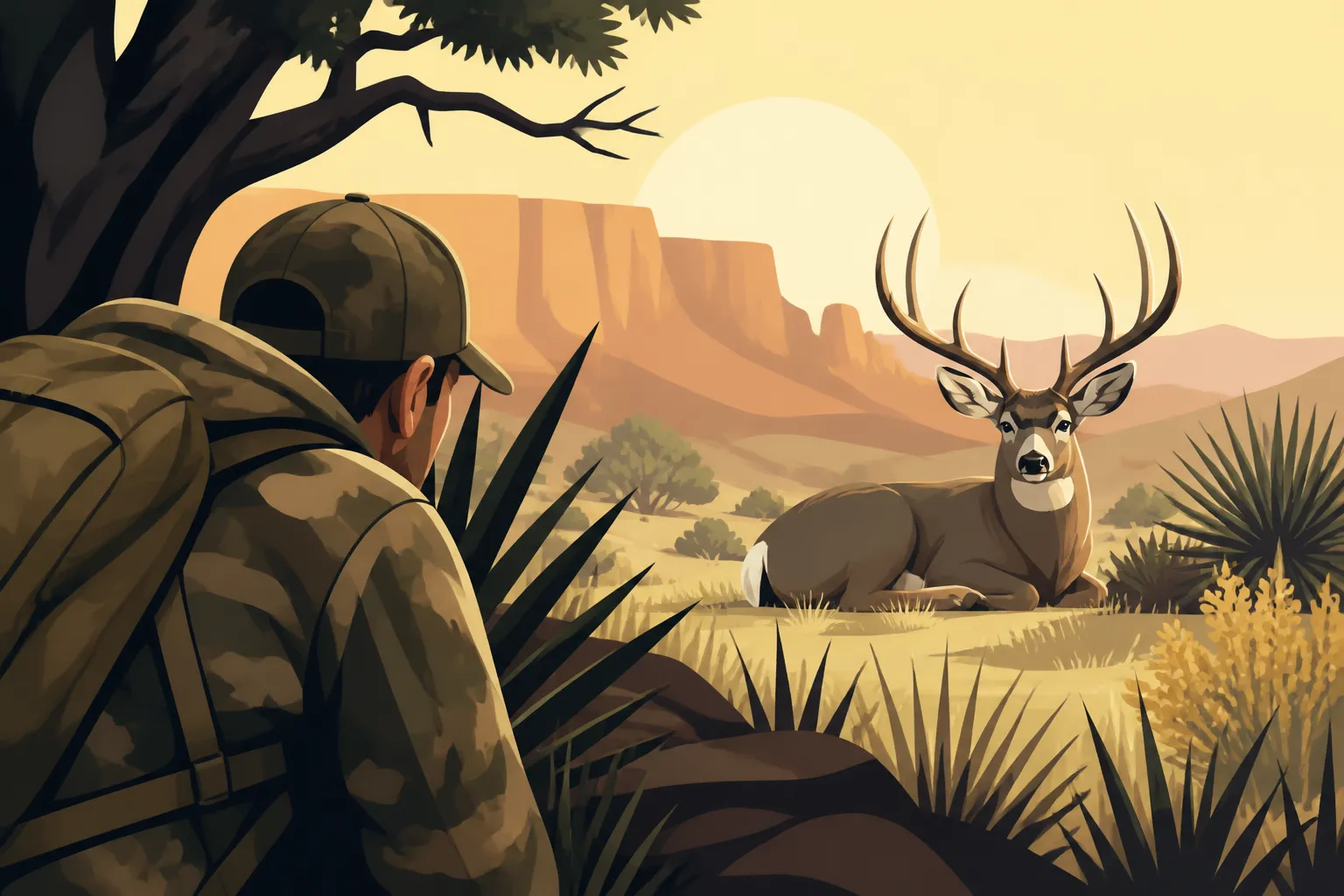
Spotting a bedded mule deer can be one of the most exciting, yet nerve-wracking, moments in a hunt. You’ve put in the work, glassed the terrain, and finally laid eyes on your target, only to be faced with the immediate challenge of closing the distance without blowing your opportunity. It’s a situation that demands patience, precision, and a deep understanding of the animal and its environment. This guide is designed to break down the art of stalking a bedded mule deer, helping you master the approach in New Mexico's varied landscapes.
Understanding the Mule Deer's Senses and Bedding Habits
Before you even think about taking a step, you need to put yourself in the mule deer's hooves, so to speak. Understanding how they perceive their world and why they choose certain bedding locations is absolutely critical to a successful stalk. Without this foundational knowledge, you're essentially stumbling in the dark, hoping for luck.
The Mule Deer's Sensory World
Mule deer are masters of survival, and their senses are finely tuned to detect threats. Ignoring any of these is a sure way to end your hunt before it truly begins.
- Olfactory Prowess: The Nose Knows All. A mule deer's sense of smell is arguably its strongest defense. They can detect human scent from incredible distances, especially when the wind is working in their favor. This is why playing the wind is not just a suggestion, it's an absolute commandment when stalking. Think about how many times you've heard stories of a deer busting out of cover because the wind shifted, even if they never saw you. It's because that invisible current carried your scent right to them. Even the slightest eddy can carry your scent into their bedding area.
- Keen Eyesight: Scanning for Movement. While not as sharp as a predator's, a mule deer's eyesight is excellent at detecting movement, especially against a static background. They have a wide field of vision, nearly 300 degrees, meaning they can see a lot without turning their head much. However, they struggle with distinguishing stationary objects, which is where good camouflage and slow, deliberate movement come into play. A tiny twitch of a finger in the wrong place, or an abrupt movement to adjust your pack, can send them bolting. You can learn more about this by reading up on how a mule deer's vision works.
- Auditory Awareness: Ears on a Swivel. Mule deer ears are like radar dishes, constantly swiveling to pick up the faintest sounds. A snapping twig, a scraping boot on rock, or even the rustle of synthetic clothing can give you away. This is particularly true in dry, still conditions, which are common in many parts of New Mexico. The crunch of dry grass or the scuff of your boot on loose shale can reverberate in the silence, signaling your presence long before you're in range.
Why Mule Deer Choose Their Beds
Mule deer aren't just flopping down anywhere. Their bedding choices are strategic, designed to maximize their safety and comfort.
- Security Cover and Escape Routes: A bedded mule deer almost always has a plan for escape. They'll pick a spot that offers concealment from predators and humans, often near dense brush, a rise in terrain, or timber. Crucially, they'll also have a clear escape route in mind, usually downhill or into heavier cover, allowing them to disappear quickly if disturbed. Think of a mule deer bedding on a ridge, looking down into a canyon. They see everything below them, and if danger approaches from above, they can quickly drop off the ridge face and vanish.
- Wind and Sun Advantage: They often bed with the wind at their back, allowing their nose to cover their blind spot while their eyes watch ahead. They also consider the sun, often bedding on north-facing slopes in the heat of the day to stay cool, or south-facing slopes in colder weather to absorb warmth. This thermal regulation is vital for their energy conservation. When you're scouting, notice these patterns – they'll tell you a lot about where the deer will likely be during different times of the day.
Evaluating the Stalk: Key Considerations Before Moving
Once you've located a bedded mule deer, resist the urge to immediately start moving. The next few minutes of careful observation and planning are far more valuable than a hasty approach. This is where you become a chess master, thinking several moves ahead.
Terrain and Cover Analysis
The landscape itself is your greatest ally or your biggest enemy. Every rock, bush, and contour needs to be assessed.
- Utilizing Natural Obstacles: Look for draws, ridges, rock outcroppings, and dense vegetation that can mask your approach. These features are your "lanes" for movement. Imagine a draw that winds uphill towards the deer – that's a perfect natural trench to hide your progress. Conversely, open, flat terrain with sparse cover is a nightmare scenario that might make a stalk impossible. Always ask yourself: "Can I move from point A to point B without exposing myself?" If the answer is no, you need to find a different path or abandon the stalk. GoHunt maps with their detailed topo lines and vegetation overlays can be incredibly helpful for visualizing these natural features from a distance, allowing you to plan your route before you even start moving.
- Elevation Changes: A downhill stalk often provides better visibility but carries your scent more easily. An uphill stalk can mask sound but requires more physical exertion and might put you in a vulnerable position if the deer stands up and sees you silhouette on the skyline. Generally, side-hilling or using undulating terrain is often the best compromise. You can gain cover without being exposed on a ridgeline or having your scent funnel directly down to the animal. Consider how Using Draws and Benches to Close Distance can be applied here.
Wind Direction and Thermals
This is the single most important factor. Period. No matter how good your cover, if the wind carries your scent to the deer, it's game over.
- The Golden Rule: Always Stay Downwind. This cannot be stressed enough. If the wind is blowing towards the deer, you absolutely cannot proceed without repositioning. You need to circle around, often taking a much longer route, to get the wind in your face or across your body. Even a slight crosswind can be acceptable, but never, ever a direct tailwind.
- Understanding Thermals: In mountainous or hilly New Mexico terrain, thermals are a critical factor, especially in the mornings and evenings. As the sun rises and warms the earth, air currents begin to flow uphill. As the sun sets and the air cools, they flow downhill. These thermal shifts can dramatically change wind direction in a localized area, even if the general prevailing wind is different. You might be perfectly downwind at 9 AM, but by 10 AM, the rising thermals could carry your scent uphill right to the deer. Carry a wind checker and use it constantly, even if you think you know the wind. This is vital when you are Playing Thermals on a Canyon Stalk.
Sun Position and Shade
The sun can be your friend or your foe.
- Glare and Shadows: Stalking with the sun directly in the deer's eyes can give you a significant advantage, making it harder for them to see movement. Conversely, if you're silhouetted against the sky or approaching from a direction where the sun casts long shadows that might spook the deer, you need to adjust. Use shadows to your advantage, especially your own shadow. In the bright New Mexico sun, a casting shadow can move with you and spook a deer.
Executing the Stalk: Closing the Distance Effectively
With your plan in place, it's time for the actual execution. This phase requires extreme discipline, patience, and hyper-awareness of your surroundings.
The Art of Slow Movement
This isn't a race; it's a crawl. Every movement must be calculated and deliberate.
- Inch by Inch: Think of yourself as moving in slow motion. Take one step, then pause. Look around. Reassess the deer. Listen. This isn't just about stealth; it's also about scanning for other deer you might not have seen, or for obstacles you might trip over. It takes an incredible amount of mental fortitude to move this slowly, especially when your heart is pounding, but it’s the difference between success and failure.
- Heel-to-Toe vs. Crawling: The terrain will dictate your best movement. In rocky, open country, a slow, deliberate heel-to-toe walk, placing your foot down softly and testing the ground before committing your weight, is often best. In dense brush or very close quarters, a low crawl or even an army crawl might be necessary. Avoid crunching leaves or scraping rocks. Wear appropriate footwear, like those designed for Choosing Boots for Rocky Desert Ground.
- Using Distractions: Sometimes, a sudden gust of wind, a passing bird, or even the sound of another animal can provide a brief window of opportunity to move a few yards undetected. Use these moments, but don't rely on them.
Maintaining Visual Contact
Keeping eyes on the prize without being seen is a constant balancing act.
- Peripheral Vision and Optics: Use your binoculars or spotting scope to occasionally check on the deer's position, but don't stare at it constantly, especially if it's looking your way. Utilize your peripheral vision and quickly glance with your naked eye as you move. A good pair of binoculars is your best friend for Binocular Size That Survives an All-Day Session.
- The "Head Down" Rule: If the deer suddenly raises its head and stares in your general direction, freeze. Become a rock. Don't even blink if you can help it. Wait until its head goes back down, or it resumes feeding/bedding activity, before moving again. It often feels like an eternity, but it's crucial.
Dealing with Obstacles and Noise
The environment will inevitably present challenges.
- Picking Your Footing: Each step needs to be chosen carefully. Avoid dry leaves, loose rocks, and snapping twigs. If you must cross noisy ground, do it as slowly and deliberately as possible, lifting your feet high and placing them gently.
- Brush and Branches: Push brush aside slowly, don't snap it. If a branch is going to rub against your clothing, try to move around it or slowly push it out of the way. Your clothing, especially your outer layers, should be quiet. Consider Layering for Gila Temperature Swings to ensure your gear isn't just warm but also quiet.
The "Sweet Spot" Distance and Ethical Shots
This is the core of the "how far" question. There's no single magic number, as it depends entirely on your weapon, your skill, and the conditions of the moment. However, we can talk about realistic ranges and what you should strive for.
Bowhunting Mule Deer: Up Close and Personal
For bowhunters, the stalk needs to get you significantly closer, which ups the ante considerably.
- The Bowhunter's Goal: 20-40 Yards. For most bowhunters, a shot between 20 and 40 yards is the ideal sweet spot. Anything beyond 40 yards rapidly increases the chance of error, especially on a bedded animal that might jump at the sound of the bow. Some highly skilled archers might feel comfortable at 50-60 yards, but for a high-percentage, ethical shot, closer is always better. This is why How Close a Bowhunter Needs to Get on Elk applies similarly to deer, even though deer are smaller.
- Challenges: Getting that close means contending with every single one of the deer's senses at their peak effectiveness. You need near-perfect wind, superb cover, and flawless, silent movement. This is where patience truly shines. You might spend an hour covering 100 yards to get to that 30-yard mark.
Rifle Hunting Mule Deer: More Leeway, Still Strategic
Rifle hunters have more range, but that doesn't mean you can be sloppy with your stalk.
- The Rifle Hunter's Goal: 100-300 Yards. For a rifle hunter, getting within 100-300 yards is generally a good goal. This provides enough distance to minimize the risk of being seen or heard during the stalk, while still offering a high-percentage, ethical shot. Modern rifles and optics are capable of much longer shots, but shooting a bedded animal at 400+ yards introduces many variables (wind drift, bullet drop, potential for the animal to stand up mid-shot) that can lead to a wounded animal.
- Optimal Shot Placement: A bedded deer presents a smaller target, and the vitals may be partially obscured. Assess the angle carefully. Is the deer quartering away, quartering towards, or broadside? Can you clearly see the kill zone? Sometimes, waiting for the deer to stand up (if possible and safe) offers a much better shot opportunity.
- Shooting Support: Always use a shooting rest if possible – bipods, shooting sticks, or even your backpack can provide the stability needed for a precise shot. You can learn more about Shooting Sticks or Bipod on Rocky Ground.
The Decision Point: When to Stop the Stalk
Knowing when to stop and prepare for a shot is just as important as knowing how to move.
- The "Can I Get Closer?" Dilemma: You'll constantly be asking yourself, "Can I get another 10 yards?" Sometimes the answer is yes, sometimes it's a risky no. The ideal is to get to a comfortable range where you feel absolutely confident in making an ethical shot, and you have a stable shooting position with a clear line of sight to the vitals.
- Ethical Considerations: Never compromise an ethical shot for the sake of getting a few yards closer. If you reach a point where you have a clear, high-percentage shot, take it. Don't push your luck. A responsible hunter knows their limits and the limits of their equipment. The goal is a clean, quick kill. This is particularly true for Judging a Mule Deer Buck Quickly when you're under pressure.
Stalking Distance Considerations Summary
| Factor | Ideal Stalking Distance (Bow) | Ideal Stalking Distance (Rifle) | Key Considerations |
|---|---|---|---|
| Wind | Always downwind | Always downwind | Never compromise, use wind checker, watch thermals. |
| Cover | Abundant, close | Moderate to good | Use terrain, vegetation to break up outline and movement. |
| Terrain Noise | Minimal, soft footing | Minimal, soft footing | Go slow, pick every step, avoid crunching. |
| Deer Activity | Bedded, relaxed | Bedded, relaxed | Wait for deer to lower head or be obscured. |
| Shot Angle | Broadside/Slight Quartering | Broadside/Slight Quartering | Ensure clear path to vitals, use shooting rest. |
| Personal Skill | High (for closer ranges) | Moderate to High | Know your effective range and stick to it. |
Ultimately, the best distance to stalk a bedded mule deer in New Mexico is the closest you can get without being detected, allowing for an ethical, high-percentage shot with your chosen weapon, given the current conditions. It’s a dance between stealth, strategy, and self-awareness. Master these elements, and your success rate on bedded bucks will soar. You can use platforms like GoHunt to scout potential bedding areas and plan multiple approach routes from home, significantly increasing your chances when you're in the field. Remember, sometimes the best stalk is the one you don't make, if the odds are truly stacked against you. But with careful planning and execution, many seemingly impossible stalks can turn into memorable successes.
Disclaimer
Hunting is an inherently dangerous activity. Always prioritize safety, follow all local, state, and federal regulations, and obtain proper licenses and permits. The information provided in this article is for educational purposes only and should not replace professional guidance or personal experience in the field. Conditions in the wilderness can change rapidly, and hunters should always be prepared for unforeseen circumstances.