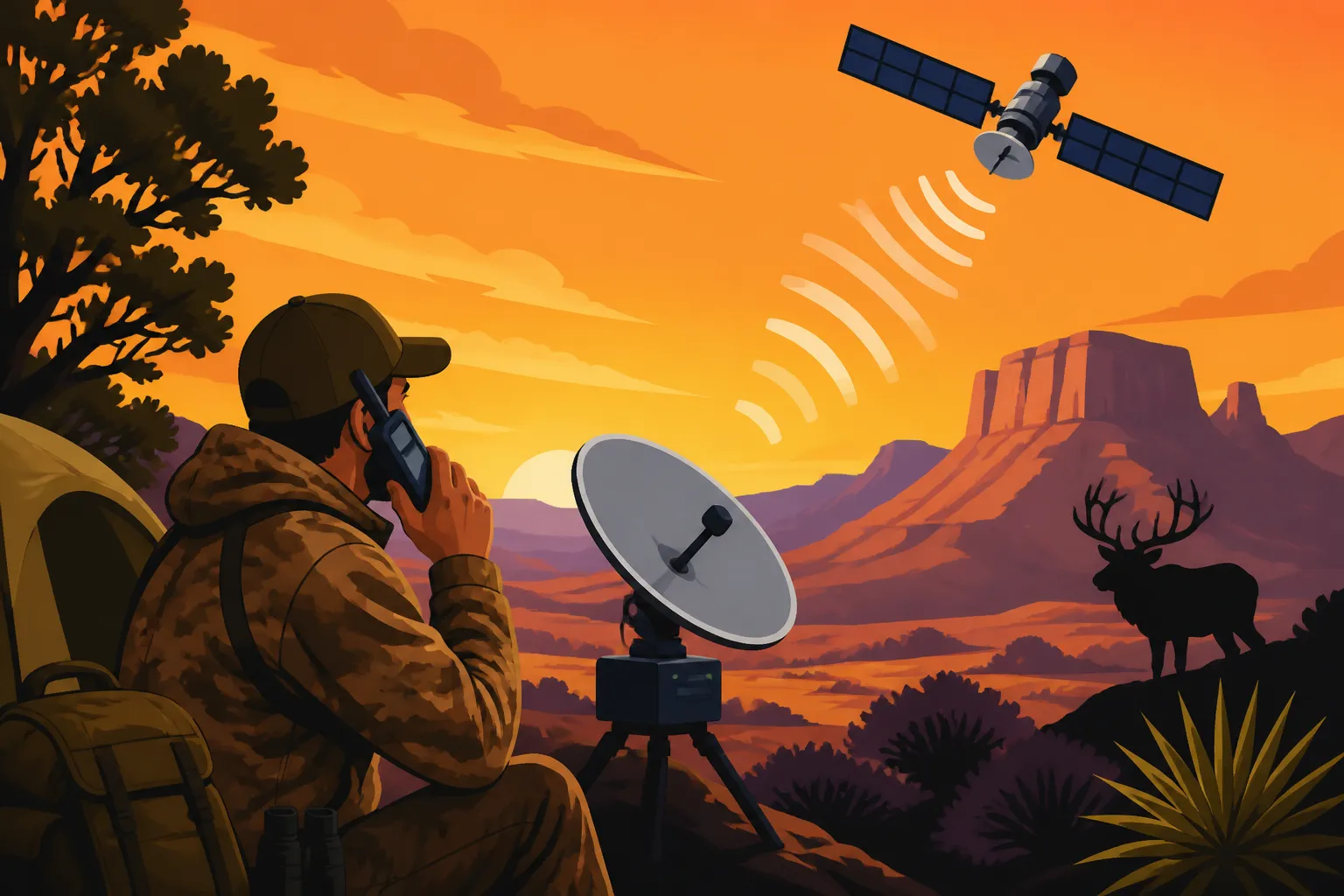
Satellite Communication From a Hunting Camp
There's nothing quite like the vast, untamed beauty of New Mexico's hunting grounds. From the towering peaks of the Sangre de Cristos to the sweeping, arid plains of the Chihuahuan Desert, the Land of Enchantment offers unparalleled opportunities to pursue big game. However, this same remoteness that draws us in can also leave us feeling isolated and vulnerable when cell service inevitably vanishes. This comprehensive guide is dedicated to helping you understand and implement reliable satellite communication strategies for your New Mexico hunting camp, ensuring you stay connected, safe, and can manage critical logistics, no matter how deep into the wilderness your adventure takes you.
The Harsh Reality of New Mexico's Remote Backcountry
Many hunters, especially those new to the expansive landscapes of the West, underestimate just how quickly and completely cell phone service can disappear once you leave the main highways. It’s a common misconception that if you see one bar, you’re good to go. The truth is, reliable communication is a luxury that often fades into memory a few miles down a dirt road, and knowing how to bridge that gap is crucial for safety and peace of mind.
Why Cell Service Disappears in the Mountains and Deserts
The primary reason for spotty, or outright absent, cell service in New Mexico's prime hunting areas comes down to a combination of geography and infrastructure. Towering mountains, deep canyons, and vast, rolling high deserts create natural barriers that simply block cellular signals. Picture yourself tucked into a deep canyon in the Gila Wilderness, pursuing elk, or hidden behind a rimrock in the Black Range, stalking mule deer. While beautiful, these very features are signal killers. Even on the seemingly flat eastern plains, the sheer distance between small towns means cellular companies often haven't invested in the extensive tower networks required for reliable coverage. It's not uncommon to drive for an hour or more between towns and have zero signal the entire way, let alone deep in the public land parcels you’re hoping to hunt.
The false sense of security that "seeing a bar" provides can be particularly dangerous. That single bar might be just enough for an intermittent text, but completely inadequate for a critical phone call, let alone reliable data transfer. You might find a brief signal on a high ridge, only for it to disappear as soon as you drop into a saddle or a valley. This inconsistency makes traditional cell phones unreliable for communication when it truly matters. Areas like The Gila National Forest as New Mexico Elk Country are legendary for their remoteness, and for good reason – they are truly off the grid for the most part. The same goes for large sections of the Carson National Forest Access in New Mexico and other wilderness areas across the state. This isn't a minor inconvenience; it's a fundamental challenge that needs a dedicated solution.
Many hunters learn this lesson the hard way. They arrive at their trailhead, excited for the hunt, only to realize their phones are bricked an hour into the hike. Planning for this lack of connectivity isn't just a convenience; it's a non-negotiable part of responsible backcountry hunting in New Mexico. You might rely on your phone for navigation apps, but without external communication, you're essentially carrying a fancy, powerless map in an emergency.
Beyond the Call: Critical Reasons for Communication
While calling home to tell your family you bagged a big bull is a great reason to want communication, the most critical reasons are firmly rooted in safety and logistics. Imagine this scenario: you're several miles from your vehicle, deep in unit 15, and you take a bad step, twisting your ankle severely. It’s not a life-threatening injury, but you can’t put weight on it, and it's getting dark. Without a way to reach out for help, a minor injury can quickly escalate into a life-threatening situation due to exposure or dehydration. This isn't just about a broken leg; it could be a sudden medical emergency like a heart attack, a severe allergic reaction, or a dangerous encounter with a venomous snake, all of which demand immediate assistance that a cell phone simply cannot provide in remote areas.
Beyond personal safety, communication is vital for coordinating with your hunting partners. If you split up to cover more ground, a satellite device allows you to check in, communicate animal sightings, or plan rendezvous points. It’s also invaluable for managing logistics back at camp, such as arranging for a pickup at a specific time and location, or letting your ride know if you’ll be a day late because you’re still Packing an Elk Out of the Gila Alone. Furthermore, if you're out for multiple days, checking on the home front—whether it's reassuring a worried spouse, checking on kids, or getting an update on a pet—provides immense peace of mind. The anxiety of being completely out of touch for days can be a significant mental burden for both the hunter and their family.
Then there’s the unpredictable nature of New Mexico weather. A sunny morning can quickly turn into a raging monsoon storm, bringing flash floods or heavy snow at higher elevations. Being able to receive weather updates or communicate a change in plans due to adverse conditions can prevent you from being caught unprepared. Consider the challenges of Heat Management on an Early Season Hunt where unexpected temperature spikes could put you at risk, or how quickly conditions can change if you're Hunting New Mexico From 4,000 Feet to 10,000. Satellite communication isn't just for emergencies; it's a robust tool for proactive risk management and efficient trip coordination.
Understanding Your Satellite Communication Options
When you venture beyond the reach of traditional cell towers, you step into the realm of satellite communication. This technology relies on devices that connect directly to orbiting satellites, allowing you to send and receive messages or make calls from virtually anywhere on Earth. However, not all satellite communication devices are created equal, and understanding their differences is key to choosing the right tool for your New Mexico hunting adventure.
Satellite Messengers: The Budget-Friendly Lifeline
Satellite messengers are often the first step for many hunters looking to gain backcountry connectivity, and for good reason. These compact, handheld devices, like those from Garmin (think InReach series) or Zoleo, are designed primarily for two-way text messaging and sending SOS signals. They're typically paired with a smartphone app via Bluetooth, which makes typing messages much easier than fumbling with tiny device buttons. When you send a message, it travels from your device to a satellite, down to a ground station, and then through regular cell networks or email to its recipient.
The primary advantages of satellite messengers are their relative affordability compared to satellite phones, their impressive battery life, and their compact size. Many models can run for days, even weeks, on a single charge when used intermittently, making them ideal for multi-day trips where charging opportunities are scarce. They're lightweight and robust, designed to withstand the rigors of the outdoors, which is perfect for navigating the varied terrain of New Mexico. Crucially, they all feature a dedicated SOS button that, when activated, connects you directly to a 24/7 emergency response center (like GEOS or IERCC). This is not just sending a text to a friend; it's a direct line to professional help, providing your exact GPS coordinates. This feature alone makes them an invaluable safety tool for any hunter.
However, satellite messengers do come with limitations. While two-way texting is reliable, it's not instantaneous like cell service. Messages can take several minutes to send and receive, especially if you don't have a clear view of the sky. They don't offer voice calls (though some newer models might offer limited voice clips), which means you can't have a natural conversation with family or emergency services. Data capabilities are usually non-existent or extremely basic (like weather forecasts). So, if your intention is to stream videos or browse the web from camp, a messenger won't cut it. For a hunter simply needing to check in with family, update partners on location, or call for help in an emergency, these devices are a fantastic and essential piece of kit. For example, if you're doing some serious E-Scouting a New Mexico Unit Before the Season and realize just how remote your chosen area is, a messenger becomes a necessity.
Satellite Phones: For Full Voice and Data Capabilities
If your communication needs extend beyond texting and emergency alerts, a satellite phone might be the answer. These devices function much like a traditional mobile phone, but instead of connecting to cell towers, they link directly to a constellation of satellites orbiting Earth. Major players in this market include Iridium and Globalstar, each with their own satellite network and coverage areas.
The most significant advantage of a satellite phone is its ability to provide full voice communication. This means you can have a real-time conversation with anyone, anywhere, provided you have a clear line of sight to the sky. This is incredibly valuable for coordinating complex logistics, getting detailed information during an emergency, or simply enjoying a long chat with family from your remote hunting camp. Some satellite phones also offer basic data capabilities, allowing for slow email access or limited internet browsing, though this is generally more expensive and slower than what we're accustomed to with cellular data. For larger hunting groups, professional guides, or those embarking on extended, deep backcountry expeditions (like a multi-week drop camp where What a New Mexico Drop Camp Costs might necessitate more robust planning), a satellite phone provides a level of connectivity that messengers cannot. It's the kind of communication tool an outfitter might rely on to manage their New Mexico Outfitter Lodging Standards in Camp from a remote location.
The downsides of satellite phones are primarily cost and bulk. The devices themselves are significantly more expensive than satellite messengers, and the service plans are typically much higher, often involving steep per-minute charges for calls. They are also generally larger and heavier than messengers, and their battery life, especially during active use, is considerably shorter. This means careful power management and backup charging solutions are essential. You'll need to consider how to keep it charged, perhaps with solar panels or large power banks, especially on a long hunt. Furthermore, while they offer global coverage, the quality and speed of calls can still be affected by weather conditions or obstructions. Despite these drawbacks, for those who absolutely need voice communication from the most remote corners of New Mexico, a satellite phone is the gold standard.
Hybrid Devices and Dedicated Hotspots
The market for satellite communication is constantly evolving, leading to some interesting hybrid devices and dedicated satellite hotspots that bridge the gap between simple messengers and full-featured phones. These options can be particularly appealing if you have specific needs that neither a basic messenger nor a high-end sat phone fully meets.
Hybrid devices often combine the messaging and SOS features of a satellite messenger with some enhanced capabilities, sometimes including limited voice notes or more advanced GPS functions. They aim to offer a good balance of features, battery life, and cost, often leveraging existing smartphone interfaces for ease of use. For a hunter who wants more than just texting but isn't ready for the full commitment of a satellite phone, these can be a compelling middle ground. They might allow for slightly faster message delivery or perhaps access to more detailed weather maps, which could be beneficial when planning your day in unpredictable mountain weather.
Then there are dedicated satellite hotspots. These devices act like a portable Wi-Fi router, but instead of connecting to cell towers, they connect to satellites. Once connected, they create a small Wi-Fi bubble that allows multiple Wi-Fi-enabled devices (smartphones, tablets, laptops) to connect to the satellite network for data and, in some cases, voice calls through an app. This can be incredibly useful for a hunting party where several individuals need to check emails, send messages, or access online maps without each needing their own dedicated satellite device. Imagine being able to upload photos of your harvest to a cloud service, or sending out a group text to multiple family members simultaneously.
The main advantage of these hotspots is their flexibility and ability to serve multiple users. However, they typically come with a higher purchase price and often have more expensive data plans than basic messengers. They also tend to be larger, consume more power, and represent another piece of gear you need to carry and manage. Power management becomes even more critical, as you’re powering both the hotspot and multiple connected devices. While they offer a greater degree of connectivity, they're generally chosen by those with more complex communication needs or by groups who want to share the cost and functionality. For most individual or small group New Mexico hunting trips focused on essential communication, a satellite messenger or phone will likely be more practical.
Practical Considerations for Satellite Comm in New Mexico
Choosing a satellite communication device for your New Mexico hunt is only half the battle. To truly leverage its life-saving and logistical potential, you need to think through the practicalities of ownership and use in the rugged, unpredictable environment of the backcountry. This means carefully selecting your device and plan, understanding battery management, and, perhaps most importantly, establishing clear communication protocols before you ever leave home.
Choosing the Right Device and Service Plan
The first step after understanding the types of devices available is to honestly assess your personal needs and hunting style. Are you a solo hunter venturing into the deep wilderness for a week, or part of a larger group staying closer to road access? Do you just need to send "I'm okay" messages, or is a full voice conversation capability absolutely critical for coordinating with family or a guide? Your budget will also play a significant role. Satellite communication devices are an investment, and service plans range widely from basic emergency-only subscriptions to robust, all-inclusive packages.
When evaluating service plans, look closely at activation fees, monthly or annual subscription costs, and per-message or per-minute rates. Some plans offer unlimited texting, while others charge per unit. It's paramount to check the current rates directly with the providers, as these figures are always subject to change. Platforms like GoHunt, while primarily focused on draw odds and unit information, often have forums or articles where hunters discuss gear, including satellite communication, which can provide real-world insights into what others are using and recommending. Similarly, if you’re booking a guided trip through a service like BookYourHunt, inquire with potential outfitters about their communication practices and what they recommend for clients.
For hunters who only venture into the deep backcountry once or twice a year, renting a satellite device can be a very cost-effective option. Many outdoor gear rental companies offer satellite messengers and phones for weekly or monthly periods. This allows you to try out different devices without the full upfront investment and ensures you only pay for the service when you actually need it. Always test your rented device thoroughly before your trip to ensure it's functioning correctly and you understand how to use all its features, especially the SOS function.
Here’s a quick comparison to help you visualize the trade-offs:
| Feature | Satellite Messenger (e.g., Garmin InReach) | Satellite Phone (e.g., Iridium, Globalstar) |
|---|---|---|
| Primary Function | Two-way texting, SOS, basic GPS | Voice calls, texting, some data |
| Cost (Device) | Mid-range | High |
| Cost (Service) | Moderate monthly/annual | Higher monthly/annual, high per-minute |
| Battery Life | Excellent (days to weeks) | Good (hours of talk time) |
| Size & Weight | Small, lightweight | Larger, heavier |
| Emergency Button | Yes (direct to GEOS/IERCC) | Yes (often less direct, depends on provider) |
| Connectivity | Text-based, slower | Voice, faster text, limited data |
| Best Use Case | Solo hunters, short trips, emergency backup | Group expeditions, long trips, professional use |
Battery Life, Charging, and Durability in the Field
Even the best satellite communication device is useless if its battery dies, or if it breaks when you need it most. Battery management is absolutely paramount in the backcountry. Satellite messengers typically boast impressive battery life, often lasting for days or weeks with intermittent use. Satellite phones, with their higher power demands for voice calls, will drain much faster. Regardless of your device, always start your hunt with a full charge. Consider packing a portable power bank or a small, lightweight solar charger, especially for longer trips. New Mexico's sunny skies are perfect for solar charging, but ensure your panels are durable and have adequate output for your devices. Remember that cold weather can also impact battery performance, so keeping your device warm (e.g., in a jacket pocket) can help prolong its charge. This careful power management applies to all your critical electronics, especially if you're trying to figure out Getting Meat Cooled on an Early Season Hunt and need to keep other gear running.
The New Mexico wilderness is a tough environment. Dust, dirt, moisture, and accidental drops are all realities of hunting. Choose a device that is rated for rugged outdoor use, ideally with a high IP (Ingress Protection) rating for water and dust resistance. Even if your device is rated as waterproof, it’s good practice to keep it in a dry bag or a protective case. Attach a lanyard to prevent accidental drops, especially when you're on a steep incline or traversing rocky terrain. Having a device fail due to environmental factors is just as bad as running out of battery, so protect your investment.
Finally, think about redundancy. While a satellite device is your primary communication tool, it's wise to have a backup plan. This could be a spare battery for your sat phone, a small solar panel for your messenger, or simply ensuring that all members of your hunting party have their own communication device. In a true emergency, multiple methods of communication increase your chances of getting help.
Establishing Communication Protocols and Emergency Plans
Having the gear is one thing; knowing how to use it effectively and having a clear plan is another. Before you ever step foot into your New Mexico hunting unit, establish clear communication protocols with your hunting partners and, crucially, with someone reliable back home. This "home base" contact should know your exact itinerary, your intended route, when you plan to check in, and what type of satellite device you're carrying, including its unique ID or phone number.
Discuss and agree upon a schedule for check-ins. Will you send a message every evening? Every morning? What specific phrases will you use to indicate different situations (e.g., "All good," "Minor issue, not emergency," "Emergency – need help")? Practicing these messages and knowing how to send an SOS signal before you're under duress is vital. Register your device with your emergency contacts, ensuring that the 24/7 monitoring center has all the necessary information to relay to first responders. This preparation is a fundamental part of Planning a DIY Public Land Hunt in New Mexico and ensures that if something goes wrong, the right people know and can act quickly.
Equally important is having a detailed emergency plan. What happens if someone gets injured? What's the rendezvous point if you get separated? Who is designated to press the SOS button, and what information will they relay? Discuss potential scenarios, from a twisted ankle to a severe medical event, or getting disoriented in thick timber. Understanding how the SOS function works—that it connects you to a monitoring center, not directly to 911—is important. They will assess the situation and dispatch appropriate local emergency services. This step-by-step preparation can be the difference between a minor inconvenience and a tragic outcome, especially when dealing with the physical demands of Preparing Physically for a High Elevation Hunt or the dangers of Altitude Preparation for a Gila Elk Hunt. Your satellite communication device is an incredible tool, but it's only as effective as the plan you build around it.
Disclaimer
This article is for general informational purposes only and does not constitute professional advice. Laws, prices and regulations vary by location and change over time. Consult a qualified professional for guidance on your specific situation.