Wilderness First Aid on a Guided Hunt
Heading out on a guided hunt in New Mexico is an incredible adventure, full of anticipation for big game and breathtaking landscapes. But even with an experienced outfitter leading the way, the remote and rugged nature of our state's wilderness means that unexpected situations, from minor scrapes to serious emergencies, can arise when professional medical help is hours, not minutes, away. This guide is all about understanding the role of wilderness first aid on a guided hunt, what you should expect from your outfitter, and how you can personally prepare to ensure everyone stays as safe as possible.
The Inherent Risks of New Mexico's Wild Country
Let's be real: New Mexico's hunting grounds are vast, beautiful, and often unforgiving. Whether you're chasing elk through the high-timbered canyons of the Gila or stalking mule deer in the scorching desert foothills, you're putting yourself in an environment where the unexpected is always a possibility. This isn't your local park; it's true wilderness, and that comes with a different set of challenges.
Common Injuries and Illnesses on a Hunt
Even the most careful hunter can face a multitude of minor and major health issues when out in the field. Think about it: you're often covering miles over uneven ground, carrying heavy gear, and exposed to the elements for long hours. A simple misstep on a rocky incline can lead to a twisted ankle or a nasty fall. Cuts and abrasions are common when navigating thick brush or field dressing an animal, and while they might seem minor, infection can set in quickly in a backcountry setting if not properly addressed.
Beyond physical injuries, environmental factors play a huge role. Early season hunts, particularly for archery, can bring brutal heat, leading to dehydration and heat exhaustion. You’ll be packing Water You Must Carry on a Desert Day Hunt but even that has its limits. Conversely, late-season hunts or those at high elevations can quickly turn cold, bringing the risk of hypothermia, even if the day starts out mild. Then there's altitude sickness, a very real concern for hunters coming from lower elevations to places like the Carson or Gila National Forests, where elevations can soar to 10,000 feet. Understanding Altitude Preparation for a Gila Elk Hunt is key, but sometimes symptoms still sneak up on you. And, of course, there's always the slim but present possibility of an encounter with wildlife, from snakebites in the desert to a surprise run-in with a bear or mountain lion. These aren't meant to scare you, but to underscore the reality that vigilance and preparedness are paramount.
The Reality of Delayed Medical Response
One of the biggest frustrations and stark realities of hunting in remote New Mexico is the sheer amount of time it can take to get professional medical help. When you’re miles from the nearest road, let alone a hospital, every minute counts. Even with modern technology, like satellite communication devices that can summon help, an emergency evacuation isn't instantaneous. It takes time for search and rescue teams to mobilize, locate you, and then transport you out of rugged terrain, which might involve a helicopter, ATVs, or even a litter carry.
Your guide will undoubtedly have communication devices and an emergency plan, but the wilderness dictates the timeline. If you break a leg deep in a canyon, it's not like calling 911 and having an ambulance arrive in ten minutes. You might be waiting hours, or even overnight, for advanced medical personnel to reach you. This prolonged waiting period emphasizes why even basic wilderness first aid knowledge among both clients and guides is not just helpful, but absolutely critical. It’s during these crucial hours that immediate action, like stabilizing a fracture, controlling bleeding, or managing shock, can make a profound difference in the outcome.
What to Expect from Your Guided Outfitter Regarding First Aid
When you book a guided hunt, you're entrusting a lot to your outfitter, including your safety. While they are experts in finding game and navigating the landscape, it’s important to understand the scope of their first aid capabilities and responsibilities. They are there to lead you to game, but also to mitigate risk and respond effectively if something goes wrong.
Outfitter's Basic Responsibilities
Most reputable New Mexico outfitters and their guides are required to have some level of first aid training. This often includes certifications like basic first aid, CPR, and potentially Wilderness First Aid (WFA) or even Wilderness First Responder (WFR) for those operating in truly remote settings. They will carry a first-aid kit, often a comprehensive one, designed to handle common hunting injuries and environmental ailments. This kit should contain supplies for wound care, splinting, allergic reactions, pain management, and basic trauma.
However, it's vital to remember that a hunting guide, no matter how experienced or well-trained, is not a doctor or a paramedic. Their role is to provide immediate, stabilizing care and to facilitate professional medical help as quickly as possible. They are trained to assess situations, administer initial treatment, and make critical decisions about evacuation, but they are not equipped for advanced medical interventions or prolonged patient care. Your outfitter should be transparent about their team's training and what resources they carry.
Verifying Your Outfitter's Preparedness
Before you even send a deposit, it’s absolutely crucial to ask pointed questions about their emergency protocols and medical preparedness. This is part of Vetting a New Mexico Outfitter Before You Send a Deposit. Don't be shy – your safety is on the line. Ask about the level of first aid certification their guides hold. Do they all have WFA or WFR? What kind of first aid kit do they carry? Is it tailored for wilderness scenarios, including trauma supplies and medications for common issues like altitude sickness or allergic reactions?
Also, inquire about their communication strategy. Do they carry satellite phones, satellite messengers like a Garmin inReach, or personal locator beacons (PLBs)? How often do they check in with base camp? What is their specific plan for communicating an emergency and arranging for evacuation? A professional outfitter will have clear, rehearsed answers to all these questions and should be happy to discuss them with you. This isn't about distrust; it's about mutual preparedness and understanding expectations.
Communication and Evacuation Plans
In New Mexico’s vast public lands, especially in areas like the Gila Wilderness where cell service is non-existent, reliable communication is your lifeline. Your outfitter should have robust communication systems in place. This includes not just satellite devices but also established protocols for their use. For example, they should have a clear understanding of when to use a satellite messenger for routine check-ins versus when to hit the SOS button for a true emergency. We've talked about Satellite Communication From a Hunting Camp before, and it’s a non-negotiable for remote trips.
A comprehensive emergency plan will also detail how they assess the severity of an injury or illness, the steps they will take to stabilize the patient, and the process for initiating an evacuation. This includes knowing the nearest road access points, identifying potential helicopter landing zones, and having direct contacts for local search and rescue, emergency medical services, and potentially even air ambulance services. They should also understand the nuances of How Outfitters Plan Emergency Evacuations, considering factors like terrain, weather, and the patient’s condition. This plan should be communicated to you, at least in broad strokes, so you understand the sequence of events should an emergency arise.
Your Personal Wilderness First Aid Preparedness
While your guide is responsible for overall safety, you also have a significant role to play in your own well-being. Being personally prepared not only increases your safety but also makes you a more valuable and capable member of the hunting party. This isn't about being a burden; it's about being an asset.
Building a Personal First Aid Kit
Even if your guide has a comprehensive kit, you should always carry a personal first aid kit with essentials. Think of it as a supplemental layer of protection for immediate self-care. This kit should be small, lightweight, and easily accessible in your day pack. What should it include? Start with blister treatment (Moleskin is your best friend on long treks), antiseptic wipes, a few bandages for small cuts and scrapes, and pain relievers like ibuprofen.
Don’t forget any personal medications you might need – an EpiPen for severe allergies, insulin for diabetes, or specific prescription meds. Beyond the basics, consider items tailored to New Mexico’s conditions: strong sunscreen, lip balm, and electrolyte tablets to combat dehydration. A small roll of athletic tape can be a lifesaver for sprained fingers or to reinforce a tired ankle. This personal kit is for the immediate needs you can address yourself, or for minor issues that don't warrant diving into the guide's larger, more specialized kit.
Basic Wilderness First Aid Knowledge for Hunters
You don't need to be a certified paramedic to make a difference in an emergency. Taking a basic wilderness first aid course (WFA) or even a standard first aid and CPR course can equip you with invaluable skills. Knowing how to perform CPR, properly clean and dress a wound to prevent infection, stabilize a suspected fracture with a makeshift splint, or recognize the signs of heatstroke, hypothermia, or altitude sickness could be critical.
These courses teach you how to improvise with the gear you have and how to make sound decisions under pressure in remote environments. Understanding how to assess a patient's condition, keep them warm, and manage pain until professional help arrives is empowering. It means you're not just a bystander, but an active participant in your own safety and potentially the safety of others in your group. This proactive approach significantly reduces risks and improves outcomes in the backcountry.
Physical Conditioning and Prevention
The absolute best "first aid" is prevention. Many backcountry emergencies stem from exhaustion, falls, or pushing physical limits too far. That's why physical preparedness is so critical. Engaging in Physical Conditioning for a Gila Hunt well before your trip, or generally Preparing Physically for a High Elevation Hunt, can drastically reduce your risk of injury or illness. Stronger muscles, better cardiovascular endurance, and increased stamina mean you’re less likely to stumble, become dehydrated, or suffer from muscle strains.
Beyond physical fitness, prevention includes smart choices in the field. This means wearing appropriate clothing for the weather, knowing how to layer effectively for temperature swings, and packing enough food and water. It means being aware of your surroundings, watching your footing, and not taking unnecessary risks. It means knowing your limits and communicating them to your guide. A well-hydrated, well-fed, and physically fit hunter is far less susceptible to common hunting ailments and much more resilient if an emergency does occur. It's a proactive step that every hunter should embrace as part of their pre-hunt routine.
Scenarios and Best Practices in the Field
Knowing the theory is one thing, but how does wilderness first aid play out when you're actually deep in New Mexico's hunting grounds, far from help? Let's consider some real-world scenarios and best practices that can make a difference.
Handling Common Hunting Ailments
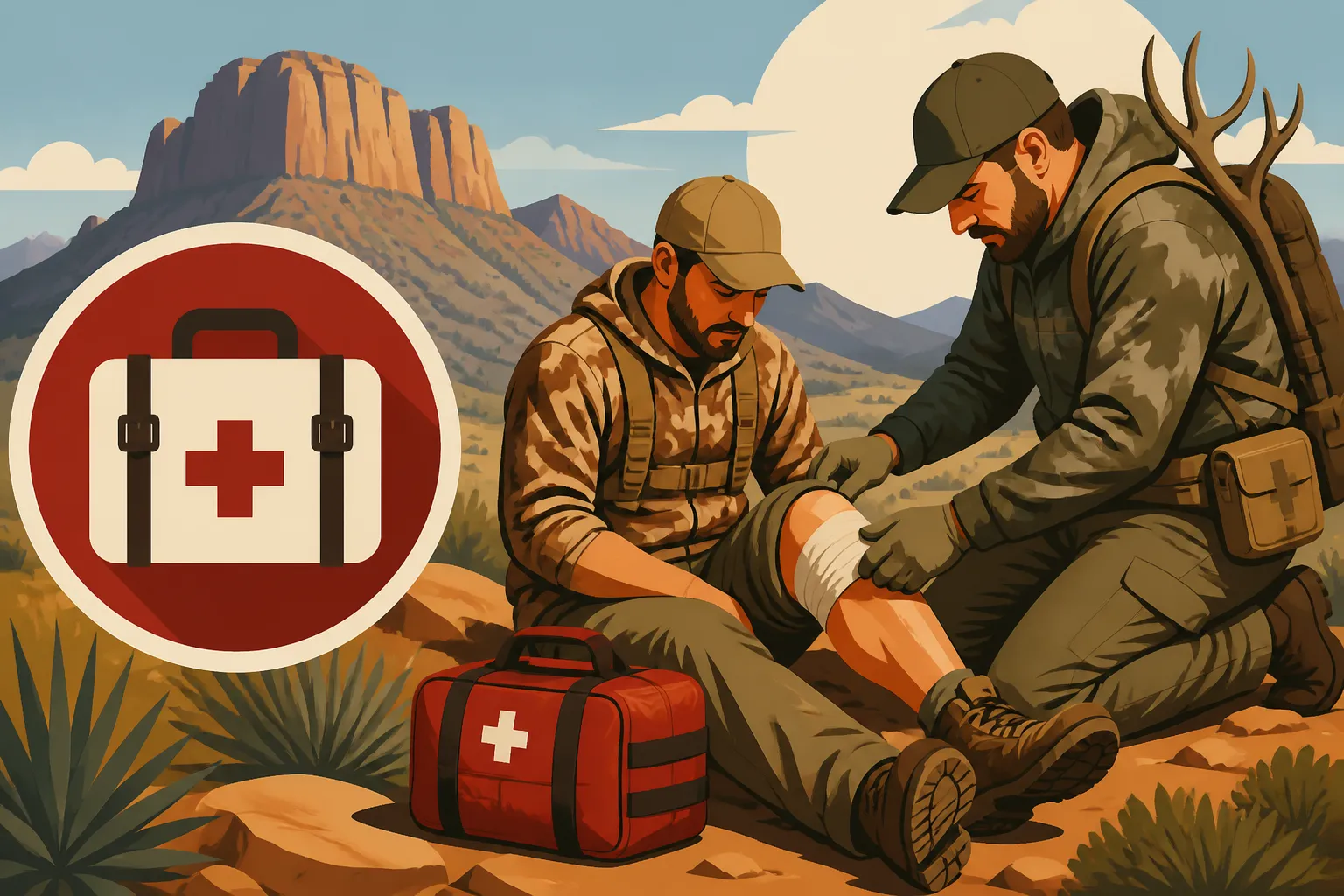
Imagine you’re traversing a steep, rocky canyon in Unit 15, and a hunting partner twists an ankle badly. It's clearly sprained, maybe worse. Your first steps are crucial: safely get them to a stable, comfortable spot. Control any swelling by elevating the ankle and applying a cold compress (snow in winter, or even cold water from a stream if available, using a bandana). Immobilize the ankle using athletic tape or by carefully splinting it with sturdy sticks or a trekking pole and bandages from your personal or the guide's kit. This is where basic WFA skills come in handy for proper splinting. Communicate the injury to your guide immediately via satellite device.
Or consider a different scenario: you’ve just finished Field Dressing in Desert Heat after a successful shot, and a small, but deep, cut on your hand won't stop bleeding. First, apply direct pressure with a clean cloth. Elevate the hand above the heart. Once bleeding is controlled, clean the wound thoroughly with antiseptic wipes and cover it with a sterile dressing. Monitor for signs of infection over the next few days. These immediate actions, while seemingly simple, are paramount in preventing further complications when medical facilities are hours away.
Emergency Signaling and Communication
When an emergency strikes, clear and effective communication is paramount. Every hunter, even on a guided trip, should know how to use an emergency whistle (three short blasts, repeated, is a universal distress signal) or a signal mirror. These can be surprisingly effective over long distances, especially if a search party is actively looking for you.
However, in today's world, satellite communication devices are king. If your guide carries one, ensure you understand how it works and when to activate the SOS function. The SOS button on devices like a Garmin inReach or Spot should only be used for true, life-threatening emergencies that require immediate search and rescue. For less critical situations, like a sprained ankle that needs attention but isn't immediately life-threatening, your guide will use the messaging function to relay details to base camp, which can then arrange for appropriate support or evacuation. Always follow your guide's lead in these situations, but be prepared to assist. Your role is to remain calm, provide clear information, and conserve energy while awaiting assistance.
| First Aid Kit Item | Purpose | Personal Kit | Guide's Kit (Expectations) |
|---|---|---|---|
| Blister Treatment (Moleskin) | Prevents and treats blisters from hiking | Essential | Likely included |
| Antiseptic Wipes/Hand Sanitizer | Cleans wounds and hands to prevent infection | Essential | Essential |
| Bandages (various sizes) | Covers cuts, scrapes, and abrasions | Essential | Essential |
| Athletic Tape | Stabilizes sprains, secures dressings | Recommended | Essential |
| Pain Relievers (Ibuprofen) | Manages pain and reduces inflammation | Essential | Likely included |
| Personal Medications | Specific prescriptions, EpiPen, insulin, etc. | Essential | N/A (your responsibility) |
| Electrolyte Tablets | Prevents dehydration, especially in heat or high exertion | Recommended | Might be included |
| Sunscreen/Lip Balm | Protects against sun exposure | Recommended | Might be included |
| Gauze Pads/Trauma Dressing | Controls heavy bleeding, covers larger wounds | Supplemental | Essential (larger quantities) |
| Triangular Bandage | Sling for arm injuries, improvised splint | Supplemental | Essential |
| SAM Splint | Flexible splint for fractures | Supplemental | Essential |
| Tweezers | Removes splinters, ticks | Recommended | Likely included |
| Small Scissors | Cuts tape, gauze, clothing | Recommended | Essential |
| Nitrile Gloves | Personal protection when treating wounds | Recommended | Essential |
| Satellite Messenger/PLB | Emergency communication | Optional (yours) | Essential (guide's primary) |
Disclaimer
This article is for general informational purposes only and does not constitute professional advice. Laws, prices and regulations vary by location and change over time. Consult a qualified professional for guidance on your specific situation.