Why New Mexico Gila Country Is Hard to Hunt Alone
The Gila National Forest in New Mexico calls to many hunters with its promise of massive bulls and vast wilderness, but don't let the allure blind you to the brutal reality: this isn't a place for the unprepared solo hunter. Attempting to navigate, hunt, and survive in the Gila alone presents a unique set of challenges that can quickly turn a dream hunt into a perilous ordeal. This guide will walk you through precisely why the Gila demands respect and often, a team.
The Sheer Scale and Ruggedness of the Gila Wilderness
The Gila National Forest isn't just "big"; it's an expansive, largely unroaded wilderness area that swallows vast tracts of land. This immense scale, combined with its incredibly rugged topography, makes it one of the most physically and mentally demanding places to hunt in the Lower 48.
Miles of Untamed Backcountry
Imagine stepping into a landscape where the nearest paved road is a day's hike away, and the closest cell signal might as well be on the moon. That's the Gila. It encompasses parts of the Gila Wilderness and the Aldo Leopold Wilderness, among others, meaning motorized travel is severely restricted, if not entirely prohibited, in huge sections. When you hunt here, you're not just walking; you're often forging your own path through dense timber, across rocky drainages, and up steep, unforgiving slopes. This lack of established infrastructure means that every mile gained is hard-won, and every decision about route finding, camp location, and water sources becomes critical.
For the solo hunter, this isolation amplifies every potential problem. A twisted ankle isn't just an inconvenience; it can be a life-threatening emergency. Getting turned around in a maze of canyons and ridges is a real possibility, even with modern GPS tools, because the sheer uniformity of the terrain can be disorienting. There's no quick bailout plan, no easy way to call for help, and very little chance of stumbling upon another person for days, or even weeks. It truly is a place where you're on your own, testing the limits of your self-reliance in ways few other places do.
Relentless Terrain and Elevation Changes
The Gila is defined by its dramatic elevation changes, deep canyons carved by ancient rivers, and endless mountains covered in ponderosa pine and mixed conifer forests. You can start your day at 7,000 feet, drop into a 2,000-foot canyon, and climb back out to a ridge at 9,000 feet, all before lunch. This isn't flat, easy walking; it's a constant up-and-down battle that drains even the most seasoned hunter's energy reserves. Every step requires careful placement on loose rock, fallen timber, or steep, muddy slopes.
These drastic elevation changes also mean rapidly shifting microclimates. You might start in cool, crisp morning air in a canyon bottom only to be baking under the midday sun on a exposed ridge, then hit a sudden afternoon thunderstorm that drops temperatures dramatically. This requires meticulous layering and constant vigilance, something that's harder to maintain when you're solely focused on navigation and game sign. Without a partner to share the physical load or simply offer a morale boost, the relentless terrain can quickly lead to exhaustion, compromising judgment and increasing the risk of accidents. Just Preparing Physically for a High Elevation Hunt is a significant challenge, let alone executing a solo hunt.
Navigating the Gila: More Than Just a Map
While modern technology has given us incredible mapping tools, the Gila demands more than just knowing where you are on a screen. It requires an intimate understanding of the landscape's nuances and a robust plan for contingencies.
Water Scarcity and Logistics
One of the most critical, and often underestimated, challenges in the Gila is water. Despite its designation as a forest, many areas, especially during the archery and early rifle seasons, can be surprisingly dry. Permanent water sources are often few and far between, and seasonal seeps or tanks can dry up without warning. Planning your water strategy is not just about carrying enough for a day; it's about anticipating multi-day excursions away from known sources, understanding how to filter or treat water, and knowing where to find emergency caches or springs.
A solo hunter carries the entire burden of water. Every liter adds significant weight to an already heavy pack. You can't rely on a partner to carry extra or to scout ahead for new sources. This means conservative consumption, constant monitoring of your supply, and often, making difficult choices about how far you can push into dry country. Misjudging water needs can quickly lead to dehydration, impaired decision-making, and a forced, potentially dangerous, retreat. Knowing Water You Must Carry on a Desert Day Hunt is paramount, even in "forest" terrain.
The Silence and the Solitude
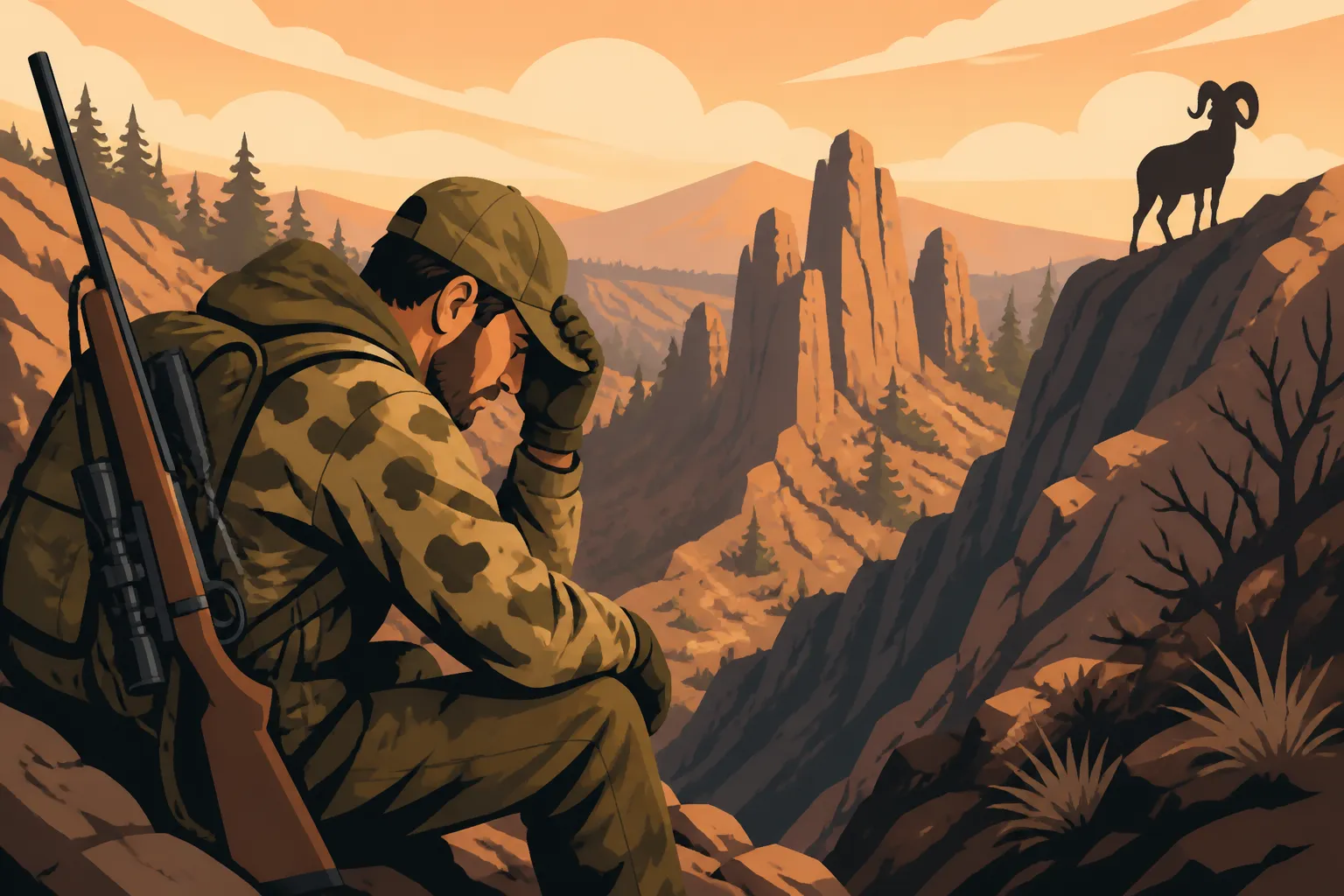
The Gila's profound solitude is both its greatest appeal and its most daunting challenge for the solo hunter. The vastness means you might not see another human for the entirety of your hunt. While this offers an unparalleled wilderness experience, it also means that you are truly alone if something goes wrong. There's no one to lean on for moral support during a tough day, no one to bounce ideas off when trying to locate a bugling bull, and most critically, no one to render aid or go for help if you suffer an injury or become disoriented.
The psychological toll of complete solitude should not be underestimated. Fatigue, hunger, and stress are amplified when you're the only one responsible for every aspect of survival and success. The quiet can be deafening, making every rustle in the leaves or snapping twig seem like a potential threat. Effective communication is virtually non-existent without a satellite messenger or similar device, and even then, calling for rescue in such remote terrain can take days. This isn't just about physical preparedness; it's about mental fortitude and a deep understanding of your own limits under extreme pressure.
The Intricacies of Hunting Gila Elk
Hunting elk in the Gila is a masterclass in patience, persistence, and physical prowess. The animals are as wild as the country they inhabit, and success often comes down to intimate knowledge of their habits and the terrain.
Locating and Approaching Wary Animals
Gila elk are notoriously elusive. They live in massive home ranges, often favoring the steepest, thickest timber for security. Locating them requires extensive scouting, often before the season, or an ability to read the landscape for subtle signs like rubs, tracks, and fresh droppings. Even after you find them, closing the distance on these wary animals in such rugged, noisy terrain is incredibly difficult. Every gust of wind, every misplaced step, or a sudden change in thermals can give you away. Reading Wind in a Deep Gila Canyon is a skill honed over many frustrating encounters.
For a solo hunter, this challenge is magnified. You are simultaneously the spotter, the caller, and the shooter. There's no one to set up downwind, no one to provide cover noise, and no one to push a bull toward you. All the intricate strategies that often make a two-person elk hunt successful are off the table. You're left to rely solely on your own woodsmanship, calling skills, and ability to remain undetected in a landscape designed to reveal your presence. This makes the odds of success considerably lower, especially for those new to the Gila or solo elk hunting.
Packing Out the Reward
Let's say, against the odds, you've located a bull, made a perfect shot, and he's down. Congratulations! Now the real work begins. Packing out an entire elk from the Gila wilderness is a monumental task, even for a team of strong hunters with pack animals. An average bull elk can weigh upwards of 700 pounds live, meaning hundreds of pounds of bone and meat need to be moved, often over miles of incredibly difficult terrain.
For the solo hunter, this is where the Gila truly tests your resolve. You'll be making multiple trips, each with heavy loads, back and forth from the kill site. This often involves quartering the animal, perhaps boning out the meat to reduce weight, and carefully planning your route over obstacles like fallen trees and steep grades. The clock is also ticking, especially in warmer early seasons, requiring you to work quickly to get the meat cooled to prevent spoilage. There's no one to help you hoist heavy quarters onto your back, no one to share the burden of a head and antlers, and no one to stand guard against predators while you're away from the carcass. This is often the point where solo hunters realize they were truly unprepared for the sheer physical and logistical demands of the Gila. Getting Meat Cooled on an Early Season Hunt quickly and efficiently is paramount.
Overcoming the Challenges: When Solo Isn't the Only Way
While the Gila is profoundly difficult to hunt alone, it's not impossible for a highly experienced and meticulously prepared individual. However, for most, acknowledging the limitations of a solo endeavor and seeking assistance is the smartest and safest approach.
The Value of Local Knowledge and Experience
The best way to mitigate the Gila's challenges is through deep local knowledge. This comes from years of experience in the specific unit you're hunting or from tapping into the expertise of those who have it. An experienced partner or a reputable outfitter can be invaluable. They know the terrain, the elk migration patterns, the reliable water sources, and the best strategies for a given season.
Outfitters, for instance, often have established camps deep in the wilderness, complete with horses or mules for packing in gear and packing out game. They understand the nuances of the Gila, from Bugle Timing Through New Mexico's Rut to navigating the most difficult canyons. While not cheap, hiring a guide or booking a drop camp can dramatically increase your safety and success rates. Many hunters use services like BookYourHunt to find reputable outfitters specializing in Gila elk. They can help you navigate not only the terrain but also the complex New Mexico Hunt Codes and How to Read Them. Having someone else handle the logistics of camp, horses, and emergency preparedness frees you up to focus on the hunt itself.
Essential Gear and Preparation for the Independent Hunter
If you are committed to attempting a solo hunt in the Gila, your preparation must be absolutely exhaustive. This goes beyond just physical fitness; it requires a mental toughness and a comprehensive gear list that accounts for every conceivable emergency.
Here's a breakdown of critical considerations for the independent hunter:
| Category | Essential Items | Considerations for Solo Hunting |
|---|---|---|
| Navigation | GPS device, satellite imagery (onX, Gaia), compass, paper map | Multiple backups; understanding how to use them without power/signal. |
| Communication | Satellite messenger (Garmin InReach, Zoleo) | Absolutely non-negotiable for emergency contact. Always inform someone of your itinerary. |
| Water | Filtration system, purification tablets, multiple bottles/bladders, water cache plan | Knowing every potential water source on your route. Overestimate needs. |
| First Aid | Comprehensive kit, trauma supplies, medications | Training in wilderness first aid. Knowing how to self-treat severe injuries. |
| Shelter | Lightweight tent/tarp, sleeping bag rated for cold | Ability to set up quickly in adverse weather. |
| Fire | Multiple ignition sources (lighter, ferro rod, waterproof matches) | For warmth, cooking, signaling. |
| Signaling | Whistle, signal mirror, bright colored cloth | For alerting search parties or other hunters. |
| Gear Repair | Duct tape, zip ties, multi-tool | Be able to fix minor gear failures in the field. |
| Food | High-calorie, lightweight, non-perishable food for extended stay | Plan for extra days in case of unexpected delays. |
| Weapon/Ammo | Reliable rifle/bow, sufficient ammunition | Know your weapon intimately. Practice under field conditions. |
| Meat Care | Game bags, sharp knives, cordage, bone saw | Lightweight, durable gear for packing out. Prioritize cooling. |
| Physical Prep | Rigorous cardio and strength training | Mimic hunting conditions: long hikes with heavy packs. Altitude Preparation for a Gila Elk Hunt is key. |
| Mental Prep | Scenario planning, crisis management, self-talk | Understand your limits, practice resilience. |
Beyond this list, consider investing in advanced e-scouting tools like GoHunt, which can provide invaluable data on public land percentages, water sources, and historical harvest data, helping you plan your approach remotely. You'll need to develop extreme self-sufficiency, anticipate every possible problem, and be brutally honest about your physical and mental capabilities. The Gila will expose any weakness, and when you're alone, there's no margin for error.
Disclaimer
This article is for general informational purposes only and does not constitute professional advice. Laws, prices and regulations vary by location and change over time. Consult a qualified professional for guidance on your specific situation.