Two Days in the Field With Your New Mexico Outfitter
So, you've heard about the New Mexico outfitter draw, and perhaps the idea of boosting your odds with a guided hunt has crossed your mind. But then you run into this seemingly odd rule: two days in the field with your outfitter. It can feel like an arbitrary hoops to jump through, especially if you envision a "drop camp" scenario. This guide is here to break down exactly what that accompaniment rule means, why it exists, and how it truly impacts your New Mexico hunting experience, whether you're chasing elk in the Gila or mule deer in the high desert.
The Foundation: New Mexico's Outfitter Draw System
New Mexico's hunting tag allocation system is unique, and frankly, it can be a little bewildering for those not intimately familiar with it. Unlike many other Western states that use preference points or bonus points, New Mexico's draw is a true lottery, resetting your chances to zero every year. However, it does segment its tags into different pools, and one of those pools is specifically for hunters who contract with a New Mexico registered outfitter. Understanding this foundational element is critical before diving into the "two-day rule."
The Rationale Behind the Outfitter Pool
The New Mexico Department of Game and Fish (NMDGF) established the outfitter pool with several goals in mind. Primarily, it's a way to support the state's professional outfitting industry, which in turn contributes significantly to the local economy, particularly in rural areas. Outfitters employ local guides, use local services, and often bring clients from out of state who spend money on lodging, food, and other supplies. By reserving a portion of the tags for outfitter clients, the state provides a more stable business environment for these professionals. It also encourages a higher level of guided hunting, which can often lead to safer and more ethical hunts, as experienced professionals are involved in the planning and execution.
Think about it: a responsible outfitter has a vested interest in their client's success and adherence to regulations, which helps maintain the integrity of hunting in the state. They often possess intimate knowledge of specific units, game movements, and local conditions that an unguided hunter might take years to acquire. This industry support translates into better opportunities for hunters, particularly non-residents who might otherwise struggle to learn complex public lands and hunt codes on their own. The outfitter pool also indirectly serves as a mechanism to manage hunter pressure, concentrating some activity under professional guidance. You can learn more about this specific allocation in The 10 Percent New Mexico Outfitter Pool.
How the Outfitter Pool Impacts Your Odds
One of the most common questions hunters ask is, "Does applying with an outfitter actually improve my draw odds?" The short answer is: yes, it can, but it's not a magic bullet. New Mexico allocates a specific percentage of its tags to different applicant groups. For elk, for instance, roughly 84% go to residents, 10% to nonresident hunters who apply with a registered outfitter, and a mere 6% to nonresident hunters who apply unguided. This means that if you're a nonresident, applying in the outfitter pool puts you into a smaller, often less competitive pool for those specific tags compared to the much smaller 6% general nonresident pool.
It’s crucial to understand that even within the outfitter pool, coveted units and hunt dates will still have steep odds. The benefit comes from entering a pool where the total number of applicants is typically lower for the available tags. This means that while your odds might not jump from 1% to 50%, they will statistically be better than if you applied in the general nonresident pool for the same hunt. However, this advantage comes with the requirement of a signed contract with a registered outfitter and the expectation of their direct involvement in your hunt. It's a trade-off that many nonresidents find worthwhile, especially when targeting trophy animals in high-demand units. You can explore how the draw generally works in How New Mexico Draw Odds Do Not Improve With Time.
Deciphering the Accompaniment Rule
Now, let's get to the heart of the matter: the accompaniment rule. This isn't just a suggestion; it's a legal requirement that underpins the entire outfitter draw system in New Mexico. Without understanding and adhering to it, your outfitter-drawn tag could be invalid, and you could face significant penalties. It's designed to ensure that the spirit of the outfitter pool—professional guidance and local economic benefit—is upheld.
Defining "Accompaniment" in the Field
When the NMDGF states that an outfitter must "accompany" their client, it means direct, in-person presence in the field. This isn't just about showing up at camp, giving some advice, and then disappearing for the rest of the hunt. It implies active participation in the hunting process, which could include scouting with you, identifying game, assisting with the stalk, calling, or helping with game retrieval. The outfitter (or a registered guide working for that outfitter) must be physically present with you, directly participating in the hunting activities.
This rule is designed to prevent "tag selling" scenarios where an outfitter simply provides their number for the draw without offering genuine services. The intent is that a client benefits from the outfitter's expertise and knowledge during the hunt itself. It’s not enough for the outfitter to just set up a camp and leave; they need to be actively involved in the hunting experience for at least the mandated period. This direct involvement is what legitimizes the application through the outfitter pool and ensures that the outfitter is truly providing a service for which they received a portion of the state's tags.
The Specific Two-Day Requirement
The specific mandate is that a registered outfitter, or a registered guide working under that outfitter, must accompany the client in the field for a minimum of two calendar days during the hunt. These do not have to be consecutive days, but they must occur during the actual dates of the client's drawn hunt. For example, your outfitter might be with you on opening day and then again on the fifth day, leaving you to hunt independently in between. The crucial part is that those two days must involve active hunting-related accompaniment.
This rule is clearly spelled out in the NMDGF regulations and is often part of the signed agreement you'll have with your outfitter. It's a non-negotiable aspect of hunting on an outfitter-drawn tag. The purpose is to ensure a substantive interaction between the outfitter and the client, validating the role of the outfitter in the hunting experience. If you're planning on a hunt where you literally want zero interaction with a guide after camp is set up, an outfitter-drawn tag requiring accompaniment might not be the right fit for you. You can find more detail on this specific requirement in New Mexico's Two-Day Accompaniment Rule Explained.
What to Expect During Your Outfitter-Assisted Hunt
The "two-day rule" is a minimum, not necessarily the entirety of your guided experience. Most reputable outfitters will be with you far more than just two days, often for the entire duration of your hunt, especially if it's a fully-guided package. However, even if they're not glued to your hip for every minute, those initial two days often set the tone and are crucial for gathering information and establishing a rhythm.
Pre-Hunt Communication and Planning
Before you even set foot in New Mexico, a good outfitter will engage in extensive pre-hunt communication. This isn't just about sending a packing list; it's about understanding your physical capabilities, hunting experience, weapon proficiency, and what you hope to achieve from the hunt. They'll want to know if you're comfortable with long hikes at elevation, what kind of shot distances you're proficient with, and what your trophy expectations are. Conversely, you should be asking about their scouting reports, typical terrain, camp setup, and contingency plans.
This dialogue is essential for both parties. The outfitter uses this information to tailor the hunt to your needs and abilities, while you gain realistic expectations about what the hunt will entail. They should provide detailed information about travel to camp, what gear you absolutely need (and what you don't), and how to prepare physically for the specific unit and season. Effective communication upfront can prevent many frustrations once you're in the field, making those two mandatory accompaniment days much more productive. You can find useful preparation information in Hunting New Mexico From 4,000 Feet to 10,000.
The Reality of Those Initial Days
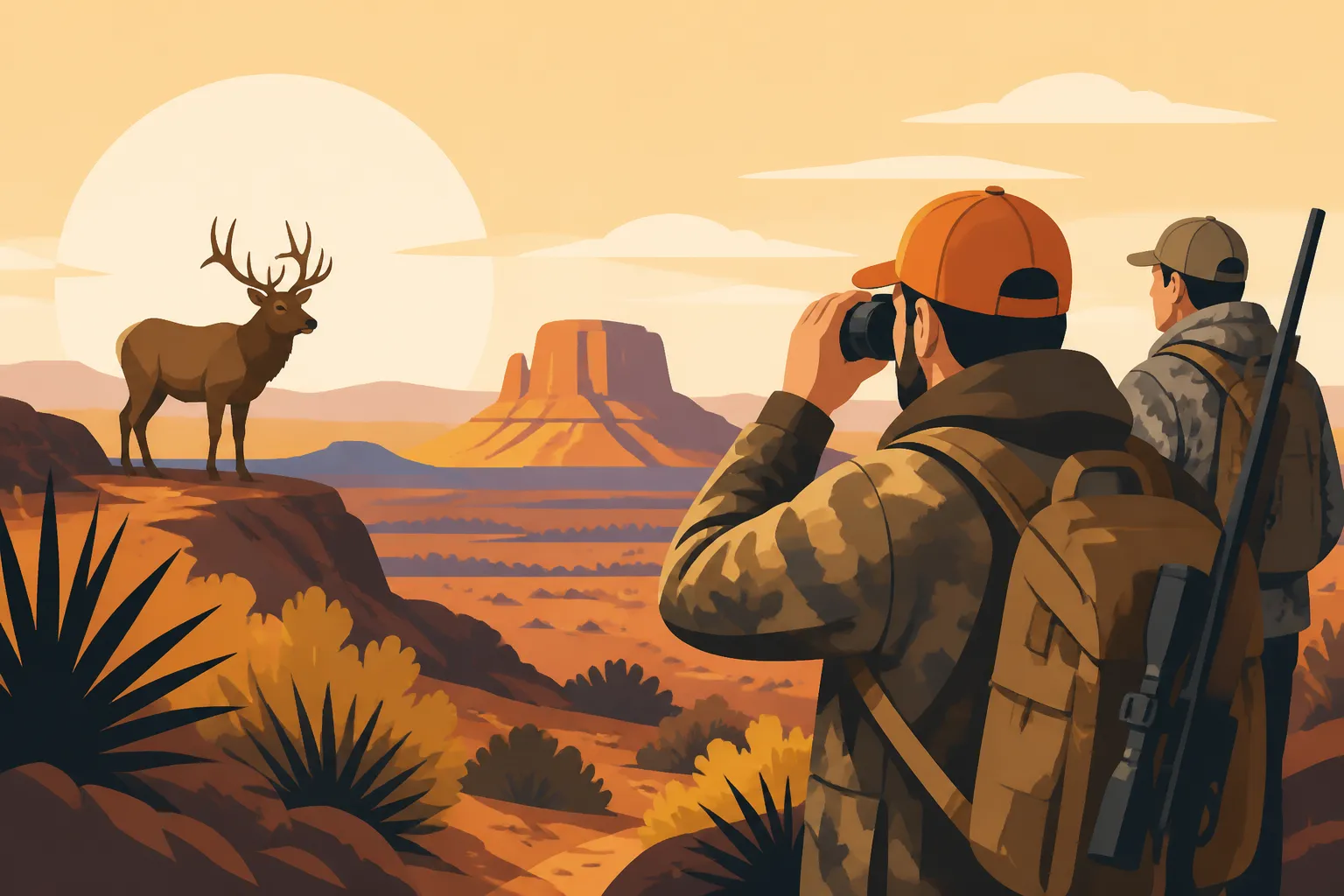
When your outfitter or guide joins you for those first couple of days, expect them to be actively involved in trying to locate game. This could involve anything from extensive glassing from a vantage point, still-hunting through timber, or hitting historical game movement corridors. They'll be evaluating conditions, reading fresh sign, and making tactical decisions based on their deep understanding of the unit. These days are often a crash course in how to hunt that specific area.
For an elk hunt in the Gila, for instance, your outfitter might spend those days covering significant ground, bugling, listening for responses, and teaching you how to navigate the complex terrain. If it's a desert mule deer hunt, they might focus on covering ground with binoculars, locating bedding areas, and planning stalks. These aren't just "check the box" days; they are designed to provide you with the benefit of their expertise, giving you the best possible chance at success. It's an opportunity to learn the ropes, understand the local conditions, and benefit from someone who has likely spent hundreds if not thousands of hours in that very landscape.
Setting Expectations for the Hunt
It's vital to have a clear understanding of what "guided" means for your specific hunt package. Will your outfitter be with you every single day, from sunrise to sunset? Or will they be there for the minimum two days and then check in with you periodically while you hunt independently? This needs to be clarified and ideally, put into your written contract. Many hunters opt for "semi-guided" or "drop camp" arrangements where the outfitter sets up camp and provides initial guidance, but direct accompaniment is limited to the minimum or slightly more.
If you're hiring an outfitter primarily for the draw odds advantage, and your plan is largely to hunt on your own after the initial requirement, that's perfectly fine—as long as it aligns with the outfitter's services and the NMDGF rules. Just make sure your expectations match what your outfitter is providing and that you’ve discussed this in detail. A transparent conversation about the level of involvement, communication protocols, and any equipment provided (like horses for packing, if applicable) will prevent misunderstandings and ensure a smoother hunt.
When the Outfitter Can't Be Physically Present
Life happens, and sometimes, despite best intentions, an outfitter or guide might face an unavoidable situation that prevents them from being in the field for the required two days. It's a scenario no one wants, but it's important to know the rules and your options should it arise. This is where the intricacies of New Mexico's regulations come into play, designed to maintain fairness and accountability.
Permissible Substitutions and Transfers
New Mexico regulations do allow for some flexibility, but it's not a free-for-all. If your contracted outfitter cannot personally fulfill the accompaniment requirement, they generally have two primary options:
- Registered Guide Substitution: The most common solution is for the outfitter to send a registered guide who works for their outfitting business to accompany you instead. This guide must be properly licensed and registered with the NMDGF. This is a standard operating procedure for many larger outfitting businesses, allowing them to manage multiple clients in different areas.
- Outfitter Transfer (Limited): In very specific circumstances, and with NMDGF approval, an outfitter might be able to transfer your contract to another registered outfitter. This is less common and usually involves unforeseen emergencies. It's not something to be relied upon, and it requires official notification and approval from the state.
What's absolutely critical is that any substitute or transfer must be to another properly licensed individual or business. Your outfitter cannot simply send a buddy or an unlicensed helper to fulfill the requirement. The person accompanying you for those two days must be operating legally under the umbrella of a New Mexico-registered outfitting license. This ensures that the professional standards and accountability built into the system are maintained.
Understanding Non-Compliance and Consequences
Failing to meet the two-day accompaniment rule carries serious consequences. If the NMDGF determines that the rule was not followed, your tag could be invalidated, meaning you would not be able to legally harvest an animal, or your harvested animal could be confiscated. Furthermore, both you as the hunter and the outfitter could face citations, fines, and potentially even suspension of hunting privileges or revocation of the outfitter's license. These are not minor penalties.
This strict enforcement underscores the importance the NMDGF places on upholding the integrity of the outfitter draw system. It's a safeguard against abuse and a way to ensure that the economic benefits intended for outfitters are genuinely earned through providing professional services. As a client, you have a responsibility to ensure your outfitter is aware of and planning to fulfill this requirement. This makes a clear The New Mexico Guide-Client Contract Requirement absolutely paramount, explicitly outlining how the accompaniment will be handled. If an outfitter is vague or dismissive about this rule, that should be a major red flag for you as a prospective client.
Selecting and Vetting a Reputable New Mexico Outfitter
Choosing an outfitter is one of the most important decisions you'll make when planning a guided hunt in New Mexico. It's an investment, not just in money, but in your time, effort, and dreams. A good outfitter can make your hunt unforgettable, while a poor choice can lead to disappointment and frustration. The "two-day rule" is just one piece of the puzzle; you need to look at the whole picture to ensure a successful partnership.
Key Questions to Ask Before Signing a Contract
Before you commit, arm yourself with a list of pointed questions. Don't be shy; a professional outfitter will appreciate your diligence. Here are some essentials, building on the accompaniment rule:
- How will the two-day accompaniment rule be met? Will it be you, personally, or one of your guides? Which guide? What specific days are planned?
- What is your experience in the specific unit and season I'm applying for? How long have you hunted there? What are typical success rates?
- What is included in the price? Be specific: food, lodging, transportation in the field, field care of game, packing out meat, taxidermy prep? Are tags included (they almost never are, but clarify)?
- What is your contingency plan for emergencies or unforeseen circumstances (e.g., bad weather, guide illness)?
- Can you provide a list of recent references (last 1-2 years)? This is crucial.
- What are your policies on deposits, cancellations, and refunds, especially if I don't draw a tag?
- How do you handle wounded game?
- What is the client-to-guide ratio on your hunts?
These questions, detailed in posts like Questions to Ask a New Mexico Outfitter, will give you a comprehensive understanding of what to expect. Don't let an outfitter rush you; take your time, get clear answers, and be confident in your choice.
Researching Outfitter Credentials and References
Once you have potential outfitters in mind, do your homework. Start by checking if they are properly licensed and registered with the NMDGF. This is public information and easily verifiable. A legitimate outfitter will have no problem providing their license number. Beyond that, delve into their reputation. Websites like BookYourHunt or GoHunt can be valuable resources for finding outfitters and reading reviews. While not exhaustive, they can provide a starting point and sometimes offer a broad perspective on an outfitter's operations and client satisfaction.
However, the most valuable research comes from talking to previous clients. When you get references, don't just send a text. Pick up the phone. Ask specific questions: Did the outfitter meet their obligations? Was the guide knowledgeable? How was the camp and food? Was the atmosphere positive? What were the challenges? A few honest conversations will tell you more than any brochure. Be wary of an outfitter who won't provide references or only provides glowing, vague testimonials. Real-world experiences, both good and bad, help paint a realistic picture. This vetting process is vital and something we cover in depth in Vetting a New Mexico Outfitter Before You Send a Deposit.
The Importance of a Solid Guide-Client Contract
A clear, written contract is your best friend. This document should spell out every detail of your hunt, including dates, species, unit, price, inclusions, exclusions, and, critically, how the two-day accompaniment rule will be met. It should also detail cancellation policies, refund terms (especially regarding draw results), and what happens in case of a non-harvest or a wounded animal.
A comprehensive contract protects both you and the outfitter by clearly defining expectations and responsibilities. Never rely solely on verbal agreements. Read every line of the contract carefully, and if you have questions, get them clarified in writing before you sign. If an outfitter is hesitant to provide a detailed contract or pushes you to sign something vague, consider it a significant red flag. This legal agreement is the framework for your entire hunting experience and ensures that the requirements, like the two-day accompaniment, are formally recognized.
The Broader Benefits of a Guided New Mexico Hunt
While the two-day accompaniment rule is a specific regulatory detail, it hints at the larger value proposition of hiring an outfitter. Beyond just potentially improving your draw odds, a guided hunt in New Mexico offers a suite of benefits that can significantly enhance your experience, especially if you're new to the state's diverse and often challenging terrain.
Logistics and Local Knowledge
New Mexico is a vast state with incredibly varied landscapes, from the high peaks of the Sangre de Cristos to the desert ranges of the south. Navigating these areas, especially the sprawling public lands, requires extensive local knowledge. An outfitter brings exactly that: intimate familiarity with specific units, including game movements, water sources, bedding areas, and travel corridors. They know where the animals typically are during certain times of the season, influenced by factors like weather, feed, and pressure.
Beyond animal behavior, outfitters handle all the complex logistics. This can include setting up comfortable camps, providing meals, arranging transportation (including horses or ATVs for access and packing), and navigating regulations for public land use. For an out-of-state hunter, tackling these logistics alone can be daunting and time-consuming. A good outfitter frees you up to focus on the hunt itself, maximizing your precious time in the field. They become your local expert, your quartermaster, and your strategic partner, allowing you to immerse yourself fully in the hunting experience without getting bogged down in the minutiae of planning. Many successful hunters attribute their ability to secure an animal to the outfitter's superior knowledge of Reading a New Mexico Hunt Code Before You Apply.
Enhanced Safety and Preparedness
Hunting in New Mexico, particularly in its more remote wilderness areas like the Gila, can present significant challenges and potential dangers. Extreme weather, rugged terrain, high elevations, and the sheer vastness of the landscape demand a high degree of preparedness. Outfitters are professionals who are well-versed in navigating these conditions safely. They typically carry extensive first-aid kits, satellite communication devices for emergencies, and have experience with wilderness protocols.
Furthermore, an outfitter or guide provides an extra layer of safety simply by being a second set of eyes and hands in the field. They can assist with navigation, help prevent accidents, and respond effectively if one occurs. Their presence means someone is always aware of your location and well-being. This enhanced safety is a huge, often overlooked, benefit, especially for solo hunters or those less experienced in backcountry environments. Knowing that you're in capable hands allows you to focus more on the hunt and less on potential hazards. This can be especially critical when considering the Altitude Preparation for a Gila Elk Hunt.
Financial Considerations and Value
Let's be real: hiring an outfitter in New Mexico is a significant financial investment. The costs can range widely depending on the species, duration, and level of service. However, understanding what you're paying for and comparing it to the alternatives helps contextualize that cost and assess the true value.
Understanding Outfitter Fees and Inclusions
Outfitter prices vary dramatically. A fully guided, one-on-one elk hunt in a prime unit might run considerably more than a semi-guided mule deer hunt. Generally, these fees cover the outfitter's time, expertise, use of their equipment (horses, camp gear, vehicles), food, and lodging. What's often not included are your hunting license and tag fees (which you must secure separately, usually through the draw), travel to and from New Mexico, meat processing, taxidermy, and tips for your guides. It's crucial to get a detailed breakdown of all costs and exclusions.
Here’s a simplified look at what services typically entail:
| Service Level | Typical Accompaniment | Key Inclusions | Price Range (Shape) |
|---|---|---|---|
| Drop Camp | Minimal (set up/take down, pack in/out) | Camp gear, food (sometimes), game retrieval | Lower end of guided hunts |
| Semi-Guided | 2-3 days actively guided, then check-ins | Camp, food, some guiding, local intel | Mid-range guided hunts |
| Fully Guided | Full duration (1:1 or 2:1 client-to-guide) | All logistics, food, lodging, active guiding | Higher end of guided hunts |
Note: Specific prices, fees, and inclusions vary wildly by outfitter, species, unit, and hunt length. Always check directly with the provider for current figures and what is specifically included in their packages.
Many outfitters also offer different packages, such as drop camps where they pack you and your gear into a remote location and retrieve you later, providing minimal direct guiding. These are generally less expensive but still fulfill the outfitter draw requirements if the outfitter (or their guide) is with you for the mandatory two days. Be sure to ask about all options and what each entails, especially for a specific species like elk. A typical What a Guided New Mexico Elk Hunt Costs will provide more detail.
Comparing DIY vs. Guided Hunt Costs
When considering the cost of an outfitter, it's helpful to compare it to the "all-in" cost of a do-it-yourself (DIY) hunt. While a DIY hunt eliminates outfitter fees, it introduces other expenses:
- Gear: You'll need to purchase or rent all your own camping gear, cooking equipment, optics, GPS, communication devices, and potentially pack frames or game bags.
- Travel: Fuel costs for extensive driving, potentially a higher-clearance vehicle rental.
- Food: All your meals and snacks.
- Scouting: Time and travel expenses for preseason scouting trips, which are almost essential for a successful DIY public land hunt.
- Time: The intangible cost of planning, researching, and executing all logistics yourself.
For a nonresident, the costs associated with getting to New Mexico, setting up a proper camp, and acquiring the necessary knowledge to hunt unfamiliar terrain can quickly add up. For example, if you factor in the value of your time, the cost of specialized equipment, and the potentially lower success rate without an outfitter, the perceived gap between a DIY and guided hunt might shrink. Ultimately, the decision comes down to your budget, experience level, available time, and how much you value the increased odds, local expertise, and logistical support that an outfitter provides. Sometimes, the investment in a guided hunt is an investment in a significantly higher chance of success and a more enjoyable, less stressful experience. Consider The All-In Cost of a New Mexico Elk Hunt for a full breakdown.
Maximizing Your Outfitter Experience
Hiring an outfitter isn't just a transaction; it's a partnership. To truly get the most out of your investment, especially given the two-day accompaniment rule, you need to actively engage in the process. Your preparation and participation are just as important as your outfitter's expertise.
Effective Communication Throughout the Hunt
Just as pre-hunt communication is vital, maintaining open and honest dialogue during the hunt itself is paramount. Be clear about your physical limitations, if you're feeling tired, or if you need a break. Don't push yourself beyond your limits just to impress your guide; it can lead to dangerous situations or missed opportunities. Conversely, if you have questions about the terrain, animal behavior, or strategy, ask them! A good guide loves to share their knowledge.
If something isn't meeting your expectations, address it respectfully and promptly. For example, if you're not seeing the type of country you discussed, or if you feel rushed, communicate that. Most outfitters want their clients to have a positive experience and will do their best to adjust. Conversely, listen to your guide's advice. They're the expert in that environment, and their suggestions are usually based on years of experience. Your active participation in the dialogue makes the entire hunt more efficient and enjoyable.
Post-Hunt Follow-Up and Feedback
Once the hunt is over, your interaction with the outfitter shouldn't necessarily end. This is a great time to provide constructive feedback, both positive and areas for improvement. Honest feedback helps outfitters refine their services and ensures future clients have even better experiences. If you had a fantastic hunt, consider writing a testimonial or becoming a reference for the outfitter. Positive word-of-mouth is incredibly valuable in the outfitting industry.
You might also have follow-up questions regarding meat processing, taxidermy, or shipping your harvest home. A professional outfitter will continue to assist you with these details. Building a good relationship with your outfitter can even open doors for future hunts or provide invaluable contacts for other hunting opportunities. By being a respectful, communicative, and engaged client, you contribute to a successful hunt for yourself and foster a positive reputation for the outfitter, benefiting the entire hunting community.
Disclaimer
This article is for general informational purposes only and does not constitute professional advice. Laws, prices and regulations vary by location and change over time. Consult a qualified professional for guidance on your specific situation.