Crossing a State Line With a Harvested Animal
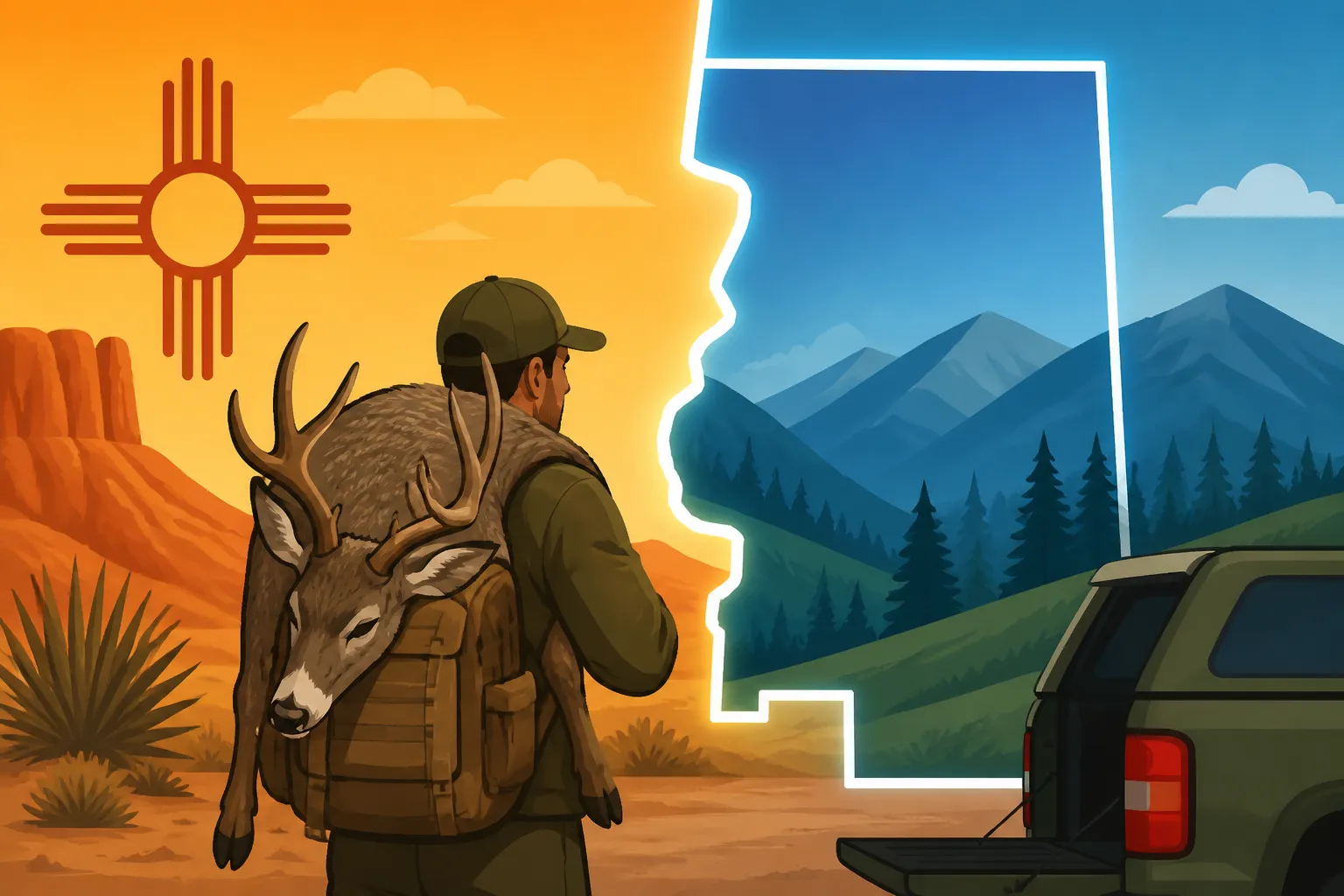
You’ve just had an incredible hunt in New Mexico – maybe you punched your tag on a magnificent bull elk in the Gila or brought down a desert mule deer in the southern units. The adrenaline is still coursing, and you’re already dreaming of that delicious venison. But then a thought hits you: how do I even get this animal home? The idea of crossing state lines with a harvested animal can bring on a whole new wave of anxiety, especially with all the talk about disease and varying regulations. This guide is here to walk you through the ins and outs of legally and safely transporting your hard-earned New Mexico harvest back to your home state, ensuring your trophy and meat make it without a hitch.
Understanding the Fundamentals of Interstate Game Transport
The moment you decide to pursue big game in another state, you’re signing up for a bit more homework than just knowing the local regulations. It's not enough to understand New Mexico's rules; you also need to be keenly aware of the laws in any state you'll be driving through, and, critically, the state where you intend to process and consume your harvest. Many hunters assume their home state rules apply, or that if it's legal where they shot it, it's legal everywhere. Unfortunately, that's often not the case, and ignorance of these laws can lead to hefty fines, confiscation of your game, or even more serious legal trouble.
The Fundamental Rule: Know Before You Go
Before you even pull out of your driveway, or certainly before you drive out of the New Mexico game unit, you need to understand the regulations of your destination state and any states you might be passing through. Each state has its own specific set of rules regarding the importation of game animals, especially concerning certain parts of the carcass. These rules are primarily designed to prevent the spread of wildlife diseases, most notably Chronic Wasting Disease (CWD). Don't rely on what you heard from a buddy or something you read on an old forum post. Go directly to the official wildlife agency websites for every state involved in your journey. Print out the relevant sections or save them to your phone, just in case you need to reference them during a stop.
The consequences of not knowing can be severe. Imagine spending thousands of dollars and countless hours on a dream hunt, only to have your hard-earned meat and trophy confiscated at a state border inspection. It's not just about the monetary loss; it's the emotional blow of losing a prized animal and the potential legal headache. Game wardens are doing their job to protect wildlife resources, and they operate under clear guidelines. By doing your research upfront, you show respect for those efforts and ensure a smooth, uneventful trip home. This diligent preparation is as much a part of a successful hunt as sighting in your rifle or Scouting New Mexico State Trust Land Fourteen Days Out.
CWD Regulations: The Biggest Hurdle
Chronic Wasting Disease (CWD) has become the single biggest factor influencing interstate carcass transport rules. CWD is a neurological disease that affects deer, elk, moose, and caribou. It's always fatal, and there is currently no vaccine or treatment. While there's no strong evidence of CWD transmitting to humans, wildlife agencies are rightly cautious about limiting its spread between animal populations. The prions (misfolded proteins) that cause CWD are concentrated in specific tissues, particularly nervous system and lymphatic tissues. This is why many states prohibit the transport of whole carcasses, or certain high-risk parts, from areas where CWD has been detected.
New Mexico actively monitors for CWD within its deer and elk populations. If you’re hunting in a unit where CWD has been detected, or if you harvest an animal that appears sick, the rules become even stricter. How Chronic Wasting Disease Testing Works is important for understanding the science behind these regulations. You might be required to submit samples for testing, and the carcass may be held until results are known. Even if your animal tests negative, the general regulations regarding parts deemed "high-risk" for CWD transmission still apply in many states. This is a critical point that trips up many hunters; just because your animal tested clean doesn't mean you can bypass the general transport rules.
New Mexico's Carcass Transport Regulations
New Mexico, like most states, has specific rules about how you must handle a harvested big game animal if you intend to transport it, especially out of state. These regulations are designed to facilitate disease management and ensure ethical hunting practices are followed. Knowing these guidelines before your hunt begins can save you a lot of grief and ensure your meat and antlers arrive safely at your doorstep.
What You Can Take Out of New Mexico
Generally, New Mexico's regulations, and those of many other states for importation, focus on allowing "low-risk" parts to cross state lines. This means you’ll primarily be transporting deboned meat, clean skull plates, hides, and taxidermy-ready skulls.
Here’s a breakdown of what is typically permissible:
- Deboned Meat: This is always the safest bet. Meat that has been completely removed from the bone is considered very low risk for CWD transmission. This means you'll need to field dress your animal thoroughly, then bone out all the muscle tissue. This also significantly reduces weight and volume, making transport much easier.
- Antlers or Horns (with clean skull plate): If you're bringing home a trophy, the antlers or horns can be transported, but they must be attached to a clean skull plate. This means all brain and spinal cord tissue, and any other soft tissue, must be removed. Many hunters will simply saw off the skull cap just below the eye sockets and remove all remaining tissue. This is especially important for species like oryx, where the horns are bone-like structures.
- Hides/Capes: Hides or capes are generally permitted, provided they are completely free of all meat and brain tissue. If you plan to have a shoulder mount done, ensure the cape is properly handled and cooled immediately. Many states prefer hides to be tanned before transport, but raw hides are often allowed if properly cleaned and cooled.
- Teeth: Teeth are generally allowed, often used for aging purposes, as they are not considered high-risk for CWD.
- Finished Taxidermy Products: Once an animal has been fully processed and turned into a taxidermy mount, it poses virtually no CWD risk and can be transported freely. The key here is "finished" – a raw cape or skull that hasn't been cleaned is still subject to the rules.
Remember that Evidence of Sex Requirements on a Carcass is also crucial. Even with deboned meat, some remnant of the sex organs might need to be kept with the meat or hide until you reach your final destination or home. Always double-check the current New Mexico regulations for the species you are hunting, as these can occasionally change.
What You Cannot Take Out (or Must Process First)
The parts you cannot take out of New Mexico, or must process extensively before crossing state lines, are those considered high-risk for CWD transmission. These include:
- Whole Carcasses: You cannot transport a whole carcass, or even a partially field-dressed carcass with the spinal column and brain material intact, across state lines from New Mexico into most other states. This is the most common violation.
- Brain and Spinal Cord: These tissues are prime locations for CWD prions. Any part of the head that contains brain matter (other than a clean skull plate for a trophy) or any part of the spinal column must be removed and left in New Mexico, or disposed of in an approved landfill. This includes the entire vertebral column, which is why deboning is often the easiest solution.
- Lymph Nodes: Lymph nodes, often found near major muscle groups and in the gut cavity, are also high-risk tissues. While difficult for the average hunter to identify and remove all of them, the process of deboning and thorough cleaning helps mitigate this risk.
- Spleen, Tonsils, Eyes: These organs can also harbor CWD prions and are generally not permitted for interstate transport.
The best practice for avoiding issues is to perform thorough Field Dressing in Desert Heat if you're hunting early in the season, and then proceed with complete deboning of the carcass. This means separating all meat from the bone structure, especially the spinal column and skull. If you're not comfortable doing this yourself, consider utilizing a local New Mexico meat processor. They are well-versed in the regulations and can prepare your meat and trophy parts according to the rules, relieving you of the stress. Always ensure your animal is tagged properly as soon as it's harvested. This is part of the Mandatory Reporting After a New Mexico Harvest process, and your tag is your legal proof.
Navigating Your Destination State's Rules
So, you've successfully harvested your animal, field-dressed it, and understand New Mexico's export rules. Now comes the equally critical step: understanding the import rules of your home state and any states you'll be traveling through. This is where many hunters get caught off guard, assuming that what's legal to export is automatically legal to import.
Researching Your Home State or Intermediate States
This step cannot be overstated. Before your boots even hit New Mexico soil, you should have already looked up the game importation regulations for your home state (and any states you'll drive through). Every state's wildlife department website will have a section on CWD and carcass transportation. Look for terms like "importation of cervid carcasses," "CWD regulations for hunters," or similar phrases.
For example, if you live in Arizona and hunted New Mexico, you need to know what Arizona permits you to bring back. Arizona may have different rules than, say, Texas or Colorado. Some states might have blanket bans on certain parts from any state with CWD, while others might have a list of specific counties or units that are restricted.
Here’s how to approach this research:
- Identify All States: List your home state and every single state you will drive through, even if it's just a few miles on an interstate highway.
- Visit Official Websites: Go directly to the state's official Game and Fish or Wildlife Department website. Do not rely on third-party sites for this critical information, as regulations can change.
- Search for "CWD Carcass Transport" or "Importation Rules": Look for specific regulations related to cervids (deer, elk, moose) and CWD.
- Note Key Restrictions: Pay close attention to lists of prohibited parts (e.g., brain, spinal cord, skull with brain material), required processing (e.g., deboned meat only), and any specific documentation needed.
- Print or Save: Keep copies of these regulations with you, preferably physical printouts, as cell service can be spotty in many areas.
Tools like onX Hunt and GoHunt are invaluable for scouting and understanding regulations within a unit, like figuring out Public Land Opportunity in the North or navigating a unit boundary on a forest map. While they focus heavily on maps and in-field data, many of these platforms also link directly to state game and fish regulations. Use them to quickly access the official sources for the most up-to-date information on carcass transport rules. Just remember, these apps are powerful tools, but the ultimate authority is always the official state wildlife agency website.
Practical Tips for Smooth Transport
Once you understand all the regulations, putting them into practice effectively will make your journey home much smoother.
- Packaging and Labeling:
- Meat: Deboned meat should be thoroughly cooled (consider Getting Meat Cooled on an Early Season Hunt) and then ideally double-bagged in heavy-duty freezer bags or vacuum-sealed. Label each package clearly with the species, date of harvest, and your name/license number.
- Skull Plates/Horns: Once cleaned, these can be wrapped in plastic and secured. If you're using a cooler, make sure it’s robust enough to handle the weight and rough roads.
- Hides: Hides should be salted liberally and folded, then placed in a breathable bag (like a burlap sack) or a heavy-duty cooler. Avoid plastic bags for long-term storage as they trap moisture and can cause spoilage.
- Coolers and Ice: Invest in high-quality coolers. For long drives, block ice lasts much longer than cubed ice. Dry ice can also be an option for freezing meat, but be aware of proper ventilation if using it inside a vehicle.
- Professional Processing: If time or facilities are an issue, seriously consider having your animal processed at a reputable facility in New Mexico. They know the rules, have the equipment, and can pack your meat and trophy parts correctly for transport. This often saves a lot of headaches, especially after a tough hunt for a large animal like an elk in the New Mexico Elk Are Why the Gila Draws Everyone units.
- Documentation Accessibility: Keep your New Mexico hunting license, tag, and copies of all relevant carcass transport regulations readily accessible, not buried in a duffel bag. If you are stopped by law enforcement or a game warden, you’ll want to present this information quickly and clearly.
Documenting Your Harvest and Journey
Beyond just having the right parts of the animal, having your paperwork in order is crucial. Think of it as your hunting resume for the road. A game warden might ask you to present your license, tag, and perhaps even proof that you understand and are adhering to carcass transport rules. Being prepared demonstrates responsibility and respect for wildlife laws, making any potential interaction quick and positive.
The Importance of Your Tag and License
Your New Mexico hunting license and the physical tag attached to your harvested animal are your primary legal documents. These prove that you legally acquired the animal during a valid season and unit. Reading a New Mexico Hunt Code Before You Apply helps you understand exactly what your tag is valid for. The tag, once properly filled out and affixed to the carcass (or the largest portion of meat, or antlers/horns as required), is your animal's "passport." It must remain with the specified parts of the animal throughout transport until it reaches its final destination for processing or taxidermy.
Always keep your license on your person, even when you're just driving. It contains vital information that links you to the hunt. If you've been on a Primitive Weapons Hunting in New Mexico's Unit 15 hunt, your license will reflect that specific weapon choice and unit. The tag itself confirms the species, date, and often the unit of harvest. This transparency is key to demonstrating compliance with regulations.
Keeping Your Paperwork Accessible
Imagine this scenario: You’re driving through a small town in Texas after a successful New Mexico elk hunt. A state trooper pulls you over for a routine traffic stop. During the interaction, they notice your coolers in the back. A polite inquiry turns into a request to see your hunting license and proof of legal harvest. If you're fumbling through a packed truck, unable to find your documents, it immediately raises red flags.
Instead, keep a small folder in your glove compartment or center console containing:
- Your valid New Mexico hunting license.
- The completed tag from your harvested animal (if it’s not affixed to the actual meat/antlers, have photos of it securely attached).
- Copies of New Mexico's carcass transport regulations.
- Copies of your home state's (and any intermediate states') importation regulations.
- Any CWD test results, if applicable.
Having this information readily available shows you're prepared and have nothing to hide. It makes the warden's job easier and gets you back on the road faster. It’s also wise to have contact information for the New Mexico Department of Game and Fish, and your home state’s wildlife agency, in case a complex question arises that you can’t answer yourself. Sometimes just a quick phone call can clear up any ambiguity.
Here's a quick summary of general rules:
| Carcass Part | New Mexico Export Rules (General) | Destination State Import Rules (General Best Practice) | Notes |
|---|---|---|---|
| Whole Carcass | NOT Permitted (must be processed) | NOT Permitted (from CWD-affected areas) | High risk for CWD transmission. |
| Deboned Meat | Permitted (must be removed from bone, cooled) | Permitted (lowest risk) | Safest and most common method. |
| Antlers/Horns with Skull Plate | Permitted (must be clean, free of brain/spinal tissue) | Permitted (must be clean) | All soft tissue, especially brain, must be removed. |
| Hides/Capes | Permitted (must be clean, free of meat/brain tissue) | Permitted (often preferred to be tanned or thoroughly cleaned/salted) | Ensure proper cooling and preservation. |
| Brain, Spinal Cord, Lymph Nodes, Spleen, Tonsils, Eyes | NOT Permitted (must be left in NM or disposed of appropriately) | NOT Permitted | High risk CWD vector. |
| Finished Taxidermy Mounts | Permitted | Permitted | Once fully processed, CWD risk is negligible. |
| Required Documentation | NM Hunting License, Valid Tag (affixed) | NM License, Tag, Proof of Compliance with all state transport rules | Keep accessible; may need CWD test results if applicable. |
This table provides a general overview, but always consult the most current regulations from the official New Mexico Department of Game and Fish website and the wildlife agencies of any states you plan to enter or pass through. Don't leave it to chance!
Disclaimer
This article is for general informational purposes only and does not constitute professional advice. Laws, prices and regulations vary by location and change over time. Consult a qualified professional for guidance on your specific situation.