Do You Need a Permit for New Mexico Trust Land?
The vast landscapes of New Mexico call to every hunter, promising wide-open spaces and incredible opportunities. But when you start looking at maps, you inevitably run into those sections marked "State Trust Land," and the big question pops into your head: Do I need a special permit to hunt there? It's a common point of confusion, and frankly, the rules around public access on various land designations can feel like deciphering ancient hieroglyphs. This guide is here to untangle that knot, clarify exactly what your New Mexico hunting license means for State Trust Land, and ensure you're fully prepared to access and enjoy these vital hunting grounds legally and responsibly.
Unpacking New Mexico State Trust Land: What It Is and How It Works
Before we dive into permits, it’s helpful to understand what New Mexico State Trust Land (STL) actually is. It’s not simply "public land" in the same way that a National Forest or Bureau of Land Management (BLM) acreage is. State Trust Lands are managed by the New Mexico State Land Office with a very specific, singular mission: to generate revenue for specific public institutions, primarily schools and universities, as well as hospitals and other beneficiaries. This means every action taken on trust land, from grazing leases to oil and gas extraction, and yes, even recreational access, is ultimately geared toward maximizing income for these beneficiaries. This core mission shapes how access is granted and regulated.
The Purpose and Management of State Trust Land
Imagine a vast endowment, but instead of stocks and bonds, it's millions of acres of land. That's essentially what State Trust Land represents. When New Mexico became a state, the federal government granted these lands to be held "in trust" for the benefit of these public institutions. The State Land Office acts as the trustee, responsible for managing these lands wisely to ensure a steady stream of income. This makes their management different from federal agencies like the Forest Service or BLM, which often have multiple-use mandates including recreation and conservation alongside resource extraction. On Trust Land, revenue generation is paramount, which can sometimes lead to different rules and a different feel than other public land types.
Because the primary goal is revenue, the State Land Office leases out parcels for various activities, including grazing cattle, energy development, and even some commercial recreation. This means that while you might be hunting on State Trust Land, there could very well be active ranching operations, oil wells, or other commercial enterprises taking place simultaneously. Understanding this foundational difference helps explain why certain restrictions or requirements might be in place that you wouldn't find on, say, a National Forest. It's a working landscape, first and foremost, contributing directly to the future of New Mexico's citizens through its beneficiaries.
Your Hunting License: The Key to Trust Land Access
Now, for the big question: Do you need a special permit for hunting on New Mexico State Trust Land? For hunting, the answer is a resounding no, not typically. Your valid, current New Mexico hunting license itself serves as your permit for recreational hunting access on State Trust Land. This is a critical distinction and often a source of relief for hunters who worry about navigating a maze of additional paperwork. The New Mexico Department of Game and Fish (NMDGF) has a long-standing agreement, or easement, with the State Land Office. This agreement essentially grants public hunting access to Trust Lands statewide to anyone holding a valid NMDGF hunting license.
This easement is a huge benefit to hunters, as State Trust Land makes up a significant portion of New Mexico's accessible acreage, often connecting larger blocks of federal land or providing crucial corridors. Without this agreement, many areas would be inaccessible or require individual permits, which would be a bureaucratic nightmare for both hunters and the State Land Office. So, when you purchase your annual hunting license, you're not just buying the right to pursue game; you're also buying your general access pass to millions of acres of State Trust Land. Think of it as an all-in-one package for your hunting adventures across a vast and diverse landscape. You can learn more about this in A New Mexico License Is Your State Trust Land Easement.
The Agreement That Makes It All Possible
This reciprocal agreement between the New Mexico State Land Office and the Department of Game and Fish is truly a cornerstone of public land hunting in the state. For decades, it has ensured that hunters holding a valid license have the privilege to hunt game on these lands without needing to jump through extra hoops for a separate access permit. This partnership recognizes the value of hunting as a recreational activity and its role in wildlife management while still allowing the State Land Office to fulfill its fiduciary responsibilities to its beneficiaries.
It’s an understanding that balances the economic interests of the trust with the public's desire for outdoor recreation. However, it's important to remember that this access is specifically for hunting activities. Other recreational uses, such as mountain biking, off-roading for pleasure, or even just hiking without a hunting purpose, might fall under different rules or require separate permits from the State Land Office. So, while your hunting license opens the gate for your pursuit of game, always be mindful of the primary purpose of your presence on Trust Land. This access isn't a free-for-all for all types of recreation, but a targeted allowance for licensed hunters.
Practical Considerations for Hunting State Trust Land
Knowing that your hunting license grants you access is the first step, but truly navigating State Trust Land effectively requires a bit more savvy. These lands are often interspersed with private holdings or other public land types, creating a complex patchwork. Being prepared with the right tools and knowledge can save you a headache in the field and ensure you stay on the right side of the law.
Pinpointing Trust Land Boundaries with Mapping Tools
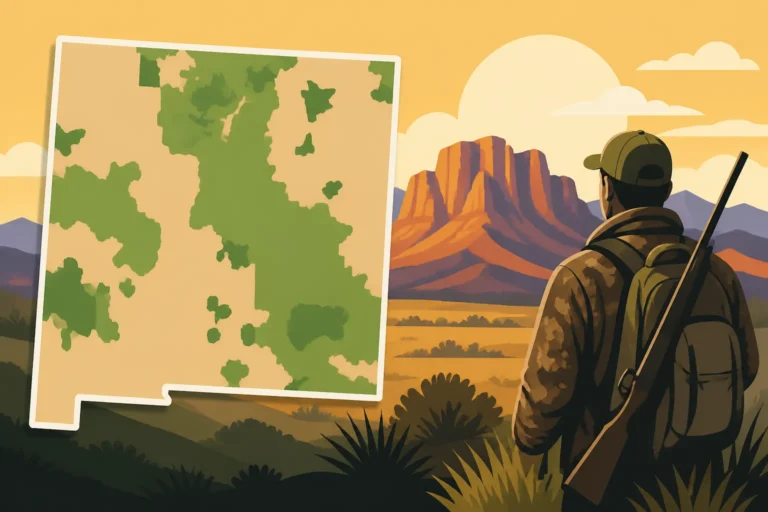
One of the biggest challenges with hunting State Trust Land is simply knowing where it is. Unlike clearly marked federal lands with entrance signs, Trust Land boundaries can be subtle, unmarked, and often border private property. This is where modern mapping applications become absolutely invaluable. Tools like onX Hunt and GoHunt are indispensable for identifying land ownership boundaries in real-time right on your phone or GPS device. You can download the unit layers before you head out, ensuring you have detailed maps even when cell service is nonexistent, which is often the case in prime New Mexico hunting country.
These apps display color-coded overlays that clearly show parcels designated as State Trust Land, National Forest, BLM, private, or tribal lands. Before you even set foot on the ground, you can use these tools to E-Scouting a New Mexico Unit Before the Season, plan your approach, identify potential access points, and, critically, distinguish between accessible Trust Land and adjacent private property that may require written permission. Relying solely on paper maps from a decade ago is a recipe for accidental trespass in today's checkerboard landscape. Always verify your location, especially when closing in on a game animal near a perceived boundary. Reading a Land Ownership Layer Correctly is a skill every modern hunter needs.
Scouting Protocols: The 14-Day Rule
Even though your hunting license grants you access for the hunt itself, there's a specific rule regarding scouting State Trust Land. You are permitted to scout Trust Land for your upcoming hunt, but only within a 14-day window immediately preceding the start date of your specific hunting season. This means you can't just drive around or walk through Trust Land year-round for general scouting purposes. This rule is designed to balance public access with the State Land Office's management objectives, ensuring that extended recreational use doesn't interfere with other leaseholders or management activities.
This 14-day window is pretty strict, so make sure you mark your calendar. If your elk hunt opens on September 15th, you can't be out there scouting on August 1st. You'd be limited to activities on Trust Land starting September 1st. This is a key piece of information many hunters overlook, often leading to unintentional violations. Plan your scouting trips carefully, perhaps combining them with visits to adjacent federal lands that don't have this restriction. For more specifics, check out You May Scout New Mexico Trust Land 14 Days Before a Hunt and The 14-Day Scouting Window on Trust Land.
Navigating Access: Private Inholdings and Right-of-Way
New Mexico's landscape is a mosaic of different land ownerships, and State Trust Land parcels are frequently surrounded by or interspersed with private property. This can create situations where a piece of Trust Land is technically accessible, but you might have to cross private property to get to it. In New Mexico, simply seeing "public land" on your map doesn't automatically grant you permission to cross intervening private land. You must obtain written permission from the landowner to cross private property, even if your ultimate destination is public Trust Land.
This is a critical point that can lead to trespass charges if ignored. Always plan your routes carefully, identifying established public access roads or routes that avoid private land. If you absolutely must cross private land, make the effort to contact the landowner well in advance and secure written permission. Don't assume implied permission. The NMDGF and State Land Office are very clear on this. For more guidance on this complex issue, refer to Crossing Private Ground to Reach New Mexico Public Land and Getting Written Permission in New Mexico. This diligent planning not only keeps you legal but also fosters positive relationships between hunters and private landowners.
Rules of Engagement: What to Know Before You Go
Hunting on State Trust Land comes with its own set of rules and courtesies that differ from federal lands. Because these lands are managed for revenue generation and often have active agricultural or industrial leases, hunters need to be extra mindful of their actions to avoid conflicts and ensure continued access.
Motorized Vehicle Use and Designated Roads
Just like on other public lands, there are specific regulations governing motorized vehicle use on State Trust Land. Generally, you should stick to established roads and two-track trails. Driving off-road, creating new trails, or disturbing the landscape with your vehicle is almost always prohibited. These rules are in place not only for environmental protection but also to prevent damage to grazing lands, fences, and infrastructure used by other leaseholders. Many areas have seasonal road closures or restrictions due to weather conditions or to protect wildlife during sensitive times, so always check local advisories.
Always be aware of signs indicating "No Motorized Vehicles" or "Road Closed." Respecting these rules is paramount to maintaining access. An open gate might not mean it's an open road to anywhere you wish to drive; it might just be part of an active ranching operation. When in doubt, park and walk. It’s better to carry your gear a little farther than to face fines or, worse, contribute to stricter access rules for all hunters down the line. Keep in mind that Motorized Travel Rules on New Mexico Public Land apply broadly across the state's public lands, including Trust Land.
Camping, Campfires, and Leaving No Trace
While your hunting license grants you access to hunt on Trust Land, it doesn't automatically grant you carte blanche for other activities like camping. Generally, dispersed camping (camping outside of designated campgrounds) is not permitted on State Trust Land without explicit, separate permission from the State Land Office. This is another key difference from many National Forest or BLM areas where dispersed camping is often allowed by default. Because these lands are actively managed and leased, overnight stays can interfere with operations or impact resources differently.
Always check the most current regulations from the State Land Office if you intend to camp on Trust Land. More often than not, you'll need to seek alternative camping spots on adjacent National Forest or BLM land, or consider private campgrounds. The same goes for campfires; fire restrictions can be stringent in New Mexico, especially during dry seasons. If camping is permitted and fires are allowed, always practice Leave No Trace principles: pack out everything you pack in, minimize your impact, and leave the area better than you found it. Respecting these rules helps ensure that access for future generations of hunters remains a possibility. For clarity on camping specifics, look up Can You Camp on New Mexico Trust Land?.
Respecting Other Land Uses and Leaseholders
It bears repeating that State Trust Lands are working lands. This means you will very likely encounter cattle, fences, windmills, oil and gas infrastructure, and potentially ranch hands or other leaseholders. Always extend courtesy and respect to anyone you encounter. If you open a gate, close it behind you. Do not disturb livestock or agricultural equipment. If you come across a water tank or wildlife guzzler, use it ethically and leave it undisturbed for wildlife and livestock.
These lands are someone's livelihood, and hunters are guests. A significant portion of the revenue generated by the State Land Office comes from grazing leases. Your presence should not disrupt these operations. If you see signs indicating certain areas are closed due to active operations or sensitive sites, respect them. Being a good steward of the land and a respectful visitor ensures that the State Land Office continues its positive relationship with NMDGF, and that hunters continue to enjoy this valuable access.
Beyond Hunting: When Additional Permits Are Required
While your hunting license covers hunting access, it's crucial to understand that not all activities on State Trust Land fall under this umbrella. Certain uses, particularly those with a commercial aspect or those not directly related to hunting, will almost certainly require separate permits from the State Land Office.
Commercial Operations and Guiding Services
If you're an outfitter or guide, or if you're a client hiring one, special rules apply. Commercial hunting operations on State Trust Land are generally not covered by a standard hunting license. Outfitters and guides conducting business on Trust Land are typically required to obtain a specific commercial use permit or lease from the State Land Office. This makes perfect sense when you consider the Land Office's mission to generate revenue. A commercial enterprise profiting from the use of trust resources would be expected to contribute to the trust's beneficiaries.
Therefore, if you're planning a guided hunt that involves Trust Land, confirm with your outfitter that they have all the necessary permits from the State Land Office, in addition to their NMDGF outfitter license. As a client, you shouldn't have to worry about this, but it's always good to be informed. This distinction highlights the difference between personal recreational use and commercial exploitation of the land's resources.
Non-Hunting Recreational Activities
Let's say you're planning a weekend trip to New Mexico, and part of your plan involves hiking or birdwatching on a beautiful stretch of land that happens to be State Trust Land. If you're not carrying a valid NMDGF hunting license and actively engaged in hunting, then your access isn't necessarily covered by the hunting easement. For general recreation that doesn't involve hunting or fishing, you generally will need a recreational access permit directly from the New Mexico State Land Office.
These permits are typically annual and cover a range of activities. This is a common mistake made by non-hunters who assume all "public land" is accessible for all activities without special permits. Always check the State Land Office website for the most current information and to purchase any required recreational access permits if your activity doesn't fall under the NMDGF hunting or fishing easement.
Special Events or Research Permits
Beyond general recreational use, any special events, large group activities, or scientific research projects conducted on State Trust Land will require specific, often tailored, permits from the State Land Office. This could include anything from a trail running race to a wildlife study, a photography workshop, or even commercial film production. The State Land Office needs to vet these activities to ensure they align with the trust's mission, don't conflict with existing leases, and provide appropriate revenue back to the beneficiaries.
These permits are usually subject to a detailed application process, review, and potentially fees and bonding requirements. If you have a unique or non-standard use in mind for State Trust Land, your first call should always be to the New Mexico State Land Office to inquire about the specific permitting process. It's always better to ask beforehand than to find yourself in violation of regulations, risking fines and damage to the trust's resources.
Summary: State Trust Land Access for Hunters
To help clarify the core points, here's a quick reference for hunting on New Mexico State Trust Land:
| Aspect | Status |
|---|---|
| Hunting Access Permit | No – Your valid New Mexico hunting license serves as your access permit for hunting on State Trust Land, thanks to an easement between the NMDGF and the State Land Office. |
| Scouting Access | Yes, with limits – Permitted only within 14 days immediately preceding your specific hunting season. |
| Mapping & Navigation | Highly Recommended – Use apps like onX Hunt or GoHunt to accurately identify Trust Land boundaries and avoid trespassing on private property. |
| Crossing Private Land | Requires written permission – You cannot cross private land to reach Trust Land without explicit, written consent from the landowner. |
| Motorized Vehicles | Restricted – Stick to established roads and two-track trails; off-road travel is generally prohibited. Respect all closures. |
| Camping | Generally not permitted – Dispersed camping typically requires a separate permit from the State Land Office. Seek alternative camping on National Forest or BLM lands if possible. |
| Campfires | Check current restrictions – Fire restrictions are common and strictly enforced. Assume fires are prohibited unless explicitly stated otherwise. |
| Other Recreational Use | Requires separate permit – If not hunting or fishing, a recreational access permit from the State Land Office is usually required for activities like hiking or birdwatching. |
| Commercial Operations | Requires separate permits/leases – Outfitters, guides, or other commercial uses of Trust Land need specific permits from the State Land Office. |
| Respect Other Users | Mandatory – Be courteous to ranchers, energy workers, and other leaseholders. Close gates, do not disturb livestock or infrastructure, and practice Leave No Trace principles. |
So, breathe easy on the permit front for hunting itself. Your New Mexico hunting license is your golden ticket to millions of acres of State Trust Land. Just remember to use those cutting-edge mapping tools, respect the 14-day scouting rule, and always be a good steward of this valuable, working landscape. Happy hunting out there!
Disclaimer
This article is for general informational purposes only and does not constitute professional advice. Laws, prices and regulations vary by location and change over time. Consult a qualified professional for guidance on your specific situation.