Crossing Private Ground to Reach New Mexico Public Land
There’s nothing quite like the excitement of finding a promising piece of public land on the map – maybe a rich basin for elk or a quiet draw for mule deer – only to zoom in and see that it’s completely surrounded by private ground. That sinking feeling of being landlocked from prime hunting opportunities is a frustration many New Mexico hunters, both residents and non-residents, have experienced. This guide is all about navigating that complex world, understanding your rights and responsibilities, and exploring the avenues available to respectfully access those coveted public parcels that might seem out of reach.
The Tricky Landscape of Accessing Public Land
New Mexico boasts millions of acres of public land, a hunter’s paradise for many species, but it’s not always a simple matter of driving up and walking on. Often, these vast tracts are interspersed with, or entirely surrounded by, private holdings, creating a checkerboard pattern that can make access incredibly challenging. This isn't just an inconvenience; it's a fundamental hurdle that can dictate where and how you hunt. Understanding the nuances of property boundaries and the laws governing access is your first, most critical step in unlocking these areas.
Understanding New Mexico's Trespass Laws
New Mexico's trespass laws are designed to protect private property rights, and they are clear. If land is fenced or posted with signs indicating private property, "No Trespassing," or "No Hunting," entering that land without permission is a violation. Even if you don't see specific signs, a fence often implies private ownership and should be respected. The law doesn't differentiate between accidental trespass and intentional trespass in some contexts, meaning simply being unaware of a boundary doesn't always absolve you of responsibility. It's a hunter's duty to know exactly where they are at all times. This is especially true when hunting close to boundaries in units where public and private land are tightly woven together. You can face fines, your equipment can be seized, and, perhaps most importantly for a hunter, you can lose your hunting privileges.
The consequences of trespassing can extend beyond just a citation; it can create a lasting negative impression of hunters with landowners, making future access for everyone even harder. It's a ripple effect we all want to avoid. The local sheriff's department often has a very clear understanding of common trespass issues in their jurisdiction, and they aren't shy about enforcing the rules.
Landlocked Public Parcels: A Common Frustration
You've probably seen it on your mapping app: a beautiful, untouched block of Bureau of Land Management (BLM) or National Forest ground, teeming with potential, yet completely encircled by private ranch land. These are what we call "landlocked" public parcels. The public owns the land, but there's no legal way to reach it without crossing private property. This is a significant issue in many Western states, and New Mexico is no exception. It can feel incredibly unfair to see perfectly good public hunting ground rendered inaccessible, and it's a legitimate frustration.
While the land itself is public, the air above it, or the right to cross the private land below, is often not. There's no inherent right to cross private property to reach public land, even if it feels like common sense. Cases regarding this issue, like "corner crossing" – stepping from one piece of public land across a common corner touching private land to another piece of public land – are still debated and can have different interpretations. For most hunters, direct access across private land is the more common scenario, and it absolutely requires permission. The existence of these landlocked parcels highlights the importance of tools like Landlocked Public Parcels in New Mexico for understanding specific situations and advocating for potential solutions, though direct landowner permission remains the primary avenue.
The Nuance of Corner Crossing Legality
The idea of "corner crossing" is something that sparks a lot of debate and can be a real head-scratcher. Picture four squares on a map: two public, two private, meeting at a single corner point. If you’re standing on public land and want to get to the adjacent public land, but the only way is to step over that theoretical corner where the four parcels meet, are you trespassing? In New Mexico, this is a very gray area that often hinges on the specific circumstances and interpretations of law enforcement and legal precedent. Some argue that you're never truly "on" private land if you merely pass through the air space above the corner point without touching the private ground. Others contend that any intrusion, however brief, constitutes trespass.
This issue has seen legal challenges in other states, with varying outcomes. It's a complex topic with no single, universally accepted answer across the West, and New Mexico doesn't have explicit statutes that clearly define its legality one way or another. For a hunter, the safest and most prudent approach is to avoid corner crossing unless you have explicit, written permission from all involved private landowners, which is often impractical. The potential legal battles, even if you believe you are in the right, can be costly and disruptive. It’s far better to find alternative, clearly legal access, even if it means a longer hike or seeking permission for a different route. This is why tools that show land ownership are so vital, allowing you to avoid these contentious areas altogether. If you're exploring Corner Crossing Legality in New Mexico, you'll quickly see how intricate and potentially risky this method of access can be without absolute clarity.
Finding the Path: Identifying Access Points and Boundaries
Before you can even think about asking for permission, you need to know exactly where the boundaries are and whether there's any public access already established. This involves a good deal of homework before you ever set foot in the field. Relying solely on a general paper map or outdated information can lead you straight into a trespass situation, which is the last thing any responsible hunter wants.
Decoding Land Ownership Maps
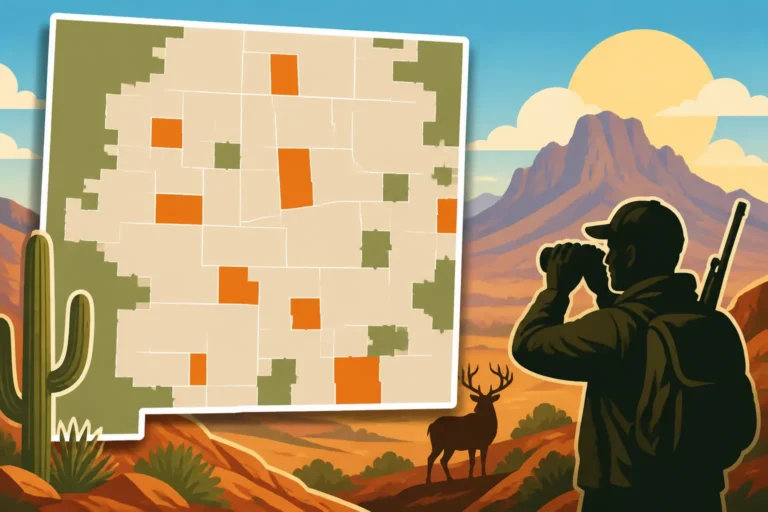
Modern technology has revolutionized how we understand land ownership, turning what used to be a laborious task with plat maps into a few taps on a screen. Using digital mapping applications like onX Hunt or GoHunt is absolutely crucial for any hunter in New Mexico. These tools layer private and public land boundaries directly onto topographic maps and satellite imagery, often color-coded for clarity. This allows you to visually identify public ground, pinpoint where private land blocks access, and locate potential access roads or trails that might cross private holdings.
When you're studying a unit, pay close attention to the lines and colors. A thin strip of public land acting as a corridor, or a small square of private land right in the middle of a larger public block, can make all the difference. Don't just look at the big picture; zoom in, scrutinize every detail, and understand the ownership patterns. Many land ownership maps also indicate easements or public rights-of-way, which can provide legitimate access across private land. However, these are often specific and limited, so always verify their exact purpose and scope. Being able to visualize the boundaries effectively is the first step in determining how to ethically gain access, or if you should seek an alternative hunting spot. Understanding Reading a Land Ownership Layer Correctly is fundamental to this process.
Physical Barriers and Signage: The Ground Truth
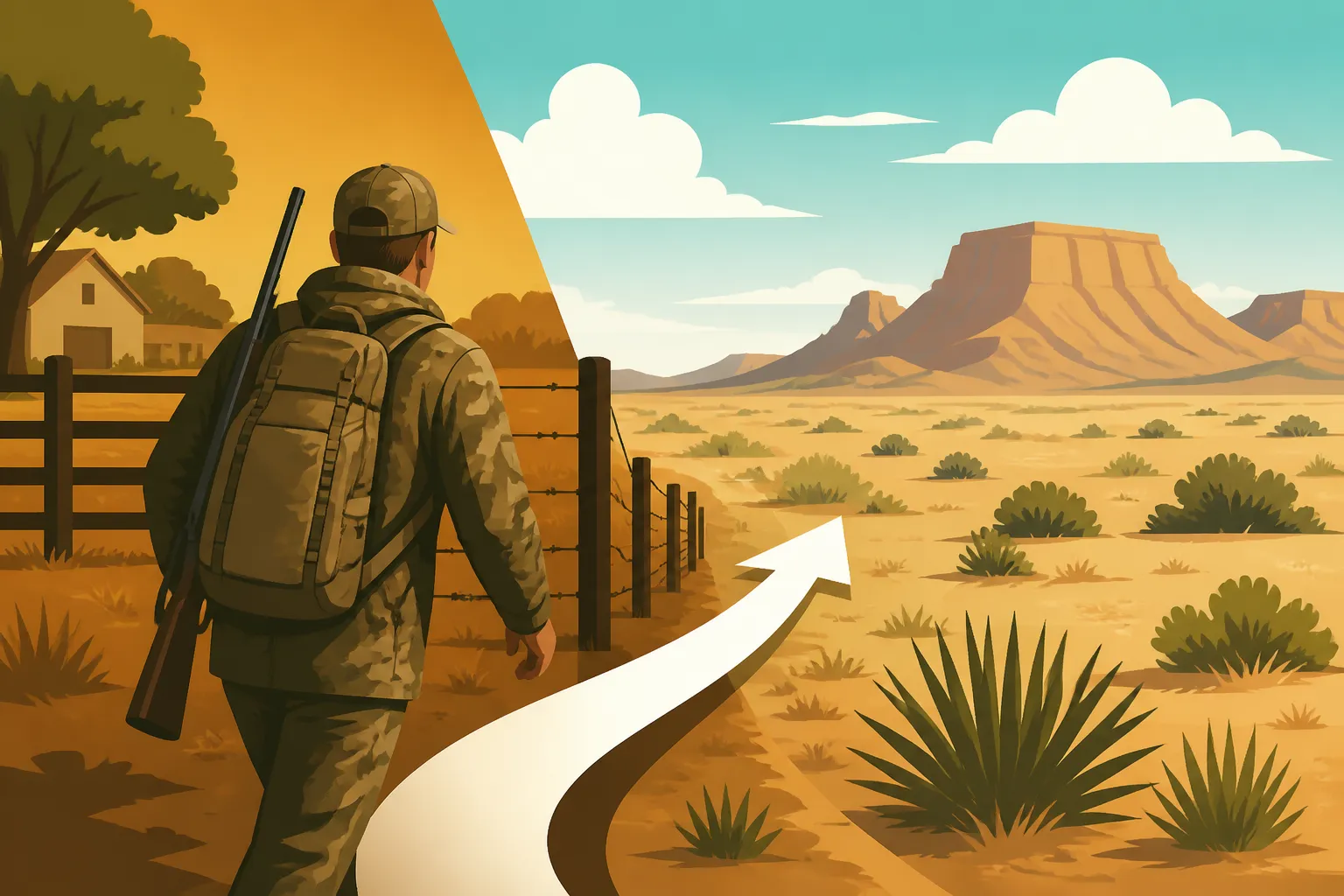
While digital maps are invaluable for planning, the reality on the ground can sometimes present surprises. Fences, gates, and "No Trespassing" signs are the physical manifestations of private property boundaries, and they must always be respected. Even if your map shows a legal easement or public road, if that road is physically blocked by a locked gate with "Private Property" signs, you cannot simply open it and proceed. This is where a legal right-of-way can clash with the physical reality, and usually, the physical barrier and explicit signage take precedence unless you have specific, documented permission for that exact access point.
It's common to find sections of public land adjacent to private ranches that are bordered by well-maintained fences. These fences serve as clear indicators of property lines. Sometimes, however, property lines can be less distinct – an old, downed fence, or simply a change in vegetation that marks a boundary. In such cases, if you're unsure, always err on the side of caution. If there's any doubt about where public land begins and private land ends, it's best to stay put or find a clearly marked public access point. Never assume that an unmarked path or an open gate means public access; it could lead directly to trouble. This is why ground-truthing your e-scouting with actual reconnaissance, if possible, is so important.
Unpacking Established Easements and Public Rights-of-Way
Sometimes, a legal path already exists across private land to access public holdings. These are known as easements or public rights-of-way. An easement is a legal right to use another's land for a specific purpose, such as ingress and egress (entering and exiting). A public right-of-way is a strip of land legally designated for public use, often for roads or trails. These can be lifesavers for hunters seeking access, but they come with their own set of rules and limitations.
It’s important to understand that an easement might only grant access for specific activities (e.g., logging, utility maintenance) and may not include hunting access. Furthermore, even if it is a public right-of-way, such as a county road, straying off that road onto adjacent private property is still trespassing. It’s also common for public roads to traverse private land, but the land immediately bordering the road is still private. Your hunting apps, particularly something like onX Hunt, will often highlight these established easements or public roads, but it’s crucial to cross-reference with official county or state records if there’s any ambiguity. Simply seeing a dotted line on a map isn't enough; you need to confirm the nature and scope of the access.
Asking for Access: Strategies for Gaining Permission
This is where the rubber meets the road. Identifying a landlocked public parcel is one thing, but actually gaining legal access across private property requires a proactive, respectful approach. Many landowners are wary of granting access, often due to negative past experiences, so your demeanor and preparation are paramount.
Initiating Contact with Landowners
The first step in seeking permission is figuring out who owns the land. Property ownership information is public record and can often be found through county assessor's offices or online databases. Once you have a name, try to find a contact number or address. A polite letter, followed by a phone call, is often a good way to initiate contact. Always remember that you are asking for a privilege, not asserting a right.
When you make contact, be clear, concise, and respectful. Introduce yourself, explain why you're calling (to request permission to cross their land to access public property for hunting), and specify the dates you'd be interested in. Emphasize that you understand and respect their property, and that you are committed to leaving no trace. Offer to provide references if you have them, or even show proof of hunter education. Many landowners appreciate knowing who is on their land and what their intentions are. Be prepared for a "no" – it's their right, and a polite "thank you anyway" maintains goodwill, which can be important for other hunters, even if not for you directly. Sometimes, a "no" for hunting might turn into a "yes" for simply walking across their land to reach public ground.
Building Relationships for Future Access
Beyond a single hunt, the real long-term game is about building trust and relationships with landowners. A one-time permission granted respectfully can open doors for years to come, not just for you but potentially for a small network of responsible hunters. If you are granted access, make sure to follow through on all your promises. Close gates, stick to the agreed-upon route, don't leave any trash, and be extra careful around livestock or structures.
Consider offering a small gesture of appreciation after your hunt, whether it's a thank-you note, a small gift, or even offering to help with a task on their property. Some hunters bring a gift basket, offer to mend fences, or even just check on their cattle when they are out. These acts of goodwill show that you value their generosity and are a responsible steward of the land. Building these relationships takes time and effort, but the rewards—consistent access to fantastic hunting grounds—are well worth it. Think about the ethical advice around Water Sources and Ethics in Desert Hunting or Baiting and Trail Camera Rules in New Mexico as examples of how small actions can build or erode trust.
Exploring Public Access Programs or Lease Options
While direct permission is often the most reliable route, some areas might have broader public access programs or a system for leasing private ground for hunting. New Mexico does have programs like the "Open Gate" program, which provides public access to private lands for hunting, fishing, and trapping through agreements with landowners. These programs, however, are usually focused on providing access to the private land itself for hunting, rather than solely a corridor to public land.
For landlocked public parcels, formal programs specifically designed to facilitate crossing private land are less common in New Mexico. However, some large ranches might offer trespass fee arrangements or lease hunting rights. This means you pay a fee for the right to cross their land, or even hunt their private land, which then grants you access to adjacent public ground. These arrangements can be pricey, but for highly sought-after units or species, they might be the only viable option. Always ensure any such agreement is in writing, clearly outlining the terms, dates, and areas of access to avoid any misunderstandings.
Navigating Boundaries: Tools and Technology
In this digital age, hunters have an incredible array of tools at their disposal to help navigate complex land ownership. Gone are the days of relying solely on paper maps and guesswork. These technologies are not just conveniences; they are essential for responsible hunting, especially when dealing with mixed public and private landscapes.
GPS and Mapping Applications
The ubiquitous smartphone, paired with robust hunting applications like onX Hunt, has become an indispensable tool. These apps provide real-time GPS location tracking on detailed topographic maps, overlaid with land ownership data. This means you can see exactly where you are in relation to property boundaries, preventing accidental trespass. When scouting or hunting, continuously check your location to ensure you're on public land or on private land where you have explicit permission.
Beyond basic navigation, these apps allow you to drop waypoints, mark boundaries, and even record your tracks, which can be invaluable for reviewing your route later or proving your location if questioned. The ability to download maps for offline use is also critical, as cell service is often nonexistent in remote hunting areas. Don't leave home without this technology, but also, don't solely rely on it. Batteries die, signals get lost; always have a backup plan, whether that's a traditional compass and paper map or a handheld GPS device. Knowing how to use Using onX Layers for New Mexico Public Land can literally save your hunt.
Harnessing Satellite Imagery for Scouting
Satellite imagery, integrated into mapping apps and available through various online platforms, is a powerful e-scouting tool. Before you even set foot in New Mexico, you can "fly over" your unit, identifying terrain features, potential game habitat, water sources, and, critically, access routes. Looking at satellite imagery can help you spot old two-track roads, faint trails, or even game trails that might lead to your desired public land.
By combining satellite views with land ownership overlays, you can plan your approach strategically, identifying choke points where private land might force you to take a specific route, or areas where public land corridors are narrower than they appear on a topo map alone. This pre-season reconnaissance is vital for understanding the lay of the land and mentally mapping out your strategy, minimizing surprises once you’re on the ground. When evaluating unit access, always consider E-Scouting a New Mexico Unit Before the Season as a critical first step.
Documenting Your Route and Permissions
If you're fortunate enough to secure permission to cross private land, documentation is key. Always get written permission, if possible. A simple note from the landowner stating your name, the dates of access, the specific route you're allowed to use, and a contact number can prevent a lot of headaches. Keep this permission readily accessible, perhaps laminated, along with your hunting license and tags.
When actually traversing the private land, consider using your GPS app to track your route. This recorded track serves as evidence that you adhered to the agreed-upon path. Should you encounter a curious ranch hand or law enforcement officer, having clear documentation and a precise GPS track can quickly clarify your legitimate presence and prevent misunderstandings. This level of preparation demonstrates responsibility and respect, further solidifying the trust you've worked to build. This also ties into important legal considerations like Getting Written Permission in New Mexico.
Navigating the Pitfalls: What Happens Without Permission
Ignoring property lines or assuming access can lead to significant repercussions. Ignorance of the law is generally not considered a valid defense, and the consequences of trespassing can be severe, impacting not only your current hunt but also your future as a hunter.
Penalties and Legal Repercussions of Trespassing
In New Mexico, trespassing on private property, especially when it involves hunting or accessing land for hunting purposes, can carry various penalties. These can range from fines to jail time, depending on the severity and whether it's a first offense or a repeat violation. Beyond monetary fines, you could have your hunting license suspended or revoked, not just in New Mexico but potentially in other states through interstate compacts. Your firearms or hunting equipment could also be seized.
Moreover, if you are caught trespassing and attempt to harvest an animal, you could face additional charges for poaching, which carries even stiffer penalties. The legal process itself is disruptive, time-consuming, and expensive, even if the outcome isn't jail time. It's simply not worth the risk. The frustration of landlocked public ground is understandable, but breaking the law to access it is never the answer. A quick look at Trespass Law on Posted Property will reinforce just how serious New Mexico takes these violations.
The Long-Term Impact on Your Hunting Future
A trespassing conviction or even just a strong complaint from a landowner can have a lasting negative impact on your hunting future. If your hunting privileges are revoked, that can mean several years, or even a lifetime, without the ability to apply for tags or participate in the sport you love. Word travels quickly in rural communities, and a reputation as someone who disregards property rights can make it nearly impossible to gain permission from any landowner in an area.
Beyond the legal and reputational damage, there's the ethical stain. Responsible hunters are stewards of the land and respectful neighbors. Trespassing undermines the entire hunting community's efforts to maintain a positive public image and preserve access for future generations. It’s a violation of trust that can erode relationships between landowners and the hunting public for years to come.
Strategies for Preventing Accidental Trespass
Given the serious consequences, preventing accidental trespass is paramount. The best defense is preparation.
- High-Quality Mapping Apps: As discussed, onX Hunt or GoHunt with downloaded offline maps are your best friend. Constantly check your position.
- Physical Markers: Pay attention to fences, blazes on trees, and property corner markers in the field. Cross-reference them with your digital map.
- Buffer Zones: When hunting near a boundary, give yourself a generous buffer. Don't hunt right up to the line, especially if you anticipate game might cross onto private land.
- Know the Rules: Familiarize yourself with New Mexico's specific land ownership rules and signage requirements.
- Don't Take Chances: If you're truly unsure about a boundary, retreat and find a clearly defined public area or alternative route. It's better to lose a few minutes of hunting time than to face a trespass charge.
- Group Communication: If hunting with partners, ensure everyone understands the boundaries and the plan for avoiding private land. Consider how you might use Two-Way Radio Use Between Hunting Partners to keep everyone informed of positions relative to boundaries.
Here's a quick comparison of different access scenarios:
| Scenario | Difficulty for Accessing Public Land | Best Approach | Key Considerations |
|---|---|---|---|
| Direct Road Access to Public Land | Easiest | Drive up, park legally, walk in. | Always confirm road status (public/private), parking rules, and seasonal closures. |
| Public Land Bordering Unposted Private | Moderate | Always seek explicit, written permission from the landowner before crossing. Never assume. | Landowners may be more receptive if not dealing with past issues. Build rapport. |
| Public Land Bordering Posted/Fenced Private | High | Absolutely requires explicit, written permission. The "posted" or "fenced" indicates clear intent to deny access. | Permission is less likely, but still worth asking respectfully. |
| Landlocked Public Parcel | Very High | Identify all adjacent private landowners. Prioritize seeking permission from the one offering the shortest, least impactful route. | This is the toughest scenario. Be prepared for multiple "no's." Consider alternative units. |
| Public Easement/Right-of-Way | Easy (with caveats) | Stick strictly to the easement path. Do not stray onto adjacent private property. | Confirm the exact scope and purpose of the easement; ensure it applies to foot traffic. |
| Corner Crossing | Extremely High (legally ambiguous) | Avoid at all costs unless you have explicit, written permission from ALL adjacent landowners. The legal risks are substantial. | High risk of trespass charges; legal precedent is still developing in some areas. |
Ethical Considerations and Being a Good Neighbor
Beyond the legalities, there's a strong ethical component to how we approach private land access. As hunters, we represent a larger community, and our actions, good or bad, reflect on everyone who participates in the sport. Being a responsible and ethical hunter goes a long way in fostering positive relationships with landowners and ensuring continued access for future generations.
Respecting Private Property and Landowners
The golden rule here is simple: treat private property as if it were your own, and landowners as you would wish to be treated. Their land is their livelihood, their home, and often, their heritage. Disrespecting it by trespassing, leaving trash, damaging fences, or disturbing livestock not only puts you in legal jeopardy but also poisons the well for all hunters.
Even if you are granted permission, always adhere to any specific requests or conditions the landowner sets. This might include sticking to a certain path, avoiding specific fields, or checking in and out. A simple phone call or text can make a huge difference. Remember, the landowner is doing you a favor, and their generosity should be met with utmost respect and gratitude. A positive interaction can secure future access and help bridge the gap between rural landowners and the hunting community.
Leaving No Trace: The Hunter's Code
"Leave No Trace" principles are essential for all outdoor enthusiasts, but especially for hunters. When you're allowed to cross private land, it's even more critical. This means packing out everything you pack in, and then some. Pick up any trash you see, even if it's not yours. Ensure gates are closed and latched exactly as you found them. Avoid driving off designated roads, even if they appear to be two-tracks, unless specifically permitted.
If you field dress an animal on private ground (with permission), ensure you dispose of the offal respectfully and away from roads or residences. The goal is for the landowner to barely know you were there, except for the positive impression you leave. Adhering to these principles builds trust and demonstrates that hunters are responsible, respectful users of the land, which can encourage more landowners to consider granting access. When we think about Retrieving Game From Private Land in New Mexico, the "leave no trace" principle is paramount.
The Importance of Being a Good Neighbor
Hunting in New Mexico often means interacting with a variety of people, from fellow hunters to rural residents and landowners. Being a good neighbor means more than just being polite; it means being proactive in demonstrating responsible behavior. This includes educating yourself on local issues, participating in conservation efforts, and always being an ambassador for ethical hunting.
If you see someone else disrespecting private property or engaging in unethical practices, it's important to report it to the proper authorities. Protecting hunting access and the integrity of the sport sometimes means holding ourselves and others accountable. By consistently acting with integrity and respect, we strengthen the bond between hunters and landowners, ensuring that those fantastic, sometimes hard-to-reach, public land opportunities remain available for generations to come.
Disclaimer
This article is for general informational purposes only and does not constitute professional advice. Laws, prices and regulations vary by location and change over time. Consult a qualified professional for guidance on your specific situation.