Glassing New Mexico’s Gila for Trophy Bulls
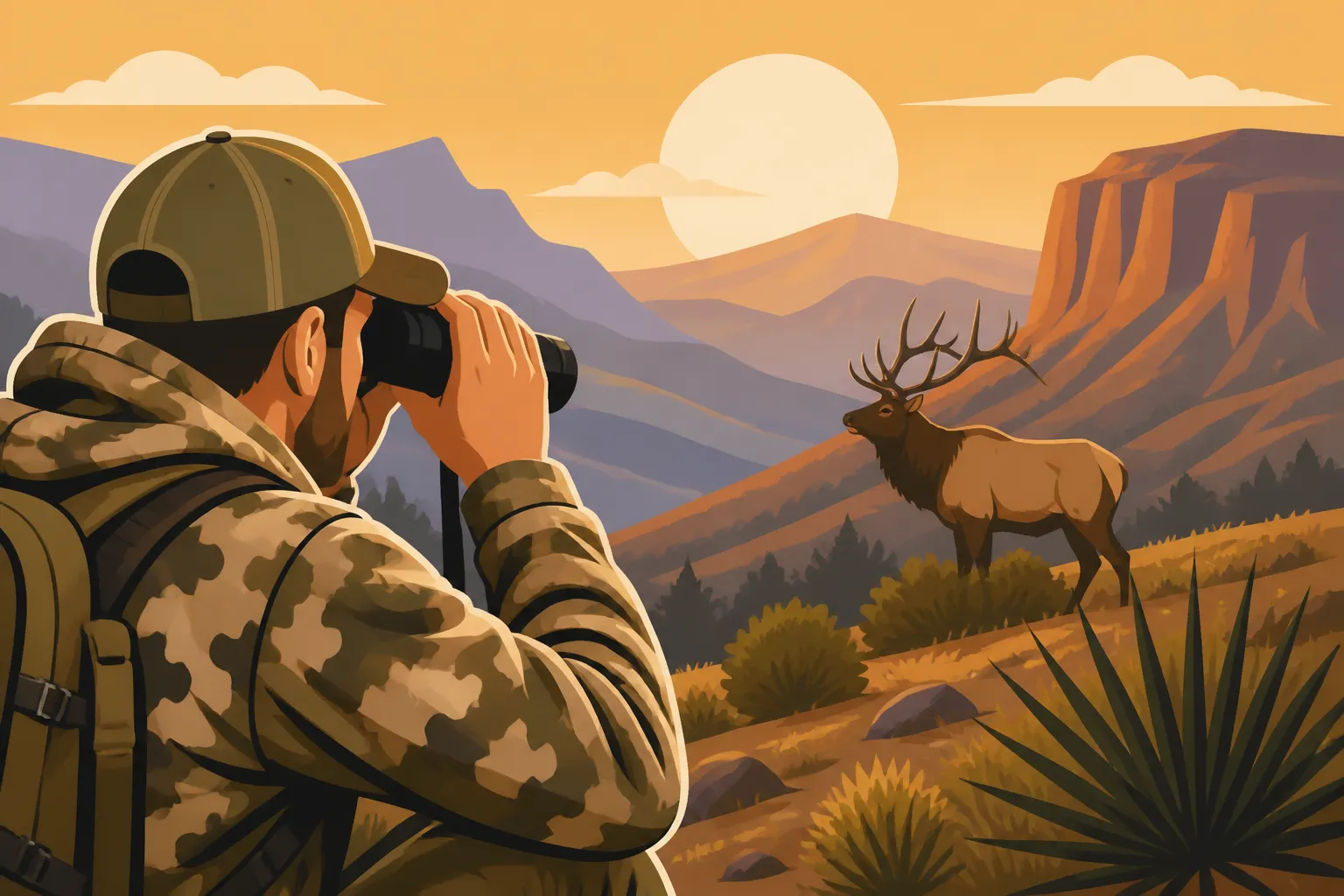
The vastness of New Mexico's Gila Wilderness is breathtaking, but it can also be incredibly intimidating for hunters. You spend days hiking through rugged canyons and dense timber, feeling like you're constantly busting elk out of thick cover or simply walking past them unseen. It’s enough to make you wonder if you’ll ever lay eyes on a trophy bull, let alone get a shot opportunity. This guide is dedicated to unlocking the power of glassing, a skill that transforms the daunting Gila landscape into a manageable canvas, helping you pinpoint those elusive giants from afar and dramatically increase your chances of success.
The Indispensable Role of Glassing in the Gila Wilderness
If you've spent any time hunting the Gila, you know it's not like hunting flatland whitetails. The sheer scale, the steep elevation changes, and the patchwork of dense timber and open parks demand a different approach. Trying to still-hunt every inch of potential elk country is a recipe for exhaustion and frustration. This is where mastering your optics becomes not just a helpful tool, but an absolute necessity.
Navigating the Gila's Expansive and Rugged Terrain
The Gila National Forest covers an enormous expanse, roughly 3.3 million acres, making it one of the largest national forests in the lower 48. Within this vastness lies the Gila Wilderness, a designated area where motorized travel is strictly prohibited, meaning you're on foot or horseback. The topography here is unforgiving: deep, winding canyons carved by the Gila River and its tributaries, interspersed with towering mesa tops, open ponderosa parks, and dense patches of mixed conifer and oak brush. You can find yourself ascending from elevations around 4,000 feet in the river bottoms to over 10,000 feet on the highest peaks. This dramatic vertical relief means you simply cannot cover all the ground on foot, and if you try, you’ll spend more time hiking than hunting. For those who understand Hunting New Mexico From 4,000 Feet to 10,000, it’s clear that observing from a distance is key.
Imagine dropping into a canyon system near Whitewater Mesa or in the Mogollon Mountains, where visibility on the canyon floor might be only 50 yards, but a ridge 1,000 feet above offers a commanding view for miles. Without the ability to effectively glass, you'd have to physically traverse every bench, every dark timber patch, and every drainage, which is a monumental, if not impossible, task within a typical hunt duration. The sheer physical toll and the high probability of spooking animals by your constant movement make this strategy unsustainable, especially if you're chasing trophy bulls that instinctively seek out the most secure and overlooked pockets of terrain.
Furthermore, the ground itself often conspires against silent movement. Dry pine needles and fallen branches crackle underfoot in the ponderosa forests, while rocky slopes in the higher elevations provide little reprieve from noise. Every step can telegraph your presence to a vigilant bull. Being able to sit quietly, observe, and let the animals reveal themselves saves your energy, minimizes your impact, and significantly increases your odds of finding undisturbed elk.
Overcoming Spot-and-Stalk Limitations
While spot-and-stalk hunting is a thrilling and effective method in many open Western landscapes, the Gila presents a unique set of challenges that can make a pure spot-and-stalk approach less efficient for finding elk. The dense timber, broken terrain, and often swirling winds conspire against the hunter trying to sneak up on an animal they haven't first located from a distance. You might spend hours creeping through a promising area, only to have a sudden gust of wind betray your scent or inadvertently stumble upon a bedded elk, sending it crashing through the timber long before you even see it clearly. This "busting" of animals is a common, disheartening experience for Gila hunters who haven't yet embraced the power of their optics.
The reality of the Gila is that visibility is often limited even in what appear to be more open areas. A small rise, a cluster of junipers, or a change in elevation can hide an entire herd of elk just beyond your immediate field of vision. Relying solely on your eyes from ground level means you're operating with severely constrained information, often reacting to sounds or fleeting glimpses rather than proactively locating game. This reactive hunting style drains your energy and mental fortitude, as you’re constantly guessing rather than observing with confidence.
In contrast, glassing allows you to become a patient, strategic observer. From a well-chosen vantage point, you can systematically pick apart vast stretches of country, identifying pockets of habitat where elk are likely to feed, water, or bed. Instead of moving noisily through potential elk haunts, you let your eyes and optics do the work, covering miles from a single, quiet position. This dramatically reduces your chances of spooking game prematurely and provides the critical intelligence you need to plan an informed, high-percentage stalk. You're no longer playing a game of chance; you're playing a game of observation and calculated movement.
Interpreting Subtle Signs from a Distance
One of the most valuable aspects of effective glassing, especially for elusive trophy bulls, is learning to see beyond the obvious. It’s not just about spotting a full-bodied elk standing in the middle of a clear park. In the Gila, where timber often reigns supreme and big bulls are masters of concealment, you’ll rarely get such a clear look. Instead, glassing teaches you to identify the subtle clues that betray an animal's presence, even when 90% of its body is hidden. This skill is honed over many hours behind the glass, training your eyes to differentiate natural elements from living creatures.
Think about the way sunlight dapples through a dense stand of ponderosas. A novice hunter might scan this area quickly and see nothing but trees and shadows. A seasoned glasser, however, will meticulously pick apart those shadows, looking for an unnatural dark patch that seems too round or too solid to be just another tree trunk. They’ll search for a horizontal line that doesn't fit the verticality of the timber, or a subtle movement that catches the eye. It might be the flick of an ear, the slight twitch of a tail, or the glint of sunlight off an antler tine peeking out from behind a juniper. These tiny details, easily missed with the naked eye or a quick scan, become screaming neon signs when viewed through high-quality optics from a stable platform.
Furthermore, you learn to look for patterns and disruptions. A patch of hide contrasting with a shaded hillside, a flash of white rump, or even the movement of a branch that seems too deliberate to be wind-driven – these are the visual cues that trigger a closer investigation with your spotting scope. This discerning eye, developed through patient and persistent glassing, turns the vast and visually cluttered Gila landscape into a series of interconnected puzzles, each piece offering a potential clue to a hidden trophy bull. It’s about not just seeing an animal, but seeing evidence of an animal, and then using every ounce of your optical power to confirm it.
Assembling Your Gila Glassing Arsenal
Effective glassing in the Gila isn't just about technique; it's also about having the right tools for the job. The rugged environment, the vast distances, and the need for precision demand quality optics that can withstand the elements and deliver crisp, clear images. Skimping on your glass can lead to eye strain, missed opportunities, and ultimately, frustration.
Choosing the Right Binoculars for Wide and Close Scans
Your binoculars are the foundation of your glassing system. They’re your primary scanning tool, used to cover broad swaths of country quickly and efficiently, identifying areas of interest before you pull out the spotting scope. For the Gila, where distances can vary from a few hundred yards to several miles, selecting the right power and objective lens size is crucial.
Many hunters swear by 10×42 binoculars for their versatility. They offer a good balance of magnification, light-gathering capability, and a wide field of view, making them excellent for handheld use throughout the day. They're typically light enough to carry comfortably around your neck or in a bino harness without causing fatigue. However, in the expansive, broken country of the Gila, you might find yourself wishing for a bit more reach. This is where 12×50 or even 15×56 binoculars truly shine. A 12×50 offers a noticeable bump in magnification and light gathering compared to a 10x, making it easier to pick out subtle details at longer distances, especially in low light. For serious long-range glassing, particularly if you’re trying to pick apart dense timber or judge antler points from over a mile away, 15×56 binoculars are hard to beat. They gather an incredible amount of light, extending your effective glassing time at dawn and dusk, and their increased magnification reveals details that smaller binoculars simply can’t. But be warned: anything over 10x power will greatly benefit, if not require, being mounted on a tripod for stable, shake-free viewing. Trying to handhold 15x binoculars for extended periods will quickly lead to eye fatigue and a blurry image.
When choosing binoculars, don't just look at magnification. The objective lens size (the second number, like 42 or 56) directly impacts how much light the binoculars can gather. A larger objective lens means brighter images, which is incredibly important during those critical first and last hours of light when elk are most active. Also consider the quality of the glass itself – factors like ED (Extra-low Dispersion) glass reduce chromatic aberration (color fringing), providing a sharper, truer-color image. Brands like Vortex, known for their durable and performance-oriented optics, offer excellent options across these magnification ranges. While specific brand names like GoHunt might review and recommend these, focus on the specs that fit your hunting style and budget. Remember, if you’re wondering about Optics Power for New Mexico's Open Country, it often leans towards higher magnification than you might initially expect for spotting animals far away.
The Power and Stability of a Quality Spotting Scope
Once your binoculars have identified an area of interest or a potential animal, your spotting scope becomes the next critical tool in your arsenal. This is your "money glass," designed for maximum magnification and detailed inspection. It's what allows you to definitively determine if that dark patch is an elk, and if it is, to accurately judge its size and trophy potential without having to move in closer and risk spooking it. A quality spotting scope can save you countless hours of hiking towards a "rag horn" or, worse, a misplaced rock.
When selecting a spotting scope, objective lens size typically ranges from 60mm to 80mm, or even larger. Just like with binoculars, a larger objective lens means more light gathering, which translates to brighter images, especially at high magnifications or in low light conditions. While a 60mm scope is lighter and more compact, an 80mm or 85mm scope will offer superior performance in challenging light, allowing you to discern antler details right up until legal shooting light fades. The magnification range is also crucial. Most popular spotting scopes come with zoom eyepieces offering ranges like 20-60x or 27-60x. This allows you to scan at a lower power and then zoom in to analyze details. Some even offer fixed power eyepieces, which often provide a slightly brighter and sharper image, though with less versatility.
Perhaps the most debated feature is the eyepiece angle: straight versus angled. A straight eyepiece is often favored by guides who are primarily scanning for clients and want a quick eye-to-scope connection, or for digiscoping. However, an angled eyepiece generally offers more comfort during long glassing sessions, especially on uneven terrain, as it allows for a lower tripod setup and less craning of the neck. For a dedicated solo hunter spending hours behind the glass in the Gila, an angled eyepiece often proves to be the more ergonomic choice, reducing strain and fatigue. Regardless of your choice, a spotting scope is truly an investment. It’s not just about seeing an elk, it’s about seeing an elk – every tine, every curve, every aspect of its trophy quality, which is paramount when chasing those Gila giants.
The Unsung Hero: The Sturdy Tripod and Accessories
You can own the most expensive, highest-quality binoculars and spotting scope on the market, but without a rock-solid tripod, they are largely useless for serious long-range glassing in the Gila. A flimsy, wobbly tripod negates all the benefits of superior optics, turning crisp images into frustrating blurs and making it impossible to hold steady at high magnifications. The tripod is the unsung hero of your glassing setup, providing the stability required for hours of detailed observation.
When choosing a tripod, prioritize stability and durability. Carbon fiber tripods are generally lighter than aluminum models, making them a better choice for backcountry hunters who are packing deep into the Gila Wilderness. They also tend to absorb vibrations better. Look for sturdy leg sections that extend and lock securely, preferably with rubber feet that can grip uneven terrain. A center column can add height, but be aware that extending it too far can compromise stability. Most importantly, pay close attention to the head of the tripod. A smooth, fluid pan head is essential for effortless scanning across vast landscapes. This allows you to track subtle movements without jerking the scope, which can cause you to lose your target. Quick-release plates are also a huge convenience, allowing you to quickly attach and detach your optics as needed.
Beyond the main tripod, a few key accessories will significantly enhance your glassing experience. A binocular adapter is an absolute must-have for mounting your 12x or 15x binoculars directly to the tripod. Trying to handhold these higher-power binoculars for more than a few minutes is exhausting and ineffective. Additionally, a comfortable sitting pad or a lightweight, portable chair will make those long hours behind the glass much more tolerable. Remember, discomfort leads to distraction, and distraction leads to missed opportunities. Many hunters also carry a small microfiber cloth to keep their lenses clean and smudge-free – even the smallest speck of dust can obscure your view when magnified. Investing in these seemingly minor accessories will dramatically improve your ability to execute effective glassing strategies in the challenging Gila environment.
Mastering the Art of Glassing Position and Setup
Finding a trophy bull in the Gila often comes down to securing the perfect vantage point and meticulously setting up your glassing station. This isn't just about finding a high spot; it's a strategic decision that factors in wind, sun, access, and comfort. A poorly chosen position or a shaky setup can render even the best optics ineffective.
Identifying Strategic Vantage Points
Choosing the right glassing perch is arguably as important as having the right optics. In the Gila, you’re looking for a spot that offers expansive views of potential elk habitat – open parks, timbered ridges, and deep canyon systems. High points like mesa tops, prominent ridges, or even specific knobs along a canyon rim are ideal. However, it's not just about elevation; it's about effective elevation. You want to be high enough to see over obstacles and into drainages, but not so high that you're silhouetted against the skyline, making yourself an obvious target for any wandering eyes (both human and animal).
Critically, you must consider the wind. Elk have an incredible sense of smell, and a trophy bull will often bed in a spot where he can smell anything coming from below. Always try to position yourself so the prevailing wind is either in your face or a crosswind, carrying your scent away from the area you intend to glass. If you're hunting an area with tricky thermals, as is common in deep Gila canyons, try to arrive at your glassing spot before the thermals shift in the morning or evening. Understanding Reading Wind in a Deep Gila Canyon is absolutely vital to preventing detection. Imagine spending hours meticulously glassing an area, only for a subtle shift in the breeze to carry your scent right to the bull you've finally spotted, sending him disappearing into the timber before you can make your move.
Finally, think about accessibility and how much time you have. Can you reach this spot before first light? Is there sufficient cover for you to remain concealed while glassing? Sometimes the most exposed, highest peak isn't the best option if it makes you too visible or difficult to approach quietly. A slightly lower, more concealed knob with good cover and a clean backdrop might be more productive in the long run, allowing you to remain undetected while conducting your patient surveillance.
Achieving Rock-Solid Stability
Once you’ve found your ideal vantage point, the next step is to achieve maximum stability for your optics. This cannot be overstated: even the slightest wobble will significantly reduce the clarity of your image, cause eye strain, and ultimately make it impossible to pick out those subtle clues that betray a hidden bull. Your goal is to make your optics feel like they're bolted to the ground.
Start by properly deploying your tripod. Extend the legs fully for the widest, most stable footprint, even if it means adjusting for uneven terrain. Many tripods have adjustable leg angles, allowing you to splay them out for maximum stability on a steep slope or in high winds. Use the leg locks securely to prevent any slippage. If your tripod has a hook on the center column, hang your backpack or a heavy rock from it. This adds downward pressure, increasing stability and dampening vibrations, especially important for high-magnification spotting scopes.
Your body position is equally important. Avoid standing if possible, as it's inherently less stable. A low sitting position, ideally on a comfortable pad or small chair, is far superior. If the terrain allows, lying prone behind your scope is the most stable option of all. Ensure your elbows are tucked in, resting on your knees or the ground, creating a stable base. Relax your shoulders and neck; tension will translate into shaking. Many seasoned glassers will even use a small bag of sand or rice under the objective lens of their spotting scope for micro-adjustments and additional stability. Remember, you might be spending hours in this position, so comfort is not a luxury, it's a necessity for maintaining focus and minimizing fatigue, ensuring you're ready when that bull finally steps out.
Optimizing for Light and Shadow
Understanding how light and shadow play across the Gila landscape is a critical skill for effective glassing. Elk are creatures of habit and often move with the sun, seeking warmth in the morning and shade as the day progresses. Knowing this allows you to anticipate their movements and optimize your glassing strategy throughout the day.
At first light, as the sun begins to kiss the eastern slopes, elk are typically moving from their bedding areas towards feeding grounds, often in open parks or on sunny, south-facing slopes. This is a prime time to glass these areas, as the rising sun illuminates the animals against the still-dark shadows. You want to position yourself with the rising sun at your back or side, never directly in your face. If the sun is in your eyes, you'll be constantly squinting and struggling with glare, making it nearly impossible to pick out details. Likewise, direct sunlight glinting off your optics can spook animals at long distances.
As the sun climbs higher and the temperatures rise, especially during early season hunts, elk will seek the sanctuary of shade. This means they'll move into the cooler, darker timber, often on north-facing slopes or in the deep recesses of canyons. Midday glassing then shifts its focus to meticulously picking apart these shaded, often dense, areas. Look for patches of sunlight that penetrate the canopy, as an elk might be bedded in one of these warmer spots. Also, pay attention to the transition zones – the edges where timber meets an open park, or where a ridge drops into a dark drainage. These are common travel routes and bedding locations. The golden hours of dawn and dusk are when elk are most active and visible, making your quality optics particularly valuable for extending your effective glassing time during these critical periods.
The Grid Glassing Method: A Systematic Approach to the Gila
Glassing the Gila is not about randomly sweeping your binoculars across the landscape hoping to stumble upon an elk. That's a recipe for missing animals and developing severe eye strain. To effectively cover the vast and complex terrain, you need a systematic approach, and the grid glassing method is arguably the most efficient and productive way to do it.
Deconstructing the Landscape with a Grid
The core principle of grid glassing is to break down a large, overwhelming area into smaller, manageable sections that you can examine meticulously. Imagine a vast canyon system, miles wide and deep, filled with timber, rock slides, and hidden benches. Trying to scan this all at once is like trying to read an entire book in a single glance. Instead, you'll mentally, or sometimes even physically with your scope's reticle, divide that landscape into a series of overlapping squares or strips.
Start with the closest terrain in your field of view, perhaps a hillside directly across from your position. Begin your scan at one edge of this section, moving your optics slowly and deliberately in a horizontal line. Every inch of that line should be thoroughly scrutinized. Once you reach the opposite edge of your chosen section, drop your optics down by about half a field of view and scan back horizontally in the opposite direction. Continue this process, working your way down the hillside and gradually outward, expanding your grid to cover the next section of terrain further away. This methodical, overlapping approach ensures that no piece of ground is overlooked. It's a structured, disciplined way to ensure you're actually seeing everything, rather than just glancing. Reputable hunting resources like GoHunt frequently advocate for this systematic approach to maximize detection probability.
This method isn't just for massive basins. Even smaller draws or isolated patches of timber benefit from a micro-grid scan. The key is extreme patience and slowing down. Many hunters make the mistake of scanning too quickly, their eyes glazing over without truly processing what they're seeing. Train yourself to pause, let your eyes absorb the detail, and consciously look for abnormalities. It’s like searching for a hidden object in a "Where's Waldo?" picture – you have to dissect the image, not just skim it.
Recognizing the Subtle Clues of Hidden Bulls
True mastery of glassing comes from learning to spot not just an entire elk, but the parts of an elk, or even just the telltale signs of an elk. In the Gila's dense cover, big bulls are rarely standing out in the open, waving at you. More often, they are bedded deep in the timber, using the canopy and shadows to their advantage. This means you need to train your eye to look for the nuances.
What are these subtle clues? It could be the horizontal line of an elk's back amidst the predominantly vertical lines of tree trunks. It might be a patch of hide – a darker brown or grey – that looks out of place against the lighter bark of ponderosas or the greens of pine needles. Look for the glint of an antler, the tip of an ear twitching, or the subtle movement of a tail. Sometimes, it’s not even a direct sighting, but a disruption in the natural pattern: a break in the brush that looks like a game trail, a freshly rubbed tree, or an area of disturbed dirt. You need to develop an "elk eye," the ability to instinctively recognize what doesn't quite belong in the landscape.
A useful trick is the "blink test." If you’re glassing a patch of timber and something just feels "off" – a slightly darker spot, a peculiar shape – look away for a moment, then quickly look back. If that anomaly still catches your eye, it’s worth a deeper, more prolonged look with your spotting scope. Often, your subconscious has picked up something your conscious mind hasn't yet registered. Don't dismiss these gut feelings. That "weird-looking rock" or "oddly shaped stump" could very well be the antler or shoulder of a bedded trophy bull, perfectly camouflaged in its natural environment.
Cultivating Patience and Mental Fortitude
Let's be honest: glassing can be incredibly boring at times. Hours can pass with nothing but trees, rocks, and an occasional squirrel or javelina crossing your field of view. This tedium is precisely where many hunters lose focus, rush their scans, or simply give up and decide to move. But it's during these quiet, seemingly unproductive periods that the most dedicated glassers often find success. Cultivating immense patience and mental fortitude is as crucial as having good optics.
Acknowledge the challenge. It's tough to sit still for hours, especially when your legs are itching to move and your mind starts to wander. Combat this by setting small goals: "I'm going to meticulously glass this entire south-facing slope for the next 30 minutes, no matter what." Take short breaks – stretch, drink some water, eat a snack – but always return to your glassing position and resume your systematic scan. Many trophy bulls are found during the midday hours, precisely because most other hunters are either moving, eating lunch, or simply not glassing as diligently. These animals feel less pressure when the woods are quiet, making them more likely to shift slightly in their beds or even stand up for a stretch.
The mental game also involves believing that an animal is there, even when you haven't seen it yet. Every time you pick apart a new section of terrain, approach it with the expectation that a bull is hidden within it. Avoid the temptation to just scan for movement; assume the animal is still and perfectly concealed. This level of sustained focus requires discipline, but the reward of finally picking out that telltale glint of an antler, or a patch of hide through the trees, makes every minute of boredom worth it. It reinforces the power of methodical observation and the payoff of sheer persistence in the vast Gila.
Decoding Elk Movement and Behavior in Gila Country
To truly excel at glassing for trophy bulls, you need to understand not just how to use your optics, but where and when to point them. This requires a solid grasp of elk behavior, particularly how they utilize the diverse habitat of the Gila throughout the day and in response to environmental factors.
Predicting Morning and Evening Activity Patterns
Elk are most active during the cooler parts of the day: dawn and dusk. This is when they move most freely, traveling between their bedding areas and feeding grounds. In the Gila, this typically means that as first light breaks, bulls will be transitioning from their secure, often timbered bedding areas on north-facing slopes to more open, south-facing slopes, grassy parks, or meadows where they can feed. Similarly, in the late afternoon and evening, they'll reverse this pattern, moving from feeding areas back towards their bedding sanctuaries as darkness approaches.
Knowing these patterns allows you to prioritize your glassing efforts. Instead of randomly scanning, focus your binoculars and spotting scope on these transition zones and known feeding areas during the golden hours. Look for the edges of dark timber where it meets a sunlit park, or along the rim of a mesa that drops into a grassy basin. These are high-traffic corridors for elk. The Gila's many open meadows and parks, especially those with good feed, become hotspots during these times. During the rut in mid-September, bulls might be more vocal and visible as they challenge rivals and gather cows. Understanding Bugle Timing Through New Mexico's Rut can help you predict periods of increased activity and visibility, though even during the rut, glassing remains crucial for locating those silent, satellite bulls.
It's also important to factor in hunting pressure. If an area has seen a lot of activity, elk will quickly adapt, becoming more nocturnal or utilizing thicker cover during daylight hours. This means your window of opportunity to see them moving in the open might be shorter, making your early morning and late evening glassing even more critical. Be ready to pick apart those heavy timber edges with extreme diligence, as a wary bull might only poke his nose out for a few brief minutes.
Unveiling Midday Bedding Locations
While dawn and dusk are prime for spotting moving elk, the midday hours are often the key to finding bedded trophy bulls. As the sun climbs and temperatures rise, especially in the early season, elk will seek out secure, shaded locations to rest and chew their cud. Identifying these potential bedding areas on your maps and then systematically glassing them is a crucial part of a successful Gila hunt.
Trophy bulls, being older and wiser, often choose bedding sites that offer both thermal cover (shade and protection from the elements) and security (dense cover, good visibility downhill, and an escape route). Look for thick stands of mature timber, particularly on north-facing slopes where the shade is deepest and lasts longest. Dense oak brush thickets, pockets of mixed conifer, or steep, brushy canyon bottoms can also be favored bedding areas. Don't be afraid to glass the nastiest, steepest, most inaccessible-looking terrain – that's often exactly where a mature bull feels safest.
When glassing midday bedding areas, you're not looking for movement; you're looking for stillness. Focus on those subtle clues discussed earlier: a horizontal line, a patch of hide, the glint of an antler through the trees. Because elk will be largely motionless, your grid glassing method becomes even more vital. Slowly pick apart every shadow, every cluster of trees, every piece of brush. A bedded bull might be facing away from you, presenting only his back or a portion of his side. He might only stand up for a brief stretch or to relieve himself every few hours. These are your opportunities. Patience during these midday hours is often rewarded with a bull that other hunters have walked right past, assuming nothing was there.
Water Sources and Travel Corridors
In an arid state like New Mexico, water is life, and that holds true for elk in the Gila. Water sources, whether natural springs, stock tanks, or perennial creeks, act as magnets for all wildlife, including trophy bulls. Understanding their location and incorporating them into your glassing strategy can be incredibly productive, especially during dry periods or warmer hunting seasons. For more on this, checking out Finding Water in New Mexico's Dry Country can be very insightful.
Glassing around known water sources, particularly during the middle of the day or early afternoon when elk might come for a drink, is a highly effective tactic. Position yourself upwind, concealed, and with a good view of the water and the approaches to it. Be aware that heavily used water sources might also attract other hunters, so vigilance is key. During drier years, less obvious seeps or small potholes can become critical watering points and are often overlooked by other hunters.
Beyond water, elk are creatures of habit and will use natural travel corridors that offer the path of least resistance or the most security. These can include saddles between ridges, benches that cut across steep hillsides, or well-worn game trails along canyon bottoms. Use your topographical maps (and digital mapping tools like GoHunt's apps) to identify these features from home, and then confirm them on the ground. When glassing, pay close attention to these corridors, as they're prime areas for elk movement. A bull might use a specific saddle to cross from one drainage to another, or travel a particular bench system to get from his bedding area to a feeding ground. Learning to identify and focus your glassing efforts on these critical chokepoints and essential resources will significantly increase your odds of intercepting a trophy bull.
Advanced Strategies for Targeting Trophy Bulls
While the fundamentals of glassing are crucial, consistently finding trophy bulls in the Gila requires an advanced understanding of how these elusive animals utilize their environment. It’s about more than just spotting an elk; it's about predicting where the biggest, most cautious bulls will be and then meticulously dissecting those specific areas with your optics.
Focusing on Key Terrain Features
Trophy bulls don't just randomly wander; they intentionally select terrain features that offer security, food, and cover. Learning to identify these key features on your maps and then systematically glassing them is an advanced tactic that separates successful hunters from the rest. One of the most productive features to target are benches. These are relatively flat areas that break up steep hillsides, often providing easier travel routes, bedding locations, and areas where feed might accumulate. Look for benches with good cover – scattered timber, dense oak brush, or even large boulders – as these offer excellent concealment for a bedded bull. A systematic scan of these linear features with your spotting scope, moving slowly along their length, can often reveal a hidden giant. You can find more detail on this in Glassing Benches and Parks for Elk.
Parks, especially those nestled deep within timbered areas, are also prime locations. These open areas, often covered in nutritious grasses, are feeding magnets for elk. While elk will typically feed in parks during low light, they might also linger on the edges or even bed down in the surrounding timber, just out of sight. By glassing the perimeter of these parks, paying close attention to where the open ground transitions into dense cover, you increase your chances of spotting a bull entering, leaving, or bedded nearby. Saddles, the low points between two peaks or ridges, are natural travel funnels. Elk often use these saddles to cross between drainages or move between different areas of their home range. Positioning yourself to glass these saddles, especially during morning and evening movements, can intercept a bull on the move. Don't forget the drainages themselves – while often thick and difficult to navigate on foot, they serve as natural travel corridors and can hold pockets of cover for bedded animals.
Unlocking the Secrets of Dark Timber
Dark timber is both the bane and the blessing of Gila elk hunting. It's notoriously difficult to glass, often obscuring animals completely. However, it's also where the biggest, most pressured bulls often choose to hide. Mastering the art of glassing dark timber is a hallmark of an advanced Gila elk hunter. It requires exceptional optics, unwavering patience, and a keen eye for the minutest detail.
The first rule of glassing dark timber is to slow way down. Forget quick scans; you need to crawl your optics through every shadow, every cluster of trees, and every patch of undergrowth. Focus on the edges of the timber – where it meets an open park, a rocky slope, or a less dense area. Bulls will often stage just inside these edges before stepping out to feed, or bed down a few yards in for security. When glassing into the depths of the timber, look for anything that breaks the natural pattern of vertical tree trunks. A horizontal backline, a patch of hide that's too uniform, or the subtle glint of an antler against the dark background. Even a slight change in the texture or color of the forest floor could indicate an animal bedded there.
Utilize your spotting scope’s highest magnification here. Even at 60x, it can be challenging, but it allows you to pick apart individual trees and scrutinize every dark corner. Pay attention to how the light filters through the canopy; sometimes a shaft of sunlight will illuminate a small section of timber, revealing a hidden animal. It’s a tedious process, but the payoff can be immense. Many Gila giants are never seen by hunters who are unwilling to dedicate the time and patience to meticulously glass these seemingly impenetrable areas. Embrace the challenge, and remember that if it's hard for you to see, it's also where the smartest bulls feel safest.
Harnessing Thermals and Wind Patterns
Understanding and utilizing thermals and wind patterns is an advanced strategy that can significantly increase your success when glassing and planning a stalk in the Gila. The complex topography of the Gila creates highly dynamic air currents, and elk use these to their advantage, relying heavily on their sense of smell for security. If you don’t play the wind, you’ll likely educate or spook more elk than you find.
Thermals are predictable air currents driven by temperature changes. As the sun rises in the morning, the ground heats up, causing warm air to rise – these are "up-thermals." In the evening, as the ground cools, cold air sinks – these are "down-thermals." Elk typically move and bed in ways that allow the prevailing thermal to carry their scent downhill in the morning and uphill in the evening, giving them advance warning of anything approaching from below. When glassing, especially in the morning, try to position yourself below the area you intend to glass, so the rising thermal carries your scent away from the elk you're looking for. Conversely, in the evening, glass from an elevated position, allowing the sinking down-thermal to carry your scent away.
Beyond thermals, the general wind direction is paramount. Gila canyons can be notorious for swirling winds, where the breeze can change direction unpredictably within a small area. This makes Reading Wind in a Deep Gila Canyon a crucial skill. Always try to set up your glassing station with the wind in your face or as a crosswind, ensuring your scent is not blowing into potential elk habitat. Even if you're not planning an immediate stalk, maintaining a good wind advantage prevents you from contaminating an area and making future hunting attempts more difficult. If the wind is constantly swirling, you might need to adjust your position frequently or be prepared to abandon a glassing spot if the wind consistently puts your scent into the area you're trying to hunt. This constant awareness and adaptation to air currents are what turn a basic glasser into an advanced elk hunter.
Integrating Technology for Enhanced Scouting and Glassing
In today's hunting world, technology isn't just a convenience; it's a powerful force multiplier. Modern digital mapping tools and smart applications have revolutionized the way hunters scout, plan, and execute their hunts, especially in vast, complex landscapes like the Gila. Integrating these tools into your glassing strategy can give you a significant advantage before you even set foot in the field.
Leveraging Digital Mapping Platforms for Pre-Scouting
Gone are the days when paper maps and topo sheets were your only recourse for understanding a unit. Digital mapping platforms like onX Hunt, BaseMap, or even the advanced features offered by GoHunt, provide an incredible amount of detail right at your fingertips. These tools allow you to virtually explore your hunting unit from the comfort of your home, saving countless hours of physical boot leather. For those interested in E-Scouting a New Mexico Unit Before the Season, these platforms are indispensable.
You can overlay various layers – topographical maps, satellite imagery, public/private land boundaries, and even historical wildfire data – to gain a comprehensive understanding of the terrain. Use the topographical layer to identify high points that offer expansive views – these are your potential glassing knobs. Look for saddles, benches, and ridges that act as natural travel corridors for elk. The satellite imagery allows you to zoom in and visually assess timber density, identify open parks, and even spot potential water sources or wallows. You can trace drainages, mark areas of dense cover where elk might bed, and get a feel for the steepness of slopes. This detailed pre-scouting helps you formulate a game plan before you even leave home, allowing you to prioritize which areas to check first and where to set up your initial glassing stations.
Identifying and Marking Potential Glassing Nods
One of the most powerful features of these digital mapping tools is the ability to identify and mark potential glassing locations. As you pour over the satellite imagery and topo maps, look for prominent points, finger ridges, or elevated benches that offer commanding views into likely elk habitat. Use the measuring tools to determine the range from these potential glassing knobs to key areas like feeding parks, bedding timber, or known water sources. You want a clear line of sight into as much elk country as possible.
Once you’ve identified a promising spot, use the waypoint feature to mark it on your map. Give it a descriptive name, like "Glassing Point Alpha" or "Sunrise Over Pine Canyon." This creates a network of potential glassing stations that you can refer to during your hunt. Have multiple options, as your primary spot might be inaccessible due to snow, occupied by another hunter, or simply not yielding results. A network of pre-scouted glassing points allows you to quickly adapt your strategy in the field, moving to a new location without losing valuable hunting time.
It’s also wise to mark potential approach and exit routes to these glassing points, considering factors like wind direction and cover. You want to be able to reach your glassing spot quietly, before first light, and without disturbing the animals below. This virtual reconnaissance is a proactive step that minimizes guesswork and maximizes efficiency once you're actually on the ground in the Gila.
Documenting Your Finds and Adapting Your Strategy
The power of digital mapping extends beyond pre-scouting. It becomes an invaluable tool for documenting your findings in the field and continuously adapting your strategy. Every time you see an elk, fresh sign, a bedding area, or a high-traffic game trail, drop a waypoint on your mapping app. Include notes about what you saw (e.g., "3 bulls, 2 cows," "fresh rub," "heavy tracks"), the time of day, and any other relevant observations.
Over the course of a hunt, and certainly over multiple seasons, this data builds an incredibly valuable personal database. By reviewing these waypoints, you can start to identify patterns. Do the elk consistently use a specific saddle during morning transitions? Do they favor a particular north-facing slope for bedding during sunny days? Does a certain park see more feeding activity in the evenings? This detailed documentation helps you to understand the specific nuances of your hunting unit and how elk utilize its various features.
This personal data, combined with official resources like Reading a Herd Unit Management Plan, gives you a comprehensive picture of elk behavior. It allows you to move beyond generalized assumptions and make highly informed decisions about where to glass, when to move, and how to plan your stalk. You're constantly learning, refining your approach, and turning every experience into actionable intelligence for future hunts. This continuous learning cycle, driven by both your optics and your mapping technology, is the ultimate advanced strategy for consistently finding trophy bulls in the challenging, yet rewarding, Gila Wilderness.
Disclaimer
Hunting is an inherently dangerous activity. Always prioritize safety, adhere to all local, state, and federal regulations, and obtain proper licenses and permits before engaging in any hunting activity. The information provided in this guide is for informational purposes only and should not replace professional guidance, thorough research of current regulations, or proper training. Always be aware of your surroundings, carry appropriate safety gear, and hunt ethically and responsibly.