How to Hunt Oryx on a New Mexico White Sands Tag
Drawing a New Mexico oryx tag for the iconic White Sands Missile Range is, for many, the pinnacle of Western hunting dreams. But let's be real, it's also a daunting prospect. You’ve earned a chance at one of the most magnificent and challenging desert animals, in a landscape unlike any other, all under the watchful eye of a military installation. This guide isn't about giving you platitudes; it’s about providing the grounded, detailed information you need to tackle the unique logistics, physical demands, and strategic nuances of turning that precious tag into a successful, memorable hunt.
Understanding the Oryx and Its Unique Challenge in New Mexico
Hunting oryx in New Mexico isn't your typical whitetail or even mule deer hunt. These are formidable animals, and the landscape they call home on the White Sands Missile Range adds layers of complexity that demand serious preparation and a realistic understanding of what you're up against.
The Oryx in New Mexico: An Exotic Success Story
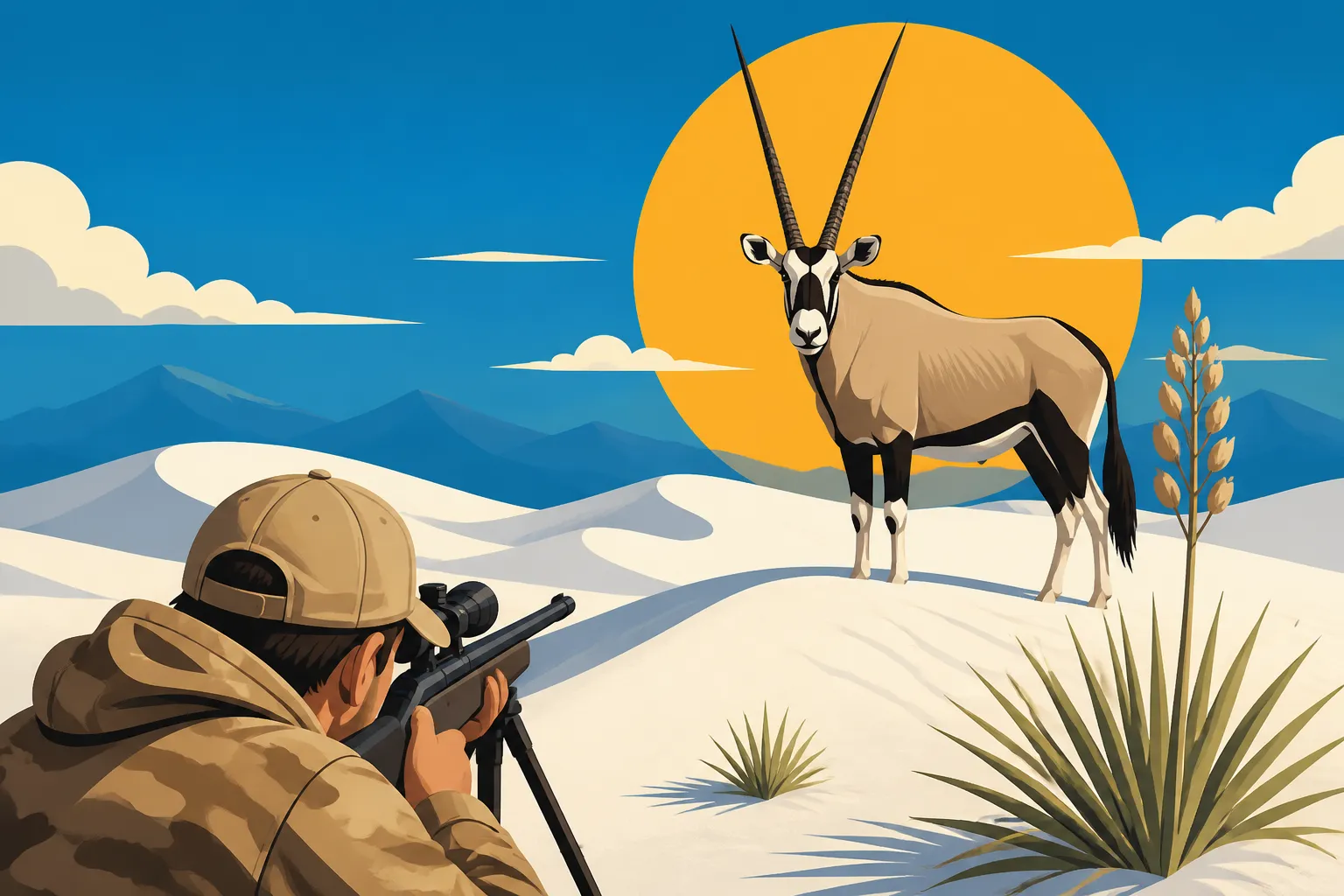
Let's talk about the oryx, or gemsbok as they're known in their native Africa. These aren't indigenous to New Mexico; they're an introduced species that has thrived beyond anyone's wildest expectations. Back in the late 1960s, a handful of oryx were released onto the White Sands Missile Range by the New Mexico Department of Game and Fish (NMDGF) as an exotic game species. The idea was to introduce a large ungulate that could not only survive but truly flourish in the harsh, arid conditions of the Chihuahuan Desert, offering a new and unique hunting opportunity. And flourish they did. They've adapted so well that their population grew exponentially, necessitating regulated hunting to manage their numbers and prevent overgrazing.
What makes an oryx such a special animal to hunt? For starters, their sheer size is impressive, with mature bulls often weighing over 400 pounds. Both sexes carry long, spear-like horns that can exceed 40 inches. These aren't just for show; they're formidable weapons used for defense and territorial disputes. An oryx is incredibly tough, built for survival in a brutal environment. They possess exceptional eyesight, hearing, and an uncanny ability to blend into the sparse desert landscape despite their striking black and white markings. Their thick hide and powerful musculature mean they can take a hit and keep going, making shot placement absolutely critical. Successfully hunting one is a true test of a hunter's skill, patience, and resolve.
The White Sands Missile Range Environment
Now, layer that formidable animal with the truly unique setting of the White Sands Missile Range. This isn't just any piece of public land. It's an active military testing facility, a vast expanse dominated by the iconic gypsum dunes, but also featuring vast playas, scrubland, and broken mesas. Imagine miles upon miles of blinding white sand, dotted with creosote bush, mesquite, and yucca, under an often unforgiving New Mexico sun. The terrain, while appearing flat from a distance, is riddled with subtle rises, shallow washes, and undulating dunes that can hide animals or make a stalk incredibly challenging.
This environment dictates everything about your hunt. The sheer openness means long-range glassing is paramount, and finding cover for an approach is a constant puzzle. Temperatures can swing wildly, from freezing desert nights to scorching daytime heat, especially during early season hunts. Water sources are scarce, making hydration a critical concern for both you and the animals. Furthermore, the constant military operations mean strict protocols, limited access, and the ever-present possibility of your hunt being temporarily halted or even cut short for safety reasons. You’re not just hunting; you’re operating within a highly controlled, dynamic environment where flexibility and strict adherence to rules are non-negotiable. It's a place that commands respect, both for the wildlife and the mission it serves.
Securing That Coveted White Sands Oryx Tag
The dream of hunting oryx on the White Sands Missile Range starts, for almost everyone, with a draw application. This isn't a walk-up tag situation; it's one of the hardest draws in the West, and understanding the process is your first step towards success.
The Draw Process and Odds
Let's not sugarcoat it: drawing a White Sands oryx tag is like winning the lottery, but with slightly better odds than your average scratch-off. The NMDGF manages the oryx hunts through an annual draw system, and the demand far, far outstrips the supply. We're talking single-digit draw odds for residents, and even slimmer for non-residents. Why so tough? Because these hunts are exclusive, limited, and offer an unparalleled experience for a truly unique big game animal. Many hunters apply for years, even decades, before finally seeing their name on the success list. New Mexico does not run a preference point system, meaning every applicant has the same chance each year, regardless of how many times they've applied unsuccessfully. You can research these odds using tools like GoHunt's Insider platform, which compiles draw statistics to help you make informed decisions, but ultimately, it comes down to luck.
The application window typically closes in mid-March, often on the 18th, so mark your calendars way in advance. The NMDGF offers various hunt codes for oryx, including "on-range" hunts (which are what most people envision for White Sands), "off-range" hunts (for oryx that have dispersed outside the missile range), youth-only hunts, and hunts specifically for mobility-impaired hunters. For this guide, we're focusing primarily on the on-range public draw tags, which are the most sought-after. When you're poring over the hunt codes, pay close attention to the specific weapon types allowed (bow, muzzleloader, rifle) and the designated hunt areas within the missile range, as these can vary. Understanding how New Mexico draw odds do not improve with time underscores the random nature of this process – it's all about putting your name in the hat every year.
Understanding Hunt Dates and Types
Once you beat the odds and secure a White Sands oryx tag, the next crucial step is understanding the specific dates and nature of your hunt. These are not open-ended seasons. White Sands oryx hunts are notoriously short, typically running for only three days. This compressed timeframe adds another layer of intensity, demanding that hunters be incredibly efficient and prepared to make the most of every minute in the field. This unique short duration is often cited as why a New Mexico oryx season runs three days, balancing hunter opportunity with military operational needs.
The hunts are usually scheduled throughout the year, with specific dates for archery, muzzleloader, and rifle seasons. It’s important to note that the military operates on its own schedule. This means that even with a valid tag, military operations can and do take precedence. It's not uncommon for portions of the range to be temporarily closed or for hunts to be delayed or even cut short due to testing. This scenario, where military operations can shorten your hunt, is a real possibility you must mentally prepare for. Flexibility and understanding that the military’s mission comes first are paramount. The NMDGF will communicate these changes, but it's essential to stay informed and ready to adapt.
To illustrate the different opportunities, here's a simplified look at the primary hunt types for oryx:
| Hunt Type | Weapon Type Allowed | Duration | Location | Access Notes | Success Rate (Approx.) |
|---|---|---|---|---|---|
| On-Range Public Draw | Rifle, Bow, Muzzle | 3 Days | White Sands Missile Range | Strictly controlled access, military escort/brief | Moderate to High |
| On-Range Mobility Imp | Rifle, Bow, Muzzle | 3 Days | White Sands Missile Range | Restricted to specific zones, vehicle access | High |
| Off-Range Draw | Rifle, Bow, Muzzle | Longer | Public lands surrounding WSMR | General public land access rules | Lower |
| Landowner/EPLUS | Rifle, Bow, Muzzle | Variable | Private land | Requires purchase from landowner | High |
This table highlights the distinctions, but for most dreamers, the "On-Range Public Draw" is the golden ticket. Being mentally prepared for a dynamic schedule and understanding that the military is a co-manager of this unique hunting ground is vital for a successful and stress-free experience.
Pre-Hunt Preparation: More Than Just Sighting In
Drawing a White Sands oryx tag isn't just about showing up with a rifle and a dream. The demanding environment and the resilience of the animal require a level of preparation that goes far beyond a quick zero at the range.
Physical and Mental Conditioning
Let's get real about the physical demands. Hunting oryx on White Sands often means covering significant ground on foot, much of it through soft, energy-sapping sand or over uneven, rocky desert terrain. You'll be walking miles, potentially under a relentless sun, carrying your rifle, optics, and a substantial amount of water. This is not a casual stroll; it's a grind. Building up your endurance through regular cardiovascular exercise – think long walks, hiking with a weighted pack, or running – is non-negotiable. Focus on strengthening your legs and core. If you typically hunt from a vehicle, this hunt will be a rude awakening if you haven't prepared. Simulating field conditions, like walking in sandy areas or wearing your actual hunting boots for extended periods, will pay dividends.
Equally important is mental conditioning. The open nature of White Sands means you’ll often spot oryx from a great distance, leading to long, frustrating stalks that may end in the animals spotting you and disappearing into the vastness. It takes incredible patience and resilience to repeatedly attempt stalks, sometimes for hours, only to come up empty. The heat, the sun, the wind, and the sheer emptiness can wear you down. You need to be able to push through discomfort, stay positive, and maintain focus. Practicing mindfulness or visualization can help. It's about being mentally tough enough to keep hunting hard even when you feel like quitting. Remember that heat management on an early season hunt is critical; proper hydration with electrolytes and wearing lightweight, sun-protective clothing are crucial for avoiding heat exhaustion, which can quickly derail your hunt.
Gear Selection for the Desert
Your gear choices on a White Sands oryx hunt are as important as your physical conditioning. Every item needs to be meticulously thought out for reliability and effectiveness in extreme desert conditions.
When it comes to optics, this is where you shouldn't skimp. The vast, open plains and subtle terrain features demand top-tier glass. You'll spend most of your hunt behind your binoculars and spotting scope, picking apart distant shadows. A high-power binocular (10×42 or 12×50) is your primary tool for scanning. Pair that with a high-quality spotting scope (like a 20-60x or 25-75x) mounted on a sturdy tripod. The tripod isn't just for your spotting scope; it's invaluable for hands-free, stable glassing with your binoculars over extended periods. Brands like Vortex, Leupold, and Swarovski are popular choices among serious Western hunters. Using resources like GoHunt can help you research different optics and read reviews specific to open country hunting. Remember, optics power for New Mexico's open country is crucial for identifying animals at extreme distances, allowing you to plan your approach.
Footwear is another critical area. Forget flimsy hiking shoes. You need sturdy, comfortable, and well-broken-in boots with good ankle support. You’ll be walking through sand, over rocks, and potentially thorny vegetation. Many hunters prefer boots that are slightly oversized to accommodate swollen feet in the heat and offer extra cushioning. Gaiters can be a lifesaver to keep sand and debris out of your boots.
For clothing, layers are essential, even in the desert. While the days can be scorching, mornings can be cool. Lightweight, breathable, moisture-wicking fabrics in light colors (tans, greys) are ideal to reflect sunlight and keep you cool. Long sleeves and pants are critical for sun protection, even if it feels hot. A wide-brimmed hat, sunglasses, and plenty of sunscreen are absolute musts. Camouflage patterns that mimic the sparse desert scrub can be beneficial for those crucial final stages of a stalk.
Water and food deserve special mention. This isn’t hyperbole: you will dehydrate quickly in the desert. Plan to carry significantly more water than you think you’ll need—at least a gallon per person per day, plus extra in your vehicle. Electrolyte supplements (powders or tablets) are highly recommended. Pack calorie-dense snacks that won't melt or spoil in the heat. A proper hydration system, whether a bladder in your pack or multiple bottles, is crucial. You really need to understand the amount of water you must carry on a desert day hunt to avoid a dangerous situation.
Finally, your rifle and ammunition. Oryx are incredibly tough animals. Many experienced hunters recommend calibers in the .300 magnum range (.300 Win Mag, .300 WSM, .300 PRC) or larger (7mm Rem Mag, .338 Win Mag) to ensure adequate penetration and knockdown power. Good quality, heavy-for-caliber bullets designed for deep penetration are paramount. Given the open terrain, prepare for potential long shots, meaning you need to be proficient out to 400-500 yards, and your rifle zero distance for canyon country (or in this case, open desert) should be carefully considered, often set at 200 or 300 yards. Practice shooting from various positions, including prone and off a bipod or shooting sticks, as you'll likely be shooting in the open.
| Gear Category | Essential Items | Specific Considerations for Oryx on White Sands |
|---|---|---|
| Optics | Binoculars (10x-12x), Spotting Scope (20-60x), Tripod | High magnification is key for vast, open terrain. Tripod for stable, long-duration glassing. |
| Footwear | Sturdy hiking boots, Gaiters | Comfortable, broken-in, ankle support for sand/rock. Gaiters keep out sand and debris. |
| Clothing | Lightweight layers, Wide-brimmed hat, Sunglasses | Moisture-wicking, light-colored for sun reflection and heat management. Long sleeves/pants for sun protection. |
| Hydration | Water (1+ gallon/day), Electrolytes, Hydration System | Absolute critical. Carry far more than you think. Electrolytes combat heat exhaustion. |
| Navigation | GPS device (Garmin inReach/onX), Paper map, Compass | Digital maps (GoHunt, onX) with satellite imagery are invaluable. Redundancy with paper maps/compass for battery failure. |
| Weapon | High-power rifle (e.g., .300 Win Mag), Quality ammo | Tough animal requires substantial caliber and deep-penetrating bullets. Practice long-range shooting. |
| Misc. | Game bags, Field dressing kit, Headlamp, First-aid, Sunscreen | Essential for meat care in heat. Be prepared for any emergency in a remote, controlled environment. |
This comprehensive gear list ensures you're not caught off guard by the desert's harsh realities or the military range's unique rules.
Navigating the White Sands Missile Range and Regulations
Hunting on an active military installation like the White Sands Missile Range isn't like heading to your local national forest. There are distinct procedures, strict rules, and a level of security that you absolutely must respect. Failure to do so can jeopardize your hunt, or worse, your safety and the future of public access.
Access and Entry Procedures
Let's talk about getting onto the range. This isn't a simple drive-up-and-hunt scenario. Before your hunt begins, you'll receive detailed instructions from the NMDGF, which will include information about specific check-in locations and times. Typically, hunters gather at a designated gate or facility on the missile range, such as the Alamogordo or Las Cruces check stations. Here, you'll undergo a mandatory check-in process. This usually involves presenting all required documentation: your valid New Mexico hunting license, your specific oryx tag, a government-issued photo ID (like a driver's license), and possibly vehicle registration and proof of insurance. Expect thorough vehicle inspections. Security personnel will likely check your vehicle for unauthorized items and ensure you have all the necessary permits.
You'll also attend a mandatory safety briefing. This isn't just a formality; it's critical information. Range personnel will cover essential safety protocols, explain off-limit areas, discuss potential unexploded ordnance (UXO) hazards, and review communication procedures. They'll outline what to do in case of military activity closures and provide contact information for emergencies. This briefing is where you learn the specific boundaries for your hunt, which roads you can and cannot use, and how to operate safely within the range. Respect the rules and the personnel, and ask questions if anything is unclear. They are there to ensure your safety and the integrity of the range. Being prepared for these steps is part of the overall readiness required for hunting oryx.
Understanding Specific Range Rules and Restrictions
Once you're cleared onto the White Sands Missile Range, the rules for your conduct are strict, non-negotiable, and designed for your safety and the security of the facility. The first and most critical rule is staying within designated hunt areas. These boundaries will be clearly marked on maps provided during your briefing. Deviating from these areas is a severe offense, as you could stray into active testing zones or areas with UXO. Always be aware of your location using a GPS device like a Garmin inReach or a smartphone app like onX Maps, which can show land ownership and restricted areas.
Unexploded Ordnance (UXO) is a constant, serious concern. You will be explicitly warned about this. Never touch, approach, or disturb any suspicious object. Mark its location, leave the area, and report it immediately to range officials. This isn't just a suggestion; it's a life-saving directive.
Vehicle travel is strictly limited to designated paved roads and graded dirt roads. Driving off-road is prohibited. This is partly due to the fragile desert environment, but primarily for safety, preventing accidental encounters with UXO or interference with operations. You must understand that even seemingly harmless off-road ventures are not allowed, quite different from some other public lands. This means understanding and adhering to motorized travel rules on New Mexico public land, with an even stricter interpretation on the missile range. Parking is usually restricted to specific pull-offs or alongside designated roads.
Other important restrictions include:
- No camping or fires: White Sands is strictly a day-hunt only area. You must check in and out daily.
- Pack it in, pack it out: Leave no trace whatsoever. This includes spent casings, trash, and any personal items.
- Retrieval of game: If you harvest an animal in a hard-to-reach area, you may need assistance from range personnel or specific permission to access it with a vehicle. This will be covered in your briefing.
- No unauthorized photography: Be mindful of what you're photographing. Military installations have security concerns.
The bottom line is that you are a guest on a working military installation. Adhering to every rule, no matter how minor it seems, is paramount. These rules are in place for your safety, the safety of others, and to ensure that this unique hunting opportunity continues for future generations.
Effective Hunting Strategies for White Sands Oryx
Hunting oryx on White Sands is a game of patience, keen observation, and precise execution. The vast, open landscape and the oryx's natural wariness demand a highly strategic approach.
Spot and Stalk in Open Country
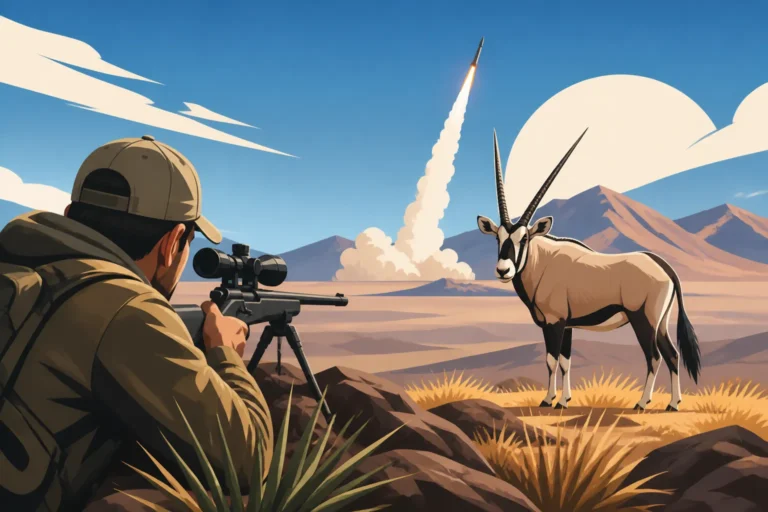
When you're out on the White Sands Missile Range, your primary hunting method will be variations of the spot-and-stalk. This isn't timber hunting; you won't be still-hunting through thick cover. Instead, you'll be constantly using your optics to pick apart the landscape. The game starts with finding a high vantage point, if available, or simply pulling over on a designated road to systematically grid glass the vast, open plains and rolling dunes. This is where your high-quality spotting scope and binoculars, mounted on a tripod, truly shine. You're looking for anything out of place: a distinct white patch against the pale sand, the sharp lines of their horns, or a subtle movement. With onX Maps or similar apps, you can mark potential areas where you've seen oryx or their sign previously (using GoHunt research tools can help identify historical hotspots).
Once an oryx or a group is spotted, the real chess match begins. The challenge is immense because of their exceptional eyesight and the lack of traditional cover. You'll need to use every subtle fold in the terrain, every sparse mesquite bush, and every slight rise or wash to your advantage. Often, this means making incredibly wide arcs, sometimes walking miles in the opposite direction from the animals just to get into a position where you can approach undetected. Playing the wind is crucial; an oryx's nose is sharp, and a whiff of human scent will send them scattering. You also have to consider the sun's position – trying to stalk directly into the sun means the oryx might pick up your shadow or glint off your optics. Patience is your biggest asset here. Be prepared to belly crawl the last few hundred yards, or even wait for hours for animals to feed into a more favorable position. Remember that your spotting scope power for open country needs to be significant enough to judge these animals from afar, aiding your stalk planning.
Shot Placement and Animal Recovery
The moment of truth on an oryx hunt demands precision. These animals are incredibly tough, and a poorly placed shot can lead to a long, frustrating, and often unsuccessful recovery in a difficult environment. Oryx have a unique anatomy compared to deer or elk; their vitals are positioned a bit more forward and lower than many North American ungulates. A good broadside shot aims directly behind the shoulder, slightly lower than you might aim on an elk. The goal is to hit the heart and lungs, which are protected by dense bone and muscle. Given their thick hide and powerful build, using a premium, deep-penetrating bullet from a magnum caliber is highly recommended. Practice shooting from a stable position – prone, off a bipod, or with shooting sticks – as you'll often be shooting across open ground.
Once the shot is taken and the oryx is down, the clock starts ticking, especially if you're hunting in warmer months. The desert heat can spoil meat quickly. Immediate field dressing is essential to begin the cooling process. Get the guts out, open the chest cavity, and if possible, split the pelvis. Having good quality game bags is critical to protect the meat from flies and dirt while allowing it to breathe. Get the carcass into the shade as quickly as possible. This might mean dragging it under a mesquite bush or to the shaded side of a dune. If you are retrieving the animal with a vehicle, try to get it to a cooler location or onto ice as soon as possible. Understanding field dressing in desert heat and how to get meat cooled on an early season hunt is vital not just for preserving your trophy but for ethical meat salvage. Always carry enough water to rinse your hands and knives.
Post-Harvest: Processing, Reporting, and Reflections
The hunt doesn't end when the animal is on the ground. There are critical steps that follow, ensuring your hard-earned meat is preserved, regulations are met, and you take time to appreciate the unique experience you've just had.
Field Care and Transport
After the shot and the initial field dressing, the priority is getting the meat cooled and off the range efficiently. Oryx are large animals, and removing them from the field, especially if you're alone or in a remote area, can be a monumental task. If allowed, try to get your vehicle as close as safely possible. Having a sturdy cart or even a heavy-duty sled can significantly aid in dragging the animal over sand and uneven terrain. Quartering the animal in the field is often the most practical approach for transport. This involves removing the four quarters, backstraps, and tenderloins. Use high-quality game bags to protect the meat from dirt, insects, and drying out.
Once quartered and bagged, your next challenge is rapid cooling. In the intense desert heat, this means getting the meat into coolers packed with ice as quickly as possible. You'll want large, well-insulated coolers. Pre-chill them with ice for a day before your hunt. Layer the meat, alternating with ice, and ensure the cooler drains are open to prevent the meat from sitting in water. This meticulous approach to cooling is essential for maintaining meat quality. As you exit the range, your vehicle and its contents may be inspected again. Ensure you have all required tags securely attached to the meat, as per New Mexico Game and Fish regulations. It's also important to be aware of the legal requirements for evidence of sex on a carcass, usually meaning a portion of the head or specific internal organs must remain attached until processing is complete.
Reporting Your Harvest and Beyond
Once you've successfully harvested an oryx, there are mandatory reporting requirements you must fulfill. The NMDGF requires all successful big game hunters to report their harvest within a specific timeframe after the kill, typically online or by phone. This data is crucial for wildlife managers to monitor harvest rates, population trends, and effectively manage the species. Failure to report your harvest can result in penalties, so make sure this step isn't overlooked in the excitement of the hunt. This is a standard procedure and part of mandatory reporting after a New Mexico harvest.
Beyond the regulatory requirements, consider what you'll do with your trophy. Oryx horns are truly unique and make for an incredible mount. If you plan to have a taxidermist work on your animal, ensure the cape and skull are properly cared for in the field. Caping an oryx requires specific knowledge due to their markings and thick hide, so if you're unsure, consulting with your taxidermist beforehand is wise. Shipping antlers or capes home might require special arrangements if you're traveling a long distance.
Finally, take a moment to reflect on the experience. Hunting an oryx on the White Sands Missile Range is a rare and unforgettable adventure. It's a testament to patience, perseverance, and a deep appreciation for unique wildlife and landscapes. You've navigated an active military installation, endured the harsh desert, and successfully hunted an incredibly challenging animal. The meat itself is a lean, delicious, and sustainable wild game protein. If you're wondering, "Is oryx meat worth eating?", the resounding answer from most hunters is an emphatic yes! It's a lean, mild, and flavorful meat that makes for excellent table fare. Cherish the memories, share the stories, and maybe, just maybe, start applying for that lottery ticket again for another chance at this incredible desert warrior.
Disclaimer
Please remember that hunting regulations and access rules can change. Always consult the most current New Mexico Department of Game and Fish regulations and any specific instructions provided by the White Sands Missile Range before planning and executing your hunt. Safety is paramount, and adherence to all rules ensures a safe and successful experience for everyone.