When Trust Land Access Actually Opens
One of the biggest head-scratchers for hunters in New Mexico, especially those new to our beautiful state or who typically stick to National Forest or BLM land, is figuring out the deal with State Trust Land. It can feel like a maze of rules and dates, leaving you wondering if you're even allowed to set foot on a promising-looking parcel. This guide aims to demystify New Mexico State Trust Land access, specifically focusing on when you can legally be there for your hunting and scouting endeavors.
Understanding New Mexico State Trust Land
New Mexico is blessed with a vast amount of public land, but not all public land is created equal in terms of access rules. State Trust Land often gets lumped in with other public lands like National Forests or Bureau of Land Management (BLM) acreage, but its purpose and, consequently, its access regulations are distinctly different. Understanding this fundamental difference is crucial for any hunter planning to use these lands.
What is State Trust Land and Its Purpose?
Imagine millions of acres of land set aside, not for general public recreation in the same way a national park or forest might be, but specifically to generate revenue. That's what New Mexico State Trust Land is all about. These lands, managed by the New Mexico State Land Office (NMSLO), exist to financially support a range of public institutions, primarily schools and universities, but also hospitals and other beneficiaries throughout the state. Every activity on State Trust Land, from oil and gas extraction to grazing, and yes, even hunting, is ultimately geared towards fulfilling this fiduciary responsibility. It's not just "public land" in the recreational sense; it's a working landscape with a very specific, financial mission. This unique purpose directly influences the rules and timelines for accessing it.
Because the NMSLO's primary goal is revenue generation, they issue leases for various uses. This means that while it's "public" in ownership, it might be leased out to a rancher for grazing or to a company for mineral extraction. Hunters need to be aware of these other uses and understand that they are guests in a working environment. This isn't just about avoiding conflict; it's about respecting the land's primary function and the livelihoods it supports, ensuring that hunting remains a welcomed activity on these valuable lands.
Why Hunters Need to Know About State Trust Land
For many hunters, State Trust Land represents a significant portion of available hunting ground, often connecting larger blocks of National Forest or BLM land, or sometimes standing as prime hunting areas themselves. Ignoring these lands means potentially missing out on huge opportunities, whether it's for elk, deer, pronghorn, or other species. However, navigating access can be tricky without proper knowledge, leading to accidental trespass or inadvertently breaking rules that could jeopardize future access for all hunters. New Mexico State Trust Land Access Rules are in place for a reason, and knowing them ensures you're a responsible user.
Beyond the sheer volume of acreage, State Trust Land can sometimes hold excellent, less-pressured game populations simply because fewer hunters understand or take the time to properly access it. A patch of trust land might be the key to unlocking a specific unit, offering a travel corridor for game or providing critical winter range. However, this potential reward comes with the responsibility of understanding the access nuances, which differ significantly from the more straightforward rules of federal public lands. It's not enough to simply see "public land" on a map; you need to know the specific regulations that apply to trust land.
The Legal Framework: Your Hunting License as an Easement
Unlike National Forests or BLM land where general recreation is often permitted by default, access to New Mexico State Trust Land for hunting is a privilege granted through a specific agreement. This isn't just a casual understanding; it's a formal arrangement that empowers your hunting license to act as a limited access permit.
The Hunting License as Your Easement
Here in New Mexico, your valid hunting license isn't just permission to hunt; it also serves as a crucial easement for accessing State Trust Land. What does that mean exactly? It means that when you purchase your license, you are essentially buying the right to enter and traverse these lands for the purpose of hunting or scouting during specific, regulated periods. This is a very specific type of access, distinct from general recreational use. If you don't have a valid hunting license for the current season, or if you're not engaged in hunting or scouting activities, you generally don't have the right to be on State Trust Land. A New Mexico License Is Your State Trust Land Easement provides the legal foundation for your presence.
Think of it like a special pass that only works for a particular event. You wouldn't expect to use a concert ticket to get into a baseball game, right? Similarly, your hunting license is that concert ticket, granting you entry to the "hunting concert" on State Trust Land. This arrangement is why you can't just hike or picnic on State Trust Land year-round without a specific permit or authorization if it's not tied to hunting or other specific, permitted activities. It's a privilege directly linked to the pursuit of game and the management efforts supported by hunting license fees.
The Agreement Between NMDGF and NMSLO
The ability for hunters to access State Trust Land stems from a formal agreement between the New Mexico Department of Game and Fish (NMDGF) and the New Mexico State Land Office (NMSLO). This isn't just a handshake deal; it's a legally binding arrangement that ensures hunters have access while simultaneously compensating the NMSLO for that access, thus fulfilling its mandate to generate revenue for its beneficiaries. The funds derived from hunting licenses and associated fees contribute to this compensation, creating a symbiotic relationship where conservation and public education both benefit. The Easement Between the Land Office and Game and Fish details this crucial relationship.
This agreement is fundamental because without it, hunters would likely face significant barriers or even outright prohibitions from using trust lands. It's a testament to the NMDGF's efforts to secure and maintain public hunting opportunities and the NMSLO's recognition of hunting as a legitimate, revenue-generating use of the land. This understanding should foster a deep sense of responsibility among hunters to abide by the rules, as any abuses could jeopardize this hard-won access for future generations. It's a delicate balance that relies on every hunter doing their part.
Distinction from Other Public Lands
It’s easy to look at a map, see a green or yellow blob, and assume "public land, go for it." But trust land operates under different statutes and management philosophies than, say, a National Forest or BLM parcel. National Forests are managed for multiple uses, including timber, recreation, and wildlife, under federal guidelines. BLM lands are also federal and managed for multiple uses, often focused on grazing, energy development, and recreation. State Trust Land, however, has that singular, overriding mandate of revenue generation for specific state beneficiaries.
This means that while a BLM road might be open to the public for general access, a road on State Trust Land could have more restrictive rules, or even be closed, if its use doesn't align with the NMSLO's revenue-generating mission or conflicts with a specific leaseholder's operations. Hunters accustomed to the more open-ended access on federal lands need to adjust their mindset when planning for trust land. Always assume there are more specific rules in place, and always verify current conditions. Don't let the similar appearance on a map fool you into thinking the rules are the same across all "public" ground.
Key Timelines for Trust Land Access
Understanding when you can access New Mexico State Trust Land is paramount. It’s not a free-for-all, year-round access, but rather specific windows tied directly to hunting seasons and activities. This structure ensures the NMSLO's mandate is met and minimizes conflicts with other land uses.
General Hunting Season Access
Generally speaking, you can access New Mexico State Trust Land for hunting purposes starting from the opening day of a specific hunt in which you hold a valid license or permit, and extending through the closing day of that hunt. This is the most straightforward access window: if you have an elk tag for Unit X, and the season runs from October 1st to October 5th, you have access to State Trust Land within Unit X for hunting during those specific dates. This applies to all big game, small game, and bird hunting seasons. Your license is your ticket, but only for the duration of the hunt you're participating in.
This means that if you're holding an archery deer tag for September, your access to State Trust Land is valid during those archery dates. If you then draw a rifle elk tag for November, your access shifts to those dates. There isn't a continuous, year-round access simply because you bought a hunting license at the beginning of the year. Each hunt code on your license dictates the specific window of legal access. It's critical to align your presence on trust land with an active, valid hunt.
The 14-Day Scouting Window
Beyond the actual hunting season dates, New Mexico also provides a dedicated scouting window for State Trust Land. For anyone holding a valid big game hunting license for the upcoming or current season, you are allowed to scout State Trust Land up to 14 days immediately preceding the opening day of your authorized hunt. This is a huge benefit, allowing hunters to get boots on the ground, locate game, find water sources, and plan their approach right before the season officially kicks off. You May Scout New Mexico Trust Land 14 Days Before a Hunt elaborates on this vital period.
This 14-day window is incredibly valuable for last-minute intel gathering, especially after doing your initial E-scouting. Imagine you have an archery elk hunt starting on September 1st. You can legally be on State Trust Land scouting from August 18th through August 31st. However, once that September 1st opener hits, you're officially in hunting mode. And if your hunt is over, your 14-day window for that specific hunt has also passed. You cannot, for example, scout in July for a November rifle hunt under this rule. The "immediately preceding" part is key. Always consult the current NMDGF regulations booklet for precise dates and any changes, as these rules are subject to update.
Specific Hunt Code Variations
While the general hunting season and 14-day scouting rules apply broadly, it's always wise to remember that specific hunt codes can sometimes have unique considerations. For example, some hunts might occur within areas that have specific NMSLO agreements or restrictions, or perhaps the hunt itself is designed around limited access that affects the trust land. These instances are rare, but they highlight the importance of reading your hunt code details and the annual NMDGF rule and information booklet thoroughly.
Occasionally, there might be depredation hunts or specific management hunts that operate under different timelines or access permissions. These are usually clearly outlined by the NMDGF when such opportunities arise. The takeaway here is to never assume universal access based solely on "it's public land." Always double-check any specific notes or provisions related to your particular hunt code and the areas it covers. A quick call to the NMDGF or NMSLO can clear up any ambiguities and prevent an unintentional violation.
Specific Scenarios and Common Misconceptions
State Trust Land access isn't just about dates; it's also about how you use the land during those dates. There are several common points of confusion that hunters frequently encounter.
Pre-Season Scouting Beyond the 14 Days
One of the biggest misconceptions revolves around scouting outside the 14-day window. Many hunters are used to year-round access on National Forests or BLM land for general scouting, shed hunting, or just exploring. However, on New Mexico State Trust Land, this is generally not allowed without a specific, separate permit or if you are not actively engaged in an authorized activity within the regulated window. Simply put, if you don't have a valid hunting license for an active hunt and aren't within the 14-day pre-hunt scouting window for that hunt, you cannot legally be on State Trust Land for scouting.
This rule is often a sticking point for out-of-state hunters or those who like to extensively scout months in advance. You might be able to E-Scouting a New Mexico Unit Before the Season from home, looking at maps and satellite imagery, but putting boots on the ground for extended periods outside the designated windows is a no-go. The NMSLO's commitment to revenue generation means unauthorized uses are generally restricted. Adhering to this rule is crucial for maintaining hunting access. If you want to scout in June for a November hunt, stick to National Forest or BLM lands for your physical reconnaissance.
Camping on Trust Land
The question of camping on State Trust Land is another area where confusion reigns. Unlike many federal public lands where dispersed camping is often allowed, camping on New Mexico State Trust Land is generally not permitted unless you have explicit written permission from the NMSLO. Your hunting license and the associated easement do not grant you camping privileges. Can You Camp on New Mexico Trust Land? is a common question, and the answer is almost always "no" without specific authorization.
This prohibition on camping extends to all forms of overnight stays, whether it's setting up a tent, parking an RV, or even sleeping in your vehicle. The primary reason for this restriction, again, ties back to the NMSLO's mandate and the potential for conflict with existing leaseholders or other authorized activities. If you plan to hunt an area heavily comprised of State Trust Land, you'll need to locate nearby National Forest, BLM land, or private campgrounds for your overnight accommodations. Plan your logistics carefully to avoid an unwelcome surprise from a Land Office Ranger.
Motorized Travel and Road Access
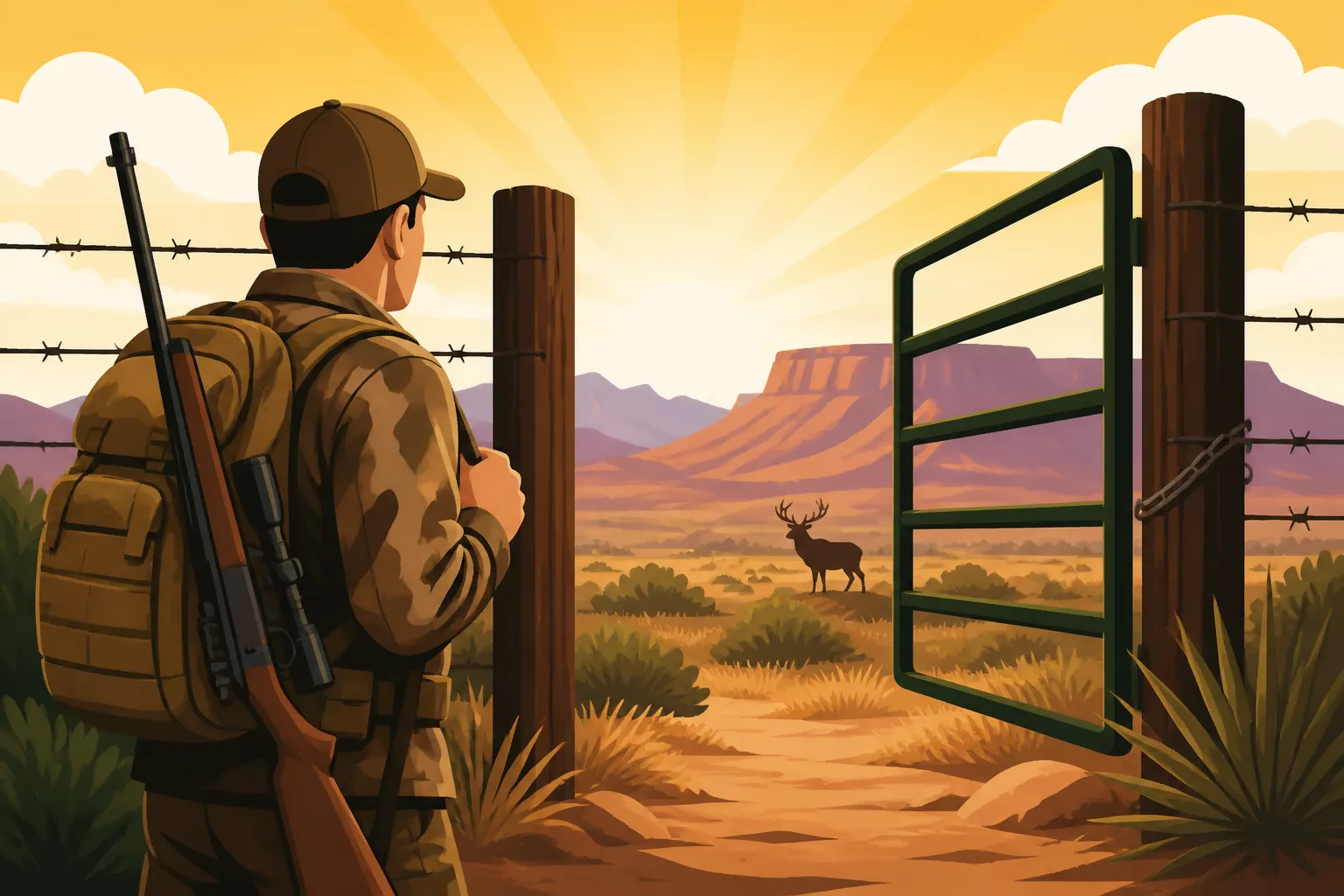
Navigating State Trust Land with a vehicle can be another minefield if you're not careful. The general rule is that motorized travel on State Trust Land is restricted to established public roads and two-track routes that are open to vehicular traffic. Your hunting license does not grant you the right to drive off-road, create new roads, or access closed routes. Many gates on State Trust Land are locked, or roads are signed as closed, often due to grazing leases, conservation efforts, or simply to prevent damage. Motorized Travel Rules on New Mexico Public Land apply to State Trust Land as well, often with even stricter enforcement.
Respecting these closures is not just a legal obligation; it's vital for maintaining good relationships with leaseholders and the NMSLO. Driving on wet or muddy roads, creating ruts, or trespassing onto private property through unapproved routes can lead to severe penalties and compromise access for all. Always assume gates are closed for a reason and never attempt to bypass them. If a road is not clearly open and designated for public access, don't drive on it. When in doubt, walk. A good mapping app can help you identify established routes.
Planning Your Hunt on Trust Land
Successfully hunting on New Mexico State Trust Land requires diligent planning and a proactive approach to understanding and respecting the land. It’s not just about drawing a tag; it’s about preparing for the unique aspects of this land category.
Identifying Trust Land Boundaries
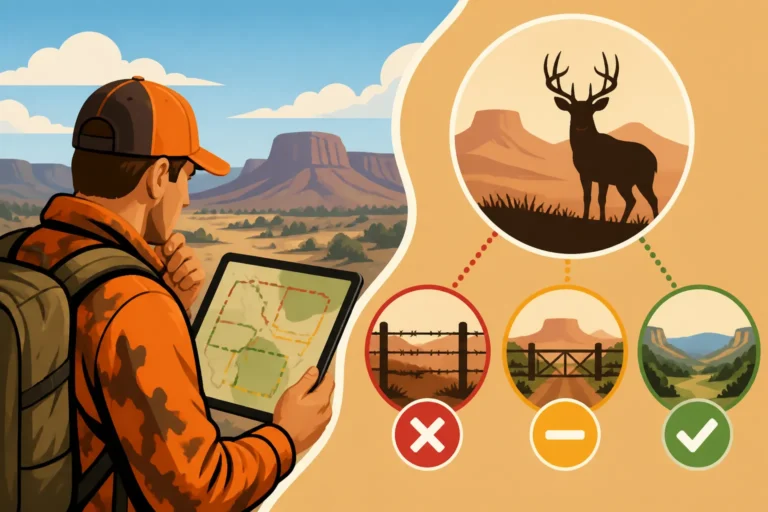
Accurately identifying State Trust Land boundaries is the absolute first step in planning a hunt on these lands. Gone are the days of relying solely on paper maps that might not be precise enough. Modern mapping applications are indispensable here. Tools like onX Hunt or GoHunt provide detailed land ownership layers that clearly differentiate State Trust Land from BLM, National Forest, private property, and other land types. It’s crucial to use these tools effectively, both during your initial E-scouting and in the field.
When you're looking at a map, don't just glance at the colors. Zoom in, cross-reference with topography, and understand where the lines actually fall. Trust land parcels can often be checkerboarded with private or other public lands, making accurate boundary identification critical. Spending time learning Reading a Land Ownership Layer Correctly on your app of choice will pay dividends, preventing accidental trespass and ensuring you're legally situated for your hunt. Always make sure your app's maps are downloaded for offline use, as cell service is often nonexistent in prime hunting areas.
Checking for Closures or Special Restrictions
Even if a parcel is identified as State Trust Land and falls within your hunt unit and dates, it's not a guaranteed open door. The NMSLO can implement temporary or permanent closures, or special restrictions, often due to fire danger, environmental concerns, or conflicts with other authorized uses. While such closures are usually announced by the NMDGF or NMSLO, it's the hunter's responsibility to check. Don't assume that because it was open last year, it's open this year.
Always check the NMDGF website for any last-minute alerts or closures before heading into the field. Sometimes, a specific leaseholder might have temporary operations that restrict access to a particular area. While this isn't always widely publicized, being aware of local conditions and signs on the ground can help. A quick search of the NMSLO website or a call to their regional office or the local NMDGF office can also provide valuable insights into any current or anticipated restrictions in your chosen area.
Respecting Adjacent Private Land
This point cannot be stressed enough: State Trust Land is often intermingled with private property. Your easement to access trust land does not grant you any rights to trespass on adjacent private property, even if it's just to cross a corner or retrieve game. Crossing Private Ground to Reach New Mexico Public Land is a definite no-go without explicit, written permission from the landowner. Accidental or intentional trespass is a serious offense that can lead to fines, loss of hunting privileges, and significantly damage the public's perception of hunters.
Always know where your boundaries are and give private property a wide berth. If game runs onto private land, you must attempt to contact the landowner and obtain permission before pursuing it. This is not only ethical but legal. The continuation of hunting access on New Mexico State Trust Land, and indeed, New Mexico Holds Over 30 Million Acres of Public Hunting Land across various designations, depends heavily on hunters demonstrating respect for all land ownership, private and public alike. Being a good steward of the land and a respectful neighbor is the best way to ensure hunting access for generations to come.
Leveraging Mapping Tools for Trust Land
In today's hunting world, digital mapping tools are no longer a luxury; they are an absolute necessity, especially when navigating the intricacies of New Mexico State Trust Land. They can be the difference between a successful, legal hunt and a frustrating, potentially unlawful one.
How onX Hunt and GoHunt Help Navigate Trust Land
Modern mapping applications are incredible resources for any hunter, and when it comes to New Mexico State Trust Land, they are indispensable. onX Hunt and GoHunt, for example, offer robust land ownership layers that color-code different land types, making it easy to see where State Trust Land begins and ends, and where it borders private or other public lands. This visual clarity is game-changing, allowing you to plan routes, identify access points, and understand potential obstacles long before you even leave your driveway. Using onX Layers for New Mexico Public Land effectively can save you countless headaches.
Beyond just identifying trust land, these apps often include other valuable layers like topography, water sources, roads (and their designations, sometimes), and even historical wildfires, all of which are crucial for planning your hunt. With GPS integration, you can see your exact location relative to these boundaries in real-time while in the field. This capability means you can confidently stalk an animal knowing you're on legal ground, or quickly identify if you're approaching private property, giving you the information you need to make ethical and legal decisions on the fly.
Interpreting Land Ownership Layers Correctly
Having a mapping app is one thing; interpreting its layers correctly is another. When you're looking at the land ownership layer, understand that the colors are your guide. Typically, different colors represent different land classifications: State Trust Land, BLM, National Forest, private, tribal, etc. Familiarize yourself with the legend in your chosen app so you can quickly differentiate. Look for obvious access points, like public roads that traverse or abut trust land parcels. Avoid routes that appear to dead-end into private land or are not clearly marked as public access.
It’s also crucial to remember that while these apps are highly accurate, they are not infallible. Always cross-reference with signs on the ground, such as "No Trespassing" signs or locked gates. If there's a discrepancy or a doubt, err on the side of caution. Land ownership can be complex, and while technology is a powerful aid, common sense and respect for property are still your best tools. Before your hunt, spend dedicated time studying the land ownership in your unit, identifying which parcels are State Trust Land, and formulating a plan for legal access and travel.
New Mexico Trust Land Access Summary
| Access Type | Valid Period | Requirements | Key Restrictions |
|---|---|---|---|
| Hunting Season | Opening Day to Closing Day of your hunt | Valid New Mexico hunting license/tag | Only for the specific hunt code/dates. |
| Scouting (Pre-Hunt) | 14 days immediately preceding your hunt | Valid New Mexico big game hunting license | Only for big game. Cannot camp. Limited to 14 days. |
| Camping | Generally NOT Permitted | Explicit written permission from NMSLO | No overnight stays without NMSLO authorization. |
| Motorized Travel | Active hunt/scouting period | On established, open public roads/two-tracks | No off-road travel. Respect all closures/gates. |
| General Recreation | Generally NOT Permitted | NMSLO-issued permit for specific activities | Not for hiking, fishing, etc., without specific permit. |
Remember, this table is a general overview. Always consult the most current New Mexico Department of Game and Fish regulations booklet and the New Mexico State Land Office website for the definitive and most up-to-date information.
Disclaimer
This article is for general informational purposes only and does not constitute professional advice. Laws, prices and regulations vary by location and change over time. Consult a qualified professional for guidance on your specific situation.