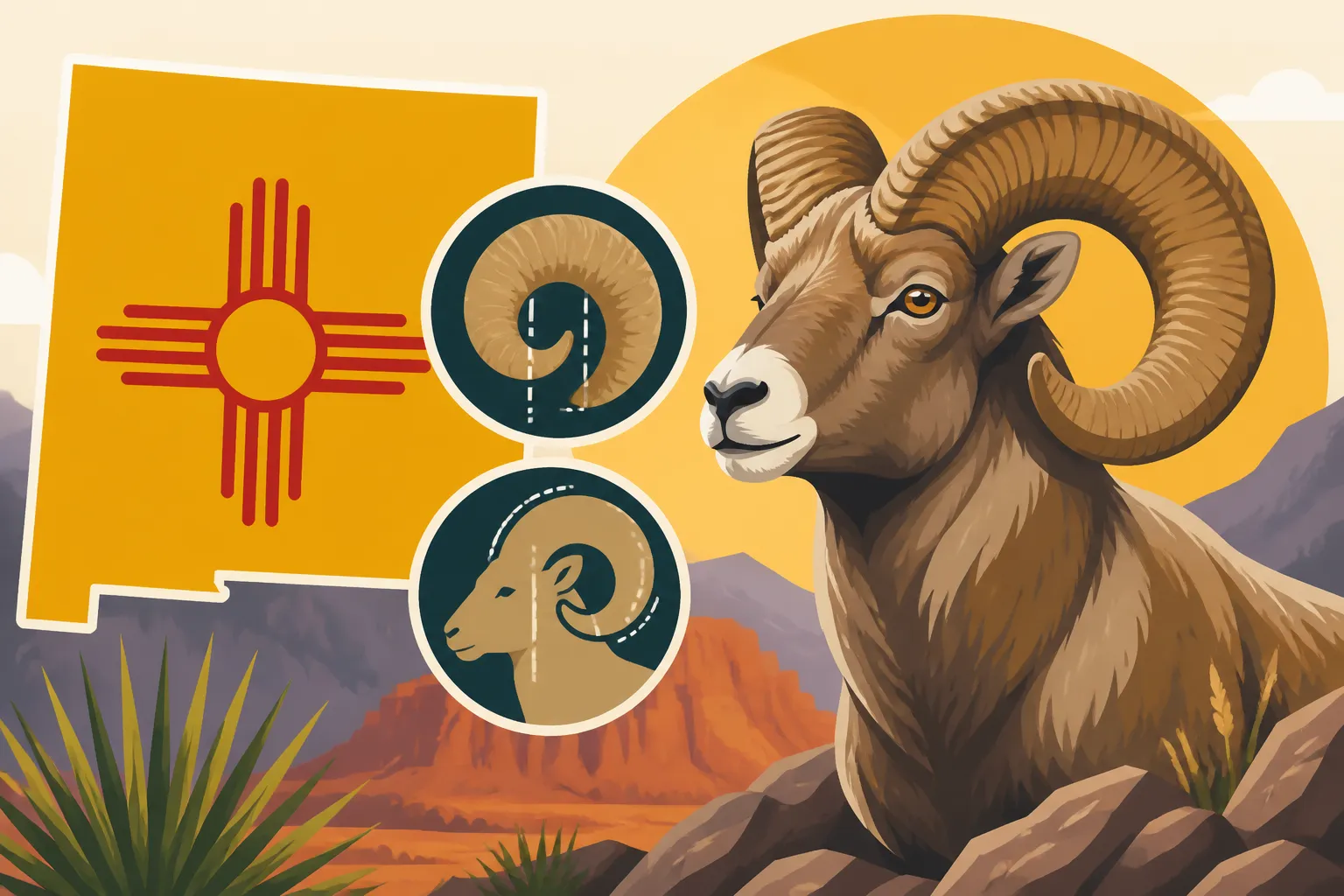
Ram Curl Requirements New Mexico Enforces
It's incredibly frustrating when you've finally drawn that coveted New Mexico bighorn sheep tag – a true hunt of a lifetime for many – only to feel a knot in your stomach about correctly identifying a legal ram in the field. The rules about "ram curl" can feel like a secret language, full of nuances that make you question every decision in the heat of the moment. This guide is here to demystify those regulations, helping you understand precisely what New Mexico requires so you can hunt confidently and ethically.
Understanding Ram Curl and Its Importance
When you hear hunters talk about "ram curl," they're referring to the arc and length of a bighorn sheep's horns, a critical characteristic used by wildlife agencies to manage populations and ensure sustainable harvesting of mature rams. It’s not just an arbitrary rule; it’s a science-backed method for protecting younger, breeding rams and allowing older, genetically superior rams to contribute to the herd for a longer period.
Biologically, a ram’s horns grow throughout its life, adding a new segment each year. As they grow, they naturally curl, often forming a spiral. The degree of this curl is directly related to the ram's age. A young ram might have short, slightly curved horns, while an older, more mature ram will typically have horns that have completed a significant portion of a full circle, or even multiple spirals. By setting a minimum curl requirement, New Mexico Game and Fish ensures that hunters are targeting these older, more mature animals, leaving the younger rams to grow and breed. It’s a conservation strategy designed to maintain healthy herd dynamics and provide quality hunting opportunities for years to come. This careful management is crucial for species like the bighorn, which can be sensitive to overharvesting. New Mexico has put a lot of effort into New Mexico Bighorn Recovery, and these regulations are a core part of that success.
Beyond the biological aspect, adhering to ram curl requirements is an ethical imperative. As hunters, we bear the responsibility of knowing and following the rules. Misidentifying a ram isn't just a legal misstep; it's a breach of trust with the resource and the larger hunting community. The challenge of field judging bighorns is significant, given their remote habitat and the sheer excitement of the moment, but it’s a test of our commitment to ethical hunting practices.
New Mexico's Specific Ram Curl Regulations
New Mexico has regulations in place for both Desert Bighorn Sheep and Rocky Mountain Bighorn Sheep, which are found in different parts of the state. While the specific legal definitions might vary slightly from unit to unit or year to year based on population objectives, the general principle of judging horn maturity remains consistent. Always consult the most current New Mexico Hunting Rules & Info booklet, as these regulations are subject to change. This is the absolute first step before you even apply for a tag. Where the Current New Mexico Regulations Are Posted is an excellent resource for this.
The most common benchmark for a legal ram in New Mexico, particularly for Rocky Mountain Bighorn, is often referred to as "three-quarter curl" or "full curl."
- Full Curl: A ram is considered "full curl" when the tip of its horn grows forward past the vertical plane of its eye. Imagine a line extending straight down from the center of the ram's eye; if the horn tip breaks that imaginary line, it's typically considered a full curl. This indicates a very mature animal, often 7 years or older. This is a classic definition across much of the West and is designed to target older, trophy-class rams.
- Three-Quarter Curl: In some units or for specific hunt codes, a "three-quarter curl" ram might be legal. This generally means the tip of the horn has grown forward to at least the rear vertical plane of the eye, but not necessarily past the front vertical plane. This classification allows for the harvest of slightly younger, but still mature, rams without impacting the breeding potential of the herd. Again, checking the specific hunt code details in the regulations is crucial because these definitions are precise. For those studying draw odds and unit specifics, platforms like GoHunt offer detailed information that can include these nuanced regulations, helping you plan your application strategy effectively.
For Desert Bighorn, found in the rugged southern ranges, the rules are often very similar. The goal is the same: to protect younger rams while allowing for the harvest of older, mature animals. Where Desert Bighorn Live in New Mexico is excellent background reading to understand their habitat. It's important to understand that simply having a broken horn tip doesn't automatically make a ram legal, either. If the ram hasn't reached the minimum curl requirement before the break, it's still illegal. This is why careful field judging, looking at the entire horn mass and direction, is absolutely essential. A good pair of binoculars or a spotting scope, perhaps one reviewed in articles like Binocular Size That Survives an All-Day Session or Spotting Scope Power for Open Country, will be your best friend in determining legality.
Here’s a simplified overview of what these often look like, but remember, always verify with the current year's official regulations.
| Curl Requirement | Visual Description (Approximate) | Age Indication (Approx.) | Typical Species/Management |
|---|---|---|---|
| Full Curl | Horn tip extends past the vertical plane of the ram's eye. | 7+ years | Rocky Mountain/Desert |
| 3/4 Curl | Horn tip extends to the rear vertical plane of the eye. | 5-6 years | Rocky Mountain/Desert |
| Broken Horn | Horn tip is broken, but the remaining horn still meets 3/4 or full curl if intact. | Varies | N/A (condition, not age) |
| Less than 3/4 | Horn tip does not reach the rear vertical plane of the eye. | Younger rams | Illegal to harvest |
Practical Tips for Field Judging Ram Curl
Successfully judging a ram's curl in the field is arguably one of the most challenging aspects of bighorn sheep hunting. These animals live in incredibly steep, unforgiving terrain, and often you’ll spot them from extreme distances. The light, the angle, and the sheer adrenaline can all conspire to make an accurate assessment difficult.
First and foremost, optics are your best friend. You cannot, and should not, attempt to field judge a ram without a high-quality spotting scope on a solid tripod. Binoculars are great for initially finding animals, but to definitively determine horn legality, you need the magnification and stability of a spotter. Position yourself for the best possible angle, ideally with the ram broadside or slightly quartering away, to clearly see the horn's curve in relation to its eye. Utilize techniques like The Grid Glassing Method, Step by Step to methodically scan terrain where bighorns might be found, ensuring you don't overlook a potential ram.
Understand the "plane of the eye" concept intimately. Visualize that imaginary vertical line dropping from the center of the ram's eye. If the horn tip breaks that line and sweeps forward, you're usually looking at a full curl. Practice this visualization at home with photos or videos. It sounds simple, but under pressure, it can be tricky. Look for the horn mass too; older rams will have significantly thicker horn bases compared to younger animals. Don't let a ram's body size fool you into thinking it's mature; horn development is the key.
Patience is paramount. Bighorns are often active, feeding, and moving. If you spot a ram and it’s not in an ideal position for judging, wait. They will often bed down or shift positions, giving you a better view. Never rush a shot unless you are 100% confident in your judgment. Waiting an hour, or even half a day, to get a clear, unobstructed view for judging is always better than making a mistake. Terrain can play tricks on your eyes, too. An animal on a steep slope can appear different than one on level ground. Remember, Hunting New Mexico From 4,000 Feet to 10,000 illustrates the vast elevation changes you'll encounter, each presenting unique viewing challenges.
Don't forget about both horns. While a ram's horns are generally symmetrical, injuries or abnormal growth can occur. Always assess both horns to ensure legality, even if one appears to meet the requirement. Sometimes, a ram will have a "broomed" horn tip where the end has been worn down from rubbing, which can make judging even more difficult. In these cases, you still need to project where the horn would have ended to determine if it meets the curl criteria. If there's any doubt, err on the side of caution. It's far better to pass on a ram and live to hunt another day than to harvest an illegal animal. Many hunters spend years trying to draw these tags; using a resource like New Mexico Bighorn Sheep Draw Odds can give you a realistic expectation of how hard these tags are to acquire, emphasizing the importance of doing everything by the book when you finally get one.
Consequences of Misjudging Ram Curl and Penalties
Harvesting a bighorn sheep that does not meet the legal ram curl requirements in New Mexico is a very serious offense, and the consequences are significant. This isn't just a minor ticket; it can lead to severe penalties that impact your hunting privileges for years to come and result in substantial financial burdens. New Mexico Game and Fish takes its big game management, especially for trophy species like bighorns, incredibly seriously.
The immediate consequence will be a citation and the confiscation of the illegal ram. You will lose your tag and the opportunity to hunt that species, often for a lifetime in New Mexico. The financial penalties are steep, often including significant fines that can range into the thousands of dollars, as well as restitution fees for the animal itself. These restitution fees are designed to compensate the state for the loss of a valuable wildlife resource and can be extraordinarily high for bighorn sheep. This financial hit alone can be devastating, especially after investing time and money into a hunt of a lifetime.
Beyond the fines, you will likely face a suspension of your hunting privileges, not just in New Mexico, but potentially in other states through the Interstate Wildlife Violator Compact. This compact means that a hunting violation in one member state can result in the loss of privileges in all member states. Imagine not being able to hunt any species, anywhere, for several years – it’s a harsh reality that can stem from a moment of misjudgment or carelessness. For hunters who travel to pursue game, this can effectively end their big game hunting career.
The ethical stain on your reputation as a hunter is also a consequence, though not legally mandated, it's something that often weighs heavily. The hunting community is tight-knit, and violations of this nature are not looked upon lightly. It undermines the conservation efforts that all ethical hunters support. Desert and Rocky Mountain Bighorn in New Mexico outlines the incredible work done to sustain these herds, and violating regulations undermines those efforts.
Therefore, the message is clear: when in doubt, don't take the shot. No trophy is worth the legal, financial, and ethical consequences of an illegal harvest. Do your homework, study the regulations, practice your field judging skills, and never feel pressured to shoot if you are not 100% certain that the ram is legal. The investment in your hunting education and responsible decision-making is far more valuable than any horn.
Disclaimer
This article is for general informational purposes only and does not constitute professional advice. Laws, prices and regulations vary by location and change over time. Consult a qualified professional for guidance on your specific situation.