Where New Mexico Black Bear Density Runs Highest
Finding black bears in New Mexico can feel like searching for a ghost in the vast expanses of the desert and mountain ranges. These elusive animals are rarely seen unless you know where to look and understand the ecological factors that concentrate them. This guide aims to demystify the process, helping you pinpoint the regions where New Mexico's black bear density runs highest, offering a realistic look at their habitat preferences and how you can use that knowledge to your advantage.
Understanding New Mexico's Black Bear Landscape
New Mexico is a diverse state, ranging from high alpine forests to arid desert canyons, and black bears have adapted to thrive in many of these varied environments. However, their populations aren't evenly distributed. They tend to concentrate in areas that provide a trifecta of essential needs: ample food, reliable water, and dense cover for security and denning. It's not just about the total number of bears statewide, but where those bears choose to spend their lives, often in surprisingly localized pockets within larger units.
Hunting black bears here requires more than just knowing a unit has bears; it demands an understanding of their seasonal movements and preferred microhabitats. For instance, a unit might have a healthy bear population, but if the acorn crop fails in one canyon, those bears will move to another area where pinyon nuts are abundant. This fluidity makes scouting crucial, and knowing the general high-density areas is your starting point. You'll often find that areas with high black bear density also happen to be prime habitat for other big game, like elk and deer, as many of their needs overlap. It’s no coincidence that some of the state’s best elk country also holds the most bears.
Top Geographic Regions for High Black Bear Density
When we talk about where New Mexico black bear density runs highest, we're really looking at specific mountain ranges and wilderness complexes that consistently provide superior habitat. These are often vast, rugged areas that offer seclusion and a consistent food base.
The Gila Wilderness Complex
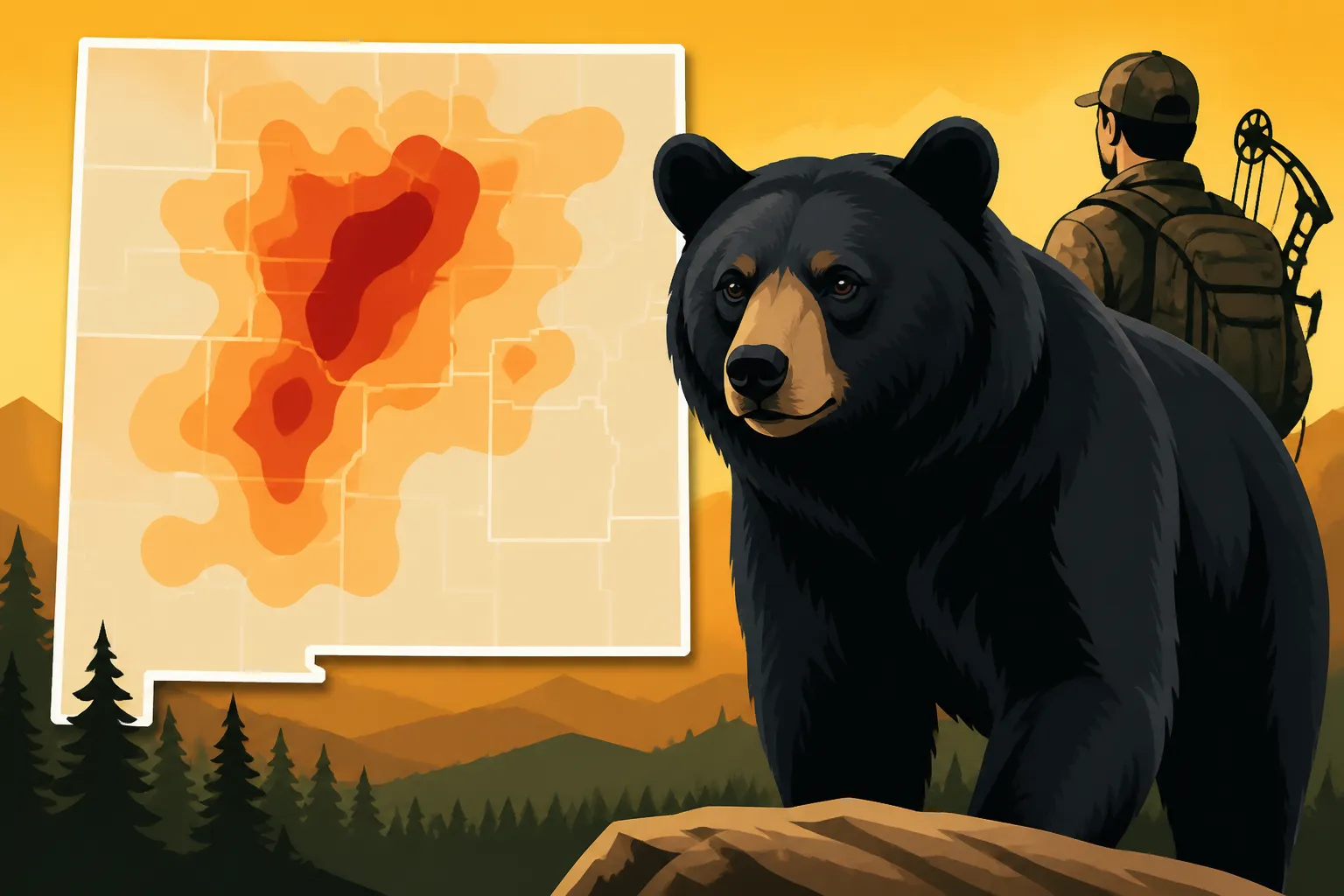
Hands down, the Gila National Forest and its associated wilderness areas, like the Gila Wilderness and Aldo Leopold Wilderness, are premier locations for black bear populations. This immense region in southwestern New Mexico is characterized by its vast, unbroken tracts of timber, deep canyons, and diverse vegetation. Bears thrive here because of the sheer scale of the wilderness, which offers minimal human disturbance, and the rich variety of food sources.
In the Gila, bears feed heavily on acorns from various oak species, especially during years of good mast crops. Pinyon nuts are another critical food source. The numerous riparian areas provide consistent water, while the dense timber and rocky bluffs offer endless denning sites and escape cover. Units like 16A, 16D, 15, and 17, often discussed for their trophy elk potential, are also strongholds for black bears. If you're planning a trip to the Gila for any big game, you're almost guaranteed to be in bear country. As an example, many hunters pursuing elk in the rut, hoping to hear Bugling Bulls Through New Mexico's Mid-September Rut, often encounter bears, either directly or through their sign, proving just how intertwined these species are in this wild landscape. This area represents some of the best public land opportunity in the state for bears.
Northern Mountain Ranges
Moving north, the Sangre de Cristo Mountains, which include portions of the Carson and Santa Fe National Forests, also boast high black bear densities. These high-elevation ranges offer a different set of habitat benefits. Here, you'll find extensive stands of ponderosa pine, mixed conifer, and aspen groves. Summers and falls bring a bounty of berries—chokecherries, elderberries, and serviceberries—which are crucial for bears to put on fat before winter. The numerous canyons and drainages provide abundant water, and the rugged terrain offers excellent cover.
Units within the Carson National Forest, such as those near Taos and Questa, are known for their bear populations. Similarly, parts of the Santa Fe National Forest, particularly the Jemez Mountains, are strong bear areas. These northern units experience colder winters and deeper snow, which influences bear activity, making them excellent choices for early fall hunts when bears are actively foraging. If you're exploring Hunting the Carson High Country, you're very likely to find bear sign, if not the bears themselves. The sheer size and inaccessibility of many of these areas allow bear populations to flourish without excessive pressure.
Southern Mountain Ranges and Isolated Sky Islands
Don't overlook the "sky islands" and southern mountain ranges, which can hold surprisingly high bear densities. The Lincoln National Forest, encompassing the Sacramento, Capitan, and Guadalupe Mountains, is a prime example. These ranges rise dramatically from the surrounding Chihuahuan Desert, creating unique pockets of forest habitat. While not as expansive as the Gila or the northern forests, these isolated mountains offer essential resources for bears.
The Sacramento Mountains, in particular, are known for their robust bear populations, sustained by consistent oak mast crops and adequate water sources. These bears often have smaller home ranges due to the concentrated resources. Similarly, areas like the Mogollon Mountains and other isolated ranges in the southwestern part of the state, though perhaps less famous for bears than the Gila, can be local hotbeds. Their isolation and the steep, rugged terrain provide ideal cover. When considering Getting Into New Mexico's Sacramento Mountains, you should absolutely prepare for bear encounters, as they are a significant presence in these areas. These ranges can be fantastic options for hunters looking for a different experience, often with less pressure than some of the more well-known Gila units.
Ecological Factors Driving Bear Concentrations
Black bear density isn't just about the presence of mountains; it's intricately tied to the availability of resources. Understanding these ecological factors helps you predict where bears will be, even within a high-density unit.
Food Sources and Seasonal Shifts
Bears are opportunistic omnivores, and their distribution is heavily influenced by the seasonal availability of food. During spring, they'll forage for new greens, roots, and carrion left over from winter. As summer progresses, berries become critical. Chokecherries, wild plums, serviceberries, and elderberries are highly sought after. These berry patches can be incredibly localized, and finding a good one can lead you directly to bears.
However, the most significant drivers of bear density and movement in New Mexico are mast crops – acorns from various oak species (Gambel, gray, scrub oaks) and pinyon nuts. Years with abundant mast crops mean fatter bears and often higher cub survival rates, which contributes to overall density. Conversely, a poor mast year can cause bears to travel widely in search of food, sometimes moving into lower elevations or even agricultural areas. Knowing how to identify oak and pinyon stands on a map and understanding their annual production cycles is paramount. When scouting, pay close attention to the abundance of these natural food sources; a lack of them will send bears elsewhere.
Water Availability and Cover
In an arid state like New Mexico, water is a non-negotiable requirement for all wildlife, and black bears are no exception. Areas with consistent, year-round water sources, such as springs, seeps, and perennial streams, will invariably hold more bears than drier regions. Riparian corridors, with their lush vegetation and often cooler microclimates, are natural magnets for bears, providing both water and denser cover.
Equally important is dense cover. Bears are shy creatures that prefer to avoid humans. They need thick timber, dense oak brush, rocky caves, and steep, inaccessible terrain for bedding, escaping danger, and raising cubs. Large, unfragmented blocks of these habitat types contribute directly to higher bear densities. In the Gila, for instance, the vastness of the wilderness provides this undisturbed cover on a grand scale. On the edges of these high-density areas, like when you're looking for Water Sources That Concentrate Desert Game or Finding Water in New Mexico's Dry Country, you'll often find bear sign around secluded tanks and springs, especially during dry periods. They use these resources under the cloak of darkness or during the cooler parts of the day.
Habitat Diversity and Wilderness Areas
The ideal bear habitat isn't uniform; it's a mosaic of different vegetation types and terrain features. A healthy black bear population thrives in areas that offer a mix of dense forest for cover and denning, open parks or clearings for foraging, rocky bluffs for security, and riparian zones for water and succulent plants. This diversity allows bears to meet all their needs within a relatively small home range.
Wilderness areas, by their very nature, epitomize this ideal. They are expansive, roadless, and offer minimal human disturbance, providing sanctuary where bears can live out their lives relatively unmolested. The Gila Wilderness is a prime example, but even smaller, unroaded canyons within national forests provide crucial pockets of high-quality habitat. When you consider regions like The Wilderness Areas Inside Unit 17, you are looking at landscapes that are not only vast but also inherently diverse, offering everything a bear needs to thrive. These zones act as core breeding grounds and population centers, from which bears might disperse into adjacent, less dense areas.
Leveraging Resources for Your Bear Hunt
While knowing the general high-density areas is a great start, modern tools and local knowledge can help you narrow down your search and maximize your chances of success.
Analyzing Harvest Data and Unit Reports
The New Mexico Department of Game and Fish (NMDGF) publishes annual harvest reports and unit summaries that can be invaluable. While these reports don't explicitly state "bear density," they do show where hunters have historically harvested the most bears. Consistently high harvest numbers in a particular unit over several years indicate a healthy and robust bear population in that area. Remember, however, that harvest data reflects hunter effort and access as much as it does pure density. A unit might have high density but low harvest if it's very remote and difficult to hunt. Conversely, a more accessible unit might have higher harvest but not necessarily the highest density if it gets a lot of pressure.
These reports also often provide insight into How a New Mexico Bear Zone Closes, as NMDGF manages bear populations through zone-specific harvest limits. A zone with high harvest limits or one that closes quickly due to reaching those limits is usually a good indicator of a strong bear population. Diving into the NMDGF website is always a good first step to get a lay of the land before you even apply for a tag.
Using Mapping Tools and Scouting
Modern mapping applications, like those offered by GoHunt, have revolutionized how hunters scout and plan. These tools allow you to overlay public and private land boundaries, topographic maps, satellite imagery, and even historical wildfire data. For bear hunting, this means you can digitally scout for prime habitat:
- Satellite Imagery: Look for dense timber stands (dark green), north-facing slopes (cooler, often holding more moisture and cover), and areas with a good mix of forest and clearings. Identify potential mast crop areas by looking for oak or pinyon stands.
- Topography: Bears prefer rugged terrain. Identify steep canyons, rocky outcrops, and saddles that offer both security and travel corridors.
- Water Sources: Pinpoint springs, seeps, and perennial streams. Cross-reference with historical rainfall data or current conditions to assess reliability.
Beyond digital scouting, nothing beats boots on the ground. Pre-season scouting allows you to confirm satellite observations, find fresh bear sign (tracks, scat, claw marks on trees, overturned rocks), and assess the current year's mast crop. This is where E-Scouting a New Mexico Unit Before the Season transitions into real-world intel, confirming the digital picture with actual evidence. Scouting also helps you identify potential bedding areas, travel routes, and feeding locations, giving you a significant edge when the season opens.
Consulting with Local Knowledge
Never underestimate the value of local knowledge. Game and Fish biologists and wardens are often excellent resources; they conduct surveys, handle problem bear calls, and have an intimate understanding of local populations and movements. While they can't give you a specific honey hole, they can confirm general areas of high density or advise on current conditions, such as the success or failure of the annual mast crop in specific regions.
Talking to other experienced local hunters, if possible, can also provide valuable anecdotal evidence. They might share insights into specific canyon systems or mountain slopes that consistently hold bears. Remember to always respect hunting ethics and local regulations, including Baiting Rules That Apply to New Mexico Bears, which are very strict. Combining all these sources—official data, digital tools like GoHunt's resources, ground scouting, and local insights—will give you the most comprehensive picture of where New Mexico black bear density runs highest for your upcoming hunt. Building a solid understanding of the ecosystem through resources like Reading a Herd Unit Management Plan can also provide a deeper appreciation for why bears thrive in certain areas.
Comparative Look at Black Bear Habitat Across New Mexico
To summarize, here's a general overview of characteristics that point to higher black bear densities in different regions of New Mexico:
| Region | Key Habitat Features | Primary Food Sources | Terrain & Cover | Typical Bear Activity |
|---|---|---|---|---|
| Gila Wilderness | Vast, unfragmented mixed conifer, ponderosa, oak brush | Acorns, pinyon nuts, berries, insects | Deep canyons, dense timber | High density, active in mast years, elusive |
| Northern Mountains | High elevation forests, aspen, mixed conifer | Berries, acorns, roots, carrion | Rugged, steep slopes, thickets | Strong spring/fall activity, winter denning |
| Southern "Sky Islands" | Isolated forested ranges, oak woodlands | Acorns, cacti, agave, seasonal fruits | Steep, rocky, dense chaparral | Can have localized high density, often nocturnal |
| Eastern Plains/Foothills | Riparian corridors, isolated mesas, brushy draws | Farm crops (rarely), berries, roots | Sparse, but concentrated in draws | Lower density, often transient, opportunistic |
Understanding the nuances of these regions is key to a successful bear hunt. While the Gila and Northern Mountains are generally considered the strongholds, don't dismiss the potential of the isolated southern ranges. Remember, bears are driven by food and security, and wherever those factors align in abundance, you're likely to find them.
Disclaimer
This article is for general informational purposes only and does not constitute professional advice. Laws, prices and regulations vary by location and change over time. Consult a qualified professional for guidance on your specific situation.