Where Aoudad Took Hold in New Mexico
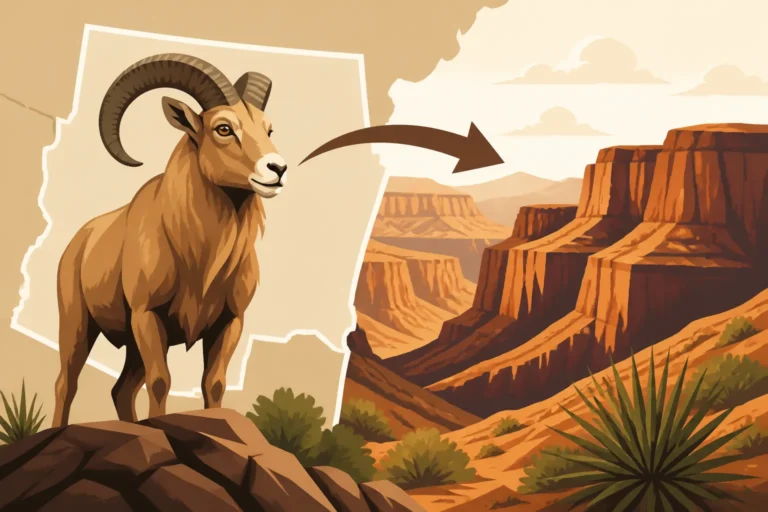
For many hunters, New Mexico brings to mind vast elk country or the elusive Coues deer. But there's a truly unique big game animal that has not only taken root but absolutely thrived in some of the state's most rugged and unforgiving landscapes: the Barbary sheep, often called aoudad. These tenacious, spiral-horned exotics present an incredible challenge, and understanding where they've made their home is the first step to experiencing one of New Mexico's most epic hunts.
The Unconventional Introduction of Barbary Sheep to New Mexico
The story of how Barbary sheep came to call New Mexico home isn't one of natural migration; it's a fascinating tale of deliberate introduction. Unlike native species, these animals were brought here for specific reasons, primarily to fill an ecological niche and provide new hunting opportunities in areas that couldn't sustain traditional big game.
Early Conservation Goals
Back in the mid-20th century, wildlife managers across the American West were looking for species that could thrive in harsh, arid environments. New Mexico, with its vast expanses of rugged canyons, mesas, and desert mountains, presented areas that, while beautiful, were often too dry or lacked sufficient forage to support large populations of deer or elk year-round. The idea was to introduce a hardy, adaptable animal that wouldn't compete directly with native wildlife for essential resources, or at least that was the hope at the time.
Barbary sheep, native to the Atlas Mountains of North Africa, fit the bill perfectly. They were known for their incredible ability to navigate steep, rocky terrain and survive on sparse vegetation and limited water. The New Mexico Department of Game and Fish (NMDGF) saw an opportunity to utilize these seemingly barren lands and create a new hunting resource. It wasn't just about adding another species; it was about maximizing the productive capacity of the state's diverse landscapes. This foresight, while debated by some today, undeniably led to the establishment of one of North America's most challenging and sought-after hunts.
Initial Release Sites and Success
The first official release of Barbary sheep in New Mexico occurred in 1950, when 53 animals were introduced into the Canadian River Canyonlands in the northeastern part of the state. This area, with its deep, broken canyons and rugged topography, closely mimicked the aoudad's native habitat. The hope was that these animals would adapt, reproduce, and establish a self-sustaining population. And adapt they did. The Canadian River Gorge provided exactly the kind of vertical escape cover and tough forage these sheep needed to thrive.
Following this initial success, more releases took place in other suitable habitats. The San Andres Mountains, a remote and largely inaccessible range within the White Sands Missile Range, received Barbary sheep introductions in 1954 and 1957. These mountains, characterized by steep, rocky slopes and sparse desert vegetation, proved to be an equally ideal environment. These early introductions were remarkably successful, laying the groundwork for the robust populations we see across New Mexico today. The ability of these animals to rapidly reproduce and expand into new territories quickly became apparent, demonstrating their incredible resilience in the face of challenging conditions.
Mapping the Major Aoudad Strongholds Today
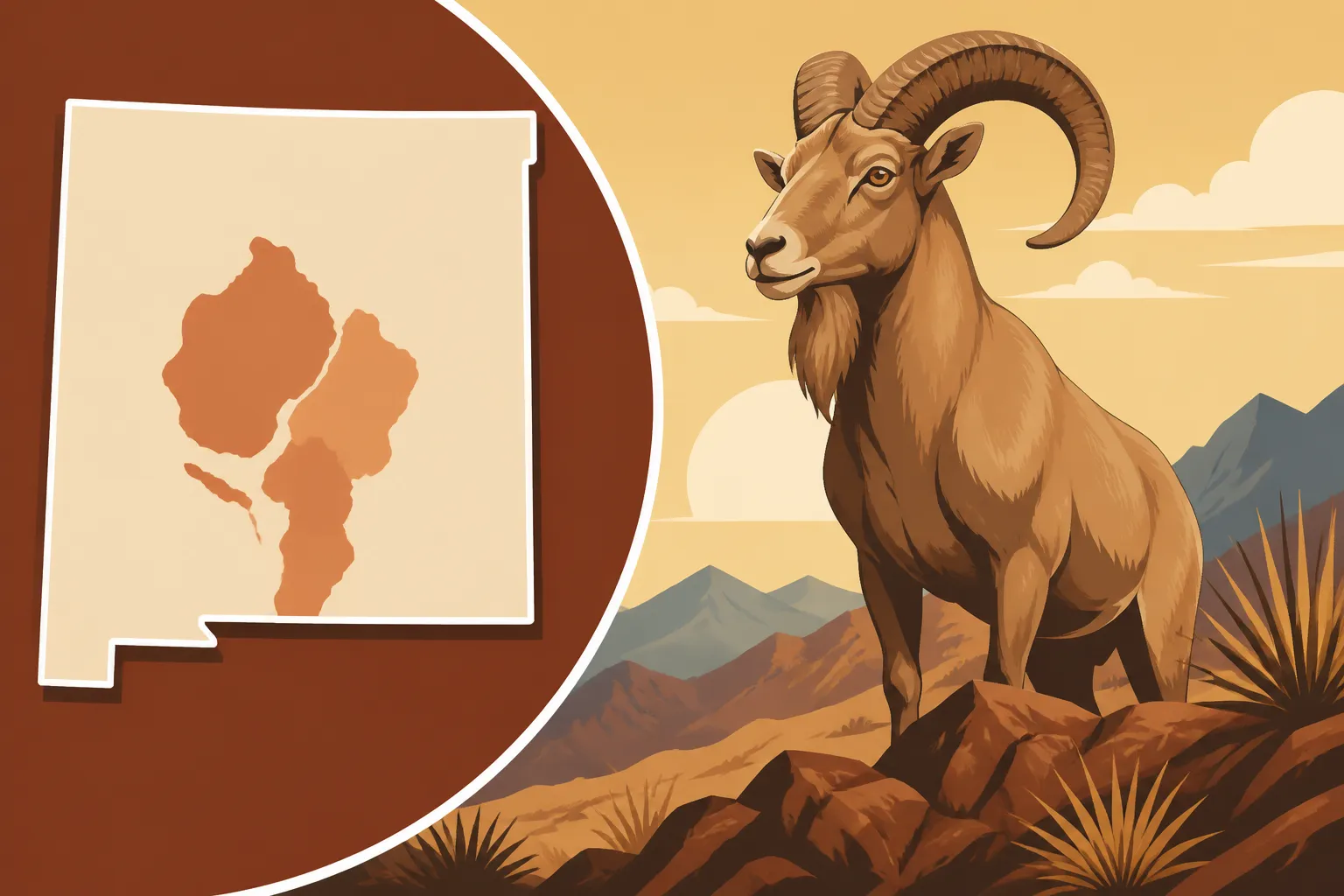
While Barbary sheep have proven their ability to spread, certain regions of New Mexico stand out as their primary strongholds, offering hunters the best chances for encountering these magnificent animals. These areas are defined by their unique geological features, which provide the ideal blend of cover, forage, and isolation that aoudad crave.
The Canadian River Gorge System
The Canadian River Gorge in northeastern New Mexico remains one of the premier Barbary sheep hunting destinations. This vast network of deep, red-rock canyons, carved by the Canadian River and its tributaries, stretches across multiple counties including Harding, Quay, and Mora. The sheer scale and ruggedness of this landscape are hard to overstate. Think of deep breaks, vertical cliff faces, and expansive mesas that drop hundreds of feet into the river bottom. These canyons provide ideal escape terrain for Barbary sheep, allowing them to disappear quickly from sight and make challenging stalks for hunters.
The Canadian River area offers significant public access, primarily through Bureau of Land Management (BLM) lands and some State Trust Lands. This can be a huge draw for hunters looking for a do-it-yourself adventure. However, access often requires navigating rough two-track roads, and crossing private land to reach public parcels can be a challenge, sometimes requiring permission. The Barbary sheep here tend to be larger-bodied, with impressive horns, due to the consistent forage and mature age structures in some of the more remote pockets. The sheer difficulty of traversing this country also helps manage hunting pressure, allowing some rams to reach truly impressive sizes. For more on navigating these diverse landscapes, you might find our guide on Hunting New Mexico From 4,000 Feet to 10,000 helpful.
The Majestic San Andres Mountains
Perhaps the most iconic Barbary sheep stronghold is the San Andres Mountains. Located almost entirely within the confines of the White Sands Missile Range in south-central New Mexico, this range is truly unique. Access to the San Andres is highly restricted due to its military designation, which means only a limited number of special hunts are permitted each year, and often under strict escort. This controlled environment has allowed the Barbary sheep population to flourish, relatively undisturbed by external pressures.
The San Andres Mountains are a classic desert range: steep, rocky, and incredibly arid, rising abruptly from the surrounding Tularosa Basin. The sheep here have adapted perfectly to this harsh environment, finding sustenance among the sparse creosote bush, ocotillo, and various desert grasses. Due to the limited access, these hunts are often considered once-in-a-lifetime opportunities, drawing applicants from across the nation. The quality of the rams in the San Andres is legendary, with many record-book animals harvested from these protected slopes. Hunters often refer to it as the "holy grail" of Barbary sheep hunting, not just for the trophy potential but for the unique experience of hunting on an active missile range.
Other Significant Mountain Ranges
Beyond these two primary strongholds, Barbary sheep have successfully expanded into several other mountain ranges and canyon systems across New Mexico. These include:
- The Big Hatchet Mountains: Located in the southwestern "Bootheel" region, these mountains offer incredibly rugged terrain and are home to a strong population of Barbary sheep. Similar to the San Andres, these are remote desert mountains, demanding serious physical conditioning from hunters.
- The Guadalupe Mountains: Straddling the New Mexico-Texas border, the New Mexico portion of the Guadalupes also hosts Barbary sheep. This area presents a mix of high desert and more timbered canyons at higher elevations, providing diverse habitat.
- The Fra Cristobal Range: Further north, near Truth or Consequences, this smaller, but equally rugged, range has developed a resident Barbary sheep population. These isolated mountain islands provide the escape cover and arid forage essential for aoudad.
- Various other smaller canyon systems and isolated mesas: Barbary sheep are incredibly opportunistic. You can find smaller, more localized populations in countless other canyon breaks and rimrock country across the state, especially in the central and southeastern regions. These smaller, more dispersed herds often offer challenging but rewarding spot-and-stalk opportunities, sometimes requiring hunters to cover significant ground to locate them.
When planning a hunt for Barbary sheep, especially in these secondary areas, utilizing modern mapping tools like GoHunt can be invaluable. Their satellite imagery and public land layers help identify those hidden pockets of rimrock and canyon country where these animals might be holding out. For further insights into the terrain Barbary sheep call home, you might want to review our post on Barbary Sheep in New Mexico Canyon Country.
| Barbary Sheep Stronghold | Primary Characteristics | Public Access | Typical Terrain Challenges | Noted For |
|---|---|---|---|---|
| Canadian River Canyonlands | Deep, broken sandstone and shale canyons, expansive mesas | Good | Steep climbs, vast distances, heat | Large-bodied rams |
| San Andres Mountains | Remote desert range, steep slopes, sparse vegetation | Restricted | Extreme aridity, military protocols | Record-book trophies |
| Big Hatchet Mountains | Rugged, arid desert mountains, isolated peaks | Moderate | Remote, lack of water, steep ascents | Challenging stalks |
| Guadalupe Mountains | High desert canyons, mixed vegetation | Moderate | Variable terrain, some dense cover | Diverse habitat |
| Fra Cristobal Range | Smaller, isolated desert range, rocky slopes | Moderate | Limited water, vertical climbing | Elusive populations |
Understanding Aoudad Expansion and Habitat Utilization
The success of Barbary sheep in New Mexico isn't just a testament to their inherent toughness; it's also about their incredible adaptability and how they leverage the unique characteristics of the New Mexico landscape. They've found ways to not just survive, but to truly thrive, often in places where other big game might struggle.
Adaptability to Arid and Rugged Landscapes
Barbary sheep are masters of arid, rugged terrain. Their physical attributes are perfectly suited for the steep, broken country found throughout New Mexico's canyonlands and desert mountains. Their sturdy legs and hooves provide exceptional grip on rocky surfaces, allowing them to navigate sheer cliffs and loose scree with surprising agility. This makes them incredibly difficult to pursue, as they can quickly retreat to inaccessible areas when pressured. Hunters often find themselves staring up at a ram that has effortlessly scaled a vertical rock face they can only dream of climbing.
Their coat, a sandy to reddish-brown, provides excellent camouflage against the ochre and grey tones of the desert. But it's their internal adaptations that are truly remarkable. Barbary sheep can survive for extended periods without free water, obtaining much of their moisture from the plants they eat, such as succulent cacti and various desert shrubs. This allows them to exploit vast areas that might be devoid of permanent water sources for much of the year, expanding their available habitat dramatically. This ability to conserve water and tolerate extreme temperatures is a key factor in where Aoudad took hold in New Mexico.
Water Sources and Forage Preferences
Despite their ability to go without free water, Barbary sheep will readily seek out springs, seepages, and stock tanks when available. These water sources become critical focal points, especially during the hotter months or extended dry spells. Hunters often find that monitoring these crucial water points can be a productive strategy, though aoudad are incredibly wary and approach water cautiously, often bedding nearby on elevated terrain to scan for threats. Understanding the importance of Water Sources and Ethics in Desert Hunting is crucial for any hunter pursuing aoudad in these arid environments.
In terms of forage, Barbary sheep are generalist browsers and grazers. They feed on a wide variety of vegetation, from grasses and forbs to the leaves and twigs of shrubs and small trees. They are not particularly picky, which further contributes to their success in diverse and often sparse desert ecosystems. You'll find them munching on everything from yucca to mesquite, literally making a meal out of whatever tough desert flora is available. This broad diet reduces competition with more specialized grazers and browsers, allowing them to utilize a greater range of habitats.
Natural Dispersal Patterns
Once established, Barbary sheep populations don't stay put. They exhibit strong dispersal patterns, with younger rams in particular often venturing out from established herds to explore new territories. This natural expansion has allowed them to colonize adjacent canyon systems and mountain ranges, slowly but steadily increasing their distribution across the state. This dispersal is often driven by population density in core areas and the search for new forage and less pressured environments.
It's this natural dispersal, combined with their incredible adaptability, that has enabled Barbary sheep to move beyond their initial release sites and colonize many of the "other significant mountain ranges" mentioned earlier. While not always in high densities, their presence in these scattered, rugged areas means that a Barbary sheep opportunity could potentially arise in units far from the historical strongholds, especially for hunters willing to put in the time and effort to scout these less-known spots. This kind of extensive scouting, often utilizing advanced mapping technology, is a cornerstone of modern western hunting, and GoHunt provides excellent tools for this purpose.
The Impact and Management of New Mexico's Barbary Sheep
While Barbary sheep have undeniably carved out a significant niche in New Mexico's hunting landscape, their presence isn't without its complexities. As an introduced species, their impact on native ecosystems and their ongoing management are topics of continuous discussion and careful consideration by the NMDGF.
Ecological Considerations and Concerns
The introduction of any non-native species always raises ecological questions, and Barbary sheep are no exception. One primary concern is potential competition with native bighorn sheep populations, particularly the desert bighorn. Both species favor similar rugged, arid mountain habitats, and there's a risk of competition for forage and water resources, especially during drought periods when resources are scarce. Disease transmission is another worry, as introduced species can sometimes carry pathogens that native wildlife has no immunity to.
To mitigate these concerns, the NMDGF has implemented management strategies that often involve monitoring Barbary sheep populations in areas that overlap with bighorn ranges and, in some cases, actively working to control Barbary sheep numbers in critical bighorn habitat. It's a delicate balancing act to maintain healthy native populations while managing the established exotic species. This careful management ensures that these unique hunts remain sustainable and that the broader ecosystem remains healthy.
Population Management and Hunting
Hunting plays a vital role in the management of Barbary sheep populations in New Mexico. The NMDGF uses hunting as a primary tool to control numbers, especially in areas where expansion needs to be limited or where densities could lead to habitat degradation. Barbary sheep tags are offered through a public draw system, and while draw odds can be tough for premier units, there are often more readily available opportunities for off-range hunts or in units with broader distribution. Information on New Mexico Barbary Sheep Draw Odds can be found on the NMDGF website and through resources like GoHunt, which compiles and analyzes draw statistics.
The challenging nature of Barbary sheep hunting naturally limits harvest rates, ensuring that the populations remain robust. The sheer physical demands of pursuing these animals across vertical terrain mean that not every hunter who draws a tag will be successful. This inherent difficulty, coupled with the management efforts, helps to maintain a healthy balance, allowing Barbary sheep to persist as a valuable and unique hunting resource without overwhelming native ecosystems.
Monitoring and Future Outlook
The NMDGF continuously monitors Barbary sheep populations through aerial surveys, ground observations, and harvest data. This ongoing research helps biologists understand population trends, distribution changes, and the overall health of the herds. Data collected helps inform future management decisions, including tag allocations and specific unit regulations.
The future of Barbary sheep in New Mexico seems secure, given their impressive adaptability and the state's vast, suitable habitat. While concerns about native species will always dictate certain management actions, Barbary sheep have clearly demonstrated their ability to thrive in the Land of Enchantment. They represent a successful introduction, offering a challenging and highly rewarding hunting experience that truly sets New Mexico apart.
Preparing for a New Mexico Barbary Sheep Hunt
If the idea of pursuing a Barbary sheep in New Mexico's rugged backcountry has piqued your interest, it's crucial to understand what kind of preparation is involved. These aren't hunts for the faint of heart, and proper planning can make all the difference between a challenging adventure and a frustrating ordeal.
Key Gear for Rugged Terrain
Hunting Barbary sheep means embracing the mountains. Your gear needs to be up to the task of navigating steep, loose rock, enduring significant temperature swings, and covering vast distances.
- Footwear: This is paramount. Invest in high-quality, stiff-soled mountaineering or serious backcountry hunting boots. They need excellent ankle support and outstanding traction. You'll be side-hilling on scree and climbing over boulders, so comfort and durability are non-negotiable. Break them in thoroughly before your hunt!
- Optics: Barbary sheep are often spotted from long distances, high up on canyon walls or distant ridges. A good pair of 10x binoculars is essential, but a high-power spotting scope (20-60x or higher) mounted on a sturdy tripod is almost a necessity for identifying rams and judging their horns. Our guide on Optics Power for New Mexico's Open Country provides great detail on selecting the right glass. Remember, they blend incredibly well into their surroundings.
- Pack: A comfortable, durable pack capable of carrying water, food, extra layers, and potentially packing out meat is vital. Barbary sheep can be heavy, and the terrain is unforgiving. A pack with good load lifters and a robust frame will be your best friend.
- Layered Clothing: New Mexico's desert mountains can experience significant temperature swings between day and night, and even between sun and shade. Dress in layers that you can easily add or remove to regulate your body temperature. Consider lightweight, breathable base layers, insulating mid-layers, and a wind/waterproof outer shell.
- Water Capacity: Do not underestimate the need for water in these arid environments. Carry more than you think you'll need, and have a reliable water filter or purification tablets. Depending on the hunt, 3-4 liters per day is a minimum.
Scouting Strategies and Public Land Access
Successful Barbary sheep hunting relies heavily on thorough scouting. These animals don't always hang out in easily accessible areas, and knowing the terrain intimately before your hunt opens is a huge advantage.
- E-Scouting: Start your scouting from home. Use satellite imagery and topographic maps from services like GoHunt to identify potential bedding areas, escape routes, water sources, and access points. Look for the gnarliest, most broken country you can find – that's where the aoudad will be. Pay close attention to south-facing slopes in winter for solar gain and north-facing slopes in summer for shade.
- Pre-Season Field Scouting: Nothing beats boots on the ground. If possible, visit your chosen unit before the season. Spend time glassing likely areas from advantageous vantage points. Look for sign: tracks, droppings, and rubbed horns on bushes. Understand the access points, road conditions, and how long it will realistically take to get into certain areas. This is where understanding Scouting New Mexico State Trust Land Fourteen Days Out becomes crucial, as many Barbary sheep units have significant Trust Land parcels.
- Understanding Unit Boundaries and Access: New Mexico has a mix of public and private lands, and often, public land parcels are landlocked or require crossing private property. Always be certain of your unit boundaries and access points. Maps from the NMDGF or specialized apps can show land ownership layers clearly. Remember, Written Permission Is Required to Cross Private New Mexico Ground.
Draw Odds and Tag Opportunities
Like most big game in New Mexico, Barbary sheep tags are primarily allocated through a public draw system. These tags are highly coveted, and draw odds can be challenging, especially for the prime units like the San Andres Mountains.
- Application Strategy: Research past draw odds carefully. Resources like GoHunt compile this data, allowing you to make informed decisions about your unit choices. Consider applying as a group, as this can sometimes slightly alter draw dynamics, though it doesn't offer preference points as New Mexico doesn't have a point system. Learn more about New Mexico's Three Allocation Pools Interact to understand how tags are distributed.
- Hunt Codes: Familiarize yourself with how to read New Mexico hunt codes. These codes contain vital information about the unit, season dates, weapon type, and species. Understanding Reading a New Mexico Hunt Code Before You Apply is fundamental to making a successful application.
- Off-Range Opportunities: Don't overlook the "off-range" Barbary sheep hunts. These tags are often more readily available and cover broader areas where sheep populations are more dispersed. While these hunts can require more effort to locate animals, they offer a great chance to pursue Barbary sheep without the extreme draw odds of the premier units. These often align with the dispersal patterns and secondary populations discussed earlier, providing an exciting challenge for a dedicated hunter.
Disclaimer
Always consult the official New Mexico Department of Game and Fish (NMDGF) regulations for the most current and accurate information regarding hunting seasons, licensing, and rules before planning any hunting trip. Wildlife regulations can change, and it is the hunter's responsibility to be fully informed and compliant.