Where New Mexico Mule Deer Winter
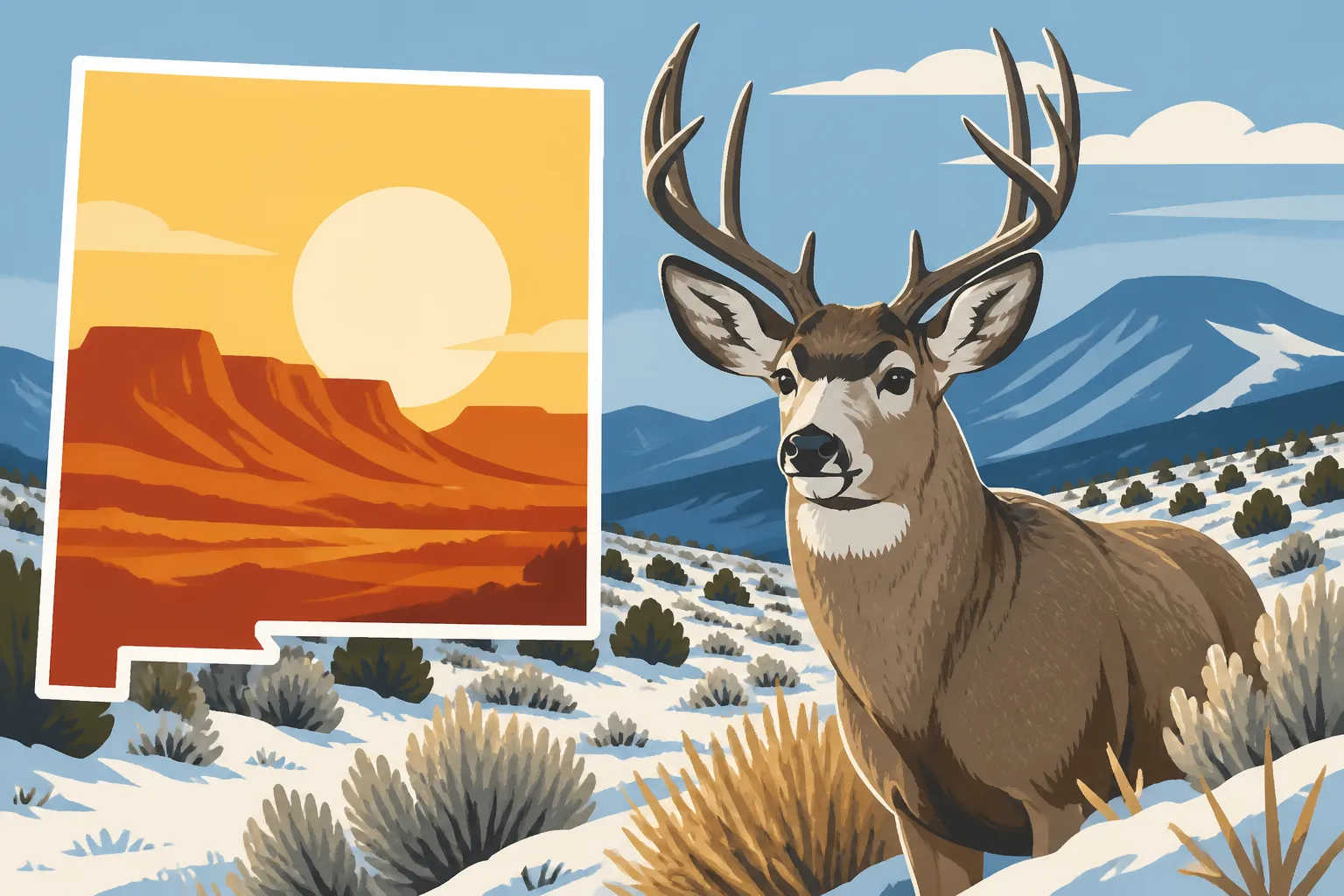
It’s a familiar frustration for many New Mexico hunters: you scout a promising area all summer, watch a buck grow, maybe even get a shot at him during an early season. Then, as the temperatures drop and the first snowflakes dust the high country, those deer seem to vanish into thin air. It’s like they have a secret hideaway, and honestly, they do. Understanding where New Mexico mule deer spend their winters is absolutely critical, not just for hunting success but for truly appreciating the intricate dance of survival these animals perform every year. This guide will pull back the curtain on those secret winter haunts, giving you insight into the patterns and places where mule deer hunker down to weather the cold months.
The Seasonal Migration of New Mexico Mule Deer
Mule deer in New Mexico are masters of adaptation, and their seasonal movements are a testament to that. While not every deer is a long-distance migrant, many undertake significant journeys between their summer and winter ranges. It’s a survival strategy honed over millennia, directly tied to the availability of food and the severity of the elements. For us hunters, understanding these shifts is like having an extra piece of the puzzle.
Why Migration Matters for Mule Deer Survival
The primary driver behind mule deer migration is survival, plain and simple. Their summering grounds, often higher in elevation, provide abundant, nutritious forage like forbs and fresh browse, essential for antler growth and building fat reserves after the rut. However, these areas quickly become inhospitable once heavy snows hit. Deep snow not only covers vital food sources but also makes movement incredibly energy-intensive, increasing predation risk. Imagine trying to walk through chest-deep snow every day just to find a few twigs to munch on – it's exhausting and leaves you vulnerable.
So, as fall turns to winter, mule deer abandon those high country havens for lower elevations, seeking areas with less snow, more accessible forage, and often, more thermal cover. These migrations can be short, just a few miles down a canyon, or they can be quite extensive, covering dozens of miles. Knowing these patterns helps us understand why an area teeming with deer in September might be completely barren by December, or vice-versa. It’s all about chasing resources and evading the harshest conditions.
The Role of Snowpack and Forage Availability
The timing and distance of these migrations are heavily influenced by environmental factors, particularly snowpack and forage availability. A mild winter with minimal snow in the high country might see deer linger longer on their summer range, or migrate shorter distances. Conversely, an early, heavy snowfall can trigger an immediate and dramatic downhill movement. Forage availability on the winter range itself is also critical; if early winter browse is scarce due to drought or overgrazing, deer might push even further to find sustenance.
New Mexico's diverse landscape, from alpine peaks to vast deserts, means these factors play out differently across the state. A buck that lives in the Sangre de Cristo Mountains will have a very different migration strategy than one in the Organ Mountains near Las Cruces. This variability is what makes hunting and understanding mule deer so fascinating and challenging. It means that what worked last year might not work this year, and you always need to be thinking about how current conditions are impacting deer movement. This is where tools like GoHunt can really shine, allowing you to cross-reference historical weather patterns and unit data to try and predict these crucial shifts.
Key Wintering Habitats Across New Mexico
Mule deer winter range in New Mexico is as varied as the state's topography itself. From the vast, open desert plains to the broken rimrock of the foothills, deer choose locations that offer the best combination of food, cover, and minimal snow accumulation. Recognizing these habitat types is key to deciphering their winter whereabouts.
The Low Elevation Deserts and Foothills
For many mule deer populations, especially in the central and southern portions of the state, the lower elevation deserts and foothills become their winter haven. Think units that might seem barren in the heat of summer. These areas, typically below 6,000 feet, generally receive less snow than the higher mountains, or the snow that does fall melts much faster. Here, mule deer rely heavily on browse species that can withstand colder temperatures and still offer nutritional value.
Common plants like various species of sagebrush, bitterbrush, cliffrose, and mountain mahogany become vital food sources. They also seek out pockets of desert scrub and creosote for cover from winter winds and predators. These lower elevations also often feature broken terrain, with draws, arroyos, and small canyons that offer both escape routes and sun-warmed beds. This type of habitat is where you'll find the Desert Mule Deer in Southern New Mexico. Their winter strategies are often about conserving energy in a harsh, dry environment rather than escaping deep snow.
Pinyon-Juniper Woodlands and South-Facing Slopes
As you move into the mid-elevations, typically between 6,000 and 8,000 feet, pinyon-juniper woodlands become prime wintering grounds. These iconic New Mexico landscapes offer a fantastic mosaic of food and cover. The dense canopy of pinyon pines and junipers provides excellent thermal cover, buffering deer from cold winds and offering shade from intense winter sun. The needles and berries of juniper, while not highly nutritious, can provide emergency forage when other options are scarce.
Crucially, south-facing slopes within these woodlands are gold mines for wintering deer. These slopes receive the most direct sunlight throughout the day, melting snow faster and warming the ground. This not only makes forage more accessible but also helps deer conserve energy by allowing them to bask in the sun. You’ll often find deer bedded on these sun-drenched slopes, especially during the coldest parts of the day. The browse species in these areas often include various oaks, serviceberry, and mountain mahogany, which retain some nutritional value into the winter months. Understanding how to read wind in a deep Gila canyon can also be critical here, as thermals can dictate where deer will bed for warmth and security.
Understanding Specific Mule Deer Winter Ranges by Region
New Mexico's vast and varied landscape means that "winter range" isn't a one-size-fits-all concept. The specific strategies mule deer employ to survive the colder months differ significantly depending on which part of the state they call home.
Northern New Mexico's High Country Descent
In northern New Mexico, particularly in units around the Carson and Santa Fe National Forests, mule deer engage in some of the most pronounced altitudinal migrations. These deer spend their summers in the high alpine meadows and dense conifer forests, often above 9,000 or even 10,000 feet. When the snow starts to fly in October and November, making those elevations impassable and stripping away their primary food sources, they begin their downward journey.
Their winter ranges are typically found in the lower-elevation conifer and mixed conifer forests, down into the pinyon-juniper belts, and sometimes even into the sagebrush flats and river bottoms. Areas like the Chama River Canyon and the lower slopes around Taos can see a significant influx of deer during winter. These deer seek out areas where snow depths are manageable, often staying on south-facing slopes to catch the sun's warmth and melt snow for easier foraging. For those interested in Mule Deer Across Northern New Mexico, understanding these migratory corridors and lower elevation sanctuaries is paramount. Their survival hinges on successfully navigating these seasonal changes, which can be brutal in a severe winter.
Southern New Mexico's Desert Dweller Strategy
Contrast that with the mule deer in southern New Mexico, where the winter challenges are less about deep snow and more about scarce water and temperature extremes. Here, "winter range" might look very similar to their year-round habitat, just with a subtle shift in focus. Deer in the bootheel, the Organ Mountains, or the vast Chihuahuan Desert units might move from higher desert ridges down into protected arroyos, dense mesquite thickets, or deep canyons.
Their winter diet relies heavily on evergreen browse species like mesquite, acacia, various cacti (which can offer moisture), and desert shrubs like creosote bush and tarbush. Water sources, even seasonal ones, become critical focal points. During a mild winter, these deer might not move much at all, but a harsh cold snap or a particularly dry period can force them to concentrate around the few reliable water sources and best thermal cover available. Learning about Desert Mule Deer in Southern New Mexico reveals a fascinating resilience to an often overlooked harsh environment.
Eastern Plains and River Corridors
The mule deer found on New Mexico's eastern plains, though less numerous than in the mountain ranges, also exhibit specific wintering patterns. These deer often inhabit the breaks and rugged canyons that feed into major river systems like the Canadian or Pecos Rivers. Their summer range might be the more open grasslands and agricultural fringes, but come winter, they pull back into these protected drainages.
Here, the river corridors and associated riparian habitats provide critical cover from fierce prairie winds, and the bluffs and canyon walls offer sheltered bedding areas. Food sources include various types of brush, cottonwood saplings, and any remaining forbs or grasses not covered by snow. While snow accumulation isn't typically as deep as in the mountains, the exposed nature of the plains means wind chill can be a major factor. Concentrating in these river bottoms helps them conserve vital energy.
Challenges and Conservation of Wintering Deer
Mule deer face an array of challenges during the winter months, and understanding these pressures is crucial for their long-term conservation. From the increasingly unpredictable forces of nature to the ever-expanding footprint of human development, their winter survival is a constant struggle.
The Impact of Drought and Climate Change
New Mexico is no stranger to drought, and its impact on mule deer populations, especially on their winter ranges, cannot be overstated. Drought directly affects forage quality and quantity. When rainfall is scarce, the browse plants mule deer depend on for winter sustenance either don't grow as robustly or become less nutritious. This forces deer to expend more energy to find food, leading to weakened animals that are more susceptible to disease and predation. We often see how drought affects desert deer numbers directly tied to the success of fawning seasons in the subsequent year.
Climate change adds another layer of complexity. While some might think milder winters would be beneficial, unpredictable weather patterns, including earlier thaws followed by sudden hard freezes, can be devastating. Early plant green-up can draw deer to areas that then get hit with late-season snows, stranding them or covering their newfound forage. Changes in snowpack dynamics also affect access to food and water, fundamentally altering historical migration routes and winter habitat quality.
Human Development and Habitat Fragmentation
The relentless march of human development poses a significant threat to mule deer winter ranges. As towns expand, roads are built, and energy development projects proliferate, crucial winter habitats are fragmented or lost entirely. Imagine a deer's traditional migration path suddenly cut off by a new highway or housing development. This forces deer into less optimal habitats, concentrates them in smaller areas, or exposes them to increased mortality risks from vehicles.
Habitat fragmentation doesn't just reduce the amount of usable land; it also disrupts the connectivity that allows deer to move freely between different habitat types as conditions change. This is particularly problematic for migratory deer, whose ability to reach their preferred wintering grounds is directly tied to the intactness of their travel corridors. Conservation efforts are increasingly focused on identifying and protecting these critical corridors and winter concentration areas, often through a combination of public land management and private land conservation easements.
Predation and Disease on Winter Ranges
Winter ranges, by their very nature, often concentrate deer. While this can provide some benefit in terms of group defense, it also makes deer more vulnerable to predators and the spread of disease. Coyotes, mountain lions, and even domestic dogs can take a heavy toll on weakened deer, especially fawns, struggling to survive the winter. The energy demands of simply staying warm and finding food leave little in reserve for escaping predators.
Disease is another silent killer. When deer are stressed and concentrated, illnesses like Chronic Wasting Disease (CWD) can spread more easily through a population. Understanding how Chronic Wasting Disease testing works is important, as these efforts are often intensified in areas of known winter concentration to monitor herd health. A severe winter can weaken immune systems, making deer more susceptible to parasites and bacterial infections, further exacerbating mortality rates.
Scouting and Hunting Considerations for Winter Ranges
For serious hunters, understanding mule deer wintering habits isn't just academic; it's a practical skill that can significantly impact your success. While many hunting seasons are long over by the time deer are deep into their winter patterns, this knowledge helps with future planning and scouting.
Identifying Winter Concentration Areas
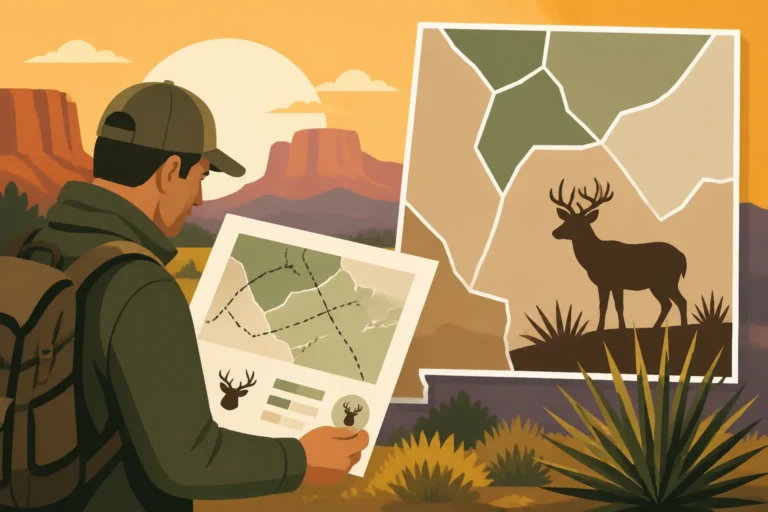
The key to applying this knowledge is identifying those crucial winter concentration areas. This usually means looking for lower elevation, south-facing slopes, pinyon-juniper benches, and protected river bottoms that offer a combination of accessible browse and thermal cover. Pay attention to how the snowpack lies on different aspects; areas that melt out fastest are prime candidates. E-scouting platforms like GoHunt are incredibly valuable here. You can use satellite imagery to identify south-facing slopes, analyze vegetation types, and even overlay historical snow depth data if available.
On the ground, look for tell-tale signs: heavily browsed plants, abundant tracks in thin snow or mud, and concentrations of droppings. Often, deer will leave distinct trails through the snow or bare ground leading to and from preferred bedding and feeding sites. These concentration areas can sometimes hold impressive numbers of deer, making them crucial for the survival of the herd. Identifying these spots during winter, even if you’re just out for a walk, can pay dividends when you're planning for next year's hunt or deciding which units to draw for a mature mule deer.
Ethical Hunting Practices on Winter Range
While most big game seasons in New Mexico close well before the peak of winter, late-season hunts or extended muzzleloader seasons can sometimes overlap with deer on their winter ranges. During these times, ethical hunting practices become even more paramount. Deer on winter range are often under significant stress, conserving every calorie to survive. Disturbing them unnecessarily, chasing them, or pushing them off critical feeding areas can have serious consequences for their survival.
If you find yourself hunting an area that also serves as critical winter range, consider minimizing your impact. Avoid prolonged glassing sessions from exposed positions that might spook deer. When approaching an animal, do so deliberately and efficiently. And most importantly, always ensure a clean, ethical shot to avoid any unnecessary suffering or wasted meat. Remember, your goal is to harvest an animal, not to contribute to winter mortality by stressing an already vulnerable population.
Scouting New Mexico's State Trust Land in Winter
New Mexico offers vast tracts of State Trust Land accessible to licensed hunters. This land often includes critical transitional and wintering habitats. You are allowed to scout New Mexico State Trust Land fourteen days out from the start of a hunting season. While this rule doesn't usually apply to the heart of winter, understanding the access rules for state trust lands is crucial if you identify potential winter range on these properties.
The key is to always verify land ownership using a reliable mapping app, like one that GoHunt provides, and ensure you have the proper licenses. Some state trust lands may have specific rules regarding vehicle access or camping, so always check the NMDGF regulations booklet. Identifying historical winter range on these accessible public lands can be a goldmine for understanding broader deer movements and planning your future hunts.
Utilizing Data and Tools for Winter Range Insight
In today's interconnected world, hunters have more resources than ever before to understand wildlife movements, including mule deer wintering habits. From scientific studies to advanced mapping applications, leveraging these tools can provide an unparalleled advantage.
Tracking Studies and Wildlife Management Efforts
The New Mexico Department of Game and Fish (NMDGF) and various university research programs routinely conduct studies on mule deer, often employing GPS collars to track their movements throughout the year. These studies provide invaluable data on migration corridors, winter ranges, and habitat use patterns. While this raw data isn't always immediately accessible to the public in fine detail, the NMDGF often uses it to inform their unit management plans and provide general guidance on deer populations.
Look for NMDGF reports and publications that discuss specific units or regions you're interested in. These often contain summaries of habitat assessments and population health, which can indirectly point to important wintering areas. Understanding why fawn ratios predict next season is also tied to these studies, as fawn survival through winter is a key metric for herd health. These scientific efforts are the backbone of sound wildlife management and offer us a deeper look into the intricate lives of these animals.
E-Scouting Platforms for Winter Range Analysis
Modern e-scouting applications have revolutionized how hunters research and plan their trips. Platforms like GoHunt, OnX Hunt, and BaseMap allow you to analyze satellite imagery, topography, land ownership, and even historical weather data right from your computer or phone. This is incredibly powerful when trying to understand winter ranges.
Here's how you can leverage these tools:
- Topography and Aspect: Use the terrain features to identify south-facing slopes, which will receive more sun and hold less snow. Look for breaks in topography that offer shelter from prevailing winter winds.
- Vegetation Layers: Analyze vegetation types. Look for concentrations of pinyon-juniper, sagebrush, or other known browse species that retain their value through winter.
- Land Ownership: Always read a land ownership layer correctly to ensure you are identifying accessible public or state trust lands that might serve as winter range. This is particularly important around areas that might be checker-boarded with private ground.
- Historical Data: Some platforms allow you to overlay historical snowfall, precipitation, or temperature data. This can help you identify areas that consistently hold less snow or are warmer during the winter months.
- Waypoint Dropping: Mark potential wintering areas with waypoints. You can then use these marks for future physical scouting trips during the off-season.
These tools allow you to do an immense amount of "boots-on-the-ground" scouting from your armchair, saving time and energy while painting a clearer picture of where those elusive mule deer will be when the temperatures drop. They also help immensely with planning your approach when you're actually hunting New Mexico from 4,000 feet to 10,000 and need to understand how deer utilize various elevation bands.
New Mexico Mule Deer Winter Range Factors At a Glance
To summarize the multifaceted elements influencing where New Mexico mule deer winter, here's a quick reference table. This table breaks down key factors by major regions, offering a comparative look at their survival strategies.
| Factor | Northern Mountains (e.g., Sangre de Cristos, Jemez) | Southern Deserts (e.g., Organ, Bootheel) | Eastern Plains (e.g., Canadian River Breaks) |
|---|---|---|---|
| Primary Challenge | Deep snow, extreme cold, limited forage access | Drought, scarce water, temperature swings | High winds, cold, exposed terrain |
| Typical Migration | Pronounced altitudinal migration (long distance) | Shorter, more localized movements | Often move into protected drainages/riverbeds |
| Key Winter Habitat | Lower elevation pinyon-juniper, south-facing slopes, mixed conifer | Dense mesquite thickets, arroyos, deep canyons, desert scrub | River bottoms, breaks, rough canyon country |
| Critical Forage | Sagebrush, bitterbrush, cliffrose, mountain mahogany, juniper | Mesquite, acacia, cacti, desert shrubs | Cottonwood, brush, residual grasses |
| Thermal Cover | Pinyon-juniper canopy, rock outcroppings, dense conifer stands | Mesquite thickets, rock formations, deep arroyos | Steep canyon walls, dense riparian growth |
| Water Access | Melting snow, seeps, residual high elevation springs | Scarce, often limited to stock tanks, seeps, ephemeral pools | River itself, stock tanks, protected springs |
| Conservation Focus | Maintaining migration corridors, reducing fragmentation, habitat restoration | Water development, drought resilience, habitat preservation | Riparian habitat health, minimizing disturbance |
Disclaimer
Always consult the most current New Mexico Department of Game and Fish regulations prior to any hunting or scouting activity. Hunting regulations, seasons, and access rules can change annually.