The 6 Percent New Mexico Nonresident Allocation
It’s a frustrating reality for many hunters dreaming of chasing elk or mule deer in the Land of Enchantment: New Mexico’s draw system can feel like a riddle wrapped in an enigma, especially for those of us coming from out of state. You’re pouring over maps, scouting photos, and imagining those wide-open spaces, only to hit the brick wall of understanding how to actually get a tag. This guide is here to break down one of the most critical pieces of that puzzle: the 6 percent nonresident allocation, and what it truly means for your hunting aspirations in New Mexico.
Decoding New Mexico's Nonresident Tag Allocation
Let's be honest, trying to understand how New Mexico doles out its coveted big game tags can make your head spin. It’s not like other states with preference points or bonus points that build over time. Here, every year is a fresh start, and the odds can feel stacked, especially if you're not a resident. The core of this system is a three-tiered allocation model, and knowing where you fit into that structure is the first step in making an informed application.
The Three Allocation Pools Defined
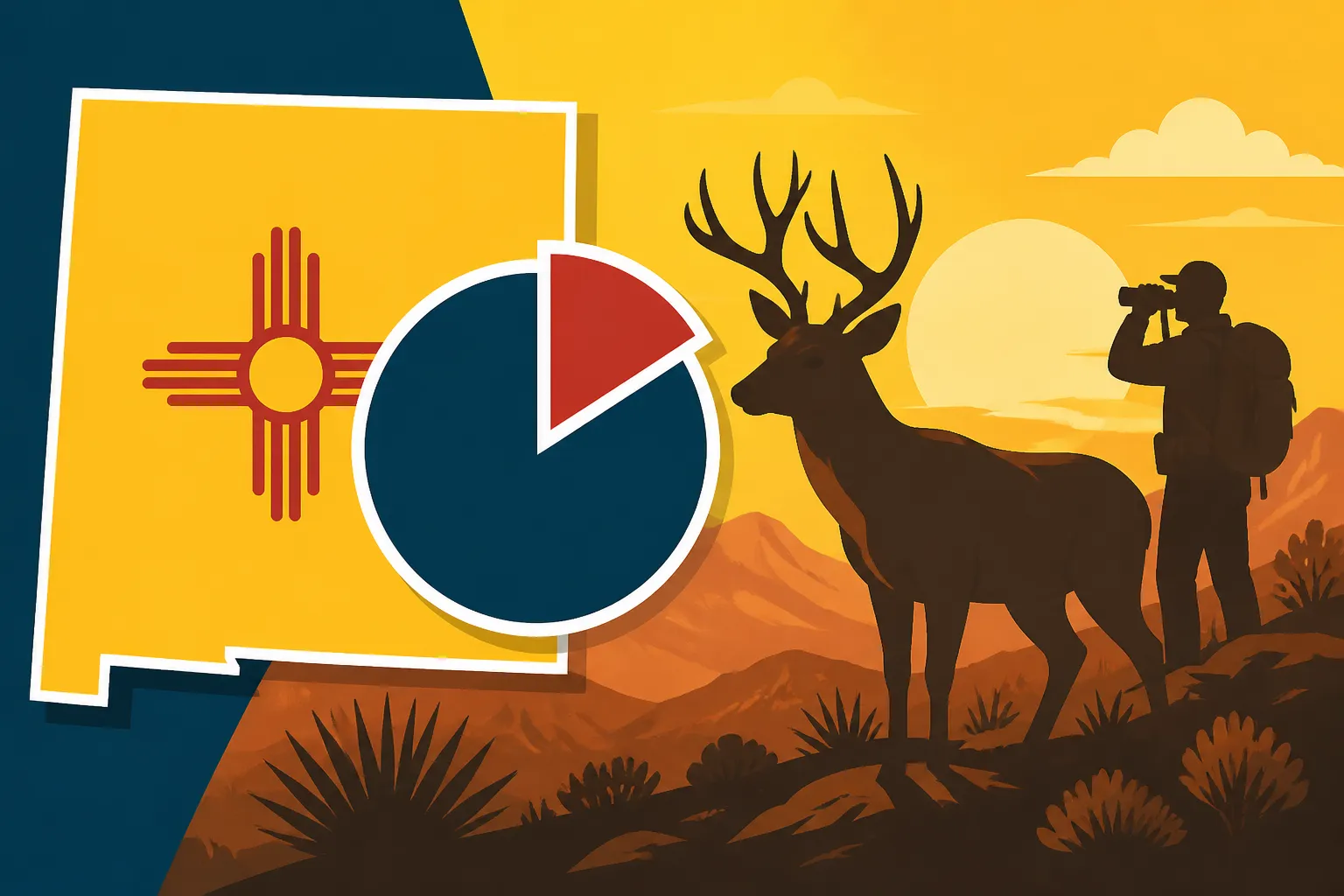
New Mexico operates on a specific three-tier system for its public draw tags, which applies to species like elk, deer, and pronghorn. This system is enshrined in law and dictates how many tags are set aside for different applicant groups. It's often referred to as the 84-10-6 rule, and it's absolutely fundamental to grasp if you're planning to apply.
The largest chunk, a whopping 84 percent of all draw tags, is reserved exclusively for New Mexico residents. This makes perfect sense; the state wants to ensure its own citizens have the best opportunities to hunt within their borders. Then, there's a 10 percent allocation that goes to nonresidents who apply with a New Mexico registered outfitter. This pool is often misunderstood, but it’s a significant pathway for many nonresidents. Finally, we arrive at the topic of our discussion: the remaining 6 percent. This small but incredibly competitive sliver is dedicated to nonresidents who choose to apply without the assistance of an outfitter. This means you're going it alone, relying on your own research, e-scouting, and boots-on-the-ground knowledge. Understanding how these pools interact is key to comprehending "New Mexico Splits Every Hunt 84, 10 and 6 Percent".
What the 6% Means for Your Application
So, you're a nonresident, and you've decided to apply for a public draw tag without an outfitter. This immediately places you squarely in that 6 percent pool. What does that actually mean for your application? In practical terms, it signifies extreme competition. When you consider the vast number of nonresidents from across the country who dream of a New Mexico elk hunt, and then pit them against such a limited number of available tags, the math quickly highlights the challenge.
Let's say a particular unit has 100 elk tags available through the public draw. Eighty-four of those tags instantly go to residents. Ten tags are set aside for nonresident clients of outfitters. That leaves a mere 6 tags for all other nonresident applicants. If thousands of nonresidents apply for that unit, each of those 6 tags becomes incredibly difficult to draw. This is the reality you face when applying in the 6 percent pool, and it's why every choice on your application needs to be strategic. It's not about being discouraged; it's about being realistic and smart about your choices when you’re vying for "The Nonresident Share of New Mexico Tags".
The Impact of Limited Tags on Your Draw Odds
When you're dealing with just 6% of the available tags, it's easy to feel like you're playing the lottery. And in many ways, you are. The odds for nonresidents applying without an outfitter are consistently tougher than any other pool, often drastically so. This isn't to say it's impossible, but it does mean your approach needs to be calculated and well-researched.
Why Your Chances Feel Slim
The simple truth is that the supply of tags in the 6% nonresident pool is incredibly low compared to the demand. Every year, thousands of eager nonresident hunters, from seasoned veterans to first-timers, throw their hats into the ring for a chance at a New Mexico big game tag. They're all hoping for that golden ticket to hunt world-class animals in stunning landscapes. When you divide a handful of tags among such a large applicant pool, the resulting percentages are, understandably, very small.
Think about it this way: if 2,000 nonresidents apply for a particular unit's elk hunt that only has 6 tags allocated to the 6% pool, your individual odds are 6 out of 2,000, or 0.3%. That’s a stark contrast to a resident applying for the same unit, who would be competing for 84 tags against a smaller pool of applicants. This disparity is why many nonresidents look into alternatives or opt for the outfitter pool, despite the added cost. The system doesn't favor those without established connections or local residency, which is a common frustration among those new to the New Mexico draw.
High Demand, Low Supply for Trophy Hunts
The problem of low supply is compounded by the high demand for specific, often trophy-quality, hunt codes and units. Everyone wants to hunt Unit 16D for Gila bull elk, or a prime mule deer unit in the northern part of the state. These units consistently see the most applications, which drives the draw odds for the 6% nonresident pool even lower. If a unit is known for producing monster bulls or bucks, you can bet that the competition will be fierce, especially for those precious 6% tags.
This intense competition means that even if you have a dream unit in mind, the statistical likelihood of drawing it in the 6% pool is very, very low. Hunters often spend years applying, learning that "New Mexico Draw Odds Do Not Improve With Time", simply hoping to get lucky. It’s a testament to the quality of hunting New Mexico offers that so many are willing to play these long odds year after year. For some, the pursuit itself, and the small chance of success, is enough to keep them coming back.
Strategies for Applying in the 6% Pool
Given the tough odds, simply throwing an application at the wall and hoping it sticks isn't a viable long-term strategy. To increase your slim chances in the 6% nonresident pool, you need a meticulous, data-driven approach. This involves careful research, strategic unit selection, and smart ordering of your hunt choices.
Researching Units with the 6% in Mind
Before you even think about putting pen to paper (or fingers to keyboard), you need to dive deep into unit research. Forget about the units everyone talks about on social media; those will always have astronomically low odds. Instead, focus on units that might have slightly better (though still challenging) odds, even if they aren't the "trophy factories." This is where resources like GoHunt become invaluable. Their Insider platform, for example, provides incredibly detailed draw odds, harvest statistics, and unit profiles that can help you identify less popular, but still productive, hunt codes. Using tools like these for "Checking New Mexico Draw Odds Before You Apply" is absolutely crucial.
Look for units with more public land access, a healthy population, but perhaps less renown. Sometimes, units bordering a popular one can offer great hunting with significantly less pressure and slightly improved draw odds. Pay close attention to the specific hunt code details too; an early archery hunt might have different odds than a late rifle hunt in the same unit. Remember, you're not just looking for a unit; you're looking for a specific hunt code within that unit that offers the best balance of opportunity and draw probability within that tiny 6% sliver.
Crafting Your Hunt Choice Strategy
New Mexico allows you to list multiple hunt choices on your application, and how you order these choices is critically important. Many applicants simply list their dream hunt as their first choice, and then perhaps an equally competitive one as their second. This is a common mistake that wastes valuable opportunities. Your goal should be to maximize your chances across all choices, even if it means putting a "less desirable" (but still good!) hunt as a higher choice.
A common strategy is to list your absolute dream hunt as your first choice, knowing the odds are long. But then, for your second, third, or even fourth choices, you should select hunts that have historically shown slightly better odds for the 6% nonresident pool. This might mean applying for a cow elk tag instead of a bull tag, or a general mule deer hunt instead of a specific trophy unit. It's about playing the percentages. You're trying to win the lottery, yes, but you're also trying to buy as many tickets as strategically possible. Don't be afraid to analyze past draw results meticulously, looking for patterns or units that might be overlooked. This strategic thinking applies to "Choice Order Strategy in the New Mexico Draw" and can make all the difference.
Species-Specific Considerations for Nonresidents
The 6% nonresident allocation isn't a monolithic entity; its impact varies significantly depending on the species you're targeting. Some species, due to their popularity and limited tags, are almost impossible to draw in the 6% pool, while others might offer a marginally better chance. Understanding these nuances is essential for tailoring your application.
Elk: The Ultimate Nonresident Challenge
Elk are, without a doubt, the holy grail for many nonresident hunters in New Mexico. The state's reputation for big bulls, particularly in the Gila, makes elk tags the most sought-after. Consequently, drawing a bull elk tag in the 6% nonresident pool is an incredibly difficult feat. We're talking about odds that often dip below 1%, sometimes even approaching 0.1% for prime hunts in desirable units.
This isn't to say it can't happen – someone has to draw those tags! But the sheer volume of applicants vying for so few tags creates immense competition. If your heart is set on a New Mexico bull elk, you need to understand that drawing one through the 6% pool is a long-shot endeavor. Many nonresidents who are serious about an elk hunt often explore the outfitter pool (the 10% allocation) or look into purchasing an EPLUS landowner tag, which bypasses the draw entirely, simply because the 6% odds are so challenging. Even a cow elk tag for nonresidents, while having slightly better odds, is still a tough draw compared to resident opportunities, but it could be a more realistic option for a first-time hunt. Don't forget to factor in "What a New Mexico Nonresident Cow Elk Tag Costs" when planning.
Mule Deer and Oryx: Still Tough, But Different
While not quite as competitive as prime bull elk tags, drawing a quality mule deer or oryx tag in the 6% nonresident pool is still a significant challenge. New Mexico offers excellent mule deer hunting across various terrains, from high mountains to desert lowlands. Many units hold good populations and the potential for trophy-class bucks. However, because mule deer are a highly desired species, especially for those who might miss out on elk, the demand in the 6% pool remains high. Your chances will vary greatly depending on the unit and the specific hunt code (e.g., archery vs. rifle, early vs. late season).
Oryx, New Mexico's unique and exotic big game animal, presents its own set of challenges. These hunts are incredibly popular, both on the White Sands Missile Range and for off-range opportunities. The tags are limited, and the experience is often considered once-in-a-lifetime for many. As such, the 6% nonresident pool for oryx hunts is fiercely competitive. The draw odds reflect this high demand, making it another extremely difficult tag to acquire for those without an outfitter. Always be sure to review all the current regulations by "Reading a New Mexico Hunt Code Before You Apply" for any species.
Here's a quick look at how the 6% allocation limits opportunities for some popular species:
| Species (Example Hunt Type) | Estimated Total Tags per Unit (Hypothetical) | Est. 6% Nonresident Tags |
|---|---|---|
| Elk (Quality Bull Hunt) | 100 | 6 |
| Elk (Cow Hunt) | 200 | 12 |
| Mule Deer (Trophy Unit) | 80 | 4-5 |
| Oryx (White Sands Hunt) | 50 | 3 |
| Pronghorn (Eastern Plains) | 150 | 9 |
Note: These numbers are illustrative and will vary significantly by unit, hunt code, and year based on New Mexico Department of Game and Fish management objectives and harvest goals.
Maximizing Your Chances in the Nonresident Draw
Even with the tough odds, there are concrete steps you can take to make your application as strong as possible. It's about being diligent, thorough, and strategic. Every little bit of edge you can gain is important when you're competing for such a small percentage of tags.
Utilizing Data and Application Tools
In today's hunting world, information is power. Relying solely on anecdotal stories or outdated forum posts is a recipe for disappointment. Instead, embrace modern tools and data analysis. Platforms like GoHunt are designed precisely for this purpose. They compile years of draw results, harvest data, and unit information into easy-to-digest formats. You can see historical odds for specific hunt codes in the 6% nonresident pool, understand hunter success rates, and even analyze terrain and access maps.
Taking the time to pore over these statistics can reveal subtle trends or less obvious units that might offer a slightly better chance. Perhaps a late-season muzzleloader hunt has slightly higher odds than an early rifle hunt in a decent unit. Maybe a unit known for its ruggedness deters some applicants, marginally improving your chances. This in-depth research is not just about finding a tag; it's about finding the right tag for your physical abilities, hunting style, and equipment. Don't underestimate the value of using these powerful tools when you are applying for "Applying for Multiple Species in One Year".
Considering Lesser-Known Units and Hunt Codes
This ties back into the research, but it deserves its own emphasis: don't be afraid to look beyond the "glamour" units. While everyone is piling into the few well-known trophy units, there are often other units that offer perfectly respectable hunting experiences with potentially better draw odds for nonresidents. These might be units with a lower trophy potential, more challenging access, or simply less media attention.
For example, instead of targeting the highly competitive Unit 13 for trophy mule deer, perhaps a unit in the northeast or southeast offers a decent number of tags with slightly higher draw odds. The quality of animals might not be "Boone and Crockett" caliber every time, but a successful hunt is still a successful hunt, especially when you're traveling from out of state. It's a balance between your trophy expectations and your desire to actually put boots on the ground in New Mexico. Sometimes, a successful hunt in a less-pressured unit can be far more rewarding than years of unsuccessful applications for a "perfect" tag.
Beyond the Draw: Alternative Nonresident Pathways
Even if the 6% nonresident pool seems daunting, it's important to remember that it's not the only way for nonresidents to hunt big game in New Mexico. There are other avenues, each with its own costs and considerations, that can provide access to New Mexico's incredible hunting opportunities.
Understanding the Outfitter Draw and 10% Pool
As mentioned earlier, 10% of New Mexico's public draw tags are reserved for nonresidents who apply with a New Mexico registered outfitter. This is a significantly larger pool of tags than the 6% allocated to unguided nonresidents, and it often comes with substantially better draw odds. For many nonresidents, especially those seeking an elk tag, applying with an outfitter is a strategic move to improve their chances.
However, this pathway comes with a commitment. You must contract with a New Mexico registered outfitter before applying, and if you draw, that outfitter is legally required to accompany you for a minimum of two days in the field. This means not only the cost of the tag itself but also the considerable expense of hiring an outfitter. While this can be a significant investment, for many, the improved draw odds and the expertise of a professional guide make it a worthwhile option. It's a completely different approach from the 6% pool, but one that many successful nonresident hunters utilize. More details on this can be found in "The 10 Percent New Mexico Outfitter Pool".
EPLUS Authorizations as an Option
Another avenue that bypasses the public draw system entirely is through New Mexico's EPLUS program, which stands for Elk Private Land Use System. This program allows landowners with qualifying elk habitat to receive "EPLUS authorizations" or landowner tags, which they can then sell to hunters. These tags are unit-specific and allow the holder to hunt elk on the private land and any accessible public land within that game management unit.
EPLUS tags are typically much more expensive than public draw tags, but they offer guaranteed access to a hunt. This can be particularly appealing for nonresidents who are either unwilling to gamble on the draw odds or who simply want to ensure they get to hunt in a specific year. Landowners often work with outfitters to sell these tags, or you can sometimes purchase them directly. It's a completely different model than the 6% draw and requires a much higher financial commitment, but it provides a reliable way to get a tag without the uncertainty of the lottery. Understanding "How New Mexico EPLUS Authorizations Work" is crucial if you are considering this route.
Disclaimer
Please remember that hunting regulations and application processes can change. Always consult the official New Mexico Department of Game and Fish website and the current year's hunting proclamation for the most accurate and up-to-date information before applying or planning any hunt.