The New Mexico Outfitter Draw and Its Two-Day Rule
Trying to understand the intricacies of New Mexico's big game draw can feel like deciphering an ancient scroll, especially when you hear whispers about the "outfitter draw" and this mysterious "two-day rule." It’s a common source of confusion and frustration for many hunters, both new and seasoned, who just want a fair shot at a coveted tag. This guide is here to pull back the curtain, explaining exactly how New Mexico’s outfitter allocation works and what you need to know about partnering with a licensed guide.
Understanding New Mexico's Unique Outfitter Pool
New Mexico operates under a draw system that, unlike many other Western states, doesn't utilize a preference point or bonus point system. This means every applicant, regardless of how many years they've applied, theoretically starts with the same odds for a given tag. However, the state does divide its tag allocations into three distinct pools, and understanding these is crucial to making sense of the outfitter draw.
The Allocation System Explained
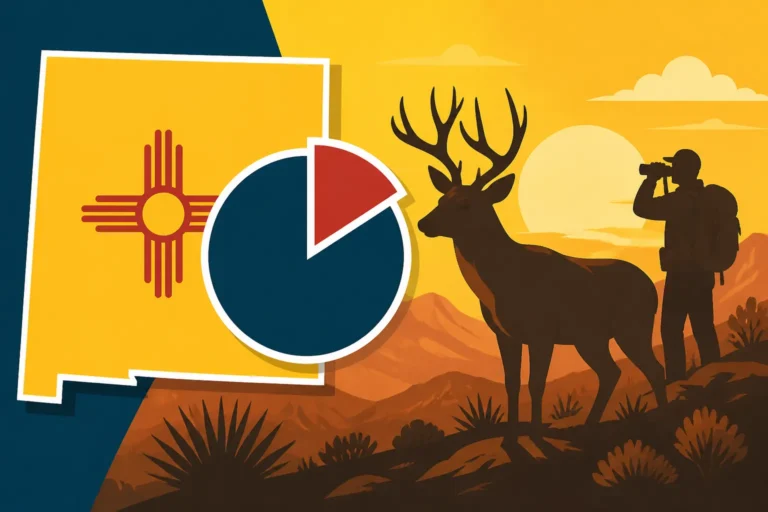
When New Mexico Game and Fish allocates its big game tags, it doesn't just toss them all into one general lottery. Instead, they operate with a three-tiered system, often referred to as the "84, 10, and 6 percent rule." This framework dictates how many licenses go to different types of applicants, and it significantly impacts your chances, especially if you're a nonresident.
Here's a breakdown of how it typically works for most species, like elk and mule deer:
- 84% Resident Pool: The vast majority of tags are reserved for New Mexico residents. This is pretty standard across states, ensuring local hunters have the best opportunities. If you're a resident, this is your primary pool, and your odds are generally the highest here.
- 10% Outfitter Pool: This is where things get interesting. Ten percent of all available tags for a given hunt code are set aside specifically for applicants who have contracted with a licensed New Mexico outfitter. This pool is open to both residents and nonresidents, but it requires that you apply with a valid outfitter number and have a signed contract in place. We'll dive much deeper into what this means.
- 6% Nonresident Public Pool: For nonresidents who don't wish to use an outfitter, only six percent of the tags are available. As you can imagine, the competition in this pool is incredibly fierce. For highly sought-after hunts, drawing a tag in the 6% pool can be exceptionally difficult, sometimes with odds well under one percent.
The existence of these separate pools means that applying as a nonresident without an outfitter puts you in a much smaller pond, competing for very few tags. If you're curious about the specifics of these allocations, you can learn more about how New Mexico Splits Every Hunt 84, 10 and 6 Percent. It’s a system that definitely makes you think about strategy before hitting that "submit" button on your application.
Why the Outfitter Pool Exists
The New Mexico outfitter pool wasn't just pulled out of thin air; it was established with a specific purpose in mind. Fundamentally, it's about supporting the state's outfitting industry and, by extension, tourism and economic activity in rural areas. Outfitters provide a valuable service, guiding hunters, often into remote or challenging terrain, and contributing to the local economy through jobs, equipment purchases, and services.
From the state's perspective, this allocation system incentivizes hunters, particularly nonresidents who often have deeper pockets, to hire New Mexico outfitters. This brings direct revenue into the state and local communities. For example, a nonresident coming for an elk hunt might spend thousands on the hunt itself, plus additional money on lodging, food, fuel, and other supplies, all of which benefit New Mexico businesses. The thought is that by creating a dedicated tag pool, it encourages this economic activity, making it a win-win for both the outfitting industry and the state's coffers. It’s a way to ensure that New Mexico's outdoor resources also contribute to its economic health, beyond just license sales.
Navigating the Outfitter Draw: How It Works
So, you've decided to explore the outfitter pool. Maybe you're a nonresident looking to improve your odds, or perhaps you're a resident seeking expertise in a new unit. Either way, understanding the mechanics of applying through an outfitter is critical, as there are specific steps and requirements you absolutely must follow. It’s not as simple as just checking a box.
The Role of the Outfitter Number on Your Application
The first and most fundamental step to entering the outfitter draw is having a valid, registered New Mexico outfitter on board. This isn't something you can just decide to do last minute before the draw deadline. Your chosen outfitter must be licensed and registered with the New Mexico Department of Game and Fish.
When you submit your application through the NMDGF online portal, there will be a specific field where you must enter your outfitter's official registration number. This number is unique to each licensed outfitter and is the mechanism by which the state identifies your application as part of the 10% pool. If you omit this number, or if it's incorrect, your application will simply be treated as a standard public draw entry within the 84% (if resident) or 6% (if nonresident) pool, and you'll miss out on the intended advantage.
It's paramount to communicate clearly with your outfitter well in advance of the application deadline. They will provide you with their registration number. Some outfitters even prefer to handle the application process for their clients to ensure all details, including their number, are correctly entered. This can be a huge relief, especially if you're new to the New Mexico draw. Make sure you understand Where the Outfitter Number Goes on Your Application to avoid any costly mistakes.
The Mandatory Guide-Client Contract
Beyond just an outfitter number, New Mexico law requires a legally binding, written contract between you and your outfitter to be eligible for the 10% outfitter draw. This isn't a handshake agreement; it's a formal document designed to protect both parties and ensure the integrity of the outfitter draw system.
This contract must be fully executed—meaning signed by both you and the outfitter—before you submit your application to the Department of Game and Fish. The Department doesn't require you to submit the contract with your application, but you must have it on file. If you are drawn in the outfitter pool and later cannot produce a valid, signed contract dated before your application submission, your license could be revoked.
The contract typically outlines the services provided, the hunt dates, the species, the agreed-upon fees, cancellation policies, and the responsibilities of both the hunter and the outfitter. It's a critical piece of documentation. Think of it as your official entry ticket to that 10% pool. Before committing, thoroughly read and understand the terms of the contract. If you're unsure about the specifics, don't hesitate to ask your outfitter for clarification or seek legal advice. Knowing The New Mexico Guide-Client Contract Requirement thoroughly will save you potential headaches down the line.
Deciphering New Mexico's "Two-Day Rule"
One of the most talked-about, and often misunderstood, aspects of New Mexico's outfitter draw is the "two-day rule." This isn't just a suggestion; it's a legal requirement that directly ties into the outfitter pool and ensures that outfitters are genuinely providing a service to the hunters who draw tags through their allocation.
What "Accompaniment" Truly Means
The two-day rule stipulates that if you draw a license through the outfitter pool, your contracted outfitter (or a registered guide working under them) must personally accompany you in the field for a minimum of two calendar days during your hunt. This is the state's way of verifying that the outfitter is actually involved in the hunt, not just providing a number for draw purposes.
"Accompanying" doesn't mean they drop you off at camp and pick you up a week later. It means they need to be actively engaged in the hunting process with you for those two days. This could involve scouting with you, guiding you to hunting spots, actively calling for elk, helping track, or otherwise directly assisting in your pursuit of game. The key is that they are physically present and participating in the field alongside you.
These two days don't have to be consecutive, nor do they have to be at the beginning or end of your hunt. They can be any two days that align with your hunt dates and the outfitter's schedule. For example, an outfitter might join you for opening day and then again for a day mid-hunt, or split their time between multiple clients throughout a season. It's flexible, but it's mandatory. This rule is explicitly outlined as New Mexico's Two-Day Accompaniment Rule Explained in the state's regulations, so there's no ambiguity about its importance.
Handling Unexpected Outfitter Absence
Life happens, and sometimes even the best-laid plans go awry. What if your outfitter, through unforeseen circumstances like illness, injury, or a family emergency, is unable to fulfill their two-day accompaniment requirement? This is a valid concern that many hunters have, especially after investing significant money and emotional energy into a guided hunt.
New Mexico regulations do have provisions for such situations, but they aren't without their complexities. Generally, if the contracted outfitter cannot personally accompany you, they are required to provide a registered guide to fulfill the two-day requirement in their stead. This guide must also be licensed with the state and working directly under the outfitter's license. It's not acceptable for the outfitter to simply say "tough luck" or to send an unlicensed friend. The replacement must be a legitimate, registered professional guide.
If, for some reason, the outfitter is unable to provide any registered guide to meet the two-day minimum, this could potentially put the hunter in a difficult position. It could lead to a violation of the terms under which the tag was issued. In such rare and unfortunate circumstances, it's crucial to contact the New Mexico Department of Game and Fish immediately to report the situation and seek guidance. They will determine the appropriate course of action, which could range from a warning to potential revocation of the tag, depending on the specifics and the outfitter's compliance history. This is why vetting your outfitter, as we'll discuss later, is so vital; you want to ensure they have the resources and professionalism to handle such contingencies responsibly.
Does Applying with an Outfitter Really Boost Your Odds?
This is the million-dollar question for many hunters: is shelling out the money for an outfitter truly worth it just to improve your draw odds? The short answer is, for nonresidents, often yes, but it's not a guarantee and it comes with a financial commitment.
Analyzing Draw Odds for Outfitter Applicants
Let's revisit those allocation percentages: 84% for residents, 10% for the outfitter pool, and 6% for nonresidents. If you're a nonresident, applying in the 6% pool means you're competing with all other nonresidents who are trying to DIY their hunt, for a very small sliver of tags. For popular units and prime seasons, the odds in this pool can be shockingly low.
Now, consider the 10% outfitter pool. While it's still competitive, the number of applicants in this pool is generally much smaller than the total number of nonresidents applying in the 6% pool. Why? Because it requires the upfront commitment of hiring an outfitter, which carries a significant cost. This financial barrier naturally reduces the number of applicants. As a result, for many hunts, the statistical draw odds for a nonresident in the 10% outfitter pool can be significantly better than in the 6% public nonresident pool. Sometimes, for certain units and species, the difference can be substantial enough to make it a serious consideration. GoHunt, a popular resource for Western big game draws, often publishes detailed draw odds for New Mexico, breaking them down by resident, nonresident, and outfitter pools, which can be invaluable for making an informed decision. You can often check Does a New Mexico Outfitter Application Improve Odds? by looking at these historical draw statistics.
However, it's critical to understand that "better" odds don't mean "guaranteed" odds. It's still a lottery. You could apply with an outfitter for several years and still not draw, just as you could draw in the 6% pool on your first try. It simply shifts the statistical probability in your favor by placing you in a less crowded applicant pool.
Nonresident vs. Resident Considerations
The impact of the outfitter draw varies greatly depending on whether you're a New Mexico resident or a nonresident.
For Nonresidents:
As discussed, the outfitter pool often represents the best statistical chance for a nonresident to draw a coveted New Mexico big game tag. Given the paltry 6% public pool, many nonresidents view going the outfitter route as a strategic necessity if they want a realistic shot at a quality hunt. The financial investment is high, but so is the potential reward of drawing a tag that might otherwise be virtually unattainable. It's a calculation of cost versus probability.
For Residents:
For New Mexico residents, the outfitter draw typically doesn't offer the same dramatic increase in draw odds. Residents have access to the generous 84% resident pool, which already offers the best odds available. While residents can apply in the 10% outfitter pool, doing so usually doesn't significantly improve their chances compared to the 84% pool, and it adds the considerable expense of an outfitter.
So, why would a resident use an outfitter? It's generally not about improving draw odds as much as it is about the service provided. A resident might hire an outfitter to:
- Hunt a particularly rugged or unfamiliar unit, like parts of the Gila National Forest.
- Increase their chances of success with an expert guide, especially for trophy animals.
- Access private land that the outfitter has leases on.
- Reduce the physical demands of a hunt by utilizing pack strings or experienced spotters.
- Gain knowledge and experience from a seasoned professional.
Essentially, for residents, the outfitter decision is more about buying a higher quality, more efficient, or more comfortable hunting experience, rather than primarily boosting draw odds.
Cost Considerations: The Financial Side of Guided Hunts
Let's be blunt: hiring an outfitter in New Mexico is a significant financial investment. It's not a cheap endeavor, and it's crucial to have a clear understanding of all the costs involved before you commit. This isn't just about the base fee; there are often many other expenses that can add up quickly.
Breaking Down Outfitter Fees and Inclusions
Outfitter fees for New Mexico hunts can vary wildly depending on the species, the unit, the duration of the hunt, the level of service, and the outfitter's reputation. For a fully guided elk hunt, for instance, you could be looking at anywhere from $5,000 to $15,000 or more. Mule deer and Oryx hunts also command premium prices, often in the $3,000 to $10,000 range. Species like Barbary sheep or Ibex, which are more niche and difficult, can sometimes command even higher prices due to the specialized nature of the hunt.
When reviewing an outfitter's quote, pay close attention to what's explicitly included. A "fully guided" hunt typically means the outfitter provides:
- Guiding services: The outfitter or a registered guide will be with you in the field.
- Meals: Often home-cooked and hearty, provided in camp.
- Lodging: This could range from comfortable wall tents in a spike camp to cabins or even motels in town, depending on the hunt type and unit.
- Transportation during the hunt: This includes getting to and from hunting areas, often using ATVs, trucks, or horses.
- Field care of game: This means caping, quartering, and packing out your animal to a processing facility.
However, not all "fully guided" packages are created equal. Some outfitters offer "drop camps" which are more budget-friendly. A drop camp might involve the outfitter packing you and your gear into a remote camp, providing basic necessities like a tent and cooking equipment, and then leaving you to hunt independently, returning at the end of your hunt to pack you out. This is a great option for experienced DIY hunters who want to access remote areas without the expense of a full guide. Understanding What a Guided New Mexico Elk Hunt Costs requires a deep dive into these details.
Beyond the Sticker Price: Hidden Costs
The outfitter's quoted fee is rarely the total cost of your hunt. There are several other expenses that can significantly add to your budget:
- License and Tag Fees: These are almost never included in the outfitter's price. For nonresidents, a New Mexico game hunting license itself can be over $100, and an elk tag can be well over $500, with Oryx tags exceeding $1,600. These are substantial upfront costs that you pay directly to the state.
- Application Fees: Each species application has a non-refundable fee (typically around $7-10 per species). If you apply for multiple species, these add up.
- Habitat Management and Access Validation (HMAV) and Habitat Stamp: New Mexico requires both an HMAV and a Habitat Stamp, which combined can add another $30-$40 to your total, depending on where you hunt.
- Travel Expenses: Airfare, fuel for driving, car rental, and pre/post-hunt lodging if you're traveling a long distance.
- Meat Processing and Taxidermy: After a successful hunt, you'll need to pay to have your meat processed and potentially shipped home. If you plan on a trophy, taxidermy and shipping costs for the cape and antlers can be considerable.
- Gratuities/Tips: It is customary to tip your guides and camp staff. A typical tip for a successful, well-run guided hunt ranges from 10-20% of the hunt cost. This can be thousands of dollars, so budget for it.
- Gear and Supplies: Do you have all the necessary hunting gear, clothing, optics, and personal supplies for a New Mexico backcountry hunt? If not, these purchases will add to your expenses.
- Unexpected Costs: Breakdowns, emergency supplies, or unforeseen circumstances can always arise. It's wise to have an emergency fund.
When budgeting, it's best to create a comprehensive spreadsheet that includes every single potential cost, not just the outfitter's base fee. This will give you a realistic picture of the total investment for your New Mexico hunting adventure.
Vetting and Choosing the Right New Mexico Outfitter
Selecting an outfitter isn't just about finding someone with an outfitter number; it's about finding a reputable, reliable, and ethical professional who aligns with your hunting style and expectations. This decision can make or break your hunting experience, so take your time and do your homework.
Key Questions to Ask Before Booking
Before you commit to a contract and send a deposit, engage in thorough conversations with several potential outfitters. Don't be shy about asking detailed questions. Here are some critical ones:
- "What's your experience in the specific unit and hunt code I'm interested in?" An outfitter might be great in one unit but unfamiliar with another. Look for specific, detailed knowledge.
- "What are your success rates and kill percentages for the species and hunt type I want?" While past success doesn't guarantee future results, it gives you an idea of their track record. Be wary of outfitters who give vague answers or promise 100% success.
- "Can you provide references from past clients, particularly those who hunted the same species/unit within the last 1-2 years?" This is perhaps the most important question. A reputable outfitter will gladly provide a list of references. Always call these references and ask them direct, specific questions about their experience, the outfitter's professionalism, the quality of the hunt, and whether they would hunt with them again. GoHunt also offers some outfitter reviews and information that can be a good starting point for your research.
- "What is included and not included in your hunt price?" Get a detailed breakdown to avoid surprises. This ties back to those hidden costs we discussed.
- "What is your refund and cancellation policy, especially if I fail to draw a tag?" This is crucial. Many outfitters have provisions for draw failure, such as rolling your deposit over to the next year's draw, but policies vary. Understand this before you sign anything.
- "How do you handle wounded game? What's your policy on blood trailing and recovery?" This shows their commitment to ethical hunting and responsible game recovery.
- "What kind of physical shape do I need to be in for this hunt? What's the typical terrain and altitude we'll be covering?" Be honest with yourself and the outfitter about your physical capabilities.
- "What is your guide-to-hunter ratio?" A 1:1 ratio typically offers the most personalized experience, while 2:1 or higher might mean less individual attention.
- "What happens if military operations shorten our White Sands Oryx hunt?" This is a very specific, hyper-local question for those seeking an Oryx tag, as military range closures can indeed cut hunts short.
- "Who specifically will be my guide in the field, and what is their experience?" You're hiring the outfitter, but often a specific guide will be with you daily.
The more detailed your questions, the better understanding you'll have of what to expect. You can often find additional insights into Questions to Ask a New Mexico Outfitter through various hunting resources.
Red Flags and Reputation Research
As you're vetting outfitters, keep an eye out for potential red flags that should give you pause:
- Vague answers or evasiveness: If an outfitter is unwilling to provide clear answers to your questions, especially regarding references, success rates, or pricing, consider it a warning sign.
- Promises of "guaranteed" tags or "record book animals": No ethical outfitter can guarantee a tag (unless it's a landowner tag) or a trophy animal. Hunting is unpredictable. Unrealistic promises suggest a lack of integrity.
- High-pressure sales tactics: If an outfitter pressures you to book immediately without giving you time to think or research, be cautious.
- Lack of licensing or insurance: Ensure they are properly licensed and insured. You can usually verify an outfitter's license status through the New Mexico Department of Game and Fish website.
- Poor communication: If they are slow to respond, don't return calls, or provide incomplete information before you've even booked, imagine how communication will be during your hunt.
- Negative feedback from references or online reviews: While one bad review might be an anomaly, a pattern of negative feedback should be a serious concern.
Beyond calling references, do your own online research. Look for reviews on forums, social media, and hunting websites. While not all online reviews are reliable, they can sometimes give you a broader picture of an outfitter's reputation. Forums specific to New Mexico hunting can be a great place to ask for honest opinions about outfitters. Remember, this is a significant investment; a little extra research can save you a lot of disappointment. When you're thinking about Booking Around New Mexico's March Deadline, ensure you've given yourself ample time to do this critical vetting.
Alternative Avenues: Beyond the Outfitter Draw
While the outfitter draw offers a distinct path to hunting New Mexico, it's certainly not the only one. For various reasons—cost, preference for independence, or a focus on specific hunt types—many hunters choose different routes. New Mexico offers a few other options that are worth exploring.
The EPLUS System and Landowner Tags
The EPLUS system is New Mexico's landowner elk tag program, and it's another significant way hunters can secure coveted elk tags outside of the traditional public draw. EPLUS stands for "Elk Private Land Use System." Essentially, landowners with qualifying elk habitat are allocated a certain number of elk authorizations (or "tags") by the Department of Game and Fish. These authorizations are tied to their private property but can sometimes be used on adjacent public land, depending on the specific authorization.
Landowners can then sell these EPLUS authorizations directly to hunters. This means if you purchase an EPLUS tag, you bypass the public draw entirely. This can be an attractive option for those who have struggled to draw a tag for years or who want to hunt a specific unit or ranch without waiting on the lottery system. The downside, of course, is the cost. EPLUS tags are sold at market value, which can range from a few thousand dollars for a cow tag to significantly more for a trophy bull tag, often exceeding the cost of even a guided draw hunt when combined with a trespass fee.
Outfitters often play a role in the EPLUS system, too. Many outfitters either own land with EPLUS authorizations or have agreements with landowners to sell and guide hunts on these properties. So, while an EPLUS tag allows you to bypass the draw, you might still end up hiring an outfitter to guide you on the private or adjacent public land you gain access to with the tag. This can be a great option for a guaranteed hunt opportunity if the financial investment aligns with your budget. Understanding EPLUS Tags Are the Other Way Into New Mexico Elk can open up different possibilities for your hunting plans.
DIY Hunting as a Public Land Option
For many hunters, the allure of New Mexico lies in its vast expanses of public land and the challenge of a do-it-yourself (DIY) hunt. Despite the various allocation pools, a significant portion of tags are still available in the general public draw, and thousands of hunters successfully pursue elk, deer, and other species on their own every year.
New Mexico boasts over 30 million acres of public land, including extensive National Forests (like the Gila National Forest, Carson National Forest, and Lincoln National Forest), Bureau of Land Management (BLM) acreage, and State Trust Land. The key to a successful DIY hunt is meticulous planning, thorough e-scouting, and often, boots on the ground scouting well before the season.
If you choose the DIY route, you'll be applying in the 84% resident pool or the 6% nonresident public pool. Your success will depend heavily on:
- Unit Selection: Choosing a unit with good public access, a healthy game population, and manageable hunting pressure.
- Physical Preparation: Many of New Mexico's best units are rugged, high-elevation, and demand excellent physical conditioning.
- Hunting Skills: Your ability to scout, track, call, and execute a stalk will be paramount.
- Gear and Logistics: Planning for everything from camp setup, water sources, navigation, and game retrieval.
While the draw odds can be tougher for nonresidents in the 6% pool, the sense of accomplishment from a successful DIY hunt is unmatched. Many hunters prefer the challenge and the lower financial barrier of going it alone. It's an experience that fosters incredible self-reliance and deepens your connection to the land. If this sounds like your style, resources like GoHunt's mapping tools and draw odds data can be invaluable for Planning a DIY Public Land Hunt in New Mexico.
| Aspect | Public Draw (Nonresident, 6% Pool) | Outfitter Draw (10% Pool) | EPLUS (Landowner Tag) |
|---|---|---|---|
| Eligibility | Any nonresident hunter | Hunter with valid outfitter contract | Anyone purchasing a landowner authorization |
| Draw Odds (Elk) | Generally very low (often <1-2%) | Generally better than 6% pool | Not applicable; tag is purchased |
| Cost of Tag | Standard NMDGF tag fee (e.g., ~$548 elk) | Standard NMDGF tag fee (e.g., ~$548 elk) | Standard NMDGF tag fee + EPLUS cost (e.g., $1,500 – $15,000+) |
| Outfitter Required | No | Yes, for minimum two days | Optional, but common for access/guidance |
| Access | Public land only | Public or private land (if outfitter has leases) | Private land and sometimes adjacent public |
| Application Deadline | March 18th | March 18th (with signed contract) | Varies, tags sold until season starts |
| Primary Advantage | Lowest cost for opportunity | Improved draw odds for nonresidents | Guaranteed tag, specific hunt opportunity |
| Primary Disadvantage | Very tough draw odds | High total cost, two-day rule | Highest total cost, tied to private land |
Disclaimer
Please remember that hunting regulations and fees in New Mexico are subject to change. While every effort has been made to provide accurate and up-to-date information, it is your responsibility to consult the official New Mexico Department of Game and Fish regulations booklet for the current year before applying for any licenses or tags. This guide is for informational purposes only and should not be considered legal advice.