Closing on a Barbary Ram in Broken Rimrock
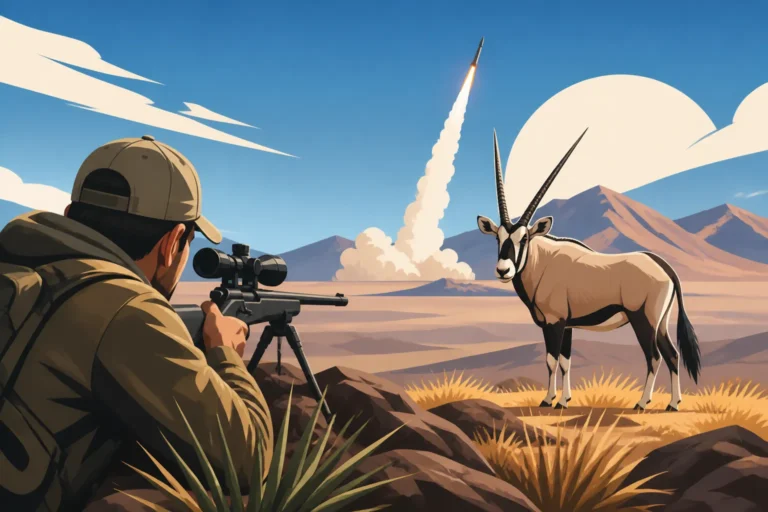
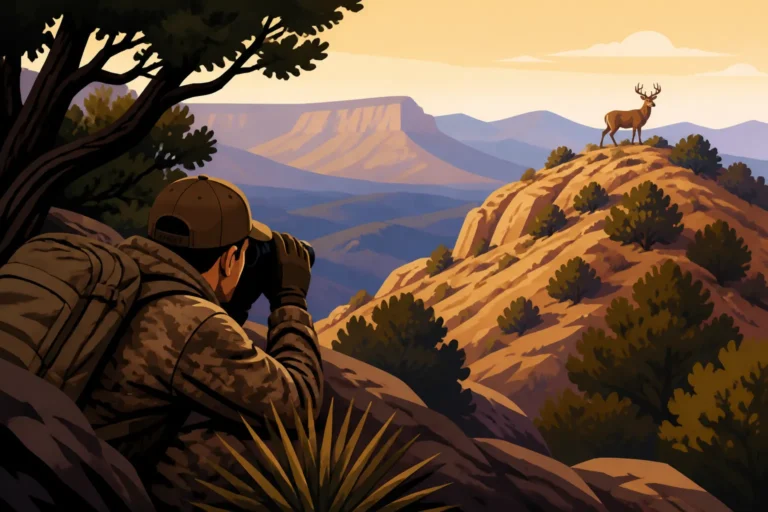
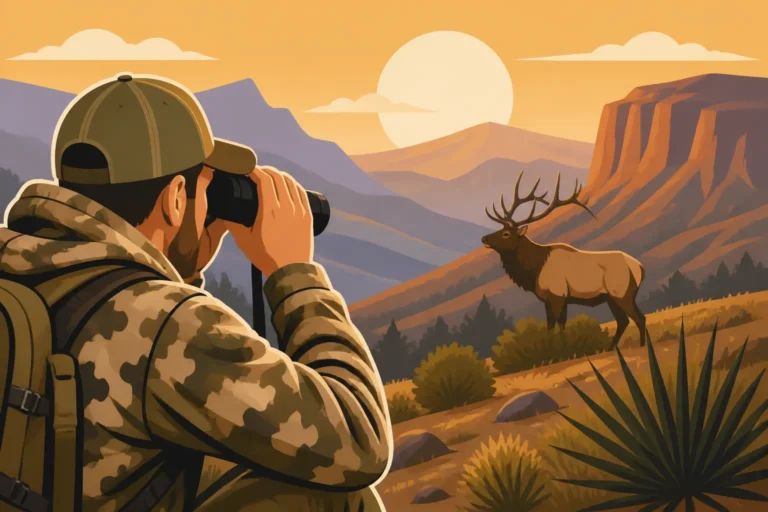
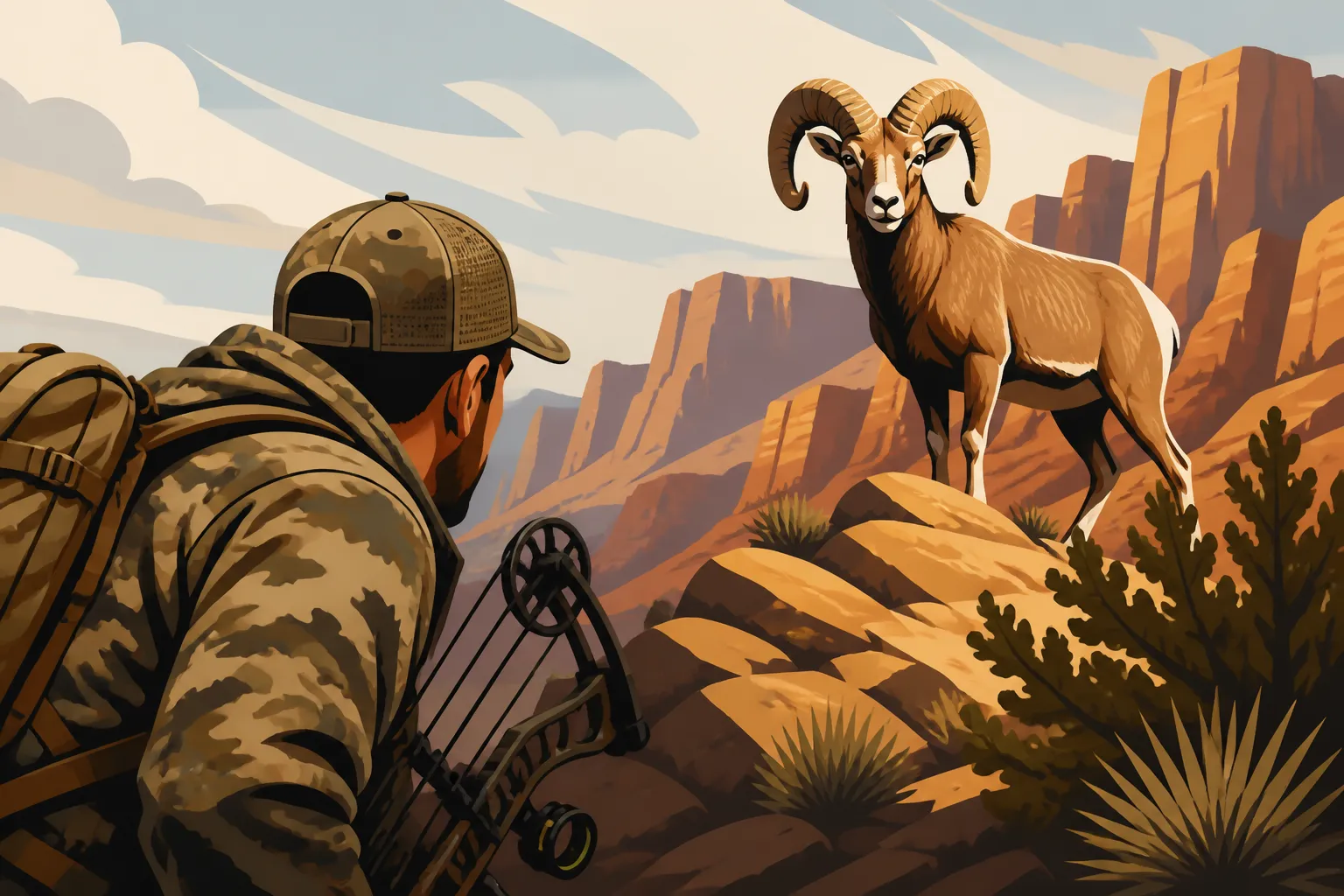
Spotting a Barbary ram on a distant, seemingly unreachable rimrock is a common moment of pure frustration for any hunter in New Mexico. That moment, when your binoculars finally resolve the tell-tale horns against the impossible backdrop of a canyon wall, is often followed by the sinking realization: how in the world do I even get close to that thing? Barbary sheep thrive in terrain that makes other big game look like park animals, and closing the distance on a wary ram in their broken, rugged domain demands a completely different set of skills. This guide is dedicated to dissecting those challenges and arming you with the actionable strategies needed to bridge that gap between glassing and a successful shot opportunity.
Understanding Barbary Ram Behavior in Their Rugged Domain
Before you even think about putting boot to rock, you've got to get inside the head of a Barbary ram. These animals are not just tough; they're perfectly adapted to some of the most unforgiving landscapes New Mexico offers. Their behavior is intrinsically linked to the broken rimrock country they call home, and understanding that connection is your first step toward success.
Why Barbary Sheep Prefer Rimrock
Barbary sheep, often called Aoudad, are creatures of verticality and vigilance. Their stocky, powerful build and unique hoof structure allow them to navigate seemingly impossible inclines and precarious ledges with incredible agility. They choose rimrock, steep canyons, and sheer cliffs not just for shelter, but for defense. From their high vantage points, they can spot predators—including hunters—from vast distances. This gives them an enormous advantage, as they can simply drop over a cliff face, disappear into a labyrinth of canyons, or melt into the shadows of a boulder field long before you get within range.
Their preferred habitat in places like the Canadian River Breaks, the Florida Mountains, or the rugged canyons of the Guadalupe Mountains, isn't just a place to live; it's a fortress. They use every fold, every rock overhang, every shaded cut as a strategic observation post or an escape route. You'll often find them grazing on sparse vegetation near a precipice, always with an escape route planned. They are constantly scanning, their eyesight sharp, their hearing acute. This means that every step you take, every gust of wind, and every exposed movement is under scrutiny. Successful hunters often spend more time studying Barbary Sheep in New Mexico Canyon Country and how these animals interact with their surroundings than they do physically stalking.
Daily Patterns and Bedding Habits
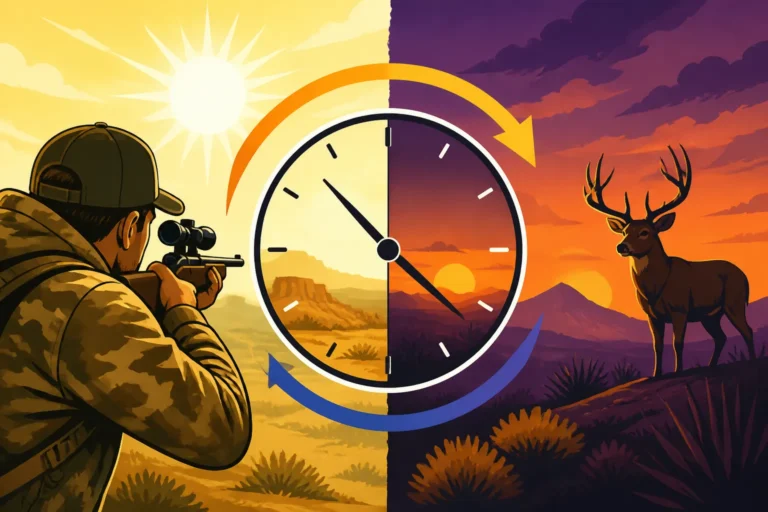
Like most big game, Barbary rams have fairly predictable daily patterns, but within their challenging environment, these patterns often involve significant vertical travel. Early morning and late evening typically find them grazing on mesa tops, along benches, or in canyon bottoms where forage might be a bit more accessible. However, as the sun climbs and temperatures rise, especially during the warmer early seasons, they retreat to shaded, inaccessible bedding areas. These beds are almost always in spots that offer maximum visibility and minimal exposure. Think a shaded overhang on a cliff face, a pocket in a jumble of boulders high up, or a narrow ledge with a commanding view of the canyon below.
When they bed, they are often facing downslope or in a direction that allows them to observe any approach. It’s not uncommon for a ram to bed down with its back to an impenetrable cliff, relying on its keen senses and the difficult terrain to protect its front and sides. This makes a direct frontal approach nearly impossible. Your challenge is not just to find them, but to determine their escape routes and how the wind and thermals will play into their natural defenses. Being able to predict these movements, especially after a period of study using tools like GoHunt's mapping features to analyze terrain, can give you a crucial edge.
Reading the Rimrock: Identifying Approach and Escape Routes
Stalking Barbary sheep is less about brute force and more about mental chess. The broken rimrock isn't just an obstacle; it's a puzzle you need to solve. Every rock, every fold in the earth, every sparse juniper tree can be either a hindrance or an opportunity. Your success hinges on your ability to read the terrain like a roadmap, identifying hidden pathways and anticipating the ram's next move.
Deciphering the Landscape's Clues
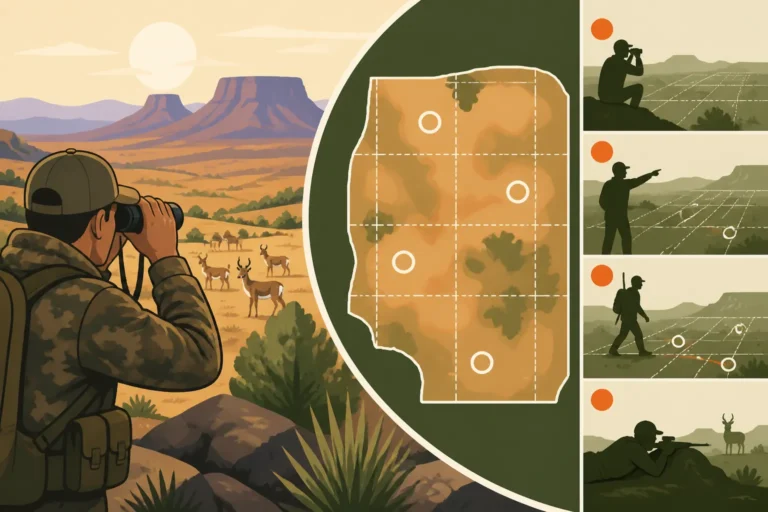
When you spot a ram, the first thing you need to do is put down your rifle and pick up your optics – a good spotting scope on a sturdy tripod is non-negotiable here. Don't just look at the ram; study its immediate surroundings. What kind of rock formations are nearby? Are there any deep draws, dry washes, or steep benches that could offer cover? Are there any natural funnels or pinch points that the ram might use if pressured?
Look for changes in elevation that could create "dead spots" or depressions where you might be able to move unseen. Often, the terrain is a series of shelves and ledges. Can you get on the same shelf as the ram from a different direction? Or can you use a lower, parallel shelf to approach, eventually finding a way to ascend unseen? This is where tools like GoHunt's 3D terrain models become invaluable during your e-scouting phase. You can often see potential approach lines and hidden pockets that aren't obvious from a flat topo map. Understanding Terrain That Hides an Approach at 10,000 Feet shares similar principles, even if the species and specific rock formations differ. The core idea is always leveraging natural features for concealment.
Consider also the type of cover. In rimrock, dense timber is rare. You're more likely to find sparse junipers, piñon pines, scrub oak, or simply large boulders. Each of these offers limited, but crucial, concealment. You'll often be using the shadows cast by these features, or moving when the ram's head is down, to make progress.
Identifying Potential Stalking Corridors
Once you've studied the immediate area, start looking for longer stalking corridors. These are the routes that will get you from your glassing position to a potential shooting lane. This might involve a circuitous path, descending into a canyon, crossing a bottom, and then ascending another side. It’s rarely a straight line.
Key elements to look for in a corridor:
- Shadow Lines: In desert environments, shadows are your friend. Plan your stalk to utilize the shaded sides of ridges or canyon walls, especially during midday.
- Draws and Washes: Dry washes, even small ones, can provide excellent concealment, allowing you to move low and out of sight. Remember to move slowly and quietly, as these can often be filled with loose rocks. Utilizing Using Draws and Benches to Close Distance is a critical skill for any mountain or desert hunter.
- Benches and Terraces: Often, rimrock isn't a single sheer cliff, but a series of broken benches or terraces. Can you get on an adjacent or lower bench and then work your way up?
- Ridges and Fingers: Sometimes, a subtle finger ridge or a rise in the terrain can offer a masked approach, allowing you to stay below the skylight and out of sight until you crest a final rise.
It’s crucial to acknowledge that not every ram is stalkable. Some rams will simply be in an unapproachable position, especially those high up on an isolated peak or cliff face. Don't force a stalk that isn't there; you'll only blow the ram out and likely not get another chance. Patience is paramount, and sometimes the best move is to watch, learn, and try again another day, or find a different animal.
Executing the Stalk: Wind, Cover, and Timing
Once you've identified a promising approach, the real work begins. Executing a successful stalk on a Barbary ram in broken rimrock requires meticulous attention to detail, a deep understanding of the elements, and incredible self-control. This isn't a race; it's a slow, deliberate chess match where every move counts.
Playing the Wind and Thermals
Wind is arguably the most critical factor in any stalk, and in broken rimrock, it can be notoriously fickle. Canyons act like natural funnels, accelerating wind in some spots and creating swirling eddies in others. Thermals, the air currents that rise with the sun and fall as it sets, will often dominate wind patterns in mountainous and canyon terrain. In the morning, cold air sinks into the canyon bottoms; in the afternoon, warm air rises.
You must constantly monitor the wind direction and velocity. Carry a small wind checker or milkweed pod and use it frequently. As you move, the wind will shift, sometimes dramatically within a matter of yards. A general rule of thumb: always keep the wind in your face or quartering toward you. This is non-negotiable for Barbary sheep, which have an incredible sense of smell.
A crucial tactic is Playing Thermals on a Canyon Stalk. If you're stalking in the morning, work your way down into the canyon or along a sidehill, understanding that the air is likely moving downslope. In the afternoon, as the sun warms the rock, expect the thermals to reverse and pull your scent upslope. This means a midday stalk might require staying below the animal, letting your scent rise past it rather than to it, or waiting for the thermals to shift. Sometimes, waiting for a consistent crosswind can be your best bet, but even then, be wary of localized eddies.
Utilizing Cover and Movement Discipline
Cover in rimrock is often sparse, making movement discipline absolutely paramount. You will need to move at a snail's pace, often taking only a few steps at a time before pausing to scan. When you do move, do so deliberately and silently. Every loose rock, every crunch of gravel, can betray your presence.
- Go Slow: Slower than you think. Imagine a squirrel crossing an open lawn—that’s your speed.
- Stay Low: The less of your silhouette that breaks the skyline, the better. Crawl, army crawl, or stoop walk as necessary.
- Use Natural Features: Hug the contours of the terrain. Use large boulders, clumps of brush, or even the shadows to break up your outline. When you crest a rise, do so slowly, peeking over with only your eyes and the top of your head, never silhouetting yourself against the sky.
- Stop and Scan: After every few steps, stop completely. Let your eyes scan the landscape, looking for the ram's head, ears, or any subtle movement. Often, an animal will pause its activity and look up if it senses something. If you're frozen, it might dismiss you as part of the landscape.
- Patience is a Virtue: The most frustrating part of Barbary hunting is often the waiting. You might be pinned down for hours, waiting for the ram to move, to turn its head, or for the wind to shift. Pack enough water (see Water You Must Carry on a Desert Day Hunt) and snacks to sustain you through these long waits. Your boots, like those needed for Choosing Boots for Rocky Desert Ground, also need to be comfortable and durable enough for long periods of stillness and slow movement on unforgiving terrain.
Anticipating the Ram's Reaction
Even with the perfect stalk, there's always a chance the ram will spot you. Barbary sheep are notoriously skittish. If it does, freeze. Don't make eye contact. If it’s looking right at you, drop to the ground and become as small and inconspicuous as possible. Sometimes, they will eventually dismiss you as a rock or a bush, especially if you blend in with the background. Other times, they’ll bolt.
Have a contingency plan. If the ram spooks, where will it likely go? Can you get to a position where you might intercept it, or at least watch its escape route to see where it resettles? Remember, Barbary sheep often don't run far, but they will put themselves in an even more unapproachable position. Knowing Spot and Stalk Tactics for Barbary Sheep will tell you that sometimes, a short, fast sprint to a new cover, if the ram is temporarily out of sight, is better than being seen moving slowly.
Making the Shot Count in Challenging Conditions
After all that effort, getting within shooting range is only half the battle. The broken rimrock environment presents unique challenges for shot placement, and you need to be prepared to capitalize on fleeting opportunities.
Range Estimation and Shot Placement
In rugged, open country, judging distance can be incredibly deceptive. The vastness of the landscape, coupled with elevation changes, can make an animal appear closer or farther than it actually is. A rangefinder is an absolute necessity. Do not guess. Dialing in a precise range, especially when shooting at upward or downward angles, is critical. Many modern rangefinders compensate for these angles, giving you an "equivalent horizontal distance" which is what your bullet truly reacts to.
Barbary rams are tough animals, built for survival in harsh conditions. A solid shot into the vitals is paramount. Aim for the classic shoulder or lung shot. Their hide is thick, and their bone structure is robust. Avoid marginal shots, especially if the ram is on a precarious ledge where a less-than-lethal hit could send it plummeting into an inaccessible canyon.
Finding a Stable Shooting Platform
The broken rimrock is not often conducive to easy prone shots. You'll be dealing with uneven ground, loose rock, and often significant inclines or declines. This means you need to be adaptable in finding a stable shooting platform.
- Prone: Always your first choice if possible. Look for a flat spot, clear of obstructions, and use your backpack or bipod for support.
- Kneeling/Sitting: If prone isn't an option, find a large boulder or a rise to rest your elbow on. Shooting sticks, either collapsible or sturdy fixed bipods, are invaluable. They offer stability when cover forces you into a kneeling or sitting position, or when standing is your only option.
- Improvised Rests: Don't hesitate to use natural elements. A large, stable rock, a sturdy tree branch, or even a solid backpack can make all the difference. Test your rest to ensure it's not going to shift at the moment of truth.
The New Mexico hunting regulations do not permit hunting from a vehicle, so be prepared to make your shot on foot, using only what you carry. Remember to practice shooting from various positions before your hunt. Simulate awkward angles and uneven ground.
The Aftermath: Retrieval in Difficult Terrain
Congratulations, you’ve put a ram down! But in Barbary country, that’s often just the beginning of the real work. Retrieving an animal from broken rimrock can be more challenging than the hunt itself.
- Mark the Spot: Immediately after the shot, pick out a prominent landmark near where the ram went down. The terrain can look completely different once you start moving.
- Safety First: Approach cautiously. Barbary sheep are tough, and a wounded animal can be dangerous.
- Plan the Descent/Ascent: Before you even reach the animal, start assessing the most feasible path for retrieval. Is it going to require ropes? Will you need to quarter the animal and pack it out in sections? It's highly likely you'll be quartering. Reviewing guides on Field Dressing in Desert Heat and Getting Meat Cooled on an Early Season Hunt can be crucial here, as desert temperatures can spoil meat quickly.
- Meat Salvage: New Mexico, like most states, has strict meat salvage requirements. You must retrieve all edible meat. In such difficult terrain, this means being prepared to break down the animal on the spot.
Barbary sheep are truly a trophy of the West, and earning one in New Mexico's broken rimrock is an experience you won't soon forget. It demands patience, physical fitness, and a deep respect for the land and the animals. Equip yourself with the right knowledge, trust your instincts, and when that moment comes, make that shot count.
| Stalking Phase | Key Consideration | Barbary Ram Strategy in Rimrock | Potential Challenges |
|---|---|---|---|
| Initial Observation | Ram's Location | Pinpoint exact location, assess immediate cover and escape routes. | Deceptive distances, hidden pockets, vast open spaces. |
| Terrain Analysis | Approach Routes | Identify draws, benches, shadow lines, and natural funnels. | Steep inclines/declines, loose scree, cliff bands, lack of continuous cover. |
| Wind & Thermals | Scent Control | Constantly check wind; plan moves based on thermal direction changes. | Swirling canyon winds, unpredictable thermal shifts, animal's keen sense of smell. |
| Movement Discipline | Concealment | Slow, deliberate movement; low profile; utilize sparse brush/boulders. | Limited continuous cover, exposing skyline, noisy loose rock. |
| Shooting Platform | Stability | Utilize bipods, shooting sticks, backpack, or natural rock rests. | Uneven ground, awkward angles, limited flat areas. |
| Retrieval | Logistics | Quarter on site, plan packing route, manage heat. | Extreme terrain, heavy loads, heat exposure, potential for falls. |
Disclaimer
Always consult the current New Mexico Department of Game and Fish regulations prior to your hunt. Rules and season dates can change, and it is your responsibility to be informed and compliant.