Water Sources and Ethics in Desert Hunting
There's nothing quite like the parched earth of New Mexico's deserts to remind you just how precious water truly is. For hunters venturing into these vast, often unforgiving landscapes, understanding water sources isn't just about finding game; it's about survival, ethics, and appreciating the delicate balance of an ecosystem that thrives on scarcity. This guide will dive deep into the crucial role water plays in desert hunting, exploring both the practicalities of locating it and the vital ethical considerations that come with hunting around these life-giving oases.
The Unforgiving Thirst: Understanding Water's Role in New Mexico's Deserts
The iconic landscapes of New Mexico, from its sweeping plains to its rugged mountains and vast deserts, present a unique challenge for both wildlife and hunters: water. In an environment where precipitation can be sparse and temperatures can soar, every drop becomes a focal point of life. Understanding this fundamental truth is the first step toward becoming a more effective and ethical desert hunter.
The Scarcity That Shapes Wildlife Behavior
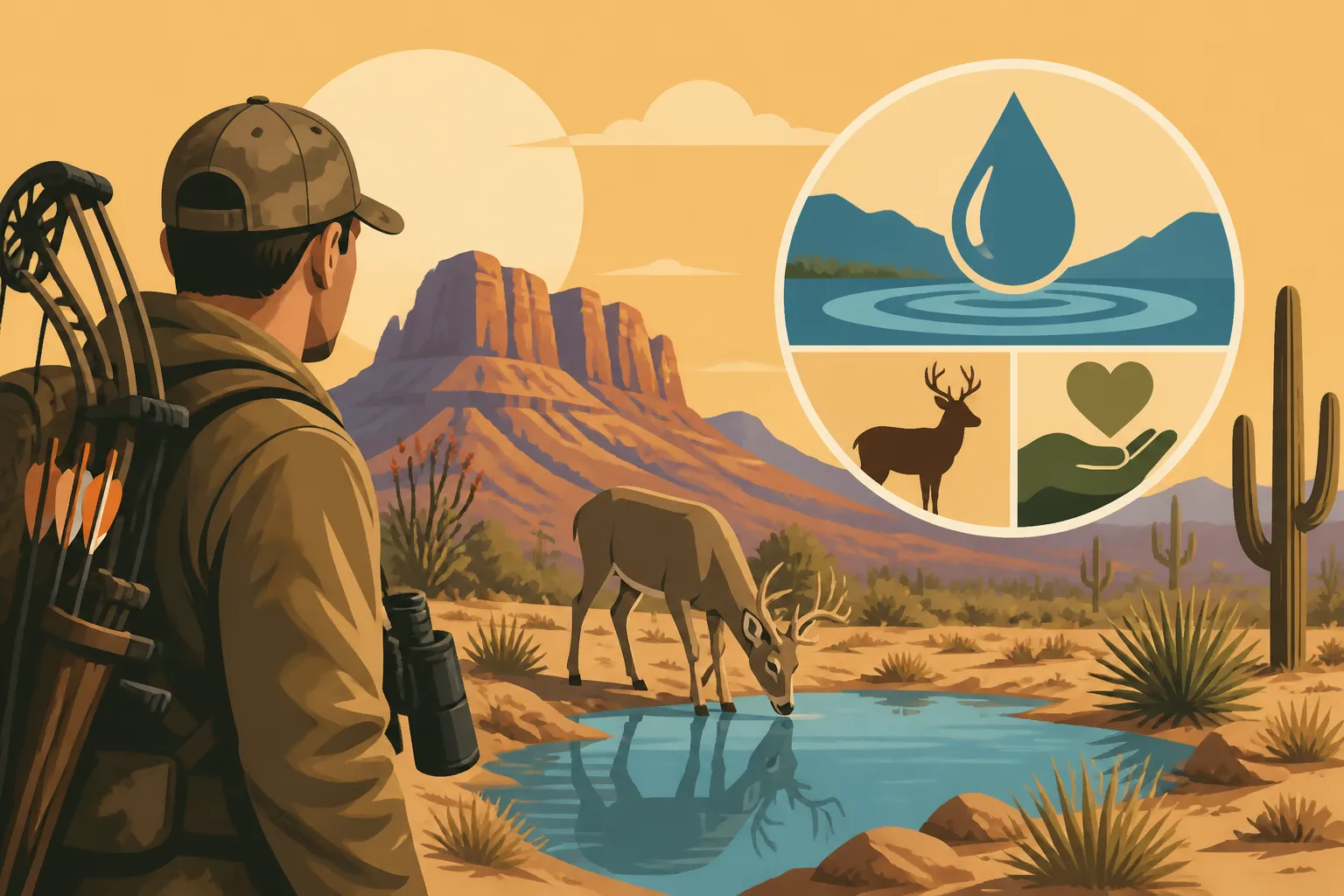
Imagine a mule deer or an oryx navigating miles of arid terrain, their internal clocks tuned to the rhythm of rainfall and runoff. In New Mexico's desert units, water isn't just a drink; it's a magnetic force that dictates movement, bedding areas, and feeding patterns. When How Drought Affects Desert Deer Numbers, these water sources become even more critical, drawing animals from vast distances and concentrating them in predictable, albeit often fragile, areas. This concentration means that if you can locate reliable water, you're often locating game. However, it also means these spots are high-traffic, high-stress areas for wildlife, making your approach and behavior around them paramount. The game trails leading to a hidden seep or a low-lying stock tank are highways of activity, telling a story of the animals that depend on it daily.
Personal Hydration: Beyond a Convenience, It's Survival
While game animals instinctively know where to find water, hunters often underestimate their own needs in the challenging desert environment. Dehydration can creep up silently, turning a promising hunt into a dangerous situation in a matter of hours. The dry air, intense sun, and physical exertion of still-hunting or glassing long hours mean your body needs constant replenishment. It's not enough to pack a single bottle; you need a strategic hydration plan. Many seasoned hunters will tell you that Water You Must Carry on a Desert Day Hunt often far exceeds what newcomers imagine. This isn't just about comfort; it's a non-negotiable aspect of safety, especially when you consider how quickly conditions can change or how far you might need to track an animal. Planning for potential delays, unexpected exertion, and even emergency situations means carrying more water than you think you’ll need.
Locating Nature's Oases: Finding Water in Arid Units
Successfully hunting in New Mexico's desert country often hinges on your ability to find water. These vital liquid resources can be few and far between, tucked away in canyons or dependent on recent rainfall. Learning to identify and locate both persistent and ephemeral water sources is a skill that will dramatically improve your success and safety in the field.
Natural Tanks, Seeps, and Ephemeral Puddles
New Mexico’s rugged geology offers several types of natural water sources. Rock tanks, also known as tinajas, are natural depressions in rock formations that collect rainwater and hold it for extended periods. These can be goldmines for game, often supporting a surprising array of life in otherwise barren landscapes. Seeps and springs, where groundwater emerges at the surface, are even more reliable, providing a consistent water supply year-round in many cases. Look for lush vegetation, darker soil, or even distinct odor as indicators. Then there are the ephemeral puddles and washes that only hold water immediately after a rain event. These might last only a few days or weeks, but during their brief existence, they can attract incredible numbers of animals before drying up. Knowing when and where to expect these temporary sources means Finding Water in New Mexico's Dry Country requires paying close attention to recent weather patterns and historical rainfall data.
E-Scouting and Reading the Terrain for Water Sign
Modern technology has revolutionized how hunters approach scouting, especially when it comes to identifying water. Tools like GoHunt’s mapping system allow you to meticulously E-Scouting a New Mexico Unit Before the Season, zooming in on topographical features that suggest water. Look for blue dots marking stock tanks, but also study contour lines for drainages, low-lying areas, and shaded canyon bottoms where natural seeps might occur. Identifying areas with a higher density of vegetation, even if dry, can sometimes point to historical or underground water sources. Once you're on the ground, reading the terrain for water sign is crucial. Game trails converging toward a specific point, tracks in damp earth, or even the distinct calls of birds can lead you to a hidden waterhole. Sometimes, the subtle shift in vegetation type or the slight dip in a wash can be the only clue you get. Understanding how Playing Thermals on a Canyon Stalk relates to these water sources can also be a game-changer; colder air often settles in low-lying areas where water collects, influencing animal movement at dawn and dusk.
The Ethical Compass: Hunting Around Water Sources
Given the critical role water plays in desert ecosystems, hunters have a profound ethical responsibility when operating near these life-sustaining hubs. It’s not just about what’s legal; it’s about respect for the animals, the land, and the hunting tradition itself.
Minimizing Disturbance at Critical Waterholes
Water sources in the desert are not merely hunting spots; they are vital sanctuaries where animals come to survive. Excessive pressure or disturbance at these locations can stress wildlife, potentially driving them away from a critical resource. This is particularly true during prolonged dry spells or in extreme heat, when an animal’s need for water is acute. Setting up too close to a known waterhole, making excessive noise, or lingering unnecessarily can cause animals to become nocturnal or abandon the site altogether. The goal should always be to minimize your footprint and impact. If you’re not actively Sitting Water for Deer and Antelope, consider approaching water sources cautiously, observing from a distance, and retreating if you notice animals are present and stressed by your presence. Always aim to leave the area as undisturbed as you found it, packing out all trash and evidence of your presence.
Fair Chase Principles and Waterhole Ambush
The concept of fair chase is deeply ingrained in hunting ethics, and nowhere is it more tested than around water sources in arid environments. While Hunting Over a Stock Tank Legally might be permissible in many areas of New Mexico, the ethical line can feel blurry. Is it truly fair chase to ambush an animal at the only water source for miles, especially when it is most vulnerable? Many hunters grapple with this question. The general consensus emphasizes giving the animal a reasonable chance to escape. This means avoiding tactics that exploit an animal's desperate need for water in an unsporting manner. For some, this means hunting waterholes only during non-peak times, or focusing on traditional spot-and-stalk methods in the vicinity rather than a direct ambush. The intent here is not to suggest any specific method is inherently wrong if legal, but to encourage self-reflection on what fair chase means to you in these unique circumstances.
Navigating Private Land and Water Access
New Mexico's landscape is a patchwork of public and private land, and water sources often straddle these boundaries or exist entirely on private property. Accessing private land, even to reach a public water source, requires explicit written permission. This isn't just a courtesy; it's a legal requirement that can lead to severe penalties if ignored. Before heading out, use robust mapping systems to clarify land ownership. A tool like Reading a Land Ownership Layer Correctly on a mapping app is essential. Don't assume that just because a water source is visible from public land, you have the right to approach it across private property. Respecting property boundaries and seeking permission from landowners is a fundamental ethical obligation that protects both the landowner's rights and the broader reputation of hunters. Ignoring these rules not only jeopardizes your hunt but can also lead to public land access issues for all hunters.
Man-Made Lifelines: Stock Tanks and Wildlife Guzzlers
Beyond natural springs and ephemeral pooling, man-made water sources play a significant role in sustaining wildlife and offering hunting opportunities across New Mexico's vast arid regions. Understanding these developments is crucial for any hunter in the state.
Legally and Ethically Hunting Over Stock Tanks
Stock tanks, dugouts, and impoundments are ubiquitous across New Mexico's ranching country, often serving as the only reliable water for livestock and, crucially, for wildlife. While these are human-made, they have become integral parts of the desert ecosystem. Hunting Over a Stock Tank Legally is a common practice, but it comes with its own set of ethical considerations. Always be mindful that these tanks are often on private grazing allotments, even if the land itself is public. This means you might encounter livestock, and disturbing them or their water source is a serious offense. Furthermore, if you are on public land but the stock tank itself is private property (sometimes built and maintained by ranchers), you may need specific permission from the rancher to hunt directly over it, even if you are on public land boundaries. Always double-check regulations, as rules can vary by land management agency and specific agreements. As always, aim for minimal disturbance to both wildlife and any ranching operations.
The Purpose and Impact of Artificial Guzzlers
In areas where natural water is exceptionally scarce, state agencies and conservation organizations often install Water Development Projects Built for Wildlife like guzzlers. These are essentially rainwater collection systems that feed into a small drinker, providing a dependable water source for various species, from quail to desert mule deer and oryx. Unlike stock tanks, guzzlers are designed specifically for wildlife. This distinction is important for ethical hunters. While hunting near a guzzler might be legal, approaching these vital resources with the utmost respect is paramount. They represent a significant investment in wildlife welfare and are often the only reason animals can survive in certain harsh environments. Over-pressuring these sites can negate their conservation benefit by creating an area of constant stress for the animals they are designed to help. Understanding the specific regulations for hunting around these structures, if any exist, is also important, as some areas may have buffer zones or restrictions to ensure wildlife has undisturbed access.
| Water Source Type | Description | Key Ethical Considerations | Hunting Approach |
|---|---|---|---|
| Natural Seep/Spring | Groundwater reaching surface; often year-round. | Highly critical, minimal disturbance, avoid direct ambush. | Spot & stalk nearby, observe from distance, avoid directly sitting on the seep. |
| Natural Rock Tank | Rain-filled depressions in rock; temporary to seasonal. | Critical during dry spells, can be the only water. | Approach cautiously, consider wind direction, leave undisturbed if possible. |
| Ephemeral Puddle | Short-lived after rain; can be found in washes/low spots. | Very temporary, animals will exploit quickly. | Quick scouting after rain, less ethical pressure due to short duration. |
| Stock Tank (Man-made) | Large impoundments for livestock and wildlife. | Often on private land/grazing allotments, respect livestock. | Check land ownership, get permission if needed, minimize disturbance to cattle. |
| Wildlife Guzzler | Engineered rainwater collection for wildlife only. | Direct conservation effort, avoid over-pressuring animals. | Maintain distance, avoid direct ambush, respect the wildlife's refuge. |
Sustaining the Source: Conservation and Stewardship
As hunters, we are often among the first to witness the direct impacts of environmental changes, particularly concerning water. This unique position also places us at the forefront of conservation efforts. Ensuring that New Mexico's water sources remain viable for future generations of wildlife and hunters is not just a good idea; it's a moral imperative.
Participating in Water Development and Maintenance
Many organizations, like the New Mexico Department of Game and Fish, Rocky Mountain Elk Foundation, and local sportsmen’s groups, actively engage in Water Development Projects Built for Wildlife. These projects involve everything from building and maintaining guzzlers to restoring natural springs and improving riparian habitats. Participating in these efforts, whether through volunteering time, donating funds, or simply spreading awareness, is a tangible way to give back to the resources that sustain the game we pursue. It’s hands-on conservation that directly benefits the animals we cherish and helps mitigate the effects of drought and increasing demands on water. Keep an eye on local conservation chapters, and you'll find plenty of opportunities to get involved. Organizations like GoHunt also often highlight conservation projects that hunters can support.
Advocating for Responsible Water Ethics
Beyond physical labor, advocating for responsible water use and ethical hunting practices around water sources is vital. This means being a voice for conservation, educating fellow hunters, and challenging unethical behaviors. It could involve supporting policies that protect critical water habitats or speaking up when you witness someone disrespecting a water source. The integrity of hunting in New Mexico’s deserts depends on our collective commitment to these principles. Remember, the actions of a few can impact the perception and opportunities for all. By championing a strong ethical code and actively working to preserve these precious resources, we ensure that the tradition of hunting in New Mexico's stunning, arid landscapes can continue to thrive for generations to come.
Disclaimer
Please note that hunting regulations, land access rules, and specific ethical considerations can change. Always consult the most current New Mexico Department of Game and Fish regulations and local land management agency rules before planning any hunt. This guide is for informational purposes and should not be considered a substitute for official legal advice or current regulations.