Drop Camp Against Semi-Guided Hunts
Planning a big game hunt in New Mexico can feel overwhelming, especially when you start looking into professional services. Many hunters grapple with finding that sweet spot between a fully outfitted, all-inclusive experience and a completely self-sufficient do-it-yourself trip. This guide aims to clear up the common confusion between drop camp and semi-guided hunts, helping you understand what each entails so you can make an informed decision for your next New Mexico adventure.
Decoding the New Mexico Drop Camp
Let's be honest, the allure of a truly remote backcountry hunt is strong, but getting all your gear, food, and ourselves into those untouched areas can be a monumental task. That's where a drop camp comes in, offering a unique blend of wilderness access and logistical support. Think of it as a wilderness taxi service that sets you up for success without holding your hand through the actual hunt.
What a Drop Camp Actually Provides
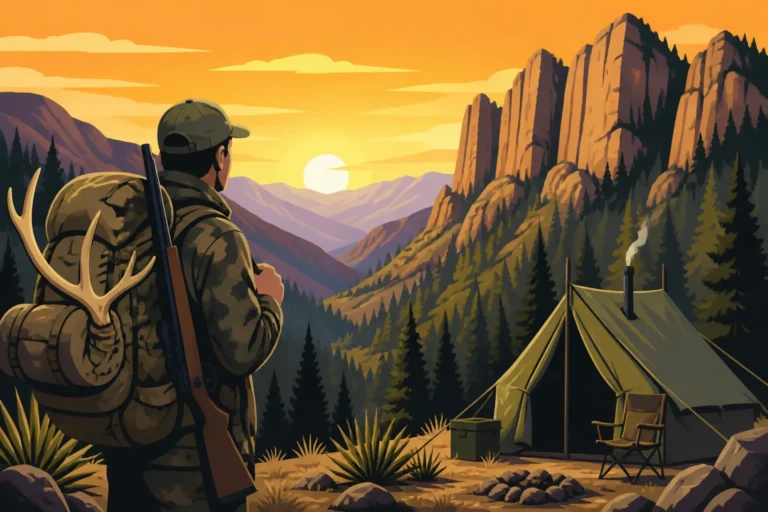
A drop camp service typically involves an outfitter transporting you and your hunting gear into a pre-arranged, remote campsite, and then picking you up at a specified time. What’s included beyond the ride can vary quite a bit, but usually, it means a sturdy wall tent, perhaps a cot, a wood stove, and a designated cooking area. Sometimes, water caches are included, which is a massive relief in arid New Mexico units. Other times, it's just the basic shelter, and you're responsible for everything else. The outfitter usually provides the means to get you in, which often involves horses or mules for deeper wilderness areas like parts of the Gila National Forest. They might also haul out your game if you're successful, which is a huge benefit when you're miles from the nearest road and have a heavy elk to pack. It's truly a partnership where the outfitter handles the heavy lifting of logistics, and you handle the hunting. You can learn more about What a New Mexico Drop Camp Actually Includes.
The Self-Reliance Expectation
This is where drop camps really set themselves apart from other services. Once the outfitter drops you off, you are, for all intents and purposes, on your own. This means you’re responsible for everything from cooking your meals, navigating the terrain, tracking game, and, crucially, field dressing and quartering your harvest. If you're hunting elk in a remote part of New Mexico's Gila National Forest for Elk Hunters, you need to be proficient with a map and compass or a GPS device, understand game movements, and be prepared for any weather conditions New Mexico throws your way. You'll set your own schedule, make your own hunting decisions, and rely solely on your own skills and those of your hunting partners. This level of independence is incredibly appealing to experienced hunters who crave a true wilderness experience but lack the horses or time to pack in a full camp themselves. It's not for the faint of heart, or for those new to backcountry hunting, as unexpected situations can arise quickly, and you're far from immediate assistance.
The Nuance of Semi-Guided Hunts in New Mexico
A semi-guided hunt sits squarely between a drop camp and a fully guided experience. It's designed for hunters who want more support than a drop camp offers but still desire a significant degree of autonomy. This option acknowledges that not everyone has the time to scout extensively or the comfort level to tackle vast, unfamiliar wilderness completely alone.
What "Semi-Guided" Actually Means
In a semi-guided hunt, the outfitter provides a crucial level of assistance without actively hunting with you every step of the way. This typically involves them directing you to specific areas they’ve scouted, which they believe hold game. They might show you trail camera photos, point out bedding areas, or advise on travel corridors. Often, they'll provide transportation to and from these hunting areas each day. This could mean driving you to a trailhead in the Cibola National Forest or using ATVs to access more remote spots. They might also help with game retrieval once an animal is down, which, let's be honest, can be the most back-breaking part of a successful hunt. Some outfits will provide meals and lodging at a base camp, while others might simply offer daily direction and recovery services. The key is that the outfitter isn't shadowing you; they're providing the tools and knowledge to empower your hunt. You're still pulling the trigger and making most of the tactical decisions in the field, but you're doing so with a significant informational advantage. If you're wondering What Semi-Guided Actually Means on a Hunt, this is generally the gist.
The Blend of Independence and Assistance
The real beauty of a semi-guided hunt is this carefully managed blend. You get the benefit of an outfitter's local knowledge and scouting efforts, which can be invaluable, especially if you're traveling from out of state and don't have time for extensive pre-season reconnaissance. Imagine arriving in a new unit, say one of the challenging units around the Sacramento Mountains, and immediately having a game plan based on fresh intel. This saves you days of searching for sign and reduces the guesswork. However, you're still doing the actual hunting. You’re navigating, stalking, calling, and making decisions in the moment. This provides a sense of accomplishment that’s often missing from a fully guided hunt where every move is dictated by a professional. It's a great option for hunters who are confident in their hunting skills but want to dramatically increase their odds by leveraging an outfitter's expertise in a specific area. It mitigates some of the biggest risks of a DIY hunt, like wasting valuable hunting time in unproductive areas, without sacrificing the core essence of the challenge.
Core Differences and What They Mean for Your Hunt
When you're trying to decide between a drop camp and a semi-guided hunt, it really boils down to how much hand-holding you want, how comfortable you are with true wilderness self-reliance, and of course, your budget. Both options are legitimate ways to experience New Mexico's incredible hunting, but they cater to very different preferences and skill sets.
Outfitter Involvement and Level of Support
The most significant distinction lies in the outfitter's active involvement during the hunt.
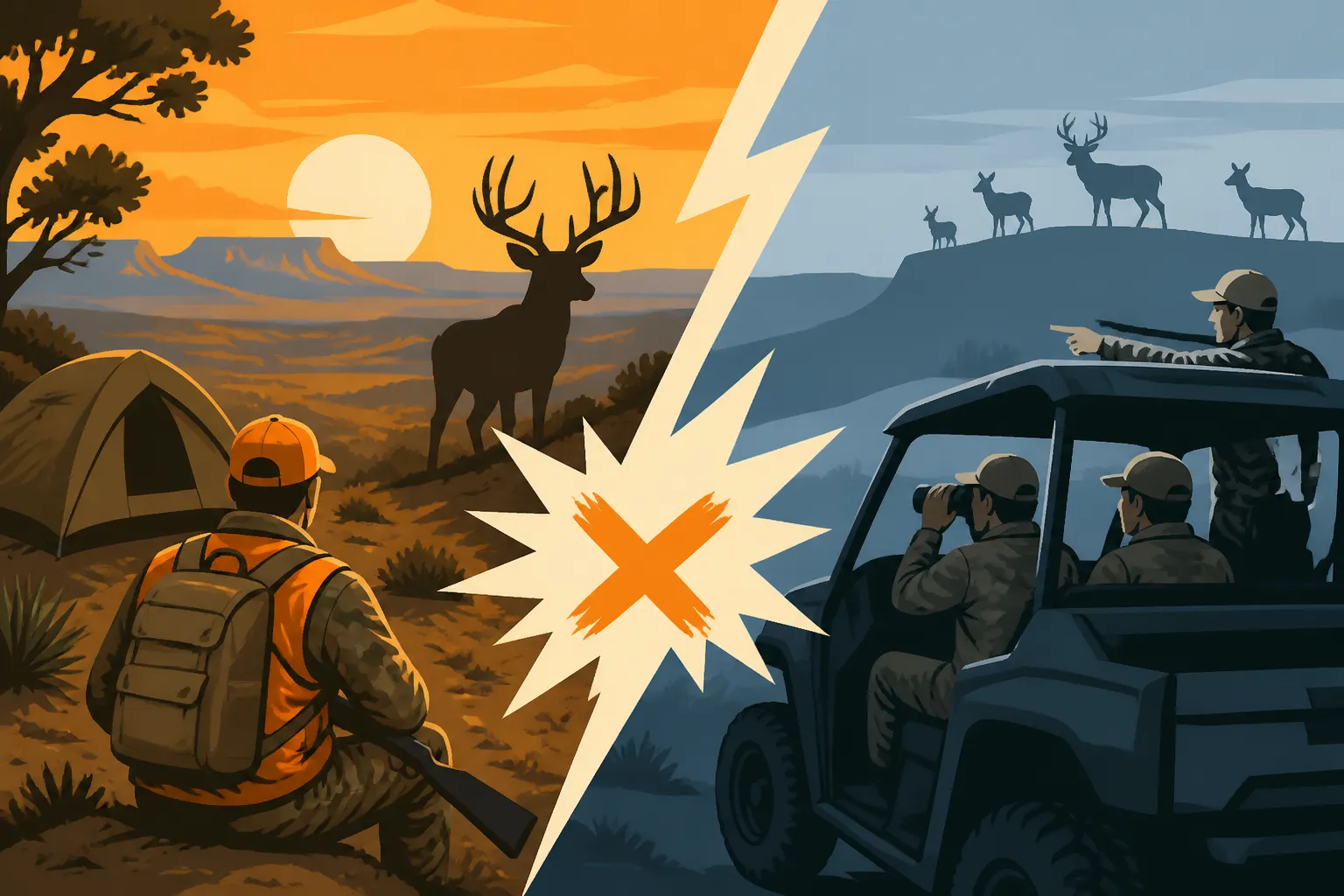
With a drop camp, the outfitter's role is primarily logistical. They get you in, provide a base camp (sometimes with minimal amenities), and get you out. Their job pretty much ends once you're settled, and begins again when it's time to retrieve game or pack up camp. There's no daily interaction, no advice on where to hunt that day, and certainly no help with tracking or stalking. You are literally dropped off. This means you need to be completely self-sufficient and capable of handling all aspects of the hunt, from navigation and scouting to game processing and emergency preparedness. If your horse wrangler doubles as a hunting guide, that's not a drop camp; that's blurring the lines into a semi-guided experience.
A semi-guided hunt, on the other hand, involves ongoing, though not constant, interaction. The outfitter often meets you daily, discusses hunting strategies, points you to specific locations based on recent sign, and might even provide transportation to and from those areas. They act as a resource, providing up-to-date information and assistance with game recovery. Think of it as having a local expert "on call" or "on tap" each day, offering their knowledge to enhance your hunting efforts. They aren't in the timber with you, but they're actively facilitating your hunting process. This means less guesswork, often higher success rates, and a safety net for things like tough recoveries in rugged terrain.
Cost and Value Proposition
Cost is almost always a driving factor, and it directly correlates with the level of service. Generally speaking, drop camps are a more budget-friendly option than semi-guided hunts because the outfitter's time and resources are far less engaged throughout the week. You're paying for access and basic infrastructure, not daily guiding expertise. This makes drop camps an attractive option for hunters who are trying to manage their expenses while still getting into prime, remote habitat that would otherwise be inaccessible.
Semi-guided hunts will naturally command a higher price point. You're paying for the outfitter's extensive scouting, their current knowledge of game movement, their assistance with daily transport, and their help with game retrieval. This added value can translate into a more efficient hunt, less wasted time, and a greater chance of success, especially for species like elk where local knowledge can make all the difference. When you're considering the All-In Cost of a New Mexico Elk Hunt, remember that a semi-guided option factors in the guide's time and expertise in a way a drop camp does not. Many hunters find this additional investment worthwhile for the peace of mind and increased probability of filling a tag.
Ideal Hunter Profiles
Understanding who benefits most from each type of hunt can help you align your expectations with the service.
Drop camps are best suited for:
- Experienced backcountry hunters: Those who are proficient in navigation, survival skills, game processing, and are comfortable with self-reliance in remote areas.
- Groups of hunters: Friends or family who want to hunt together, prefer their own company, and have a good system for working as a team.
- Budget-conscious adventurers: Hunters looking to access remote areas without the higher price tag of a fully guided or even semi-guided trip.
- Physically fit individuals: You'll be doing all the walking, packing, and potentially dragging or quartering game on your own. Preparing Physically for a High Elevation Hunt is crucial.
Semi-guided hunts are ideal for:
- Hunters seeking an edge: Those who want to benefit from local knowledge and scouting without losing the independence of hunting on their own.
- First-time visitors to a unit: If you're new to a specific area, like the vastness of the Gila or the broken country of the Lincoln National Forest, an outfitter's intel can be invaluable.
- Hunters with limited time: If you only have a few days to hunt, a semi-guided service can help you focus your efforts efficiently.
- Those who appreciate logistical support: The help with transportation and game retrieval can significantly reduce the physical burden and stress of a hunt.
Here's a quick comparison table to help visualize the differences:
| Feature | Drop Camp Hunt | Semi-Guided Hunt |
|---|---|---|
| Outfitter Role | Logistics (transport, camp setup/takedown) | Direction, scouting, daily intel, some transport/recovery |
| Hunter Independence | Full (self-reliant on hunt) | High (you hunt alone, but with guidance) |
| Daily Interaction | Minimal to none after drop-off | Daily check-ins, discussions, assistance |
| Game Retrieval Help | Often included for heavy game | Usually included and more readily available |
| Scouting Information | None (rely on your own pre-scouting) | Provided daily (based on current outfitter scouting) |
| Camp & Meals | Hunter supplies all or most | Varies, some may include lodging/meals at base camp |
| Typical Cost (relative) | Lower | Moderate to Higher |
| Best For | Experienced, self-sufficient, budget-focused | Want an edge, less time, prefer some support |
Choosing the Right Option for Your New Mexico Adventure
Ultimately, the best choice for your New Mexico hunting trip hinges on a few personal factors: your experience level, your budget, and what kind of hunting experience you truly desire. There’s no right or wrong answer, only what fits you best.
Assessing Your Skills and Comfort Level
Before you even start looking at outfitters, take an honest inventory of your own skills and comfort level in the backcountry. Are you proficient with a map and compass, or do you rely heavily on your phone's GPS? Can you quarter a large animal like an elk by yourself, or would you struggle with the physical demands and the know-how? Are you comfortable with the solitude and potential challenges of being truly alone in the wilderness for days on end? If the thought of all this excites you and you have the skills to back it up, a drop camp could be an incredible, empowering experience. You'll get to test your mettle in incredible places. You might even find yourself booking through a service like BookYourHunt, filtering specifically for "drop camp" options to see what's available in those remote units.
However, if you're newer to backcountry hunting, or if the idea of a significant problem miles from help makes you uneasy, a semi-guided hunt might be a much more sensible and enjoyable option. It provides a safety net and a significant informational advantage that can alleviate a lot of stress, especially when hunting a challenging species in complex terrain. Having someone local guiding you to prime areas can dramatically improve your success rate and overall enjoyment. This is where tools like GoHunt can be incredibly useful, allowing you to research units and then consider how much support you might want based on the terrain and game density.
Considering Your Budget and Time Constraints
Money and time are often the biggest limiting factors for hunters. A drop camp, while still an investment, generally offers a more economical way to get deep into prime hunting country. It cuts out the daily wages and intensive labor of a guide, focusing the cost on transportation and basic camp setup. This can free up funds for other aspects of your trip, like better gear or more days in the field. But remember, what you save in outfitter fees, you might spend in time researching and preparing.
Semi-guided hunts, by offering more direct assistance and local knowledge, come at a higher price. However, they can save you invaluable time. If you only have a week of vacation, spending two days driving around trying to locate sign is time you don't get back. A semi-guided outfitter will have done that legwork for you, allowing you to maximize your hunting days. This can be especially important if you've drawn a coveted tag in a tough unit and want to make the most of that once-in-a-lifetime opportunity. When considering What a New Mexico Drop Camp Costs versus a semi-guided option, weigh the financial cost against the value of time and increased odds of success.
Desired Hunting Experience
Finally, think about what kind of story you want to tell when you get home. Do you want to recount an epic tale of wilderness survival and pure self-reliance, having navigated, hunted, and retrieved your animal with nothing but your own grit? Then a drop camp is calling your name. You'll truly earn that animal, and the sense of accomplishment will be immense. Many seek the rugged challenge and solitude that a drop camp inherently offers, a true escape into wild New Mexico.
Or do you want to tell a story of smart hunting, leveraging expert advice to find game, making strategic moves, and ultimately succeeding with a little help from a local pro? The semi-guided experience offers that balance. You're still the hunter, still making the shot, but you’ve had a significant assist in putting yourself in the right place at the right time. For many, this blend provides the perfect amount of challenge and assurance, leading to a highly rewarding hunt without the complete burden of a fully DIY wilderness expedition. No matter which you choose, prepare thoroughly, study your New Mexico Hunt Codes and How to Read Them, and enjoy the incredible opportunities New Mexico offers.
Disclaimer
This article is for general informational purposes only and does not constitute professional advice. Laws, prices and regulations vary by location and change over time. Consult a qualified professional for guidance on your specific situation.