Horseback and Pack String Outfitters
Navigating New Mexico's vast and often roadless backcountry can feel utterly overwhelming, especially when you dream of a deep-woods elk hunt or need to retrieve a big bull miles from the nearest trail. The reality of hunting vast areas like the Gila Wilderness without motorized access means a heavy pack, exhausting daily hikes, and the very real prospect of being unable to pack out an animal if you’re lucky enough to get one. This guide is all about shedding light on how horseback and pack string outfitters can transform these daunting challenges into achievable, even enjoyable, hunting experiences, detailing what they offer and how to choose the right service for your adventure.
Why Horseback and Pack String Outfitters are Essential in New Mexico's Wilderness
For many hunters, the thought of deep backcountry hunting in New Mexico conjures images of endless hiking, heavy packs, and remote, pristine landscapes. While the allure is undeniable, the physical demands and logistical nightmares can quickly turn a dream hunt into a grueling test of endurance. This is where horseback and pack string outfitters become not just a luxury, but often a necessity, bridging the gap between desire and reality in the state's most rugged hunting grounds.
Accessing Remote Backcountry
New Mexico boasts millions of acres of public land, much of which is designated wilderness or roadless national forest. Areas like the Gila National Forest, particularly its vast wilderness components such as the Gila Wilderness and the Aldo Leopold Wilderness, are famous for their trophy potential but infamous for their inaccessibility. While a few trailheads exist, accessing prime hunting areas often means hiking 5, 10, or even 15 miles on foot, carrying all your gear. Trying to do this for a week-long hunt with a camp, food, and hunting equipment is a monumental task for even the fittest hunter.
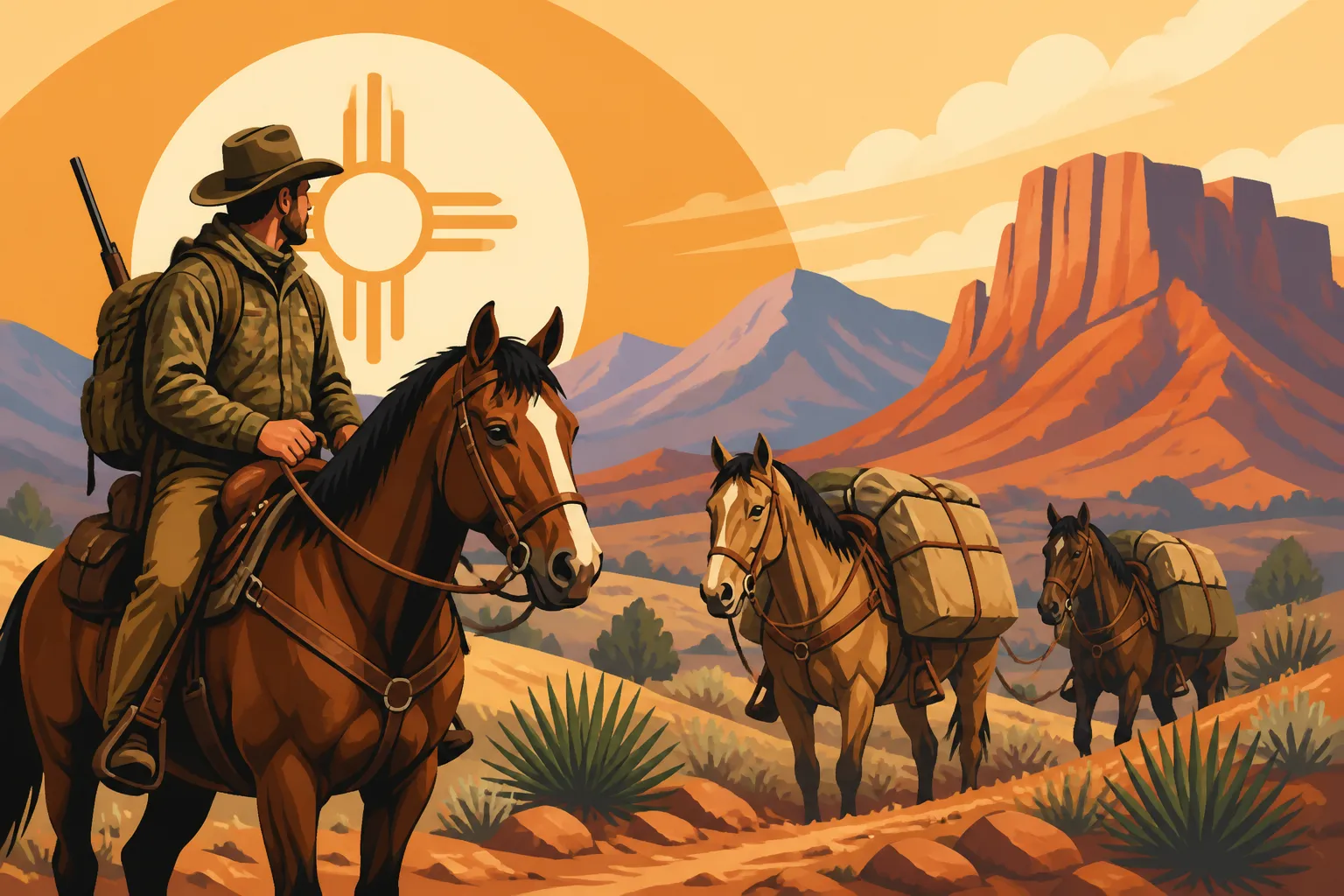
Horseback and pack string outfitters literally open up this country. They have the horses and mules, and the expertise, to traverse these long distances, carrying not only you but also all your camping gear, food, and hunting essentials deep into the wilderness. This means you arrive at your hunting grounds fresh, well-equipped, and ready to focus on the hunt, rather than exhausted from a multi-day pack-in. It's the difference between scratching the surface of a unit and truly being able to immerse yourself in the untouched habitat where big game often thrives away from road hunters. For a true wilderness experience, understanding Getting Into New Mexico's Gila National Forest is crucial, and that often means horses.
Conquering Challenging Terrain
The landscape of New Mexico is anything but flat. From the steep, timbered canyons of the Gila to the high-alpine peaks of the Sangre de Cristos, hunters regularly encounter extreme elevation changes, rocky terrain, thick ponderosa pine forests, and dense oak brush. Navigating these environments on foot, day after day, while trying to remain quiet and effective, is a huge challenge. Carrying a heavy rifle, optics, and a daypack over such ground saps energy quickly.
Horses and mules are built for this. They have the strength, balance, and sure-footedness to climb steep trails, descend into deep drainages, and move efficiently through country that would leave a human hunter struggling. By riding in, you conserve your energy for the actual hunting: glassing, stalking, and calling. Imagine covering vast distances across a unit on horseback, rather than slogging through miles of brush and rock. This not only allows you to cover more ground and explore more potential game habitat but also keeps you fresher and more mentally alert when it matters most – when you finally spot that bull or buck. Consider how challenging it can be to navigate Terrain That Hides an Approach at 10,000 Feet without the aid of a seasoned trail animal.
Efficient Game Retrieval
This is arguably the single most compelling reason to consider a pack string outfitter for a New Mexico backcountry hunt, especially for elk. Imagine you've spent days, maybe a week, deep in a wilderness area, finally locating and successfully harvesting a mature bull elk. Now comes the real work: packing out hundreds of pounds of meat, cape, and antlers, potentially many miles over rugged terrain. For a solo hunter, or even a small group, this can take multiple, exhausting trips over several days, leaving the meat vulnerable to spoilage, especially in early season heat.
A pack string eliminates this nightmare. Once your animal is on the ground and field dressed, the outfitter's mules can carry entire quarters, capes, and antlers out in a single trip, or at most, a couple of trips. This drastically reduces the physical burden on the hunter, ensures the meat is retrieved quickly and efficiently, and protects your hard-earned trophy. Without a pack string, many hunters are limited to hunting areas within a mile or two of a road or easy trail, severely restricting their access to less pressured game. The ability to retrieve game safely and quickly from remote locations fundamentally changes where and how you can hunt. Anyone who has considered Packing an Elk Out of the Gila Alone knows the immense value of this service.
What a Horseback or Pack String Outfitter Actually Provides
When you engage a horseback or pack string outfitter, you're not just renting a few animals; you're securing a comprehensive suite of services designed to facilitate a successful and comfortable backcountry hunting experience. These services go far beyond simple transportation, encompassing everything from camp logistics to critical local knowledge.
Transportation of Hunters and Gear
At its core, a horseback and pack string outfitter provides the means to penetrate deep into otherwise inaccessible wilderness areas. This involves the literal transportation of you and your entire hunting party, along with every piece of equipment required for your trip. Think about a typical backcountry hunt: you need tents, sleeping bags, cooking equipment, food for several days or a week, personal clothing, optics, firearms, and safety gear. The combined weight of this gear can easily exceed hundreds of pounds per person.
Trying to backpack this volume of equipment over multiple miles of rough terrain is simply not feasible for most hunters. The outfitter's horses are your ride, while the sturdy pack mules shoulder the heavy loads. This allows you to arrive at your hunting grounds feeling fresh and focused, rather than physically drained before you even begin to hunt. It expands your hunting range exponentially, enabling you to explore remote basins and ridges where game is less pressured. This capability is paramount for those looking to experience the wild heart of New Mexico without sacrificing their physical well-being.
Establishing and Maintaining Camp
Beyond just getting you there, many outfitters take on the entire burden of establishing and maintaining a comfortable and functional backcountry camp. This isn't just a matter of pitching a few dome tents; we're talking about robust wall tents with wood-burning stoves for warmth, cots for sleeping, and even dedicated cooking and dining areas. Imagine returning to a warm, dry camp after a long day of hunting, a hot meal waiting, and a comfortable place to rest, rather than struggling with a lightweight backpacking tent and dehydrated food in the dark.
This service frees you from the time-consuming and energy-draining chores of camp setup and breakdown, allowing you to maximize your hunting time and recovery. The outfitter's crew handles water procurement, firewood gathering, and meal preparation, all critical tasks in a remote setting. The quality and comfort of these camps can vary, from rustic spike camps to more elaborate base camps, but the underlying benefit is the same: a significant reduction in the logistical burden on the hunter. Understanding What a New Mexico Drop Camp Actually Includes can help set your expectations for camp amenities.
Expert Navigation and Local Knowledge
Perhaps one of the most invaluable aspects an outfitter provides is their intimate knowledge of the land. These individuals and their guides spend countless hours, weeks, and even months in the field, year after year. They know the unit like the back of their hand: the subtle game trails, the most reliable water sources, the preferred bedding areas, and how game animals react to hunting pressure and changing weather patterns. They understand the nuances of the terrain and how to navigate it safely and efficiently, even in low light or adverse conditions.
This local expertise is a profound advantage for any hunter, but especially for non-residents or those unfamiliar with a particular unit. They can put you in the right areas at the right time, advise on effective strategies, and help interpret fresh sign. They also know the safest routes through challenging country and how to avoid potential hazards. Their knowledge can significantly increase your chances of success and, just as importantly, ensure your safety in a demanding environment. For example, knowing Reading Fresh Elk Sign in Ponderosa Timber is second nature to an experienced guide.
Types of Pack String Services: From Drop Camps to Fully Guided Hunts
New Mexico outfitters offer a spectrum of services centered around horseback and pack string support, catering to different budgets, experience levels, and desired levels of independence. Understanding these distinctions is key to choosing the right fit for your hunting aspirations.
Drop Camp Services
A drop camp service is essentially a backcountry taxi for hunters and their gear. The outfitter will pack you, your hunting partners, and all your equipment into a pre-selected, remote campsite. They typically set up a basic, yet functional, camp for you, which might include wall tents, cots, a stove, and cooking amenities. Once the camp is established and you're dropped off, the outfitter and their crew depart, leaving you to hunt entirely on your own for the duration of your trip.
You are responsible for all aspects of the hunt: navigating, cooking, calling, tracking, and field dressing any animals you harvest. At a pre-arranged date and time, the outfitter will return to pack out your camp, you, and any game you've taken. This option is popular with experienced backcountry hunters who possess strong hunting skills and self-sufficiency but lack the horses, mules, or physical capacity to pack themselves and their gear deep into the wilderness. It provides the access advantage of an outfitter without the daily presence or higher cost of a fully guided hunt. It's a fantastic way to access prime, unpressured areas, and a good way to manage cost. For specific details, researching What a New Mexico Drop Camp Costs will give you a better idea of the investment involved.
Semi-Guided Hunts
Semi-guided hunts offer a middle ground between the complete independence of a drop camp and the constant companionship of a fully guided trip. With a semi-guided hunt, the outfitter still handles the transportation to and from a remote camp, and often sets up and maintains a comfortable base camp, much like a drop camp. However, a guide or outfitter might be present in the camp, or will periodically check in with you.
The key difference is the level of involvement during the hunt itself. A semi-guided service might include daily advice on where to hunt, information on game movement, or a review of maps and strategies. The guide might show you specific areas, point out game sign, or suggest tactics. However, you are still primarily responsible for your own hunting efforts—spotting, stalking, and shooting. The guide might assist with game retrieval once an animal is down, which is a significant benefit. This option is ideal for hunters who want some logistical support and local insight but prefer the autonomy of making their own hunting decisions in the field.
Fully Guided Hunts with Pack Support
This is the most comprehensive service an outfitter provides, offering an all-inclusive, immersive hunting experience. With a fully guided hunt, you're accompanied by an experienced guide (or guides, depending on the hunter-to-guide ratio) every step of the way, from before dawn until after dark. The outfitter provides all camp amenities, cooks meals, and handles all logistics. Most importantly, your guide actively assists you in hunting, employing strategies like calling, tracking, glassing, and stalking.
They interpret game sign, help make decisions in the field, and work tirelessly to put you in a position for a shot. Once an animal is harvested, they manage the entire process of field dressing, caping, and packing the game out with the pack string. This option is particularly valuable for first-time New Mexico hunters, those targeting specific trophy animals, or anyone who desires the highest level of service and support. It allows you to focus entirely on the hunt and the experience, knowing that all the logistical complexities are expertly handled. For a deeper dive into what such a premium service entails, check out What a Fully Guided New Mexico Elk Hunt Includes.
Choosing the Right Horseback or Pack String Outfitter
Selecting the right outfitter is paramount to the success and enjoyment of your New Mexico hunting adventure. It's not a decision to be taken lightly, as the quality of your outfitter can make or break your trip. Thorough vetting and clear communication are key.
Vetting and Due Diligence
Before you commit to an outfitter, extensive research and due diligence are absolutely critical. Start by checking if the outfitter is licensed and insured in New Mexico, which is a basic requirement for legal operation. You can often verify this through the New Mexico Department of Game and Fish website. Look for outfitters with a long-standing reputation and positive reviews. Websites like BookYourHunt or GoHunt can be excellent starting points for discovering potential outfitters, as they often aggregate information and reviews. However, don't stop there.
The most important step is to ask for recent references—and not just one or two, but several from the past year or two. When you contact these references, ask specific questions: Was the outfitter professional? Were the horses/mules well-cared for and reliable? Was the camp clean and comfortable? Did the outfitter and guides work hard? Were expectations managed realistically? How was game retrieval handled? Listen carefully for any inconsistencies or red flags. A reputable outfitter will be transparent and eager to provide references. This thorough vetting process helps ensure you're entrusting your hunt to a legitimate and capable operator. It’s important to take Vetting a New Mexico Outfitter Before You Send a Deposit seriously to protect your investment.
Questions to Ask Your Outfitter
Once you've narrowed down your choices, prepare a comprehensive list of questions for your prospective outfitter. Don't be shy; a good outfitter will appreciate your thoroughness. Key questions should include:
- Experience: How long have you been operating in this unit? How much time do you spend in the field scouting and hunting this specific area each year?
- Horses/Mules: What is the experience level of your horses and mules? Are they accustomed to hunters, firearms, and packing game? How do you ensure their safety and well-being?
- Camp Details: Describe the typical camp setup. What kind of tents, sleeping arrangements (cots?), and cooking facilities are provided? Is there heat? What kind of meals should we expect?
- Guide-to-Hunter Ratio: What is your typical guide-to-hunter ratio? (Lower is generally better for guided hunts).
- Hunt Style: How do you typically hunt in this area? (e.g., spot and stalk, calling, still-hunting from horseback).
- Game Retrieval: What is your process for retrieving game once harvested?
- Safety and Emergencies: What are your safety protocols? What happens in a medical emergency? Do you carry satellite communication devices?
- Success Rates: What are your historic success rates for the species and weapon type I'm interested in? (Be realistic; a 100% success rate is usually a red flag).
- What's Included/Excluded: Get a clear itemized list of what the price covers and what additional expenses (licenses, tags, gratuities, meat processing, taxidermy, travel) you should anticipate.
- References: Again, ask for recent references.
Asking these detailed Questions Worth Asking Before You Book helps clarify expectations and ensures there are no surprises once you're in the field.
Understanding the Contract and Expectations
Before you sign anything or send a deposit, meticulously read and understand the outfitter's contract. This legal document should clearly outline all terms and conditions of the hunt. Pay close attention to:
- Deposit and Payment Schedule: When is the deposit due? Is it refundable? What is the final payment schedule?
- Cancellation Policy: What happens if you need to cancel your hunt? What if the outfitter cancels? Are there provisions for rebooking?
- Refund Policy (especially for draw hunts): If you apply for a draw tag and fail to draw, is your deposit refunded, or can it be rolled over to the next year? This is a critical point for New Mexico’s draw system.
- What's Covered: Reconfirm everything that's included in the price: guiding, lodging, food, transportation within the hunting area, game retrieval, etc.
- Liability Waivers: Most outfitters will require you to sign a liability waiver, which is standard practice for activities involving inherent risks like horseback riding and hunting.
Having a clear understanding of the contract and all expectations upfront prevents misunderstandings and potential disputes down the road. Don't hesitate to ask for clarification on any clause you don't fully understand. The more informed you are, the smoother your experience will be. Make sure you understand Reading the Cancellation and Refund Terms thoroughly.
Logistics and Preparation for Your Pack String Hunt
A successful horseback or pack string hunt in New Mexico's rugged terrain requires more than just booking an outfitter; it demands personal preparation. From physical conditioning to smart packing and understanding communication protocols, being ready for the backcountry ensures you can fully enjoy the experience and maximize your chances of success.
Physical Conditioning and Riding Ability
While horses and mules do much of the heavy lifting and cover significant ground, a horseback hunt is not a passive experience. You will still be spending many hours in the saddle, often over uneven terrain. Maintaining your balance, absorbing the movement of the horse, and using core muscles can be surprisingly demanding. Beyond riding, you'll still be dismounting to stalk game, climbing up and down hillsides, and potentially navigating dense cover on foot.
Therefore, good physical conditioning is crucial. Focus on cardiovascular fitness, core strength, and leg endurance in the months leading up to your hunt. If you're not an experienced rider, consider taking a few horseback riding lessons beforehand. Familiarizing yourself with horse behavior and basic riding commands will not only make your trip more enjoyable but also safer for both you and the animals. You don't need to be a rodeo star, but being comfortable and confident in the saddle is a huge asset. This is vital for overall endurance, especially when you factor in Preparing Physically for a High Elevation Hunt.
Gear and Packing Smart
Packing for a pack string hunt is different from a typical backpacking trip. While the outfitter handles the bulk of the camp gear, you're still responsible for your personal effects, and there will likely be weight limits for your individual bags that go on the mules. Communicate closely with your outfitter about what specific gear they recommend and any weight restrictions. Generally, you'll want durable, weather-appropriate clothing suitable for layering, as New Mexico's weather can change dramatically, especially in the high country.
Invest in high-quality optics, a reliable rifle or bow, and comfortable, broken-in hunting boots that are suitable for both riding and hiking. A good daypack is essential for carrying your daily essentials like water, snacks, extra layers, first-aid, and calls. Pack everything in durable, waterproof bags or duffels that can withstand the rigors of being strapped to a mule. Avoid oversized, rigid luggage. Think efficient and practical. Many outfitters provide a detailed gear list; stick to it. This will ensure you have the right tools without overburdening the pack animals. Pay attention to The Gear List Your Outfitter Will Send, as it's tailored to their specific operation and region.
Communication and Safety in the Backcountry
Remote wilderness areas often lack cell service, making reliable communication a critical safety consideration. Before your hunt, discuss your outfitter's communication plan. Reputable outfitters will carry satellite communication devices such as a satellite phone or a two-way satellite messenger (like an inReach or Zoleo) for emergencies. Knowing that help can be reached in a dire situation provides immense peace of mind.
Beyond emergency communication, discuss daily check-in procedures if you're on a drop camp or semi-guided hunt, or what happens if you get separated from your guide on a fully guided trip. Always carry a whistle, a map, a compass, and a GPS device (or a reliable hunting app like onX maps on your phone with downloaded layers) for navigation, even if you have a guide. Let someone outside your hunting party know your itinerary and expected return date. Prepare a small personal first-aid kit, and understand basic wilderness first aid. While outfitters take every precaution, personal preparedness for unforeseen circumstances is paramount. Carrying a satellite device is key for Satellite Communication From a Hunting Camp.
Cost and Booking Considerations for Pack String Hunts
Engaging a horseback or pack string outfitter for a New Mexico hunt represents a significant investment, but one that often pays dividends in terms of access, experience, and potential success. Understanding the cost structure and booking timeline is crucial for planning your adventure.
Understanding the Investment
The cost of a horseback or pack string hunt in New Mexico can vary widely depending on several factors: the species you're hunting (elk hunts are typically more expensive than deer), the duration of the hunt, the type of service (drop camp vs. fully guided), the quality and reputation of the outfitter, and the inclusions. Drop camp services are generally the most affordable option, as you're primarily paying for transportation and camp setup, not daily guiding. Semi-guided hunts fall in the middle, while fully guided hunts with dedicated guides, cooks, and a full camp are the most premium offering.
Beyond the outfitter's fee, remember to budget for other significant expenses. These include your New Mexico hunting license and tag fees (which can be substantial, especially for non-residents), travel costs to and from New Mexico, gratuities for your guide and camp staff (a customary and important part of the experience), meat processing, taxidermy, and shipping if you're taking your harvest home. Always ask for a comprehensive breakdown of costs from your outfitter so you can budget accurately. For a clearer picture, check out typical figures in Typical Price Range for a Guided New Mexico Elk Hunt.
Booking Timelines and Deposits
Reputable outfitters, especially those operating in high-demand units for elk, often book up years in advance. This is particularly true for prime rut hunts or specific limited-entry areas. If you have a specific season or unit in mind, it's not uncommon to book 12 to 24 months out. This long lead time is often necessary to secure your spot and to align with New Mexico's draw application deadlines, which typically fall in March for most big game species.
When you book, you'll almost certainly be required to pay a non-refundable deposit to secure your dates. This deposit can range from 25% to 50% of the total hunt cost. The remaining balance is typically due a certain number of days or weeks before the hunt begins. Always clarify the exact payment schedule and accepted payment methods. Being proactive and planning well in advance is key to getting on the books with a quality outfitter. Considering How Far Ahead to Book a New Mexico Hunt is essential for popular seasons.
Refund Policies and Draw Success
New Mexico operates on a lottery draw system for most big game tags, meaning there's no guarantee you'll draw a tag even if you apply with an outfitter. This introduces a unique challenge when booking. You're often asked to pay a deposit to an outfitter before draw results are announced. It's absolutely crucial to understand the outfitter's policy if you fail to draw a tag.
Some outfitters offer a full refund of your deposit if you don't draw. Others may offer to roll your deposit over to the following year's application cycle. Still others may have a non-refundable deposit policy, regardless of draw success, in which case you might lose that money. This is a critical point of discussion during your initial conversations with any outfitter. Get their policy in writing in your contract. Ensure you are comfortable with their terms before committing your funds, as this can significantly impact your financial risk. Delve into Refunds When You Fail to Draw in New Mexico to understand common scenarios and what to expect.
| Service Type | Key Inclusions | Hunter Involvement | Typical Price Shape (Relative) | Ideal For |
|---|---|---|---|---|
| Drop Camp | Transportation in/out, camp setup (basic), pack out | High (hunt, cook, manage self) | Lowest | Experienced, self-sufficient hunters needing deep access & game retrieval |
| Semi-Guided | Transportation in/out, camp setup, some guidance, pack out | Medium (hunt independently, get advice) | Mid-Range | Hunters wanting support & local knowledge but still enjoy autonomy |
| Fully Guided | All of the above, plus active daily guiding, meals | Low (focus solely on hunting) | Highest | First-time hunters, trophy hunters, those seeking maximum support |
Disclaimer
This article is for general informational purposes only and does not constitute professional advice. Laws, prices and regulations vary by location and change over time. Consult a qualified professional for guidance on your specific situation.