Elevation Bands Worth Understanding
One of the biggest surprises for hunters coming to New Mexico, especially those from lower elevations, is just how dramatically the landscape and hunting opportunities change with every thousand feet of gain. You might arrive thinking you're ready for a desert hunt, only to find yourself gasping for air in pine forests or navigating rocky peaks. Understanding New Mexico's diverse elevation bands isn't just a matter of curiosity; it's absolutely critical for success, safety, and even drawing the right tag. This guide will walk you through the distinct elevation zones, how they shape wildlife behavior, and what you need to consider to prepare for a hunt that can literally take you from the desert floor to timberline.
Why Elevation Matters in New Mexico Hunting
New Mexico is a land of extremes, from scorching low deserts to snow-capped peaks, and these dramatic shifts in altitude profoundly impact every aspect of a hunt. Ignoring elevation is like trying to navigate a ship without a compass – you'll be lost, unprepared, and likely unsuccessful. It dictates the type of terrain you'll encounter, the weather you'll face, and critically, where the game animals will be and what they'll be doing.
Impact on Habitat and Vegetation
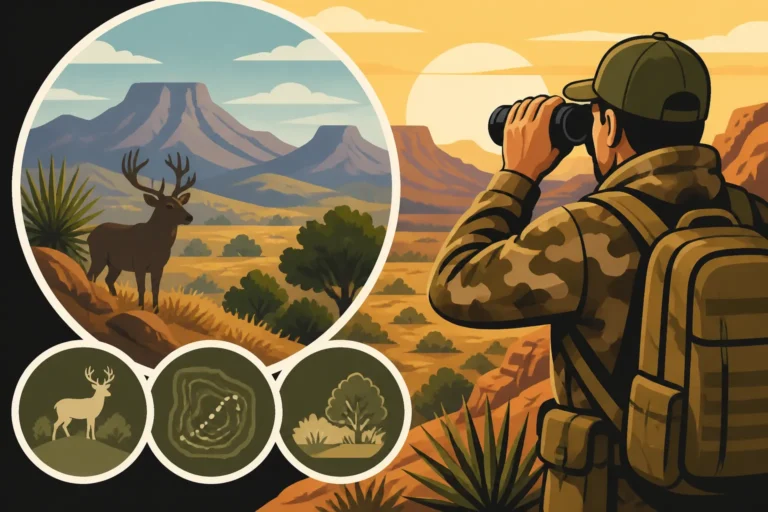
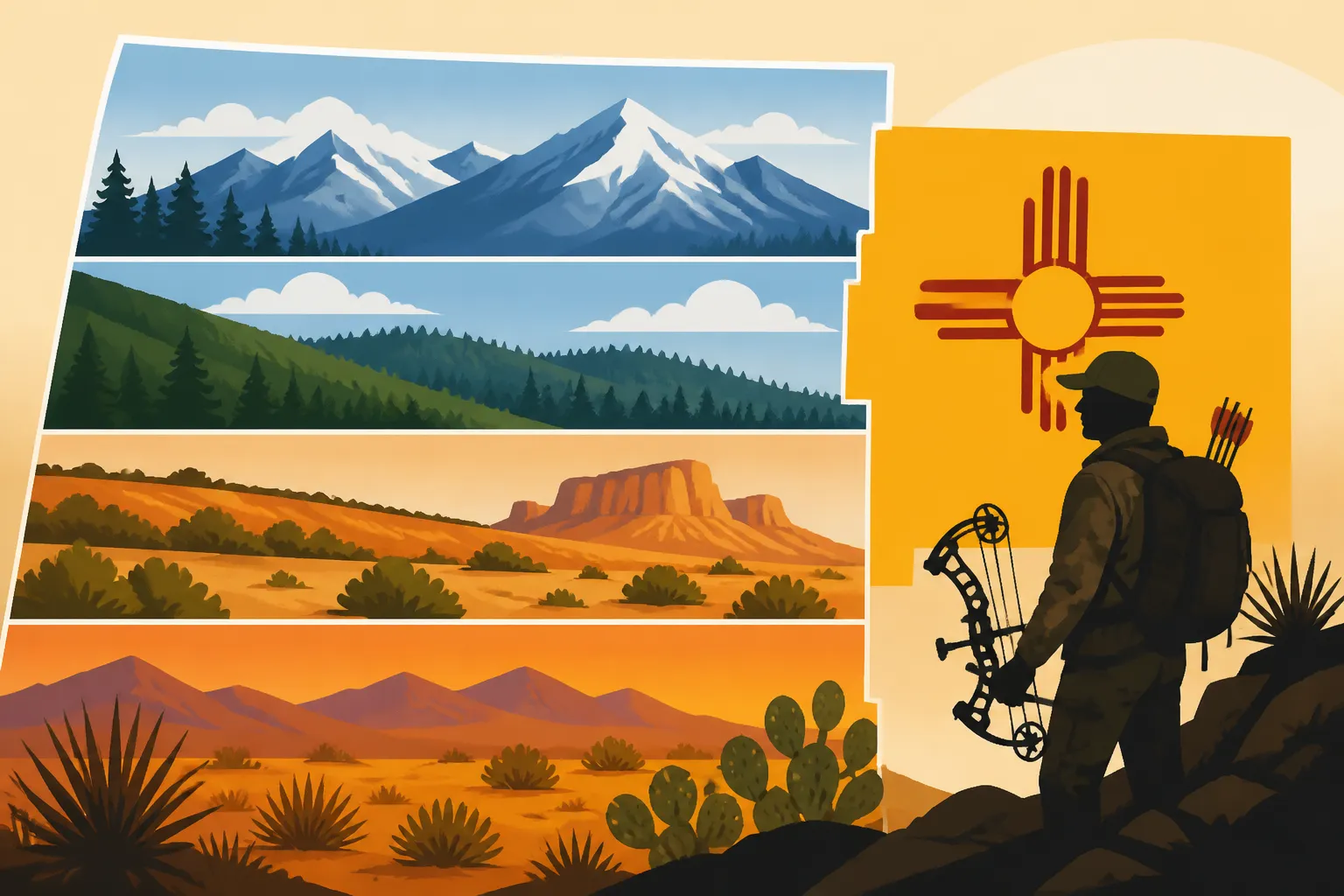
Think about how much the plants change as you drive from Albuquerque up towards the Sandia Mountains. It’s not just a gradual shift; it's a series of distinct ecological communities, each tied directly to elevation. At lower elevations, you'll find hardy desert shrubs, cacti, and sparse grasses, built to withstand intense heat and minimal water. This is the domain of desert mule deer, oryx, and pronghorn. As you climb, you transition into pinyon-juniper woodlands, a denser, more varied landscape providing cover and food for deer, bears, and even some elk. Go higher still, and you hit the majestic ponderosa pine forests, often interspersed with aspens and lush meadows – prime elk country. Finally, at the highest reaches, sparse firs give way to alpine tundra and rocky slopes, where bighorn sheep and high-country mule deer thrive. Each of these zones offers different food sources, different types of cover, and entirely different hunting challenges. Understanding these transitions helps you predict where specific species will be, depending on the time of year and available resources.
Influence on Temperature and Weather Patterns
It's a common saying that for every 1,000 feet of elevation gained, the temperature drops about 3 to 5 degrees Fahrenheit. This isn't just a trivial statistic; it's a fundamental truth that shapes hunting in New Mexico. A September archery elk hunt might see daytime temperatures in the 80s at 6,000 feet, but at 9,000 feet, you could be shivering in the 40s with a chance of sleet. These temperature swings are even more pronounced in the high country, where afternoon thunderstorms can build rapidly, dropping hail or heavy rain before quickly clearing. Wind also becomes a much more significant factor at higher elevations, especially when you're trying to Reading Wind in a Deep Gila Canyon. Ignoring these climatic realities can lead to hypothermia, dehydration, or simply being too cold or hot to effectively hunt. Layering your clothing becomes paramount, and constantly checking localized weather forecasts for your specific elevation band is a non-negotiable part of trip planning.
Affect on Hunter Comfort and Performance
Beyond the impact on game and weather, elevation directly affects you, the hunter. Acclimatization to higher altitudes is a real physical challenge. The air is thinner, meaning less oxygen with every breath. This can lead to altitude sickness, characterized by headaches, nausea, dizziness, and extreme fatigue. Even if you don't experience full-blown sickness, your stamina will be reduced, and tasks that feel easy at home might become grueling ordeals. Carrying a heavy pack up a steep incline at 9,000 feet feels entirely different than doing so at sea level. This is why Altitude Preparation for a Gila Elk Hunt is so crucial. Your physical preparation needs to account for this decreased oxygen, and you should plan to arrive a day or two early, if possible, to allow your body to adjust. Dehydration is also a greater risk at altitude due to increased respiration and dry air, making constant hydration vital.
Understanding New Mexico's Diverse Elevation Zones
New Mexico's topography is a tapestry woven from vast desert basins, rolling grasslands, abrupt mountain ranges, and soaring peaks. Each of these features corresponds to distinct elevation bands, creating a mosaic of habitats for various game species. Knowing these zones is your first step in deciphering the state's complex hunting opportunities.
Low Desert Below 5,000 Feet
This is the classic New Mexico desert landscape, found predominantly in the southern part of the state, including areas around Las Cruces and Deming, stretching into the Bootheel. Here, elevations typically range from 3,000 to 5,000 feet. The vegetation is sparse, dominated by creosote bush, mesquite, various cacti, and hardy grasses. Water sources are often few and far between, concentrating game around specific features like stock tanks or ephemeral washes. Temperatures can be brutally hot, especially during early season hunts, requiring careful Heat Management on an Early Season Hunt.
Game species in these lower elevations include desert mule deer, often found in thick mesquite bottoms or rocky hillsides, and the unique oryx, which thrive in this harsh environment. You'll also find abundant pronghorn on the open plains. Hunting here often involves extensive glassing from high points, followed by long stalks across open ground. Success hinges on finding water sources and understanding how animals move in response to heat and limited cover. Hunting Oryx on an Active Missile Range is a prime example of a low desert hunt, with its unique challenges and environment.
Pinyon-Juniper Woodlands 5,000-7,000 Feet
As you climb out of the lowest deserts, often into the foothills of mountain ranges, you enter the pinyon-juniper zone. This band, typically from 5,000 to 7,000 feet, is characterized by dense stands of pinyon pine and juniper trees, often interspersed with oak brush, chamisa, and various grasses. This habitat offers significantly more cover and a more diverse food source than the true desert. These woodlands are prevalent across much of central and western New Mexico, including parts of the Gila National Forest and units leading up to larger mountain ranges.
This elevation band is excellent for mule deer, especially during the later seasons when deer move down from higher country. Black bears are also commonly found here, utilizing the abundant pinyon nuts and juniper berries. Even some elk herds will inhabit the higher reaches of the pinyon-juniper, especially if water is reliable. The terrain can be rugged, with steep draws and rocky outcrops, making for challenging but rewarding still-hunting or spot-and-stalk opportunities. These areas can also be thick, demanding a different approach than wide-open plains.
Ponderosa Pine Forests 7,000-9,000 Feet
This is what many hunters picture when they think of prime Western big game country. From roughly 7,000 to 9,000 feet, you'll find extensive forests of towering ponderosa pines, mixed with Douglas fir, white fir, and quaking aspen. Meadows and open parks are often interspersed throughout, providing crucial forage. This elevation band defines much of the Gila National Forest, the Carson National Forest, and the Lincoln National Forest, making it the heart of New Mexico's elk country. The moisture here is generally more abundant, leading to richer vegetation and more permanent water sources.
This elevation is unequivocally elk heaven. During the rut, these forests echo with bugles, and hunters pursue them in the timber and along meadow edges. Mule deer also thrive here, especially in areas with good browse and cover. Bear activity is high, and mountain lions follow their prey. Hunting in these forests often involves tracking, still-hunting through dense timber, or setting up on travel corridors between feeding and bedding areas. Understanding how to Reading Fresh Elk Sign in Ponderosa Timber becomes a critical skill here, as does navigating steep, timbered slopes. The air is noticeably thinner, and the physical demands are significantly higher than in the lower zones.
High Mountains and Alpine Above 9,000 Feet
Venturing above 9,000 feet, particularly into the high peaks of the Sangre de Cristo, Pecos Wilderness, or portions of the Gila and Aldo Leopold Wilderness Areas, introduces you to truly alpine environments. Here, forests thin out, dominated by spruce and fir, eventually giving way to rocky scree slopes, tundra, and sparse, hardy vegetation above timberline. The weather can be extreme, with rapid changes, high winds, and early snows.
This is the domain of specialized big game. Rocky Mountain bighorn sheep are found on the craggy peaks of the north, while Persian ibex inhabit the rugged Florida Mountains in the south. High-country mule deer will spend their summers in these lofty reaches, often above timberline, making for incredible glassing opportunities. Hunting in these areas is physically grueling, requiring superior conditioning and mountaineering skills. It's often a solitary pursuit, where the challenge of the terrain is as significant as finding the animal. When you're Hunting New Mexico From 4,000 Feet to 10,000, these highest elevations present the ultimate test.
How Elevation Affects Game Movement and Behavior
Animals aren't stationary; they're constantly on the move, and their migrations and daily routines are intricately linked to elevation. Understanding these patterns is key to predicting where your target species will be and how they'll react to hunting pressure and environmental changes.
Elk and Deer Migration Patterns
Both elk and mule deer in New Mexico are classic examples of altitudinal migrators. As winter approaches, the high country above 8,000-9,000 feet becomes impassable due to deep snow and dwindling food sources. This triggers a downward migration to lower elevations, often into the pinyon-juniper or even desert fringes, where snow cover is less severe and forage is more accessible. Conversely, as spring arrives and snow recedes, they follow the green-up back up the mountains, seeking fresh, nutritious growth in the high meadows.
This means that an early archery elk hunt in September might find bulls and cows scattered throughout the high ponderosa and even alpine basins, enjoying the lush summer feed. By a late December muzzleloader deer hunt, those same animals might be concentrated in much lower units, using the pinyon-juniper to escape the cold. The Gila, for instance, has huge elk herds that move between its high country and lower, more accessible areas. If you're looking at New Mexico Elk Season Dates by Unit, it's crucial to cross-reference those dates with the likely elevation of game movement. Knowing these general migration corridors and timing is essential for scouting and selecting the right unit and hunt date.
Water Sources and Their Elevation Dependence
Water is life in New Mexico, and its availability is often a function of elevation. At higher elevations, snowmelt and more consistent rainfall contribute to permanent streams, springs, and mountain lakes. These reliable water sources allow game to disperse more widely. However, even in the high country, prolonged dry spells can shrink these sources, forcing animals to converge on the remaining reliable spots.
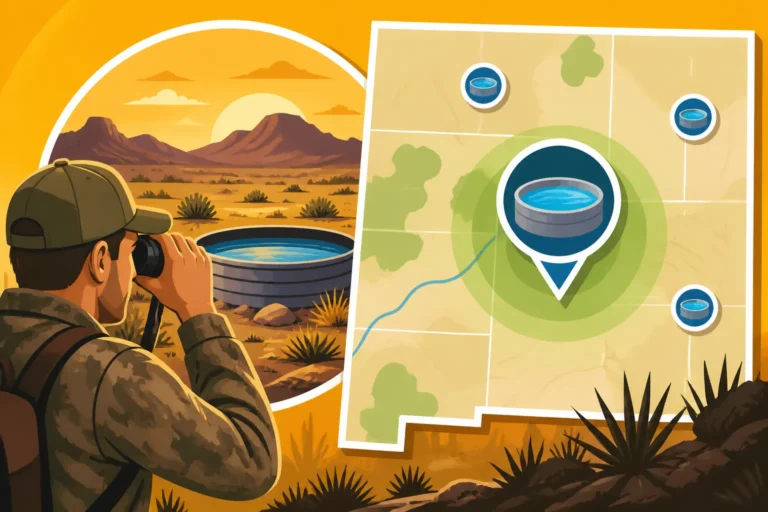
In the lower pinyon-juniper and desert bands, water becomes a far more critical limiting factor. Permanent water sources are scarce, often consisting of man-made stock tanks, guzzlers, or isolated springs. These locations become magnets for game, especially during dry periods or early season hunts. Knowing how to Finding Water in New Mexico's Dry Country and incorporating water sources into your scouting and hunt plan is paramount in these lower elevation units. Animals will often bed far from water during the day and make a trip to drink during low light, offering prime ambushing opportunities. onX Hunt can be an invaluable tool for identifying every mapped water source in your unit.
Predator Activity at Different Altitudes
Predators like mountain lions and black bears also adjust their ranges and hunting strategies based on elevation and the availability of their prey. Where the elk and deer go, the predators often follow. In the high mountain country, mountain lions will stalk elk and mule deer along steep ridgelines and through dense timber. Bears will frequent berry patches and pinyon nut groves in the ponderosa and pinyon-juniper zones, often moving up and down the elevation bands to capitalize on seasonal food sources.
Understanding this dynamic helps you not only anticipate where game might be, but also what kind of pressure they might be under. For instance, if you're hunting a low-elevation mule deer unit that has seen a lot of lion activity, those deer might be more skittish or change their patterns to avoid open areas. Conversely, in the high country, predators might be less of a concern if you're specifically targeting bighorn sheep on exposed slopes where lions have difficulty with cover.
Planning Your Hunt Around Elevation Bands
Successfully hunting New Mexico's varied terrain means meticulously planning for the elevations you'll encounter. This isn't just about packing the right clothes; it's about strategic thinking, physical conditioning, and utilizing modern tools to your advantage.
E-Scouting for Elevation Changes
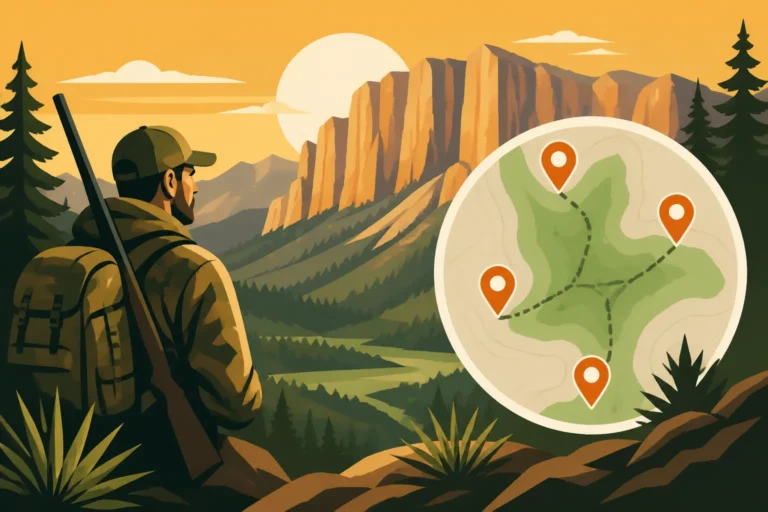
Before you even set foot in New Mexico, you can do a tremendous amount of preparation from your home using digital tools. Programs like onX Hunt are indispensable for e-scouting elevation bands. You can overlay topographic maps, satellite imagery, and even 3D terrain views to identify key features. Look for distinct changes in contour lines that indicate steep climbs, gradual slopes, or benches where animals might feed or bed. Pay attention to how elevation changes affect vegetation, often visible in satellite images – where dense timber thins out, where pinyon-juniper transitions to ponderosa.
Use the elevation profile tools to understand the actual climb involved in reaching certain areas. A simple distance on a map can hide a massive elevation gain. Identifying saddles, ridge lines, and hidden basins within specific elevation ranges will allow you to pinpoint potential game locations. For example, if you're targeting elk in September, you might focus your initial scouting efforts on areas between 8,000 and 9,500 feet, looking for north-facing slopes with good timber and close proximity to water, knowing these are often preferred bedding areas for bulls during the rut. Using these tools to E-Scouting a New Mexico Unit Before the Season can give you a huge advantage.
Gear Selection for Varied Altitudes
The gear you bring must be as adaptable as New Mexico's elevations. If your hunt spans multiple elevation bands, or even if it's confined to a single band known for drastic temperature swings, layering is paramount. Start with a good base layer that wicks moisture, add insulating mid-layers (fleece or puffy jackets), and top it off with a waterproof and windproof outer shell. Even in the desert, morning temperatures can be surprisingly cold before the sun crests.
Footwear is another critical consideration. Sturdy, well-broken-in boots with good ankle support are a must for traversing rocky, steep terrain. You might choose a lighter, more breathable boot for lower desert hunts, but higher elevation pursuits will demand something more robust and insulated, especially if you anticipate snow or cold. Carrying adequate water capacity is non-negotiable, particularly at higher elevations where dehydration is a greater risk. Even if your initial plan involves a specific elevation, always pack for a wider range of conditions, as weather can change quickly.
Physical Preparation for High Elevation
This might be the most overlooked aspect of planning a New Mexico hunt, but it's arguably the most important. Hunting at 8,000, 9,000, or even 10,000 feet is physically demanding, even if you consider yourself fit. Oxygen deprivation means your body has to work harder for every step. Start your physical conditioning months in advance, focusing on cardiovascular endurance, strength training, and especially hiking with a weighted pack. Mimic the types of climbs you expect to encounter.
Consider arriving in New Mexico a day or two before your hunt begins, if possible, to allow your body to begin the acclimatization process. During this time, stay hydrated, avoid alcohol, and take it easy. During the hunt, listen to your body. Don't push too hard, too fast. Small, consistent efforts are often more effective than bursts of intense activity that leave you winded and exhausted. Programs like those suggested by GoHunt often emphasize the importance of pre-hunt physical conditioning specifically for Western hunts, and for good reason. Being physically ready ensures you can safely and effectively pursue game across New Mexico's stunning, but challenging, elevation bands.
Elevation Bands and Hunting Considerations in New Mexico
To sum it all up, here's a quick overview of how New Mexico's elevation bands generally influence your hunt planning:
| Elevation Band (Approx.) | Typical Terrain & Vegetation | Primary Game Species | Key Hunting Considerations |
|---|---|---|---|
| Below 5,000 ft | Desert, mesquite, cacti, sparse grass | Desert Mule Deer, Oryx, Pronghorn, Javelina | Extreme heat, water scarcity, long glassing/stalking, minimal cover |
| 5,000 – 7,000 ft | Pinyon-juniper woodlands, oak brush, rocky hills | Mule Deer, Bear, some Elk | Dense cover, rugged terrain, moderate temperatures, good for still-hunting |
| 7,000 – 9,000 ft | Ponderosa pine, fir, aspen, meadows | Elk, Mule Deer, Bear, Cougar | Prime elk country, variable weather, physically demanding, tracking, calling |
| Above 9,000 ft | Spruce-fir forest, alpine tundra, rocky peaks | Bighorn Sheep, Ibex, High-country Mule Deer | Extreme cold, rapid weather changes, technical terrain, high physical demands |
This table provides a generalized view; specific units and localized conditions will always have their own nuances. Always consult the official New Mexico Department of Game and Fish regulations and unit maps for the most accurate information on your specific hunt area.
Disclaimer
This article is for general informational purposes only and does not constitute professional advice. Laws, prices and regulations vary by location and change over time. Consult a qualified professional for guidance on your specific situation.