Units Around Las Cruces for Desert Hunts
Many hunters dream of high-country elk or timber deer, but New Mexico's southern reaches offer a completely different, yet equally challenging and rewarding, experience. The vast, arid landscapes around Las Cruces can feel intimidating if you're used to dense cover, presenting unique hurdles from navigating expansive public lands to understanding species adapted to extreme conditions. This guide will help you navigate the specific units, target species, and unique demands of a successful desert hunt in this fascinating region.
The Unique Challenges and Rewards of Desert Hunting Near Las Cruces
Hunting the Chihuahuan Desert around Las Cruces is not for the faint of heart, but it offers an incredibly unique and satisfying experience for those willing to embrace its demands. Unlike the heavily timbered units of the north, here you're dealing with vast, open spaces, sparse vegetation, and extreme conditions. This requires a completely different mindset, gear selection, and hunting strategy. The frustrations often begin with the sheer scale of the landscape, where game can seem to vanish into thin air, and access can be tricky. But with these challenges come the immense rewards of seeing unique desert species in their natural, harsh environment and the satisfaction of earning a hard-won trophy from truly wild country.
The Landscape: Arroyos, Mesas, and Basins
Imagine an endless expanse of scrub brush, dotted with prickly pear and ocotillo, cut by countless arroyos that snake through the terrain like dry riverbeds. Towering mesas jut abruptly from the desert floor, offering commanding views and critical escape routes for game. This is the typical landscape you'll encounter when Hunting the Chihuahuan Desert Units near Las Cruces. These features are not just scenic; they dictate how animals move, where they find water and shade, and how you, as a hunter, must navigate. The arroyos, in particular, can be your best friend or worst enemy. They provide crucial cover for stalking, allowing you to get within range of bedded animals without being seen, but they can also be mazes that hide game and make tracking incredibly difficult. Understanding the subtle contours of a basin, the prevailing wind currents off a mesa, and the network of arroyos is paramount to locating and approaching desert game. You might spend hours glassing what looks like barren ground, only for a majestic oryx or a mule deer buck to materialize seemingly out of nowhere, perfectly camouflaged against the dusty backdrop.
Species Adaptation and Behavior
The animals that thrive in New Mexico's southern deserts are remarkable survivors, perfectly adapted to their harsh environment. Desert mule deer, for instance, have evolved to utilize sparse cover and conserve water, often bedding down for extended periods to escape the midday heat. Their movements are often dictated by access to limited water sources and the availability of palatable browse. Oryx, an introduced species, are perhaps the most iconic desert dwellers, capable of enduring extreme temperatures and going long periods without direct water, often subsisting on moisture from plants. This means your traditional understanding of where and when to find game might need a complete overhaul. Forget the lush meadows or dense timber where elk or northern deer might feed; here, you're looking for subtle signs like disturbed sand near a mesquite bush, faint tracks leading to a hidden seep, or the tell-tale white flash of an oryx from miles away. Their incredible senses and wariness are amplified by the open terrain, making a successful approach a true test of skill and patience.
The Extreme Demands on Hunters
Hunting in the Las Cruces desert region is physically and mentally grueling. The combination of heat, low humidity, rugged terrain, and often long distances between water sources can push hunters to their limits. Dehydration is a constant threat, and carrying enough water becomes a logistical challenge. You're not just walking; you're often climbing rocky slopes, descending into steep-sided arroyos, and traversing soft, sandy washes. The sun beats down mercilessly, and shade is a precious commodity. Gear choices become critical; lightweight yet durable clothing, wide-brimmed hats, and reliable, comfortable boots are non-negotiable. Beyond the physical, the mental game is intense. The vastness can be overwhelming, making it easy to feel discouraged. You might glass for hours without seeing anything, only to have a fleeting opportunity that demands quick, precise action. It's a game of persistence, patience, and unwavering determination.
Prime Hunting Units Around Las Cruces and Their Game
When you're looking at hunting around Las Cruces, you're primarily eyeing units in the southwestern and south-central parts of the state. These units are characterized by their desert ecology but can vary significantly in topography, specific species, and access. It’s crucial to delve into the details of each unit to understand what makes it tick and which animals you're most likely to encounter. Before you even apply, spend serious time researching these areas, using tools like onX Hunt to understand land ownership and topographical features, and GoHunt for detailed draw odds and historical harvest data.
| Unit Number | Primary Game Species | Key Terrain Features | Public Land Percentage (Approx.) | Unique Challenges |
|---|---|---|---|---|
| 26 | Mule Deer, Oryx | Expansive Chihuahuan Desert, isolated mountain ranges (e.g., Florida Mountains), arroyos. | Very High (BLM, State Trust, WSMR) | Heat, vastness, limited cover, military operations (WSMR). |
| 27 | Mule Deer, Barbary | Rugged foothills, rimrock, and deep canyons, transition zones between desert and higher elevations. | Moderate to High (BLM, State Trust, some National Forest) | Steep terrain, thorny brush, finding water, difficult access. |
| 28 | Mule Deer, Oryx | Similar to 26, broad plains, scattered mesquite, mountain ranges (e.g., Organ Mountains). | High (BLM, State Trust) | Similar to Unit 26 but with different access points, potential for more private land on the eastern edges. |
| 20 | Ibex (Floridas) | Extremely steep, rocky, unforgiving mountain range (Florida Mountains Wilderness). | High (BLM) | Extreme physical exertion, specialized gear, limited tags. |
Mule Deer Hotspots: Units 26, 27, and 28
If desert mule deer are on your radar, units 26, 27, and 28 are definitely where you'll want to focus your attention. These units offer some of the best opportunities for Desert Mule Deer in Southern New Mexico. Unit 26, encompassing vast stretches of Chihuahuan Desert and the Florida Mountains, is a popular choice for its sheer size and decent mule deer populations. Hunting here often means glassing massive basins and then making a long, arduous stalk through broken country. Unit 28, just east of Las Cruces, includes the rugged Organ Mountains, which provide critical refuge and slightly higher elevation for deer, though much of the hunting is still in the surrounding desert flats. Unit 27 to the west and north offers a different flavor, with more varied terrain, including deep canyons and rimrock that provide excellent cover for deer. Hunters often find success by systematically glassing these broken areas at dawn and dusk, looking for that tell-tale movement or the distinct silhouette of a buck against the horizon. The bucks in these areas are often leaner, harder, and incredibly wary, making them a formidable challenge.
Exotic Opportunities: Oryx and Ibex Units
New Mexico is unique for its introduced exotic species, and the area around Las Cruces is ground zero for some truly incredible hunts. Unit 26 is particularly famous for its oryx, with a significant portion of its population residing on the White Sands Missile Range (WSMR). Oryx on White Sands Missile Range hunts are highly sought after, offering a once-in-a-lifetime chance at this impressive African antelope. These hunts are meticulously managed and require strict adherence to military regulations, but the experience is unparalleled. Beyond WSMR, oryx can be found on off-range hunts in various units, including parts of 26 and 28, though these populations are often more scattered and challenging to locate.
Then there's the legendary Persian ibex in the Florida Mountains, primarily within Unit 20. Persian Ibex in New Mexico's Floridas is arguably one of the most physically demanding hunts in North America. These wild goats inhabit the steepest, most unforgiving terrain imaginable. Tags are extremely limited, and success often comes down to sheer will, specialized climbing gear, and a healthy dose of luck. If you manage to draw an ibex tag, be prepared for an adventure that will test every fiber of your being.
Barbary Sheep in the Rimrock
Barbary sheep, or aoudad, are another introduced species that have found a comfortable home in New Mexico's rugged canyon country. Units like 27 and 29, just west and northwest of Las Cruces, are known for their Barbary Sheep in New Mexico Canyon Country populations. These agile sheep prefer steep, rocky rimrock and canyon systems, utilizing their incredible climbing ability to evade predators and hunters alike. Hunting Barbary sheep is a strenuous affair, often involving long climbs and descents into rough, thorny terrain. They blend in remarkably well with their surroundings, making keen optics and meticulous glassing crucial for success. Look for them on ledges, in shadowed canyons, and around the steepest bluffs at first light and last light. A successful Barbary hunt is a testament to perseverance and a willingness to tackle incredibly difficult country.
Essential Gear and Tactics for Success in the Southern Desert
Hunting in the Las Cruces desert units demands a deliberate approach to gear and strategy. The environment is unforgiving, and overlooking critical details can quickly turn a challenging hunt into a miserable, or even dangerous, ordeal. You're not just bringing your rifle or bow; you're equipping yourself for survival and success against a backdrop of extremes.
Water, Optics, and Footwear: Non-Negotiables
Let's talk about the absolute essentials for desert hunting:
- Water: This isn't just a suggestion; it's a lifeline. You cannot carry too much water in the desert. Always plan to carry significantly more than you think you'll need for a day, and have plenty stashed in your vehicle. Dehydration can creep up on you quickly in the arid climate. A good rule of thumb is at least a gallon per person per day for active hunting, and that's just for drinking. Factor in cooking and hygiene if you're camping. Read up on Water You Must Carry on a Desert Day Hunt to understand the real stakes.
- Optics: In the vast, open landscapes around Las Cruces, your eyes are your most important hunting tool, and quality optics extend their reach exponentially. A good pair of 10x binoculars is a minimum, but for serious desert hunting, a spotting scope with high magnification (e.g., 20-60x or 25-75x) is an absolute must-have. You'll spend hours, even days, glassing distant hillsides and arroyo systems. The ability to discern an ear flicker or a faint outline from miles away will make all the difference. Knowing your Spotting Scope Power for Open Country is key to maximizing its effectiveness. Don't skimp here; quality glass saves you countless steps and improves your chances significantly.
- Footwear: Your feet are going to take a beating on the rocky, uneven, and often thorny terrain. Lightweight, durable, and broken-in hiking boots with excellent ankle support are crucial. Avoid anything too heavy or stiff, as you'll be covering many miles. Pay attention to sole stiffness and tread pattern for traction on loose rock. Furthermore, a good pair of gaiters can prevent countless thorns, burrs, and sand from entering your boots and socks, which will feel like a godsend after a long day. Thinking about Choosing Boots for Rocky Desert Ground seriously can save your hunt.
Mastering Spot and Stalk in Open Country
The dominant hunting tactic in these open units is spot and stalk. There's simply not enough cover for still-hunting or sitting in a blind, except perhaps over a very specific water source. This means you'll spend most of your time on high vantage points, patiently glassing.
- Find a Vantage Point: Seek out mesas, hilltops, or high ridges that offer expansive views of the surrounding country. Use your maps, like those on onX Hunt, to identify potential glassing knobs before you even leave camp.
- Systematic Glassing: Don't just scan casually. Break down the landscape into grids and meticulously search every inch with your binoculars and spotting scope. Take your time. Animals blend in incredibly well. Focus on areas with varied topography – where arroyos meet, shaded north-facing slopes, or pockets of denser vegetation.
- The Stalk: Once you spot an animal, the real work begins. Plan your approach meticulously. Consider wind direction, available cover (even a single mesquite bush can be enough), and the animal's behavior. A successful desert stalk often involves crawling, belly-crawling, and moving agonizingly slowly through uncomfortable terrain. Be prepared to backtrack and re-evaluate if the wind shifts or the animal moves. It's often a game of inches and patience, but the rush when you close the distance is addicting.
Strategic E-Scouting and Physical Preparation
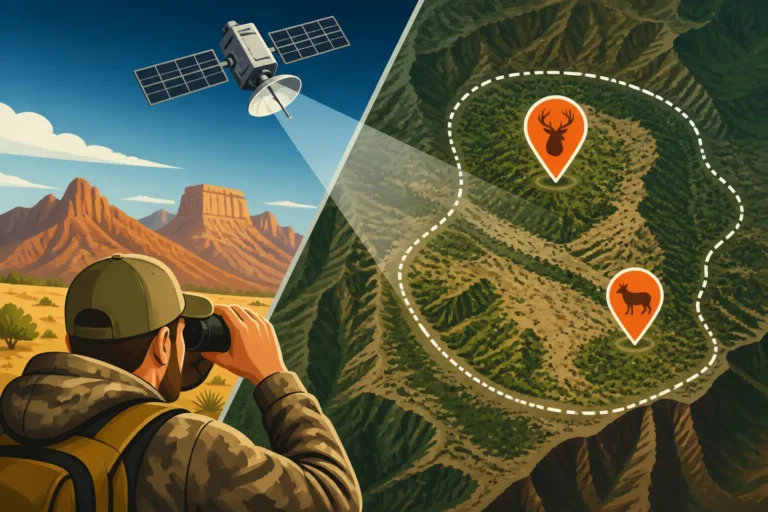
Modern technology has revolutionized how we prepare for hunts, and nowhere is this more true than in vast desert landscapes. E-Scouting a New Mexico Unit Before the Season is not just helpful; it's practically mandatory.
- Digital Maps: Platforms like onX Hunt are invaluable for identifying public vs. private land, understanding terrain features, and marking potential glassing points, water sources, and access roads. You can overlay satellite imagery, topo maps, and land ownership layers. Knowing how to interpret a Reading a Land Ownership Layer Correctly can prevent accidental trespass and save you a lot of grief.
- Draw Odds and Harvest Data: Websites like GoHunt provide critical data on draw odds for specific units and species, as well as historical harvest statistics. This information helps you make informed decisions about where to apply and what kind of success rates to expect. It manages expectations and helps you choose units that align with your hunting goals.
- Physical Conditioning: You simply cannot underestimate the physical demands of hunting these units. Long days of walking, climbing, and carrying heavy packs (filled with water!) under the sun require a high level of fitness. Start training months in advance. Focus on cardio, leg strength, and endurance. Simulating hunting conditions by hiking with a weighted pack can make a huge difference in your comfort and effectiveness in the field.
Common Species and What to Expect
While the desert around Las Cruces might seem empty to the uninitiated, it teems with life, offering diverse hunting opportunities. Each species presents its own unique challenge and requires specific knowledge to pursue successfully.
Desert Mule Deer: Elusive and Tough
The desert mule deer are smaller in body size than their mountain cousins, but they are every bit as wily, if not more so, given their open environment. You won't find them in dense timber; instead, they rely on the sparse brush, rocky outcrops, and the intricate network of arroyos for cover. Their light coloration helps them blend seamlessly with the dusty earth, making them incredibly difficult to spot.
When targeting Desert Mule Deer in Southern New Mexico, expect to spend long hours glassing, often covering vast expanses of terrain from a single vantage point. Early morning and late evening are prime times, as they move from bedding areas to feed. During the heat of the day, they will often bed down in the shade of a mesquite tree, under an overhang in an arroyo, or on a steep, north-facing slope. Understanding how to play the thermals and wind currents is crucial, as the open country allows scents to travel far. A successful mule deer hunt here is a testament to patience and sharp optics, often culminating in a challenging stalk over broken ground.
Oryx: A Challenging Trophy
Hunting oryx near Las Cruces, especially on the White Sands Missile Range, is a truly exotic experience and one many hunters dream of. These majestic animals are tough, resilient, and possess incredibly keen senses. They can be found in small herds, often traversing vast open plains or seeking refuge in the foothills of isolated mountain ranges within the desert.
Oryx hunts are unique because of the animals' size and their ability to absorb a lot of lead. Accurate shot placement is paramount. Due to the limited cover, engagements are often at longer ranges, making a solid shooting rest (bipod, tripod, or shooting sticks) essential. Tracking a wounded oryx in the desert can be incredibly difficult, so making that first shot count is critical. Remember, these are not native animals, and their introduction has created a truly special hunting opportunity that combines big-game pursuit with the stark beauty of the Chihuahuan Desert.
Ibex and Barbary Sheep: Mountain Goats of the Desert
If you're seeking a physically grueling but incredibly rewarding hunt, then the desert mountain goats are for you. Persian Ibex in New Mexico's Floridas offers the ultimate challenge in steep, unforgiving terrain. These animals are masters of vertical landscapes, and getting within range requires exceptional physical conditioning and a high tolerance for exposure and heights. Ibex tags are exceptionally rare, making them a true once-in-a-lifetime draw.
Barbary sheep, while also found in rugged terrain, tend to inhabit the rimrock and canyon systems of units like 27 and 29. Barbary Sheep in New Mexico Canyon Country are incredibly agile and blend in surprisingly well. They will use the steep, broken country to their advantage, often disappearing as quickly as they appear. Hunting Barbary sheep involves relentless hiking, often through dense, thorny brush, and careful navigation of treacherous slopes. Both ibex and Barbary sheep hunts demand powerful optics to locate animals at extreme distances, followed by a determined and often brutal climb to get into position. These hunts are about pushing your limits and earning every step of the journey.
Disclaimer
This article is for general informational purposes only and does not constitute professional advice. Laws, prices and regulations vary by location and change over time. Consult a qualified professional for guidance on your specific situation.