Trespass Law on Posted Property
We've all been there: staring at a map, trying to figure out exactly where public land ends and private land begins. In New Mexico, with its patchwork of land ownership, the fear of inadvertently stepping onto posted private property while pursuing game is a very real, stomach-dropping concern for hunters. This guide is here to unravel the complexities of New Mexico's trespass laws, help you confidently identify boundaries, and equip you with the knowledge to enjoy your hunt without legal headaches.
Understanding New Mexico's Trespass Laws
Navigating land ownership in New Mexico can feel like a maze, especially when you're focused on the hunt. The laws regarding trespass are designed to protect private property rights, and as hunters, it's our fundamental responsibility to understand and respect them. Ignoring these rules, whether intentionally or not, can lead to serious consequences that could jeopardize your hunting privileges and more.
What "Posted Property" Really Means and Doesn't Mean
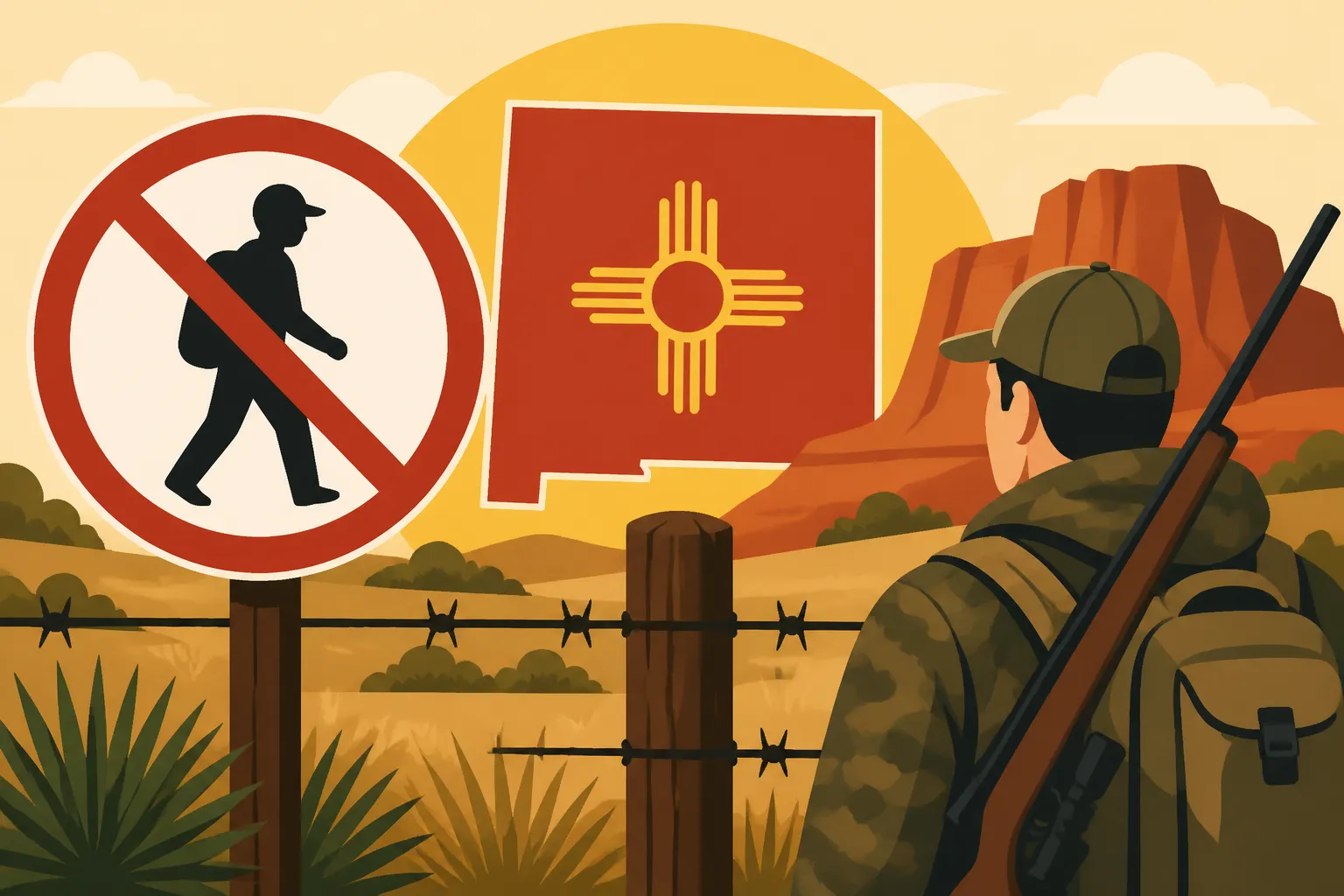
When we talk about "posted property" in New Mexico, it’s not just about a faded, handwritten sign tacked to a fence post. The law is quite specific about what constitutes adequate notice that land is private and access is restricted. For property to be legally "posted," the landowner must provide reasonable notice prohibiting entry. This typically means signs placed conspicuously at regular intervals, usually no more than 500 feet apart, along the exterior boundaries and at all roads and trails entering the land. These signs need to be easily readable and state that entry is prohibited or restricted.
Beyond traditional signs, painted posts or other markers can also serve as legal posting. Often, you'll see specific colors, like purple paint, used on fence posts or trees at intervals along a property line, indicating "no trespassing." The key here is "reasonable notice." If a reasonable person, exercising due diligence, would understand that entry is prohibited, then the land is considered legally posted. This means you can’t claim ignorance if there are clear visual cues. It’s a hunter's responsibility to keep an eye out for these indicators, especially when Reading a Land Ownership Layer Correctly or transitioning between different land types. However, "posted" doesn't mean every single square inch has a sign; it implies consistent, visible indicators along the perimeter. It also doesn't automatically mean permission is impossible; it simply means it's required.
The Difference Between Civil and Criminal Trespass
The distinction between civil and criminal trespass is crucial, as the consequences can vary significantly. Civil trespass typically involves an unauthorized entry onto someone's land that causes damage or interferes with the owner's use and enjoyment of the property. In these cases, the landowner might pursue a civil lawsuit for monetary damages. For example, if you mistakenly walk onto private land, causing no damage but upsetting the landowner, they might seek compensation for their inconvenience or perceived violation of rights, rather than involving law enforcement directly. This is often the realm of minor incursions without malicious intent or significant harm.
Criminal trespass, on the other hand, is a more serious offense. It occurs when you knowingly or willfully enter or remain on posted private property without authorization. This includes situations where property is clearly fenced or posted with "no trespassing" signs, or if you've been personally told to leave. The presence of hunting equipment can also elevate a civil trespass to a criminal matter, as it implies a specific purpose for being there. Criminal trespass can result in fines, potential jail time, and, critically for hunters, the forfeiture of your hunting license and equipment. Imagine accidentally following a wounded animal onto a clearly marked private ranch. Even with the best intentions, if you proceed without immediate attempts to contact the landowner or law enforcement, you could find yourself facing criminal charges. It's a stark reminder of the importance of knowing where you stand, literally and legally.
Identifying Property Boundaries in the Field
Knowing where you are, and more importantly, where you're allowed to be, is perhaps the most critical skill for any New Mexico hunter. The landscape often doesn't present clear-cut boundaries, and relying solely on what you see with the naked eye can lead to trouble.
The Essential Role of Mapping Apps
In this modern age, mapping applications like onX Hunt and GoHunt have become indispensable tools for hunters. These apps overlay property ownership data onto detailed topographic maps, allowing you to see public, private, and state trust land boundaries right on your phone or GPS device. Before you even set foot in the field, you can meticulously plan your routes, identify potential access points, and pinpoint areas to avoid. This foresight is invaluable, helping prevent accidental trespass by giving you a real-time, visual representation of land status. I often spend hours E-Scouting a New Mexico Unit Before the Season with these tools, highlighting potential hotspots and double-checking boundaries.
However, it's vital to remember that technology is a tool, not a fail-safe. While onX Hunt and GoHunt are incredibly accurate, they rely on digital data which can sometimes have minor discrepancies or be slightly out of date. Always download your maps for offline use, especially in New Mexico's remote areas where cell service is non-existent. Furthermore, these apps don't replace physical observation. A property line on a screen might look clear, but on the ground, it could be an old, dilapidated fence or even just an imaginary line through thick brush. Use the app as your primary guide, but always be alert to physical markers and the terrain itself. Using onX Layers for New Mexico Public Land can illuminate key details, but a keen eye is still paramount.
Physical Markers and What to Look For
While mapping apps are fantastic, they complement, rather than replace, the need to recognize physical boundary markers. New Mexico landowners use various methods to mark their property. Fences, especially well-maintained ones, are the most obvious indicators. Look for gates that are locked or clearly marked with "No Trespassing" signs. Beyond fences, pay attention to painted posts, trees, or rocks. Purple paint on fence posts or trees is a widely recognized indicator of private property in many western states, including New Mexico. This can be a much more subtle boundary marker than a full fence.
Survey markers, sometimes small metal caps or cairns of stones, indicate precise property corners, though these are often harder to spot and aren't typically strung along a boundary. Rivers, roads, or natural drainages can also form property lines, but don't assume a natural feature automatically delineates ownership without confirming it on a map or with other markers. The reality on the ground is rarely as clean as a map suggests. A fence might be down, signs might be old and faded, or the "no trespassing" warning might only be on one side of a trail. When in doubt, err on the side of caution. If you're Reading a Game Management Unit Boundary, compare the map to what you see.
Here’s a quick overview of common physical markers:
| Marker Type | Description | Visibility | Legal Implication |
|---|---|---|---|
| Signs | "No Trespassing," "Private Property," "Posted" | High | Clear legal notice, especially at entry points and intervals. |
| Fences | Barbed wire, woven wire, chain link; can be old or new. | Medium-High | Often defines property, especially if accompanied by signs. |
| Painted Markers | Purple paint on fence posts or trees. | Medium | Widely recognized legal indicator of private land in NM. |
| Gates | Blocked roads or trails, often locked or chained. | High | Indicates restricted access, even if no explicit sign. |
| Survey Pins/Cairns | Metal caps, stone piles at property corners. | Low | Precise, but not typically a continuous boundary marker. |
| Natural Features | Rivers, ridges, old roads (check maps carefully). | Variable | Can be boundaries, but require verification; easily mistaken. |
Navigating Access and Avoiding Incidents
Even with the best maps and keen observation skills, navigating New Mexico's land ownership can still present challenges. Sometimes the land you want to hunt is completely surrounded by private ground, or you might find yourself in a situation where you've inadvertently crossed a line.
Getting Written Permission to Cross Private Land
One of the most effective ways to avoid trespass issues, especially when dealing with Landlocked Public Parcels in New Mexico, is to proactively seek written permission from landowners. This isn't just a polite gesture; it's a legal safeguard. If you need to cross private ground to access public land, or if there's a specific private parcel you've identified that holds game, contacting the landowner well in advance is paramount. A simple phone call or letter explaining your intentions, your proposed route, and your commitment to respecting their property can go a long way.
When you secure permission, ensure it's in writing. This document should clearly state the names of the individuals granted access, the specific dates, the purpose of the access (e.g., hunting, retrieving game), and a clear description of the property or route. Keep this written permission with you at all times while in the field. This not only protects you legally but also fosters goodwill and shows immense respect for the landowner's rights. Written Permission Requirements in New Mexico are not just a formality; they are your protection. Never rely on verbal permission if you can help it, as memories fade and misunderstandings can arise.
What to Do If You Inadvertently Trespass
Despite your best efforts, there might come a moment when you realize you've accidentally stepped onto private land. Your immediate reaction in this situation is critical. First and foremost, stop hunting. Unload your weapon and secure it. Then, immediately and calmly retrace your steps to the nearest public land boundary. Do not continue to advance, especially if you're pursuing an animal. Your priority is to rectify the mistake quickly and respectfully.
If you encounter a landowner or law enforcement, remain courteous, apologetic, and cooperative. Explain that it was an inadvertent error and show them your mapping app, demonstrating your attempt to stay on public land. Offer to leave immediately. If you've just retrieved an animal that fell on private ground, the situation becomes more delicate. In New Mexico, it's generally understood that retrieving game from private land requires permission, even if the animal was shot legally on public land. This is where pre-hunt planning and establishing contact with landowners bordering your hunting area can be invaluable. Being upfront and honest, even if it's uncomfortable, is always the best course of action. Remember, What Happens Without Landowner Permission can escalate quickly.
Corner Crossing and Landlocked Public Parcels
The issue of "corner crossing"—stepping from one piece of public land to another over a corner shared by private property—is a contentious and evolving legal gray area in many Western states, including New Mexico. While the physical act might seem benign, it legally involves traversing private airspace and, in some interpretations, private land. This is particularly relevant when you're trying to reach Landlocked Public Parcels in New Mexico that are completely surrounded by private holdings.
Currently, there is no explicit state law in New Mexico that definitively allows or prohibits corner crossing, and it remains a subject of ongoing debate and legal challenges elsewhere. The safest and most conservative approach is to avoid corner crossing unless you have explicit, written permission from the landowner of the private parcel involved. The risks of civil or even criminal trespass charges are simply too high to gamble on an ambiguous legal interpretation. If you find yourself needing to access public land that requires crossing a private corner, consider it the same as crossing any other segment of private land: secure Crossing Private Ground to Reach New Mexico Public Land permission beforehand. Always consult your detailed mapping applications to understand the complexities of these land intersections.
Consequences and Prevention
The ramifications of trespassing while hunting in New Mexico can range from a stern warning to severe legal penalties. Understanding these potential outcomes and adopting proactive prevention strategies is essential for a responsible hunter.
Penalties for Trespassing While Hunting
The legal penalties for criminal trespass in New Mexico can be significant. Depending on the specific circumstances, such as whether the land was clearly posted, if you refused to leave, or if you were hunting while trespassing, you could face misdemeanor charges. Misdemeanors in New Mexico can carry fines, ranging from hundreds to thousands of dollars, and even jail time. For example, some classifications of criminal trespass can result in up to a year in jail and a substantial fine.
Beyond the immediate legal and financial costs, hunters face additional, sport-specific consequences. A trespass conviction can lead to the suspension or revocation of your hunting license, meaning you could lose the privilege to hunt in New Mexico for a period of time, or even permanently. Your hunting equipment, including firearms or bows, could also be seized. Imagine losing your prized hunting rifle or having your ability to apply for future draws in New Mexico stripped away, all because of a moment of carelessness or ignorance regarding property lines. These are not minor inconveniences; they are serious blows to your hunting future. The courts don't take these infractions lightly, especially when combined with hunting activities.
Best Practices for Ethical and Legal Hunting
Preventing trespass ultimately comes down to a combination of diligent preparation, continuous awareness, and unwavering respect for private property rights. Here are some best practices to ensure your hunts are both ethical and legal:
- Pre-Season Scouting with Maps: Dedicate significant time before your hunt to study land ownership maps using tools like onX Hunt or GoHunt. Identify all property boundaries, potential private inholdings within public land, and viable access routes. Understand How New Mexico Numbers Its Hunting Units and their unique characteristics. Checking Public Land Percentage by Unit can give you an idea of how complex the land ownership might be.
- Always Carry Current Maps (Digital and Physical): Don't rely solely on cell service. Download offline maps to your phone and consider carrying a backup physical map for areas where batteries might fail or signals drop.
- Look for Physical Markers: As you move through the field, constantly scan for fences, "No Trespassing" signs, purple paint, or other boundary indicators. Cross-reference what you see with your mapping app.
- Seek Written Permission Proactively: If there's any doubt about access or if you know you might encounter private land, make the effort to contact landowners in advance and secure written permission. This is especially true if you anticipate Retrieving Game From Private Land in New Mexico.
- Communicate with Landowners: Build relationships. A friendly phone call before the season, even if you don't need direct access, can open doors for future permission or at least prevent misunderstandings.
- Educate Your Hunting Partners: Ensure everyone in your party understands the local trespass laws and your plan for navigating boundaries. Hunting as a cohesive, informed group reduces the risk of someone inadvertently straying.
- Err on the Side of Caution: If you are ever unsure about whether you are on public or private land, assume it's private and back out. A missed opportunity is far better than a trespass charge.
By integrating these practices into your hunting routine, you not only protect yourself legally but also uphold the integrity of the hunting community. Respecting private property is fundamental to being a responsible hunter and ensuring continued access to public lands for everyone.
Disclaimer
This article is for general informational purposes only and does not constitute professional advice. Laws, prices and regulations vary by location and change over time. Consult a qualified professional for guidance on your specific situation.