Navajo Nation Permits in New Mexico
For many hunters, the New Mexico landscape is a mosaic of public and private lands, each with its own set of rules and access points. But then you encounter the concept of tribal lands, and suddenly, the familiar rulebook seems to vanish, replaced by a whole new system. It can be incredibly confusing to understand how to legally hunt on these lands, especially when you're used to dealing with state game and fish departments. This guide is here to untangle the specifics of hunting permits on the Navajo Nation in New Mexico, helping you understand the process and what to expect.
The Distinctive Nature of Navajo Nation Land and Its Hunting Regulations
Hunting on tribal lands is fundamentally different from hunting on state or federal public lands. It's not just about different forms to fill out; it's about respecting sovereign nations that manage their wildlife and resources according to their own laws, cultures, and conservation goals. This distinction often creates a lot of head-scratching for hunters who are only familiar with the New Mexico Department of Game and Fish (NMDGF) regulations.
The Distinction Between Tribal and State Land
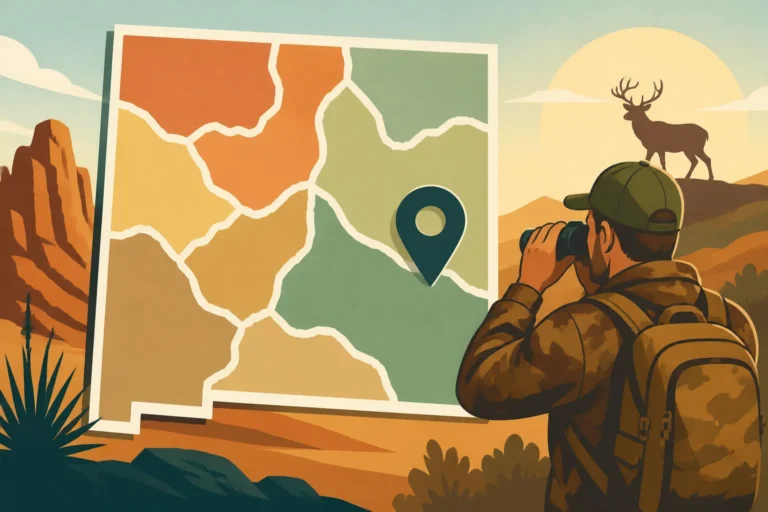
When you're looking at a land ownership map, whether it's a physical map from the Forest Service or a digital one through an app like onX Hunt, you'll see different colors designating National Forests, BLM land, State Trust Land, and private parcels. But then there are these large swaths marked as tribal land, and they operate under a completely separate jurisdiction. Unlike state trust lands, where your NMDGF license often acts as your access permit for hunting (though you should always verify current rules for A New Mexico License Is Your State Trust Land Easement), Navajo Nation land is not managed by the state. It’s its own entity, a sovereign nation with the inherent right to govern its territory and resources.
This means that all the rules you've learned for hunting elk in the Gila or deer in the Carson National Forest simply don't apply here. You can't just walk onto Navajo land with a state-issued tag and expect to hunt. It's a common misconception that all land within New Mexico's borders is subject to New Mexico state law. While state laws generally apply to private property and state-managed lands within its jurisdiction, federally recognized tribal lands are largely self-governing. This sovereign status impacts everything from game management to law enforcement and, crucially, hunting permits.
Why Navajo Nation Has Its Own Hunting Rules
The reason Navajo Nation has its own hunting rules stems directly from its status as a sovereign nation. Just like a state has its own game and fish department, the Navajo Nation has its own wildlife and fisheries department. This department is responsible for managing game populations, setting seasons, determining harvest quotas, and issuing permits on the vast tribal lands. Their regulations are designed to reflect the cultural values, conservation priorities, and economic interests of the Navajo people.
For a hunter looking in from the outside, this can feel like an extra layer of bureaucracy, but it's essential to understand and respect. These regulations are not arbitrary; they are the result of centuries of stewardship and self-determination. The Navajo Nation's wildlife management programs are often sophisticated, aimed at ensuring sustainable populations for future generations and sometimes to support specific tribal enterprises or community needs. So, when you seek a permit for Navajo Nation, you're not just buying access; you're engaging with a distinct governmental body and supporting their conservation efforts directly. It’s a completely different system from what you encounter with How New Mexico Numbers Its Game Management Units or Reading a New Mexico Hunt Code Before You Apply.
Navigating the Navajo Nation Hunting Permit System
Once you grasp the fundamental difference in jurisdiction, the next step is understanding the practicalities of obtaining a permit and what that process entails. It's not a "draw" in the same way the NMDGF operates its lottery system for public land tags. Instead, it's typically a direct purchase or application process managed by the Navajo Nation Department of Fish and Wildlife.
The Application Process for Navajo Permits
The application process for Navajo Nation hunting permits differs significantly from the state's public land draw. Generally, hunters will need to contact the Navajo Nation Department of Fish and Wildlife directly. They will provide information on available hunts, specific species, season dates, and the application or purchase procedure. This often involves downloading forms from their official website, mailing in applications, or, in some cases, visiting their offices in person. It’s important to note that you won’t find these permits listed in the NMDGF draw statistics or on commercial draw odds services like GoHunt, because they aren't part of the state system.
Crucially, a New Mexico state hunting license is typically still required, even if you're hunting on tribal land, unless specific agreements or treaties dictate otherwise for certain species or resident tribal members. This is a point of frequent confusion for many, but it boils down to the fact that while the Navajo Nation manages its wildlife and land, the state still requires its residents and non-residents to possess a general hunting license for the privilege of hunting within the geographical boundaries of New Mexico. Always check the most current regulations from both the Navajo Nation and the NMDGF to be absolutely sure. This is distinct from how you might approach The New Mexico Hunter Education Requirement for state hunts, but the principle of needing foundational licensing remains.
The cost of Navajo Nation permits can vary widely depending on the species, the type of hunt (e.g., archery, rifle), and whether you are a tribal member or a non-member. Generally, non-member permits for trophy animals like elk or mule deer can be quite substantial, often reflecting the quality of the hunting experience and supporting the tribal wildlife programs. This is a different financial model compared to applying for state tags, where application fees are often minimal and the full tag fee is only charged upon success in the draw.
Key Differences from New Mexico State Tags
Let's break down some of the fundamental differences between obtaining a Navajo Nation permit and a New Mexico state tag:
| Feature | New Mexico State Tag (Public Draw) | Navajo Nation Permit |
|---|---|---|
| Jurisdiction | New Mexico Department of Game and Fish (NMDGF) | Navajo Nation Department of Fish and Wildlife |
| Application | Online draw, preference point systems rare/non-existent | Direct application/purchase, specific forms, sometimes in-person |
| Deadlines | Typically a single major deadline (March 18th for big game) | Vary by species and year, specific to Navajo Nation calendar |
| Allocation | Resident/Non-resident/Outfitter pools (e.g., 84/10/6 percent) | Tribal member vs. Non-member; specific quotas may exist |
| Cost Structure | Small application fee, full tag fee upon drawing | Permit fee often paid upfront, can be substantial |
| Access | Public land (National Forest, BLM, State Trust) | Navajo Nation tribal lands only |
| Outfitter Req. | Optional for 84% pool, mandatory for 10% outfitter pool (e.g., The New Mexico Outfitter Draw and Its Two-Day Rule) | Often required or highly recommended for non-members |
| State License | Integral to the draw system | Often required in addition to tribal permit |
One of the most significant differences is the involvement of outfitters. While you can certainly hunt New Mexico's public lands completely DIY, and many do, hunting on Navajo Nation lands, especially for trophy animals, often involves either a mandatory or highly recommended guided experience. This isn't always the case, but it's a common model, especially for non-members. This means the overall cost and logistics can be much higher than even a guided hunt through the state's outfitter pool.
Common Misconceptions About Navajo Hunts
It's easy to fall into traps of misinformation when dealing with a system that's so different from the norm. One common misconception is that Navajo Nation permits are "easier to get" or a "backdoor" into high-quality hunts simply because they bypass the state draw. While it's true you avoid the state's lottery, the Navajo Nation permits are often very limited, highly sought after, and carry a premium price tag, meaning they are not necessarily easier to acquire, just different. For instance, if you're frustrated by Why New Mexico Draw Odds Do Not Improve With Time in the state system, you might see tribal permits as an alternative, but they come with their own set of challenges and costs.
Another misunderstanding is regarding what your permit actually allows. Just because you have a Navajo Nation permit doesn't automatically grant you access to any part of the Navajo lands. Specific hunting areas may be designated, and you must respect those boundaries. Furthermore, hunters sometimes assume that tribal lands automatically have larger animals or higher success rates than state-managed areas. While many tribal lands are indeed very well-managed and can produce exceptional animals due to limited pressure, this isn't a universal guarantee. Quality depends on the specific unit, the species, and the management practices in place, just like on state lands.
Lastly, some hunters believe that tribal lands are entirely exempt from state regulations, including things like blaze orange requirements or legal shooting hours. While the Navajo Nation sets its own specific regulations, it's always safest and wisest to consult their specific rulebook for each hunt. Don't assume anything. As mentioned before, a New Mexico state license is usually still required in addition to your tribal permit, meaning you are still bound by some basic overarching state laws, particularly regarding hunter education requirements and general licensing. Do New Mexico Tribal Hunts Require a State License? is a key question to answer directly from both the Navajo Nation and NMDGF current regulations.
What to Expect When Hunting on Navajo Nation Land
Hunting on Navajo Nation land is a unique experience that offers incredible opportunities, but it also comes with distinct regulations and cultural considerations. Approaching it with respect and thorough preparation will ensure a much more enjoyable and successful trip.
General Regulations and Ethical Considerations
Beyond the permit itself, you'll need to understand and adhere to the Navajo Nation's specific hunting regulations. These will cover everything from season dates and bag limits to weapon restrictions and tagging requirements. It's not uncommon for tribal regulations to include rules regarding campfires, off-road vehicle use, and even respectful interaction with tribal members and cultural sites. For example, while you might find Baiting and Trail Camera Rules in New Mexico for state land, the Navajo Nation will have its own stance on these practices, and you must follow their guidance.
Ethical conduct takes on an even greater significance on tribal lands. Remember that you are a guest on a sovereign nation's territory. This means showing utmost respect for the land, its wildlife, and its people. This includes leaving no trace, adhering strictly to hunting boundaries, and understanding that decisions about wildlife management are made for the benefit of the Navajo people. If you're coming from a background of hunting New Mexico From 4,000 Feet to 10,000 feet in the high country or tracking Mule Deer Across New Mexico's High Country and Desert, the terrain might feel familiar, but the rules governing your presence are profoundly different. Treat every interaction with courtesy and humility.
Another aspect to consider is how you handle your harvest. The Navajo Nation will have its own rules for tagging and transporting game. You must understand these processes fully to avoid any issues. This can often mean reporting your harvest to the tribal wildlife department within a specific timeframe or at designated check stations, which might differ from the state’s Mandatory Reporting After a New Mexico Harvest requirements. Being prepared for field dressing, especially in warmer desert units, and ensuring proper meat care is also crucial, just as it would be for any other New Mexico hunt.
Scouting and Access on the Nation
Scouting on Navajo Nation land can present its own set of challenges and opportunities. Unlike open public lands where apps like onX Hunt seamlessly show land ownership and often allow you to scout well in advance (like Scouting New Mexico State Trust Land Fourteen Days Out), accessing and scouting tribal lands may require prior permission or specific permits from the Navajo Nation Department of Fish and Wildlife. You cannot simply assume general public access for scouting purposes without explicit authorization.
When you obtain your hunting permit, it's vital to inquire about scouting policies. They may have designated areas for scouting, specific timeframes, or even require a tribal guide to accompany you during scouting trips. This is a critical difference, as unpermitted entry onto tribal lands, even for scouting, can be considered trespassing and lead to severe penalties. Always clarify these rules upfront.
Road conditions and general access can also vary widely. While some areas may have well-maintained roads, others might be remote and require high-clearance 4×4 vehicles. Be prepared for varied terrain and potential lack of cell service, necessitating robust navigation tools and communication plans. If you're used to relying heavily on detailed land ownership overlays provided by onX Hunt for state and federal lands, remember that while the app shows tribal land, the rules for accessing it are managed by the tribe, not derived from typical state/federal agreements.
The Role of Guides on Tribal Land
For many non-tribal hunters, especially those pursuing high-demand species, hiring a licensed tribal guide is either mandatory or highly recommended, even if not explicitly required. These guides are invaluable for several reasons. First, they possess intimate knowledge of the land, wildlife patterns, and specific hunting areas. They understand the terrain, game movements, and how to maximize your chances of success. This local knowledge is often unparalleled, helping you navigate areas that would be impossible to hunt effectively alone.
Second, tribal guides ensure you adhere to all Navajo Nation regulations, preventing accidental infractions. They are familiar with the nuances of the permit system, reporting requirements, and local customs. This can be particularly important when dealing with potentially sensitive areas or interacting with local residents. A good guide isn't just a hunting assistant; they are an ambassador for the land and its people. This guidance can be critical when you compare it to the general rules of, say, Hunting New Mexico From 4,000 Feet to 10,000, where you might navigate entirely on your own.
Finally, utilizing a tribal guide is often a way to support the local economy directly. These individuals are typically experienced hunters and outdoorsmen who provide a legitimate service. While there are options for Hunting New Mexico Tribal Land Through an Operator which can include guide services, it’s always best to book directly with a guide licensed by the Navajo Nation if possible, or through a reputable outfitter with strong, verifiable ties to the Nation. Always vet your guide thoroughly, checking references and ensuring they are properly licensed by the Navajo Nation Department of Fish and Wildlife.
Disclaimer
This article is for general informational purposes only and does not constitute professional advice. Laws, prices and regulations vary by location and change over time. Consult a qualified professional for guidance on your specific situation.