You May Scout New Mexico Trust Land 14 Days Before a Hunt
For any New Mexico hunter, the challenge of finding accessible public land for scouting is a real frustration. You spend countless hours e-scouting, dreaming of that perfect basin or ridge, only to wonder if you're even allowed on the ground when you need to be there. This comprehensive guide will walk you through the specifics of scouting New Mexico State Trust Land, particularly the crucial 14-day window before your hunt, ensuring you know exactly how to leverage this valuable resource.
Understanding New Mexico State Trust Land
When you think about hunting public land in New Mexico, your mind likely jumps to vast National Forests or Bureau of Land Management (BLM) acreage. These are indeed massive resources, covering millions of acres across the state. However, New Mexico State Trust Land often flies under the radar for many, yet it represents another significant portion of accessible ground that can be absolutely critical for hunters. It's not just a few scattered parcels; these lands encompass diverse habitats, from high mountain forests to arid desert plains, and understanding them is key to expanding your hunting opportunities.
What is State Trust Land?
State Trust Land isn't simply "public land" in the same way National Forests or BLM land are. It has a very specific purpose: to generate revenue for designated beneficiaries, primarily public education. When New Mexico became a state, the federal government granted millions of acres of land to be held in trust, much like an endowment. The State Land Office manages these lands, often through activities like grazing leases, mineral extraction, and, yes, recreational permits. The key difference is that these lands aren't primarily managed for public recreation, but rather for income generation.
This underlying purpose means that access rules for State Trust Land can be a bit different, and sometimes more restrictive, than those for federal lands. It’s not just a free-for-all; there’s a system in place that balances public access with the fiduciary responsibility of the State Land Office. For hunters, this translates into specific permits and regulations that must be understood and followed to avoid trespassing or other legal issues. Ignorance of these rules isn't an excuse, and can quickly turn a hopeful scouting trip into a frustrating encounter with law enforcement or landowners.
How Your Hunting License Grants Access
This is where things get really interesting for hunters. Unlike some states where you might need a separate, specific permit just for accessing State Trust Land for recreation, New Mexico has a more streamlined approach for hunting. Your valid New Mexico hunting license, specifically one purchased for big game or game birds, actually serves as your general easement for recreational access on State Trust Lands. This means that once you've purchased your tag and license, you generally don't need a separate "recreational access permit" from the State Land Office for the specific act of hunting or scouting during open seasons.
This is a huge benefit, simplifying the process considerably for residents and non-residents alike. It means less red tape and more focus on the actual hunt. However, it's crucial to remember that this easement is specifically tied to hunting and related activities. It doesn't mean you can just go camp anywhere, target practice, or hold an ATV rally. The spirit of the access is for hunting and scouting in preparation for a hunt. Understanding A New Mexico License Is Your State Trust Land Easement is fundamental, as it clearly defines the nature of your access.
The Specifics of Hunting Access on Trust Land
While your hunting license does grant a general easement, that doesn't mean you have carte blanche to do whatever you want on State Trust Land. There are critical nuances and rules that govern precisely when and how you can access these lands, especially when it comes to scouting. Many hunters assume "public land is public land," but Trust Land has its own unique set of regulations that are vital to grasp if you want to stay on the right side of the law and make the most of your hunting opportunities.
When Trust Land Access Actually Opens
A common misconception is that if a hunting season is open, all public lands are open for access and scouting. While this is largely true for National Forests and BLM, State Trust Land operates under a slightly different calendar. Your general hunting license provides access only during the official hunting season for which you hold a valid license. This means if you have an elk tag for Unit 17 in October, you can access Trust Land in Unit 17 during that October season. However, you can't just wander onto it in July to look for sheds or do extensive year-round scouting without other specific permissions.
This rule is a major point of confusion and often leads to unintentional trespass. Many hunters, eager to get a jump on scouting, will venture onto Trust Land months before their season, unaware that their hunting license doesn't cover that period. Always check the official New Mexico Game and Fish regulations booklet for the exact start and end dates of your specific hunt. This ensures that your license is indeed "active" for that time, granting you the necessary easement. You can delve deeper into this by reading When Trust Land Access Actually Opens.
The 14-Day Scouting Window on Trust Land
Here's the golden rule for scouting State Trust Land: you may scout these lands for your permitted hunt up to 14 days immediately prior to the opening day of your authorized big game or game bird hunt. This is a crucial window that allows hunters to get on the ground, find fresh sign, locate water sources, and finalize their game plan without needing a separate permit beyond their hunting license. This rule is designed to give hunters a fair chance to prepare without allowing year-round, unrestricted access that could conflict with other land uses or strain resources.
Let's break that down: If your archery elk hunt in Unit 15 starts on September 1st, you can begin scouting on August 18th. Not August 17th, not August 1st – specifically 14 days out. This window applies regardless of whether you’re hunting elk, deer, pronghorn, or upland birds, as long as you hold the valid license for that species and season. It’s a carefully crafted compromise that respects both the hunter’s need to prepare and the State Land Office’s mandate to manage these lands responsibly. Neglecting this specific timeframe is a common pitfall for even seasoned hunters. You can find more detail on this specific allowance in The 14-Day Scouting Window on Trust Land.
Planning Your Trust Land Scouting Trip
Once you understand the rules, the next step is to plan an effective scouting trip. State Trust Land, like any public land, isn't uniform. It can range from easily accessible parcels near roads to remote, rugged terrain. Effective planning means leveraging technology, understanding the landscape, and knowing what to look for when you're on the ground. This preparation is what separates a frustrating, unproductive trip from one that provides invaluable insights for your actual hunt.
E-Scouting a New Mexico Unit Before the Season
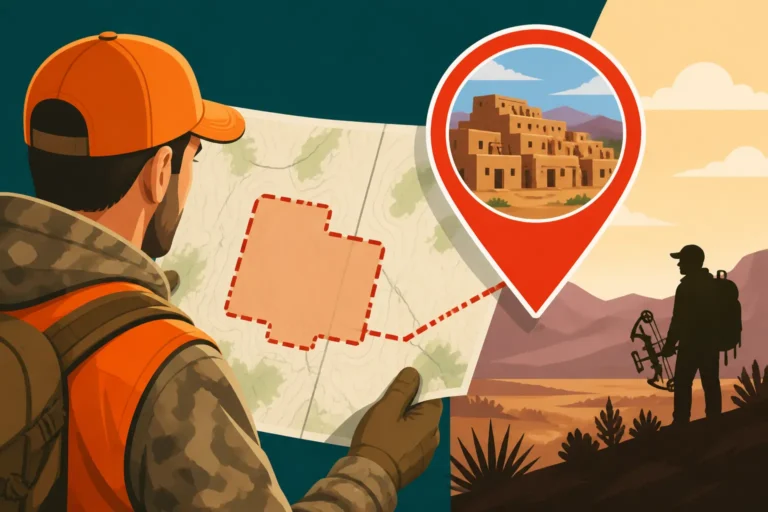
Before you even think about putting boots on the ground, you should be deep into e-scouting. This is where digital tools like onX Hunt and GoHunt truly shine. These platforms allow you to overlay land ownership maps with topographic data, satellite imagery, and even historical burn areas or water sources. Your first task is to identify all the State Trust Land parcels within your hunting unit. These aren't always contiguous; they can be checkerboarded with private land, BLM, or Forest Service ground. Knowing precisely where the boundaries lie is paramount.
Use the satellite imagery to identify potential game travel corridors, bedding areas, feeding grounds, and, critically, water sources. Look for subtle changes in vegetation, terrain features like saddles or ridges, and natural funnels. Pay attention to how these features intersect with the State Trust Land boundaries. Sometimes, an isolated parcel of Trust Land might hold a key water source or a strategic high point that makes it a magnet for game, even if it's surrounded by private holdings. Remember, E-Scouting a New Mexico Unit Before the Season is not just a suggestion; it's a necessity in today's hunting world.
Identifying Access Points and Potential Obstacles
E-scouting also helps you identify legal access points. Just because a parcel of Trust Land exists doesn't mean you can drive right up to it. It might be landlocked by private property, requiring you to cross someone else's ranch to get there. In New Mexico, Crossing Private Ground to Reach New Mexico Public Land without explicit, written permission is strictly prohibited and can lead to severe penalties. So, while you're pouring over your onX Hunt maps, look for public roads, two-tracks, or trails that directly abut Trust Land.
Also, be mindful of any existing infrastructure on Trust Land, such as stock tanks, windmills, corrals, or fences. These are often related to grazing leases and must be respected. Gates should always be left as you found them – if it was closed, close it behind you. If it was open, leave it open. Note any signs of active ranching operations, as you'll want to avoid disrupting them. Understanding Motorized Travel Rules on New Mexico Public Land is also critical, as vehicle access might be restricted to existing roads, and off-road travel is almost universally prohibited.
Ethical Considerations and Regulations on Trust Land
Hunting and scouting on State Trust Land comes with a significant responsibility. These lands are actively managed for various uses, and hunters are just one piece of a larger puzzle. Adhering to ethical practices and regulations isn't just about avoiding trouble; it's about being a good steward of the land and ensuring continued access for future generations. Ignoring these responsibilities jeopardizes everyone's ability to utilize these valuable areas.
Respecting Other Land Uses and Leaseholders
Many State Trust Lands are actively leased for grazing, farming, or other commercial ventures. This means you will likely encounter livestock, ranching infrastructure, and potentially ranch personnel. It is paramount to treat these areas with the utmost respect. Leave gates as you find them, do not disturb livestock, and avoid driving over cultivated fields or tearing up fragile rangeland. Remember, the rancher operating on that land has a valid lease and relies on the land for their livelihood. Your presence, while legal, should be as minimally disruptive as possible.
If you encounter a leaseholder or their employees, be polite, identify yourself as a hunter, and explain you are on State Trust Land for legitimate scouting purposes within the 14-day window. Most are reasonable people, but they are also protective of their operations. A friendly, respectful interaction can go a long way in fostering good relationships between hunters and landowners/leaseholders. Always remember that while your license grants you hunting access, it doesn't give you permission to interfere with the primary operations of the land.
Rules on Camping, Fires, and Waste Management
Unlike some sprawling federal lands where dispersed camping might be allowed, camping on New Mexico State Trust Land is generally much more restricted. While specific rules can vary, generally, your hunting license easement does not explicitly grant permission for overnight camping. If you plan to camp, you would typically need a separate permit from the State Land Office or permission from a surface leaseholder, which can be difficult to obtain. For most hunters scouting the 14-day window, this means day trips are the norm. If you're wondering Can You Camp on New Mexico Trust Land?, the answer is often "no" without extra steps.
Fire restrictions are another critical consideration, especially in New Mexico's dry climate. Always check for current fire restrictions before heading out, particularly during late summer and fall. A small, uncontrolled campfire can devastate an entire ecosystem and lead to severe legal consequences. Practicing Leave No Trace principles is non-negotiable. Pack out everything you pack in, including all trash, spent casings, and any human waste. Preserve the integrity of the land for wildlife and other users.
| Activity | State Trust Land (with valid hunting license) | BLM Land (General) | National Forest (General) |
|---|---|---|---|
| Hunting/Scouting | Yes (during season & 14-day window) | Yes | Yes |
| General Recreation | Limited (needs separate permit usually) | Yes | Yes |
| Overnight Camping | Generally No (needs permit/permission) | Often Allowed (dispersed/designated) | Often Allowed (dispersed/designated) |
| Motorized Travel | Designated roads/trails only | Designated roads/trails only | Designated roads/trails only |
| Firewood Gathering | Generally No | Often Allowed (permit may be needed) | Often Allowed (permit may be needed) |
| Fire Restrictions | Always check local conditions | Always check local conditions | Always check local conditions |
Maximizing Your Scouting Efforts
Scouting isn't just about driving around and looking at the landscape. It's a strategic process that, when done correctly, significantly increases your chances of success during the actual hunt. With only a 14-day window on State Trust Land, you need to be efficient and focused. Every minute on the ground counts, and knowing what to prioritize will pay dividends.
Interpreting Game Sign and Habitat
When you're on Trust Land, you're not just looking for animals; you're looking for evidence of animals. This includes tracks, scat, rubs, scrapes, and feeding areas. Fresh sign tells you where animals have been recently, while older sign shows established patterns. Pay attention to the type of vegetation – are there preferred browse species? Are there areas with heavy mast crops like acorns from oaks or piñon nuts? These areas will concentrate game. For instance, understanding Water Sources That Concentrate Desert Game can be absolutely vital in arid Trust Land units. A lone stock tank or a seep might be the only reliable water for miles, making it a hotspot.
Consider the time of day you're scouting. Animals often move more during dawn and dusk. If you're seeing a lot of fresh tracks in an area during the middle of the day, it's a good indicator that animals are moving through there consistently. Look for bedding areas – usually thick cover or north-facing slopes where animals can escape the sun and wind. Note where these areas are relative to feeding and watering locations. This helps you develop a mental map of their daily routine.
Using Trail Cameras Strategically
Trail cameras can be an incredibly effective scouting tool, even with the 14-day window. While some states have strict rules about how long cameras can be deployed or when they can be checked, New Mexico's rules are generally more permissive, as long as they are not used for "real-time" hunting. Deploying cameras a few days into your 14-day window allows them to gather intel for the remaining days leading up to the opener. Focus your camera placement on trails leading to water, pinch points, saddles, or areas with heavy browse.
Remember, however, that you must abide by Trail Camera Rules on New Mexico Public Land. Most importantly, cameras must be clearly marked with your name and hunting license number. Also, be discreet. While State Trust Land might see less human traffic than popular National Forest trailheads, other hunters or outdoor enthusiasts might be in the area. Position your cameras securely but out of plain sight if possible, to deter theft or tampering. Don't rely solely on cameras; they are a supplemental tool, not a replacement for active scouting.
Comparing Trust Land with Other Public Access
New Mexico offers a diverse tapestry of public lands, and State Trust Land is an important thread in that fabric. Understanding how it compares to other options like BLM land, National Forests, and even private land with public access programs helps you build a more complete picture of your hunting opportunities and avoid common pitfalls. Each type of land comes with its own set of rules and nuances that, if understood, can greatly expand your hunting horizons.
BLM Ground and National Forests
Bureau of Land Management (BLM) land and National Forests often make up the bulk of publicly accessible hunting ground in New Mexico. BLM lands are typically characterized by vast, open, arid to semi-arid landscapes, often found in southern and eastern New Mexico, while National Forests tend to be the higher-elevation, timbered mountains of the north and west, like the Gila, Cibola, and Carson National Forests. Both offer general public access for hunting and recreation without the specific 14-day scouting window or the "hunting license as easement" distinction of Trust Land.
The key differences lie in the primary management goals and associated regulations. BLM land, while managed for multiple uses, often has a strong emphasis on grazing and mineral extraction, similar to Trust Land, but with broader recreational allowances. National Forests prioritize timber, watershed, and recreation, leading to different road systems, trail networks, and camping regulations. For instance, dispersed camping is usually much more common and accepted on BLM and National Forest lands than on State Trust Land. Understanding How Much Public Land New Mexico Holds and the nuances of each type is crucial for comprehensive hunt planning.
The Open Gate Program and Private Land Access
Beyond the three main categories of public land (Trust, BLM, National Forest), New Mexico also has programs like the Open Gate program, which works with private landowners to open their property for public hunting or fishing. This is a fantastic initiative that provides access to otherwise inaccessible private ground, often specifically targeting species like deer or waterfowl. These areas come with their own set of rules, usually very specific to the individual property and the agreement with the Game and Fish Department.
While not directly related to State Trust Land, it's important to consider these programs as part of your overall access strategy. A hunter might draw a tag in a unit that has limited traditional public land but significant Open Gate acreage or abundant State Trust Land. Knowing all your options and understanding the specific rules for each type of access point, from federal lands to State Trust, to private lands with agreements, maximizes your opportunity. Always, always check the current regulations booklet and online maps like those from onX Hunt or GoHunt to verify land status and access rules for any given parcel.
Leveraging Technology for Trust Land Hunting
In today's hunting world, technology isn't just a convenience; it's an absolute necessity, especially when navigating the intricacies of State Trust Land. Gone are the days of relying solely on paper maps and vague directions. Modern mapping applications and data sources provide an unprecedented level of detail that can make or break a hunting or scouting trip.
Digital Mapping Tools: onX Hunt and GoHunt
When it comes to understanding land ownership and access, digital mapping applications are your best friend. onX Hunt is an industry leader for a reason, providing incredibly accurate property boundary lines, public land designations (including State Trust Land), topography, and satellite imagery. With onX Hunt, you can literally see where the State Trust Land starts and stops, identify any surrounding private parcels, and plan your approach accordingly. This is invaluable for preventing accidental trespass, a constant concern when hunting checkerboarded landscapes. You can download unit layers, mark waypoints for water sources or game sign, and even track your movements in real-time. Reading a Land Ownership Layer Correctly is a skill every modern hunter needs to master.
GoHunt is another excellent resource, often favored for its comprehensive drawing odds data and strategic planning tools, but it also provides robust mapping capabilities. Combining the strengths of both, or choosing one that best fits your workflow, will dramatically enhance your ability to scout and hunt Trust Land efficiently. These tools become even more critical when you're looking at parcels that are less obvious or tucked away in areas you might not otherwise explore.
Utilizing Hunt Codes and Regulations Booklets
Beyond the maps, the New Mexico Department of Game and Fish regulations booklet is your bible. It contains all the specifics, including the exact wording of the 14-day scouting rule, legal shooting hours, blaze orange requirements, and any unit-specific regulations. While apps tell you where the land is, the regulations tell you how you can use it. It's not enough to skim; you need to read it thoroughly, especially the sections pertaining to land access and general hunting rules.
Every hunt in New Mexico has a specific hunt code, which details the unit, species, weapon type, and season dates. Understanding Reading a New Mexico Hunt Code Before You Apply is fundamental, as these codes directly dictate when your license provides that Trust Land easement. Cross-referencing your hunt code with the regulations booklet ensures you're scouting within the correct legal framework. Don't rely on hearsay or what a buddy told you; go straight to the source for accurate, up-to-date information.
Best Practices for Trust Land Stewardship
As hunters, we are often among the most passionate conservationists. Our continued access to public lands, including State Trust Land, depends on responsible behavior and proactive stewardship. By adhering to best practices, we not only ensure our own future opportunities but also uphold the positive image of hunting.
Minimizing Your Impact
The phrase "Leave No Trace" is more than a slogan; it's a set of principles that should guide every outing onto State Trust Land. This means packing out all trash, human or otherwise. It means staying on established roads and trails, especially when conditions are wet and fragile desert soils are easily damaged. Avoid disturbing cultural or historical sites, which can often be found on these older landscapes. When you come across a fence, climb over it carefully near a post to avoid damaging it, and if there's a gate, operate it exactly as you found it.
Minimizing your impact also extends to game animals themselves. While scouting, observe from a distance. Don't chase animals around or needlessly push them out of an area. The goal is to learn their patterns, not to harass them. The less stress you put on wildlife during the scouting phase, the more likely they are to be in their natural patterns when the season actually opens.
Reporting Violations and Concerns
If you witness illegal activity on State Trust Land – whether it's poaching, littering, or damage to property – it's your responsibility as a good steward to report it. The New Mexico Department of Game and Fish has a "TIP" (Turn In Poachers) hotline, and local law enforcement or the State Land Office can also be contacted for other violations. Documenting what you see with photos or notes can be helpful, but always prioritize your safety.
Reporting also includes concerns you might have about land conditions, such as damaged fences, illegal dumping, or unauthorized access roads. By acting as extra eyes and ears on these lands, hunters play a vital role in their ongoing preservation and responsible management. Our participation in the outdoor experience often means we are the first to notice issues, and our reports can lead to timely interventions that protect the resource for everyone.
Disclaimer
This article is for general informational purposes only and does not constitute professional advice. Laws, prices and regulations vary by location and change over time. Consult a qualified professional for guidance on your specific situation.