When Trust Land Access Opens for a Hunt
Navigating public land access in New Mexico can feel like deciphering an ancient riddle, especially when you're trying to figure out the nuances of State Trust Land. Many hunters, myself included, have stood on the edge of a promising looking parcel, scratching our heads, wondering if we're actually allowed to be there yet. This guide will cut through the confusion and explain exactly when you can legally access New Mexico State Trust Land for your hunting endeavors, ensuring you stay on the right side of the rules and make the most of your hard-won tag.
Understanding New Mexico State Trust Land for Hunters
Let's start with a foundational understanding of what New Mexico State Trust Land actually is. It's not the same as BLM ground or National Forest, and understanding that distinction is key to staying out of trouble and maximizing your hunting opportunities. Many hunters mistakenly lump all "public land" into one category, but Trust Land operates under a different set of directives and, consequently, different rules.
What is State Trust Land and Why Does it Matter?
New Mexico State Trust Land comprises millions of acres throughout the state, often interspersed with private and other public lands. Unlike National Forests or BLM lands, which are managed for multiple uses including recreation, State Trust Land exists primarily to generate revenue for specific beneficiaries, primarily public schools and other state institutions. This foundational purpose influences every rule and regulation regarding its use. When you're out there, you're not just hunting on public land; you're hunting on land that's contributing to our schools, and that comes with a specific set of responsibilities.
This unique mission means access isn't always as open-ended as it might be on, say, National Forest ground. While hunters are often eager to explore every corner of their unit, failing to understand these distinctions can lead to citations, fines, and even losing hunting privileges. It’s not just about knowing where the land is, but what kind of land it is and the specific regulations tied to it. This is why having a clear understanding of your mapping tools, like onX Hunt, is so crucial – they can clearly delineate these different land classifications.
The Easement Between the State Land Office and Game and Fish
For hunters, the critical piece of the puzzle is the formal easement agreement between the New Mexico State Land Office and the Department of Game and Fish. This agreement is what grants you, as a licensed hunter, the privilege to access State Trust Land for hunting and associated activities. Without this specific agreement, Trust Land would effectively be off-limits to hunters, treated much like private property. It's a testament to the collaborative efforts to preserve public hunting opportunities in a state with diverse land ownership.
What does this mean for you, practically speaking? It means your valid hunting license essentially acts as your permit to be on State Trust Land during your authorized hunt. There isn't a separate permit to buy or an additional form to fill out just for Trust Land access, beyond your standard hunting license. This makes things simpler in some ways, but it also means the rules tied to your hunt license are the direct gatekeepers to this land. You might wonder, Does a Hunting License Cover Trust Land?, and the answer is a resounding yes, but with important caveats around timing and activity that we'll dive into next. This easement is vital for unlocking access to some incredible hunting grounds, particularly in units where Trust Land makes up a significant portion of the public access.
Pinpointing When Trust Land Access Opens for Your Hunt
Here's where many hunters get tripped up, and it's perhaps the most important detail when it comes to State Trust Land access. Unlike some other public lands you can visit almost year-round for general recreation, access to Trust Land for hunting is directly tied to your specific hunt dates. This isn't just a suggestion; it's a strict rule enforced by the State Land Office.
The "Date of Your Hunt" Rule and What It Means
The golden rule for State Trust Land access is this: you are permitted to be on State Trust Land only during the dates of your authorized hunting license or permit. This means if you have an archery elk tag for September 1-14, you can access Trust Land within that specific unit during those dates. If your rifle deer hunt starts on October 20th, you can't be on that Trust Land parcel with a firearm looking for deer until October 20th. It's that precise.
This rule is designed to minimize potential conflicts with other land uses, such as grazing, and to protect the resources that generate revenue for the Trust. It's a stark contrast to how you might approach Bureau of Land Management (BLM) land or National Forests, where general recreational access, including hiking and camping, is often allowed year-round, regardless of a specific hunting season. For example, you could hike into a National Forest in July, but you generally cannot hike or recreate on State Trust Land unless it's for hunting during your designated season, or during the specific pre-scouting window we'll discuss next. Always double-check your hunt code and dates, and make sure your presence on Trust Land aligns perfectly with them.
Why Pre-Season Scouting Has Different Rules
Now, what about scouting? You can't just show up a month before your hunt to look around, right? Well, there's a specific provision for that, but it's crucial to understand its limitations. New Mexico law allows for a specific 14-day scouting window immediately preceding the start date of your authorized hunt. This is a huge benefit for hunters, as it allows you to get boots on the ground, confirm game movement, and dial in your plans without technically being "hunting." The internal link How Long Before a Hunt You May Scout provides even more detail on this critical timeframe.
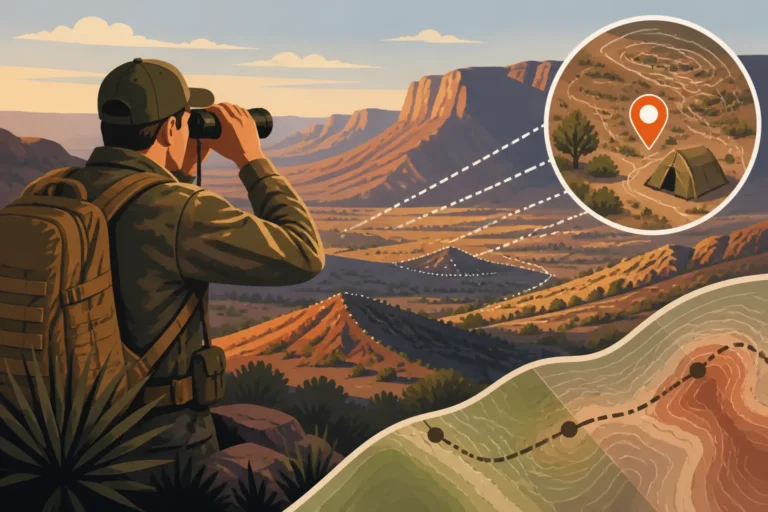
During this 14-day window, you can access the Trust Land for scouting purposes. This means walking the terrain, looking for sign, setting up trail cameras (where allowed), and generally familiarizing yourself with the area. However, it is explicitly not a hunting window. You cannot carry a weapon during this time with the intent to hunt. Your activities must clearly be for scouting, and your equipment should reflect that. Think binoculars, spotting scopes, maps (digital ones like GoHunt or onX Hunt are invaluable here), and hiking gear, but leave your bow or rifle safely stored until your actual season opens. Respecting this distinction is paramount. Violating it isn't just bending the rules; it's considered trespassing and hunting out of season, which carries significant penalties. This window is a privilege, not an invitation to push the boundaries, so use it wisely and legally.
Practical Considerations for Hunting State Trust Land
Hunting State Trust Land effectively and legally requires more than just knowing when you can be there. It demands a keen understanding of boundaries, respectful conduct, and careful planning for logistics. Failing to address these practical aspects can quickly turn an exciting hunt into a frustrating, or even illegal, experience.
Navigating Boundaries and Identifying Trust Land
One of the biggest challenges with State Trust Land is its often-fragmented nature, intermixed with private land, BLM, and National Forest. You might find a section of Trust Land completely surrounded by private ground, or long, narrow strips threading through other public holdings. This makes precise navigation absolutely essential. Relying solely on paper maps, while useful for an overview, can leave you guessing about exact boundaries, especially in broken or heavily vegetated terrain.
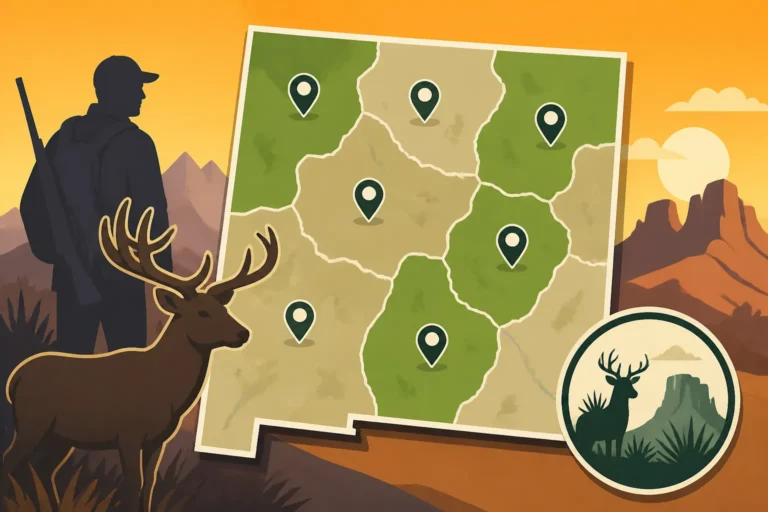
This is where modern mapping applications become your best friend. Services like onX Hunt and GoHunt provide detailed land ownership layers that clearly show you where State Trust Land begins and ends, differentiating it from private property or other federal lands. It's a wise investment, and one that could save you from an accidental trespass. Before heading out, download offline maps to your phone or GPS device, as cell service is often nonexistent in prime hunting areas. Familiarize yourself with the colors and symbols your app uses to denote different land types. Additionally, always cross-reference with official maps from the New Mexico Department of Game and Fish and the State Land Office. They also provide publicly accessible maps that you can review. For more guidance on where to find these crucial resources, check out Where New Mexico Publishes Unit Access Maps. Taking the time to understand your maps will reduce stress and keep you focused on the hunt, not on legal boundaries.
Respecting the Rules and Avoiding Issues
Being a responsible hunter on State Trust Land goes beyond just showing up on the right day. There are additional rules and ethical considerations that are important to uphold. Unlike some other public lands, extended camping is generally not allowed on State Trust Land. This means no setting up a multi-day base camp for your elk hunt. You can't just throw down a tent and stay a week. If you're looking for detailed information on this, the article Can You Camp on New Mexico Trust Land? offers specific insights. You're typically expected to pack in and out daily, or arrange camping on adjacent BLM or National Forest land if available.
Furthermore, motorized vehicle use on Trust Land is often restricted to existing roads and trails, and cross-country travel is almost always prohibited. Always look for posted signs, consult your NMDGF maps, and use your mapping apps to understand designated travel routes. The primary goal of Trust Land is revenue generation, and damaging the land through irresponsible actions like off-road driving or leaving trash detracts from that purpose. Treating these lands with the utmost respect – packing out everything you pack in, leaving no trace, and being mindful of any grazing allotments or other commercial activities – ensures that hunting access remains available for future generations. Violating Trust Land rules can be treated as seriously as trespassing on private land, leading to significant fines and the potential loss of your hunting privileges.
Planning Your Access and Egress
Finally, consider the logistical challenges of accessing State Trust Land. Due to its patchwork nature, many parcels of Trust Land can be "landlocked," meaning they are entirely surrounded by private property with no direct public road access. The article Landlocked Public Parcels in New Mexico explores this issue in more depth. This presents a significant hurdle for hunters. You might have a tag for a unit with ample Trust Land, but if you can't legally reach it, it's effectively inaccessible.
This means you absolutely must research your access points well in advance. Do not assume that if you see a patch of green on your map, you can just drive or walk to it. If the only way to reach Trust Land is by crossing private property, you must obtain written permission from the landowner beforehand. This isn't just a courtesy; it's a legal requirement in New Mexico. Without written permission, you are trespassing. The link Getting Written Permission in New Mexico provides a good overview of this process. Planning your entry and exit routes meticulously, utilizing the detailed mapping features of onX Hunt or GoHunt, is critical. This foresight prevents frustrating last-minute scrambles and ensures you can focus on the hunt, knowing your access is legitimate and secure.
Here’s a quick overview of access rules across different land types:
| Land Type | Primary Purpose | General Public Recreation Access | Hunting Access Window | Scouting Access Window | Camping Rules (General) |
|---|---|---|---|---|---|
| State Trust Land | Generate revenue for beneficiaries | Highly restricted | Only during valid hunt dates | 14 days immediately prior to hunt | Generally not allowed |
| BLM Land | Multiple-use (grazing, recreation) | Generally open year-round | During state-sanctioned seasons | Generally open year-round | Typically allowed for short periods |
| National Forest | Multiple-use (timber, recreation) | Generally open year-round | During state-sanctioned seasons | Generally open year-round | Typically allowed, often with limits |
| Private Land | Private ownership | Requires explicit permission | Requires explicit permission | Requires explicit permission | Requires explicit permission |
Disclaimer
This article is for general informational purposes only and does not constitute professional advice. Laws, prices and regulations vary by location and change over time. Consult a qualified professional for guidance on your specific situation.