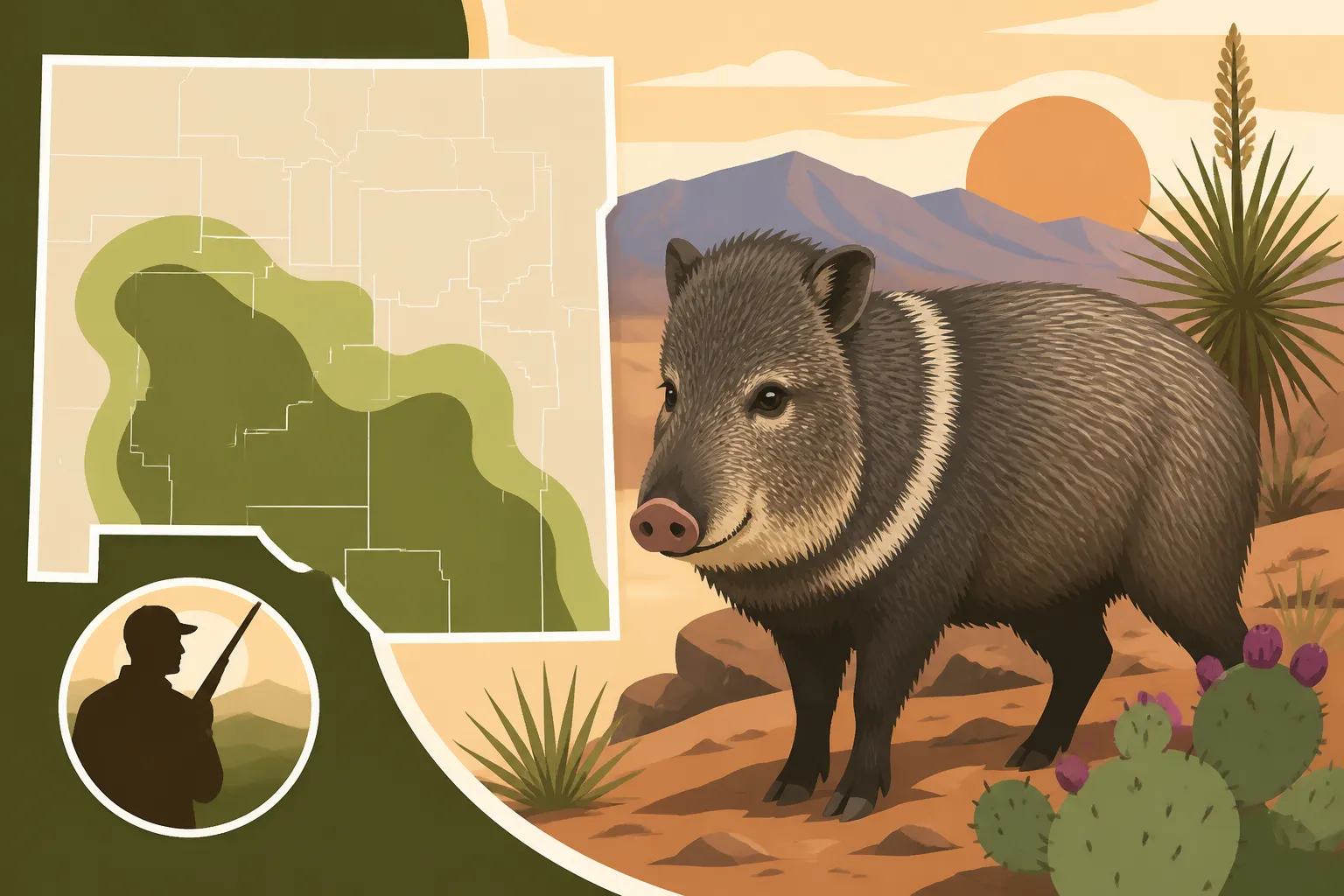
Javelina Range Across Southern New Mexico
If you've ever spent time in southern New Mexico, you've likely heard whispers of javelina – those stout, brush-dwelling creatures often mistaken for feral pigs. This confusion is common, and understanding what javelina truly are, where they live, and how they behave is crucial for anyone venturing into their desert domain, whether for wildlife viewing or hunting. This guide aims to clear up those misconceptions and provide a comprehensive look at these unique animals, helping you pinpoint their range and understand their place in the arid landscapes they call home.
Understanding Javelina: More Than Just a Pig
It's a common misconception, one that I've heard countless times around campfires and coffee shops: "Javelina are just wild pigs, right?" Actually, no, they're not. While they bear a superficial resemblance to their porcine cousins with their bristly coats and snouts, javelina are an entirely different species. They are collared peccaries, members of the Tayassuidae family, not the pig family (Suidae). This distinction isn't just biological trivia; it impacts their behavior, their diet, and where you're likely to find them. They're a truly distinct animal, perfectly adapted to the harsh conditions of the American Southwest and points south.
Physical Characteristics and Behavior
Javelina are compact animals, usually standing about two feet tall at the shoulder and weighing between 40 to 60 pounds, though some larger individuals might push 80 pounds. Their bodies are covered in coarse, grizzled hair, ranging from gray to black, often with a lighter "collar" around their neck, which gives them their full name: collared peccary. Their heads are large in proportion to their bodies, featuring a pig-like snout and small, rounded ears. What really stands out are their tusks, which are straight and sharp, unlike the curved tusks of true pigs, and are used effectively for defense and digging.
They possess keen senses, particularly an excellent sense of smell and hearing, which compensate for somewhat poorer eyesight. This allows them to navigate their dense, thorny habitat and detect predators or food sources with remarkable efficiency. When disturbed, a javelina might emit a sharp bark or a low growl, and a whole herd can make quite a racket if feeling threatened. Their defensive behavior, often a coordinated charge by the group, is a testament to their strength in numbers, a fact any hunter or hiker should respect. They aren't aggressive by nature, but they certainly won't back down if cornered or if their young are perceived to be in danger.
Social Structure and Diet
Javelina are highly social animals, typically living in herds ranging from a few individuals up to twenty or more, though average herd sizes are often around eight to fifteen. These herds are a true family unit, with all members participating in raising the young, foraging, and defending their territory. They communicate through a variety of vocalizations, scent marking, and body language, maintaining a cohesive social structure that helps them survive in challenging environments. If you find one javelina, you can almost always bet there are more close by, often bedded down in thick cover nearby.
Their diet is primarily herbivorous, consisting mainly of succulents like prickly pear cactus, agaves, mesquite beans, and various roots and tubers. They are perfectly equipped to handle the spines of cacti, often eating the entire pad, spines and all. They also consume insects, grubs, and occasionally small vertebrates, especially during leaner times. This adaptability in diet is another reason they thrive in arid landscapes where other animals might struggle. They don't need open water daily, often getting enough moisture from the plants they consume, though they will certainly visit tanks and riparian areas when available, especially during the hotter months. Understanding their diet can be a key piece of information when scouting, helping you identify promising areas with their preferred forage. Water Sources That Concentrate Desert Game are often prime locations.
Where Javelina Call Home: Southern New Mexico's Domain
When we talk about javelina in New Mexico, we're talking about the southern half of the state, almost exclusively. Their range aligns closely with the Chihuahuan Desert ecosystem, extending north into the arid and semi-arid grasslands and scrublands that characterize this vast region. It's a land of thorny brush, rugged mountains, and surprising oases, all of which javelina have learned to master. If you're heading north of, say, Socorro, your chances of encountering a javelina diminish significantly, becoming virtually nonexistent as you approach the high country of the Sangre de Cristos.
Key Geographic Regions and Units
The prime javelina country in New Mexico is concentrated in the southwest and south-central portions of the state. This includes large swaths of units like 23, 24, 26, 27, 28, 30, 32, 34, and 37. These units are predominantly Chihuahuan Desert habitat, characterized by rolling hills, broken mesas, and extensive tracts of creosote bush, mesquite, and various cacti. The Peloncillo Mountains in the bootheel, the Florida Mountains, the Little Hatchet Mountains, and the various ranges around Silver City and Deming are classic javelina strongholds. Further east, areas around the Guadalupe Mountains and the vast expanses of BLM land near Carlsbad also hold good numbers.
Successful javelina hunting often comes down to knowing the specific terrain they favor within these larger units. While they can be found in a variety of desert environments, they often gravitate towards certain features. You can use mapping tools like those offered by GoHunt to zoom in on these specific features within your chosen unit. Look for areas with dense, thorny cover, often on south-facing slopes that offer warmth in cooler months. Draw odds for javelina are generally better than for elk or bighorn, and a tag can offer a fantastic experience in these rugged lands. You can check New Mexico Javelina Draw Odds to get a sense of your chances.
Habitat Preferences and Terrain
Javelina are masters of concealment, preferring habitat that provides ample cover for bedding, escape, and thermal regulation. This means dense thickets of mesquite, catclaw acacia, tornillo, and especially prickly pear cactus. You'll often find them bedding down in these thorny fortresses during the heat of the day, emerging in the cooler morning and evening hours to feed. Their short legs are surprisingly agile, allowing them to navigate through incredibly dense brush that would stop a human in their tracks. This makes stalking them a real challenge, often requiring a slow, deliberate approach, listening for their distinctive "woofing" sounds or the rustle of leaves as they move.
While they can survive for extended periods without open water, areas near seeps, springs, or stock tanks will often concentrate javelina, especially during dry periods. These water sources also attract other desert wildlife, providing a more reliable food source in the form of succulent vegetation that thrives nearby. Steep, rocky canyons and arroyos also provide excellent travel corridors and escape routes, offering shade and shelter from the elements. When you're Hunting the Chihuahuan Desert Units, remember that these animals use every fold of the landscape to their advantage, making scouting key to finding them.
Hunting Javelina: Strategies for Success
Hunting javelina can be a uniquely challenging and rewarding experience. Unlike elk or mule deer, which often rely on open spaces and long-distance travel, javelina are brush-dwellers, and your tactics need to reflect that. It’s a hunt that often demands patience, keen observation, and a willingness to get down and dirty in the thorns. Don’t expect to glass them from miles away like pronghorn; this is a much more intimate, close-quarters affair.
Best Times and Methods
Javelina seasons in New Mexico typically fall in the late winter and early spring, often in February or March. These months are ideal because the desert temperatures are generally cooler and more pleasant for hunters, and the javelina are more active during daylight hours as they seek warmth. Early mornings and late afternoons are prime hunting times, as herds move from bedding areas to feeding grounds. Mid-day can be slow, but it’s a good time to methodically still-hunt through dense cover or sit patiently near known travel routes or water sources.
Spot-and-stalk is a popular and effective method. This involves getting to a high vantage point at dawn, often an elevated mesa or ridge, and glassing the terrain below with binoculars or a spotting scope. Focus on areas with good cover, especially south-facing slopes. Once a herd is spotted, the real work begins: planning an approach that keeps the wind in your favor and uses terrain features to stay hidden. This often means crawling, ducking, and weaving through thorny brush. Calling can also be effective; javelina will respond to distress calls or aggressive barks, often coming in to investigate, which can pull them out of thick cover. For hunters used to longer shots, getting within bow range of these animals can be a real thrill.
Essential Gear and Tips
For a successful javelina hunt, your gear selection should prioritize durability and comfort in a desert environment. Sturdy boots are non-negotiable, as you’ll be covering rocky, uneven, and often thorny ground. You’ll want boots that offer good ankle support and a tough sole. Choosing Boots for Rocky Desert Ground is critical. Layered clothing is also important, as desert mornings can be chilly and afternoons surprisingly warm, even in winter. Camouflage patterns that blend with the desert scrub, like arid or sagebrush patterns, work well.
Optics are crucial: good quality binoculars (8x or 10x) are essential for picking apart distant brush and spotting those camouflaged collared peccaries. A spotting scope can be helpful for confirming animals at longer distances before making your move. Since you'll be on foot in the desert, always carry plenty of water. Water You Must Carry on a Desert Day Hunt is not just a suggestion, it's a lifeline. A good daypack with essentials like first-aid, a knife, and navigation tools (GPS or a mapping app like GoHunt on your phone) is also vital. Remember to keep an eye out for snakes, even in cooler months; Snake Awareness on a September Archery Hunt is good advice year-round in the desert.
When it comes to firearms, anything from a .223 to a .30-06 will do the trick, as javelina are not particularly large or heavily armored animals. Shot placement is key. Bowhunters should aim for a broadhead that creates a clean pass-through. Ultimately, patience and persistence are your greatest assets. Javelina can be surprisingly elusive, even in areas with good numbers, but with the right approach, you can have a truly memorable desert hunting experience.
Common Misconceptions and Conservation
The unique nature of javelina often leads to misunderstandings, particularly regarding their identity and ecological role. Clarifying these points is important for both ethical hunting practices and effective conservation. It's easy to lump them into a category that doesn't quite fit, but their specific adaptations and behaviors deserve recognition. They are not merely an invasive nuisance, but a native species with a distinct place in the New Mexico ecosystem.
Javelina vs. Feral Hogs
One of the most persistent misconceptions is confusing javelina with feral hogs. While both are wild, pig-like animals, they are biologically distinct species, as mentioned earlier. Feral hogs are domestic pigs that have escaped captivity and established wild populations. They are invasive, destructive, and often much larger, with curved tusks. Javelina, on the other hand, are native to the Southwest and Latin America, smaller, and possess straight tusks. Their ecological impacts are also very different.
Here's a quick comparison to help distinguish between them:
| Feature | Javelina (Collared Peccary) | Feral Hog (Wild Pig) |
|---|---|---|
| Family | Tayassuidae (New World Peccaries) | Suidae (True Pigs) |
| Origin | Native to Southwest U.S. and Latin America | Domesticated pigs gone wild, invasive |
| Size | 40-80 lbs, ~2 ft tall at shoulder | 100-400 lbs+, up to 3 ft tall at shoulder |
| Snout | Shorter, more blunt | Longer, more pointed |
| Tusks | Straight, short | Curved, longer |
| Hair | Coarse, grizzled, often with a "collar" | Variable, often sparse, no distinct collar |
| Tail | Vestigial (almost none) | Long, often curly or straight |
| Young | Uniformly colored, reddish-brown | Striped or solid colored |
| Behavior | Herd animals, shy, often defensive | Sounders, highly destructive, opportunistic |
Understanding these differences is not just academic; it has practical implications for land management and hunting regulations. While feral hogs are often considered vermin and can be hunted year-round with liberal limits in many areas where they are present, javelina are managed as big game species with specific seasons and tag requirements. The ecological damage caused by feral hogs, such as rooting up native vegetation and preying on ground-nesting birds, far exceeds that of native javelina.
Conservation Efforts and Management
In New Mexico, javelina are managed by the Department of Game and Fish as a big game species, similar to Desert Mule Deer in Southern New Mexico. This means their populations are monitored, and hunting seasons and tag allocations are set to ensure sustainable numbers. The department uses harvest data, aerial surveys, and field observations to assess population health and trends. Because javelina are so reliant on specific desert habitats, factors like drought, habitat loss, and predation can all influence their numbers.
Conservation efforts often focus on habitat preservation and enhancement. Maintaining healthy desert ecosystems, including appropriate water sources and diverse plant communities, benefits javelina along with a host of other desert species. While their populations are generally stable in their core range, localized fluctuations can occur due to environmental conditions. By adhering to hunting regulations and respecting their habitat, hunters play a crucial role in the ongoing conservation of these fascinating and iconic animals of southern New Mexico.
Disclaimer
This article is for general informational purposes only and does not constitute professional advice. Laws, prices and regulations vary by location and change over time. Consult a qualified professional for guidance on your specific situation.