New Mexico Cottontail and Jackrabbit Seasons
It's easy to get caught up in the allure of New Mexico's big game draws, the trophy elk, the elusive mule deer, or the unique oryx. But for many of us, the real joy and consistent opportunity lie in the state's abundant small game. If you've ever felt overwhelmed by complex draw odds or year-long waits, finding clear, concise information about hunting New Mexico's cottontail rabbits and jackrabbits can feel like a breath of fresh air. This guide will cut through the noise, offering a comprehensive look at their seasons, habitats, and the practical tips you need to get out and enjoy the desert and mountain scrub.
The Enduring Allure of New Mexico's Small Game Hunting
There's something wonderfully foundational about small game hunting. It takes us back to basics, connecting us with the land in a direct, often less-pressured way than the big game pursuits. For many of us, it's where we started, honing skills that would later prove invaluable for larger quarry. New Mexico, with its vast tracts of public land and diverse ecosystems, offers fantastic opportunities for small game, particularly for those quick-footed cottontails and long-legged jackrabbits.
Why Small Game Still Matters to New Mexico Hunters
Small game hunting often feels like the unsung hero of the hunting world. It's incredibly accessible; you don't need to win a highly coveted draw tag, nor do you typically need specialized gear that costs an arm and a leg. For new hunters, especially youth, it's an incredible entry point into the outdoor lifestyle. The frequent action and the opportunity to hone shooting and stalking skills without the immense pressure of a once-in-a-lifetime tag are invaluable. It teaches patience, observation, and quick decision-making – all essential traits for any hunter. Imagine a crisp fall morning, walking through a mesquite flat, the sun just warming your back, and a cottontail bursting from beneath a bush. That kind of experience, rich in simplicity and excitement, is why small game remains so vital to the hunting tradition here. It’s also a fantastic way to introduce someone to the joy of a successful hunt and the bounty of wild game meat.
General Small Game Season Structure in New Mexico
Unlike the intricate, often unit-specific draw systems for elk or deer, New Mexico's small game seasons are typically much broader and more forgiving. You won't find yourself poring over complex hunt codes or worrying about specific weapon types tied to dates, at least not to the same degree as big game. Generally, these seasons run for an extended period, often from early fall through late winter, providing ample opportunity to get afield. This structure encourages frequent outings, allowing hunters to learn their local areas, observe animal behavior over time, and simply enjoy more days in the field. It’s a stark contrast to the often high-stakes, single-chance nature of big game draws, offering a refreshing simplicity. Checking the annual New Mexico Game and Fish regulations booklet is always your best bet for the most current information, as season dates can shift slightly year to year. The team at GoHunt also does a great job of breaking down regulations, making it easy to see what applies to you. For a broader overview of seasons, you might find New Mexico Small Game Seasons at a Glance helpful.
Deciphering New Mexico's Cottontail Rabbit Season
Cottontail rabbits are, without a doubt, one of New Mexico's most popular small game species. They are found virtually everywhere, from the desert floor to the mountain foothills, wherever there's enough cover and food. Their abundance and the challenge they present make them a perennial favorite.
Typical Season Dates and Bag Limits for Cottontails
The cottontail season in New Mexico is wonderfully generous, typically opening in the early fall, often around September 1st, and running all the way through February or even into March of the following year. This long season offers hunters plenty of opportunities to get out, whether you prefer the mild temperatures of early autumn or the crisp air of mid-winter.
As for bag limits, these can vary, but a common regulation allows for a daily bag limit, and a possession limit that’s often double the daily bag. For example, you might be allowed to take 10 cottontails per day, with a possession limit of 20. This allows hunters to enjoy a productive day in the field without feeling overly restricted, while still managing the population responsibly.
Cottontails thrive in diverse habitats, but you'll almost always find them where there's dense cover adjacent to feeding areas. Think brushy draws, thickets of mesquite, cholla cactus patches, rocky outcroppings with good vegetation, and the edges of agricultural fields. They love environments that offer quick escape routes and plenty of places to hide. Water sources, even small ones like stock tanks, are magnets for them in arid regions. Keep an eye out for their droppings, which look like small, round pellets, and well-used trails leading into dense brush.
Strategies for Finding and Hunting New Mexico Cottontails
Hunting cottontails is a relatively straightforward affair, but it requires patience and a keen eye. The most common and often most effective method is simply walking. Whether you're still-hunting slowly through prime habitat or pushing through brushy cover, the goal is to surprise them and get a shot when they bolt. Mornings and late afternoons are generally the best times to hunt, as cottontails are crepuscular, meaning they are most active during dawn and dusk. During these times, they are often out feeding or moving between cover and feeding areas.
When walking, try to move against the wind, if possible, to help mask your approach. Pay close attention to any movement in the brush ahead of you. When a rabbit flushes, it often runs a short distance and then stops, giving you a quick shot opportunity. A .22 rifle or a small-gauge shotgun (like a .410 or 20 gauge) with birdshot are excellent choices for cottontail hunting. For safety, always be aware of your surroundings, especially if hunting with a group. It’s a good idea to wear some visible color, even though blaze orange isn't always mandatory for small game. Take a look at Blaze Orange Requirements Through the Season for general guidance on visibility.
Consider focusing your efforts around natural water sources, even small ones. In the desert, these can be veritable hubs of activity for all kinds of wildlife, including cottontails. While being ethical around water is crucial, observing and hunting near these areas can be highly productive. For tips on navigating these critical areas, you might read Water Sources and Ethics in Desert Hunting.
Navigating New Mexico's Jackrabbit Season and Tactics
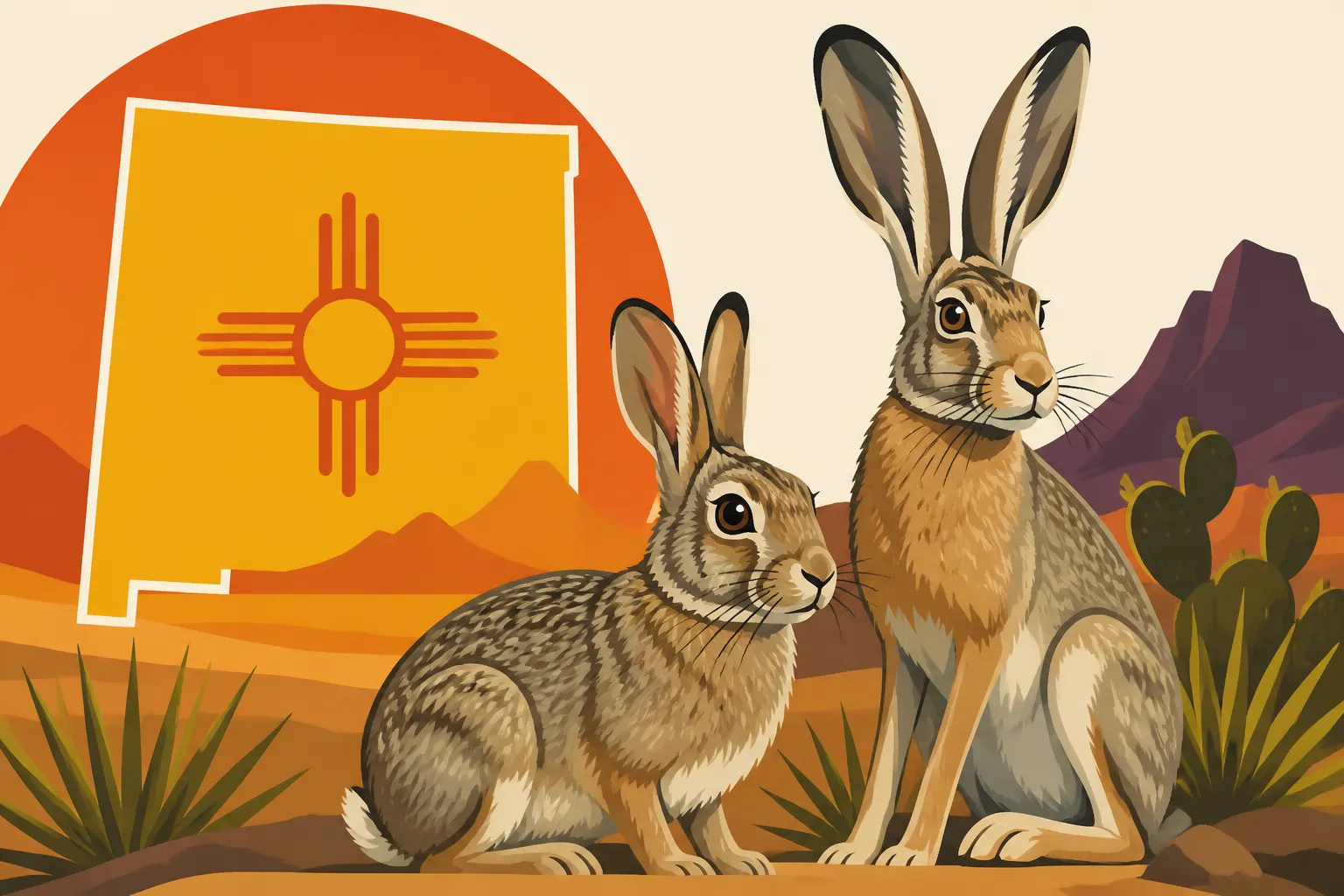
Jackrabbits, with their towering ears and incredible speed, are a completely different challenge than their cottontail cousins. They are creatures of the open country, built for evasion, and spotting one before it sees you can be half the battle.
Jackrabbit Season Length and Common Regulations
One of the most appealing aspects of hunting jackrabbits in New Mexico is the incredible length of their season. For the most part, jackrabbits are considered unclassified or varmint species, and their season is often open year-round with no bag or possession limits. This provides continuous opportunities for hunters, making them a perfect quarry for those times when big game seasons are closed or when you just want to get out and shoot. Always double-check the current regulations, as specific units or public land management areas might have local restrictions, but generally, the jackrabbit season is the most open hunting opportunity in the state.
New Mexico is home to both black-tailed jackrabbits, which are widespread across the state, and the less common white-sided jackrabbit, primarily found in the southwestern corner. Both are impressive in size and speed, and both offer a challenging hunt. Their habitat preference leans heavily towards wide-open spaces: grasslands, desert flats, sagebrush country, and thinly vegetated rangeland. Unlike cottontails that dive into dense brush, jackrabbits prefer to rely on their incredible vision, hearing, and explosive speed to escape danger. They’ll often hide in plain sight, blending seamlessly with their surroundings until the last possible moment.
Effective Hunting Approaches for New Mexico Jackrabbits
Hunting jackrabbits often involves a different approach than cottontails. Since they favor open terrain, long-range shooting skills become much more critical. Spot and stalk is a classic method: use good optics to scan distant hillsides, open flats, and the base of prominent bushes. Once you spot a jackrabbit, plan your approach carefully, using terrain features to break up your silhouette. They have phenomenal eyesight, so staying low and moving slowly is key.
For weaponry, a .22 rifle can work at closer ranges, but many hunters prefer something with a flatter trajectory and more knockdown power, like a .17 HMR, .22 WMR, or even a .223 Rem for longer shots. These animals are surprisingly tough for their size. Shotguns can be effective if you can get them to flush close, but often, they'll be out of effective shotgun range quickly.
Road cruising can be an effective way to cover ground and spot jackrabbits, particularly on public land with established two-track roads. However, always be mindful of legal shooting hours and distance from roads or vehicles. New Mexico has specific rules regarding hunting from or immediately next to a vehicle, which you should always clarify in the current regulations. Rules on Hunting From a Vehicle can give you a better idea of these limitations.
Some hunters also find success using electronic calls to pique a jackrabbit’s curiosity, much like you might for coyotes. If you're considering this, verify the legality for jackrabbits in the current regulations, as rules can differ between varmints and big game. You can learn more about general electronic call usage from Electronic Calls for Predators and Varmint Hunting. The key to jackrabbit hunting is patience, good optics, and being prepared for a quick, often challenging shot.
| Feature | Cottontail Rabbit | Jackrabbit |
|---|---|---|
| Typical Season | Fall through late winter (Sept-Feb/March) | Generally open year-round |
| Bag Limit | Daily and possession limits often apply (e.g., 10/20) | Often no bag or possession limit |
| Habitat | Brushy draws, thickets, rocky cover, field edges | Open grasslands, desert flats, sagebrush, rangeland |
| Common Weapon | .22 rifle, shotgun (.410, 20ga) | .22 rifle, .17 HMR, .22 WMR, .223 Rem |
| Hunting Style | Walking, jump-shooting, dogs, still-hunting | Spot and stalk, road cruising, long-range shooting |
| Challenge Level | Moderate, quick shots at close range | High, requires good optics and shooting skills |
| Meat Quality | Excellent table fare | Edible, but often tougher, gamey |
Essential Regulations and Responsible Small Game Hunting in New Mexico
Even for small game, understanding and adhering to regulations is paramount. Being a responsible hunter means knowing the rules, respecting the land, and practicing ethical conduct in the field.
General Licensing and Hunter Education Requirements
To hunt cottontails and jackrabbits in New Mexico, you'll need a valid New Mexico hunting license. While you don't typically need specific draw tags or endorsements for these small game species, that base license is your ticket to the field. For residents and nonresidents alike, this is the fundamental requirement.
Furthermore, New Mexico has a hunter education requirement for most hunters. If you were born after January 1, 1970, you generally need to have completed an approved hunter education course to purchase a license. There are exemptions, of course, such as those participating in the Mentored Youth Hunter Program, which allows younger hunters to experience the field under the direct supervision of an experienced adult. It's a fantastic program for getting kids started safely. You can find more details on The New Mexico Hunter Education Requirement. Even if you're exempt, a hunter education course is always a good idea for solidifying safe and ethical practices.
Ethical Practices and Public Land Access for Small Game
New Mexico boasts an incredible amount of public land—BLM, National Forests, and State Trust Lands—where small game hunting opportunities abound. However, with this privilege comes the responsibility to know and respect land boundaries. Always carry maps, whether paper or digital (like those available through GoHunt), that clearly show land ownership. Accidentally crossing onto private property without permission is trespassing, and it's a serious offense. If you need to access public land that is landlocked by private property, you absolutely must obtain written permission from the landowner to cross their ground. It’s not just a courtesy; it's the law. The article Written Permission Is Required to Cross Private New Mexico Ground delves deeper into these critical requirements.
Beyond legalities, ethical considerations are vital. Always practice good sportsmanship. This includes picking up all spent shell casings, packing out any trash, and leaving the land cleaner than you found it. Avoid hunting too close to roads, trails, or developed areas where other people might be recreating. Be considerate of other hunters and land users. For example, if you're hunting in a desert unit, be mindful of critical water sources. While you can hunt near them, proper etiquette and understanding local rules regarding "sitting water" are important.
Finally, always double-check the current New Mexico Hunting Rules & Information booklet before each season. Regulations can change, and it’s your responsibility to stay informed. Many outfitters and resources, including GoHunt, offer breakdowns of these regulations, but the official document is your ultimate source. You can generally find where to access this information by checking Where the Current New Mexico Regulations Are Posted. By following these guidelines, we ensure that the tradition of small game hunting in New Mexico remains vibrant and accessible for generations to come.
Disclaimer
This article is for general informational purposes only and does not constitute professional advice. Laws, prices and regulations vary by location and change over time. Consult a qualified professional for guidance on your specific situation.