Where Rocky Mountain Bighorn Live Up North
It's a dream many of us share: spotting the unmistakable curl of a bighorn ram high on a New Mexico mountain face. These incredible animals represent the pinnacle of Western hunting, not just for their trophy status, but for the sheer challenge and breathtaking beauty of the country they call home. If you've ever wondered where exactly these magnificent creatures carve out their existence in the rugged northern reaches of our state, and what it truly takes to even look for them, you're in the right place. This guide is all about pulling back the curtain on the secretive lives of Rocky Mountain Bighorn Sheep in New Mexico's north.
The Majestic Domain: Where Rocky Mountain Bighorn Roam in Northern New Mexico
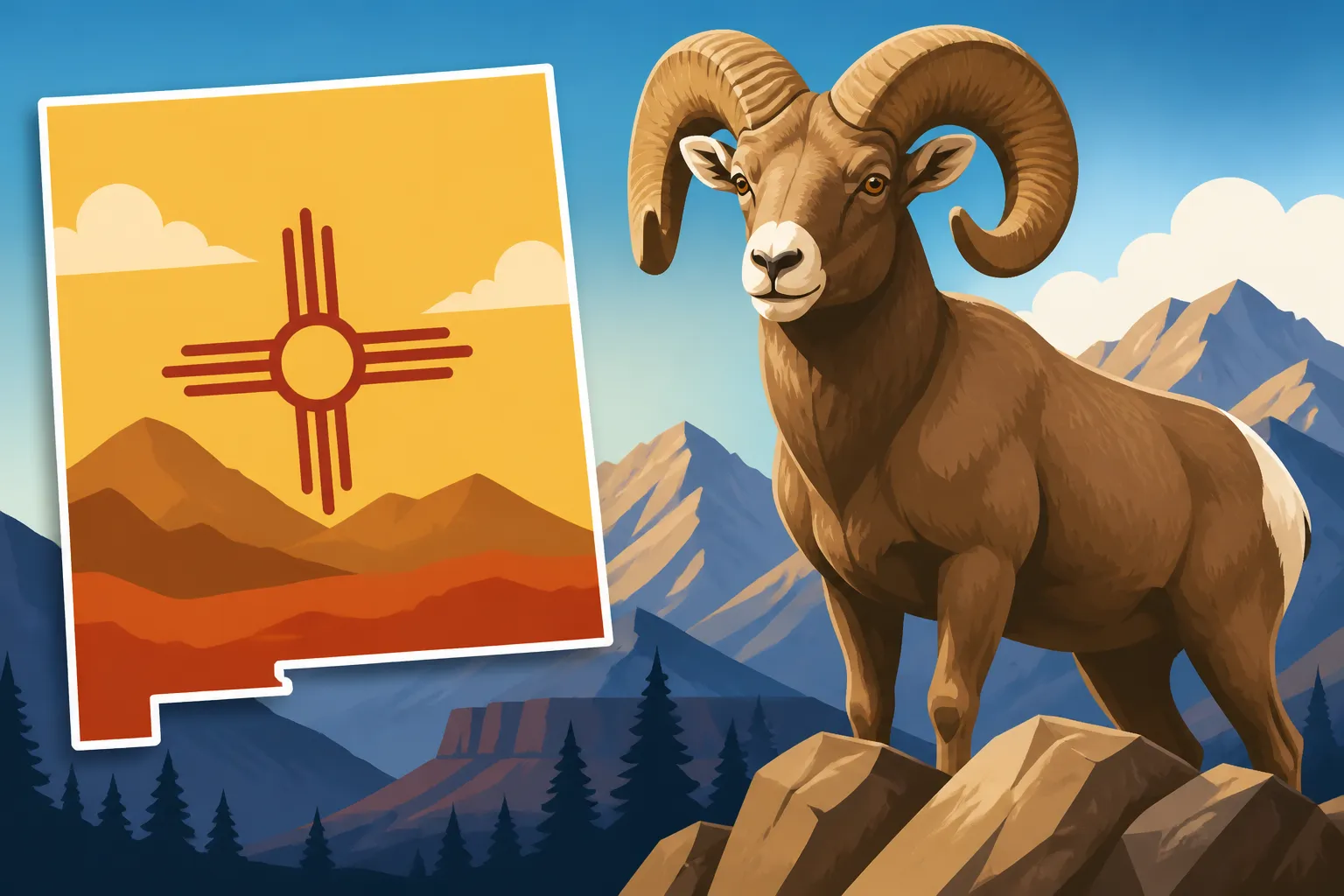
When you talk about Rocky Mountain Bighorn Sheep in New Mexico, you're primarily talking about the northern, higher elevation ranges, specifically within the Sangre de Cristo Mountains. These aren't creatures of the desert floor or the rolling foothills; they are truly mountain dwellers, preferring the most precipitous and unforgiving terrain our state has to offer. They thrive where few other large game animals, let alone humans, dare to tread with regularity. This preference for extreme vertical escape country is hard-wired into their survival instincts.
The Sangre de Cristo Mountains: A Prime Stronghold
The Sangre de Cristo range, often called the "Blood of Christ" mountains for their stunning alpenglow, stretches from southern Colorado down into north-central New Mexico. Within this grand sweep of peaks and canyons, specific areas provide the perfect blend of habitat components that bighorn sheep require. We're talking about units deep in the wilderness, places that demand significant effort just to set foot in, let alone hunt.
These mountains offer towering peaks, often exceeding 13,000 feet, dramatic cliff bands, and a mosaic of alpine tundra, spruce-fir forests, and high-elevation meadows. It's a landscape that is as beautiful as it is brutal. When hunters mention the northern bighorns, their minds immediately go to these rugged, high-altitude havens. Years of dedicated New Mexico Bighorn Recovery efforts have helped re-establish and bolster populations in these historic ranges.
Hunting these areas isn't just about drawing a tag; it's about committing to a physical and mental ordeal. The terrain alone is enough to send many packing, but for those who dream of a bighorn, the Sangres are where the legend lives. You need to be prepared for drastic weather changes, steep ascents, and descents that test even the most seasoned mountaineers, all while carrying your hunting gear.
The Latir Wilderness and Pecos Wilderness: Remote Sanctuaries
Within the broader Sangre de Cristo range lie specific wilderness areas that serve as core habitats for Rocky Mountain Bighorn. The Latir Wilderness, north of Questa, and the Pecos Wilderness, east of Santa Fe and north of Las Vegas, are prime examples. These areas are designated wilderness, meaning motorized access is strictly prohibited. You'll be using your boots, or perhaps a trusty pack string, to get in.
The Latir Wilderness is known for its incredible high-country lakes and stunning cirques, all surrounded by some of New Mexico's tallest peaks. For bighorn, this means endless rocky outcrops, steep slopes for escape, and relatively open high country for feeding and spotting predators. It's a place of breathtaking isolation, where solitude is almost guaranteed.
Similarly, the Pecos Wilderness encompasses a vast expanse of high-alpine territory, with elevations climbing well above timberline. The sheer scale and ruggedness of the Pecos make it an ideal sanctuary for bighorn sheep. The challenges of hunting here are immense, from navigating the maze of canyons and ridges to dealing with the thin air at extreme elevations. Understanding Terrain That Hides an Approach at 10,000 Feet becomes absolutely critical in such an environment. These remote sanctuaries are vital for the sheep's survival, providing them with the seclusion and protection they need from human disturbance and a wide-open view for spotting danger.
Unpacking the Habitat: What Bighorn Need to Thrive
Bighorn sheep aren't just in the mountains; they are adapted specifically to a very particular type of mountain habitat. Their physiology and behavior are intrinsically linked to the steep, rocky, and often exposed landscapes they inhabit. Understanding these environmental demands is key to figuring out where they might be, and, more importantly, why they are there.
Steep, Rugged Terrain and High Elevations
The most defining characteristic of bighorn habitat is its vertical nature. These sheep prefer country that is steep, rocky, and riddled with cliffs, ledges, and breaks that provide immediate escape routes from predators like mountain lions and bears. You'll find them on precipitous slopes where a human might struggle to keep their footing, but a bighorn simply hops from one tiny ledge to the next. This is their kingdom, where their incredible agility and specialized hooves give them a distinct advantage.
They utilize these vertical sanctuaries for bedding, lambing, and evading danger. A ram might be feeding in a relatively open alpine meadow, but he'll always be within a stone's throw of a sheer cliff face or a series of ledges he can disappear into in seconds. This reliance on escape terrain means that flat, timbered areas, while potentially offering food, are generally avoided unless they're directly adjacent to severe broken country. Hunters often must contend with significant elevation changes and technical climbing during a bighorn pursuit, truly putting their Altitude Preparation for a Gila Elk Hunt training to the test, even if they're in the Sangres.
The high elevations themselves provide cooler temperatures, especially in the summer months, and can sometimes mean less dense vegetation, offering better visibility for spotting potential threats. It's a demanding environment for all creatures, but the bighorn sheep are perfectly evolved for it, relying on their acute eyesight and ability to navigate treacherous ground with ease.
Alpine Meadows and Sparse Timber
While the rugged cliffs provide security, bighorn sheep also need food. This comes primarily from the alpine meadows and sparse timber found at higher elevations. They are grazers, feeding on a variety of grasses, forbs, and shrubs that grow above the tree line or in openings within the high-elevation forests. These meadows are often interspersed with rocky outcrops and timbered patches, creating a mosaic habitat.
During the warmer months, these meadows are flush with nutritious vegetation, providing ample forage. In winter, they might move to lower, south-facing slopes where snow depth is less, exposing crucial forage. However, they rarely abandon the broken country entirely, always seeking that balance between food and security. You'll often find them transitioning between these two types of habitat throughout the day—grazing in an open patch then retreating to a sun-warmed ledge for a mid-day rest.
The timber they do utilize tends to be sparse, allowing for good visibility. Thick, dark timber is generally avoided, as it can hide predators and impede their ability to survey their surroundings. When you're scouting, look for benches or "parks" within the high country that are close to severe cliff bands. These are the sweet spots.
Scouting and Access: Pinpointing Bighorn Opportunities
Getting a bighorn tag in New Mexico is like winning the lottery – the New Mexico Bighorn Sheep Draw Odds are famously long. But even if you beat the odds, the real work is just beginning. Finding these sheep in their vast, vertical domains requires meticulous scouting, both virtually and on the ground. This isn't a species where you just show up and hope for the best.
E-Scouting and Topographical Maps
Your scouting journey for bighorn begins long before you ever set foot in the mountains, starting with detailed e-scouting. This involves poring over topographical maps and satellite imagery to identify potential habitats. Look for areas with significant elevation changes, large cliff bands, steep, broken slopes, and high alpine basins that are difficult to access. Services like GoHunt are invaluable for this, allowing you to layer different map types and identify public land boundaries.
The key is to understand the "contour lines." Tight, closely spaced lines indicate steep terrain—exactly what you're looking for. Identify potential travel corridors, natural funnels, and areas that provide both forage and escape cover. Pay close attention to south-facing slopes, as these often melt out earlier in the spring and hold less snow in winter, making them attractive to sheep. E-Scouting a New Mexico Unit Before the Season can help you identify high-probability areas and plan your physical scouting trips more efficiently, saving you countless hours of unproductive hiking.
It's also crucial to identify access points. Where are the trailheads? How many miles of hiking are involved to reach the sheep's core habitat? Are there any seasonal road closures that might affect your plans? You need a clear understanding of the geography before you ever load up your pack.
Physical Reconnaissance and Glassing Strategies
Once you've narrowed down your potential areas through e-scouting, it's time for boots on the ground. However, "boots on the ground" for bighorn often means "optics on the tripod." You're not going to stumble into these sheep; you're going to glass them up. This means finding a high vantage point that overlooks vast expanses of suitable bighorn habitat.
Spend hours, literally hours, patiently picking apart the terrain with high-quality optics. A good spotting scope on a sturdy tripod is non-negotiable. Look for any movement, any unnatural shape, any patch of white that might be a ram's rump against the grey rock. Often, a ram will appear as nothing more than a tiny speck that slowly resolves into a sheep as you increase magnification. This is where Spotting Scope Power for Open Country truly shines.
The strategy is to systematically grid-glass entire mountain faces, cliff bands, and high basins. Don't just scan; dissect the landscape piece by piece. Bighorn sheep are incredibly well-camouflaged, and they don't move around like elk or deer. They often stand motionless for long periods, or bed down in spots that perfectly blend with their surroundings. Patience is your most potent weapon during physical reconnaissance, and be prepared to spend days doing nothing but glassing.
Navigating Draw Odds and Regulations
Drawing a New Mexico bighorn tag is a monumental achievement, a testament to luck and persistence, as there are no preference points to improve your New Mexico Bighorn Sheep Draw Odds. Each year, everyone starts from scratch with equal opportunity, emphasizing the importance of doing your homework on choice order strategy. The draw is an annual event, and many hunters apply for decades before finally pulling a tag.
Once you have that coveted tag, understanding the specific regulations is paramount. New Mexico has very particular rules regarding bighorn sheep, including ram curl requirements. You need to know exactly what constitutes a legal ram before you even consider squeezing the trigger. This means thoroughly Reading a New Mexico Hunt Code Before You Apply and reviewing it again once you have a tag in hand.
Furthermore, these hunts are often scheduled during periods when the sheep are in their most predictable locations, such as the rut, but access and weather can still be major factors. Be aware of the season dates, any specific unit boundaries, and whether you're hunting Rocky Mountain or Desert Bighorn (though for northern New Mexico, it's strictly Rocky Mountain). Your planning needs to be as precise as your shooting, because opportunities like this are once-in-a-lifetime for most.
The Reality of the Pursuit: Challenges and Conservation
The journey to hunt a Rocky Mountain Bighorn in New Mexico is far more than just a hunt; it's an epic adventure that tests a hunter's limits in every conceivable way. From the physical demands to the emotional highs and lows, it’s an experience that leaves an indelible mark.
The Sheer Difficulty of a Bighorn Hunt
Let’s be honest, bighorn hunting is not for the faint of heart or the casually prepared. The physical demands are immense. You’ll be hiking, often off-trail, at extreme elevations, gaining and losing thousands of feet of vertical gain each day. The air is thin, the sun can be brutal, and sudden mountain storms can turn a beautiful day into a treacherous ordeal in minutes. You need to be in peak physical condition, capable of carrying a heavy pack over difficult terrain for multiple days. This isn't just a suggestion; it's a requirement for success and, frankly, for safety.
Beyond the physical, there’s a significant mental component. You will likely spend days glassing, covering vast distances with your optics, seeing nothing but rocks and shadows. The patience required is immense, and it’s easy to get discouraged. Finding a legal ram is a challenge in itself, and then closing the distance on an animal that lives in escape country is another hurdle entirely. Many hunters who draw a tag don't successfully harvest a bighorn, simply because the mountain wins. The commitment, the sheer willpower to keep pushing, even when your body screams for rest, is what truly defines a bighorn hunter.
The financial investment is also considerable. Beyond the tag fees and licenses, you’ll be looking at specialized gear—optics, clothing, high-altitude camping equipment—and potentially the cost of an outfitter or packer to help you get into the remote country. This all adds up to a truly significant commitment, making it understandable why such a tag is so deeply coveted.
Conservation Efforts and Herd Management
The existence of Rocky Mountain Bighorn Sheep in New Mexico is a conservation success story. Decimated by disease and overhunting in the late 19th and early 20th centuries, these herds have been slowly and painstakingly rebuilt through dedicated efforts by state wildlife agencies and conservation organizations. Programs involving reintroduction, habitat improvement, and disease management have been critical. The number of tags issued each year is extremely limited, reflecting the fragile nature of these populations and the commitment to sustainable management.
These strict tag allocations and hunting seasons are not just about creating an exclusive hunting experience; they are crucial tools for herd management. They ensure that harvest levels are sustainable, allowing populations to grow and thrive. Diseases, particularly those transmitted from domestic sheep, remain a constant threat, and wildlife managers are vigilant in monitoring herd health. When you participate in a bighorn hunt, you are not just a hunter; you are part of a larger conservation effort, helping to fund and maintain these magnificent animals for future generations.
It's a delicate balance, allowing a limited number of hunters to pursue these iconic animals while safeguarding the long-term health and viability of the herds. The challenges faced by bighorn sheep are ongoing, from habitat encroachment to climate change, and every hunter who draws a tag has a responsibility to contribute to their continued survival through ethical hunting practices and support for conservation.
| Northern New Mexico Bighorn Hotspots | Primary Characteristics | Hunting Challenge |
|---|---|---|
| Latir Wilderness | Extreme elevation, alpine lakes, steep cirques | Very remote, non-motorized access, severe weather |
| Pecos Wilderness | Vast, high-alpine terrain, extensive cliff systems | Large area to cover, high altitude, physical endurance |
| Wheeler Peak Wilderness | New Mexico's highest peak, tundra, rocky slopes | Highest elevations, rugged, can be crowded with hikers |
This table provides a glimpse into the challenging, yet rewarding, landscapes where you might find New Mexico's Rocky Mountain Bighorn Sheep. Each area presents its own unique set of circumstances, but all demand respect, preparation, and an unyielding will.
Disclaimer
This article is for general informational purposes only and does not constitute professional advice. Laws, prices and regulations vary by location and change over time. Consult a qualified professional for guidance on your specific situation.