Desert Mule Deer in Southern New Mexico
Chasing mule deer in the vast, unforgiving expanses of Southern New Mexico can be a humbling experience. These are not the timber deer of the high country, and if you approach them with the same tactics, you'll likely go home empty-handed and exhausted. This guide will walk you through the unique challenges and rewarding strategies for finding success with desert mule deer in New Mexico’s sun-baked landscapes.
Understanding the Desert Mule Deer Habitat in Southern New Mexico
The terrain itself is your biggest teacher when it comes to desert mule deer. It dictates their movement, their feeding habits, and where they choose to bed down during the scorching days. Forget dense timber; think endless vistas, rocky arroyos, and sparse, tenacious vegetation.
The Arid Landscape and Its Challenges
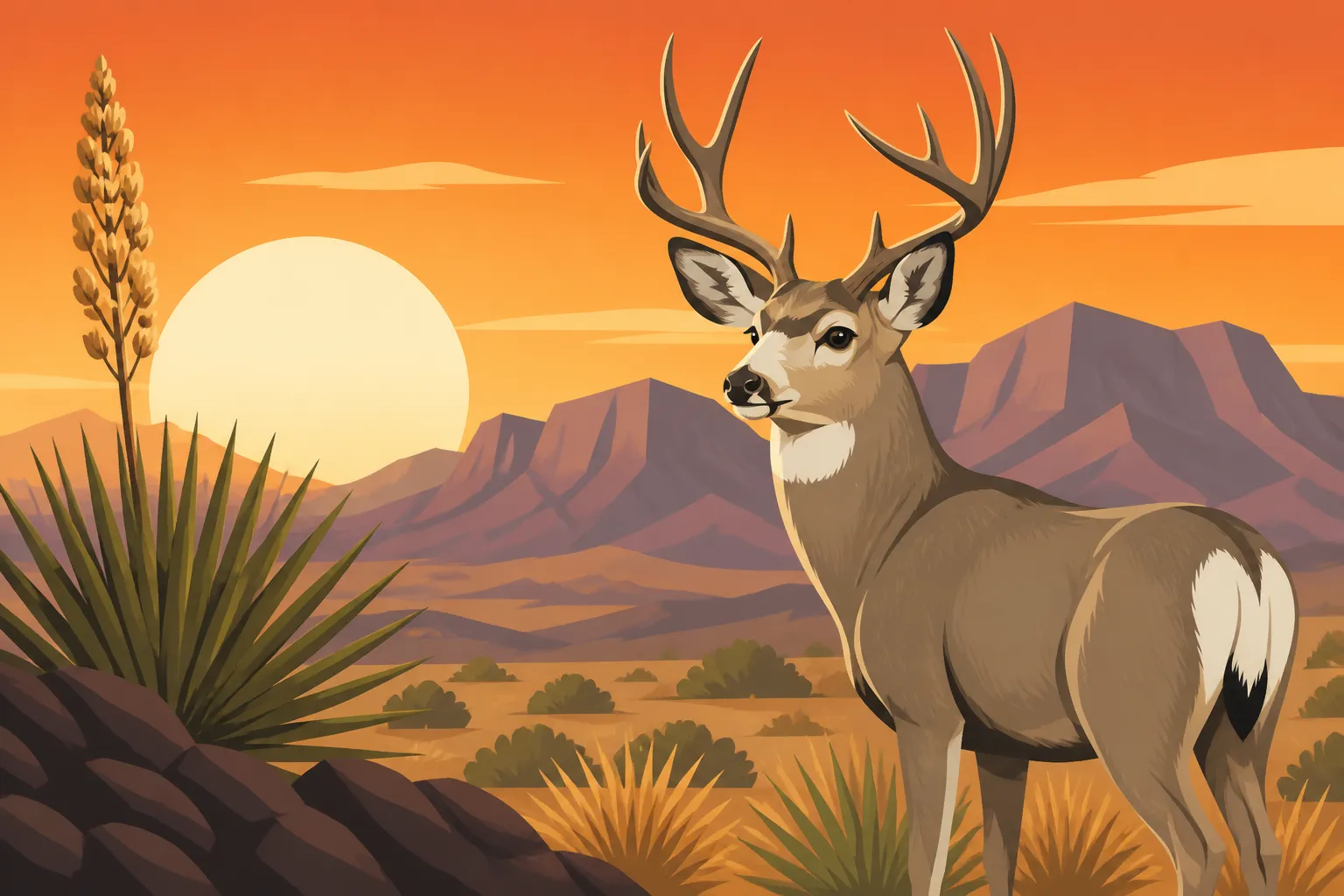
Southern New Mexico's mule deer live in a world defined by aridity. We're talking about units where the average rainfall is minimal, and the cover is often nothing more than a few scattered mesquite bushes, prickly pear cactus, and ocotillo. This sparse environment forces these deer to be incredibly resilient and, frankly, masters of disappearing in plain sight. They use every fold in the ground, every shadow cast by a distant mountain, and every cluster of brush to their advantage. A deer that would stick out like a sore thumb in a Montana pine forest can vanish into a seemingly barren hillside here.
The challenges for a hunter are immediate and obvious: visibility is immense, but so is the distance a deer can travel undetected. Water sources, while scarce, become critical focal points, especially during dry periods. Understanding the subtle nuances of this landscape – the subtle washes that funnel movement, the south-facing slopes that catch morning sun, the north-facing slopes that offer afternoon shade – is far more important than knowing specific bedding thickets, which are rare. It's about reading the broad strokes of the land.
Key Southern New Mexico Units for Desert Mule Deer
While it's impossible to list every single productive unit, Southern New Mexico offers a broad range of units characterized by their desert or semi-desert landscapes. You'll find yourself hunting vast stretches of Bureau of Land Management (BLM) ground, interspersed with state trust land and private ranches. These units often feature low-lying mountain ranges, volcanic mesas, sprawling grasslands broken by drainages, and deep canyon systems. Think of units encompassing areas like the "Bootheel" or the expansive plains east of the Rio Grande.
These aren't always units with the highest deer densities, but they often hold bucks that have grown old and wise due to the challenges of the terrain and the lower hunting pressure in some remote areas. Successful hunters learn to appreciate the subtle differences in these units – a unit with more cholla cactus might offer different cover than one dominated by creosote bushes. Researching your unit thoroughly, understanding its primary vegetation, and recognizing potential travel corridors carved by washes are crucial first steps.
How Drought and Rainfall Affect Desert Deer
The lifeblood of any desert ecosystem is water, and Southern New Mexico is no exception. The amount of rainfall, or lack thereof, directly impacts everything from forage availability to deer movement. A dry spring and summer mean less lush vegetation, forcing deer to travel farther for food and concentrate around remaining water sources. This can be a double-edged sword for hunters: deer may be more predictable around water, but they might also be in poorer body condition with less impressive antler growth.
Conversely, a wet year, especially one with strong monsoons, can make deer hunting incredibly difficult. The desert floor explodes with green growth, and temporary water sources appear everywhere. This scatters the deer, making them less reliant on traditional water holes or established feeding grounds. They can find sustenance and hydration almost anywhere, turning the hunt into a vast game of hide-and-seek. Understanding How Drought Affects Desert Deer Numbers is key to setting realistic expectations and adapting your hunting strategy.
The Life Cycle and Behavior of Southern New Mexico Mule Deer
Desert mule deer aren't just smaller versions of their northern cousins; they've adapted unique behaviors to survive their harsh environment. Their rut timing, movement, and even what they choose to eat are all finely tuned to the rhythms of the desert.
When the Desert Mule Deer Rut Actually Starts
Unlike the fairly consistent November rut of mule deer further north, the desert mule deer rut in Southern New Mexico can be a bit more unpredictable, often starting later, typically peaking from late December into mid-January. This timing is heavily influenced by environmental factors, especially rainfall and temperature, which in turn affect the does’ estrus cycles. A mild, wet fall might see an earlier peak, while a harsh, dry one could delay it. This later rut timing means that by the time rifle seasons roll around for many of these desert units, you might catch the very beginning of pre-rut activity, or perhaps even the peak if your hunt is in late December or early January.
During this period, bucks become much more visible, abandoning their bachelor groups and often covering vast amounts of ground in search of receptive does. They'll drop their guard a little, making them more susceptible to spotting. Knowing this window is critical, as it provides some of the best opportunities to target mature bucks who are normally highly reclusive. It's a stark contrast to the early archery seasons where bucks are still firmly in their summer patterns.
Movement Patterns and Bedding Habits
Desert mule deer are masters of energy conservation and concealment. During daylight hours, especially as the sun climbs, they are incredibly adept at finding shade, whether it's under a mesquite thicket, nestled against a rock outcropping, or tucked into a cut bank in an arroyo. Their bedding sites are usually chosen with a clear escape route in mind and often positioned to catch any passing breeze. They'll rarely bed in wide-open country without some form of visual barrier.
Their movement patterns are largely dictated by the sun and the need for food and water. Early mornings and late evenings are prime feeding times, when temperatures are cooler. During these periods, they'll move from bedding areas to foraging grounds and back, often utilizing the labyrinthine network of washes and canyons as natural travel corridors, or for concealment. These washes act like deer highways, offering both shade and a hidden path through otherwise open country. Learning to identify these subtle travel routes and potential bedding locations is a skill honed over many hours of glassing.
Diet and Foraging in Arid Environments
Desert mule deer are true generalists when it comes to their diet, which is a necessity in an environment where preferred forage can be scarce. They browse on a variety of plants, including mesquite beans, various forbs, cacti (especially prickly pear pads), and the tender shoots of desert shrubs. When rains come, they'll quickly capitalize on new green growth. During dry spells, they might rely more heavily on browse that is less palatable to other animals or seek out specific plants that retain moisture.
This adaptability in their diet means you can find them in a variety of locations, but their presence is always tied to available food sources. Look for areas with a diversity of plant life, or where recent rainfall has spurred new growth. Observing tracks and droppings can tell you what they’ve been eating and where they’ve been foraging most recently. Often, the densest pockets of deer will be found where there's a confluence of diverse forage and reliable water, which brings us to our next point.
Essential Tactics for Desert Mule Deer Hunting
Hunting desert mule deer requires a shift in mindset and a different skill set than hunting in timbered mountains. It's a game of patience, optics, and covering ground intelligently.
Spot and Stalk in Open Country
The overwhelming majority of successful desert mule deer hunts are accomplished through spot and stalk. You simply cannot "still hunt" or "drive" these vast, open landscapes effectively. The key is to get to a high vantage point before first light and use high-quality optics to systematically pick apart the landscape. This is where your glassing skills truly shine. You're not just looking for a whole deer; you're looking for a flicker of an ear, a patch of antler, an unusual shadow, or a horizontal line that doesn't quite fit the vertical brush.
Once a buck is spotted, the real chess match begins. The stalk is often long, arduous, and requires extreme care to stay out of sight, using every piece of available terrain for cover. Wind direction is absolutely critical in these open areas, as thermals can be tricky, especially in canyon systems. Planning your route carefully, understanding the topography, and being prepared to crawl long distances are all part of the equation. Before you even set foot on the ground, diving deep into mapping software like GoHunt will give you a serious edge, allowing you to identify potential glassing knobs and plan your stalk routes. You can learn more about methods like The Grid Glassing Method, Step by Step to maximize your scanning efficiency.
Utilizing Water Sources
In an arid environment, water is life, and that holds true for desert mule deer. During dry periods, water sources become magnets for all wildlife. These can be natural seeps, small springs, or man-made stock tanks. While New Mexico has strict rules about baiting, legally hunting near a natural or artificial water source is a time-honored and effective tactic, especially during the early season when temperatures are high.
The trick is to identify the most reliable water sources in your unit and scout them for sign. Look for fresh tracks, droppings, and rubbed bushes indicating deer are frequenting the area. Setting up an ambush from a distance, or watching water sources from a concealed position at dawn and dusk, can be highly effective. Remember, other animals, including predators, will also be utilizing these water holes, so be aware of your surroundings. Understanding the regulations around Hunting Over a Stock Tank Legally is crucial.
Field Judging a Desert Mule Deer Buck Quickly
In the vastness of the desert, opportunities can be fleeting. You might spot a buck a mile away, or he might pop out of an arroyo at 200 yards for only a few seconds. The ability to quickly and accurately field judge a desert mule deer buck is invaluable. These deer often appear smaller in the wide-open spaces, and without a solid reference point, it's easy to misjudge their size.
Focus on key indicators: the width of the antlers compared to his ears when alert (which are generally 18-20 inches wide), the mass of the main beams, and the length of the tines. Pay attention to the age of the buck, too; older bucks often have more developed body characteristics and thicker necks during the rut. Don't forget that a deer's body size can also tell you a lot; a mature buck will have a deep chest and a thick neck, especially as the rut approaches. Practice judging photos and videos before your hunt so you can make quick decisions in the field. This skill is similar to Judging a Coues Buck in Southern New Mexico where quick assessments are often required.
Gear and Preparation for Southern New Mexico Desert Hunts
The desert demands specific gear and a certain level of physical preparedness. Neglecting either can quickly turn a challenging hunt into a miserable one.
Optics for Vast Desert Landscapes
When your primary hunting method is spot and stalk, your optics are your most important tool. Forget the old adage of "buy a good rifle and cheap scope"; in the desert, your glass is king. You need powerful binoculars (10x or 12x are common choices), and a good quality spotting scope (20-60x or 25-75x) mounted on a sturdy tripod is non-negotiable for picking apart distant hillsides. The sheer scale of the landscape means you'll be glassing for hours, so comfort and clarity are paramount.
Invest in the best optics you can afford. The difference between cheap glass and high-quality glass becomes incredibly apparent during long glassing sessions, especially in the low light of dawn and dusk, or when dealing with heat shimmer. A good tripod is equally important, allowing you to hold your optics steady for extended periods without fatigue. Using apps like GoHunt can help you digitally scout and mark potential glassing points long before your boots hit the ground, maximizing the effectiveness of your physical glassing efforts.
Physical Demands and Hydration
While the desert might not always involve the steep, lung-busting climbs of high-country elk hunting, it has its own demanding physical challenges. You'll cover miles on foot, often over uneven, rocky terrain, and potentially in extreme temperatures. The heat alone can be a significant drain on your energy. Dehydration is a constant threat and can quickly lead to dangerous situations.
Preparation means getting your body in shape for long walks with a pack, often off-trail. Core strength, endurance, and ankle stability are all vital. Most importantly, you need to master hydration. Carry far more water than you think you'll need. A good rule of thumb is at least a gallon per person per day, sometimes more, depending on activity level and temperature. Electrolytes are also critical to prevent cramping and maintain fluid balance. Read up on Water You Must Carry on a Desert Day Hunt to be fully prepared.
Footwear and Clothing for Rocky Desert Ground
Your feet will take a beating in the desert, so robust and comfortable footwear is paramount. Choose boots with excellent ankle support, a stiff sole to protect against sharp rocks, and good traction for loose scree and sandy washes. Waterproofing is less critical than breathability, as sweat management is usually more of a concern than puddles. However, durable construction is key; the desert environment will tear up lesser boots quickly.
Clothing should be lightweight, breathable, and provide good sun protection. Long sleeves and pants are a must, even in warm weather, to protect against sun exposure, thorns, and abrasive rocks. Layering is still important, as desert mornings can be cool, while midday temperatures can soar. Consider clothing with built-in UPF protection. Neutral, earthy tones that blend with the desert environment are ideal for camouflage. Ensure your Choosing Boots for Rocky Desert Ground selection accounts for the unique challenges of the New Mexico landscape.
| Feature | High Country Mule Deer | Desert Mule Deer |
|---|---|---|
| Primary Habitat | Coniferous forests, alpine meadows, steep mountain slopes | Arid scrublands, low mesas, rocky canyons, sparse plains |
| Vegetation Cover | Dense timber, aspens, thick brush | Sparse mesquite, creosote, cactus, open terrain |
| Water Reliance | Readily available streams, lakes, snowmelt | Extremely reliant on scarce springs, stock tanks, seeps |
| Rut Timing | Typically peaks in November | Often peaks late December to mid-January |
| Movement | Often follow ridges, game trails in timber | Utilize washes, low folds in terrain, cover vast distances |
| Primary Tactic | Still hunting, calling, spot & stalk in open parks | Spot & stalk (heavy emphasis on optics and long range) |
| Physical Demands | Steep ascents/descents, high altitude | Long walks, heat endurance, rocky terrain, sun exposure |
| Antler Appearance | Often wide, heavy, good mass | Can be narrower, but still impressive depending on nutrition |
This article is for general informational purposes only and does not constitute professional advice. Laws, prices and regulations vary by location and change over time. Consult a qualified professional for guidance on your specific situation.