Scaled and Gambel’s Quail in New Mexico
There's a special kind of frustration that comes with chasing upland birds in New Mexico. One minute you're walking seemingly barren ground, convinced there's nothing out there, and the next, a covey explodes from under your feet, leaving you fumbling for your gun and wondering what just happened. This guide is here to unravel the mysteries of New Mexico's most popular quail species – the Scaled Quail and the Gambel's Quail – helping you understand their habits, habitats, and how to put more birds in the bag without losing your mind (or your breath) in the process.
Understanding New Mexico's Quail Landscape
New Mexico is often hailed as a big game hunter's paradise, but for those of us who prefer the flush and the whirring wings of upland birds, it holds a unique and often overlooked charm. The sheer diversity of terrain, from high desert plains to riparian corridors, makes quail hunting here an adventure unlike anywhere else. It’s not just about the numbers; it’s about the experience, the challenge, and the satisfaction of earning every bird.
The Appeal of Quail Hunting in New Mexico
If you’ve never chased quail in New Mexico, you’re missing out on some truly exhilarating hunting. Unlike the more predictable patterns of some other upland birds, New Mexico's quail are masters of their environment, blending seamlessly into the arid landscape. They demand keen observation, quick reflexes, and often, a good pair of lungs and legs. It's a highly interactive hunt, often involving dogs, and the anticipation of a sudden covey rise keeps you on edge from the first step to the last. There's a raw, untamed feel to it, a sense of truly being out in the wild, pitted against clever, fast-flying birds in a vast, beautiful, and sometimes unforgiving landscape. It's a chance to connect with the land and with your hunting companions (especially your canine ones) in a way that’s different from a solitary elk stalk.
Habitat Diversity and Quail Distribution
New Mexico's geography is incredibly varied, and that's reflected in where you'll find its different quail species. The state essentially acts as a crossroads for different types of terrain, which means certain quail thrive in specific niches. You'll find Scaled Quail, often called "cotton tops" or "blue quail," predominantly in the arid grasslands, desert scrub, and open country, particularly across the eastern plains and southern parts of the state. Think wide-open spaces dotted with mesquite, yucca, and cholla cacti. They are true inhabitants of the Chihuahuan Desert.
Gambel's Quail, on the other hand, are the quintessential "desert pheasants" of the Southwest. They are much more tied to the denser, often thorny cover found along dry washes, river bottoms, and the edges of agricultural fields in the western and southern reaches of New Mexico. Their preferred habitat often includes species like mesquite, acacia, catclaw, and sometimes even prickly pear, forming impenetrable thickets that offer both food and protection. Understanding these fundamental habitat preferences is the first step in knowing where to focus your efforts. A good starting point for any hunter is to study resources that list where to find Scaled Quail in New Mexico and hunting Gambel's Quail in New Mexico Desert to narrow down units.
Scaled Quail: The "Cotton Tops" of the Desert
The Scaled Quail, with its distinctive cotton-top crest and bluish-gray plumage, is a true icon of the New Mexico desert. They are often found in larger coveys than Gambel's and are notorious for their preference to run rather than fly, leading to some incredibly frustrating, yet rewarding, hunts.
Identifying Scaled Quail and Their Preferred Habitat
When you're out in the field, spotting a Scaled Quail often starts with seeing that telltale white, cotton-like topknot bobbing through the sparse brush. Their overall plumage is a beautiful scaled, bluish-gray, giving them excellent camouflage against the desert backdrop. They're a bit larger than their Gambel's cousins, with a more robust body. Their call is a distinctive, often rapid pe-cos, pe-cos or chip-chip-chip, which can carry a fair distance across the open plains.
As for their home turf, Scaled Quail absolutely love the expansive, open grasslands and desert scrublands that stretch across much of eastern and southern New Mexico. Think of areas near places like Tucumcari, Roswell, or Deming. They thrive in environments dominated by sparse grasses, mesquite, yucca, cholla, and other low-lying desert shrubs. These birds aren't typically found in dense riparian areas but rather prefer the more arid, wide-open country where they can use their running ability to evade predators. They need accessible water sources, like stock tanks, especially during dry periods, but they don't depend on the dense, linear cover that Gambel's often do. When you're glassing, look for them feeding along dirt roads, at the edges of pastures, or scurrying between clumps of brush.
Effective Hunting Strategies for Scaled Quail
Hunting Scaled Quail is a game of strategy, patience, and often, out-running the birds themselves. Since they're famous for running, a purely "walk them up" approach can leave you frustrated and exhausted.
One of the most effective methods is a combination of spot-and-stalk and intelligent dog work. Early in the morning or late in the afternoon, Scaled Quail will often be out in more open areas, dusting or feeding. Get up high, if possible, and use good optics to glass for moving birds or the tell-tale white of their topknots. Once you spot a covey, plan your approach to cut off their escape routes, using terrain features like small rises, washes, or dense brush to your advantage. This is where a good mapping app can really shine.
When you introduce dogs, you'll want dogs that can work quickly and range out, but also hold a point well. A strong retrieve is also crucial, as these birds can fall in surprisingly thick cover. German Shorthaired Pointers, English Pointers, or Brittany Spaniels are popular choices. The real challenge comes when the birds start running. Instead of chasing them head-on, try to get ahead of their running path and pin them between you, your hunting partners, and a natural barrier like a fence line or a draw. Pushing through shallow draws, especially those with some denser vegetation, can also be productive. Scaled Quail will sometimes hold tight in these spots, offering better flushing opportunities. Don't be afraid to take wide flanking movements; often, you can loop around a running covey and force them to fly back towards your position. Remember, these birds are very good at using the smallest bit of cover, so pay close attention to every clump of grass or single mesquite bush.
Challenges and Rewards of Pursuing Scaled Quail
Let's be honest, hunting Scaled Quail can be incredibly challenging, and sometimes downright exasperating. Their primary defense mechanism is running, and they are excellent at it. A covey might burst up, fly 50 yards, and then immediately hit the ground running, scattering in all directions. You might feel like you're constantly chasing ghosts. The terrain itself adds another layer of difficulty: the open, often rocky ground, the endless mesquite and cholla, and the ever-present risk of encounters with rattlesnakes, especially on an early season hunt. You'll need to be physically prepared, capable of covering a lot of ground in conditions that often involve intense heat management on an early season hunt.
However, the rewards are equally grand. When a large covey of 20 or 30 Scaled Quail finally decides to flush in unison, it's an exhilarating spectacle. The sheer volume of wings beating the air is a sound and sight that will stick with you. Because they run so much, when you do get good flushes, you often get multiple birds. The satisfaction of outsmarting these wily birds, of anticipating their movements and finally getting a shot, is immense. Plus, Scaled Quail are fantastic table fare, with lean, flavorful meat. Bagging your limit of these blue beauties is a hard-earned triumph, making the effort all the more worthwhile.
Gambel's Quail: The "Desert Pheasant" of the Southwest
Gambel's Quail are instantly recognizable with their prominent, forward-curving topknot and striking rusty-red head plumage. They are truly birds of the dense desert washes and riparian areas, and their explosive flushes can be absolutely heart-stopping.
Identifying Gambel's Quail and Their Riparian Homes
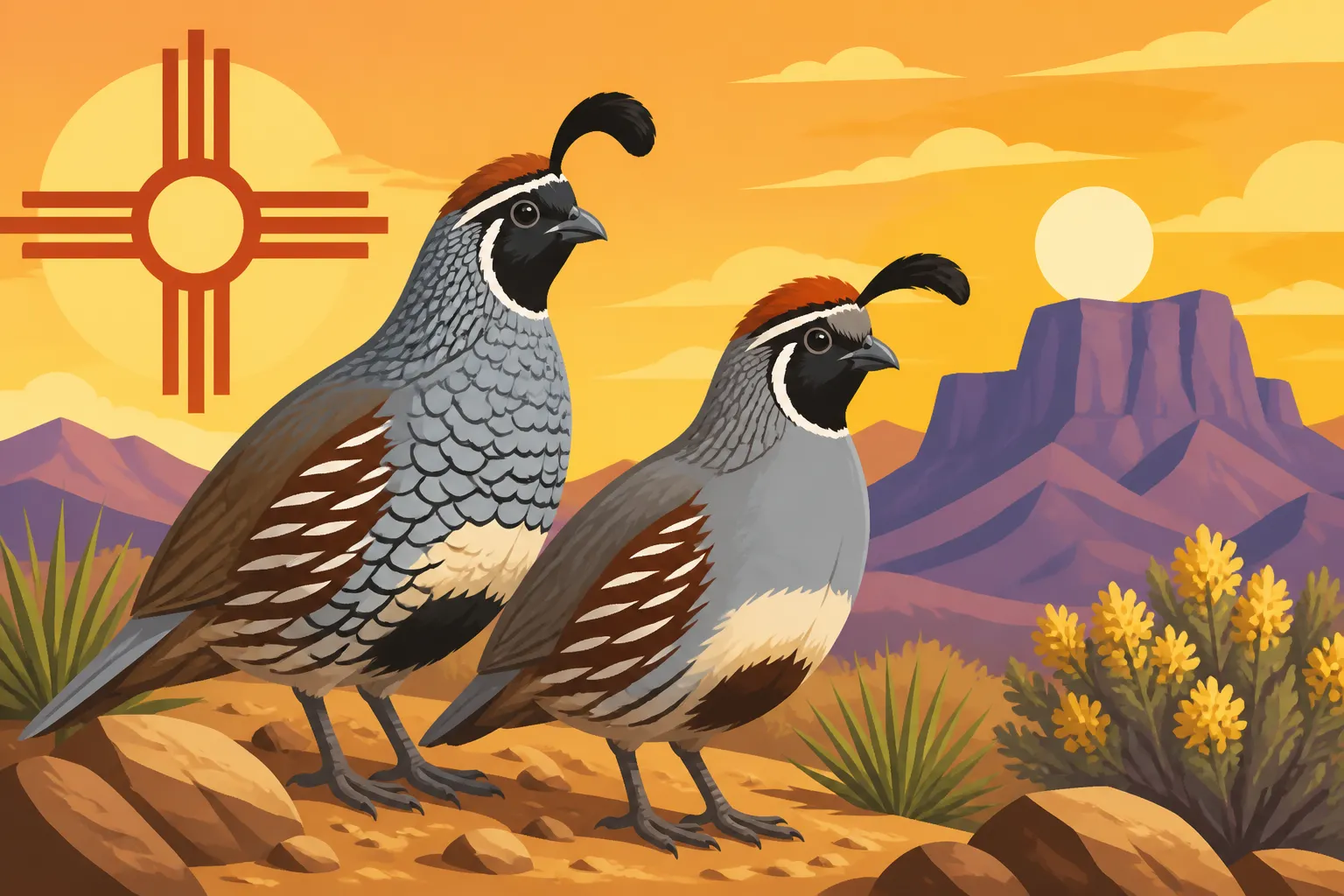
Gambel's Quail are distinguished by their jaunty, comma-shaped topknot that curls forward, giving them a very distinct profile. Males have a striking black face patch bordered by white, and a rich chestnut-colored crown, making them quite handsome birds. Their body plumage is a mix of gray, white, and rusty brown, allowing them to blend perfectly into the thorny tangles they call home. Their call is a loud, excited chi-ca-go, chi-ca-go or g-g-g-g-g-g-go!, which is often heard just before or during a flush.
Unlike Scaled Quail, Gambel's are deeply connected to dense, often thorny, riparian habitats. They thrive along the edges of dry washes, active river bottoms (like sections of the Rio Grande corridor), agricultural field borders, and areas with thick stands of mesquite, acacia, desert willow, and catclaw. These dense thickets provide crucial cover from predators and harsh desert sun, as well as a rich source of seeds, insects, and berries. You'll often find them congregating near water sources, especially during dry periods. Think of the brushy drainages and riverbeds in areas like southwestern New Mexico, around Silver City or Las Cruces, where the desert vegetation gets thicker and more tangled. These birds are less about open plains and more about navigating the labyrinthine corridors of dense desert growth.
Tactics for Locating and Flushing Gambel's Quail
Hunting Gambel's Quail requires a different approach than Scaled Quail. While they can run, they are more inclined to hold tight in dense cover and then burst into flight, often with incredible speed and agility.
Your primary tactic for Gambel's will involve systematically working through the thickest cover along washes and drainages. Walking these linear features, especially those with good water sources nearby, is often the most productive strategy. Pay close attention to fresh sign – tracks, dusting bowls, and droppings – to confirm birds are in the area. Like Scaled Quail, early morning and late afternoon are usually the best times, as birds move to and from feeding and watering areas.
When it comes to dogs, you want a bird dog that has grit and isn't afraid of thorns, but also knows how to work close to you in dense cover. A wide-ranging dog can be a liability here, as they'll flush birds out of shotgun range before you even know they're there. Flushers like Springer Spaniels or Labs, or close-working pointers, can be excellent. The key is to keep them working within 20-30 yards. As you walk, zig-zag through the densest patches of brush, making sure to hit every nook and cranny. Gambel's Quail will often hold incredibly tight, almost letting you step on them before they explode. Don't be surprised if they flush behind you after you've passed a thicket. This often happens because they've been running ahead of you in the cover, then circle back or burst out unexpectedly. Patience and thoroughness are paramount.
Navigating the Toughest Cover for Gambel's
Hunting Gambel's Quail means embracing the challenge of truly formidable cover. These birds love thorns, and you'll quickly learn to respect species like mesquite, catclaw acacia, and cholla. These plants form nearly impenetrable walls of spines, making travel slow and often painful. This is where good gear becomes absolutely critical; think tough briar pants, sturdy boots that protect your ankles, and eye protection.
When working these dense areas, it’s important to stay disciplined. If you’re hunting with partners, maintain a line and communicate constantly. Birds flushed from one side might fly across to another hunter, or try to escape down the wash. Be prepared for very close shots; these birds are incredibly fast and can disappear into the next patch of brush in an instant. Sometimes, the most productive strategy is to work a wash with one or two hunters walking the bottom, and another walking just above the bank on either side, effectively pinning the birds within the corridor.
The combination of thick brush, often loose, rocky footing, and the potential for steep banks can make for exhausting work. Hydration is key, and understanding the nuances of how Gambel's use cover to evade you will be a lifelong learning process. But when you finally manage to put a few of these vibrant, fast-flying birds into your vest after a hard-earned hunt, you’ll understand why they're called the "desert pheasant" – they're tough, beautiful, and absolutely worth the effort.
Gear and Preparation for a New Mexico Quail Hunt
Hitting the New Mexico desert for quail isn't like walking a groomed pheasant field in the Midwest. The terrain, the weather, and the birds themselves demand specific gear and preparation to ensure a safe, comfortable, and successful hunt.
Essential Gear for Upland Success
Your gear needs to be as tough and adaptable as the New Mexico environment itself. Let's start with the basics.
First, your shotgun. A 12-gauge or 20-gauge is generally preferred, with a fast-swinging, lightweight model being ideal for quick shots on exploding coveys. Modified or Improved Cylinder chokes are usually perfect, allowing for a good pattern spread at the typical close ranges you'll encounter. As for ammo, 7.5 or 8 shot in a field load is standard. You’ll want to carry plenty, because when a covey flushes, you might get multiple opportunities.
Next, footwear and clothing are paramount. Forget your comfortable duck boots. You need sturdy, ankle-supporting boots with good traction for rocky, uneven terrain. Look for models with snake protection if you're hunting in warmer weather. Briar-proof pants or chaps are non-negotiable when dealing with mesquite, catclaw, and cholla; they will save your legs from countless scratches and punctures. Layering is also important, as temperatures can swing dramatically, especially if you're hunting New Mexico from 4,000 feet to 10,000 or even lower desert elevations. A good upland vest or game bag with plenty of pockets for shells, water, and harvested birds is essential.
Beyond that, don't skimp on hydration. A quality hydration pack or multiple water bottles are critical, especially if you're out for an all-day hunt in arid conditions. A GPS device or a reliable mapping app like GoHunt on your phone (with downloaded maps, as cell service can be spotty) is also a lifesaver for navigation and marking covey finds. Finally, a good pair of shooting glasses to protect your eyes from stray shot or thorns, and hearing protection, should always be in your pack.
Preparing Your Dogs for New Mexico's Conditions
If you're hunting with dogs, their preparation is just as important as yours, if not more so. New Mexico's desert environment can be brutal on canine companions.
Foot care is paramount. The rocky, abrasive terrain can quickly shred pads. Consider conditioning your dog's paws for weeks leading up to the hunt with paw tougheners, and carry a paw wax or balm to protect them in the field. Booties are also a good idea, especially if your dog is sensitive or if you encounter particularly nasty ground.
Hydration for dogs cannot be stressed enough. They can overheat quickly in the desert sun. Carry ample water for your dog and offer it frequently. Consider an insulated water bottle for yourself and a collapsible bowl for them. During breaks, find shade and give them a chance to cool down. If possible, consider taking advantage of water sources and ethics in desert hunting, like stock tanks, but always ensure the water is safe for your dog.
Snake avoidance training is a wise investment, especially for younger dogs or those new to the desert. Rattlesnakes are a real concern, particularly in the warmer early season. A snake-proof vest can offer some protection, but training is the best defense. Furthermore, inspect your dog regularly for foxtails, burrs, and cactus spines, especially between their toes and in their ears. The desert is full of natural hazards that can quickly put a dog out of commission.
Physical Conditioning and Safety in the Field
New Mexico quail hunting is physically demanding. You'll be covering miles over uneven, sometimes steep and rocky, terrain. This isn't a casual stroll. Weeks or months of physical conditioning are highly recommended. Focus on cardiovascular endurance and leg strength. Hiking with a loaded pack, even just around your local trails, can mimic the demands of a long day in the desert.
Heat awareness is critical, especially during the early season. Mornings are often the best time to hunt, as temperatures rise quickly. Recognize the signs of heat exhaustion in yourself and your hunting partners, and don't push it. Start early, take breaks in the shade, and hydrate constantly. If temperatures get too high, it's safer to call it a day and enjoy the evening.
Snake awareness is another major safety concern. Always watch where you step, where you put your hands, and be mindful of where you sit. Wearing snake gaiters or snake boots can provide peace of mind. Know basic first aid for snakebites, both for humans and dogs, and carry a basic first-aid kit. Finally, always let someone know your hunting plans, including your route and expected return time. Carrying a satellite communication device is a smart precaution, as cell service is often nonexistent in remote quail country.
Regulations, Seasons, and Opportunities
Before you even think about lacing up your boots, understanding the regulations and where you can hunt is crucial for a legal and ethical New Mexico quail hunt.
Understanding New Mexico Quail Regulations
New Mexico's hunting regulations are designed to manage wildlife populations responsibly, and quail are no exception. The first thing you'll need is a valid New Mexico hunting license. For residents, this is fairly straightforward. Nonresidents will need to purchase a Nonresident Game Hunting License. Always check the current year's New Mexico Rules and Info Booklet for the most up-to-date information, as regulations can change annually.
When it comes to quail, you'll want to pay close attention to the specific season dates and bag limits. New Mexico Quail Season Openers usually run for several months, typically from early November through mid-February. However, specific dates can vary, so consult the official game and fish proclamation. More importantly, understand the New Mexico Quail Bag Limits by Species. Typically, the daily bag limit is 15 quail in the aggregate, which means a combined total of Scaled, Gambel's, and Bobwhite Quail. The possession limit is usually 30 quail. These limits are strictly enforced, and you need to be able to identify your birds. While blaze orange is not typically required for small game hunting like quail, it's always a good idea, especially if you're hunting in an area that might also see big game hunters. Always err on the side of safety and visibility.
Finding Public Access for Quail Hunting
New Mexico is blessed with millions of acres of public land, offering fantastic opportunities for quail hunting. Knowing where these lands are and how to legally access them is key.
The vast majority of public access for quail hunting will be on Bureau of Land Management (BLM) ground. BLM acreage across New Mexico offers huge tracts of open country, particularly in the southern and eastern parts of the state where Scaled Quail thrive. BLM ground often comes with minimal restrictions on foot travel, making it ideal for ranging out and covering ground. Indeed, BLM ground carries most of New Mexico's open access for hunting.
New Mexico State Trust Land is another excellent resource. While it's private land managed for the benefit of state institutions, a valid New Mexico hunting license effectively grants you an easement for legal hunting and fishing access. A New Mexico license is your State Trust Land easement, but always double-check the specific rules and be aware of any posted signs or restrictions. Trust Land access usually opens with the general hunting season.
National Forests (like sections of the Cibola National Forest or Lincoln National Forest) can also hold quail, particularly Gambel's in riparian zones within the forest boundaries. However, these areas might be steeper and more rugged.
The best way to identify these public lands and plan your hunt is by using modern mapping tools. I personally rely on apps like GoHunt, which overlays land ownership data onto satellite imagery, making it incredibly easy to see public and private boundaries. It also helps with identifying potential access points, roads, and crucial features like washes or stock tanks.
Leveraging Scouting Tools and Resources
Successful quail hunting starts long before you ever step foot in the field. Smart scouting and resource utilization can dramatically increase your odds.
First, invest in a good digital mapping system. As mentioned, tools like GoHunt are invaluable. You can virtually scout an entire unit from your couch, identifying potential habitat for both Scaled and Gambel's Quail. Look for the distinct linear features of washes and dense riparian corridors for Gambel's, and the vast, open, grassier areas with scattered mesquite for Scaled Quail. Pay attention to water sources – stock tanks, windmills, or even natural seeps – as these are magnets for quail, especially during dry periods. You can also download New Mexico unit layers for your GPS or mapping app to ensure you're always aware of boundary lines.
Next, delve into harvest reports and draw statistics published by the New Mexico Department of Game and Fish (NMDGF). While not always species-specific for small game, these can give you an idea of overall hunter pressure and general game populations in certain units. Talk to local NMDGF biologists if possible, or visit the department's website for specific quail population surveys or habitat improvement projects.
Finally, pre-season scouting trips are incredibly valuable if you can manage them. Walking potential areas without a gun, looking for tracks, dusting bowls, droppings, and listening for calls, can confirm if birds are present. It also helps you get a feel for the terrain, identify thorny patches to avoid, and mark water sources. Even if you can't walk it, a drive through potential areas can reveal a lot about current conditions and bird activity. Remember, the desert changes quickly, so recent intel is always best.
Beyond the Hunt: Conservation and Ethics
As hunters, we are the original conservationists. Our passion for the pursuit comes with a profound responsibility to protect the resource and the land for future generations.
Respecting the Resource and Landowners
Ethical hunting isn't just about following the law; it's about upholding a code of conduct that respects the animals, the environment, and fellow outdoor enthusiasts. For quail hunting in New Mexico, this means several things.
Leave No Trace: Pack out everything you pack in. This includes spent shotgun shells, food wrappers, and any other trash. The desert is a fragile ecosystem, and leaving litter behind degrades the experience for everyone and can be harmful to wildlife.
Responsible Shooting: Only take ethical shots at birds that are within range. Wounded birds are often lost birds. Know your effective range and stick to it. Avoid shooting into coveys on the ground; instead, wait for them to flush and shoot individual birds in flight. This allows more birds to escape and ensures a cleaner harvest.
Retrieval and Meat Care: Make every effort to retrieve downed birds immediately. In the heat of the desert, meat can spoil quickly. Field dressing in desert heat might not be necessary for small birds if you have a cooler nearby, but getting them cooled down quickly is paramount. Don't waste any game meat; it’s a precious resource.
Landowner Relations: This is incredibly important in a state with so much mixed public and private land. Always be aware of property boundaries, especially when using tools like GoHunt. Even if you're on public land, respect adjacent private property. Never trespass, and if you happen to retrieve game that goes onto private land in New Mexico, you must have permission before crossing the fence. A simple knock on the door or phone call can often build goodwill and even open up future hunting opportunities. Our reputation as hunters rests on these respectful interactions.
Quail Conservation Efforts in New Mexico
Quail populations, like many wildlife species, are subject to fluctuations due to a variety of factors, including weather patterns, habitat changes, and predation. New Mexico's quail numbers are heavily influenced by rainfall. Good monsoon rains can lead to booming populations, while prolonged drought can see numbers drop significantly.
The New Mexico Department of Game and Fish (NMDGF) actively monitors quail populations through various surveys and studies. They also work on habitat improvement projects, often in collaboration with private landowners and conservation groups like Quail Forever. These projects might involve prescribed burns, brush management, or water development projects built for wildlife to enhance the quality of quail habitat.
As hunters, we play a crucial role in conservation. A portion of every hunting license and excise tax on firearms and ammunition (through the Pittman-Robertson Act) directly funds these conservation efforts. By purchasing licenses and supporting conservation organizations, we contribute financially to the future of quail hunting. Beyond that, being observant in the field and reporting any significant changes in habitat or bird populations to the NMDGF can provide valuable data for biologists. Understanding the science behind wildlife management, such as why fawn ratios predict next season for deer, can help us appreciate the complexities of quail populations as well. Our sustained interest and financial contributions are vital to ensuring that the thrill of a quail covey rise remains a part of the New Mexico landscape for generations to come.
| Feature | Scaled Quail (Callipepla squamata) | Gambel's Quail (Callipepla gambelii) |
|---|---|---|
| Common Names | Cotton Top, Blue Quail | Desert Pheasant |
| Appearance | Bluish-gray plumage, prominent white "cotton top" crest | Rusty-red head, black face, prominent forward-curcurved topknot |
| Primary Habitat | Arid grasslands, desert scrub, open country, mesquite, yucca | Dense riparian corridors, washes, river bottoms, thorny thickets |
| Behavior | Notorious runners, can form large coveys | Prone to holding tight in cover, explosive flushes |
| Vocalization | Rapid "pe-cos, pe-cos" or "chip-chip-chip" | Loud, excited "chi-ca-go, chi-ca-go" or "g-g-g-g-g-g-go!" |
| Hunting Strategy | Spot-and-stalk, working dogs fast and wide, pushing draws | Systematically working dense washes, close-working dogs, patience |
| Distribution | Eastern and Southern New Mexico | Western and Southern New Mexico (more tied to specific linear cover) |
| Typical Covey Size | Often larger (10-50+ birds) | Generally smaller (5-20 birds) |
Disclaimer
The information provided in this guide is for informational purposes only and does not constitute legal advice. Hunting regulations in New Mexico are subject to change. It is the responsibility of every hunter to review and understand the current New Mexico Department of Game and Fish regulations and proclamation before engaging in any hunting activities. Always prioritize safety and ethical hunting practices.