Barbary Sheep in New Mexico Canyon Country
The rugged, sun-baked canyons of New Mexico present one of the toughest, yet most rewarding, big game challenges: Barbary sheep. These tenacious animals, often called aoudad, thrive in environments that would break most hunters, making a successful hunt a testament to grit and strategic planning. This comprehensive guide will walk you through everything you need to know about pursuing Barbary sheep in New Mexico, from their unique biology and preferred habitat to essential hunting tactics and navigating the draw process for these elusive canyon dwellers.
The Allure of Barbary Sheep in New Mexico
Hunting Barbary sheep in New Mexico is more than just a hunt; it's an adventure into some of the most unforgiving, yet breathtaking, landscapes the state has to offer. These non-native animals have carved out a niche, offering a truly unique experience for those willing to embrace the challenge.
Why Barbary Sheep Are So Unique in New Mexico
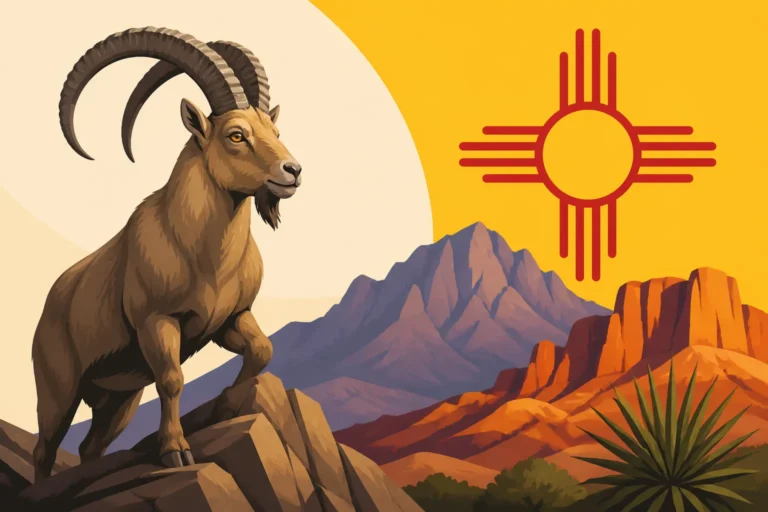
Barbary sheep, or aoudad, aren't native to North America; they hail from the rocky deserts of North Africa. They were introduced to New Mexico in the 1950s, primarily for sport hunting, and have since flourished in the state's rugged, arid canyon systems. What makes them so unique is their incredible adaptability to these harsh conditions. They can go for extended periods without free water, obtaining moisture from vegetation and dew, which makes them perfectly suited to the Chihuahuan Desert ecosystem. Their impressive, sweeping horns, which grow throughout their lives and are carried by both sexes, are a coveted trophy. These horns can curl back over their shoulders, presenting a truly magnificent sight on a mature ram. The sheer physical and mental demand of pursuing them in their chosen terrain sets them apart from almost any other big game hunt in the state, offering a genuine mountain hunt feel without the high altitudes of the Gila.
Successfully hunting these animals requires a specific set of skills. You're not just dealing with the animal's senses, which are incredibly sharp, but also with terrain that can be brutal on both body and gear. The steep ascents and descents, the loose scree, and the constant sun exposure mean every step is a calculated effort. This uniqueness adds to the allure; it’s a fair chase hunt in an incredibly challenging environment, often requiring hunters to push their limits.
Where Aoudad Took Hold in New Mexico Canyon Country
While Barbary sheep have spread to various parts of New Mexico, they truly thrive in specific canyon systems that mimic their native North African environment. One of the most prominent strongholds is the rugged Guadalupe Mountains in southeastern New Mexico. This range, straddling the New Mexico-Texas border, offers a labyrinth of deep canyons, steep cliffs, and rocky outcrops that provide ideal escape terrain and cover. Here, the Barbary sheep populations are robust, and the landscape is exactly what these animals prefer.
Another significant area where aoudad have taken hold is the expansive Canadian River Canyon system in the northeastern part of the state, particularly around the towns of Roy and Mosquero. This vast, intricate network of canyons, breaks, and mesas provides incredible solitude and perfect habitat. The sheer scale of these canyons means sheep can disappear quickly, making glassing and strategic movement absolutely critical. You also find populations in Largo Canyon and other scattered buttes and isolated mountain ranges throughout the central and western parts of New Mexico. These areas are characterized by broken country, deep washes, and a mix of sparse grass and scrub brush that offer both forage and concealment. When you're planning an e-scouting session, these are the types of features you'll want to be looking for on satellite imagery.
Understanding Barbary Sheep Behavior and Habitat
To successfully hunt Barbary sheep, you need to understand their daily lives, how they interact with their environment, and what makes them tick. They are survivors, perfectly adapted to a demanding landscape.
Typical Barbary Sheep Diet and Water Sources
Barbary sheep are incredibly resourceful when it comes to their diet, which largely consists of the hardy vegetation found in their arid habitats. They are primarily grazers but will readily browse on shrubs, forbs, and even cacti if necessary. They feed on grasses like grama grass and three-awn, as well as various desert succulents that provide not only sustenance but also crucial moisture. Their ability to extract water from their food sources is a key adaptation, allowing them to survive for long periods without direct access to standing water.
However, despite their impressive drought tolerance, water is still a magnet for them, especially during hotter months or prolonged dry spells. They will seek out isolated springs, seeps, and even man-made stock tanks or guzzlers tucked away in remote canyons. Understanding these water sources and how they utilize them is critical for hunters. While they might not drink every day, a reliable water source can become a focal point, particularly in the mornings and evenings when temperatures are cooler. Knowing the location of these vital resources within your chosen unit, perhaps from your E-Scouting a New Mexico Unit Before the Season, can give you a significant advantage in patterning their movements.
Daily Movement Patterns and Bedding Areas
Barbary sheep are largely crepuscular, meaning they are most active during the cooler parts of the day – early morning and late evening. This is when they typically feed, moving from their bedding areas down to more open slopes or canyon bottoms to graze. As the sun climbs higher and temperatures rise, especially in the relentless New Mexico heat, they retreat to shaded, secure bedding sites. These spots are almost always on steep, north-facing slopes, under overhanging cliffs, or within caves and crevices that offer protection from predators and the sun.
Their bedding areas are strategically chosen for both thermal regulation and security. They'll often bed in places that offer excellent visibility of their surroundings, allowing them to spot potential threats from a distance. Their eyesight is legendary, so approaching a bedded animal requires extreme stealth and careful use of topography. In the evenings, they'll often emerge from these same bedding areas, working their way back down to feed before settling into a new bedding site for the night. Observing these patterns during your Scouting New Mexico State Trust Land Fourteen Days Out can be invaluable. Rams, especially older, larger ones, often prefer more secluded and higher elevation bedding areas, making them even more challenging to locate.
Adapting to Extreme Canyon Environments
The canyon country of New Mexico is a brutal proving ground, and Barbary sheep are master adapters. Their physical attributes, such as their powerful legs and specialized hooves, allow them to navigate incredibly steep, rocky, and treacherous terrain with remarkable agility and speed. They can scramble up seemingly vertical cliffs and bound across broken scree fields, leaving lesser creatures (and most humans) far behind. This ability to utilize vertical escape terrain is their primary defense mechanism against predators like mountain lions and, of course, hunters.
Understanding how they adapt to these environments also means recognizing the impact of weather. While they are desert dwellers, extreme heat can push them deep into shady canyon bottoms or caves. Conversely, rare winter snowfalls might concentrate them on sun-exposed, south-facing slopes. They are incredibly resilient, but any significant change in weather can subtly shift their movement patterns. For hunters, this means not only being physically prepared for the terrain but also being ready to adjust tactics based on conditions. The ability to climb and descend steep grades, often with loose rock, is paramount for success, making your choice of Choosing Boots for Rocky Desert Ground absolutely critical.
Essential Scouting and Locating Strategies
Finding Barbary sheep is arguably the hardest part of the hunt. They blend seamlessly into their rocky surroundings and can cover vast amounts of ground. Effective scouting, both from your computer and on foot, is non-negotiable.
E-Scouting for Barbary Sheep Terrain
Before you ever set foot in a unit, your boots-on-the-screen efforts can save you countless hours and miles. E-scouting for Barbary sheep means meticulously examining satellite imagery for their preferred habitat. Look for deep, intricate canyon systems, steep rimrock, and areas with broken, rocky terrain. North-facing slopes that hold shade for longer parts of the day are prime candidates for bedding areas. Identify potential water sources like stock tanks, seeps, or natural springs. Tools like Google Earth, onX Hunt, and especially GoHunt, offer invaluable layers for land ownership, topo maps, and detailed satellite views.
Use contour lines to identify benches, saddles, and steep cliffs that aoudad will frequent. These animals love vertical escape cover, so anything that looks like it would be a pain to walk for a human is likely good Barbary country. Pay attention to areas where canyons open up into more rolling hills, as these transitional zones can be feeding grounds. Mark all potential travel corridors, pinch points, and glassing knobs. Remember, Barbary sheep can inhabit massive units, so narrowing down your focus to a few square miles of ideal habitat is your first, most crucial step. GoHunt's detailed map overlays and unit information can be particularly useful here, providing insights into historical observations or general habitat preferences within specific game management units.
Boots-on-the-Ground Reconnaissance
Once you've done your digital homework, it's time for real-world scouting. This is where you confirm your e-scouting theories and get a feel for the actual terrain. Focus on accessing the potential areas you've identified and spend significant time glassing. Bring high-quality optics (more on that later) and systematically scan all the canyons, slopes, and rimrock. Look for any movement, a patch of off-color hair, or the tell-tale horizontal line of a sheep's back against a vertical backdrop.
When you're on the ground, don't just look for the animals themselves; look for sign. Fresh tracks around water sources or along canyon trails, scat pellets, and rubbed-out patches on rocks or bushes where they've scratched are all indicators of recent activity. Pay close attention to wind direction and thermals in these deep canyons; they can be tricky and shift frequently. Scouting prior to the season, during the same general time of year as your hunt, will give you the most accurate picture of where the sheep are holding. This hands-on experience is critical for understanding the vastness and difficulty of the terrain.
Interpreting Barbary Sheep Sign
Learning to read the subtle clues Barbary sheep leave behind is a skill developed over time, but it's essential for success. Fresh tracks are a strong indicator of recent presence. Barbary sheep tracks are distinct, with a more pointed and narrower hoof print compared to deer, and often deeper impressions due to their weight and the steep terrain they traverse. Look for these around watering holes, dusty trails, or soft dirt pockets within rocky areas. Distinguishing between a large ram's track and a ewe's can be challenging, but generally, rams will have larger, wider tracks.
Scat is another key indicator. Barbary sheep droppings are small, dark pellets, similar to deer but often found in larger clusters. Look for these in bedding areas, feeding zones, or along travel routes. Rubs, where sheep have rubbed their horns against rocks or vegetation, can also provide clues about their presence and the size of the animals. Older rams will often leave more significant rubs. Finally, observe the vegetation: grazed areas, especially on preferred forage plants, can show where sheep have been feeding. The fresher the sign, the closer you are to finding your target. Consistent observation of these details will help you narrow down productive areas within the vast New Mexico's Canyon Country.
Hunting Tactics for New Mexico's Aoudad
Barbary sheep hunting is often described as a true mountain hunt, even if the "mountains" are technically canyons. It demands patience, physical endurance, and a methodical approach.
Spot and Stalk Tactics for Barbary Sheep
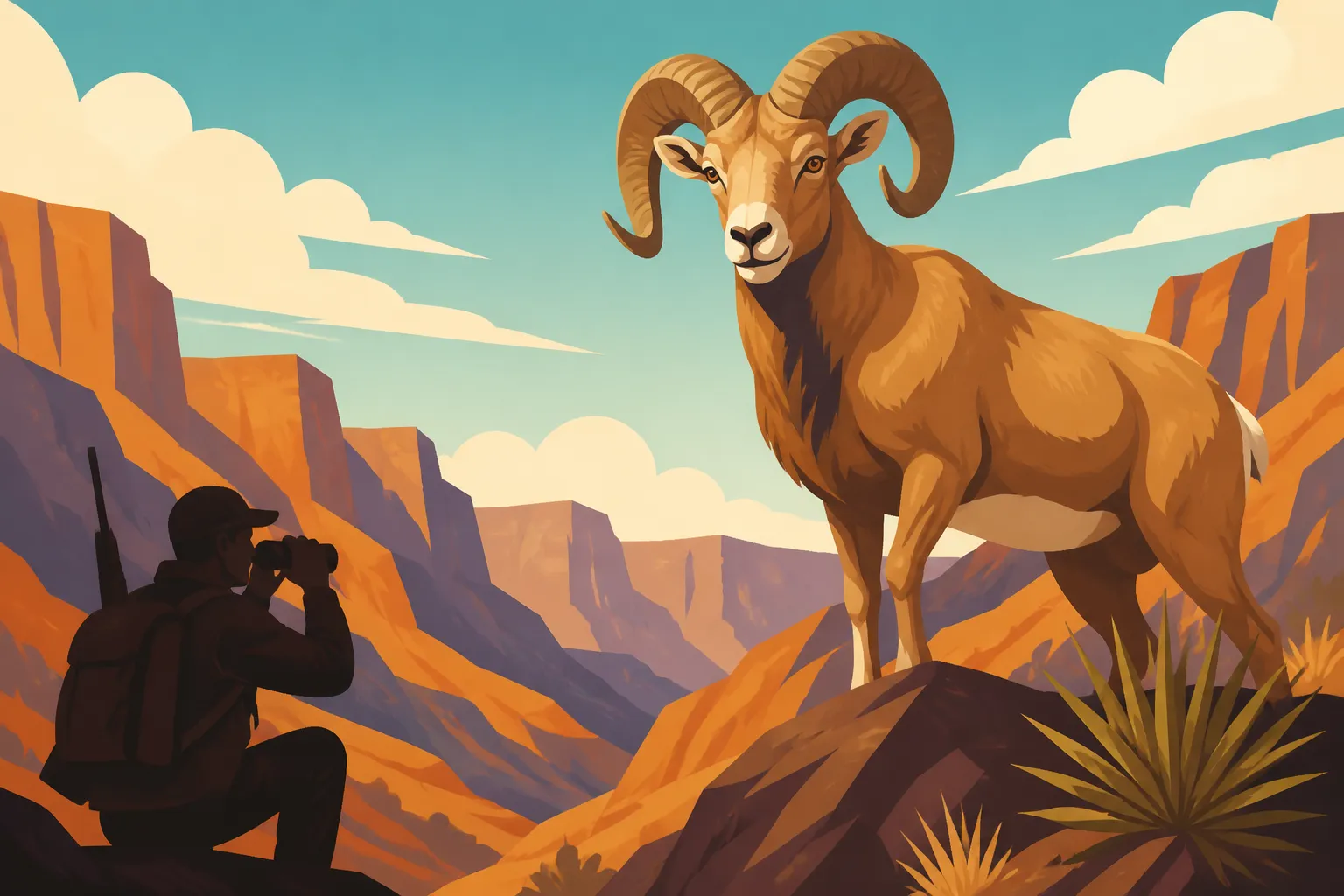
Spot and stalk is the quintessential method for hunting Barbary sheep, and it’s where their keen senses and the challenging terrain truly test a hunter. The process begins with extensive glassing from a high vantage point. You'll need to systematically pick apart every rock, shadow, and crevice in the canyons below and across from you. Once you spot a sheep, the real challenge begins. You'll need to carefully evaluate the animal's location, the surrounding topography, and critically, the wind direction. Wind in canyons is notorious for swirling and changing, so a reliable wind checker is your best friend.
Plan your approach meticulously. This often involves long, arduous hikes, sometimes requiring significant detours to stay out of sight and downwind. Use every piece of cover available – washes, ridges, thick brush – to conceal your movement. The goal is to get within comfortable shooting range, which for most hunters is 300-400 yards, given the typical shot opportunities in this open country. This is an extremely demanding tactic, requiring mental fortitude and physical conditioning. For more specific guidance on this approach, consider reviewing resources on Spot and Stalk Tactics for Barbary Sheep.
Effective Glassing for Aoudad in Canyon Country
High-quality optics are not just an advantage; they are an absolute necessity for Barbary sheep hunting. You'll spend 80-90% of your hunt behind glass, so investing in good binoculars and a spotting scope is paramount. Binoculars in the 10×42 or 12×50 range are excellent for wide-field scanning, while a spotting scope (20-60x or higher) on a sturdy tripod is essential for picking apart distant slopes, identifying sheep, and judging their size. When considering your gear, think about Optics Power for New Mexico's Open Country.
The key to effective glassing is patience and a systematic approach, often called "grid glassing." Don't just haphazardly scan the landscape. Instead, pick a section of terrain and methodically scan it in a grid pattern, from left to right, then drop down and go right to left, slowly moving across the entire area. Pay extra attention to shaded areas, rimrock edges, and any breaks in the terrain. Barbary sheep blend in incredibly well, so you're often looking for a specific texture, a slight movement, or an unnatural shape rather than a whole animal. Set up your tripod on a stable surface, make yourself comfortable, and be prepared to spend hours behind the glass.
Mastering the Approach in Steep Terrain
Once a sheep is spotted and a stalk initiated, mastering the approach in New Mexico's steep canyon terrain becomes the ultimate test. This isn't a casual stroll; it's a calculated, often grueling, physical endeavor. You'll be navigating loose scree, steep rock faces, and thick brush, all while trying to remain as quiet and unseen as possible. Your footwear, as mentioned earlier, is crucial – stiff-soled boots with excellent ankle support are non-negotiable.
Pay constant attention to the wind, as thermals in canyons will often rise in the morning and fall in the evening, changing throughout the day. A shift in wind direction can quickly blow your cover. Move slowly and deliberately, taking one step at a time, especially when you get closer to the animal. Use terrain features like ridges, washes, and large rocks as natural blinds. The goal is to get into a stable shooting position without alerting the sheep. This often means crawling, sneaking, and pausing for long periods, sometimes for hours, waiting for the right moment or for the animal to move into a more favorable position. This physical and mental stamina, coupled with stealth, is what ultimately separates successful Barbary sheep hunters from the rest.
Gear Considerations for a Barbary Sheep Hunt
The gear you choose for a New Mexico Barbary sheep hunt can make or break your trip. You're operating in a demanding environment that requires reliable, durable, and effective equipment.
Optics That Perform in New Mexico's Canyon Country
As previously emphasized, optics are your most important tool, second only to your rifle. For binoculars, look for models in the 10×42 or 12×50 range from reputable brands like Swarovski, Zeiss, or Vortex. These provide a good balance of magnification and field of view, crucial for scanning vast landscapes. For a spotting scope, aim for a variable magnification of at least 20-60x, with an objective lens of 65mm or larger to gather enough light in low-light conditions. Pairing your spotting scope with a sturdy, lightweight carbon fiber tripod is non-negotiable; a flimsy tripod will lead to frustrating shakes and missed opportunities.
Consider investing in an angled eyepiece for your spotting scope, as it can be more comfortable for prolonged glassing sessions, especially when looking uphill or downhill from a seated position. Rangefinding binoculars are also a fantastic addition, allowing you to quickly and accurately determine distances without fumbling with separate devices. The vast, open nature of New Mexico's canyon country means you'll be constantly ranging animals and landmarks, so a reliable rangefinder is essential for precise shot placement.
Footwear and Clothing for Rugged Terrain
Your feet are your foundation on a Barbary sheep hunt, and proper footwear is paramount. You need high-quality, stiff-soled hiking boots with excellent ankle support to protect you from the constant abuse of steep, rocky, and uneven terrain. Brands like Crispi, Kenetrek, or Schnee's are popular choices among serious mountain hunters for their durability and support. Ensure they are well-broken in before your hunt to prevent blisters. Pair them with moisture-wicking wool socks to keep your feet dry and comfortable.
Clothing should be a layering system that can adapt to drastic temperature swings common in the desert. Early mornings can be chilly, even freezing, while midday temperatures can soar into the 80s or 90s, especially during early season hunts. Start with a moisture-wicking base layer, add an insulating mid-layer (fleece or lightweight puffy), and top it with a durable, breathable outer shell that offers protection from wind and occasional precipitation. Neutral, earthy tones are best for camouflage. Don't forget a wide-brimmed hat, sunglasses, and sun-protective clothing, as sun exposure will be relentless.
Rifle and Caliber Selection for Aoudad
Barbary sheep are tough animals, known for their resilience. While not huge, they are solidly built with heavy bone, and shot opportunities often present at longer ranges across canyons. A flat-shooting cartridge capable of delivering sufficient energy downrange is advisable. Popular choices include cartridges like the .270 Win, .30-06, .7mm Rem Mag, .300 Win Mag, or even the newer 6.5 PRC and .300 PRC. What's more important than the specific caliber, however, is shot placement and bullet construction.
Choose a quality bullet designed for controlled expansion and deep penetration, such as bonded bullets or monometal designs (e.g., Barnes TSX, Hornady ELD-X, Nosler AccuBond). Practice shooting at extended ranges from various field positions – prone, kneeling, using a backpack or shooting sticks – to simulate hunting conditions. Knowing your rifle and its capabilities inside and out is crucial. Given the typical shot distances, a rifle zeroed at 200 yards is a good starting point, but understand your ballistic trajectory out to 400-500 yards. Suppressors are legal in New Mexico and can significantly reduce muzzle blast, making follow-up shots easier and protecting your hearing.
Drawing a New Mexico Barbary Sheep Tag
Drawing a Barbary sheep tag in New Mexico can be tough, but it's not impossible. Understanding the draw process and playing the odds is a critical first step.
Understanding New Mexico Barbary Sheep Draw Odds
New Mexico operates on a lottery system for its Barbary sheep tags, meaning there are no preference points or bonus points that accumulate over time. Every applicant essentially starts with a clean slate each year, which means even a first-time applicant has the same odds as someone who has applied for decades. This can be both frustrating and exciting! The draw odds for Barbary sheep tags can vary significantly depending on the unit and the specific hunt code, but generally, they are challenging due to the limited number of tags issued. Many units have odds in the single digits for resident hunters, and even lower for non-residents.
It's crucial to research the draw statistics from previous years. The New Mexico Department of Game and Fish (NMDGF) publishes draw results and statistics, allowing you to see how many applicants there were for each hunt code and how many tags were issued. Websites like GoHunt also compile this data and provide analytical tools that can help you strategize your application. Understanding New Mexico Barbary Sheep Draw Odds is key to managing expectations and making informed choices about which units or hunt periods to apply for. While there's no way to guarantee a draw, a smart application strategy can increase your chances over time.
Applying for a Tag and Hunt Code Nuances
The New Mexico hunting application process can be a bit intricate, and missing a detail can cost you a chance at a tag. All applications are typically due by March 18th at 5 p.m. MT, though bear applications close earlier. You'll apply online through the NMDGF website. When filling out your application, you'll select up to three hunt choices for Barbary sheep. It's vital to research each hunt code carefully, paying close attention to the unit number, weapon type (rifle, muzzleloader, or archery), and hunt dates.
A hunt code like "BHS-1-200" would break down to Barbary Sheep, Unit 1, hunt number 200. Understanding these codes is essential, as different hunts within the same unit can have vastly different draw odds or access restrictions. For instance, some hunts might be for "any legal weapon," while others are more specialized. Make sure your first choice is truly your dream hunt, as subsequent choices have significantly lower odds of being drawn. Carefully review Reading a New Mexico Hunt Code Before You Apply to ensure you're making the right selections. Remember to purchase your annual Game Hunting License before applying, as it's a prerequisite for the draw.
The Role of Outfitters in Barbary Sheep Hunts
For many hunters, especially non-residents or those new to hunting Barbary sheep in New Mexico, hiring an outfitter can significantly increase their chances of success and provide a more comfortable, safer experience. Outfitters often have extensive knowledge of the units they operate in, including private land access, key water sources, and reliable areas where sheep frequent. They also provide crucial logistical support, including transportation, camping, and guiding services.
New Mexico even has a specific "outfitter pool" in its draw system, where 10% of tags are allocated to applicants who apply with a registered outfitter. While applying through the outfitter pool doesn't guarantee a tag, it can sometimes improve your mathematical odds, especially for highly sought-after hunts. However, remember that you'll need a signed contract with your outfitter to apply in this pool. A guided hunt is a significant financial investment, but it provides expert assistance with everything from scouting and tracking to field care and trophy extraction. Outfitters like those specializing in Barbary sheep, such as Antler Addiction Outfitters or Triple C Outfitters, understand the extreme challenges of this hunt and are equipped to handle them. Before committing, ask potential outfitters about their success rates, references, and what exactly is included in their hunt package.
| Aspect | DIY Barbary Sheep Hunt | Guided Barbary Sheep Hunt |
|---|---|---|
| Draw Odds | General Resident/Non-Resident Pool (84%/6%) | Outfitter Pool (10%) – potentially better odds, but not guaranteed |
| Cost | Lower initial cost (license, gear, travel) | Higher overall cost (guide fees, tips, license, gear) |
| Knowledge/Experience | Requires extensive personal scouting and experience | Leverages outfitter's deep local knowledge and expertise |
| Physical Demands | Extremely high, often solo navigation of rugged terrain | High, but with expert guidance and support (pack animals often available) |
| Logistics | All planning (camp, food, water, navigation) by hunter | Outfitter handles most logistics (camp, food, transportation) |
| Success Rate | Generally lower due to difficulty and lack of local knowledge | Generally higher due to expertise, scouting, and resources |
| Learning Opportunity | Steep learning curve, valuable self-reliance skills | Learn from experienced guides, focus on hunting |
Disclaimer
Please remember that hunting regulations and seasons are subject to change. Always consult the official New Mexico Department of Game and Fish website and their current "Rules and Information Booklet" for the most up-to-date and accurate information before planning any hunt. This guide is for informational purposes only and should not replace official sources.