New Mexico Ibex Season Timing
The dream of hunting Persian ibex in New Mexico is a powerful one, often painted with images of rugged mountain terrain, incredible physical challenge, and the pursuit of one of North America's most elusive and striking big game animals. Yet, for many hunters, understanding the specific season timing, application intricacies, and the sheer demanding nature of an ibex hunt can feel like trying to solve a complex puzzle. This comprehensive guide is here to cut through that confusion, giving you a clear roadmap of when New Mexico's ibex seasons typically fall, how to navigate the application process, and what you absolutely need to know to prepare for a potentially once-in-a-lifetime adventure in the challenging Florida Mountains.
Understanding New Mexico's Ibex Seasons
Hunting Persian ibex in New Mexico is unlike almost any other big game pursuit in the state. These aren't your typical elk or deer tags; they are incredibly rare, highly sought after, and represent one of the most physically demanding hunts you can undertake. The season timing is designed to offer opportunities while carefully managing this unique, introduced species in its primary stronghold.
The Uniqueness of Ibex Hunting in New Mexico
Let's be frank, an ibex hunt in New Mexico's Florida Mountains is not for the faint of heart, and that's precisely what makes it so appealing to a certain breed of hunter. We're talking about extremely steep, rocky, unforgiving terrain where these magnificent animals thrive. The Florida Mountains, just south of Deming, are their sole habitat in the contiguous United States, making any tag truly special. It's an opportunity to pursue a species that embodies the spirit of extreme mountain hunting, often requiring exceptional physical fitness, top-tier optics, and a relentless attitude.
The New Mexico Department of Game and Fish manages the ibex population very carefully, which means tags are extremely limited. This isn't a hunt you can reliably draw every few years; for many, it's a "once-in-a-lifetime" experience, especially for mature billies. The rarity of the tags and the nature of the beast itself contribute to the intense draw odds and the mystique surrounding this hunt. Hunters who are lucky enough to draw one of these coveted tags know they are in for an adventure that will test them mentally and physically like few others. You can learn more about this unique species by exploring Persian Ibex in New Mexico's Florida Mountains.
Primary Hunt Periods and Dates
New Mexico typically offers a couple of distinct windows for ibex hunting each year, primarily focusing on late fall/early winter and a separate spring season. These seasons are entirely draw-only, meaning you cannot purchase an over-the-counter tag for ibex. Your best bet for understanding the exact dates for any given year is to consult the most current New Mexico Hunting Rules and Information Booklet, which is released annually.
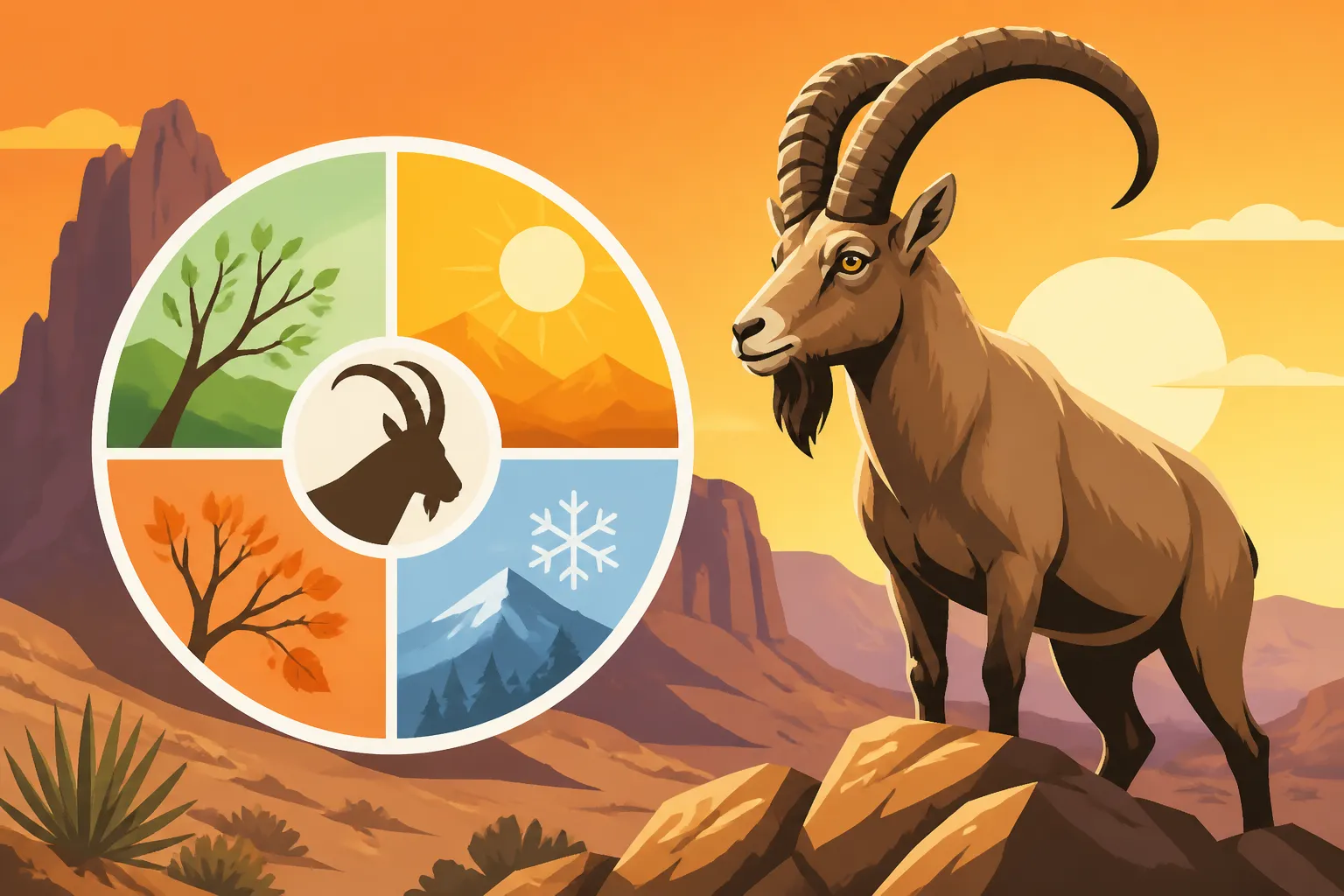
Generally, you'll see a fall/winter season that might span from November through February, often broken into several shorter hunt codes. For instance, there might be a late fall rifle hunt, followed by an archery hunt, and then another rifle hunt pushing into the new year. The spring season, often shorter, usually occurs in March. These season structures are designed to provide different hunting experiences – some hunters prefer the colder, potentially snowy conditions of winter, which can sometimes push ibex to lower elevations, while others enjoy the longer daylight hours and milder temperatures of early spring. Be aware that these dates can shift slightly year to year based on wildlife management objectives, so always double-check the regulations. To keep up with the specific dates, you'll always want to confirm the New Mexico Ibex Season Timing in the official regulations.
Special Opportunity Hunts
While ibex hunting is already a "special opportunity" in itself due to its rarity and difficulty, New Mexico does occasionally offer hunt codes tailored to specific hunter demographics. These can include youth-only hunts or mobility-impaired hunts. However, for a species as physically demanding and limited as ibex, these special hunts are even rarer than general public draw tags. They are often highly specific in their unit and season dates.
For instance, a youth hunter might have a dedicated archery or rifle season, often timed to coincide with school holidays or milder weather to encourage participation. Mobility-impaired hunts are designed to offer opportunities for hunters with specific physical challenges, but even these hunts in the Florida Mountains would require significant logistical support due to the extreme terrain. If you fall into one of these categories, it's absolutely worth sifting through the annual regulations booklet carefully, looking for those specific hunt codes that cater to youth or mobility-impaired individuals. These hunts, while scarce, represent a fantastic chance for eligible hunters to pursue this incredible animal, often with fewer applicants than the general draw.
The New Mexico Ibex Application Process
Drawing an ibex tag is a long shot, no doubt about it. The success rates are incredibly low, but someone has to draw, and every year lucky hunters find themselves holding one of these prized permits. Understanding the application process is the first crucial step on this challenging journey.
Key Application Deadlines and Fees
The most critical date for any New Mexico big game draw, including ibex, is typically March 18th at 5:00 PM Mountain Time. This is a hard deadline, and there are no extensions or second chances if you miss it. It’s absolutely vital to mark this date on your calendar and submit your application well in advance to avoid any last-minute technical glitches. When applying, you'll need to pay a non-refundable application fee for each species you apply for, in addition to the cost of a game hunting license (often referred to as a "card fee"). These application fees are generally modest, but they add up if you apply for multiple species.
Remember, you aren't paying the full tag fee upfront when you apply; your credit card will only be charged the full tag amount if you are successfully drawn. This means ensuring your card details are up-to-date and have sufficient funds after the draw results are announced, usually in early April. Missing the deadline or having a failed payment once drawn are heartbreaking ways to lose out on a tag, especially one as rare as ibex. For all applications, the deadline is firm: All New Mexico Applications Close March 18 at 5 p.m..
Maximizing Your Draw Odds
Let’s be realistic: ibex draw odds are some of the toughest in the state, if not the entire country. New Mexico does not operate on a preference point or bonus point system, which means every applicant has the same chance each year, regardless of how many times they've applied unsuccessfully in the past. This is a double-edged sword; it means a first-time applicant has the same odds as someone who has been applying for twenty years, but it also means consistent bad luck can really test your resolve.
Given these tough odds, research becomes paramount. Utilizing platforms like GoHunt's Insider tool can be incredibly helpful. They compile historical draw data, success rates, and application statistics, allowing you to see how many applicants there were for each hunt code and what the success percentages looked like. While past performance doesn't guarantee future results, it gives you a much clearer picture of what you're up against. You might discover that certain hunt codes have slightly higher odds, or you can use the data to make informed decisions about whether to apply as a resident or non-resident, or if applying with an outfitter (which places you in a different draw pool) might be a viable strategy. Understanding the New Mexico Ibex Draw Odds is crucial for setting realistic expectations.
Required Licenses and Stamps
Before you can even consider purchasing an ibex tag (should you be so fortunate to draw one), you need to have a few foundational licenses and stamps. The most fundamental is the New Mexico Game Hunting License. This is your general license to hunt big game in the state and is a prerequisite for applying for or purchasing any big game tag. On top of that, you'll need the Habitat Management and Access Validation (HMAV) and a Habitat Stamp.
The HMAV is a relatively new requirement that helps fund habitat improvement projects and provides access to public lands. The Habitat Stamp is specifically required for hunting on federal lands, which includes the majority of the Florida Mountains where ibex reside. These are mandatory purchases for most big game hunters in New Mexico, and while they add to the overall cost, they are essential to legally hunt. Make sure these are purchased and valid for the current license year well before the draw results are posted, so you don't face any last-minute scrambles or complications if your name is pulled. Knowing about The HMAV and Habitat Stamp Every New Mexico Hunter Needs is a vital piece of the puzzle.
Preparing for a New Mexico Ibex Hunt
Congratulations, you drew an ibex tag! Now the real work begins. This isn't a hunt you can take lightly; it demands significant physical, mental, and gear preparation.
Physical Demands of the Florida Mountains
Let's not mince words: an ibex hunt in the Florida Mountains is a brutal physical challenge. These aren't rolling hills; they are incredibly steep, rocky, and often brushy ascents and descents that will test your knees, lungs, and willpower to their absolute limits. The ibex are masters of this terrain, using sheer cliffs and treacherous ledges as escape routes, and if you want a chance at them, you'll have to follow into some seriously gnarly country. Even though the Florida Mountains aren't at the extreme high altitudes of the Sangre de Cristos, the relentless up-and-down of the terrain can mimic the oxygen demands of higher elevations.
Think of it this way: you'll be covering ground that would make a mountain goat blush. Proper physical conditioning is non-negotiable. Start training well in advance, focusing on high-intensity cardio, strength training for your legs and core, and extensive hiking with a loaded pack on steep, uneven ground. Simulating the hunt conditions as much as possible, including hiking up and down mountainsides with your rifle and hunting pack, will be invaluable. Failing to prepare physically can not only jeopardize your hunt success but also put you in a dangerous situation in the rugged landscape. The stories from hunters who have pursued Ibex Hunting in the Florida Mountains often focus as much on the physical grind as they do on the actual shot.
Essential Gear and Optics for Ibex
Given the extreme terrain and the ibex's remarkable ability to blend in, your gear selection, especially optics, will make or break your hunt. High-quality binoculars are your first line of defense; think 10×42 or 12×50 for extended glassing sessions. But for really picking apart the distant cliffs and rock slides, a top-tier spotting scope (20-60x or 27-60x) with a sturdy tripod is absolutely essential. You'll spend hours, if not days, behind glass, so invest in the best you can afford. The clarity, light gathering, and resolution will pay dividends when trying to distinguish an ibex from the surrounding rocks. Understanding Spotting Scope Power for Open Country is critical for this hunt.
Beyond optics, you'll need rugged, broken-in mountain boots with excellent ankle support and aggressive tread. Trekking poles are not optional; they will save your knees and prevent falls on slippery, loose rock. A lightweight but durable pack capable of hauling meat is also key, as getting an ibex out of the Floridas is a Herculean task. For rifles, flat-shooting calibers like .270 Win, 6.5 PRC, 7mm Rem Mag, or .300 Win Mag are popular choices, paired with premium bullet construction to ensure clean kills at potentially longer ranges. Before you head out, GoHunt's gear reviews and recommendations can offer insights into what other serious mountain hunters are using for these types of expeditions.
Scouting and Strategy Considerations
When it comes to ibex, effective scouting, whether physical or digital, is absolutely paramount. E-scouting tools like onX Hunt or GoHunt maps are invaluable for identifying potential bedding areas, escape routes, water sources (which are critical in this arid environment), and most importantly, access points and viable glassing knobs. You'll want to spend hours poring over satellite imagery and topo maps, marking every potential ridge, basin, and drainage. Look for areas with a mix of steep, broken cliffs for security and pockets of vegetation for feeding.
Once on the ground, your strategy will almost certainly revolve around spot and stalk. Ibex are incredibly wary, have phenomenal eyesight, and can disappear into seemingly impossible terrain in seconds. This means long-range glassing from a vantage point, identifying animals, planning a meticulous approach that uses every contour for cover, and then executing a precise stalk. Wind direction is always crucial, but in the steep, swirling canyons of the Florida Mountains, thermals will play a huge role, often rising in the morning and falling in the evening. You'll want to study them closely. This intensive preparation includes techniques found in E-Scouting a New Mexico Unit Before the Season.
What to Expect After Drawing an Ibex Tag
So, you beat the odds and drew that elusive ibex tag. The hard work of preparation now transitions to the intense reality of the hunt itself. Knowing what to expect on the ground, both from a regulatory and practical standpoint, will help ensure a successful and compliant hunt.
Rules and Regulations Specific to Ibex
Beyond the general New Mexico hunting regulations, there are often specific rules that pertain to ibex. You'll need to be intimately familiar with the legal shooting hours, which typically run from one-half hour before sunrise to one-half hour after sunset. These hours are critical, as low light can present visibility challenges in rugged terrain, and you absolutely do not want to risk a regulation violation. Make sure you understand the exact timings, which can shift slightly throughout the season.
After you harvest an ibex, immediate tagging of the animal is required. You'll also need to be aware of any evidence of sex requirements, meaning certain parts of the animal (like horns or specific anatomical features) might need to remain attached to the carcass during transport to confirm the sex of the animal for biologists. Mandatory harvest reporting is also a common requirement for rare species like ibex, often needing to be completed online or by phone within a specific timeframe after the kill. Always check the current regulations booklet for the exact specifics, as rules can occasionally be updated. Understanding the broader framework of Legal Shooting Hours and Blaze Orange in New Mexico is a good start, but dive deep into the ibex-specific sections.
On-the-Ground Challenges
Beyond the physical demands, you'll encounter a host of on-the-ground challenges unique to the Florida Mountains. Weather can be extremely variable. While New Mexico is known for its sunshine, a late fall or winter hunt can bring freezing temperatures, high winds, and even snow at higher elevations, making travel treacherous. Conversely, a spring hunt can quickly become surprisingly hot, especially in the sun-baked rock faces, necessitating careful hydration planning. You need to be prepared for everything, layering your clothing appropriately.
The terrain itself is a constant challenge. Loose rock, thorny brush, and dizzying drops are standard features. Navigation can be difficult, even with GPS, as the sheer scale and broken nature of the mountains can disorient you. Ibex are also incredibly elusive. They have an uncanny ability to hold still in plain sight, vanish behind a rock, or simply outclimb and outmaneuver hunters. Patience will be your greatest virtue. Don't be afraid to take a day to simply glass and observe, learning the ibex's patterns and preferred escape routes. Sometimes, gleaning insights from other hunters on platforms like GoHunt's community forums can offer valuable tips for navigating these specific challenges.
Ethical Considerations and Conservation
Hunting ibex carries a significant ethical responsibility. Given the extreme terrain and the value of these animals, practicing fair chase principles is paramount. This means making every effort for a clean, ethical kill and ensuring thorough game recovery, no matter how difficult the retrieve. A wounded ibex in the Floridas can be nearly impossible to recover, so shot placement and knowing your effective range are critical.
Hunters play a vital role in the conservation of unique species like the Persian ibex. The funds generated from license and tag sales directly contribute to the New Mexico Department of Game and Fish's efforts in managing and studying these populations, ensuring their health and future. By respecting the land, the wildlife, and adhering to all regulations, ibex hunters contribute to the legacy of this remarkable conservation success story. It's not just about harvesting an animal; it's about participating in the responsible stewardship of a truly unique and challenging hunting experience.
New Mexico Ibex Season Overview
Here's a general overview of New Mexico's ibex seasons and application timelines. Please note that exact dates and specific hunt codes can vary annually, so always refer to the official New Mexico Department of Game and Fish Rules and Information Booklet for the current year.
| Category | General Timing (Approximate) | Key Details | Application Type |
|---|---|---|---|
| Application Deadline | Mid-March (e.g., March 18) | Firm deadline for all big game draws. Non-refundable application fee required. Full tag fee charged upon draw. | Draw-Only |
| Draw Results | Early April | Applicants notified of draw success. | N/A |
| Fall/Winter Hunts | November – February | Typically multiple rifle and archery hunt codes. Colder weather, potential for snow. Ibex may be lower. | Draw-Only |
| Spring Hunts | March | Often shorter, single-hunt codes. Milder temperatures, longer daylight. Ibex may be higher. | Draw-Only |
| Youth/Special Hunts | Variable | Extremely limited; consult regulations for specific dates and eligibility. | Draw-Only |
Disclaimer
Please remember that hunting regulations, season dates, and application procedures can change. While I strive to provide accurate and up-to-date information, it is your responsibility to consult the official New Mexico Department of Game and Fish website and their current "Rules and Information Booklet" before planning any hunt or submitting an application. This guide is for informational purposes only and should not be considered legal advice.