The Resident Share of New Mexico Tags
It can feel incredibly frustrating trying to understand the complex rules and percentages that govern big game tag allocations in New Mexico. You're a resident, you live here, you contribute to the state, and you just want a fair shot at hunting the incredible animals found in your home state. This guide is here to untangle the nuances of the resident share of New Mexico tags, showing you exactly how this system benefits you and how to leverage it for a better chance at drawing that coveted tag.
Understanding New Mexico's Tag Allocation System
Let's cut right to it: New Mexico has a unique and often discussed tag allocation system that significantly favors residents. While other states might use preference points or bonus points, New Mexico operates on a lottery system with a hard percentage split for most of its big game species. This split is really the cornerstone of understanding your chances as a resident.
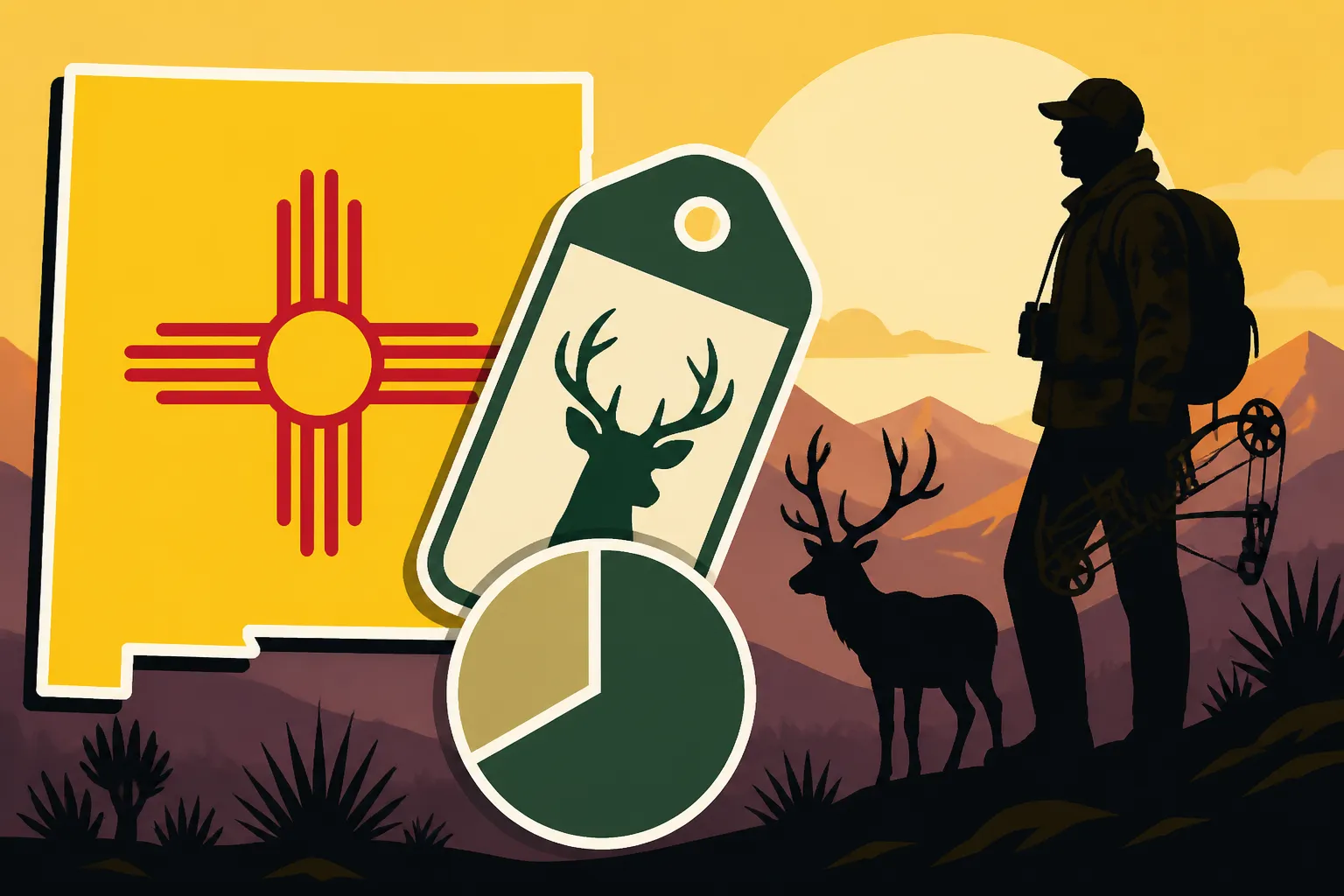
The New Mexico Department of Game and Fish (NMDGF) divides available tags into three distinct pools: 84% for New Mexico residents, 10% for residents who apply with a registered New Mexico outfitter, and 6% for nonresidents. While that 10% outfitter pool technically includes residents, the vast majority of outfitters cater to nonresidents willing to pay for a guided hunt and the increased draw odds that pool sometimes offers. For the average resident hunter, the crucial number to focus on is that massive 84% allocation. You can dive deeper into the specifics of this breakdown by reading about how New Mexico Splits Every Hunt 84, 10 and 6 Percent.
Many residents don't fully grasp just how beneficial this 84% allocation truly is. In practical terms, it means that for every 100 tags offered in a particular hunt code, 84 of those tags are only competing among New Mexico residents. This isn't just a small edge; it's a monumental advantage compared to the six tags available to nonresidents. It effectively creates a much smaller, less competitive pool for you to draw from, even for some of the state's most popular hunts. When you consider How New Mexico's Three Allocation Pools Interact, you'll see why the resident pool stands out so starkly.
The Impact of the 84% Resident Pool on Draw Odds
When you hear people talk about "tough draws" in New Mexico, it's often from the perspective of nonresidents or those trying to draw a once-in-a-lifetime tag. As a New Mexico resident, your draw odds are inherently and significantly better because of that 84% allocation. Let's compare this to other states where residents might only get a 50-70% allocation, or where preference points mean you're competing with hunters who have decades of points built up. New Mexico's system means every resident applicant for a given hunt unit starts on equal footing each year, only competing against other residents for that large slice of the pie.
Imagine a highly sought-after archery elk tag in a prime Gila unit. If there are 200 tags available for that hunt code, 168 of those tags are reserved exclusively for New Mexico residents. Only 20 go to the outfitter pool (which, as mentioned, is primarily nonresident-driven), and a mere 12 go to the general nonresident pool. This dramatically increases your chances compared to someone coming from out of state, who is vying for a much smaller number of tags. This advantage means that while a specific hunt might be difficult to draw, your odds as a resident are often several times higher than if you were applying as a nonresident.
This significant allocation directly impacts your strategy. Instead of feeling like you're fighting an uphill battle against thousands of applicants, you're realistically competing against a smaller, local pool. This makes it crucial to do your homework and understand which units and hunt codes offer the best opportunities within the resident pool. Tools like GoHunt can be invaluable here, as they often break down draw odds by resident and nonresident pools, helping you visualize the true benefit of your resident status. You can find out more about analyzing these statistics by learning how to go about Checking New Mexico Draw Odds Before You Apply. This advantage doesn't mean every tag is easy to draw, but it certainly makes many more tags attainable for residents than for nonresidents. Remember, New Mexico Draw Odds Do Not Improve With Time as there's no point system, so every year is a fresh start with those same strong resident odds.
Strategies for Residents to Maximize Their Chances
With that substantial 84% resident allocation firmly in mind, let's talk about how you, as a New Mexico resident, can strategically approach the draw to improve your chances even further. It's not just about applying; it's about applying smart.
Group Applications and Multiple Choices
New Mexico allows group applications, which can be a double-edged sword but often beneficial for residents. When applying as a group, if one member of the group draws a tag, all members draw a tag, provided there are enough tags remaining in the pool. This means your group's application essentially goes into the draw as one unit. While some states penalize group applications by taking the lowest preference points, New Mexico's pure lottery system for the resident pool means a group application's odds are equal to the odds of the least lucky member in the group. If you're a resident, applying with other residents can be a good way to increase your chances of someone in your hunting party drawing, leading to a shared experience. Familiarize yourself with the Group Application Rules in New Mexico before you apply.
Furthermore, New Mexico allows applicants to list up to five choices for each species. This is a critical opportunity that many hunters don't fully leverage. Don't just put down one dream hunt and leave the rest blank! Filling out all five choices dramatically increases your overall chance of drawing something. Your first choice should absolutely be that dream tag you're hoping for, but your subsequent choices should be strategic. Consider including hunts with historically higher draw odds, or hunts for less popular but still desirable species, like a quality mule deer hunt or an off-range oryx hunt if you're looking for something unique. Think about your Choice Order Strategy in the New Mexico Draw carefully. It's also possible to maximize your chances by Applying for Multiple Species in One Year, spreading your bets across elk, deer, antelope, and other available species.
Understanding Hunt Codes and Unit Research
The New Mexico Department of Game and Fish (NMDGF) regulations are dense, but understanding hunt codes is your superpower. Each hunt code specifies the unit, species, weapon type, and season dates. For instance, an archery elk hunt in Unit 16A will have a different hunt code and different draw odds than a muzzleloader elk hunt in the same unit, or an archery elk hunt in Unit 17. Taking the time to deeply research specific hunt codes and their associated draw statistics is paramount. You can get a head start by learning Reading a New Mexico Hunt Code Before You Apply.
This is where advanced tools and resources really shine. Platforms like GoHunt provide incredibly detailed draw odds, application statistics, and unit profiles, often breaking down success rates by weapon type and hunt period. As a resident, you can filter this data to focus specifically on the 84% resident pool, giving you a clearer picture of your actual chances. Use these resources to identify units that have historically better resident draw odds, even for premium species. Don't just look at the overall odds; dig into the resident-specific numbers. When you're Reading New Mexico Hunt Draw Statistics, pay close attention to the number of resident applicants versus the number of resident tags available. This insight can guide you to a more realistic and successful application strategy.
Considering Less Popular Hunts
While everyone dreams of a trophy bull elk tag in the Gila, sometimes the smartest play is to consider hunts that are less popular but still offer fantastic opportunities. This doesn't mean settling for a "lesser" hunt; it means expanding your options within that generous 84% resident allocation.
Think about cow elk hunts. These tags often have much higher draw odds than bull tags, and a cow elk provides excellent meat and a fantastic hunting experience. Similarly, look at archery deer seasons in less-pressured units, or muzzleloader deer windows. Often, these hunts have fewer applicants, making your 84% share feel even larger. New Mexico's New Mexico Archery Deer Season Structure offers various opportunities, and many units have great general season deer tags that residents have a solid chance at drawing. Even within elk, consider units with higher road access or less rugged terrain if you're looking to minimize physical demands and maximize draw potential. You can review New Mexico Elk Season Structure by Unit to find these less competitive options. The point is, don't limit your imagination to only the most talked-about hunts. The less glamorous hunts often provide incredible experiences and are far more attainable for residents.
Beyond the Draw: Other Resident Opportunities
Drawing a tag is undeniably exciting, but your opportunities as a New Mexico resident don't end there. The NMDGF offers several other avenues for hunters, many of which residents are particularly well-positioned to take advantage of.
Leftover Tags
One of the best-kept secrets for savvy New Mexico residents is the leftover tag sale. After the primary draw is completed and all drawn tags are paid for, any tags that remain unsold or unclaimed are offered to the public on a first-come, first-served basis. This is a golden opportunity, especially for residents, because you're often among the first to have access to these tags when they go on sale. These can include anything from cow elk to various deer hunts, and sometimes even antelope or youth-specific tags.
The NMDGF typically announces the date and time for leftover tag sales, which can sometimes be incredibly competitive, with tags selling out in minutes. Being prepared, having your account set up, and being ready right when the sale opens is key. While these tags are open to nonresidents as well, the time difference and the sheer volume of resident hunters often mean residents have a better chance to snag one. Keep a close eye on the NMDGF website for announcements regarding New Mexico Leftover License Sales. This is a fantastic way to secure a hunt even if you weren't successful in the primary draw.
Mentored Youth Programs
If you have aspiring young hunters in your family, New Mexico's Mentored Youth program is an absolute game-changer, and it's particularly valuable for residents. This program allows eligible youth to hunt without first completing a Hunter Education course, as long as they are accompanied by a licensed, certified mentor who meets specific criteria. This opens the door for kids to experience hunting earlier and gain invaluable field experience.
The program allows youth to hunt a variety of species, and it's designed to introduce them to the hunting tradition in a safe and educational environment. As a resident, participating as a mentor or having your child participate as a mentored youth leverages your status to provide incredible opportunities for the next generation. This program truly embodies the spirit of passing on our hunting heritage. To understand the full scope of this program, check out The New Mexico Mentored Youth Program Explained and especially read about how New Mexico Mentored Youth Can Hunt Two Years Before Certifying. It's a fantastic way to get kids into the field and foster a love for hunting and conservation.
Here's a quick comparison of the tag allocation pools to keep things clear:
| Tag Pool | Percentage of Tags | Primary Beneficiaries | Cost Consideration | Draw Odds for Residents (Relative) |
|---|---|---|---|---|
| Resident Pool | 84% | New Mexico Residents | Standard resident license and tag fees | Highest |
| Outfitter Pool | 10% | Hunters (often nonresidents) contracting with a N.M. registered outfitter | Outfitter fees (can be substantial) + license/tag fees | Can be higher than general nonresident, but typically lower than resident general |
| Nonresident Pool | 6% | Nonresidents | Higher nonresident license and tag fees | Lowest |
Remember, your resident status in New Mexico is a significant advantage. By understanding the allocation system, researching hunt codes thoroughly (perhaps with tools like GoHunt), and strategically applying, you dramatically increase your chances of having a tag in your pocket come hunting season.
Disclaimer
The information provided in this guide is for general informational purposes only and is subject to change. Always consult the official New Mexico Department of Game and Fish (NMDGF) regulations and website for the most current and accurate rules, deadlines, and legal requirements before planning any hunting activity.