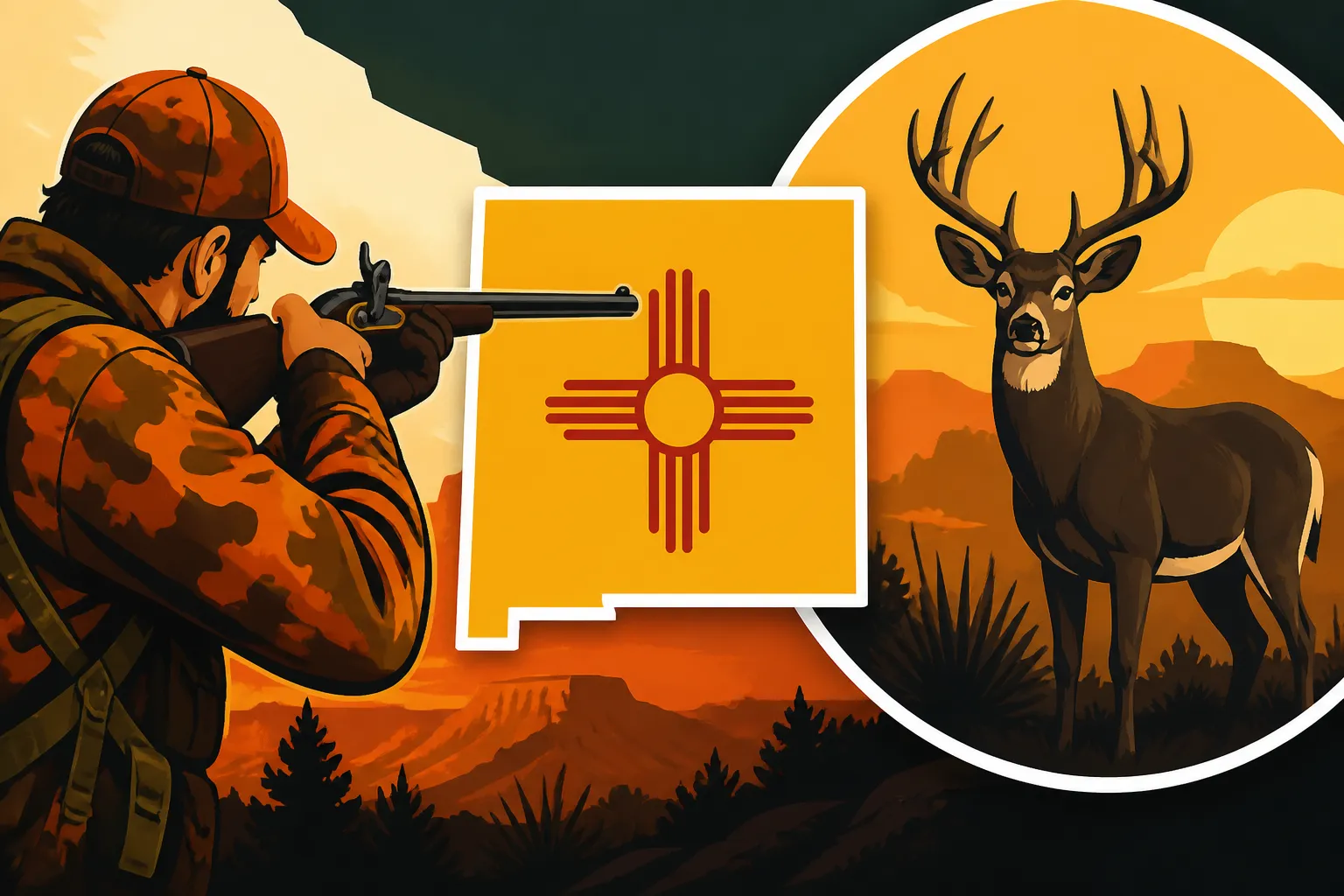
New Mexico Muzzleloader Deer Windows
Hunting deer in New Mexico can feel like navigating a maze, especially when you're trying to figure out the specific regulations and opportunities for different weapon types. It’s particularly frustrating for those drawn to the unique challenge of muzzleloader hunting, where the season dates, allowed equipment, and unit variations seem to shift annually. This guide is here to untangle the complexities of New Mexico’s muzzleloader deer windows, helping you pinpoint the best times and places to pursue a buck with your smoke pole and prepare for a truly distinctive hunting experience.
Understanding New Mexico's Muzzleloader Philosophy
For many, hunting isn't just about punching a tag; it's about connecting with tradition and embracing a deeper challenge. New Mexico's approach to muzzleloader deer seasons reflects this sentiment, offering hunters a chance to slow down, hone their skills, and experience the deer woods in a more intimate way.
The Appeal of Primitive Weaponry
There’s something uniquely alluring about a muzzleloader hunt. For many of us, it’s not just about the harvest; it’s about stepping back in time, embracing a more fundamental approach to hunting. In a world of high-tech rifles that can reach out hundreds of yards, the single-shot, smoke-billowing muzzleloader forces you to slow down, to think more critically about your approach, and to truly become part of the landscape. It’s a challenge that modern hunting sometimes lacks, pushing your woodsmanship to the forefront.
The satisfaction derived from taking an animal with a muzzleloader is profound. It’s a testament to patience, stealth, and marksmanship under pressure, often without the aid of modern optics. Every stalk, every close encounter, feels earned in a way that’s hard to replicate with other weapon systems. This pursuit of a more "primitive" experience is what draws many hunters to these specific seasons.
Furthermore, the mechanics of a muzzleloader—loading powder, sabot, and primer—create a deliberate ritual before the hunt even begins. It’s a mindful process that grounds you in the moment, fostering a deeper appreciation for the effort involved. This slower pace allows for a greater focus on reading the terrain, understanding deer behavior, and truly immersing oneself in the environment, making the overall hunting journey more meaningful.
How Muzzleloader Seasons Fit into the Calendar
New Mexico strategically places its muzzleloader deer seasons to provide additional hunting opportunities that often fall outside the peak archery or "any legal weapon" (ALW) windows. You won't typically find muzzleloader seasons kicking off with the earliest archery hunts in September, nor will they always coincide with the most popular rifle hunts in late October or early November. Instead, they’re often positioned during transition periods, bridging the gaps and offering unique advantages.
These seasons might occur in mid-fall, as the leaves are changing and deer patterns begin to shift from summer feeding to pre-rut activity. Or, quite commonly, you'll find them stretching into early December, offering a chance to hunt during the late rut or post-rut, often in colder weather that can concentrate deer and make tracking more feasible. This placement creates different scenarios for hunters to consider, from mild fall conditions to potentially snowy, winter landscapes.
By offering these distinct windows, New Mexico ensures a broader range of opportunities for hunters who might not draw an ALW tag or prefer not to bowhunt. It diversifies the hunting landscape, allowing for various hunting styles and preferences to be accommodated throughout the fall and early winter. It’s a testament to maximizing hunter access while managing game populations effectively.
Key Muzzleloader Deer Season Dates and Unit Variations
Understanding when and where you can hunt with a muzzleloader is crucial, as dates and specific unit opportunities vary significantly across Newquir New Mexico. The New Mexico Department of Game and Fish (NMDGF) provides a comprehensive hunt proclamation each year, and a careful review of these dates is paramount.
Early Season Opportunities
While not as common as late-season hunts, some New Mexico units do offer muzzleloader deer hunts earlier in the fall, typically in October. These seasons often follow closely on the heels of the New Mexico's First and Second Archery Deer Seasons or might even overlap with the early part of general rifle seasons in other units. The conditions during these early windows can be quite different from later hunts, characterized by milder temperatures and still-abundant foliage, particularly in the high country.
Hunting during these early windows means deer might still be in their predictable summer feeding patterns, moving between bedding areas and food sources. However, the rut has typically not kicked off, so expect less activity driven by breeding. Successful strategies often involve focusing on higher elevation basins, timbered ridges, and north-facing slopes where deer might be seeking cooler temperatures and richer forage. It’s a great time to be in the mountains, but requires diligent scouting to pinpoint consistent deer movement.
Always consult the official NMDGF rules and information booklet to identify the specific units and dates for early muzzleloader deer seasons. These opportunities can be less crowded than peak rifle seasons, offering a quieter, more serene hunting experience before the main rush begins. Tools like GoHunt's Insider service can be incredibly helpful for filtering these early season options and comparing potential units.
Late Season December Hunts
A substantial portion of New Mexico's muzzleloader deer hunting opportunities falls into the colder, often snowier, month of December. These late-season hunts are particularly attractive because they frequently coincide with the late stages of the mule deer rut, especially in southern and central New Mexico, and offer a chance to catch bucks that are still actively searching for does. The challenging conditions can also work to a hunter's advantage.
December hunts bring colder temperatures, shorter days, and often, snow at higher elevations. While this demands more robust gear and physical preparation, snow can be an incredible asset for tracking deer, revealing their movements and helping hunters locate fresh sign. Deer might also be more concentrated on south-facing slopes, seeking warmth and easily accessible forage, making them more predictable. If you're wondering Which Units Run a December Muzzleloader Hunt, the NMDGF proclamation will list them explicitly, but generally, many of the central and southern units offer these later windows.
The rewards of a December muzzleloader hunt can be significant. The chance of encountering a mature buck that has been worn down by the rut is higher, and the stark, quiet winter landscape offers a truly memorable hunting experience. Be prepared for harsh weather, however, as sudden snowstorms and freezing temperatures are common during this time of year.
Unit-Specific Considerations
It’s impossible to overstate that New Mexico's hunting seasons, especially for muzzleloaders, are highly localized. What's legal and available in one Game Management Unit (GMU) might be entirely different in another. This is why a thorough review of the annual NMDGF Hunt Proclamation is not just recommended, but absolutely essential. Each unit has its own set of deer populations, habitat types, and management objectives, which directly influence season dates, tag allocations, and even species (mule deer versus Coues deer).
For instance, a unit in the northern mountains might have an early muzzleloader season targeting mule deer in high-elevation timber, while a southern desert unit could offer a late December muzzleloader hunt primarily for Coues deer, with vastly different terrain and strategies involved. The terrain itself plays a huge role; a hunt could take you Hunting New Mexico From 4,000 Feet to 10,000 feet, demanding different physical and tactical approaches.
Before you even consider applying, you must understand Reading a New Mexico Hunt Code Before You Apply. Each code is a condensed piece of information, detailing the unit, species, weapon type, and specific dates. Getting this wrong can lead to applying for the wrong hunt or, worse, hunting illegally. Don't rely on word-of-mouth; always verify the details directly from the NMDGF resources.
Weapon Requirements for New Mexico Muzzleloader Hunts
New Mexico has specific regulations governing what constitutes a legal muzzleloader for deer hunting. These rules are designed to ensure fair chase and maintain the primitive spirit of these hunts, which means you can't just take any black powder gun into the field.
Legal Muzzleloader Types and Calibers
When it comes to New Mexico muzzleloader deer hunts, the regulations are quite clear: your firearm must be loaded from the muzzle. This means no break-action, in-line rifles loaded from the breech with pre-packaged cartridges, even if they use black powder. It must be a single-barrel, single-shot firearm. This rule emphasizes the traditional method of loading each component individually down the barrel.
For deer, your muzzleloader must be at least .45 caliber or larger. Common calibers like .50 or .54 are widely used and perfectly legal. The projectile must be a single, solid projectile, which includes conical bullets, patched round balls, or saboted projectiles. Unlike some other states or truly "primitive weapon" seasons, New Mexico generally allows saboted bullets during its standard muzzleloader deer hunts, offering hunters a wider range of modern projectile options that can enhance accuracy and terminal performance. If you're looking for Muzzleloader Caliber Minimums for Elk, for example, you'd find similar .45 caliber minimums, reinforcing this baseline.
It's crucial to ensure your muzzleloader meets all these specifications before heading afield. Modern inline muzzleloaders are popular, but always double-check that they are indeed muzzle-loaded from the barrel and not breech-loaded systems that might be mistaken for "primitive." Adhering strictly to these definitions is paramount for a legal and ethical hunt.
Optics and Ignition Restrictions
One of the most significant distinctions for New Mexico muzzleloader hunts, and a key factor in their primitive appeal, is the restriction on optics. During these hunts, your muzzleloader must be equipped with open or peep sights only. Scopes, whether fixed or variable power, are strictly prohibited. This rule levels the playing field, making precise shot placement at longer distances a true test of skill and practice.
This no-scope rule changes the dynamic of the hunt entirely. Without magnification, hunters must get much closer to their quarry to ensure an ethical shot, increasing the challenge and emphasizing stalking and woodsmanship. It also means extensive practice with your chosen open or peep sights is absolutely critical. You might wonder, Can You Use a Scope on a Muzzleloader? For New Mexico muzzleloader deer seasons, the answer is a definitive no.
Regarding ignition, New Mexico permits the use of percussion caps, flintlock mechanisms, and even 209 primers during its standard muzzleloader seasons. This offers flexibility to hunters, as 209 primers provide a hotter, more reliable ignition, which can be advantageous in cold or damp conditions. However, it’s worth noting that some truly primitive weapon specific hunts (which are distinct from standard muzzleloader seasons) might restrict 209 primers, so always verify the hunt code's specific requirements. For general muzzleloader deer, you're good to go with the ignition method that best suits your firearm.
Strategies for a Successful Muzzleloader Deer Hunt
Success with a muzzleloader often hinges on meticulous preparation and adopting specific hunting tactics that account for the weapon's limitations and the season's unique challenges. This isn't a long-range shooting game; it's a close-quarters chess match.
Scouting for Muzzleloader Deer
With the limited effective range of a muzzleloader and the single-shot nature of the weapon, rigorous, detailed scouting is not just an advantage—it's absolutely essential. You need to know your hunting area intimately. This means identifying not just where deer are, but how they move through the landscape, their preferred bedding areas, primary food sources, and critical water access points. For mule deer, this could involve glassing expansive sagebrush flats or timbered ridges, while for Coues deer, it’s all about the broken, brushy canyons.
Utilize modern e-scouting tools like those offered by GoHunt, which provide detailed maps and overlays to help you understand terrain features, public land boundaries, and potential travel corridors. Supplement this digital work with boots-on-the-ground reconnaissance. Consider Scouting New Mexico State Trust Land Fourteen Days Out to get ahead of the season, identifying fresh sign, game trails, and potential ambush points. The more you know about your unit, the better you can position yourself for a high-probability shot.
Focus on identifying natural funnels, pinch points, and areas where deer are forced to slow down or congregate. This could be a narrow canyon bottom, a saddle between two peaks, or a thicket bordering a water source. Knowing how deer use these features will dramatically increase your chances of getting within ethical muzzleloader range, especially when considering the diverse elevations found when Hunting New Mexico From 4,000 Feet to 10,000.
Packing for a Cold Weather Muzzleloader Hunt
Many of New Mexico’s muzzleloader deer seasons extend into the colder months, making proper gear selection vital for comfort and success. Layering is always the golden rule for hunting in variable mountain and desert climates, allowing you to adapt to temperature swings from frosty mornings to mild afternoons, or sudden cold fronts. Start with a moisture-wicking base layer, add insulating mid-layers like fleece or down, and top it off with a waterproof and windproof outer shell.
Beyond clothing, your specific muzzleloader gear needs careful consideration. Always carry extra powder charges, primers/caps, and projectiles in waterproof containers. A quality cleaning kit is crucial for field maintenance, as black powder is corrosive. Invest in sturdy, insulated, and waterproof boots, especially if your hunt involves snow or wet conditions. Don't forget reliable fire-starting tools, a headlamp with extra batteries, and a good compass or GPS, even if you’re relying on your phone for navigation.
Staying hydrated and properly nourished is just as important in cold weather as in warm. Pack high-energy snacks and a thermos with hot coffee, tea, or soup to help maintain core body temperature. If you're planning a multi-day backcountry trip, ensure your pack system is capable of comfortably carrying all your essentials, plus the potential weight of meat if you're successful.
Shot Placement and Follow-Up
The single-shot nature of a muzzleloader elevates the importance of ethical shot placement and a disciplined follow-up protocol. With only one chance, you must make it count. Practice extensively with your muzzleloader at various ranges, both from a rested position and offhand, as real-world hunting rarely offers perfect shooting benches. Familiarize yourself with your rifle's trajectory and point of impact with open or peep sights, understanding that these can be less forgiving than magnified optics.
When a deer presents itself, be patient and wait for the ideal broadside or slightly quartering-away shot angle that exposes the vital organs—the heart and lungs. Aim carefully for the crease behind the shoulder, visualizing the path of your projectile through the animal. Avoid rushed shots or attempting difficult angles, especially at the edge of your effective range. Your personal ethical range with a muzzleloader might be significantly shorter than with a modern rifle; respect that limit.
After the shot, resist the urge to immediately rush in. Mark the exact spot where the deer was standing, and then take a moment to compose yourself. Listen for sounds of the animal crashing or running. After a recommended waiting period (typically 30 minutes to an hour for a well-hit deer, or several hours for a questionable hit), begin your systematic blood trail. Muzzleloader projectiles can leave a different kind of blood trail than high-velocity rifle rounds, sometimes less profuse, so a slow, grid-style search from the last known location is often necessary. Don't give up too soon; every effort must be made to recover the animal.
Applying for New Mexico Muzzleloader Tags
Securing a New Mexico muzzleloader deer tag means navigating the state's draw system, a process that can seem daunting but is straightforward once you understand the key deadlines and how to research your odds.
The Draw Process for Muzzleloader Tags
New Mexico operates on a lottery draw system for most of its big game tags, and muzzleloader deer tags are no exception. All applications are submitted online through the NMDGF website. To apply, you'll need to purchase a Game Hunting License first, and then submit your application for the specific hunt code you desire. It's a non-refundable application fee for each species you apply for, so choose your hunts wisely.
The most critical date for any New Mexico draw application is typically March 18th at 5 p.m. Mountain Time. This is the deadline for all big game species except bear, which has an earlier closing. If you miss this window, you're out of luck for the primary draw. As detailed in "The March Deadline for New Mexico Applications," punctuality is absolutely non-negotiable in this system.
Unlike many western states, New Mexico does not use a preference or bonus point system. This means that every applicant, whether it's their first time applying or their twentieth, has an equal chance in the draw for each unit and hunt code. While this can be frustrating for those who've applied for years without success, it's also incredibly encouraging for new hunters, as they stand the same statistical chance as anyone else for highly sought-after tags.
Checking Draw Odds and Unit Popularity
Even without a preference point system, draw odds in New Mexico vary dramatically based on the unit, species, weapon choice, and specific hunt dates. A highly popular unit with a reputation for trophy bucks might have single-digit draw odds, while a less-known unit or a hunt during a more challenging time might offer significantly better chances. It’s a game of balancing your desired experience with realistic expectations.
Before you finalize your application, it's highly advisable to research historical draw odds. The NMDGF publishes draw statistics from previous years on its website, providing a transparent look at how many applicants there were for each hunt code and how many tags were issued. Third-party platforms like GoHunt's Insider service take this data and present it in an incredibly user-friendly format, often with additional layers of data like public land percentages, harvest statistics, and season breakdowns. Utilizing such tools is invaluable for making informed choices about your application.
GoHunt offers detailed draw odds and insights that can help you strategize your choices effectively. For example, if your primary goal is simply to get a muzzleloader deer tag, you might consider applying for units or hunt dates that historically have higher draw success rates, even if they aren't renowned for giant bucks. Conversely, if you're chasing a specific trophy animal in a particular unit, be prepared for lower odds and understand that it might take several years to draw. Understanding these dynamics is key to "Checking New Mexico Draw Odds Before You Apply".
Comparing Muzzleloader to Other Deer Seasons
New Mexico offers a diverse array of deer hunting opportunities, each with its own set of rules, challenges, and rewards. Understanding how muzzleloader seasons stack up against archery and "any legal weapon" hunts can help you decide which path is right for you.
Muzzleloader vs. Archery Deer Seasons
New Mexico's archery deer seasons, often split into New Mexico's First and Second Archery Deer Seasons, generally run earlier in the fall, typically throughout September. These hunts usually take place in milder weather, with abundant foliage, and often coincide with the early stages of the rut for mule deer, or the tail end of the general deer rut for Coues. The primary challenge with archery is the need for extreme proximity to the game, often requiring shots within 50 yards, demanding exceptional stealth and patience.
Muzzleloader seasons, while still demanding a relatively close shot compared to modern rifles, offer a bit more range than archery, typically allowing ethical shots out to 100-150 yards, depending on the hunter's proficiency and equipment. This extended range can be a significant advantage, especially in open New Mexico terrain where closing the final few yards with a bow can be agonizingly difficult. Muzzleloader hunts also tend to have slightly less hunter pressure than early archery seasons, particularly in certain units, offering a more solitary experience.
Ultimately, the choice between muzzleloader and archery often comes down to personal preference for the challenge. Archery is about intimate encounters and precision at very close range. Muzzleloader hunting still maintains that close-quarters challenge but provides a slight buffer in range, often during cooler parts of the season that can offer different hunting dynamics, like tracking in snow.
Muzzleloader vs. Any Legal Weapon Seasons
"Any Legal Weapon" (ALW) deer seasons are typically the most popular and highly sought-after hunts in New Mexico. These seasons generally run in late October and early November, often coinciding with the peak of the deer rut across much of the state. ALW hunts allow for modern rifles with scopes, shotguns, muzzleloaders, and bows, giving hunters maximum flexibility in their weapon choice and typically allowing for much longer effective ranges, often stretching beyond 300 yards. This is why many hunters are eager for Hunting the Any Legal Weapon Deer Windows.
Muzzleloader seasons, in stark contrast, intentionally limit weapon technology by prohibiting scopes and requiring muzzle-loading. This primitive restriction significantly reduces the effective range and demands a different hunting strategy focused on closing the distance stealthily and making a precise, ethical shot with open sights. The pressure on muzzleloader hunts is generally less intense than during the peak ALW seasons, as fewer hunters are willing or able to commit to the specific equipment and skill set required.
The decision between a muzzleloader and an ALW hunt boils down to the kind of experience you're seeking. If you're after the highest probability of harvesting a deer during the peak rut with the aid of modern technology and extended range, an ALW tag is likely your preference. However, if you're drawn to a more traditional, challenging hunt that emphasizes woodsmanship and intimate encounters, with the added bonus of potentially lower hunter density, then a muzzleloader tag offers a uniquely rewarding path. Both types of hunts can be incredibly successful, but they cater to very different hunting philosophies.
| Feature | Archery Deer | Muzzleloader Deer | Any Legal Weapon Deer |
|---|---|---|---|
| Weapon Type | Bow/Crossbow | Muzzleloader (.45+ cal) | Rifle, Shotgun, Bow, ML |
| Optics Allowed | Pin Sights, Magnified Scopes (Crossbow) | Open/Peep Sights Only | Scopes Allowed |
| Loading | Arrows/Bolts | Muzzle-loaded, single shot | Magazine/Internal |
| Season Timing | Early Fall (Sept) | Fall/Early Winter (Oct-Dec) | Late Fall (Oct-Nov) |
| Pressure | Moderate to High | Low to Moderate | High |
| Typical Range | Under 50 yards | Under 150 yards | Up to 500+ yards |
| Hunting Style | Spot/Stalk, Ambush, Calling | Spot/Stalk, Still Hunting | Spot/Stalk, Still Hunting |
Disclaimer
The information provided in this guide is for general informational purposes only and is not intended as legal advice. Hunting regulations and season dates are subject to change annually by the New Mexico Department of Game and Fish. Always consult the most current official NMDGF Hunting Proclamation and regulations prior to any hunting activity to ensure compliance with all state laws and rules.