Where Baiting Is Allowed and Where It Is Not
Navigating the myriad of hunting regulations can sometimes feel like trying to hit a moving target in a windstorm, and few topics stir up as much confusion and passionate debate as baiting. Many hunters wonder if they can use that trusty bag of corn or a strategically placed mineral block to attract game, only to find the rules are a patchwork of allowances and prohibitions depending on the species and even the specific location. This guide is here to untangle the complexities of baiting laws in New Mexico, ensuring you know exactly where you stand and how to stay on the right side of the regulations.
Understanding New Mexico's General Baiting Regulations
Let's cut right to the chase: New Mexico's stance on baiting, especially for big game, is pretty clear-cut, but it's the nuances and exceptions that often trip people up. It's not just about dumping a pile of corn; the definition of baiting can be surprisingly broad.
The Core Rule: Big Game and Baiting
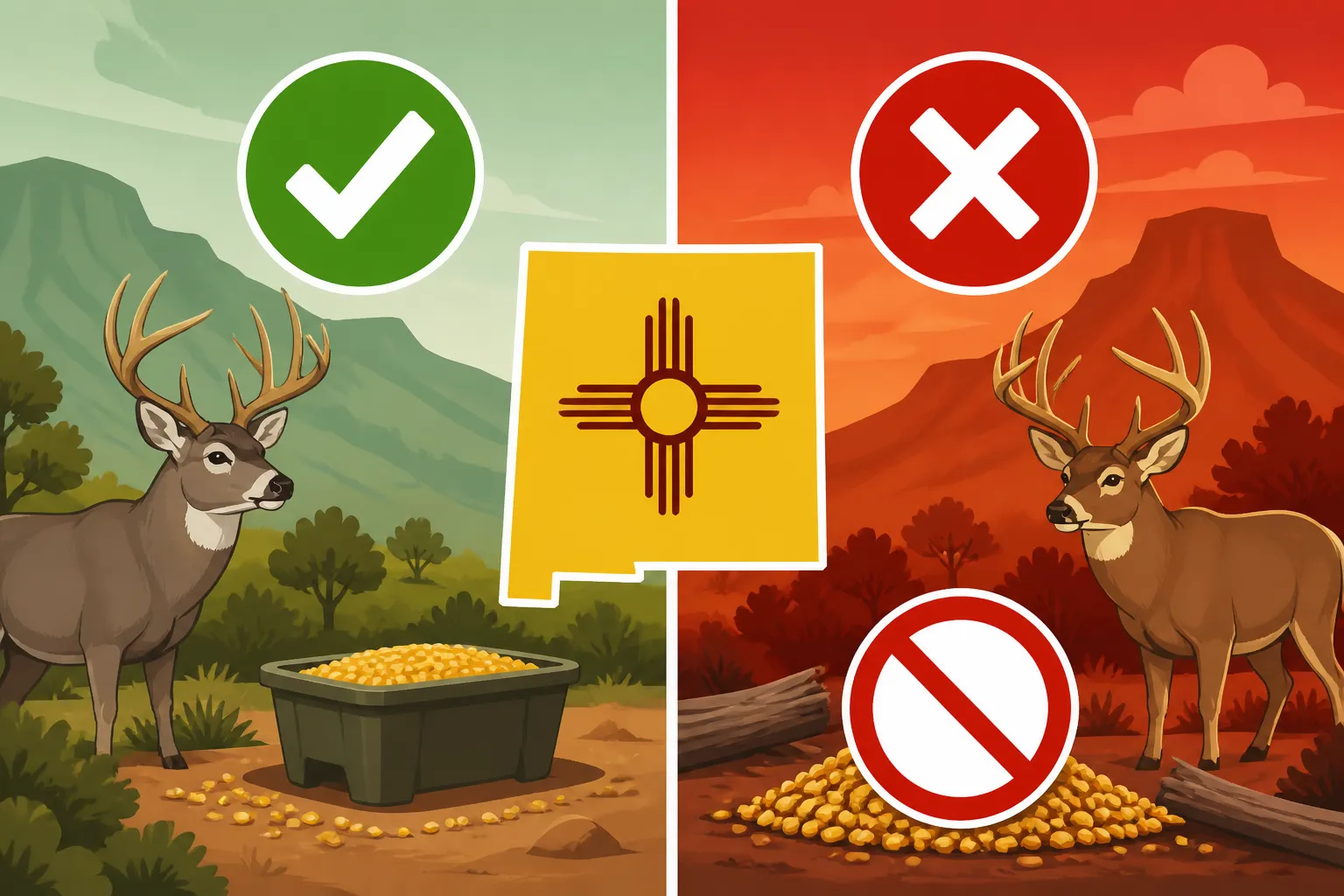
When it comes to big game animals like elk, deer, antelope, or oryx, New Mexico takes a firm "no baiting" stance. This means you cannot use any feed, minerals, or other attractants that lure or entice big game animals to a specific area for the purpose of hunting them. This prohibition isn't just about ethical fair chase, though that's certainly a significant component; it's also a crucial measure to prevent the spread of diseases. When animals congregate closely around a food source, the risk of transmitting illnesses like Chronic Wasting Disease (CWD) skyrockets. The New Mexico Department of Game and Fish (NMDGF) is very serious about managing these risks, and controlling unnatural congregating of animals is a key strategy. For more on disease prevention, understanding How Chronic Wasting Disease Testing Works can be really insightful.
This rule applies universally across public and private land for big game. It can be incredibly frustrating for hunters, especially those coming from states with different regulations, to have a technique they've always used suddenly deemed illegal. However, the intent is always to maintain healthy wildlife populations and preserve the challenging, fair-chase nature of big game hunting. Imagine spending months planning your dream elk hunt in the Gila only to realize your scouting methods or preferred tactics fall afoul of the law simply because of a misunderstanding about what constitutes "bait." It’s a bitter pill to swallow, and one this guide aims to help you avoid.
Exceptions to the Big Game Rule: What Isn't Bait
Now, here's where things get a little more intricate. While the big game baiting rule is strict, not everything that attracts an animal is considered illegal bait. The key distinction often lies in whether the item is intended for consumption and designed to lure animals.
For instance, certain non-food attractants or scents are generally permitted. Think about using an elk urine scent during the rut, or a deer attractant scent for a whitetail hunt. These are designed to appeal to an animal's olfactory senses, mimicking the presence of another animal, rather than providing a food source. The critical difference is that these items are not ingested. You're not providing a meal; you're providing an illusion. So, while you might be trying to trick a bull into thinking a cow is nearby when Bugling Bulls Through New Mexico's Mid-September Rut, you're not offering it a snack.
Another common point of confusion revolves around incidental feeding. If you're driving your truck through a cornfield to get to your hunting spot and some corn falls out, and a deer happens to eat it later, that's not considered baiting. The intent matters here. Intentional baiting involves purposefully placing or distributing attractants for the purpose of hunting. If you scatter a handful of sunflower seeds while calling in a turkey, that's different from pouring out a 50-pound bag of deer feed. It's a fine line, and understanding this distinction can save you a lot of grief.
Baiting for Other Species in New Mexico
The world of baiting rules opens up considerably once you step away from big game. New Mexico recognizes that different species require different management strategies and ethical considerations. What's strictly forbidden for a trophy bull elk might be a perfectly legal and even recommended practice for controlling nuisance predators.
Small Game, Predators, and Furbearers
For species like coyotes, bobcats, foxes, and even certain small game animals, the baiting rules are significantly more relaxed, or in many cases, non-existent. You can absolutely use bait to lure in predators for hunting or trapping. This is often done to help manage predator populations, which can impact big game herds, or simply for the sport of predator hunting. Common baiting methods for these animals include roadkill, scraps from game processing, or commercially prepared predator baits.
This difference in regulation makes sense when you consider the overall wildlife management goals. With predators, the focus often shifts to population control and nuisance management, where efficient take methods are sometimes necessary. When you're out there using electronic calls for predators and varmint hunting, you might also be combining those calls with a visual bait to seal the deal. Just be sure to double-check local ordinances or specific unit rules, as there can sometimes be exceptions or specific guidelines on public land.
Upland Birds and Waterfowl Considerations
When it comes to birds, especially migratory species, baiting rules become very strict once again, often mirroring the prohibitions for big game, but with a federal layer of regulation. For species like doves and ducks, federal law, enforced by the U.S. Fish and Wildlife Service, prohibits hunting over bait. This includes any grain, salt, or other feed that is scattered or placed to attract migratory game birds to an area.
The rationale here is rooted deeply in conservation and fair chase. Migratory birds are incredibly vulnerable to overharvest when concentrated by bait. These rules prevent unscrupulous hunters from exploiting birds during their migration. It’s important to understand the concept of a "baited area," which can even persist after the bait itself is gone. If the ground is still considered "baited" because of residual attractants, it's illegal to hunt there. For local upland birds like quail, the rules are typically less stringent than for migratory species, but it's always best to consult the NMDGF regulations booklet or call them directly if you have any doubts. This becomes especially pertinent if you plan on combining your quail hunt with, say, a waterfowl hunt in the same general area, because the regulations can differ dramatically.
Legal Considerations and Potential Pitfalls
Even with the clearest regulations, there are always situations that can lead to unintentional violations. New Mexico's hunting laws are designed to be comprehensive, but they also place a significant burden of responsibility on the hunter to know and adhere to them.
Proximity to Bait and "Reasonable Knowledge"
One of the most insidious traps for hunters is unknowingly hunting over bait placed by someone else. New Mexico law often includes a "reasonable knowledge" clause, meaning you can be held accountable if you knew or reasonably should have known that bait was present. You can't just turn a blind eye and claim ignorance. If you're hunting a deer and you suddenly stumble upon a pile of corn that wasn't there yesterday, your hunt needs to end there, or you need to move far away from that spot.
Imagine this scenario: you've been scouting a fantastic piece of public land using tools like GoHunt, marking potential bedding areas and travel corridors. You arrive for opening morning, settle into your stand, and then realize a new, suspiciously neat pile of deer feed has appeared just outside your effective range. What do you do? The ethical and legal answer is to pack up and move. Not only is hunting over that bait illegal, but the presence of bait can fundamentally alter animal behavior, potentially drawing in deer or other big game from a wide area, disrupting natural patterns. This is precisely why the NMDGF publishes Where the Current New Mexico Regulations Are Posted – so hunters have no excuse for not knowing.
Ethical Debates and Hunter Responsibility
Beyond the letter of the law, the debate over baiting often delves into deeply held ethical beliefs about hunting. For many, fair chase means pursuing an animal under natural conditions, relying on skill, woodcraft, and strategy to outwit game. Baiting, to some, undermines this fundamental principle by creating an artificial advantage. This is especially true for big game, where the challenge is part of the appeal.
New Mexico's regulations reflect a strong leaning towards this fair chase ethic for big game. As hunters, we have a collective responsibility to uphold these standards, not just to avoid fines or penalties, but to ensure the integrity of our sport and the health of our wildlife. Being a responsible hunter means not only understanding the rules but also understanding the spirit behind them. It means taking the time to truly scout a unit, like using digital mapping tools for E-Scouting a New Mexico Unit Before the Season, to locate natural food sources and travel patterns, rather than relying on artificial attractants.
Specific Scenarios and Grey Areas
Despite the clear general rules, some specific situations often leave hunters scratching their heads. New Mexico's diverse landscape, from arid deserts to high mountain timber, presents unique challenges and opportunities that can blur the lines.
Hunting Over a Stock Tank Legally
One question that pops up regularly, particularly in New Mexico's drier units, is about hunting near water sources. Can you hunt over a stock tank? The simple answer is yes, generally. Natural water sources – whether they are springs, rivers, or man-made stock tanks designed solely for water collection – are perfectly legal places to hunt. Animals, especially in the desert, rely heavily on these water sources, and concentrating on them is a legitimate hunting strategy. For a deeper dive, check out the article on Hunting Over a Stock Tank Legally.
The crucial distinction, however, is whether any attractant other than water has been added to that location. If someone pours molasses, a salt block (unless specifically allowed for certain species, which is generally not the case for big game), or grain near a stock tank, it suddenly becomes an illegal baiting site. The water itself is a natural attractant; anything added to enhance that attraction for big game turns it into bait. So, while sitting a water source for deer and antelope is a time-honored tradition in arid regions, ensure it's truly natural or un-enhanced. The same applies to Water Sources and Ethics in Desert Hunting, where respecting the land and wildlife means ensuring your activities don't compromise natural behaviors.
Trail Cameras and Baiting Intersections
Trail cameras are incredibly popular scouting tools, offering hunters a glimpse into the secretive lives of game animals. But how do they fit into the baiting discussion? In New Mexico, using trail cameras is generally legal on public land, with specific regulations in place regarding identification and placement. You can learn more about this in Trail Camera Rules on New Mexico Public Land.
However, the intersection with baiting is critical. While a trail camera itself is not bait, using one in conjunction with illegal bait is still a violation. You cannot place a trail camera directly over a pile of corn if you're targeting big game. The camera merely records what happens; it doesn't legitimize an illegal attractant. If you're using a camera to monitor a natural travel corridor, a water source, or a rub line, that's perfectly fine. But if it's placed to monitor an area you've intentionally baited for big game, both the baiting and the camera usage in that context would likely be considered illegal. It's about the underlying act of baiting, not the observation tool.
Mineral Blocks and Salt Licks
These are perhaps the most misunderstood items when it comes to baiting laws. Many hunters believe mineral blocks or salt licks are natural and therefore permissible. For big game in New Mexico, this is largely not the case. Commercial mineral blocks and salt licks, even if they mimic natural minerals, are considered bait if placed to attract big game for hunting purposes. These artificial attractants bring animals to a specific spot, altering their natural movement patterns and creating congregation points that wouldn't otherwise exist.
The only way mineral supplements might be permissible in a big game hunting context would be if they were part of an agricultural operation for domestic livestock, and even then, there are strict rules about the proximity of hunting activity to these areas. Always remember that for big game, the default assumption should be: if you're placing something edible or consumable for the purpose of attracting an animal to hunt it, it's probably bait and therefore illegal. This isn't just a New Mexico rule; many states share similar prohibitions, often driven by the CWD concerns we mentioned earlier.
Staying Compliant and Informed
With so many nuances, it's easy to feel overwhelmed. However, staying on the right side of the law is not only crucial for avoiding penalties but also for maintaining the integrity of hunting. There are straightforward steps you can take to ensure you're always compliant.
Consulting the New Mexico Department of Game and Fish (NMDGF)
Your single most authoritative source for all hunting regulations, including baiting, is the New Mexico Department of Game and Fish (NMDGF) annual hunting proclamation. This document is updated every year, and it’s your primary legal reference. Never rely solely on hearsay, forum discussions, or even old regulation booklets. The rules can and do change. The NMDGF website is the best place to find the most current information, and they also provide specific contact information if you have a question that isn't clearly answered in the booklet. Checking Where the Current New Mexico Regulations Are Posted should be a ritual for every hunter before heading afield.
If you have a particularly tricky scenario or are unsure about a specific attractant, don't hesitate to call an NMDGF game warden or biologist. They are there to help clarify the rules and prevent violations. It's much better to ask a question beforehand than to face a citation later. They often deal with these questions daily and can provide guidance tailored to your specific situation.
Utilizing Mapping and Scouting Tools
Modern technology has revolutionized how hunters approach the outdoors. Digital mapping applications like GoHunt and onX Hunt provide incredible detail on land ownership, terrain features, and even specific unit boundaries. These tools are invaluable for e-scouting, planning your approach, and ensuring you are hunting legally and ethically.
While these tools won't tell you if someone has illegally baited an area, they can help you identify natural features like water sources, dense cover, or traditional game trails that might concentrate animals without human intervention. By understanding the natural lay of the land, you can focus your efforts on fair-chase hunting strategies. You can plan your approach to natural funnels or locate optimal glassing points, rather than relying on methods that skirt the edge of legality. Think of these tools as your digital guides to becoming a more effective and compliant hunter, helping you hone skills that align with New Mexico's emphasis on fair chase. When you're trying to figure out Reading a New Mexico Hunt Code Before You Apply, these apps can help visualize the unit the code refers to, further enhancing your understanding of the hunting landscape.
| Species Category | Baiting Legality (General) | Common Attractants | NMDGF Big Game Stance | Key Considerations |
|---|---|---|---|---|
| Big Game | Generally Prohibited | Corn, grain, mineral blocks, salt licks, molasses | Illegal | Fair chase ethics, disease prevention (CWD), "reasonable knowledge" |
| Small Game (Non-migratory) | Generally Permitted (check species-specific rules) | Seeds, fruit, commercial attractants | Generally Allowed | Intent to hunt the specific species, avoid big game overlap |
| Predators/Furbearers | Generally Permitted | Roadkill, meat scraps, commercial baits | Generally Allowed | Population control, trapping rules, local ordinances |
| Migratory Birds | Strictly Prohibited (Federal regulation applies) | Grain, salt, any feed | Illegal | Federal law (USFWS), conservation, "baited area" definition |
Disclaimer
Please remember that hunting regulations can change. Always consult the most current New Mexico Department of Game and Fish (NMDGF) hunting proclamation and regulations for the exact and up-to-date rules before engaging in any hunting activities. This article is intended for informational purposes only and does not constitute legal advice.