Sitting Water for Deer and Antelope
Hunting in New Mexico often means contending with an incredibly dry, vast landscape where finding game can feel like searching for a needle in a haystack. Many hunters experience the frustration of endless miles and glassing sessions yielding little more than heat waves, especially during early seasons. This guide is dedicated to a time-tested strategy that directly addresses this challenge: effectively sitting water sources for mule deer, Coues deer, and pronghorn antelope, helping you understand how to leverage their fundamental need for water to your advantage.
Understanding New Mexico's Arid Landscape and Water's Role
New Mexico is a land of stunning contrasts, but one thing remains constant across much of its prime hunting grounds: the pervasive aridity. Water, or the lack thereof, dictates everything. For hunters, this isn't just an observation; it's a critical piece of the puzzle that, when understood, can transform a tough hunt into a productive one.
The Scarcity of Natural Water Sources
If you’ve spent any time driving through or hiking across New Mexico’s vast expanses, you’ve quickly come to appreciate how little standing water there truly is. Outside of major river systems like the Rio Grande or the Pecos, and the higher elevations of the national forests after recent precipitation, natural water sources are few and far between. We're talking about everything from tiny, shaded seeps that barely produce a trickle to seasonal puddles in low-lying areas that vanish as quickly as they appear under the relentless sun.
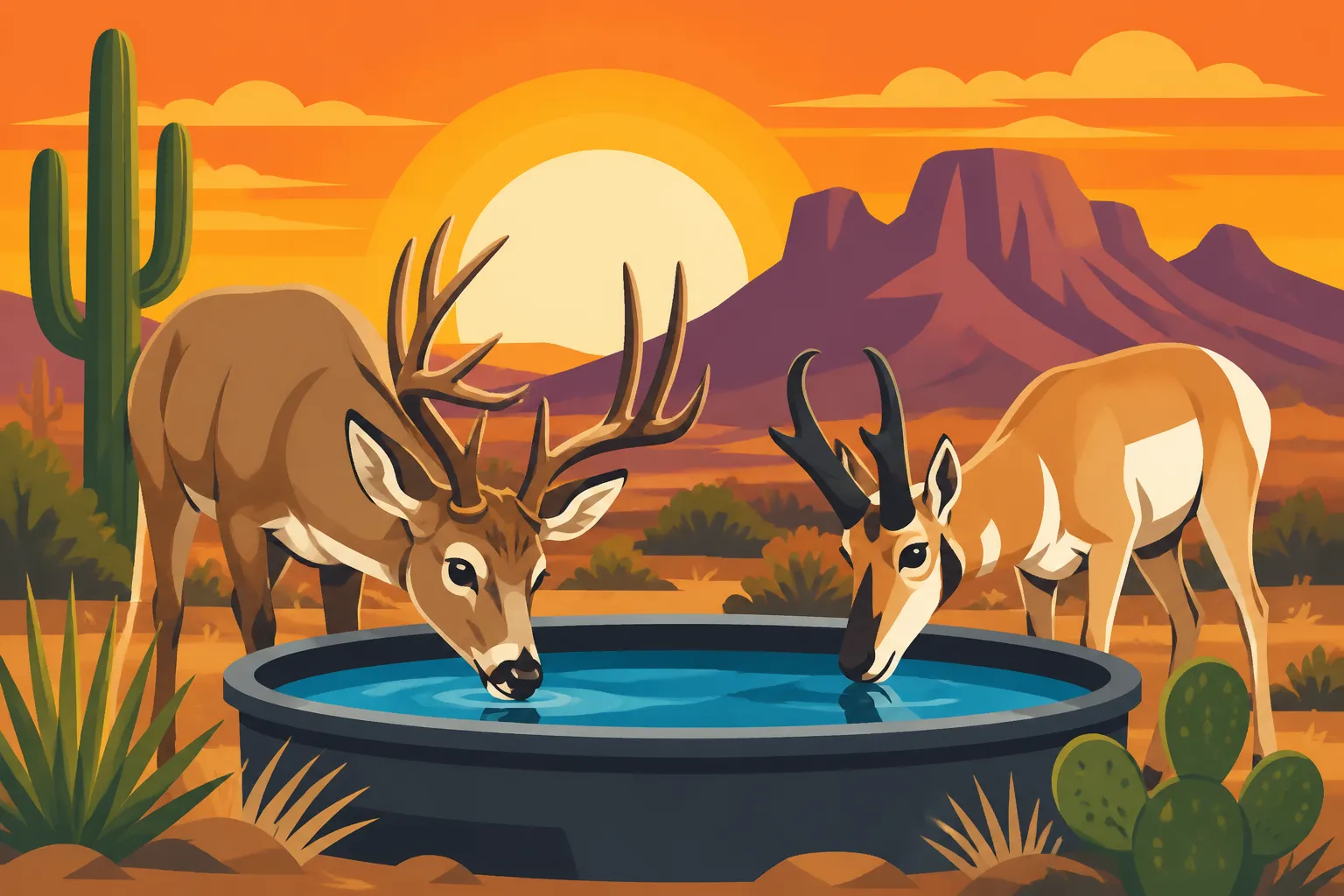
This scarcity means that any consistent water source—be it a man-made stock tank, a guzzler specifically designed for wildlife, or a perennial spring—becomes an absolute lifeline for deer and antelope. During prolonged dry spells, which are incredibly common here and can significantly impact game populations as discussed in How Drought Affects Desert Deer Numbers, these water points are often the only reason animals can survive. Hunters who grasp this fundamental reality gain a significant advantage, because these hotspots become predictable congregation points. This isn't just about thirst; it's about survival.
How Deer and Antelope Depend on Water
Just like us, all living creatures need water to survive, and New Mexico’s big game animals are no exception. Their physiological need for hydration shapes their entire daily and seasonal behavior patterns. While some desert species, like mule deer, can go longer without direct water intake by getting moisture from vegetation, they still need to drink regularly, especially when temperatures soar or during periods of intense activity like the rut. Pronghorn antelope, with their wide-open country habitat, are particularly susceptible to dehydration and often need to water more frequently than deer.
During the hotter months, especially during an early season hunt, you'll find that these animals will modify their schedules to visit water sources during cooler times of the day, or, if conditions are extreme, even multiple times a day. Their bodies are constantly working to maintain balance, and losing too much water through respiration and digestion means a trip to the nearest tank. This dependency creates a vulnerable, yet predictable, pattern that serious hunters can exploit. Understanding these needs is the first step in successfully Finding Water in New Mexico's Dry Country.
Scouting and Identifying Prime Water Sources for Sitting
The key to successful water sitting isn't just finding any water; it's about finding the right water sources and understanding when and how animals use them. This takes a combination of modern technology and old-fashioned boots-on-the-ground effort.
Utilizing Maps and Digital Tools for Water Sources
In this day and age, our phones and computers are powerful scouting tools that can save you countless hours of hiking, especially when you're E-Scouting a New Mexico Unit Before the Season. Start by leveraging satellite imagery on mapping apps like GoHunt. Zoom in on your chosen unit, looking for distinct features that indicate water. Think stock tanks, which appear as dark circles or squares, often with faint trails radiating out from them. Look for guzzlers, which might be harder to spot but often have associated access roads or disturbed earth. Even subtle changes in vegetation color can indicate a seep or a small, hidden spring.
Cross-reference these potential spots with land ownership layers. Knowing whether a water source is on public land or private property is absolutely critical. You definitely don't want to inadvertently trespass, and understanding Reading a Land Ownership Layer Correctly can prevent headaches. Make note of surrounding terrain – areas with good cover nearby, or a natural funnel that might push game towards the water, are prime candidates. Don’t just look for the water itself, but the entire ecosystem surrounding it. Many hunters overlook the importance of these subtle details when planning their approach to a promising spot.
Ground Scouting and Reading Sign Around Water
Once you've identified potential water sources on your map, it's time to put boots on the ground. This is where you truly confirm if a spot is worth your time. Approach these areas carefully, ideally during the middle of the day when game activity is minimal, and always paying attention to the wind. Look for fresh tracks in the mud or soft soil around the edge of the water. Mule deer tracks are generally larger and more heart-shaped than Coues deer, while antelope tracks are distinctively pointed and smaller. Pay attention to how fresh the tracks are – clear, undisturbed prints indicate recent activity.
Beyond tracks, look for droppings. Fresh droppings, particularly those that are still somewhat moist, are a dead giveaway that animals are frequenting the spot. Also, observe the vegetation around the water. Is there browse that's been recently nipped? Are there rubs on small trees or shrubs nearby, indicating deer activity? The more fresh sign you find, the higher the probability of a successful sit. It's also vital to check for human pressure. Too many boot prints, ATV tracks, or discarded trash might indicate a heavily hunted spot, which can make animals extremely wary. Your goal is to find those less disturbed, consistent watering holes.
Setting Up for a Successful Water Sit
Finding the right water source is only half the battle. The next, and arguably most crucial, step is how you position yourself and manage your presence to increase your chances of a close encounter.
Choosing Your Hide and Managing Scent
The most important rule when sitting water is to be absolutely invisible. Deer and antelope have incredible senses, and they will bust you long before they ever reach the water if you're not careful. Your hide needs to offer complete concealment from all angles, especially from the direction you expect animals to approach. Utilize natural cover like thick cedar trees, dense brush, or rock formations. If natural cover is sparse, a pop-up ground blind can be an excellent investment. Set it up well in advance of your hunt, if possible, allowing animals to become accustomed to its presence.
Always, always, always play the wind. This cannot be stressed enough, especially in New Mexico's often unpredictable thermals. Position yourself so your scent is blowing away from the water source and any likely approach routes. Even a slight shift in wind can betray your presence. Many hunters invest heavily in scent control sprays, specialized clothing, and ozone generators, and while these can help, nothing replaces being vigilant about wind direction. Think about a mule deer’s acute sense of smell; it’s their primary defense, and you need to respect it.
Timing Your Sit and Being Patient
Timing is everything when it comes to sitting water. During the hotter parts of the season, like those early archery hunts, animals will often come to water during the cooler hours of dawn and dusk. However, don't rule out midday sits. When the mercury climbs and there's no relief from the sun, deer and antelope may become so thirsty that they'll risk a midday trip to water. This is particularly true if the area has low hunting pressure. These animals are masters of energy conservation, and hydrating helps them cope with the punishing heat, as discussed in Heat Management on an Early Season Hunt.
Keep an eye on the moon phases, too. A full moon can mean animals are more active at night, potentially watering under the cover of darkness, making daylight visits less frequent. Cloudy days or days immediately following a rain shower might also slow daytime activity, as animals can get some moisture from wet vegetation. But ultimately, the most important "timing" factor is patience. You might sit for hours, even all day, with no activity, only for the buck of a lifetime to step out in the last minutes of legal shooting light. Bring a comfortable cushion, plenty of water for yourself, and perhaps a good book or podcast for the lulls. Binoculars that survive an all-day session are also a crucial piece of gear.
Ethical Considerations and Water Source Etiquette
Hunting over water, while legal and effective in New Mexico, comes with its own set of ethical responsibilities and considerations that every hunter needs to respect.
Respecting Wildlife and Other Hunters
When you're dealing with a critical resource like water in an arid environment, your actions have a magnified impact. First and foremost, never contaminate a water source. That means no cleaning game nearby, no dumping trash, and being mindful of any chemicals or scents you might be inadvertently introducing. The water isn't just for the animals you're hunting; it's for all wildlife, and often for livestock as well.
Secondly, maintain an ethical distance. While you want to be close enough for a clean shot, don't crowd the water source in a way that makes animals too nervous to approach at all. The goal is to hunt ethically, not to stress the local wildlife unnecessarily. On public land, there's always the chance of encountering other hunters. If you find someone else already sitting a water source, respect their presence and move on. Communication and courtesy go a long way in the field. Leave the area cleaner than you found it, always.
Legalities of Hunting Over Water in New Mexico
New Mexico's hunting regulations are quite clear on hunting over water. Unlike baiting, which involves introducing food attractants, simply sitting near a natural or artificial water source is perfectly legal. The state defines baiting specifically as "the placing, exposing, depositing, distributing or scattering of salt, grain, or other feed or edible attractants that could lure, entice or attract game mammals or birds." Water, by itself, is not considered bait.
Therefore, you are well within your rights to sit a stock tank, guzzler, or spring to hunt deer and antelope. However, it's always crucial to double-check the current year's regulations booklet for any changes. The legality of Hunting Over a Stock Tank Legally is a common question, and thankfully, for New Mexico hunters, it's a valid and productive strategy. Just remember, the rules apply to everyone, so ensure you understand the boundaries and conditions for hunting around these precious resources.
Comparing Deer and Antelope Water Sitting Strategies
| Feature | Mule Deer & Coues Deer | Pronghorn Antelope |
|---|---|---|
| Habitat | Varied: Timbered mountains, deep canyons, desert brush | Open grasslands, rolling plains, sagebrush flats |
| Typical Approach | Often use washes, draws, natural cover to reach water | More exposed, may approach cautiously across open ground |
| Distance to Water | Can be more comfortable with cover further from water | Prefer to scan surroundings from a distance before committing |
| Hide Selection | Dense brush, large boulders, ground blinds near travel routes | Low profile ground blind, small depressions, minimal cover on approach |
| Scent Management | Crucial, especially in thicker cover where wind swirls | Paramount due to open country and keen sense of smell |
| Peak Activity | Dawn/Dusk, midday during extreme heat | Midday during extreme heat, often more frequent visits |
| Optics Needs | Binoculars for scanning cover, potentially a spotter for long ranges | High-power binoculars/spotting scope for distant scanning |
| Patience Level | High; can be long waits, often solitary visits | Very high; they are notoriously wary, often come in groups |
| Internal Link | Where Mule Deer Range in Northern Units | Pronghorn on the Eastern Plains Units |
Sitting water in New Mexico is a powerful tactic, especially during the harsh conditions of early seasons. It demands patience, meticulous scouting, and unwavering attention to detail regarding scent and concealment. But for those willing to put in the effort, it often turns the odds in their favor, providing intimate encounters with some of the state's most iconic big game animals.
Disclaimer
Please remember that hunting regulations, fees, and season dates can change. Always consult the official New Mexico Department of Game and Fish (NMDGF) Rules and Information Booklet for the current year before planning any hunt. This guide is for informational purposes only and does not supersede state regulations.