What Semi-Guided Actually Means on a Hunt
When you're dreaming of a New Mexico hunting adventure, the options can feel like a labyrinth of terms: fully guided, drop camp, DIY, and then there's "semi-guided." It's a phrase that often leaves hunters scratching their heads, wondering what exactly they're paying for and what they're still responsible for. This guide is here to untangle that confusion, breaking down what a semi-guided hunt truly means in the rugged and diverse landscapes of New Mexico, and whether it's the right fit for your next big game pursuit.
Defining "Semi-Guided": More Than Just a Drop Camp
The term "semi-guided" lives in that fascinating middle ground between a full-service, white-glove guided hunt and the entirely self-reliant do-it-yourself expedition. It's not just a drop camp, and it's certainly not a fully outfitted experience. Instead, it’s a bespoke arrangement where you get a significant leg up from an outfitter, but the ultimate success of your hunt still rests squarely on your shoulders. It's for the hunter who cherishes independence but appreciates local knowledge and logistical support.
The Core Distinction from Fully Guided
Let's start by clarifying what a semi-guided hunt is not. It's not a scenario where your guide is with you from dawn till dusk, calling the shots, reading the terrain, and tracking your animal. In a fully guided hunt, especially for species like elk in the demanding Gila Wilderness, your outfitter and their guides are actively leading the hunt every single day. They decide where you're going, they're glassing with you, they're bugling, they're making the final decisions on approach and shot placement. You're essentially a client along for the ride, albeit an active participant with the trigger finger.
A semi-guided hunt flips much of that dynamic. While a licensed New Mexico outfitter is involved, they are not continuously present with you in the field. They provide a framework, assistance, and advice, but you are the primary decision-maker during the hunt itself. You'll be the one cutting tracks, reading wind, and planning your daily movements. This distinction is vital for those who want to experience the thrill of finding and harvesting an animal largely on their own terms, yet still benefit from professional insights. It’s often a more affordable option, too, which can be a huge factor for many hunters. You won't find the same The New Mexico Outfitter Draw and Its Two-Day Rule requirements for a semi-guided hunt as you would for a draw tag obtained through the outfitter pool.
How it Differs from a Basic Drop Camp
Now, let's distinguish it from a basic drop camp, which is another common point of confusion. A traditional drop camp, particularly in wilderness areas like parts of the Gila National Forest, typically involves an outfitter packing you and your gear into a pre-set camp (or a spot where you set up your own). They drop you off, leave you with some emergency communication, and then return on a pre-arranged date to pack you out. Beyond transport and a camp, there's little to no active hunting guidance or support during your hunt.
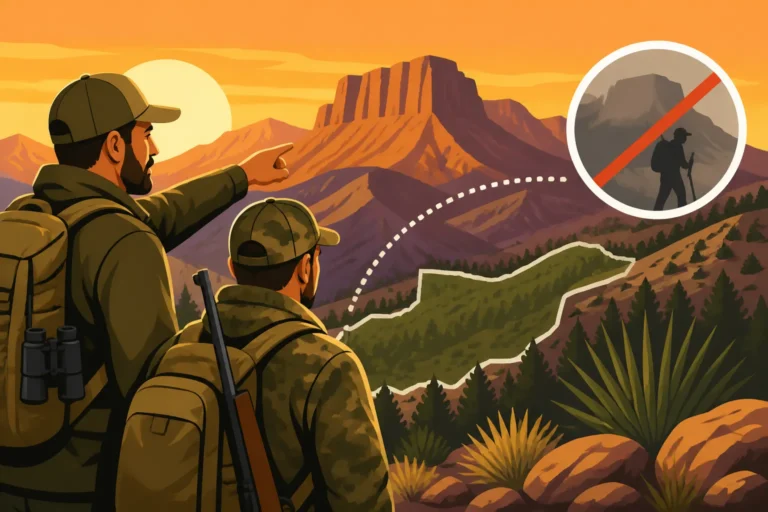
A semi-guided hunt usually offers more. While it might include pack-in/pack-out services and a camp setup, it often comes with a crucial layer of pre-hunt or limited in-field consultation. This might mean the outfitter has scouted the area, has recent intel on animal movement, or provides detailed maps with marked water sources, bedding areas, and travel corridors. They might check in with you periodically via satellite communication, or they might meet you at the trailhead daily to offer advice before you head out. This extra level of intelligence and occasional touch-base support is what elevates a semi-guided experience above a bare-bones drop camp. It's about providing the tools and knowledge, but letting you wield them.
What You Can Realistically Expect from a Semi-Guided Hunt in New Mexico
Understanding what a semi-guided hunt delivers is key to managing expectations and ensuring you get value for your investment. New Mexico's diverse terrain, from the high peaks to the desert plains, means that the specifics can vary greatly, but there are common threads that tie semi-guided hunts together. It’s a delicate balance of independence and assistance, tailored to hunters who want a significant challenge without going completely unassisted.
Pre-Hunt Communication and Scouting
One of the biggest values in a semi-guided hunt often comes before you even set foot in the unit. A reputable outfitter will typically engage in extensive pre-hunt communication. This isn't just a quick email; it should be a detailed exchange of information. They might provide you with recent scouting reports, offering insights into where they've seen game, current patterns, and even specific areas to focus your efforts. This could include marked maps, digital overlays for your GPS or mapping apps, and discussions about tactics that have worked in that particular unit. For example, if you're hunting elk in a unit like 15 or 16D, they might advise on specific drainages holding bulls during a given week, or point out historical wallows.
They've often spent considerable time in the unit, even if it’s not exclusively for your hunt. This boots-on-the-ground knowledge is invaluable, especially if you're a nonresident or new to a particular New Mexico's Gila National Forest for Elk Hunters. They might offer general advice on the terrain, water sources, and common game trails. While they won't typically take you out for scouting before your hunt, they will share their findings, allowing you to fine-tune your own e-scouting efforts. Many hunters combine this outfitter intel with tools like GoHunt, utilizing their robust mapping features and draw odds data to further refine their strategy. This synergy of professional experience and personal research can be incredibly powerful.
Field Assistance and Logistics
The "semi" in semi-guided really shines here. While your outfitter won't be your constant shadow, they often provide critical logistical support. This can manifest in several ways:
- Transportation: They might drive you to specific trailheads each morning, dropping you off in a key area and picking you up at a predetermined spot later in the day. This eliminates the headache of navigating unfamiliar roads or getting your truck stuck deep in the backcountry. Imagine the convenience of being driven deep into a rugged unit, rather than spending precious hunting time figuring out rough access roads.
- Game Retrieval: This is a huge one, especially for elk. Down an elk miles from a road, and the thought of packing it out solo can be daunting. Many semi-guided services include assistance with game retrieval, which might involve packing an animal out by horse or UTV, or guiding you to the nearest accessible point for your own recovery efforts. This alone can be worth the cost for many hunters.
- Advisory Role: Throughout the hunt, the outfitter might provide ongoing advice. This could be checking in via satellite communicator to discuss your day's findings, suggest alternative areas based on new information (like changing weather or fresh sign), or help you strategize your next move. They are there as a resource, not a director. You're still making the final calls, but you have an experienced ear to bounce ideas off. This is a tremendous asset, particularly in complex terrain where reading the landscape and game behavior is critical.
Camp and Gear Support
The level of camp support in a semi-guided hunt can vary widely, making it crucial to clarify this upfront with your chosen outfitter. It generally falls somewhere between a fully self-sufficient wilderness camp and a comfortable lodge.
- Camp Provision: Some semi-guided hunts will provide a fully set up camp, which might include wall tents, cots, cooking gear, and even a heat source. You show up, and the infrastructure is already there, ready for you to move your personal items in. This saves immense time and effort compared to hauling and setting up your own heavy camp.
- Cooking and Meals: This is a major differentiator. In a fully guided camp, meals are typically prepared for you. In a semi-guided scenario, you are almost always responsible for your own cooking and food provisions. The outfitter might provide a cooking area, water, and some basic utensils, but the groceries and meal prep are on you. Be prepared to plan your own menu and pack in all your food.
- Gear Transport: If the hunt involves a pack-in scenario, the outfitter will transport your gear, including your hunting equipment, personal items, and food, to the camp. This is a huge benefit, as it allows you to focus on the hike and the hunt, rather than straining under a heavy pack. Just ensure you understand weight limits and how your gear needs to be prepared for transport. In some of New Mexico's most remote units, like those found in the Aldo Leopold Wilderness, such logistical support is a game-changer.
Is a Semi-Guided Hunt Right for Your New Mexico Adventure?
Deciding if a semi-guided hunt is the best fit for you involves a careful consideration of your experience level, budget, and desired hunting experience. There's no one-size-fits-all answer, but by understanding the nuances, you can make an informed choice that maximizes your enjoyment and chances of success in New Mexico's challenging hunting grounds.
Weighing the Pros and Cons
Let's break down the advantages and disadvantages of a semi-guided hunt compared to its alternatives. This often helps hunters visualize where they fit on the spectrum of independence versus support.
| Feature | DIY (Do-It-Yourself) | Semi-Guided | Fully Guided |
|---|---|---|---|
| Cost | Lowest | Mid-range | Highest |
| Experience Level | Highly experienced, self-reliant | Moderate to experienced, adaptable | Any level, great for beginners or those seeking high service |
| Field Independence | Full | High (daily decisions are yours) | Low (guide directs the hunt) |
| Local Knowledge | Relies on personal research & e-scouting | Provided by outfitter (maps, advice, intel) | Provided by outfitter (direct lead, real-time intel) |
| Logistics (Camp) | All setup, tear-down, food, gear transport | Camp setup, gear transport often included; you cook | All provided (lodge, meals, camp staff) |
| Game Retrieval | Entirely your responsibility | Often included or assisted | Handled by outfitter/guides |
| Success Rate | Varies widely, dependent on hunter skill | Can be improved with outfitter intel | Generally highest, but not guaranteed |
| Time Commitment | Significant pre-hunt planning and execution | Less pre-hunt logistics, more in-field execution | Minimal pre-hunt logistics for client |
| Flexibility | Maximum (your schedule, your spots) | Good (your daily plan, outfitter supports) | Limited (adheres to guide's plan) |
Considering this table, you can see that a semi-guided hunt is an attractive middle ground. It significantly reduces some of the most arduous logistical burdens, like hauling a heavy camp miles into the backcountry or figuring out how to get a boned-out elk back to your vehicle. This can be especially appealing in physically demanding units or for hunters who simply don't have weeks to scout a new area themselves. It also provides a safety net of local knowledge and support that can be crucial in unfamiliar or challenging terrain.
The Ideal Candidate for a Semi-Guided Experience
So, who thrives on a semi-guided hunt in New Mexico? It's often someone who possesses a solid foundation of hunting skills but is looking to bridge a gap, either in experience with a new species or a new unit, or in physical capability to handle all the logistics themselves.
- Experienced Hunters in New Territory: You've hunted for years, perhaps even multiple states, but New Mexico's unique terrain, species, or draw system (which doesn't offer New Mexico Draw Odds Do Not Improve With Time) is new to you. You know how to read sign, shoot accurately, and handle game, but you could use a boost of local intel to cut down on the learning curve. You might be targeting elusive animals like Coues deer or Barbary sheep, where local knowledge of their haunts is paramount.
- Budget-Conscious but Seeking an Edge: You can't justify the cost of a fully guided hunt, but you recognize the value of professional assistance. A semi-guided option often provides that critical support at a more accessible price point. You’re willing to put in the effort, but want to increase your odds without breaking the bank. Many hunters explore options on platforms like BookYourHunt to compare semi-guided packages within their budget.
- Hunters Who Cherish Independence: You love the challenge and satisfaction of a self-reliant hunt. You want to make your own calls, strategize your own stalks, and experience the solitude of the backcountry. However, you also appreciate having a backup for logistics, emergency communication, or that crucial piece of advice when you're feeling a little lost. You want to earn your animal, but with a safety net of experienced support.
- Physical Limitations or Time Constraints: Maybe you're not as young as you used to be, or a past injury makes packing heavy loads difficult. A semi-guided hunt, especially one that includes gear transport or game retrieval, can extend your hunting career or allow you to tackle more ambitious terrain. Similarly, if you only have a few days to hunt and can't dedicate weeks to scouting, an outfitter's pre-hunt intel can save you precious time.
Finding and Vetting a Semi-Guided Outfitter
Just like any significant investment, choosing a semi-guided outfitter requires due diligence. You're entrusting a portion of your hard-earned money and precious hunting time to their expertise. A good outfitter will be transparent and responsive, understanding that your confidence in them is paramount. This process is similar to Vetting a New Mexico Outfitter Before You Send a Deposit, but with specific questions tailored to the semi-guided model.
Key Questions to Ask Prospective Outfitters
Before you sign any agreement or send a deposit, equip yourself with a list of specific questions. This helps you understand the exact nature of their semi-guided service and ensures there are no surprises once you're in New Mexico.
- "What specifically is included in your semi-guided package?" Don't just assume. Get a clear breakdown. Does it include camp setup, cots, cooking gear, water, firewood? What about game retrieval? Is there a limit on how far they'll go for retrieval, or is it always included?
- "What level of pre-hunt information will you provide?" Ask about maps, GPS coordinates, recent scouting reports, and specific intel on game movement for your hunt dates. Will they share general areas or pinpoint specific drainages or bedding sites?
- "What is the extent of your in-field assistance?" Will you see the outfitter or a designated guide daily at a trailhead, or is it purely a communication-based check-in? How often will they communicate? Via satellite phone, texts, or in-person meetings?
- "Am I responsible for my own food and cooking, or are some meals provided?" This is a common area of misunderstanding. Most semi-guided hunts require you to bring and prepare all your own food. Confirm this directly.
- "What are the typical camp accommodations?" Is it a wall tent, spike camp, or cabins? What are the sleeping arrangements? Is there a common area? How far is the camp from good hunting ground?
- "What is the outfitter-to-hunter ratio for semi-guided clients?" Even if they aren't directly guiding you, an outfitter managing too many semi-guided clients might spread their attention too thin.
- "Can you provide references from past semi-guided clients?" Speaking directly with previous clients is invaluable. Ask them about the outfitter's communication, the accuracy of their intel, and how satisfied they were with the level of support.
- "What happens in an emergency?" Understand their emergency protocols, communication systems, and how they would assist if you or a member of your party were injured in the backcountry. This is crucial when considering areas like Packing an Elk Out of the Gila Alone.
Understanding the Contract and Expectations
Once you've asked your questions and feel good about a particular outfitter, the next critical step is to meticulously review their contract. This document is your roadmap and safety net. Do not hesitate to ask for clarification on any clause you don't fully understand.
The contract should clearly outline all inclusions and exclusions. Pay particular attention to:
- Dates of the Hunt: Ensure they match your tag dates. For instance, if you drew an early archery tag, ensure the outfitter's service aligns perfectly.
- Payment Schedule and Cancellation Policy: What's the deposit? When is the final payment due? What are the refund terms if you have to cancel, or if the outfitter has to cancel due to unforeseen circumstances (like wildfires or military operations on a White Sands Oryx hunt)?
- Game Retrieval Specifics: Are there any distance limitations? Are there extra charges for retrieving an animal beyond a certain point? Will they handle field dressing or caping, or is that solely your responsibility? Some outfits might charge extra for extensive trophy care.
- Liability Waivers: You will almost certainly be required to sign a liability waiver. Read it thoroughly so you understand what risks you are assuming.
- Expectations of the Hunter: The contract might also outline what the outfitter expects from you in terms of physical preparedness, gear, and adherence to ethical hunting practices. Remember, even with assistance, your success is largely dependent on your own skill and effort.
A semi-guided hunt offers a unique blend of challenge and support, providing an excellent option for many hunters looking to experience the wild beauty and abundant game of New Mexico. By doing your homework and asking the right questions, you can set yourself up for a memorable and successful adventure.
Disclaimer
This article is for general informational purposes only and does not constitute professional advice. Laws, prices and regulations vary by location and change over time. Consult a qualified professional for guidance on your specific situation.