Fire Restrictions During Hunting Season
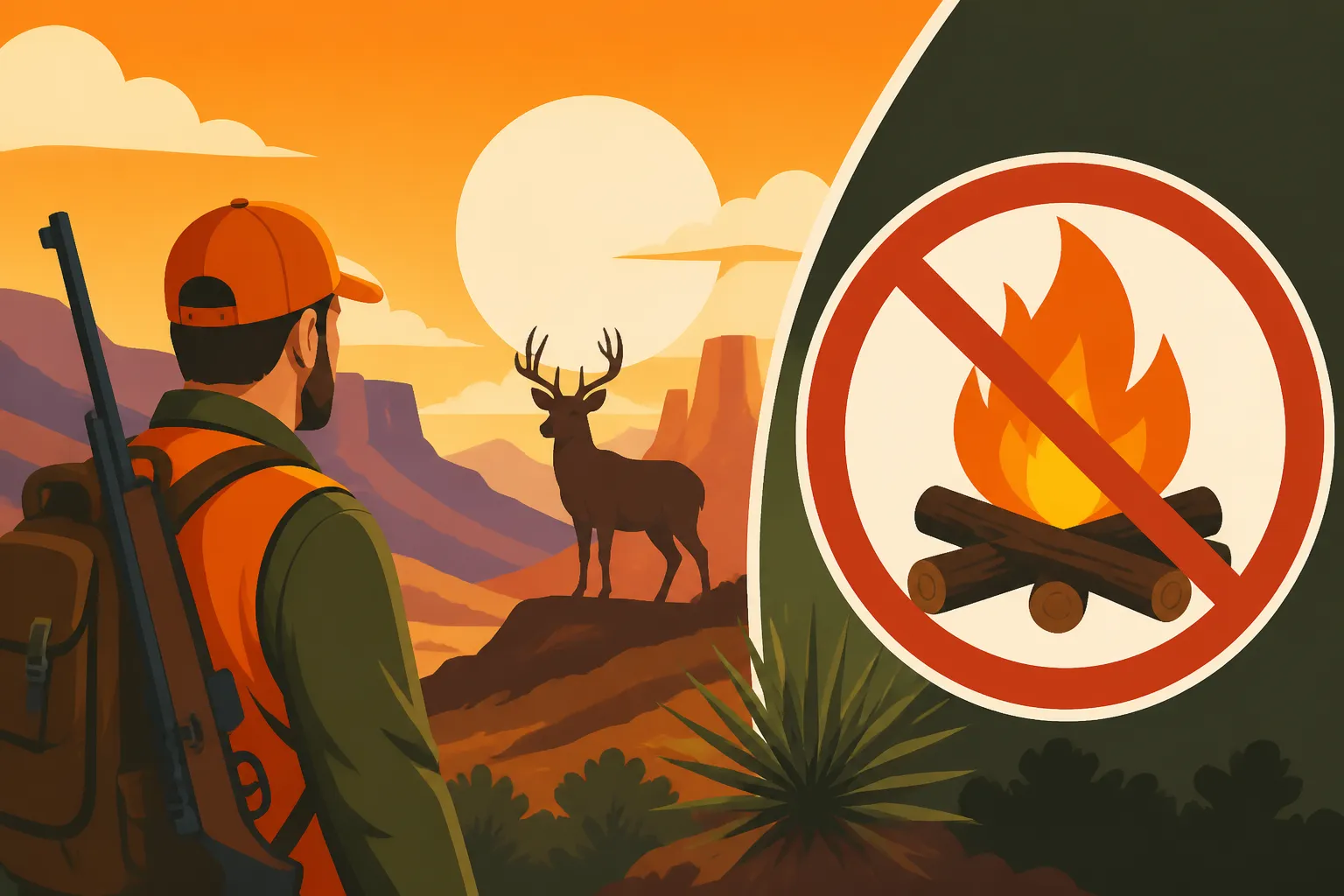
You’ve spent months planning your New Mexico hunt, scouting maps, dreaming of big bulls or bucks, only to arrive and find the landscape under a blanket of fire restrictions. It’s a gut punch, turning your carefully laid plans upside down and forcing you to rethink everything from your campfire to your driving route. This guide is here to help you understand New Mexico's fire restrictions during hunting season, how they're declared, what they mean for your hunt, and how you can adapt to ensure a safe and successful trip.
Navigating New Mexico's Wildfire Risk Levels During Hunting Season
Hunting in New Mexico often means venturing into vast, dry landscapes, particularly during the early archery seasons or late-season rifle hunts when dry conditions persist. The risk of wildfire is a constant concern, and land management agencies don't take it lightly. Understanding how these restrictions are declared and what they entail is your first line of defense against both starting a fire and getting in trouble.
Understanding the Stages of Fire Restrictions
Fire restrictions in New Mexico are typically implemented in stages, increasing in severity as the fire danger rises. These stages are not arbitrary; they reflect actual environmental conditions like fuel moisture, temperature, wind, and precipitation. It's not just about a campfire; it's about anything that can produce a spark or heat.
Stage 1 restrictions are usually the mildest. They might allow campfires, but only in designated, developed campgrounds with metal fire rings and cleared areas around them. Smoking might be restricted to enclosed vehicles or areas that are at least three feet in diameter and cleared of all flammable materials. It's a "use your head" stage, meaning caution is paramount. You might still be able to cook over a small, contained fire in a safe location, but the emphasis is on control and constant attendance. Often, this stage bans the use of chain saws unless they have an approved spark arrester and you have a shovel and fire extinguisher immediately available. This stage is a warning shot, telling hunters to be extra vigilant.
Stage 2 restrictions are far more serious and will significantly impact your hunt. At this stage, open flames are almost universally prohibited across public lands. That means no campfires, no charcoal grills, and often no smoking at all, even inside a designated area, unless you're in an enclosed vehicle. The use of internal combustion engines off designated roads might also be restricted, impacting your ability to retrieve game or access certain areas. Sometimes, even welding or operating equipment with an open flame is banned. This is when your hunting plans really need to shift to accommodate the rules.
Where to Find Current Fire Restriction Information
The dynamic nature of fire restrictions means that information can change rapidly, sometimes daily, especially during prolonged dry spells or after a brief rain shower. Relying on outdated information is a recipe for disaster. You need to be proactive and check multiple sources right up to the moment you leave for your hunt, and even while you’re in the field if you have the means.
The primary sources for current fire restriction information are the various land management agencies. The U.S. Forest Service manages the national forests like the Gila, Cibola, and Carson. Their websites and local ranger district offices are excellent resources. Similarly, the Bureau of Land Management (BLM) oversees vast tracts of public land, particularly in southern and eastern New Mexico, and their district offices or website should be checked. New Mexico State Forestry also provides statewide updates, and the New Mexico State Land Office has specific rules for state trust lands, which you can access with your hunting license. Local county sheriff's offices or fire departments might also have their own restrictions. Think of it as a pyramid: state, federal, and then local. It’s not uncommon for different agencies to have slightly different rules, so always check for the specific area you plan to hunt. Using mapping apps like onX Hunt can help you Reading a Land Ownership Layer Correctly and then you can cross-reference that with the specific agency managing that land. Checking these sources frequently is a critical part of E-Scouting a New Mexico Unit Before the Season.
Common Prohibitions Across Different Land Types
It's a common misconception that fire restrictions are uniform across the entire state, but this couldn't be further from the truth. New Mexico is a checkerboard of federal, state, and private lands, and each jurisdiction can impose its own rules, or even different rules within its own boundaries. This is where hunters can get really confused, and unfortunately, get into trouble.
On National Forests, you might find specific districts under different stages of restrictions. For example, a high-elevation, timbered area in the Carson National Forest might be under stricter rules than a more open, lower-elevation part of the same forest. The same goes for BLM lands; the rules for the dry, desert BLM acreage near Las Cruces might differ from those in the grasslands of the northeastern plains. State Trust Land, which often surrounds or intersperses federal lands, will have its own set of rules, usually outlined by the New Mexico State Land Office. While your hunting license acts as an easement for access, it doesn't exempt you from their specific fire rules. It's a good idea to refresh your knowledge on these types of access rules, like those found in Scouting New Mexico State Trust Land Fourteen Days Out. Private landowners, of course, can set their own rules, which are typically even more stringent than public land, often prohibiting any open flames regardless of public land status. When planning your hunt, especially if it traverses different land ownership types, it's vital to identify the specific land manager for each parcel and check their current restrictions individually.
Adapting Your Hunting Practices Under Fire Restrictions
Once you know the rules, the next step is adapting your hunting style and camp setup to comply. This isn't just about avoiding a fine; it's about protecting the landscape you cherish and ensuring everyone's safety. A single spark in dry conditions can devastate thousands of acres, erase years of habitat, and even endanger lives.
Campfires, Cooking, and Heat Sources
The romantic image of a crackling campfire at deer camp is often the first casualty of fire restrictions. In Stage 1, you might be limited to existing fire rings in developed campgrounds. But in Stage 2, that's almost certainly out the window. This means completely rethinking your cooking and warming strategies.
Propane or butane stoves are your best friends during fire restrictions. They offer a contained flame, are easy to control, and leave no embers. Always ensure they are placed on a stable, non-flammable surface, far from dry grass, tents, or other combustible materials. Even with a propane stove, it's smart to have a shovel and a gallon of water nearby, just in case. Consider compact, efficient backpacking stoves even if you're car camping. They get the job done without excessive heat spread. For warmth, layered clothing becomes even more critical. Portable propane heaters are an option for inside a tent or camper, but ensure proper ventilation to avoid carbon monoxide buildup. Never bring a charcoal grill if Stage 2 restrictions are in place; the embers from charcoal can easily ignite dry fuels, even hours after you think they're out. Remember that even a seemingly innocent cigarette butt flicked out a window can start a blaze, so if smoking is allowed at all, it's usually restricted to enclosed vehicles or completely bare ground.
Vehicle Operation and Spark Prevention
Your vehicle, while a necessity for many New Mexico hunts, can be a significant fire risk, especially in dry conditions. Many wildfires have been started by vehicles, and under strict restrictions, authorities will be extra vigilant about potential violations of Motorized Travel Rules on New Mexico Public Land.
When driving or parking, always be mindful of where your hot exhaust pipe and catalytic converter are positioned. Parking over dry grass, brush, or pine needles is incredibly dangerous, as the heat can easily ignite them. Whenever possible, park on bare dirt, gravel, or paved surfaces. If you must park in vegetated areas, carry a small shovel and clear a spot under your vehicle's exhaust system, down to bare earth. Also, regularly check your vehicle’s undercarriage for any dragging chains or loose metal parts. A dragging chain hitting pavement or rock can produce sparks that fly into dry roadside vegetation, igniting a fire without you even realizing it until it’s too late. Pay attention to vehicle maintenance – a poorly running engine might run hotter or backfire, increasing risk. When traveling on unimproved roads, be extra cautious about stirring up dust that could reduce visibility and make it harder to spot a potential spark. During periods of high fire danger, even normal off-road travel might be entirely prohibited, limiting your access to certain areas, particularly during dry early seasons where Heat Management on an Early Season Hunt is already a major concern.
Essential Fire Safety Gear to Carry
Being prepared isn’t just about having the right weapon or optics; it’s also about carrying the tools to handle an emergency, especially when it comes to fire. Under fire restrictions, a few extra items in your pack or truck can make all the difference.
A robust shovel is non-negotiable. Whether it’s a full-sized digging shovel or a sturdy folding camp shovel, it’s vital for clearing areas, digging firebreaks, or smothering small flames. A fire extinguisher, specifically a 5-pound ABC rated one, is another must-have for your vehicle and camp. Even a large jug of water can serve as a makeshift extinguisher for small fires. Beyond these tools, carrying a well-stocked first-aid kit is always smart, and for fire season, consider having an extra large bottle of water for immediate dousing of any accidental sparks. Being aware of your surroundings, noting escape routes, and knowing the nearest water source are mental preparations that can save lives. In remote areas, where cell service is non-existent, carrying a satellite communication device is crucial for reporting any fires you might spot or for emergency contact, as discussed in Satellite Communication From a Hunting Camp. Early detection and reporting can be the key to preventing a small flare-up from becoming a raging inferno.
The Broader Impact of Wildfire Danger on Your New Mexico Hunt
Fire restrictions are more than just an inconvenience; they're a critical safety measure that can fundamentally alter your hunting experience. Understanding these broader implications helps you plan more realistically and act responsibly.
How Closures and Restrictions Affect Access and Scouting
It's one thing for a campfire ban to be in place, but quite another for entire units or vast tracts of public land to be closed to entry due to extreme fire danger. These closures, often implemented by federal agencies like the Forest Service or BLM, can effectively cancel your hunt, regardless of whether you drew a coveted tag. Imagine arriving in New Mexico for an archery elk hunt in the Gila only to find your unit completely closed. This scenario is a real possibility and has happened to many hunters.
Beyond full closures, restrictions on motorized travel can severely limit access. Roads that you typically drive might be gated or designated as foot traffic only, meaning longer hikes into your chosen hunting grounds. This makes physical preparation, as covered in Preparing Physically for a High Elevation Hunt, even more critical. Even if an area isn't fully closed, the risk of a new fire starting can make hunters hesitant to venture deep into the backcountry, fearing they might be cut off by a rapidly spreading blaze. This uncertainty can make scouting extremely difficult, especially if pre-season scouting happens during a high fire danger period. Even with modern mapping tools, you need to verify real-world access points right before your trip. Always check for road closures, which can also happen due to heavy monsoon rains creating unsafe conditions, as explored in Monsoon Road Conditions in the Gila.
The Legal Consequences of Non-Compliance
Ignoring fire restrictions is not merely a breach of etiquette; it’s a serious legal offense with potentially devastating consequences. New Mexico authorities, especially land management agencies, take fire safety extremely seriously, and violations can lead to hefty fines, potential jail time, and even civil liability for the cost of fighting a fire if your actions are proven to be the cause.
Penalties for violating fire restrictions vary depending on the severity of the offense and whether a fire was actually started. Fines can range from hundreds to thousands of dollars, and in extreme cases, you could face federal charges and substantial jail time. If you're found responsible for starting a wildfire, even accidentally, you could be liable for millions of dollars in firefighting costs, property damage, and restoration efforts. This is not a situation you ever want to be in. Authorities patrol areas, and other hunters or concerned citizens will report suspicious activities. It’s simply not worth the risk to yourself, your future hunting privileges, or the integrity of New Mexico’s precious wildlands.
Here's a quick overview of common fire restriction stages and their general prohibitions:
| Restriction Stage | Campfires (Open Flames) | Smoking | Vehicle Use (Off-Road) | Chainsaws & Equipment | Penalties (General) |
|---|---|---|---|---|---|
| Stage 0 (No Restrictions) | Permitted (Exercise Caution) | Permitted (Exercise Caution) | Generally Permitted | Permitted | None (but always be fire-aware) |
| Stage 1 (Moderate) | Only in designated rings/areas | In enclosed vehicles or cleared 3ft areas | Minor restrictions possible | Spark arrester, shovel, water | Fines (hundreds of dollars), potential citations |
| Stage 2 (High/Extreme) | Generally Prohibited | In enclosed vehicles only (if allowed) | Often restricted or prohibited | Usually Prohibited | Significant fines (thousands), potential jail, civil liability for fire suppression |
| Area Closure | All entry prohibited | All entry prohibited | All entry prohibited | All entry prohibited | Immediate removal, severe fines, federal charges |
Note: This table provides general guidance. Always check current, specific agency regulations for the area you plan to hunt.
Prioritizing Safety and Preservation
Ultimately, adapting to fire restrictions comes down to a commitment to safety and the preservation of New Mexico's wild places. Hunting is a privilege, and that privilege comes with immense responsibility. While it can be incredibly frustrating to have your hunt plans derailed by restrictions, remember that these measures are in place for a vital reason: to prevent catastrophic wildfires.
A wildfire doesn't just impact one hunting season; it can destroy habitat for decades, fundamentally altering the landscape and the game populations within it. The recovery of areas, such as the Gila after a major burn, can take many years, and even then, the ecosystem might never be the same. Understanding How Wildfire Changes Gila Elk Habitat puts the importance of fire prevention into stark perspective. Being flexible, having backup plans, and being willing to postpone or alter your hunt if conditions are too dangerous are signs of a responsible and ethical hunter. Your actions, or inactions, can have lasting consequences for everyone who cherishes New Mexico's outdoors. By being informed and prepared, you're not just protecting yourself, but the future of hunting in this incredible state.
Disclaimer
This article is for general informational purposes only and does not constitute professional advice. Laws, prices and regulations vary by location and change over time. Consult a qualified professional for guidance on your specific situation.