Finding Low Pressure Ground on Opening Weekend
It's opening weekend in New Mexico, and for many hunters, that means visions of unpressured game, crisp mornings, and silent stalks. The reality, however, can often be a jarring cacophony of slamming truck doors, rattling quad bikes, and the frustrating sight of a dozen other orange hats heading to your "secret spot." This guide is all about helping you avoid those crowds and find the quiet corners where game feels more at ease, giving you a genuine shot at success away from the masses.
Understanding Opening Weekend Pressure Points
Opening weekend in New Mexico is a blend of excitement and, let's be honest, often a good deal of frustration. Everyone has been waiting for this moment, and that collective anticipation translates directly into more boots on the ground. Understanding why certain areas get hammered can help you strategically avoid them. It’s not about judging other hunters, it’s about recognizing patterns of access and behavior that concentrate effort.
The Lure of Easy Access
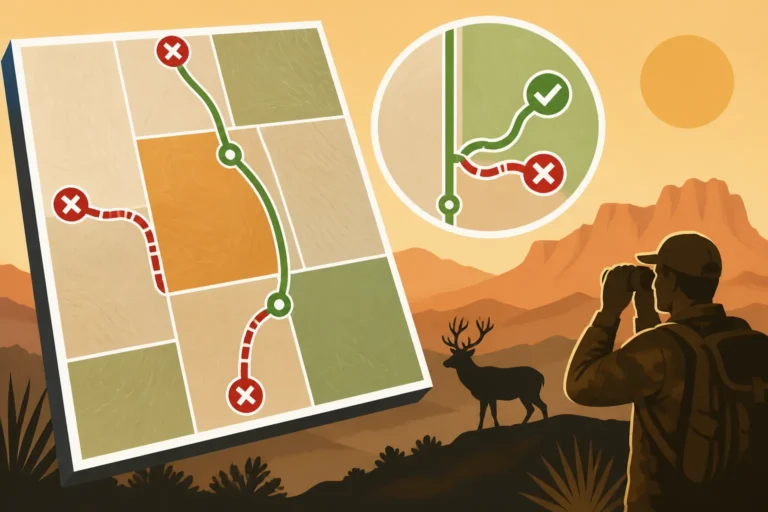
Let's face it, after a long week of work, or a lengthy drive to your hunting unit, the path of least resistance is incredibly appealing. Paved roads turning into graded dirt roads, leading right to a national forest boundary or a well-known trailhead, are often the first places hunters flock to. These areas are convenient; you can park your truck, throw on your pack, and be walking into the woods within minutes. But this convenience comes at a cost: intense hunter pressure. You'll see more trucks parked, more camps set up within a mile of the road, and you'll likely bump into other hunters more frequently. This is especially true for popular elk or deer units that are well-documented for their public access. Game animals, particularly mature ones, learn these patterns quickly and will move away from these easily accessible corridors.
Popular Units and Hunt Codes
Every year, certain units and specific hunt codes develop a reputation. Maybe a big bull was harvested there last season, or the draw odds were unusually good, or it just consistently produces decent numbers of animals. Word travels, and these units become magnets for hopeful hunters. It's not just the big, sought-after units like some of the Gila units for elk that see heavy pressure; even general deer units with good road systems can become crowded. Before you apply, it’s always a good idea to spend some time Reading a New Mexico Hunt Code Before You Apply and also look at past harvest reports. While historical success is appealing, it's also a strong indicator of where many other hunters will be focusing their efforts. If a unit consistently has high hunter numbers, expect company.
Limited Access vs. Deep Wilderness
The type of terrain and its inherent access limitations play a huge role in hunter distribution. Areas with extensive road networks, even if they are rough two-tracks, mean more hunters can penetrate deeper with less effort. Conversely, designated wilderness areas or vast stretches of roadless public land naturally act as filters. Only those willing and able to walk miles, often with heavy packs, will venture into these remote spots. The difference between hunting an area crisscrossed by old logging roads and one that requires a multi-day pack trip into an area like the Gila Wilderness is stark. The more challenging the access, the lower the hunting pressure tends to be. This is a fundamental truth in Western hunting: effort often equates to solitude.
Strategies for Identifying Low Pressure Areas
Okay, so we know where not to go. But how do we pinpoint those elusive low-pressure zones? It requires a blend of digital scouting, physical effort, and a keen eye for overlooked details. This isn't about finding a secret honey hole that no one else knows about (those are rare and fleeting), but rather identifying areas that are simply less appealing to the average hunter due to perceived difficulty or lack of obvious game sign.
Diving Deep: Wilderness and Roadless Areas
The most straightforward way to escape the crowds is to go where vehicles can't. New Mexico has extensive public lands, including vast national forests and BLM ground. Many of these areas contain designated wilderness or large roadless tracts. These are the places where elk and deer learn to feel safe once the season opens. You'll need to identify trailheads that access these remote zones and be prepared for multi-mile hikes, often with significant elevation gain. Consider studying maps for areas like the Gila Wilderness or the Aldo Leopold Wilderness; these are places where, after a few miles, the hunter density drops dramatically. For these expeditions, having a solid plan for Packing an Elk Out of the Gila Alone becomes crucial, as you won't have quick vehicle access.
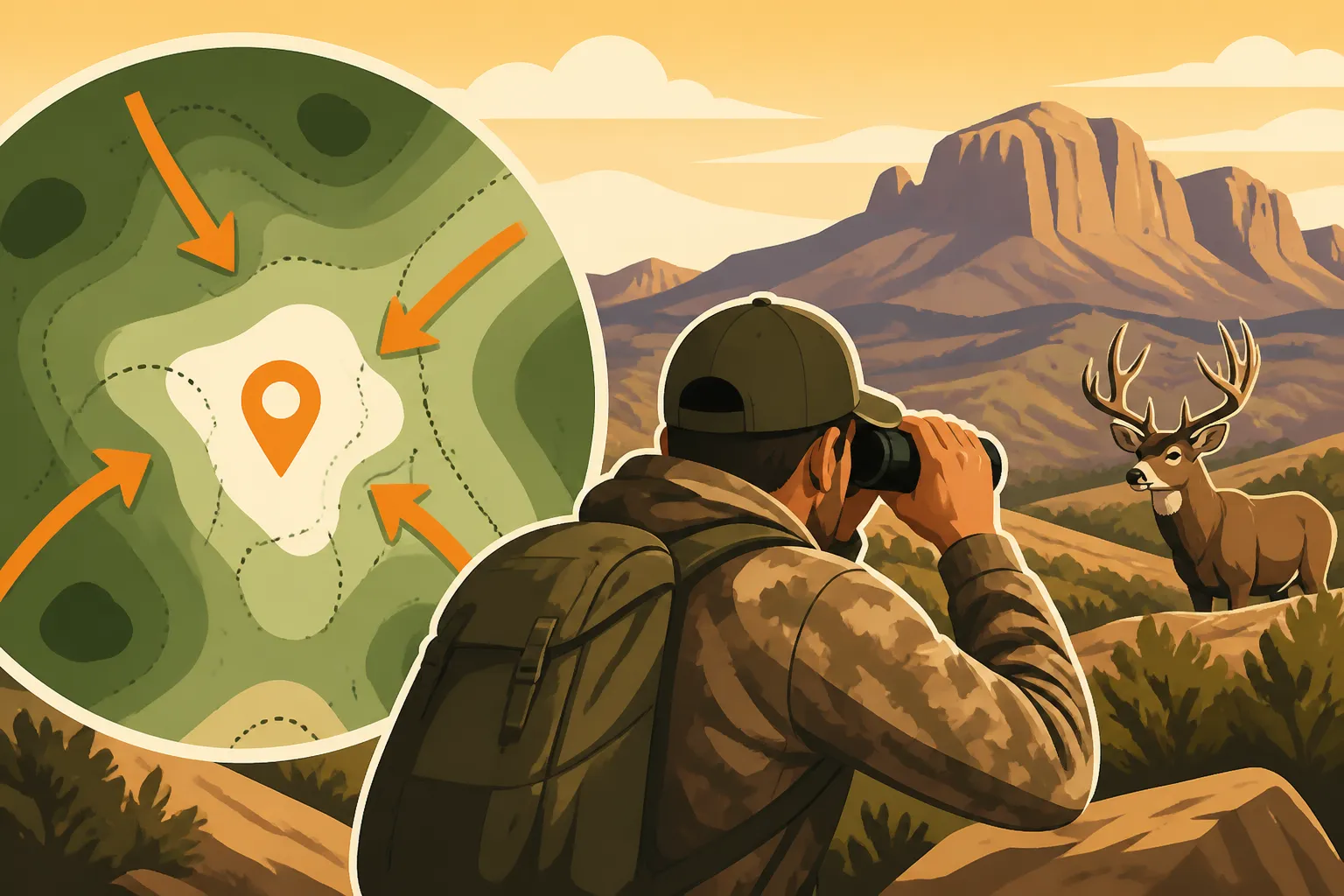
One fantastic way to start is by pouring over maps. Look for areas on National Forest or BLM land that are several miles from the nearest legal motorized access point. These "roadless" blocks often hold surprisingly good numbers of game simply because fewer hunters are willing to put in the foot miles. While others are bumping into each other a mile from the truck, you can be several miles deep, finding game that hasn't been pressured off its patterns.
Utilizing Digital Scouting Tools (onX Hunt, GoHunt)
In today's hunting world, digital scouting tools are indispensable for finding low-pressure ground. Platforms like onX Hunt and GoHunt allow you to meticulously analyze terrain, access points, and land ownership before you ever set foot in the field.
With onX Hunt, you can toggle layers to show public land boundaries, roads (including seasonal closures), wilderness areas, and topography. I spend hours looking for isolated pockets of public land that might be surrounded by private property but still have a public access easement, or public land that's simply a long walk from the nearest road. Using onX Layers for New Mexico Public Land effectively can reveal these hidden gems. Look for areas with dense timber that might obscure glassing opportunities from roads, or steep, rugged canyons that look intimidating on a topo map – these are often deterrents for many hunters, but havens for game.
GoHunt offers draw odds, harvest data, and often unit-specific maps and analysis that can help you understand hunter density. While it's great for understanding where the general success is, you can use that information to deduce where the pressure will be. Then, focus your personal scouting efforts on adjacent, less-hyped areas within the same unit, or units that historically fly under the radar. Both platforms allow you to drop waypoints, measure distances, and visualize elevation changes, all critical for planning a deep push into unpressured territory. E-Scouting a New Mexico Unit Before the Season using these tools is paramount to success.
Overlooked Habitat and Terrain Features
Sometimes, low-pressure ground isn't about distance, but about finding areas that hunters simply overlook. This might include:
- North-facing slopes in timber: These areas often hold moisture longer, provide shade, and offer dense cover. They can be steep and brushy, making for tough hunting, but game loves them, especially when pressured off more open south-facing aspects.
- Small, isolated water sources: In New Mexico's dry climate, water is life. Look for small springs, seeps, or stock tanks that might not be prominently marked on maps or are a long distance from roads. These can be magnets for game. Finding Water in New Mexico's Dry Country is key to understanding game movement.
- Steep, nasty canyons or rimrock: Areas that look like a nightmare to traverse on a map are often less visited. Deer and elk are incredibly agile and will use these features to escape pressure. If you're willing to put in the effort to navigate them, you might find undisturbed animals. When Reading Terrain Before You Pick a Camp, actively seek out these "unpleasant" looking spots.
Practical Steps for Hunting Low Pressure Ground
Finding these areas is only half the battle; successfully hunting them requires preparation, a strategic mindset, and a willingness to adapt. This isn't the kind of hunting where you jump out of the truck and walk a quarter-mile. This is about committing to a tougher, more rewarding experience.
Physical Preparation and Gear for Remote Hunts
Hunting low-pressure ground almost always means covering more difficult terrain and greater distances. This demands a higher level of physical fitness. Start working out months before the season: hiking with a weighted pack, inclines, and core strength will all pay dividends. You’ll be carrying more water, more emergency gear, and potentially packing out an animal from miles deep. For a serious backcountry hunt, consider if you are ready for Preparing Physically for a High Elevation Hunt.
Your gear needs to be reliable and suited for the task. This includes:
- Quality Boots: Comfortable, broken-in boots that provide excellent ankle support for rough terrain are non-negotiable.
- Layered Clothing System: New Mexico weather can be unpredictable. Layers allow you to adapt to temperature swings from frosty mornings to warm afternoons.
- Navigation Tools: Beyond your phone with onX Hunt, carry a physical map and compass, and know how to use them as a backup. A satellite communication device is also highly recommended for remote areas where cell service is non-existent.
- Pack: A comfortable, capable pack that can handle heavy loads is essential, especially for pack-out scenarios.
- First Aid Kit: A comprehensive kit, and the knowledge to use it, is vital when you're far from help.
Planning Your Approach and Exit
Once you've identified a promising low-pressure area, meticulous planning of your approach and exit is critical. Don't just pick a trailhead and start walking. Instead, strategize your entry point to be as discreet as possible.
- Early Mornings: Be on the trail well before first light. This allows you to get deep into your chosen area before other hunters are even out of their sleeping bags, and it gives you prime hunting time at dawn when animals are often most active.
- Utilize Natural Cover: Plan your route to take advantage of draws, ridges, and timbered areas that conceal your movement. Avoid skylining yourself on open ridges.
- Wind Management: Always be cognizant of the wind. Animals will bust you long before you see them if your scent is blowing in their direction. Reading Wind in a Deep Gila Canyon can be a game-changer for those deep pushes.
- Exit Strategy: Have a clear plan for packing out an animal, including potential game retrieval routes. This might mean identifying multiple routes back to your vehicle or considering a caching strategy if you're alone. You should have a good idea of Judging How Much of a Unit You Can Walk and how that impacts a pack-out.
Adapting to Animal Behavior Under Pressure
Animals in low-pressure areas will often exhibit more natural behavior, but as opening weekend progresses, even these animals might start to feel the ripple effect of hunting pressure.
- Day Bedding in Cover: Expect animals to move from open feeding areas into thick cover earlier in the day as light increases and they sense human activity. Focus your hunting efforts around these bedding areas later in the morning and early afternoon.
- Use Topography: Animals will often use terrain features to their advantage, slipping over ridges or into deep canyons to evade hunters. Use the same features to make your approach.
- Patience and Stealth: In low-pressure zones, you might encounter less skittish animals. This is your chance to practice quieter movement and more patient stalks. Spend more time glassing from vantage points, especially benches and parks, to spot animals before they spot you. Glassing Benches and Parks for Elk can be incredibly effective when you find those quiet spots.
Comparison of High vs. Low Pressure Hunt Zones
| Feature | High Pressure Zone | Low Pressure Zone |
|---|---|---|
| Access | Easy, close to roads, popular trailheads | Difficult, miles from roads, deep wilderness |
| Hunter Density | High, frequent encounters, visible camps | Low, infrequent encounters, sense of solitude |
| Game Behavior | Skittish, nocturnal, quick to flee | More natural, active during daylight, less wary |
| Terrain | Often moderate, navigable with less effort | Rugged, steep, dense cover, harder to traverse |
| Game Sign | Often older, scarce fresh sign due to movement | Abundant fresh sign, animals holding patterns |
| Required Effort | Moderate physical effort, less navigation skill | High physical effort, advanced navigation skill |
| Tools Needed | Basic maps, compass, binoculars | onX Hunt/GoHunt, topo maps, satellite comms, GPS |
Finding low-pressure ground on opening weekend in New Mexico is entirely achievable, but it requires a commitment to scouting, preparation, and often, more physical exertion. By focusing on overlooked areas, utilizing modern digital tools, and being willing to go deeper than the average hunter, you can turn those crowded opening weekend frustrations into a truly memorable and successful hunting experience. Happy hunting out there!
Disclaimer
This article is for general informational purposes only and does not constitute professional advice. Laws, prices and regulations vary by location and change over time. Consult a qualified professional for guidance on your specific situation.