Water Sources That Concentrate Desert Game
Hunting in the vast, often parched landscapes of New Mexico can feel like searching for a needle in a colossal haystack, especially when you're after desert game. The sparse vegetation and seemingly endless miles of sagebrush, creosote, and rocky arroyos can make finding animals incredibly frustrating. But there's a secret to unlocking these units, a single, undeniable truth that dictates where life thrives: water. This guide will walk you through understanding, locating, and ethically approaching the precious water sources that become absolute magnets for desert game across New Mexico.
The Critical Role of Water in New Mexico's Desert Ecosystems
Imagine trying to survive a blistering New Mexico summer day without a drop to drink. It's a stark reality for much of the wildlife here, and it makes water the single most important factor in their daily lives. For hunters, this translates directly into where you should focus your efforts.
Why Water is a Lifeblood for Desert Animals
New Mexico's desert environments are renowned for their aridity and extreme temperatures. Animals living in these conditions, from mule deer and javelina to bighorn sheep and oryx, have evolved incredible adaptations to conserve moisture and endure long periods without rain. Yet, even with these adaptations, water remains absolutely essential for survival. It's not just about hydration; water plays a crucial role in regulating body temperature, aiding digestion, and supporting overall metabolic functions. When temperatures soar, especially during early archery seasons or warm rifle hunts, animals experience increased heat stress. They simply cannot survive without regular access to water. This physiological need funnels game animals to the limited water sources available, turning these spots into veritable oases of activity.
The scarcity of water means that any reliable source, no matter how small, becomes a vital hub. Animals will travel considerable distances to reach these lifelines, creating well-worn game trails that crisscross the landscape. These trails are like highways leading directly to where you need to be. Think of it from the animal's perspective: if you know there's a seep or a small guzzler that consistently provides water, you're going to use it, even if it means exposing yourself to a bit more risk. Hunters who understand this fundamental dependency can effectively narrow down vast tracts of seemingly barren land, transforming an overwhelming search into a focused and strategic effort. It’s all about putting yourself between the game and their most fundamental need.
The Unpredictable Nature of Desert Water Sources
One of the biggest frustrations for hunters in New Mexico's desert units is the sheer unpredictability of water. Unlike high-country streams that flow reliably from snowmelt, desert water sources can be incredibly fickle. A massive thunderstorm might fill a low-lying depression or a rocky basin today, but a week of intense sun and dry winds can evaporate it entirely. Seasonal changes play a huge role too; a seep that trickles year-round might slow to a crawl during a prolonged drought, while a gully that's bone dry in May might run freely after the monsoon rains hit in July or August. How Monsoon Rain Affects Antler Growth is closely tied to these periods of water availability. This constant flux means that relying on old maps or anecdotal information without verifying current conditions can lead to wasted time and effort.
Hunters often arrive in a unit, confident they've identified a promising water source from satellite imagery, only to find it completely dry, or worse, so stagnant and fouled it's unusable by game. This is why "boots on the ground" scouting, even if just a few days before your hunt, becomes absolutely non-negotiable in desert country. A waterhole that was vibrant last season might be nothing but cracked mud this year. Understanding this transient nature means you must approach water sources not just as static points on a map, but as dynamic elements of the landscape that demand current intelligence. It's an ongoing puzzle, and those who can adapt to its changing pieces are the ones who find success.
Types of Natural Water Sources and How to Find Them
In New Mexico's arid landscape, not all water sources are created equal. Some are temporary gifts from the sky, while others are more enduring features of the geology. Knowing the difference and how to spot them is key.
Ephemeral Washes and Rain Catchments
Ephemeral washes, also known as arroyos or dry streambeds, are common features across New Mexico's desert floor. These channels are typically dry for most of the year but can transform into raging torrents during heavy rainfall or flash floods. While the water often dissipates quickly, pooling in deeper sections or depressions, these areas can hold moisture for days or even weeks after a significant rain event. Animals instinctively know this and will often congregate in and around these washes shortly after a storm to drink and browse on the new growth that sprouts up. The challenge for hunters is timing: you need to be there when the water is fresh and accessible.
Rain catchments are naturally occurring depressions in rock formations, often referred to as "tinajas" in the Southwest, or simply potholes. These bowls can range from small puddles to surprisingly deep reservoirs, capable of holding water for extended periods due to their shaded locations and protective rock walls. After a heavy rain, these pockets become critical water points. To find them, you need to study topographic maps and satellite imagery intently, looking for areas of exposed rock, steep drainages, and deep canyons where water might naturally collect and be protected from direct sunlight. Once you've identified potential spots, a thorough ground check for fresh tracks and game trails leading in and out is essential. The sign might indicate a hidden source you didn't even see on the map.
Seeps, Springs, and Tinajas
While ephemeral sources come and go, seeps and springs represent more reliable, albeit often small, water offerings in the desert. A seep is essentially groundwater slowly oozing out of a hillside, often marked by a patch of greener vegetation in an otherwise dry landscape. Springs are more defined points where groundwater emerges from the earth, sometimes creating a small pool or a slow-flowing trickle. These are true lifelines, especially during prolonged dry spells, as they can provide consistent moisture year-round. Animals will often bed down nearby or graze in the lush vegetation surrounding these spots. Identifying them on a map might involve looking for blue dots or specific spring icons, but in the field, they are often revealed by vibrant green patches that stand out against the muted desert palette.
Tinajas, as mentioned before, are naturally carved rock basins that collect rainwater. What differentiates them from simple rain catchments is their often greater depth and the fact that they can hold water for much longer periods, sometimes even year-round in protected locations. These are often found in deep canyons or on steep, rocky slopes where water runoff is concentrated. Finding them takes diligent map scouting – looking for areas of exposed bedrock in drainages or at the base of cliffs. When E-Scouting a New Mexico Unit Before the Season, zooming in on high-resolution satellite imagery can reveal subtle changes in color or texture that indicate a potential seep, spring, or tinaja. Once you're on the ground, follow game trails into these features; the animals know where the reliable water is, and their paths will lead you there.
Man-Made Water Developments and Ethical Considerations
Beyond nature's offerings, humans have also contributed significantly to water availability in New Mexico's dry lands, primarily for ranching and wildlife management. These man-made sources are crucial, but they also bring specific ethical considerations.
Stock Tanks and Guzzlers
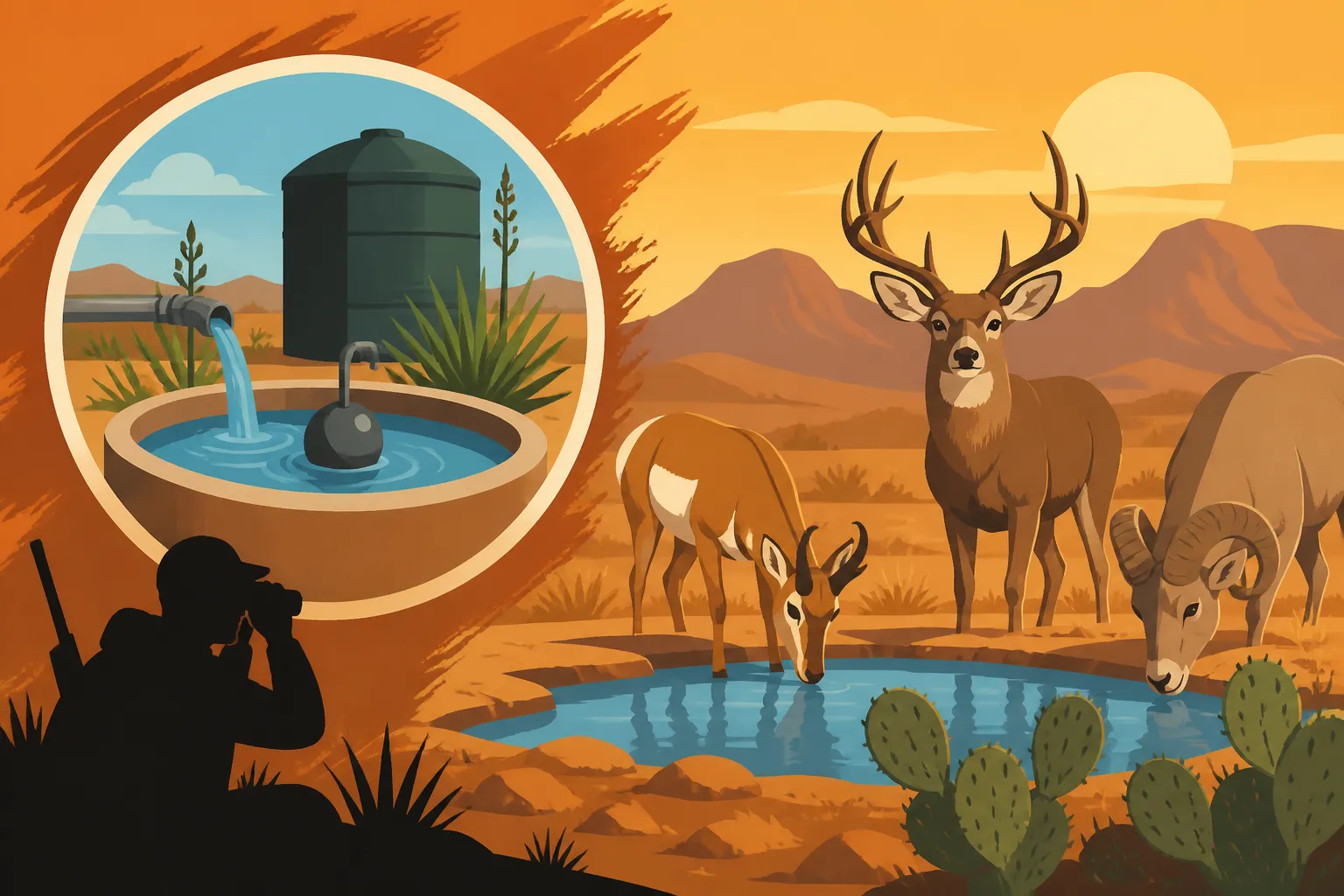
Stock tanks are perhaps the most common man-made water sources you'll encounter in New Mexico's desert units. Originally built for livestock, these earthen impoundments collect rainwater runoff and hold it for varying periods, depending on their size, construction, and rainfall. They range from small, quickly evaporating ponds to larger, more permanent fixtures. While not always pristine, they are often a consistent water source that game animals quickly learn to utilize. Finding Stock Tanks on a Unit Map is a key skill, as they are often marked. Guzzlers, on the other hand, are specifically designed for wildlife. These structures typically consist of a large collection apron (often a metal or concrete ramp) that funnels rainwater into an underground storage tank, with a small drinker unit that allows animals to access the water. Guzzlers are meticulously placed in areas lacking natural water and are designed to provide a reliable supply, often deep into dry periods.
Both stock tanks and guzzlers become magnets for desert game. Mule deer, pronghorn, oryx, and even bighorn sheep will frequent these spots, especially during the hottest parts of the year. While they offer a distinct advantage to the hunter by concentrating game, they can also be heavily pressured. Animals become wary around these locations, often approaching cautiously during low-light hours. If you plan to hunt near these, remember that patience and stealth are paramount. Consider scouting them well in advance to understand patterns of use, and always approach with the wind in your favor. It's a fine line between using an obvious resource and over-pressuring an area that wildlife depends on.
Ethical Hunting Around Water Sources
The concentration of game around water sources, particularly during dry periods, raises important ethical considerations. While it might seem like an easy target to simply "sit" a waterhole, true fair chase principles encourage a more respectful approach. Animals are at their most vulnerable when seeking water, a necessity for their very survival. Exploiting this vulnerability indiscriminately can cross a line for many hunters and goes against the spirit of ethical hunting. Sitting Water for Deer and Antelope requires careful thought and planning. Instead of simply ambushing an animal, consider how you can use the water source as an intelligence point to understand movement patterns, allowing you to intercept game away from the immediate vicinity of the drink.
Minimizing your impact on these vital resources is also critical. Ensure you leave no trash, avoid contaminating the water, and disturb the area as little as possible. Game animals have long memories, and excessive human presence or disturbance around a water source can cause them to abandon it, forcing them to find less reliable alternatives or travel greater distances, putting additional stress on the herd. When you use mapping tools like onX Hunt or GoHunt to locate these spots, remember that they are shared resources, not just for hunters, but for all wildlife and often for ranchers too. Respecting the animals, the land, and other users is a cornerstone of responsible hunting, especially around such a precious commodity as water in the desert.
Using Technology and Scouting to Locate Water Sources
In today's hunting world, you have a powerful combination of tools at your disposal: advanced technology and good old-fashioned boots-on-the-ground scouting. Leveraging both effectively is the recipe for finding those crucial desert water sources.
Mapping Tools for Identifying Potential Water
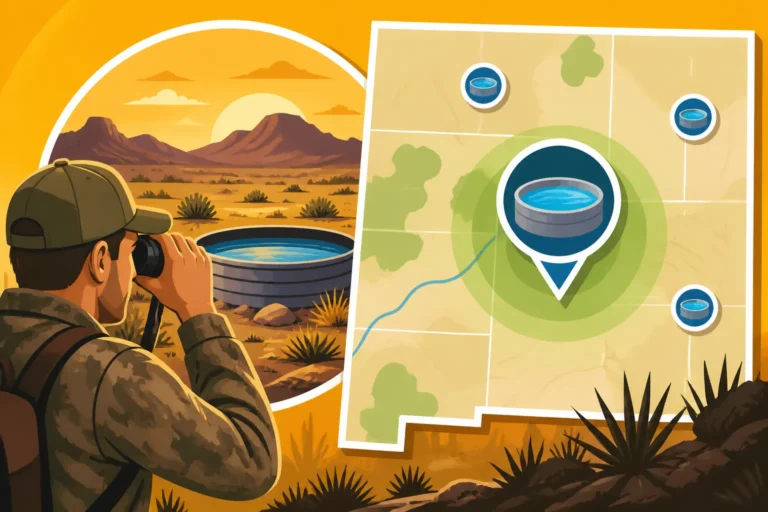
The advent of digital mapping tools has revolutionized how hunters approach scouting, especially in vast, unfamiliar territory like New Mexico's desert. Platforms like onX Hunt and GoHunt are indispensable for identifying potential water sources from the comfort of your home. Start by utilizing the topographic map layers to spot drainages, depressions, and areas where water might naturally collect. Look for contour lines that indicate bowls, benches, or the confluence of arroyos. Then, switch to satellite imagery. This is where the magic happens. Zoom in on areas of interest, looking for subtle changes in vegetation color that suggest moisture – a patch of greener brush, taller grass, or even a line of cottonwoods or willows in a seemingly dry wash. These are tell-tale signs of underlying water, even if it's just a seep or a damp spot.
Don't forget to use public land layers to ensure any identified water source is on accessible ground. Often, some of the most consistent springs are nestled on private ranches. While this can be frustrating, knowing boundaries helps you focus your efforts where you can legally hunt. Cross-reference different map layers to build a comprehensive picture. An area that looks like a minor dip on a topo map might reveal itself to be a significant tinaja or a network of game trails leading to a stock tank on satellite view. These tools allow you to prioritize areas for physical scouting, saving you invaluable time and effort when you hit the dirt.
Boots-on-the-Ground Scouting for Active Water
While mapping tools are incredibly powerful for identifying potential water sources, they are only the first step. There is simply no substitute for boots-on-the-ground scouting to confirm active water and assess game activity. Satellite imagery can be months or even years old, and a promising green patch might now be bone dry. When you arrive in the unit, prioritize visiting these mapped water points. Look for fresh game sign: tracks in the mud (or even dried mud), droppings, and browsed vegetation around the edges. Reading Fresh Elk Sign in Ponderosa Timber is one thing, but in the desert, you're looking for signs specific to mule deer, oryx, or javelina. Heavy, well-worn game trails leading into and out of a water source are excellent indicators of consistent use.
Pay attention to the type of water source as well. A small puddle in an ephemeral wash might have tracks, but if it's not a reliable long-term source, it might not hold game for your actual hunt. Conversely, a less obvious seep that consistently trickles might be far more valuable. Consider setting up trail cameras on established game trails leading to water, but always check local regulations regarding their use. The intel gained from scouting will tell you not just if there's water, but how animals are using it – when they're coming in, which trails they prefer, and what other resources (like bedding or feeding areas) are nearby. This detailed understanding transforms a mere water spot into a strategic hunting location.
Comparing Desert Water Source Types
To give you a clearer picture, let's break down the different types of water sources you're likely to encounter in New Mexico's deserts and what to expect from them.
| Water Source Type | Reliability | Lifespan | Game Activity | Scouting Difficulty | Typical Location |
|---|---|---|---|---|---|
| Ephemeral Washes/Puddles | Low, highly dependent on recent rain | Days to a few weeks after rain | High immediately after rain, then drops | Moderate | Low-lying areas, arroyos, rock depressions |
| Seeps & Springs | Moderate to High, can reduce in drought | Weeks to year-round | Consistent, especially in dry times | Moderate | Hillsides, canyon walls, areas of green vegetation |
| Tinajas (deep) | Moderate to High | Weeks to months, sometimes year-round | Consistent, can be sheltered | Moderate to High | Rocky canyons, bedrock outcrops, shaded areas |
| Stock Tanks | Moderate to High, can dry out in drought | Weeks to months, can be permanent | Consistent, but often pressured | Low | Ranches, accessible flatter areas |
| Guzzlers | High | Designed for year-round reliability | Consistent, can be very good | Low to Moderate | Remote, water-scarce areas, often signed |
This table should help you visualize what each source type offers. Remember that the "Reliability" and "Lifespan" columns are averages; New Mexico's climate can make even the most reliable sources falter in extreme drought years, emphasizing the importance of current intel and flexibility in your hunt plan.
The Broader Context: Water and Ecosystem Health
Understanding water sources isn't just about finding game; it's about appreciating the delicate balance of New Mexico's desert ecosystems. These often harsh environments are surprisingly vibrant, supporting a diverse array of flora and fauna, all intricately linked by the availability of water. How Drought Affects Desert Deer Numbers is a direct consequence of water scarcity, influencing everything from fawn survival to antler growth. When water is plentiful, especially after good monsoon rains, you often see a boom in vegetation, leading to healthier animals and better hunting opportunities. Conversely, prolonged dry spells can lead to dispersal of game as they search for water, making them harder to pattern.
As hunters, we become intimately connected to these natural cycles. We learn to read the landscape, to understand the subtle cues that indicate where life congregates. We learn the importance of conserving water, not just for ourselves, but for the wildlife that calls these places home. When you're out in a remote New Mexico unit, perhaps miles from any paved road, and you find a small, trickling seep hidden beneath a mesquite bush, you truly grasp its value. It's not just a place for an animal to drink; it's a testament to resilience, a tiny beacon of life in an otherwise unforgiving world. Your journey to find game becomes a journey of deeper ecological understanding, and that's something truly special.
Conclusion: Mastering the Desert's Lifeline
Hunting New Mexico's desert game can be one of the most rewarding, yet challenging, experiences you'll ever have. The key to success often boils down to one fundamental principle: mastering the art of finding and understanding water. From ephemeral rain catchments to perennial springs and man-made guzzlers, each water source tells a story about the land and the animals that inhabit it. By combining diligent e-scouting with tools like onX Hunt and GoHunt, and then validating your findings with boots-on-the-ground effort, you can transform vast, intimidating landscapes into decipherable hunting grounds. Always remember to approach these vital resources with respect, practice ethical hunting, and prioritize minimizing your impact. Do this, and you'll not only increase your chances of success but also deepen your connection to the incredible desert wildlife of New Mexico.
Disclaimer
This article is for general informational purposes only and does not constitute professional advice. Laws, prices and regulations vary by location and change over time. Consult a qualified professional for guidance on your specific situation.