Penalties for Breaking New Mexico Travel Rules
It's an unfortunate truth that hitting the trail for a hunt can sometimes feel like navigating a minefield of regulations, especially when it comes to where you can and cannot drive your vehicle. Many of us have faced the frustration of encountering a gate, a closed road, or confusing signage, and the temptation to just "go around" can be strong. This guide is here to shed light on the real-world penalties for breaking New Mexico's public land travel rules, helping you understand the consequences and, more importantly, how to avoid them entirely.
Understanding New Mexico's Public Land Travel Rules
Public land access is a privilege that comes with a set of responsibilities, and how we travel on that land is a big part of it. New Mexico boasts an incredible amount of public ground, from vast BLM acreage to towering National Forests, but each agency has its own specific rules for motorized travel. Understanding these foundational elements is the first step in staying on the right side of the law and preserving access for future generations.
Why These Rules Exist
At the heart of every travel restriction lies a core principle: conservation and responsible land management. These rules aren't put in place just to make our lives difficult; they serve vital ecological and social purposes. For instance, sensitive habitats for various wildlife species, including crucial wintering grounds or calving areas for elk and deer, can be severely impacted by vehicle disturbance. Driving off-road can compact soil, destroy vegetation, and disrupt the delicate balance of an ecosystem, leading to erosion and habitat degradation. Beyond the environmental aspect, these rules also aim to minimize user conflict. Imagine trying to enjoy a quiet backcountry hike or stalk an animal, only to have it spooked by an off-road vehicle where it shouldn't be. These rules help maintain a semblance of order and ensure a quality experience for all public land users, whether they're hunters, hikers, or birdwatchers. They are a critical tool in balancing the public's desire for access with the need to protect the very resources that draw us to these wild places.
Common Travel Restrictions You'll Encounter
When you head out onto New Mexico's public lands, you're likely to encounter a variety of signs and designations regarding motorized travel. The most common restrictions revolve around designated routes. Many federal lands, particularly those managed by the U.S. Forest Service and the Bureau of Land Management (BLM), operate under a "designated route" system. This means that if a road or trail isn't specifically marked as open for motorized use, it's considered closed. It's not an "open unless marked closed" system; it's the opposite. You'll often see signs indicating Motor Vehicle Use Maps (MVUMs), which are the official maps showing where you can legally drive. These maps are your bible for navigating vehicle access. Beyond designated routes, seasonal closures are also very common. These might be in place to protect muddy roads from damage during wet periods, to reduce disturbance to wildlife during critical times like migration or breeding seasons, or to minimize fire risk during extreme drought conditions. Always keep an eye out for these seasonal notices, as ignoring them can lead to significant repercussions. Knowing BLM Ground Carries Most of New Mexico's Open Access is one thing, but knowing how to access it legally with your vehicle is another entirely.
Differentiating Between Federal and State Land Rules
It's easy to assume all public land operates under the same set of rules, but that's simply not the case in New Mexico. Different land management agencies, from federal entities like the Forest Service and BLM to state-managed lands, have their own specific regulations regarding vehicle access. For instance, National Forest lands will adhere to their specific MVUMs, detailing every road and trail open to motorized use within their boundaries. BLM lands, while often offering vast open access, also have designated routes and sometimes even travel management plans for specific areas that dictate where vehicles can and cannot go. You might use tools like onX Hunt to see these layers.
Then there's New Mexico State Trust Land, which operates under a unique system. While a valid hunting or fishing license acts as your easement for recreational access, the rules for motorized travel can still be quite strict. Often, driving off established roads is prohibited, and specific areas might have further restrictions. It’s not just about knowing New Mexico State Trust Land Access Rules for walking; it’s about understanding the nuances of vehicle use. Always, always check the specific rules for the agency managing the land you intend to hunt or scout. A quick call to the local ranger district or BLM field office, or a thorough review of their online maps and regulations, can save you a lot of headache and potential legal trouble. Relying on generic assumptions about "public land" is a surefire way to find yourself in a bind.
Specific Offenses and Their Penalties
Ignorance of the law is never a valid defense, especially when dealing with public land travel rules. The enforcement agencies in New Mexico, including game and fish officers, Forest Service law enforcement, and BLM rangers, take these violations seriously because of the potential for environmental damage and negative impacts on other users. Let’s break down some specific offenses and the penalties you could face.
Driving Off Designated Routes
This is arguably one of the most common and damaging violations. When you venture off a clearly marked road or trail, you're not just taking a shortcut; you're actively creating a new, unauthorized route. This can lead to severe soil erosion, especially in arid New Mexico landscapes where vegetation is sparse. It rips up fragile ecosystems, destroys critical wildlife habitat, and can spread invasive species. The visual scars left by off-road vehicles can persist for decades, marring the natural beauty of the land and signaling irresponsible use.
The penalties for driving off designated routes can be substantial. You're typically looking at significant fines, which can range from hundreds to thousands of dollars depending on the severity of the damage, the sensitivity of the area, and whether it's a repeat offense. In some cases, your vehicle could even be impounded, adding towing and storage fees to your already hefty financial burden. Beyond the immediate costs, repeated or egregious violations could lead to more serious legal action, including potential charges for property damage to federal or state land. It's simply not worth the risk.
Violating Seasonal or Area Closures
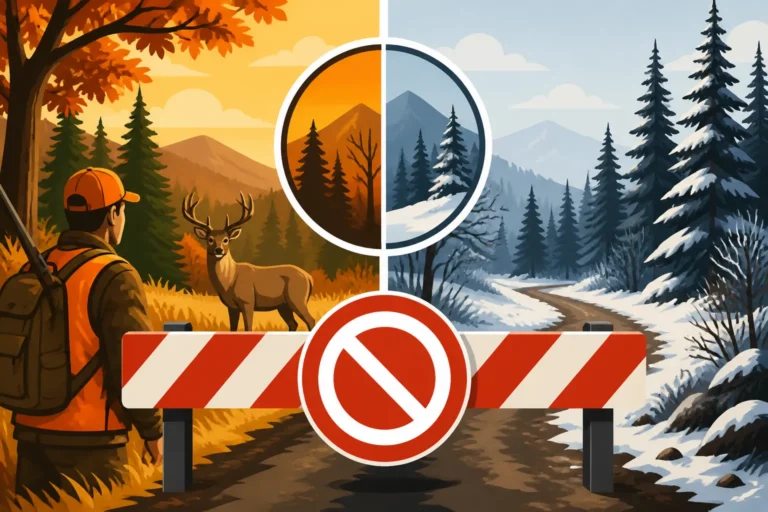
Seasonal and area closures are implemented for very specific and important reasons, often tied directly to wildlife protection or resource management. For example, a road might be closed in the spring to protect elk calving grounds, ensuring new calves have a chance to thrive without human disturbance. Other closures might be put in place during particularly wet seasons to prevent heavy vehicles from creating deep ruts and destroying roads that are otherwise usable. Perhaps most critically, during periods of high fire danger, certain areas or roads might be closed to motorized vehicles to prevent sparks from igniting devastating wildfires.
Disregarding these closures not only shows a blatant disrespect for the land and wildlife but also poses a serious threat. The penalties reflect this severity. You can expect hefty fines, similar to those for driving off-route, and these can escalate rapidly if your actions lead to additional damage, such as sparking a fire or significantly disturbing protected wildlife. Moreover, such violations are often considered game and fish offenses if they interfere with wildlife management, leading to potential license suspension. Always check for Seasonal Road Closures Across New Mexico before your hunt, especially if you're planning an early or late season trip when conditions can change rapidly.
Vehicle Use for Game Retrieval
This is a scenario many hunters grapple with: you've successfully harvested an animal, but it's down in a tough spot, a long way from the nearest legal road. The thought of packing out a quartered elk or mule deer on your back, especially in rugged terrain, can be daunting. The temptation to "just drive over" and retrieve it is immense. However, in New Mexico, as in most places, driving off-road to retrieve game is generally prohibited unless explicitly designated on an MVUM or you have specific permission.
The rules are clear: if the animal is not on or immediately adjacent to a designated open route, you must retrieve it by non-motorized means. This often means walking, packing with horses or mules, or using a game cart. The penalties for driving off-road for game retrieval are the same as driving off-designated routes: significant fines, potential vehicle impoundment, and even charges related to damaging public land. It's a tough pill to swallow, but it's part of ethical hunting and responsible land stewardship. Planning for a difficult pack out is as much a part of the hunt as shooting accurately. Remember the guidelines for Can You Drive Off Road to Retrieve Game? and plan accordingly.
Camping and Parking Violations
While perhaps not as severe as actively driving off-road, ignoring camping and parking regulations can still land you in trouble. Dispersed camping (camping outside of designated campgrounds) is often allowed on many public lands in New Mexico, but it comes with rules. These can include restrictions on how far you must be from developed water sources, roads, or trails, and limits on how long you can stay in one spot. Parking violations typically involve blocking access roads, gates, or trailheads, which can impede emergency services, other users, or even ranching operations on checkerboard land.
Penalties for these types of violations are usually smaller fines, but they can still be an unwelcome expense. More importantly, repeated or egregious offenses can lead to being asked to leave the area, or even citations that could impact your ability to acquire permits or access in the future. Always park your vehicle completely off the main travel way, ensuring it does not obstruct traffic or block gates, and respect any signage regarding camping distances or fire restrictions.
The Consequences Beyond Just a Fine
A ticket is a pain, no doubt about it. But when you break New Mexico's public land travel rules, the consequences can reach far beyond the initial financial hit. These broader impacts can affect your ability to hunt in the future, damage the reputation of hunters, and cause long-lasting harm to the very landscapes we cherish.
Financial Penalties
Let's not sugarcoat it: fines for public land violations in New Mexico can be steep. A simple "driving off designated route" ticket could set you back hundreds of dollars, and that's just the starting point. If your actions result in significant environmental damage, you could face additional restitution charges, where you're legally required to pay for the cost of repairing the damage you caused. This could involve funding efforts to reseed eroded areas, repair damaged roads, or even restore wildlife habitat.
Beyond the initial fines and potential restitution, there are court costs and administrative fees if the violation goes to court, which often happens with more serious offenses. These can quickly add up, turning what seemed like a minor infraction into a major financial burden. A single poor decision can snowball into thousands of dollars in expenses, a sum that could have been better spent on new gear, another hunting trip, or simply staying in good standing with the law. It’s a sobering reminder that carelessness carries a heavy price.
Impact on Hunting Privileges
This is perhaps the most significant consequence for any dedicated hunter: losing your hunting privileges. Many public land travel violations, especially those involving environmental damage or direct interference with wildlife management, are considered violations of game and fish regulations. In New Mexico, a conviction for such an offense can lead to the suspension of your hunting and fishing licenses. This isn't just a temporary slap on the wrist; suspensions can last for one, two, or even several years, effectively barring you from participating in the sport you love.
What's more, New Mexico is part of the Interstate Wildlife Violator Compact. This means that if your hunting privileges are suspended in New Mexico, that suspension can be recognized and enforced by other member states. So, a violation in the Gila National Forest could mean you can't hunt elk in Colorado, deer in Arizona, or even waterfowl in your home state. This reciprocity adds a serious layer of consequence, making it imperative to understand and follow all rules. Losing access to the backcountry is one thing, but losing your ability to even pursue game across multiple states can be devastating for a hunter.
Environmental Damage and Community Perception
The immediate fines and loss of privileges are personal consequences, but violating travel rules also has broader, more insidious impacts. The environmental damage caused by off-road vehicle use—erosion, habitat destruction, disruption of wildlife—can take decades to heal, if it ever fully recovers. These scars on the landscape are a constant reminder of irresponsible behavior.
This brings us to the crucial issue of community perception. Hunters already face scrutiny from various non-hunting groups, and highly visible acts of disregard for public land rules only fuel negative stereotypes. Every time an illegal off-road track is cut or a closure is ignored, it provides ammunition for those who advocate for stricter regulations, reduced access, or even outright bans on hunting. We, as hunters, are stewards of the land. Our actions reflect not just on ourselves, but on the entire hunting community. Responsible behavior, including strict adherence to travel rules, is essential to maintaining public support and ensuring continued access to these precious resources for all. Preserving our hunting heritage depends on our collective commitment to ethical conduct and environmental respect.
How to Avoid Breaking Travel Rules
The good news is that avoiding violations is entirely within your control. With a little proactive planning and the right tools, you can confidently navigate New Mexico's public lands without fear of a penalty. It’s about being informed and making responsible choices before you even put your rig in drive.
Utilizing Mapping Tools
In today's digital age, there's simply no excuse for not knowing where you can and cannot drive. Modern mapping applications have revolutionized how we interact with public lands. Tools like onX Hunt are invaluable. They offer detailed layers showing land ownership, designated motorized routes, wilderness boundaries, and even specific agency regulations for a given area. You can download these maps to your phone or GPS device, allowing you to see exactly where you are in relation to legal travel routes, even when you're far out of cell service. This allows for excellent E-Scouting a New Mexico Unit Before the Season.
Beyond commercial apps, it's crucial to consult official Motor Vehicle Use Maps (MVUMs) from the U.S. Forest Service and Bureau of Land Management (BLM). These maps are often available for free online or at local ranger stations and are the definitive authority on where motorized vehicles are permitted. Learning to read these maps, understanding their symbols for different road types (open, restricted, seasonal closures), and cross-referencing them with your current location using your GPS is the single best way to stay compliant. Don't just glance at a map; truly understand Reading a Land Ownership Layer Correctly and all the associated travel designations.
Pre-Trip Planning and Research
Before you even load your rifle or bow into the truck, dedicated research and planning are your best defense against accidental violations. Don't just rely on what you "think" you know about an area. Regulations can change, roads can close, and new restrictions can be implemented.
Start by visiting the websites of the specific land management agencies for the unit you plan to hunt – be it the Forest Service, BLM, or New Mexico State Land Office. Look for news releases, alerts, and updated MVUMs. Call the local ranger district or BLM field office for the area you're targeting. A quick phone call can clear up any ambiguities about road status, seasonal closures, or specific rules regarding game retrieval. These folks are usually more than happy to help clarify rules, as they'd much rather prevent a violation than issue a ticket. Getting this information directly from the source is far more reliable than relying on outdated forum posts or hearsay. This diligent pre-trip planning will give you peace of mind and help ensure your hunt is stress-free.
When in Doubt, Walk it Out
This is perhaps the simplest and most foolproof rule for avoiding travel violations: if you're not absolutely certain that a route is open and legal for motorized travel, assume it's closed and proceed on foot. The temptation to push a little further, to save yourself a long walk, is understandable, but it's rarely worth the risk. The potential fines, legal repercussions, and the damage to the land and the reputation of hunters far outweigh the convenience of a shorter hike.
Embrace the hike. Plan your hunts with the assumption that you'll be doing a lot of walking, and prepare physically for it. That extra mile on your boots or with a game cart is a small price to pay for compliance and responsible stewardship. Remember, the goal is to enjoy the hunt, respect the land, and maintain your good standing as a legal, ethical hunter. When you find yourself questioning whether a track is a legal road or an illegal two-track, make the conservative choice. Hunting New Mexico From 4,000 Feet to 10,000 often means leaving the vehicle far behind anyway.
Here's a quick reference guide to common travel rule violations and their general consequences:
| Violation Type | Description | General Consequences (New Mexico) |
|---|---|---|
| Driving Off Designated Routes | Operating a motorized vehicle outside of marked, official roads/trails. | Significant Fines (hundreds-thousands), Vehicle Impoundment, Restitution for Damages, License Suspension (if wildlife impact) |
| Violating Seasonal Closures | Entering a road/area closed for specific periods (e.g., mud, wildlife, fire). | Fines (hundreds), Potential for License Suspension (if wildlife/resource impact), Vehicle Impoundment |
| Vehicle Game Retrieval (Illegal) | Driving off-road to retrieve harvested game where not explicitly permitted. | Significant Fines, Vehicle Impoundment, Restitution, License Suspension (considered game & fish violation) |
| Blocking Access/Gates | Parking or leaving a vehicle that obstructs roads, gates, or trailheads. | Fines (lower range), Vehicle Towing/Impoundment |
| Dispersed Camping Violations | Camping too close to water, roads, or for too long in restricted areas. | Fines (lower range), Being asked to move/leave |
| Creating New Trails | Repeatedly driving in a non-designated area, forming a new route. | Significant Fines, Restitution, Potential for Criminal Charges, License Suspension |
Disclaimer
This article is for general informational purposes only and does not constitute professional advice. Laws, prices and regulations vary by location and change over time. Consult a qualified professional for guidance on your specific situation.