Getting Into New Mexico’s Black Range
Heading into New Mexico's Black Range for a hunt can feel like stepping back in time, a rugged venture that rewards preparation and grit, but it's easy to get overwhelmed by the sheer scale and challenging terrain. Many hunters, especially those new to this part of the state, find themselves wondering where to even begin with scouting and access. This guide aims to demystify getting into the Black Range, offering practical advice and insights to help you navigate its wild beauty safely and effectively.
The Unique Landscape of New Mexico's Black Range
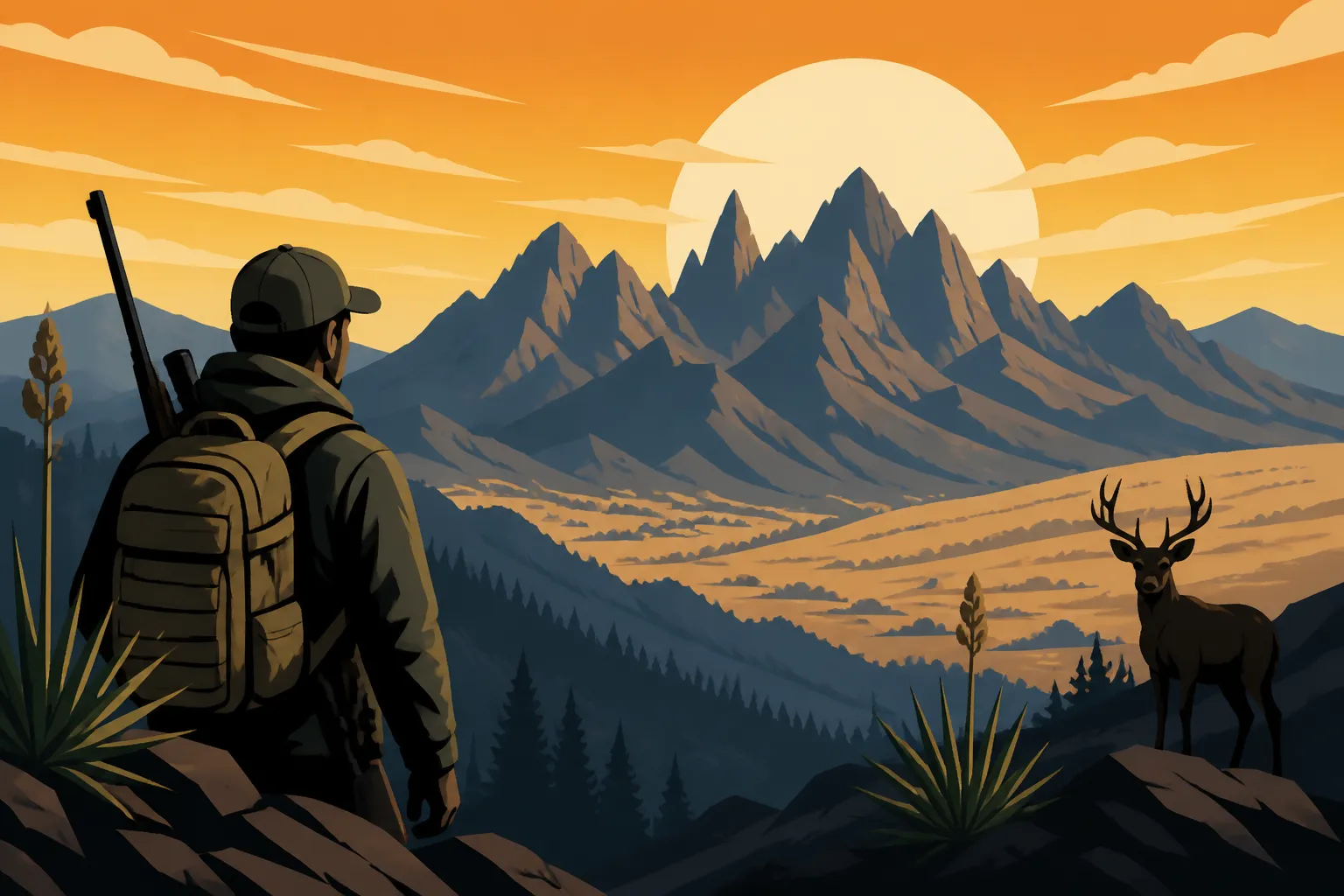
The Black Range isn't just another mountain chain; it's a vast, unbroken expanse of rugged timber, deep canyons, and high-elevation parks that commands respect and offers some of the most challenging, yet rewarding, hunting New Mexico has to offer. It's an area where the commitment truly begins long before you set foot on the mountain, requiring thorough understanding and preparation.
Defining the Black Range's Hunting Terrain
Stretching for roughly 100 miles north to south through the heart of southwestern New Mexico, the Black Range is characterized by its steep, heavily forested slopes and often-remote backcountry. Elevations can soar from around 5,000 feet in the canyons to over 10,000 feet at peaks like Hillsboro Peak and McKnight Mountain. This dramatic elevation change means hunters will experience diverse ecosystems within a single hunt, from pinyon-juniper woodlands at lower reaches to ponderosa pine and mixed conifer forests higher up, finally giving way to spruce-fir zones on the highest ridges.
The terrain is notoriously steep and broken, riddled with drainages, rock slides, and thick pockets of brush. This is not open country hunting where you can glass for miles; instead, it demands a still-hunting approach and an intimate knowledge of how to move quietly through dense cover. For elk hunters, these mountains are legendary, holding populations of mature bulls that have learned to thrive in the rough country. Mule deer, black bear, and even some cougar also call this vast wilderness home. The sheer size and inaccessibility of much of the range provide incredible refuge for big game, meaning that if you're willing to put in the effort, you stand a chance at encountering truly unpressured animals. It’s the kind of country that demands you learn Hunting New Mexico From 4,000 Feet to 10,000 and respect every elevation band.
Key Game Units Within the Black Range
The Black Range spans several game management units, with some of the most renowned being Unit 15, Unit 16A, Unit 16D, and portions of Unit 17 and Unit 22. Each of these units holds its own unique characteristics and challenges, but all share the common thread of the Black Range's formidable terrain. Unit 15, for example, is famous for its primitive weapons hunts and the quality of its elk. Unit 16A and 16D are deep within the Gila National Forest and offer extensive wilderness opportunities. When applying for a tag, it’s critical to understand Reading a New Mexico Unit Boundary Before You Apply because a boundary line can dictate entirely different access routes and terrain types.
When you're researching these units, you'll notice a significant portion falls under public ownership, primarily managed by the U.S. Forest Service as part of the Gila National Forest. This means vast tracts of land are open to the public, which is a huge advantage for DIY hunters. However, even within these public lands, there can be smaller, interspersed private parcels, old mining claims, or ranching leases that require careful attention. It’s always smart to double-check land ownership using a reliable mapping application like onX Hunt to ensure you’re not inadvertently trespassing. Each unit has its own nuances, and a successful hunt begins with knowing exactly where you stand, literally and figuratively.
Unlocking Access: Roads, Trails, and Wilderness Boundaries
Reaching the prime hunting grounds within the Black Range is often the first significant challenge. Unlike areas with well-maintained paved roads, access here frequently means navigating rough dirt roads and then transitioning to demanding foot travel into true wilderness. It's a journey that tests both your vehicle and your physical endurance.
Navigating Forest Service Roads and Seasonal Limitations
The primary vehicular access into the Black Range is via a network of Forest Service roads. These are typically unpaved, often rocky, deeply rutted, and can become treacherous with adverse weather. A high-clearance, four-wheel-drive vehicle is not just recommended; it’s often a necessity, especially if you plan to explore deeper into the range. Many of these roads see minimal maintenance, and some might be seasonal only, closing due to snow, mud, or fire danger. It’s not uncommon to encounter washouts or downed trees, requiring you to be self-sufficient with recovery gear. Before heading out, always check the Gila National Forest website for current road conditions and any Seasonal Road Closures Across Forests that might impact your planned entry points.
You might find yourself driving for hours on these winding, bumpy roads just to reach a trailhead. Patience is key, as is a thorough understanding of your vehicle's capabilities. Remember that cell service is often nonexistent in large parts of the Black Range, so a flat tire or getting stuck far from the main roads can quickly turn into a serious situation. Plan your routes meticulously using detailed maps, ideally layered with current road data from sources like onX Hunt, and always let someone know your itinerary. If you plan to cross any private land, even just a corner, you need to be aware of Written Permission Requirements in New Mexico and respect those boundaries.
The Commitment of Wilderness Backcountry Access
Once the roads end, the real work begins. Much of the Black Range is encompassed by wilderness areas, most notably the Aldo Leopold Wilderness, and parts of the Gila Wilderness. These areas are specifically designated for foot or horseback travel only, meaning no motorized vehicles or even bicycles are allowed. This commitment to non-mechanized access is precisely what preserves the wild character of these mountains and allows for exceptional, unpressured hunting experiences. Accessing these areas means planning a true backcountry hunt, often requiring you to pack in all your supplies and pack out all your game on your back or with the aid of stock. Hunting the Aldo Leopold Wilderness offers an unparalleled experience, but it demands peak physical condition.
The trails themselves can be steep, rocky, and sometimes difficult to follow, especially after heavy rains or in areas affected by past wildfires. You'll be climbing significant elevation and covering serious ground, often off-trail, through thick timber and over downed logs. This isn't a casual stroll; it's an intense physical endeavor that demands stamina, strength, and mental fortitude. Many hunters underestimate the physical toll of packing a heavy camp in and then potentially packing out an elk quarter by quarter. This is why you really need to be Preparing Physically for a High Elevation Hunt well in advance. Understanding what a backcountry hunt truly entails is crucial for both success and safety in this magnificent but challenging landscape.
Preparing for Success in the Black Range Backcountry
Hunting the Black Range isn't something you can just decide to do on a whim. It requires meticulous planning, the right tools, and a healthy dose of physical and mental preparation. It’s about being self-sufficient, adaptable, and respectful of the wild environment.
Essential Tools for Mapping and Navigation
In a landscape as vast and untamed as the Black Range, reliable navigation is paramount. Forget about relying on cell service – it's typically nonexistent. Your primary navigation tools should be a combination of digital mapping applications and physical backups. Apps like onX Hunt are invaluable for their detailed satellite imagery, land ownership layers, and topographic maps. You can download offline maps before you leave home, allowing you to track your position even without a signal. This capability is absolutely critical for staying on track, identifying public land boundaries, and even marking game sign or potential camping spots. Utilizing GoHunt for pre-season research, examining draw odds, and gathering unit-specific information can give you a significant advantage before you even begin to e-scout.
However, technology can fail, so always carry a traditional paper map (USGS topographic maps are excellent) and a compass. Know how to use them, even if you primarily rely on your GPS device. Beyond just knowing where you are, these tools help you with Reading Terrain Before You Pick a Camp, find water sources, and plan your approach to potential animal bedding areas or feeding grounds. E-Scouting a New Mexico Unit Before the Season from home, using these digital resources, is a powerful first step in gaining familiarity with the challenging contours of the Black Range.
Gear Up for the Demands of the Black Range
The gear you bring to the Black Range needs to be robust, reliable, and appropriate for extreme conditions. Think lightweight but durable, and definitely consider layers. Temperatures can swing dramatically from cold mornings to warm afternoons, and a sudden mountain storm can bring rain, hail, or even snow, regardless of the season. Being able to adjust your clothing with effective Layering for Gila Temperature Swings is key to staying comfortable and safe.
Beyond clothing, a sturdy backpack capable of carrying heavy loads is non-negotiable, not just for your camp but for packing out game. A good set of optics – binoculars and perhaps a spotting scope on a sturdy Tripod Setup for Glassing From a Ridge – will aid in locating game in the vast timbered country, though often the hunting is close-quarters. Water filtration is essential, as carrying enough water for several days in this rugged terrain is impractical. Finally, consider satellite communication devices like a Garmin inReach or Zoleo, especially given the lack of Cell Coverage Across New Mexico Hunt Units. These can send text messages and, more importantly, act as an emergency beacon if something goes wrong.
Here’s a basic checklist of essential gear:
| Category | Item | Why It's Essential |
|---|---|---|
| Navigation | GPS/Satellite Communicator (onX Hunt) | Offline maps, tracking, emergency communication, pinpointing game |
| Topographic Maps & Compass | Backup navigation, understanding terrain | |
| Shelter/Camp | Lightweight Tent/Shelter | Protection from unpredictable mountain weather |
| Sleeping Bag (appropriate rating) | Warmth for cold mountain nights | |
| Cook System & Fuel | Hot meals and drinks, essential for morale | |
| Clothing | Layering System (base, mid, outer) | Adaptability to extreme temperature swings and moisture |
| Durable Hiking Boots (broken in!) | Support and protection on steep, rocky, uneven terrain | |
| Rain Gear (jacket & pants) | Protection from sudden downpours or snow | |
| Hunting Tools | Optics (binoculars, spotting scope) | Locating game in dense cover or across canyons |
| Hunting Knife & Sharpening Stone | Field dressing and processing game | |
| Game Bags | Protecting meat from dirt, flies, and cooling | |
| Safety/Survival | First Aid Kit | Treating injuries in remote areas |
| Water Filter/Purifier | Accessing safe drinking water from natural sources | |
| Headlamp & Spare Batteries | Navigating in the dark, camp tasks | |
| Fire Starter (multiple methods) | Emergency warmth, signaling | |
| Signaling Mirror/Whistle | Attracting attention in an emergency | |
| Miscellaneous | Trekking Poles | Aid on steep ascents/descents, stability with heavy packs |
| Repair Kit (duct tape, cordage) | Field repairs for gear | |
| Sun Protection (hat, sunscreen) | Guard against high-altitude sun exposure |
Remember, every ounce counts when you're Packing an Elk Out of the Gila Alone or carrying a multi-day camp. Prioritize wisely, but never skimp on safety or critical items.
Physical and Mental Readiness for a Rugged Hunt
Beyond the gear, your physical and mental conditioning are arguably the most important elements for a successful Black Range hunt. These mountains are steep, unforgiving, and demand sustained effort day after day. You need to be in good cardiovascular shape to handle the elevation gains and thin air, as well as have the leg strength to navigate rocky, uneven terrain with a heavy pack. Training should begin months in advance, focusing on hiking with weight, stair climbing, and general endurance.
Mentally, you need to be prepared for solitude, discomfort, and the inevitable challenges that come with wilderness hunting. The Black Range can be physically draining and emotionally taxing, especially if game isn't immediately cooperative or if weather turns for the worse. Patience, perseverance, and a positive attitude are crucial. Understand that sometimes the greatest reward isn't the harvest itself, but the experience of being truly immersed in such a wild and beautiful place, pushing your limits, and proving your self-reliance. This is primitive country, and it will demand a primitive kind of toughness from you.
Disclaimer
This article is for general informational purposes only and does not constitute professional advice. Laws, prices and regulations vary by location and change over time. Consult a qualified professional for guidance on your specific situation.