Getting Cleared Onto a Military Range
Hunting on military ranges in New Mexico can feel like trying to crack a secret code, full of unique challenges and a bureaucratic maze that often deters even seasoned hunters. Many folks get frustrated by the seemingly endless paperwork and stringent rules, wondering if it's even worth the effort. But what if I told you that navigating this system can unlock access to some of the most pristine and unpressured hunting grounds in the state? This guide is here to demystify the process, walking you through everything you need to know about getting cleared to hunt on these special lands.
Why Military Ranges Hold Unique Hunting Opportunities
Let's face it, the idea of hunting on a military range sounds a bit unusual, maybe even a little daunting. But for those willing to do their homework and follow the strict protocols, these lands offer a hunting experience unlike almost any other in New Mexico. The very restrictions that make them difficult to access are what often contribute to their exceptional quality.
The Unique Habitat and Game Concentration
One of the biggest draws to military ranges is the sheer lack of consistent human pressure. Unlike vast tracts of National Forest or BLM land that see constant recreational use, these areas are primarily managed for military operations. This often means large swaths of habitat remain undisturbed for long periods, allowing wildlife to thrive without constant disruption. Game animals, especially big game like oryx, can establish stable populations, grow to impressive sizes, and develop patterns that are less influenced by daily human presence.
Think about it: fewer roads, less off-roading, and limited public entry mean that deer, elk, and especially the exotic species that call these ranges home, can mature and grow old without the kind of hunting pressure they might encounter elsewhere. This creates a unique ecosystem where game often behaves more naturally, making for a truly wild hunt if you can secure access. It's a testament to how protected areas, even those for military purposes, can become accidental wildlife havens.
Specific Ranges in New Mexico
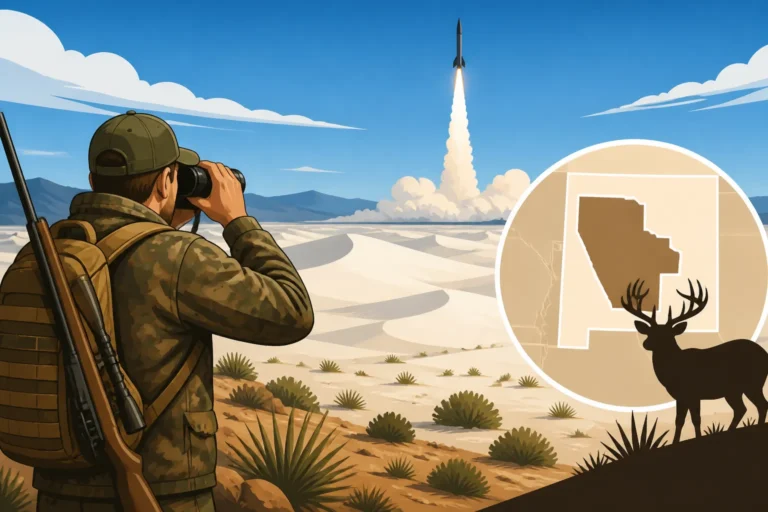
When we talk about hunting on military ranges in New Mexico, one name immediately springs to mind: White Sands Missile Range. This massive installation in the south-central part of the state is renowned for its incredible oryx hunting opportunities. How Oryx Were Introduced to New Mexico explains a bit about this. These majestic animals, introduced from Africa, have flourished in the Chihuahuan Desert landscape of the range, often reaching impressive sizes. While White Sands is the most prominent example, other military installations in New Mexico, such as Fort Bliss (which extends into New Mexico from Texas) and occasional tracts managed by Holloman Air Force Base, might also offer limited hunting opportunities for various species, though these are far less common or publicly known than the White Sands oryx hunts. Each range will have its own specific management plan and access protocols, so it's always critical to check directly with the installation's wildlife or public affairs office.
The Application and Vetting Process for Military Range Hunts
Now, let's talk about the nitty-gritty: how do you actually get onto one of these places? It's not as simple as showing up with your hunting license. There's a dedicated process, and knowing it inside and out is your key to success.
Understanding the Application Timeline
Military range hunts typically operate on a very strict schedule, often separate from the general New Mexico Game and Fish draw system, though you usually need a state hunting license in addition to the range permit. For White Sands Oryx hunts, for example, the application process usually runs parallel to, or just after, the state's main draw. This means you need to be incredibly diligent in checking the specific military installation's website or wildlife management office for their annual hunt schedule and deadlines. Missing a deadline, even by an hour, usually means you're out of luck until next year. The early bird definitely gets the worm when it comes to these unique opportunities. It's not uncommon for these applications to open and close months before the actual hunt, to allow ample time for background checks and logistical planning. You’ll want to be ready to apply as soon as applications open, often in late spring or early summer, to be considered for hunts later in the year.
Required Documentation and Background Checks
This is where the military aspect really comes into play. You’re not just applying for a tag; you’re requesting access to a secure federal installation. This means expect thorough background checks. You'll likely need to provide personal identification details, including your full name, date of birth, Social Security Number, and often a copy of your driver's license. Expect questions about your criminal history, and potentially even a requirement to list any foreign travel. You might also need to provide your New Mexico Hunter Education certification number.
The process often involves filling out specific military base access forms in addition to any hunt application forms. These forms are designed to ensure national security and the safety of everyone on the range. Don't be surprised if the paperwork feels extensive; it's all part of the security protocol. Being upfront and providing accurate information is paramount. Any discrepancies or omissions could lead to your application being denied outright. Think of it as applying for a highly exclusive club where safety is the number one rule.
Special Permit Requirements and Fees
Beyond your standard New Mexico Game Hunting License and a species-specific tag (which you'll often need to draw through the state system or purchase as an EPLUS tag if applicable), military ranges typically require their own specific permits or fees. For instance, White Sands will have a range-specific permit fee once you are drawn for an oryx hunt. This fee usually covers the cost of administering the hunt, providing necessary safety briefings, and facilitating access.
These fees are separate from your state license and tag costs, so budget accordingly. You might also need to acquire a Habitat Management & Access Validation (HMAV) and a Habitat Stamp, if required for federal lands. The HMAV and Habitat Stamp Every New Mexico Hunter Needs is a good resource for understanding these. The military range itself will issue a unique permit or access badge that you must carry at all times while on the hunt. This permit specifies your hunt dates, the authorized hunting area, and any other critical restrictions. Always confirm the exact fee structure and what it covers with the installation's wildlife office before applying.
Navigating Rules and Restrictions on Military Land
Once you've successfully navigated the application process and secured your permit, the real adventure begins. However, hunting on a military range comes with a unique set of rules that go beyond typical state hunting regulations. Ignoring these can not only get your hunt terminated but could also lead to serious legal consequences.
Safety Protocols and Briefings
This is non-negotiable. Every hunter granted access to a military range will be required to attend a mandatory safety briefing, usually held the day before or morning of the hunt. These briefings cover critical information: current military operations, active firing zones, emergency procedures, communication protocols, and specific boundaries you absolutely cannot cross. Pay close attention, ask questions if anything is unclear, and take notes. You'll be informed about what to do if you encounter unexploded ordnance (UXO), which is a very real possibility on a live-fire range. It's a solemn reminder that you are on active military ground, and your safety, as well as the safety of military personnel, is paramount. Expect strict adherence to all firearm safety rules, and often, specific rules about loaded firearms in vehicles.
Restricted Areas and Boundaries
Military ranges are dynamic environments. Areas that are open one day might be closed the next due to training exercises or ordnance clearance. Your hunt permit will specify the exact areas you are authorized to enter, and you must stick to them. Crossing into a restricted zone, even accidentally, can lead to immediate revocation of your permit, expulsion from the range, and potential legal charges.
Utilizing mapping apps like onX Hunt becomes absolutely essential here. While military ranges might not always have perfectly delineated public hunting boundaries on commercial apps, using these tools to identify your specific hunt unit and marking the boundaries provided by the base is critical. Many ranges will provide detailed paper maps during the briefing, and it's wise to cross-reference these with your digital mapping tools. Always err on the side of caution. If a boundary is unclear, stay out until you can confirm it with range staff.
Vehicle, Weapon, and Harvest Regulations
Expect specific rules regarding vehicles. This could include designated parking areas, limitations on off-road travel, speed limits, and even requirements for certain vehicle types or colors. For example, some ranges might require all vehicles to be street legal and in good working order, with no loud exhaust or excessive modifications.
Weapon regulations can also differ. While state regulations dictate legal weapon types for big game, military ranges might have additional rules regarding carrying loaded firearms, transporting ammunition, or specific safety checks at entry/exit points. For instance, you might be required to store your rifle unloaded and encased while driving on the range, even if state law allows otherwise.
Harvest regulations are another key area. Beyond tagging requirements, some ranges have mandatory check-in/check-out procedures for hunters and harvested game. This is often tied to monitoring game populations on the range and ensuring all hunters have left the premises safely. You might be required to present your harvested animal for inspection, and potentially even provide biological samples for disease monitoring. Be prepared for Mandatory Reporting After a New Mexico Harvest.
Preparing for Your Military Range Hunt
Getting cleared and understanding the rules is half the battle; the other half is making sure you're physically and mentally ready for a hunt that can be unlike any other.
Scouting and Access Limitations
Traditional pre-season scouting, where you walk the land for days, might be severely restricted or even impossible on a military range. Access is often limited to your designated hunt days, and entry outside of those times is typically prohibited. This means you'll have to rely heavily on remote scouting methods.
Satellite imagery through tools like GoHunt or onX Hunt becomes your best friend. Study the terrain, identify potential bedding areas, feeding zones, and water sources. Look for subtle changes in vegetation, terrain features that might funnel animals, or historical travel corridors. Pay attention to anything that looks like a man-made structure or potential danger zone, and make sure it's outside your authorized hunting area. You might be allowed a single scouting day before the hunt, but that's a rare luxury. Many hunters find themselves learning the land for the first time during their hunt, making adaptability and quick observation skills crucial.
Essential Gear and Communication
Given the unique environment, your gear list will need some specific additions. Beyond your usual hunting essentials, consider:
- Reliable GPS device/mapping app: As mentioned, onX Hunt is invaluable. Having a backup power source is critical.
- Satellite communication device: Cell service is often non-existent or spotty on these vast ranges. A satellite messenger (like a Garmin inReach or Zoleo) is highly recommended for emergencies and to communicate with range staff if needed.
- Plenty of water and food: You might be far from any amenities.
- First-aid kit: A comprehensive one, including any personal medications.
- High-visibility clothing: Even if not strictly required, wearing blaze orange or other bright colors can increase your safety, especially if military exercises are ongoing nearby (even if separate from your hunt unit). Blaze Orange Requirements Through the Season will give you some general guidelines.
- Extra fuel: Distances can be vast, and gas stations nonexistent on the range.
Always have a "go bag" ready in your vehicle with essentials in case you get separated or need to spend an unexpected night out. Your military range permit is often your only proof of authorization, so keep it secure and accessible.
What Happens if the Hunt is Cut Short
One of the most challenging realities of hunting on military land is the possibility of your hunt being abruptly cut short due to military operations. These ranges exist primarily for training and testing, and your hunt is a secondary use of the land. Why a White Sands Hunt Can Be Cut Short delves into this reality. If military operations require the range to be cleared, hunters will be notified and required to exit immediately.
This isn't just an inconvenience; it can be heartbreaking if you've invested time, money, and effort into the hunt. Unfortunately, there's usually no compensation or guarantee of rescheduling. It's a risk you accept when applying for these hunts. Being prepared for this means having a flexible mindset, understanding the inherent uncertainty, and being grateful for whatever time you do get on the range. Always have a plan for a swift exit, and adhere strictly to any evacuation orders given by range personnel.
Key Differences: Military Range vs. Public Land Hunting
To summarize, here's a quick look at how hunting on a military range often differs from a typical public land hunt in New Mexico:
| Feature | Military Range Hunting | General Public Land Hunting (e.g., National Forest, BLM) |
|---|---|---|
| Access | Highly restricted, special permits, background checks. | Generally open, requiring state license/tags. |
| Scouting | Limited to no pre-season physical scouting, heavy e-scouting. | Extensive physical pre-season scouting often possible. |
| Rules & Regulations | State game laws + strict military base protocols, safety briefings. | Primarily state game laws, some federal land rules. |
| Pressure | Often low due to limited access. | Can be moderate to very high, especially on opening day. |
| Boundaries | Extremely critical to adhere to precise, often dynamic, military-designated zones. | Marked by physical features, property lines, mapping apps. |
| Communication | Satellite communicator often essential; cell service rare. | Cell service often available; satellite communicator good backup. |
| Hunt Interruption | High risk of hunt being cut short due to military operations. | Low risk of external, non-weather related interruption. |
| Game Quality | Often exceptional due to low pressure over time. | Varies greatly by unit and pressure; can be excellent. |
| Permit Cost | State license/tag + separate range access fee. | State license/tag only. |
| Emergency Procedures | Specific military protocols, designated muster points. | Self-reliance, standard emergency services. |
Hunting on a military range is a unique privilege, offering the chance to pursue game in areas less touched by human activity. It requires extra planning, patience, and a deep respect for the rules and the land's primary purpose. But for those who embrace the challenge, it can lead to an unforgettable and highly rewarding experience.
Disclaimer
This article is for general informational purposes only and does not constitute professional advice. Laws, prices and regulations vary by location and change over time. Consult a qualified professional for guidance on your specific situation.