Landlocked Public Parcels in New Mexico
It’s a scenario many New Mexico hunters have faced, and it’s undeniably frustrating: you’ve meticulously scouted a unit, found a promising public land parcel teeming with sign, only to discover that the only way to reach it is by crossing private property. This isn't just an inconvenience; it's a genuine access barrier that can turn a promising hunt into a legal quagmire. This guide will dive deep into understanding these "landlocked" public parcels in New Mexico, exploring why they exist, the legal challenges they pose, and most importantly, how to navigate them responsibly and legally so your hunting adventures don't inadvertently lead to a run-in with the law.
Understanding Landlocked Public Land in New Mexico
The concept of "public land" often conjures images of vast, unbroken stretches of forest or desert, freely accessible to all. While New Mexico certainly boasts incredible public acreage, the reality on the ground, especially when you start looking at detailed maps, is often far more complex. Many public parcels, owned by the Bureau of Land Management (BLM) or the Forest Service, find themselves completely surrounded by private ground, creating what we call "landlocked" areas.
What "Landlocked" Truly Means for Hunters
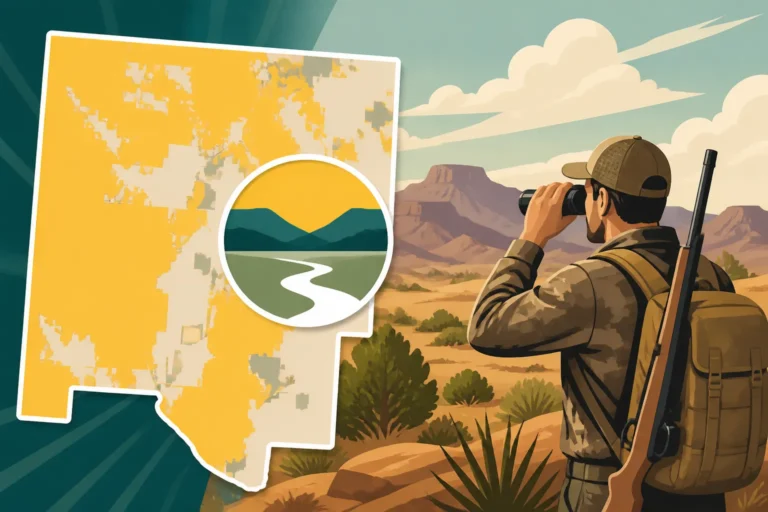
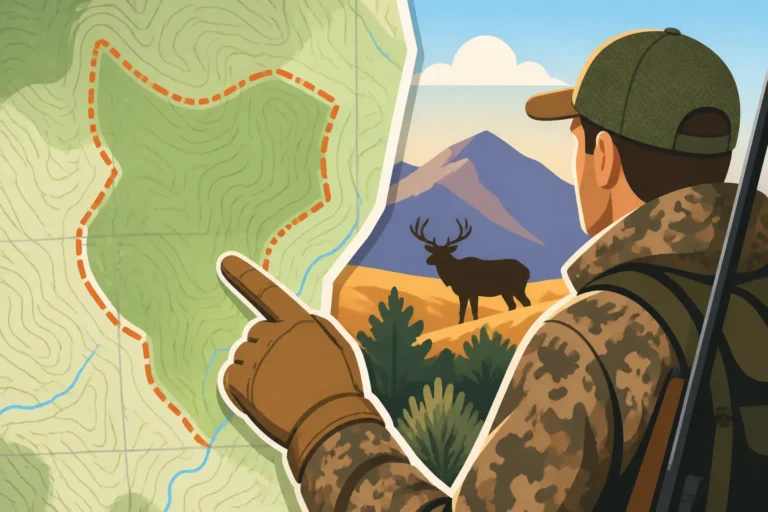
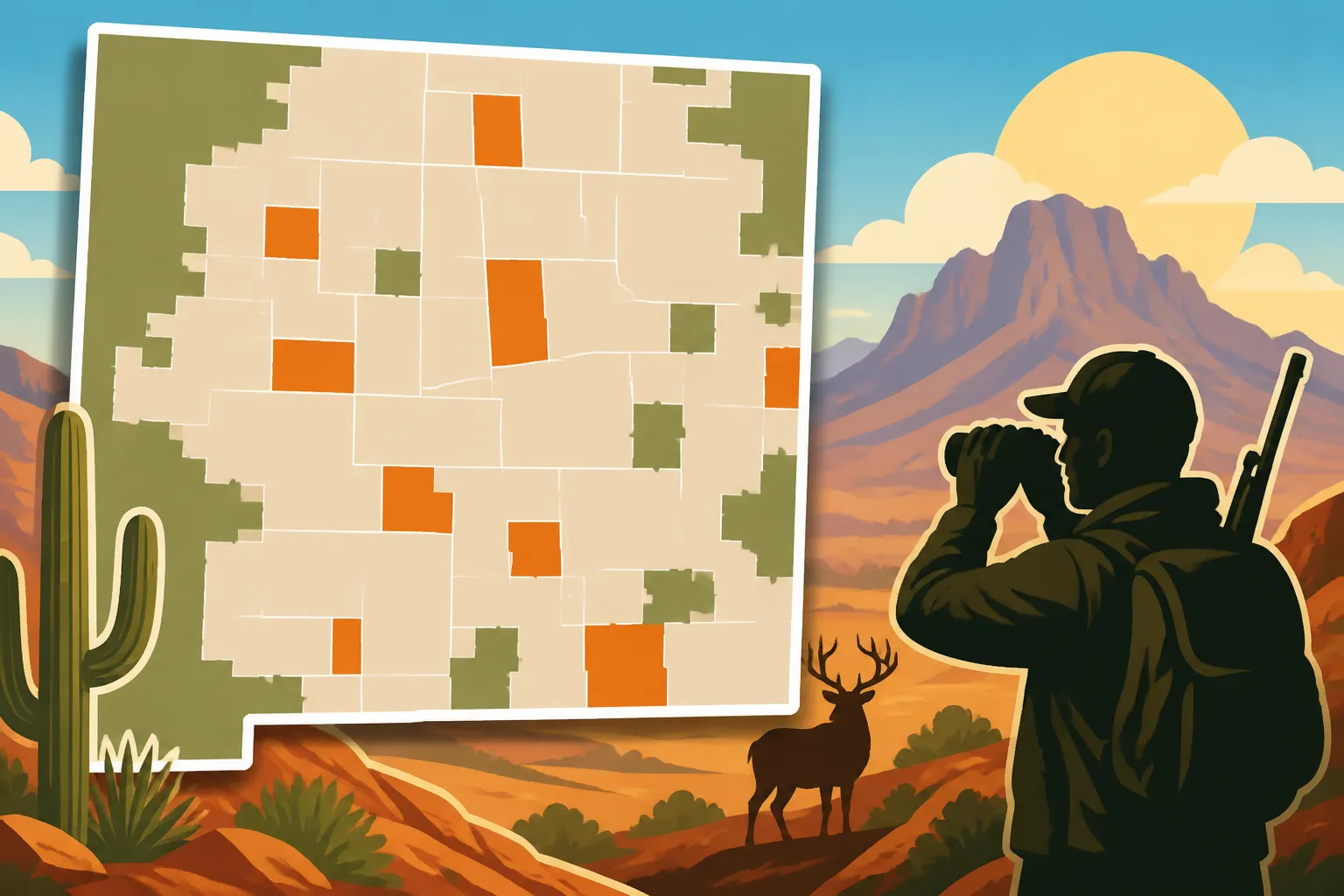
At its core, a landlocked public parcel is exactly what it sounds like: a piece of public land that has no legal, public access route to it. Imagine looking at a detailed land ownership map, perhaps on an app like onX Hunt. You see a vibrant green square or rectangle, clearly marked as BLM or National Forest, but it’s completely encased by a sea of white or another color indicating private ownership. There's no public road, no trail, no river, and no designated easement that allows you to walk or drive from other public land to that specific parcel without setting foot on private property.
The frustration this causes is immense. You might be staring at satellite imagery showing excellent habitat – maybe a hidden water source, a secluded bench, or a thick stand of timber – but you can’t get there. This isn’t a matter of simply a long walk; it’s a legal barrier. It’s a parcel that, despite being public, is functionally inaccessible to the average hunter without risking trespass. These parcels might be small, a forty-acre square in the middle of a massive ranch, or sometimes surprisingly large, a square mile or more that seems tantalizingly close but remains out of reach. It fundamentally changes how you approach a unit, forcing you to rethink entire areas you might have considered prime hunting ground.
Why This Phenomenon Exists in New Mexico
The existence of landlocked public parcels is deeply rooted in the historical patterns of land distribution across the American West, and New Mexico is no exception. Much of it boils down to how land was originally surveyed, granted, and sold over the past two centuries.
One of the most common reasons stems from the "checkerboard" land grants. During the 19th century, land was often granted to railroad companies in alternating sections (squares of one square mile each) to incentivize railroad construction. The odd-numbered sections might go to the railroad, while the even-numbered sections remained public (or were granted to states). Over time, these private railroad sections were often sold off to ranchers and homesteaders, leading to a patchwork quilt of public and private ownership. While some of these "checkerboard" areas are adjacent, creating an accessible pattern, others can result in isolated public squares surrounded by land that has since become private.
Another factor is the sheer scale of private ranch land in New Mexico. Many historic ranches encompass vast acreages, often acquired through Spanish land grants, homesteading, or subsequent purchases. As these private holdings expanded, they sometimes engulfed smaller, isolated pockets of public domain land that were deemed less valuable at the time or simply overlooked in access planning. Furthermore, as private land is bought and sold, access easements that once existed might not be formally recorded or maintained, further complicating the issue. The result is a landscape where the legal boundaries don't always align with practical access, leaving hunters with the challenge of figuring out how to Judging Access Before You Draw a Tag.
Navigating the Legal Landscape of Access
When you encounter a landlocked public parcel, your first instinct might be to find "some way" in, especially if it looks like prime hunting. However, it's absolutely critical to understand the legal nuances surrounding access, particularly in New Mexico, to avoid severe consequences. Simply put, good intentions don't absolve you of trespass.
The Corner Crossing Debate and New Mexico Law
The term "corner crossing" has gained a lot of attention in recent years, referring to the act of stepping from one piece of public land to another by crossing over the common corner point of two private parcels without touching the private ground. Imagine four squares meeting at a single point, like a crosshairs. Two diagonally opposite squares are public, and the other two are private. You jump from public to public, theoretically never stepping on the private land itself.
While this might seem like a clever workaround, it's a highly contentious legal area, and the interpretation varies significantly by state. In New Mexico, the situation remains legally ambiguous, and relying on the "corner crossing" defense can be risky. There have been instances in other states where hunters attempting this have faced criminal trespass charges, with landowners arguing that merely passing through the airspace above their property, or even establishing a "footprint" at the corner, constitutes trespass. For a hunter in New Mexico, the safest and most prudent approach is to assume that any access, even at a corner, requires explicit permission if it involves crossing over private land, regardless of how briefly or minimally. The legal system tends to favor private property rights in these disputes, making Corner Crossing Legality in New Mexico a complex and evolving issue you absolutely want to avoid being the test case for.
The Requirement for Written Permission to Cross Private Ground
This is perhaps the most fundamental rule when dealing with landlocked public parcels: you must obtain written permission from the private landowner to cross their property, even if your ultimate destination is public land. New Mexico law is quite clear on trespass; if land is not explicitly public, it is private, and unauthorized entry is illegal.
Simply asking for verbal permission, while a friendly gesture, is rarely sufficient, especially in legal terms. A written agreement, however simple, provides documentation and protects both you and the landowner. This document should clearly state the names of the individuals granted permission, the dates of access, the specific route permitted, and the purpose (e.g., hunting). Without it, you are risking fines, potential impoundment of game, and even the loss of hunting privileges. Landowners often have legitimate concerns about liability, property damage, and poaching, so a formal approach builds trust. Showing up unannounced or attempting to sneak across can quickly sour relations and permanently close off any future access for other respectful hunters. The bottom line is, if you need to cross private ground, secure Written Permission Requirements in New Mexico well in advance of your hunt, and carry it with you.
Strategies for Identifying and Accessing These Parcels
Navigating the complexities of landlocked public land requires preparation, good tools, and a respectful, proactive approach. You can't just guess where the public land is, especially when private property lines are involved.
Using Mapping Tools to Identify Landlocked Areas
In today's hunting world, digital mapping applications are indispensable, especially for understanding land ownership and access. Tools like onX Hunt and GoHunt have revolutionized how hunters scout and plan. These apps, particularly onX Hunt, offer detailed land ownership layers that clearly delineate public lands (like BLM, National Forest, State Trust Land) from private parcels. They are absolutely critical for identifying landlocked public areas before you even leave your driveway.
Here’s how you can use them effectively:
- Activate Land Ownership Layers: Open your chosen app and make sure the private and public land layers are activated. This will show you a color-coded map where different colors represent different land ownership types.
- Zoom and Scan: Systematically zoom in and scan your chosen unit. Look for those green (BLM/National Forest) or yellow (State Trust Land) parcels that are entirely surrounded by private land (often white or another color). These are your landlocked parcels.
- Analyze Access Points: Once you identify a landlocked parcel, trace its perimeter. Look for any faint trails, roads, or natural features that might connect it to other public land or a public road. Often, you'll find none. This visual confirmation is crucial.
- Cross-Reference with Satellite Imagery: Toggle to the satellite view. Sometimes, a landlocked parcel might be visible from a public road or adjacent public land, but a deep canyon or dense vegetation makes foot travel impossible without crossing private corners or lines. The satellite view helps you understand the terrain and potential physical barriers.
- Identify State Trust Land: Don't forget State Trust Land. In New Mexico, your hunting license provides an easement for hunting on State Trust Land, but this only applies if you can legally access the land without trespassing on other private property. So, a landlocked State Trust parcel is just as inaccessible as a landlocked BLM parcel.
By diligently using these mapping tools, you can pinpoint exactly where these access issues exist. This allows you to avoid wasting time and effort planning a hunt in an area you legally cannot reach. It also helps you strategize on which landowners to approach for permission. Being able to visualize and understand Reading a Land Ownership Layer Correctly is the first step in addressing the challenge of landlocked parcels. You can also Downloading New Mexico Unit Layers to work offline in areas with no cell service.
Creative (and Legal) Access Solutions
Once you’ve identified landlocked public ground, don't immediately write it off. While the primary solution is always securing permission, there are ethical and legal avenues to explore:
- Approach Landowners Respectfully: This is your number one option. Identify the owners of the private property surrounding the landlocked public parcel. Many mapping apps can even provide landowner contact information. When you approach them, be polite, respectful, and clear about your intentions. Explain you’ve identified a public parcel you'd like to access for hunting and are seeking permission to cross their land. Offer to share contact information, provide proof of your hunting license, and be transparent about your plans. Highlight your commitment to safety, respecting their property (no litter, no gates left open, sticking to a specific route), and ethical hunting. Sometimes, building a good relationship can open doors that seem closed. Always ask for that written permission.
- New Mexico’s Open Gate Program: New Mexico does have an "Open Gate" program, which provides public access to private land through agreements with landowners. While primarily focused on providing new access, it’s worth checking if any landlocked public parcels have been made accessible through this program. These agreements are often for specific game species and durations, but they can be a fantastic resource. Keep an eye on the New Mexico Department of Game and Fish website for updates on Open Gate Properties and How They Work. While it might not solve every landlocked parcel issue, it’s a legal and ethical avenue that directly addresses access challenges.
- Look for Existing Easements (Rare but Possible): Occasionally, there might be historical easements or rights-of-way that aren't immediately obvious on mapping apps. These are typically public access routes that cross private land. Researching county records or contacting local BLM/Forest Service offices might reveal such easements, but this is often a time-consuming and low-probability endeavor. Do not assume an easement exists without clear, legal proof.
- Consider Adjacent Public Land (if not truly landlocked): Sometimes a parcel looks landlocked, but upon closer inspection with topographical maps and satellite imagery, you might find a very difficult, but legal, foot access route along a rugged ridge, a dry wash, or a forgotten public two-track road that skirts private land. This requires thorough E-Scouting a New Mexico Unit Before the Season and often a demanding physical approach, but it avoids private property entirely. This isn't truly "landlocked" but can often feel that way due to the difficulty of access.
The Hunter's Ethical Responsibility and Risk Mitigation
Ultimately, hunting landlocked public parcels in New Mexico boils down to a blend of careful planning, respecting the law, and upholding the ethics of our sport. A single act of trespass can have far-reaching negative consequences for all hunters.
The Importance of Respecting Private Property
This cannot be stressed enough: respect for private property is paramount. As hunters, we are guests on the landscape, whether it's public land managed for multiple uses or private ground owned by individuals. Ignoring "No Trespassing" signs or knowingly crossing private land to access public ground damages the reputation of all hunters. It erodes trust with landowners, who are often our allies in wildlife conservation and habitat management. When landowners feel their property rights are violated, they are more likely to put up more fences, post more signs, and actively oppose efforts to improve public access.
Consider the cumulative effect: if enough hunters disregard private property boundaries, landowners might petition for road closures, refuse future access requests, or even lease their land exclusively to outfitters, effectively reducing public opportunity. It creates an adversarial relationship where none needs to exist. A true hunter's code dictates that you know where you are at all times, you respect the land and its owners, and you leave no trace. This means understanding Trespass Law on Posted Property and abiding by it, even when it's inconvenient.
Legal Ramifications and Avoiding Trouble
The legal consequences of trespassing in New Mexico can range from minor to severe, depending on the specifics of the situation and the discretion of law enforcement. Typically, trespass on private property in New Mexico is a misdemeanor, carrying potential fines and possibly jail time. However, if the trespass is combined with hunting without permission, or if property damage occurs, the penalties can escalate significantly.
Here’s what you need to know to avoid trouble:
- Know Your Boundaries: Use your mapping tools (onX Hunt, GoHunt) meticulously. Double-check your location frequently, especially in areas with unclear boundaries or checkerboard patterns. Don't rely solely on physical landmarks, which can be misleading.
- Always Seek Written Permission: If you need to cross private land, get it in writing. Carry this permission with you at all times while hunting. This document is your shield against potential misunderstandings or accusations.
- Communicate Clearly: If you do secure permission, ensure you understand the landowner's expectations: specific routes, gates to close, areas to avoid, and contact numbers. Stick to those agreements precisely.
- Assume It’s Private Until Proven Public: When in doubt, err on the side of caution. If a boundary is unclear, or you're unsure if a road is public or private, treat it as private until you can verify otherwise. It's far better to turn back than to risk a trespass charge.
- Be Accountable: If you accidentally trespass, immediately contact the landowner (if you have contact info) or local law enforcement to explain the situation. Honesty can often mitigate the consequences, though it doesn't excuse the act.
By understanding the nature of landlocked public parcels, respecting private property, and meticulously using modern mapping tools, you can ensure your New Mexico hunting adventures remain legal, ethical, and enjoyable. It’s a challenge, no doubt, but one that proactive and responsible hunters can learn to navigate.
| Access Method | Legality in New Mexico | Risks & Considerations | Best Practice |
|---|---|---|---|
| Direct Public Road/Trail | Legal & Encouraged | May be long walk, rugged terrain | Always the preferred method. |
| Crossing Private Land | Illegal without written permission | Fines, jail, loss of hunting privileges, damaged reputation | Must obtain written permission; carry it at all times. |
| Corner Crossing | Legally ambiguous; high risk of trespass | Same as direct trespass; ongoing legal disputes | Avoid entirely. Do not attempt without explicit legal clarification and landowner permission. |
| Open Gate Program | Legal & Encouraged (specific properties/dates) | Limited availability, specific rules | Check NMDGF resources; adhere strictly to program guidelines. |
| Easements/Rights-of-Way | Legal (if verified & public) | Often unrecorded, hard to verify | Research thoroughly; only use if legally confirmed as public access. |
| Stealth/Ignoring Signs | Illegal trespass | Guaranteed legal trouble, serious ethical breach | Never an option. Avoid at all costs. |
Disclaimer
This article is for general informational purposes only and does not constitute professional advice. Laws, prices and regulations vary by location and change over time. Consult a qualified professional for guidance on your specific situation.