Seasonal Road Closures Across New Mexico
There’s nothing quite like the excitement of planning a New Mexico hunt, pouring over maps, marking water sources, and visualizing that perfect stalk. But that excitement can quickly turn to frustration when you arrive at your trailhead, only to find a gate locked tight, blocking the road you’d counted on. Seasonal road closures are a reality across the Land of Enchantment, and they can absolutely make or break your hunting plans. This guide is here to help you understand why these closures happen, how to find out about them, and most importantly, how to plan around them so your next adventure doesn't get derailed before it even begins.
Understanding the "Why" Behind New Mexico's Road Closures
Road closures aren't just an arbitrary inconvenience; they're put in place for very important reasons, usually revolving around resource protection, public safety, and wildlife management. As hunters, it’s crucial we understand these justifications, not only to comply with regulations but also to appreciate the effort that goes into maintaining healthy ecosystems and safe public lands. Getting a grip on the "why" helps us anticipate closures and plan more effectively.
Protecting Winter Range and Wildlife Habitat
Many of the higher elevation roads, particularly in national forests like the Carson, Santa Fe, and Gila, are closed annually to protect vital winter range for elk, deer, and other big game animals. When snow levels rise and temperatures drop, these animals move down to lower elevations where forage is more accessible and energy expenditure is minimized. Vehicle traffic and human disturbance in these critical areas can stress wildlife during an already challenging time, forcing them to burn precious calories and potentially impacting their survival rates into the spring. Where Elk Winter in the High Country is a topic many hunters consider, and road closures are often directly related to safeguarding these areas.
Moreover, these closures also protect the roads themselves from damage. Freezing and thawing cycles, combined with vehicle traffic on muddy or snowy roads, can quickly lead to deep ruts and erosion, requiring costly repairs that are often funded by user fees and taxes. By closing these roads seasonally, land management agencies can prevent extensive damage, allowing the ground to freeze solid or dry out before traffic resumes. This proactive approach helps preserve access for everyone in the long run.
Mitigating Fire Risk and Post-Fire Hazards
New Mexico, like much of the arid West, is no stranger to wildfire. During periods of high fire danger, typically in the late spring and early summer, some roads and even entire areas of public land may be closed to prevent human-caused ignitions. Even a stray spark from a vehicle exhaust or an improperly doused campfire can quickly escalate into a catastrophic blaze. These closures are temporary but absolutely necessary to protect communities, natural resources, and, of course, the wildlife that calls these areas home.
The challenges don't end when the flames are out. Post-fire landscapes present significant hazards, including falling trees (often called "widowmakers"), flash flooding, and eroded roads. Recovery efforts, like reseeding or timber salvage, also require road closures to ensure the safety of workers and the success of restoration projects. It's not uncommon for roads in recently burned areas to remain closed for months, or even years, while the landscape stabilizes and replanting takes place. Always check for information on areas affected by recent fires; a hunting spot that was prime before a burn might be inaccessible or drastically changed afterwards.
Maintaining Infrastructure and Ensuring Public Safety
Beyond winter and fire considerations, closures are often necessary for routine maintenance, infrastructure repairs, or to address specific safety concerns. This could involve anything from replacing a culvert that washed out during a monsoon storm to repairing a bridge, or even mitigating rockfall hazards on a steep mountain pass. While these closures might seem arbitrary from a hunter's perspective, they're essential for the long-term integrity of the road system and for public safety.
Imagine getting stranded deep in the backcountry because a bridge you crossed on the way in suddenly becomes impassable on your way out. Land management agencies work to prevent these scenarios by implementing closures when roads are deemed unsafe or when heavy equipment is operating. These types of closures might not be seasonal in the traditional sense, but they can pop up unexpectedly and affect your access, making it crucial to stay informed.
Common Agencies and Their Closure Policies
Navigating road closures in New Mexico means understanding which agency manages the land you're trying to access. The state boasts a mosaic of public and private lands, and each agency has its own set of rules, maps, and communication methods for informing the public about closures. It's not a one-size-fits-all situation, and being aware of these differences is key to successful hunt planning.
US Forest Service Regulations on National Forest Lands
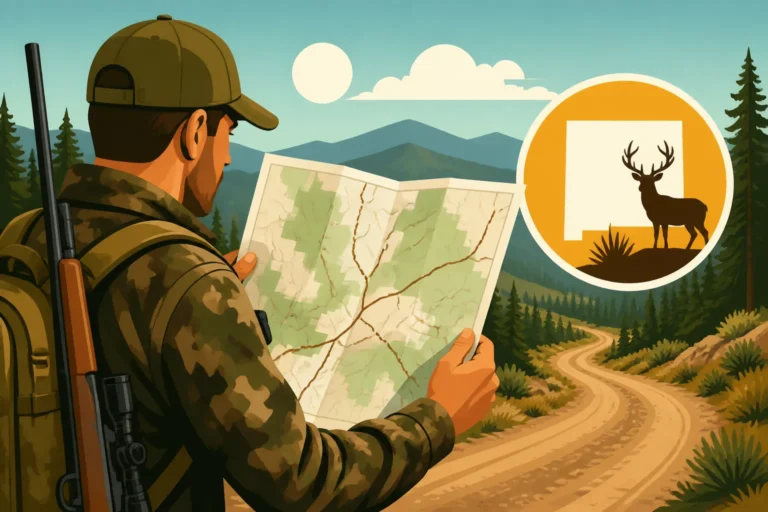
The U.S. Forest Service (USFS) manages vast tracts of prime hunting country across New Mexico, including the Gila, Carson, Santa Fe, Cibola, and Lincoln National Forests. They are generally the most proactive in implementing seasonal road closures, especially for winter range protection. Most Forest Service roads are designated as open or closed on their Motor Vehicle Use Maps (MVUMs). These maps are your bible for understanding what's open to wheeled vehicles and what's not.
MVUMs clearly delineate which roads are open year-round, which are seasonally closed, and what types of vehicles are permitted. For instance, a road might be open to full-sized vehicles from May 1st to November 30th, but closed outside of those dates, or only open to ATVs. The dates are critical. Many roads in the higher elevations will be closed from late November or early December until April or May, often with physical gates. You might find some roads marked as "closed to wheeled vehicles" but open to foot or horse traffic, which is a different consideration entirely. Learning Reading a Forest Service Road Map is an essential skill for any hunter.
BLM Ground and More Flexible Access
The Bureau of Land Management (BLM) manages an even larger acreage of public land in New Mexico, particularly in the more arid and lower elevation regions. BLM lands generally have more flexible access policies than national forests, primarily because many of the roads are less developed and less prone to severe winter conditions, or they serve as access to private inholdings. You'll often find a more extensive network of two-track and unimproved roads on BLM land.
While BLM doesn't typically have the same widespread, defined seasonal closures for winter range that the Forest Service does, they are certainly subject to temporary closures due to fire, weather events (like monsoon washouts), or administrative needs. The key difference is that BLM often relies more on signage on the ground to indicate specific closures. Always pay attention to posted signs, even on what appears to be a well-traveled road. And remember, BLM Acreage Across New Mexico offers immense opportunity, but it's often more remote and less maintained.
New Mexico State Trust Land Considerations
New Mexico State Trust Land is another significant component of the hunting landscape, and access rules here differ again. While your hunting license acts as an easement for legal access, seasonal road closures aren't typically a primary concern for the State Land Office in the same way they are for federal agencies. Instead, the focus is often on preventing damage to infrastructure related to grazing, oil and gas operations, or other permitted uses.
You might encounter gates on State Trust Land that are meant to keep livestock in or out, or to restrict vehicle access to specific areas of a lease. While these aren't "seasonal" in the traditional sense, they can impact your access just as much. Always ensure gates are closed behind you, and never damage or cut a lock. If a road is clearly marked as private or restricted, respect that. The State Land Office and Game and Fish Department work together to provide access, but respecting the rules is paramount to maintaining that access. A New Mexico License Is Your State Trust Land Easement provides more detail on how this access works.
Types of Seasonal Closures You'll Encounter
Seasonal closures aren't a single phenomenon; they manifest in different ways throughout the year, each with its own cause and typical duration. As hunters, understanding these patterns helps us anticipate issues and adjust our plans accordingly. From the bitter cold of winter to the sudden downpours of monsoon season, New Mexico's climate dictates the rhythm of road access.
Winter and Snow-Related Road Closures
This is probably the most common type of seasonal closure, especially in the northern and western parts of the state. As winter approaches, higher elevation roads become impassable due to snow and ice, often well before the official "closure date" on a map. Forest Service gates often go up in late November or early December, remaining locked until spring thaws. These closures are crucial for winter range protection, as discussed earlier, but also for public safety, preventing vehicles from getting stuck or drivers from encountering hazardous conditions.
If you have a late-season deer or elk tag, especially in December or January, understanding these closures is paramount. What might be a two-track road in September could be under several feet of snow and inaccessible by vehicle in December. This significantly impacts your approach and requires a shift in tactics, often meaning long pack-ins or horse travel. Always consult MVUMs and local ranger district offices if you're planning a hunt that borders on winter conditions. Winter Access to Northern New Mexico Units is a great resource if you're thinking about a late-season hunt up north.
Monsoon Washouts and Flash Flooding
While winter closures are predictable, monsoon season closures can be more sudden and unpredictable. From July through September, New Mexico experiences its monsoon, bringing intense, localized thunderstorms that can drop inches of rain in a short amount of time. This leads to flash flooding, especially in desert washes and arroyos, and can quickly make dirt roads impassable or even wash them away entirely.
I’ve personally seen a perfectly fine two-track turn into a raging riverbed in minutes during a monsoon downpour. These washouts can leave behind deep ruts, impassable mud, or completely obliterate sections of road, particularly in areas with clay soils. If you're hunting early archery elk or deer, which often coincides with the peak of monsoon, be prepared for rapidly changing road conditions. Always check the weather forecast, especially for flash flood warnings, and reconsider driving through washes if rain is in the area or has recently fallen. Monsoon Road Conditions in the Gila offers specific advice for hunting during this challenging time.
Wildfire and Post-Fire Recovery Zones
As touched on earlier, wildfires can cause immediate and long-lasting road closures. During an active fire, entire areas may be closed to public access for safety reasons, due to fire activity, smoke, and emergency vehicle operations. These closures are critical to allow firefighters to do their job safely and effectively. It’s not just the burn zone itself; roads leading to and from the fire perimeter can be closed.
After a fire, closures often persist in what's known as a "post-fire recovery zone." This is where the long-term hazards come into play. Burned trees are unstable and can fall without warning, particularly during high winds or subsequent rain events. The loss of vegetation cover also means increased erosion and a higher risk of flash flooding, which can further damage roads. These closures protect the public from these hazards and allow the ecosystem time to recover, often involving replanting efforts and other restoration work. Respecting these closures, even if it means missing a season in a favorite spot, is vital for long-term health of the habitat.
How to Find Current Road Closure Information
Knowing that closures exist is one thing; finding specific, up-to-date information is another. This is where modern technology and a little old-fashioned legwork come into play. Relying solely on a map you printed five years ago is a recipe for disappointment. Agencies do their best to keep the public informed, but it often requires hunters to be proactive in seeking out that information.
Leveraging Online Mapping Tools and Apps
In today's hunting world, digital maps are indispensable, and many integrate critical information about public land access and road status. Apps like onX Hunt are incredibly useful for this, as they often include layers that show MVUMs from the Forest Service, delineating open and closed roads, along with the specific dates of seasonal closures. This means you can see right on your phone, even offline, whether a road you plan to use is officially closed for the season.
Another powerful tool for research is the GoHunt platform. While widely known for its draw odds and strategy content, their mapping features can also help you identify road networks and assess public access points, allowing you to cross-reference with agency-specific closure information. Remember, these apps are fantastic for showing official designations, but they may not always reflect very recent, temporary closures due to a specific event like a new washout or an active fire. Always check the source if there’s any doubt. E-Scouting a New Mexico Unit Before the Season is greatly enhanced by these tools.
Checking Agency Websites and Motor Vehicle Use Maps (MVUMs)
The most authoritative source for road closure information, especially for federal lands, will always be the managing agency's official website.
- US Forest Service: Each national forest in New Mexico (Gila, Carson, Santa Fe, Cibola, Lincoln) has its own website. Look for sections on "Alerts & Notices," "Roads & Trails," or "Maps & Publications." This is where you'll find the most current MVUMs, which you can often download and print, or use digitally. MVUMs are legally enforceable documents, so understand them thoroughly.
- Bureau of Land Management (BLM): The New Mexico BLM website is the place to check for broader alerts, but specific field offices often have more localized information. Look for "Closures & Restrictions" or "Recreation" sections.
- New Mexico Department of Game and Fish (NMDGF): While NMDGF doesn't manage roads directly, their website will often post alerts for hunting-related closures or access changes, especially on State Game Commission properties or areas with special conditions. They're also an excellent source for understanding general hunting regulations that might affect access.
It’s a good practice to check these sites a few weeks before your hunt, and then again right before you leave, as conditions can change rapidly.
Calling Local Ranger Districts or Field Offices
Sometimes, there's no substitute for talking to a human being who works in the area. A quick phone call to the local Forest Service Ranger District or BLM Field Office can provide invaluable, up-to-the-minute information that might not yet be updated online. They can tell you about recent washouts, current snow levels, or any ongoing activities that might affect your planned route.
When you call, be specific about the unit, the roads you plan to use, and your hunt dates. The more detail you provide, the better information they can give you. They're often happy to help hunters plan responsibly, as it helps prevent search and rescue situations or illegal road use. Don't be shy about asking for advice on alternative access points if your primary route is closed.
Here’s a quick overview of where to check for information:
| Agency/Resource | Best For | Key Information | Frequency of Updates |
|---|---|---|---|
| US Forest Service | National Forests (Gila, Carson, etc.) | MVUMs, seasonal gates, fire closures, road repair | Regular, but check specific dates for MVUMs |
| BLM New Mexico | BLM lands, general access | Temporary closures (fire, washouts), specific area restrictions | As needed for incidents |
| NMDGF | Statewide hunting conditions, specific wildlife areas | Hunting-related access, special use rules | As needed, usually for seasons |
| onX Hunt / GoHunt | Digital map layers, MVUM integration, private/public land | Official road designations, ownership, topography | Frequent app updates, data is agency-sourced |
| Local Ranger Districts | Up-to-the-minute, specific road conditions | Snow depth, recent washouts, temporary hazards | Daily/weekly during peak seasons |
Planning Your Hunt Around Potential Closures
Knowing about road closures is one thing, but proactively integrating that knowledge into your hunt planning is where you truly gain an advantage. A little foresight and flexibility can turn a potential trip-killer into a minor inconvenience. This is where strategic thinking and contingency planning become as important as your shooting skills.
Scouting Alternative Access Points and Routes
Never put all your eggs in one basket when it comes to access. When you're e-scouting, identify not just one, but two or three potential routes to your hunting area. If your primary road is seasonally closed or unexpectedly washed out, having a backup plan ready to go can save your hunt. This might mean identifying a longer route that stays on main roads, or a different trailhead entirely, even if it adds miles to your hike.
Use your mapping apps, like onX Hunt, to identify roads that are at lower elevations or on different aspects that might clear snow earlier or be less prone to monsoonal flooding. Sometimes, a road that’s open to foot traffic but closed to vehicles can be your secret weapon, allowing you to access areas that other hunters avoid due to the long walk. Judging Road Access From a Unit Map is a skill worth honing for exactly this reason.
Adjusting Your Physical Conditioning for Longer Hikes
If you determine that your preferred vehicle access is likely to be closed, you need to adjust your physical preparation accordingly. A hunt that you thought would involve a short walk from the truck might suddenly become a multi-mile trek with a heavy pack. This changes everything, from the amount of water you need to carry to the type of boots you wear.
Embrace the hike! Some of the best hunting experiences come from reaching areas that others can't or won't. If you know you might be facing a long walk-in, start training well in advance. Incorporate more steep climbs and weighted pack exercises into your routine. Remember, packing an animal out over long distances is an entirely different beast than a short drag to the truck. Preparing Physically for a High Elevation Hunt is a must-read if you anticipate covering significant ground on foot.
Having Contingency Plans for Camp and Logistics
Road closures can impact more than just your initial access; they can affect your entire camp setup and logistics. If your preferred truck camp spot becomes inaccessible, where will you set up? Do you have an alternative spot, perhaps closer to a main highway, that still allows for reasonable access to your hunting unit? Consider the implications for water hauling, especially in drier units, or bringing in firewood if you're tent camping.
Think about how you'll get an animal out if you're successful. A closed road means a longer haul. Will you need to quarter the animal further from the vehicle? Do you have enough game bags, ice, and coolers to keep meat fresh during a longer pack out, especially if you're hunting in warmer early-season conditions? Packing an Elk Out of the Gila Alone gives a good sense of the challenges when you're far from the truck. Having a solid plan for retrieval is just as important as the plan for the hunt itself.
Impact of Closures on Different Hunt Types
The timing of road closures can disproportionately affect different hunting seasons. An early archery elk hunt might deal more with monsoon issues, while a late rifle deer hunt will almost certainly face winter snow and ice. Understanding these season-specific challenges helps you pick the right hunt, unit, and preparation strategies.
Early Archery and Monsoon Road Conditions
New Mexico's early archery seasons for elk and deer often coincide with the peak of monsoon season, typically in late August and September. This means that while winter closures aren't a concern, washouts and muddy roads absolutely are. Hunters heading into the Gila or other mountainous regions during this time need to be hyper-aware of weather patterns and ground conditions.
Access roads that are fine one day can become impassable the next. This means you might need a vehicle with higher clearance and good tires, and even then, be prepared to get stuck or turn around. An unexpected heavy rain can leave you stranded or cut off from your camp. Always carry recovery gear, water, and extra food, and consider using a satellite communication device if you're heading into remote areas. Reading Wind in a Deep Gila Canyon often goes hand-in-hand with understanding how water flows through that same terrain.
Muzzleloader and Any Legal Weapon Seasons in Fall
As fall progresses into October and November, monsoon rains typically subside, but the threat of early winter weather emerges, especially in the higher elevations. Muzzleloader hunts, which often occur in mid-October, can encounter anything from glorious fall colors and dry roads to unexpected early snowstorms that could lead to temporary road closures.
By the time the Any Legal Weapon rifle seasons roll around in late October and November, the risk of snow-related closures becomes much more significant in the northern units. Roads that were perfectly navigable during scouting trips in September might be completely covered in snow and ice, making vehicle travel impossible. This is when those MVUMs and calls to the ranger district become crucial. You need to know if the roads you plan to use will still be open, or if you're committing to a hike-in hunt. Any Legal Weapon Deer Seasons in New Mexico can span a variety of weather, so be prepared.
Late-Season Hunts and Full Winter Closures
For those hardy souls chasing deer or elk into December and January, full winter road closures are not just a possibility, but a near certainty in many areas. Most national forest roads will be officially closed by this point, and even some lower-elevation BLM roads might become impassable due to snowdrifts or deep mud from repeated freezing and thawing.
These late-season hunts are often wilderness experiences, requiring extensive planning for foot or horse travel. This means packing in all your gear, food, and water, and being prepared for extreme cold and deep snow. Access to your unit might be miles from the nearest open road, which translates to a multi-day backpacking trip just to reach hunting grounds. While challenging, these hunts also offer incredible solitude and a unique opportunity to experience New Mexico's wild places in their most pristine state. Just remember to double-check those MVUMs for official closure dates and be prepared for primitive travel. Hunting New Mexico From 4,000 Feet to 10,000 illustrates the vast elevation changes and corresponding climate challenges.
Strategies for Mitigating Road Closure Risks
Dealing with road closures isn't about avoiding them entirely—that's impossible in New Mexico—it's about building resilience into your hunt plan. By adopting a few key strategies, you can reduce the headache and increase your chances of a successful and enjoyable trip, regardless of what Mother Nature or land managers throw your way.
Develop a Flexible Hunt Itinerary
The most important strategy for dealing with closures is to be flexible. Rigid plans are easily broken. Instead of a single, fixed plan, think in terms of a "Plan A," "Plan B," and even a "Plan C." This might mean having alternative units or at least different areas within your drawn unit that are accessible via different roads.
For example, if your primary plan relies on a high-elevation road that's prone to early snow, have a backup area at a slightly lower elevation, accessible via a different route, that you can pivot to if the snow flies. This level of flexibility requires more upfront scouting and research, but it pays dividends when unexpected closures arise. It’s the difference between salvaging a hunt and having to pack up and go home.
Investing in Reliable Mapping and Communication Technology
While official maps and websites are crucial, having the right technology in your pocket can be a game-changer. Offline mapping apps like onX Hunt that store MVUMs and topographic data are invaluable, especially since cell service is virtually nonexistent in many prime hunting areas. You can clearly see road status, land ownership, and even real-time weather overlays if you have a satellite messenger with subscription.
Speaking of satellite messengers (like Garmin InReach or Zoleo), these devices are not just for emergencies. They allow you to send and receive text messages even when out of cell range, which can be critical for checking on road conditions with a hunting partner or a local contact. They also let you pull down basic weather forecasts, helping you anticipate those monsoon downpours or early winter storms that could close roads. This investment can truly enhance both your safety and your ability to adapt to changing access.
Embracing Non-Motorized Travel Options
Sometimes, the best way to deal with road closures is to simply bypass them. Embracing non-motorized travel, whether that's on foot, horseback, or mountain bike (where permitted), can open up vast tracts of country that are inaccessible to vehicles. This is particularly true for roads designated as "closed to wheeled vehicles" but open to other forms of access.
For instance, a road that’s closed for winter range might still be legally traversable by foot or horse. This means you can pack in several miles past the gate, gaining a significant advantage over hunters who only stick to open roads. While it requires more effort and different gear, learning to navigate these "walk-in" areas can lead to incredible hunting experiences in less pressured zones. It’s also a great way to improve your fitness and connect more deeply with the landscape. Think about hunting New Mexico's Gila for trophy bulls – often, the biggest bulls are far from the beaten path.
Disclaimer
This article is for general informational purposes only and does not constitute professional advice. Laws, prices and regulations vary by location and change over time. Consult a qualified professional for guidance on your specific situation.