BLM Acreage Across New Mexico
Oh, the vast, sometimes confusing, but always exciting world of public land in New Mexico! If you're like me, you've probably spent countless hours staring at maps, squinting at faint lines, and trying to figure out just what kind of land you're actually looking at. One of the biggest pieces of that puzzle, and often the most accessible for hunters, is Bureau of Land Management (BLM) acreage. This guide is all about demystifying BLM land across our beautiful state, helping you understand where it is, what it offers, and how to make the most of it for your next hunting adventure.
Understanding the Landscape of New Mexico's Public Lands
New Mexico is a treasure trove of public land, a concept that can feel both incredibly liberating and utterly overwhelming to a hunter. We're lucky enough to have millions of acres open for recreational use, including hunting, but not all public land is created equal, nor is it managed under the same set of rules. Understanding these nuances is the first step to becoming a truly effective and ethical hunter in the Land of Enchantment.
The Sheer Volume of Open Space
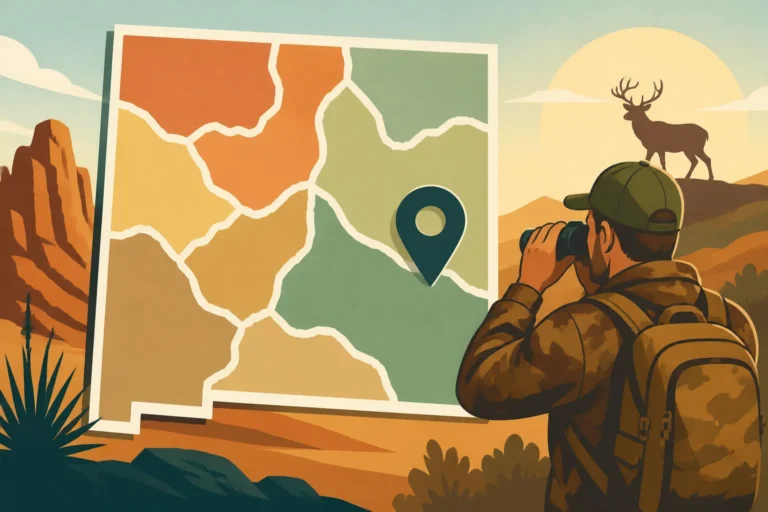
When you look at a land ownership map of New Mexico, what strikes you immediately is the sheer amount of open, undeveloped country. It's a vast expanse that stretches from the high alpine forests of the north to the low Chihuahuan Desert of the south. Much of this land falls under federal or state management, ensuring that generations of hunters, hikers, and outdoor enthusiasts can continue to explore and enjoy it. But with so much ground, it can be a dizzying prospect to even know where to begin your search for that trophy buck or bull. Don't worry, you're not alone in feeling a bit lost in the acreage. How Much Public Land New Mexico Holds is a question many ponder, and the answer is truly impressive, offering endless possibilities for adventure.
This incredible volume of public land is precisely why New Mexico stands out as a premier hunting destination. Unlike some states where public access is limited to small, often heavily pressured pockets, here we have room to roam, to get away from the crowds, and to truly immerse ourselves in the wild. From the towering peaks of the Sangre de Cristos to the sweeping grasslands of the eastern plains, the diversity of habitat available on public land is astonishing, supporting an equally diverse array of game species. It’s this vastness that allows for genuine backcountry experiences, even on a day hunt, if you know where to look.
Diverse Ownership, Diverse Rules
The challenge, and where a lot of hunters get hung up, is that this vast landscape isn't managed by a single entity. We have National Forests, Bureau of Land Management (BLM) lands, State Trust Lands, and even State Parks or Wildlife Management Areas, all with their own specific regulations and access provisions. While all are generally considered "public," the specific rules governing camping, vehicle use, target shooting, and even scouting can differ significantly from one agency to another. This means that merely knowing you're on public land isn't enough; you really need to understand which kind of public land it is.
For example, what might be perfectly legal on BLM ground—like driving off a designated road for game retrieval (with specific limitations, of course)—could land you in hot water on a National Forest. Similarly, while your New Mexico hunting license grants you access to hunt on State Trust Land, there are often specific scouting windows and other rules that don't apply to federal lands. This patchwork of regulations isn't designed to confuse hunters, but rather reflects the different mandates and priorities of the various land management agencies. It puts the onus on us, as responsible hunters, to do our homework. In total, New Mexico Holds Over 30 Million Acres of Public Hunting Land, each parcel with its own specific guidelines.
BLM Land: A Closer Look at What It Is
When you hear "public land" in New Mexico, many people immediately think of national forests with their dense timber and high-country elk. While those are certainly critical, the Bureau of Land Management (BLM) actually manages a significant portion of our state's public acreage, often encompassing a completely different, but equally valuable, type of landscape. It's the unsung hero for many desert and plains hunters, providing vast expanses of relatively unpressured ground.
The Bureau of Land Management's Mission
The BLM operates under a "multiple-use" mandate, which means they manage lands for a variety of purposes: energy development, livestock grazing, timber harvesting, mining, outdoor recreation, and, crucially for us, wildlife habitat conservation. This differs from the Forest Service, which traditionally focuses more on timber, watershed health, and recreation in forested environments, or the National Park Service, which prioritizes preservation and minimal human impact. Because of this broad mandate, BLM lands often look and feel different from other public areas. They are frequently more open, less developed, and cover vast tracts of arid and semi-arid country that wouldn't necessarily be classified as "forest."
This multiple-use approach means you'll often encounter cattle, oil and gas infrastructure, or even old mining claims on BLM land. These activities are part of the landscape and, in many cases, can even benefit wildlife by creating water sources (like stock tanks) or opening up dense brush for forage. As hunters, it's important to understand and respect these other uses, as they are often long-standing and integral to the local economy and land management strategy. The BLM's mission makes it a truly unique resource for hunters who are willing to adapt to a different kind of public land experience, providing immense opportunity for those seeking a more rugged, self-reliant hunt.
Common Misconceptions About BLM Ground
One common misconception among hunters, especially those new to western states, is that BLM land is somehow "inferior" or "worthless" ground compared to National Forests. This couldn't be further from the truth. While much of it might not boast the towering Ponderosa pines or lush meadows of the high country, BLM land often provides critical habitat, especially for species adapted to arid environments. It's frequently prime winter range for elk and deer, vital migration corridors, and year-round homes for pronghorn, desert mule deer, and a variety of small game. The "ugly duckling" perception often means these lands receive less hunting pressure, making them a golden opportunity for those willing to learn their secrets. Why BLM Carries New Mexico's Open Access is a testament to its value.
Another misunderstanding is that all BLM land is simply flat, featureless desert. While there are certainly vast plains, BLM also encompasses incredibly diverse topography, from rolling hills and mesa country to deep arroyos, canyons, and even rimrock formations that hold hidden pockets of game. The lack of amenities, such as developed campgrounds or extensive trail systems, can also be misconstrued as a negative. For the self-sufficient hunter, however, it means fewer crowds and a more authentic wilderness experience. You might not find a picnic table, but you'll certainly find solitude, and often, incredible hunting. It demands more planning and preparedness, but the rewards are often far greater.
Where to Find BLM Acreage Across New Mexico
New Mexico's BLM lands are as diverse as the state itself, stretching from the eastern plains to the rugged western borders. They aren't confined to one particular region but are interwoven throughout the landscape, creating a rich tapestry of public access. Knowing the general characteristics of BLM land in different parts of the state can significantly aid your e-scouting and on-the-ground efforts.
Eastern Plains and High Desert Basins
Head east from the Rio Grande, and you'll encounter vast stretches of BLM land characterized by shortgrass prairie, mesquite, and cholla cactus. These areas are typically flatter, with gentle rolling hills and wide-open vistas. Water sources here are often limited to stock tanks, wind-pumping wells, and ephemeral washes that might hold water after a good rain. This type of BLM ground is iconic for species like pronghorn, which thrive in these open environments, where their incredible eyesight gives them a distinct advantage. Pronghorn on the Eastern Plains are a common sight, and hunting them on these lands can be a truly exhilarating experience, often requiring long-range shooting skills and patience.
Hunting these eastern BLM lands means embracing the wide-open spaces. You'll spend a lot of time glassing, often from elevated positions like a truck bed or a small rise, spotting game at immense distances. The challenge is often closing that distance in cover-scarce terrain. For mule deer, you might find them in the larger arroyos or areas with denser mesquite and shinnery oak. The sheer scale of these lands means you can truly get away from other hunters, but it also demands a high degree of self-sufficiency. Expect unimproved roads, dusty conditions, and the need to carry all your water and supplies.
Western Deserts and Rimrock Country
Shift your focus to western and southern New Mexico, and the BLM landscape changes dramatically. Here, you'll find more rugged terrain, characterized by broken rimrock, steep canyons, and a mix of desert scrub, juniper, and pinyon pine. These lands often border or are interspersed with larger mountain ranges and national forests, creating diverse transition zones that can be incredibly productive for hunting. Think of the country south and west of Albuquerque, or down near the Bootheel, where the Chihuahuan Desert stretches into Arizona. This type of BLM can hold larger concentrations of desert mule deer, especially in the more remote canyon systems, and is even home to species like oryx and barbary sheep in certain units.
The hunting here is much more about navigating elevation changes, glassing broken terrain, and often long, quiet stalks. Water sources remain critical, but they might include natural springs or seepages in rocky outcrops, in addition to man-made tanks. These areas can be incredibly remote, with challenging access points requiring high-clearance 4×4 vehicles, and sometimes, just plain old boot leather. The rewards, however, can be substantial, as these overlooked pockets of public land often hold mature animals that have learned to use the rugged topography to their advantage. Learning to spot game in the Chihuahuan Desert Units requires a keen eye and a patient approach.
Smaller, Fragmented Parcels
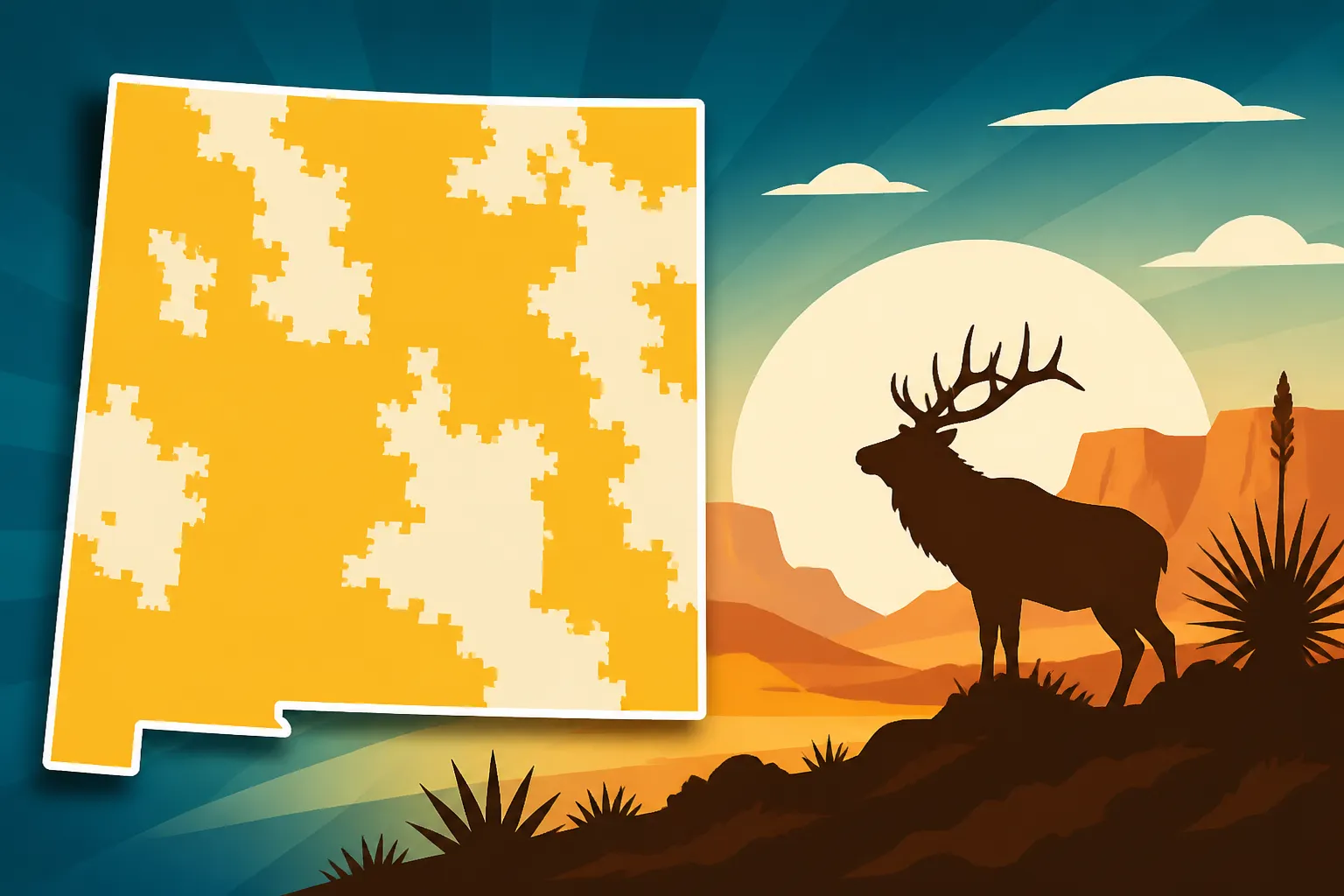
Not all BLM land comes in vast, contiguous blocks. Throughout the state, particularly in areas with a long history of settlement and private land development, you'll find smaller, often "checkerboarded" parcels of BLM. These are public sections intermixed with private property, often in a square-mile grid. While these can be frustrating to navigate, they also represent overlooked opportunities. These smaller parcels, especially if they border agricultural fields, private ranches with water, or inaccessible wilderness, can act as magnets for game. They might be small, but if they offer sanctuary or valuable resources, animals will use them.
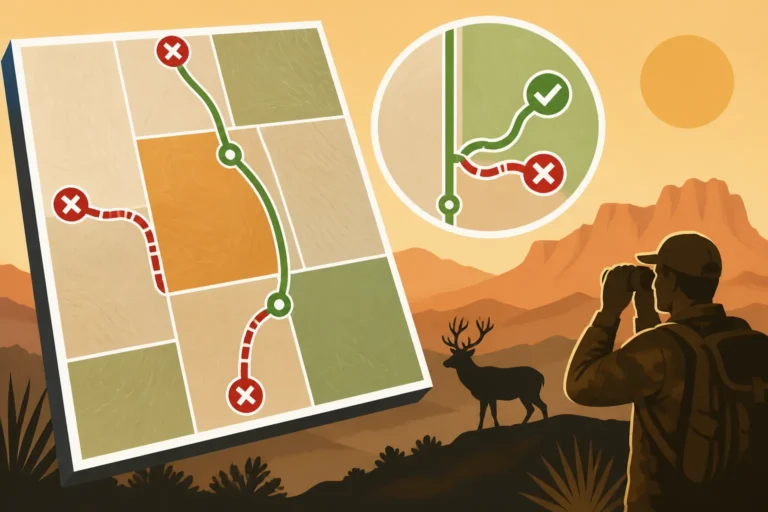
Hunting these fragmented parcels demands extreme diligence with mapping and a deep understanding of boundary lines. Trespassing onto private land, even inadvertently, is a serious offense, so precision is key. Digital mapping tools become absolutely indispensable in these areas, allowing you to clearly see where public land begins and private ends. While some might dismiss these smaller chunks as "too difficult" or "too small," for the hunter willing to do their homework and respect boundaries, they can offer fantastic, low-pressure hunting opportunities for deer, antelope, and predators. Remember, sometimes the best hunting isn't about the biggest piece of land, but the piece of land nobody else bothers to hunt. Identifying and accessing Landlocked Public Parcels in New Mexico can be a game-changer.
Here's a quick comparison of common public land types in New Mexico:
| Land Type | Primary Mission | Typical Terrain | Accessibility for Hunters | Common Game |
|---|---|---|---|---|
| Bureau of Land Management (BLM) | Multiple-use: grazing, energy, recreation, wildlife. | Open plains, high deserts, badlands, rimrock, low canyons. | Generally good, but often on unimproved roads. Can be remote. | Pronghorn, Desert Mule Deer, Oryx, Barbary Sheep, Quail, Predators |
| National Forest (NF) | Timber, watershed, recreation, wilderness, wildlife. | High mountains, dense timber, alpine meadows, deep canyons. | Good, often with developed roads and trails. Wilderness areas are non-motorized. | Elk, Mule Deer, Bear, Turkey, Grouse, Bighorn Sheep |
| State Trust Land | Generate revenue for public institutions (e.g., schools). | Highly varied, often intermixed with private. | Requires a New Mexico hunting license (acts as an easement). Specific rules for scouting. | Mule Deer, Pronghorn, Oryx, Quail |
Hunting Opportunities on New Mexico BLM Land
For many hunters, BLM land forms the very backbone of their New Mexico hunting strategy. It offers vast, relatively open access that, with the right approach and preparation, can yield incredible experiences and successful hunts. Unlike some other public land types, BLM areas often cater to a style of hunting that emphasizes scouting, glassing, and a willingness to cover a lot of ground.
Why BLM Ground is a Hunter's Backbone
The sheer scale of BLM land, coupled with its "open access" policy, makes it indispensable for public land hunters. While National Forests are crucial for elk and timber-dwelling species, BLM often provides the landscape for different kinds of hunts, catering to those who prefer wide-open spaces and the challenge of spotting game at a distance. It’s where many DIY hunters cut their teeth and often return year after year. The fact that your New Mexico hunting license is your ticket to thousands upon thousands of acres of huntable ground, without the need for additional permits or fees specific to BLM, is a huge advantage. This accessibility, combined with the often rugged and remote nature of the terrain, means that hunters willing to put in the effort can still find truly unpressured pockets of game. Why BLM Ground Carries the Most Access for so many hunters is precisely because of this blend of vastness and relatively straightforward regulations.
Furthermore, BLM lands frequently serve as critical habitat for game species that rely on more open, arid, or semi-arid environments. Many of these areas are year-round homes or seasonal ranges that animals use to escape deep snows, find specific forage, or access isolated water sources. The less-developed nature of many BLM areas also means less human disturbance from activities like logging or heavy recreational use, which can translate into more natural animal behavior patterns. It’s a place where you truly feel immersed in the wild, often miles from any paved road or even another person, giving you an authentic Western hunting experience.
Species You'll Encounter on BLM
The diversity of game animals that call New Mexico's BLM lands home is truly impressive. While elk are certainly present, especially in areas where BLM transitions into National Forest or higher elevations, the true stars of BLM hunting are often the species adapted to the desert and plains. Pronghorn are perhaps the most iconic, with vast herds roaming the eastern plains and high desert basins. Their incredible eyesight and speed make for a challenging and exhilarating spot-and-stalk hunt, often requiring long-range shooting capabilities.
Desert mule deer are another staple, found throughout the rugged western and southern BLM units. They tend to stick to the arroyos, juniper breaks, and rimrock country, using the broken terrain for cover. Hunting them often involves extensive glassing of south-facing slopes in the morning and north-facing slopes in the afternoon, followed by careful stalks. And let's not forget New Mexico's unique exotic species: oryx and barbary sheep. Oryx Is New Mexico's Strangest Big Game Animal, and while the most famous hunts are on White Sands Missile Range, healthy off-range populations can be found on BLM lands, offering incredibly challenging and rewarding hunts for those lucky enough to draw a tag. Barbary sheep, or aoudad, thrive in the rugged, canyon-strewn BLM landscapes, providing a physically demanding and exciting chase. Beyond big game, BLM lands also host excellent populations of scaled and Gambel's quail, coyotes, and other predators, offering year-round hunting opportunities.
Navigating Access and Challenges
While BLM land offers unparalleled hunting opportunities, it comes with its own set of challenges, particularly concerning access and self-sufficiency. Many BLM roads are unimproved dirt tracks, often unmaintained, and can quickly become impassable with rain or snow. A high-clearance 4×4 vehicle is almost a necessity for venturing off the main arteries, and even then, always be prepared to walk or turn back if conditions deteriorate. Seasonal road closures, while less common than in National Forests, can also occur, so checking local field offices for current conditions is always a good idea.
Water, or the distinct lack thereof, is perhaps the biggest challenge on much of New Mexico's BLM land. Game animals congregate around available water sources, making places like stock tanks, windmills, and natural springs absolute magnets. For hunters, this means you'll need to carry all the water you'll need for yourself and your camp, as potable water sources are exceedingly rare. Understanding Water Sources That Concentrate Desert Game is paramount to success. Finally, while BLM lands often offer solitude, areas near paved roads or popular recreation spots can see significant pressure, especially on opening weekend. To truly find unpressured game, you might need to embrace walking miles into the backcountry or exploring those harder-to-reach, fragmented parcels.
Utilizing Mapping Tools for BLM Access
In today's hunting world, digital mapping tools are no longer a luxury; they are an absolute necessity, especially when navigating the intricate patchwork of public and private land in New Mexico. Without them, you're not just at a disadvantage; you're risking trespassing, wasting valuable hunting time, and potentially missing out on prime opportunities. Understanding how to effectively use these tools is arguably as important as knowing how to shoot your rifle or call an elk.
Digital Tools for Identifying BLM Boundaries
Gone are the days of relying solely on paper maps that might be outdated or lack the precise detail needed to confidently hunt checkerboarded lands. Modern GPS mapping applications, like onX Hunt, have revolutionized how we interact with public land. These apps allow you to see your precise location in real-time, overlaid on detailed maps that clearly delineate property boundaries – showing exactly where BLM land ends and private land begins. This is absolutely crucial when you're hunting those smaller, fragmented parcels or when public and private ownership is intermingled. Using onX Layers for New Mexico Public Land can literally keep you out of trouble and put you on game.
Beyond simply showing boundaries, these tools often provide satellite imagery, topographical maps, and layers indicating features like roads, trails, water sources, and even historical burns. You can mark waypoints, measure distances, and track your movements, which is invaluable for both scouting and on-the-ground hunting. Knowing that you're standing firmly on public ground, or that the ridge you're glassing is still within a legal hunting zone, removes a huge amount of stress and allows you to focus purely on the hunt. While cellular service can be spotty in remote BLM areas, most modern mapping apps allow you to download maps for offline use, ensuring you always have your bearings, even miles from a cell tower.
Researching Hunt Units with Public Land Data
Digital mapping tools aren't just for on-the-ground navigation; they are powerful pre-season scouting instruments. Websites and apps that compile public land data, such as GoHunt, often allow you to research specific hunt units and see the percentage of public land within those boundaries. This is invaluable when you're applying for tags, as a higher percentage of public land generally translates to more accessible hunting opportunities and potentially better DIY odds. If a unit is 80% public land, your chances of finding unpressured spots are likely much higher than in a unit that's only 20% public. E-Scouting a New Mexico Unit Before the Season is a critical step, and these tools are the foundation.
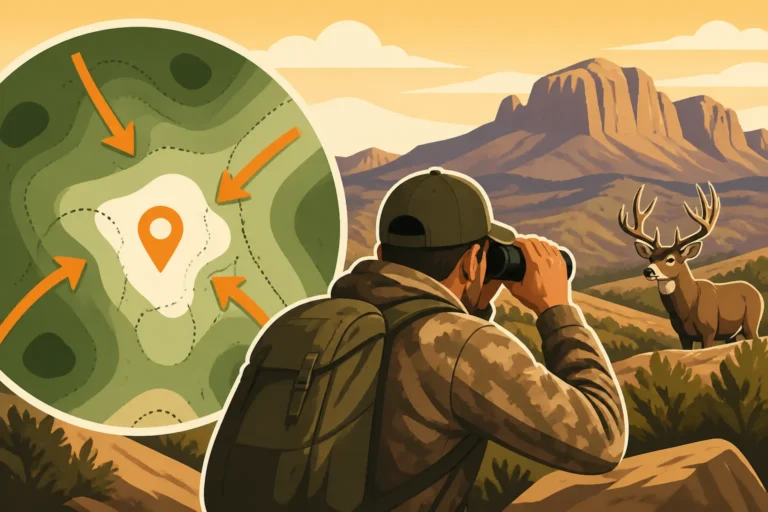
You can use these tools to virtually scout an entire unit from your living room, identifying potential access points, remote pockets of BLM, water sources, and key terrain features like deep arroyos or rimrock breaks that might hold game. By combining public land overlays with satellite imagery and topographical maps, you can develop a solid plan, pinpointing areas worth exploring during your actual hunt. This kind of detailed reconnaissance saves you precious time and effort in the field, allowing you to focus your limited hunting days on the most promising areas. It's about working smarter, not just harder, and leveraging technology to maximize your chances of success on New Mexico's vast and varied BLM lands.
Disclaimer
This article is for general informational purposes only and does not constitute professional advice. Laws, prices and regulations vary by location and change over time. Consult a qualified professional for guidance on your specific situation.