How Many New Mexico Hunt Choices You May List
Applying for big game tags in New Mexico can feel like navigating a maze, especially if you're used to systems in other states where you might get one or two picks, maybe a unit and a season. It’s easy to feel overwhelmed by the possibilities, or perhaps even confused by the idea of listing multiple options when you just want one good tag. This guide is here to untangle the process of making your selections, specifically focusing on how many hunt choices you can list on your New Mexico big game application, and more importantly, how to use those choices strategically to maximize your odds.
Understanding New Mexico's Application Philosophy
New Mexico's draw system is unique in a few key ways, and understanding the philosophy behind it helps clarify why you get multiple choices in the first place. Unlike many western states that use a preference point or bonus point system, New Mexico operates on a pure lottery. This means every applicant, regardless of how many years they've applied, starts fresh each year with essentially the same odds for a given tag. This approach, while frustrating for some, also means that a brand-new hunter has the same chance to draw a coveted tag as someone who's been applying for decades.
How New Mexico's Draw System Works
The New Mexico Department of Game and Fish (NMDGF) draw process works by sequentially evaluating your hunt choices. When you submit your application, you're not just throwing your hat in for a single unit and season. Instead, you're creating a prioritized list of up to five different hunt codes. The system will first look at your first choice. If there's an available tag and your application is drawn, congratulations, you get that tag!
However, if your first choice is already full by the time your application comes up, or if you simply don't get drawn for it, the system doesn't discard your application. Instead, it moves on to evaluate your second choice, then your third, and so on, until it either finds an available tag from your listed preferences or exhausts all five choices. This sequential processing is absolutely critical to grasp, as it forms the bedrock of your application strategy. It’s not just about listing five options; it’s about listing them in a smart, calculated order that reflects your true desires and a realistic understanding of the draw odds.
The Importance of Multiple Choices
The provision of multiple choices is a direct response to the pure lottery system. Since there are no preference points accumulating year after year to reward loyalty, the NMDGF offers multiple choices as a way to give hunters more opportunities within a single application cycle. It acknowledges that drawing a highly sought-after tag, like an archery elk tag in a prime unit, is incredibly difficult. By allowing up to five choices, they provide a safety net, enabling you to try for that dream hunt (your first choice) while still having a solid chance at a more attainable tag (further down your list).
This system also encourages hunters to explore different units and seasons. Maybe your first choice is the Gila National Forest for a trophy bull during the peak of the rut, a hunt that can have incredibly tough odds. But your fifth choice might be a less popular unit or a late-season muzzleloader hunt, which still offers a great experience but with significantly better draw statistics. The multiple choice system essentially allows you to cast a wider net without submitting multiple applications for the same species, making the process more efficient for both the hunter and the department.
The Specifics of Your Hunt Choices
When it comes to New Mexico's big game applications, most species allow you to list up to five hunt choices. This is a pretty generous allowance compared to some states, and it's a tool you absolutely need to understand how to wield effectively. Each of these choices represents a unique hunt code, which is a specific combination of species, unit, season, and weapon type.
How Many Choices You Can List
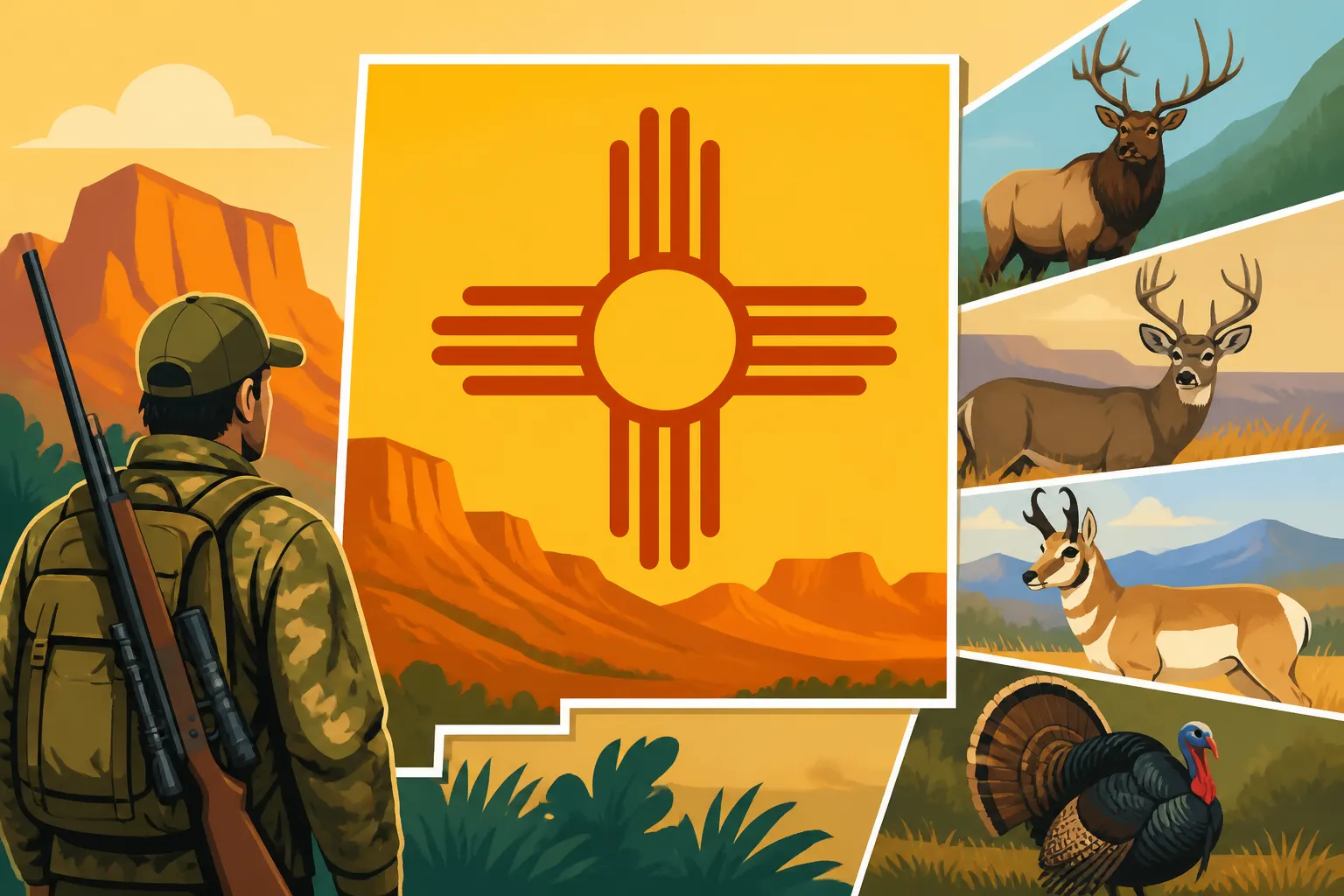
For most big game species in New Mexico—think elk, mule deer, antelope, oryx, and even Barbary sheep or ibex—you are typically permitted to list up to five different hunt choices on a single application. This means you can select five distinct hunt codes. These choices are your opportunities to tell the NMDGF exactly what you'd be happy to draw.
It's important to remember that these five choices are specific to one species per application. For instance, you would submit one application for elk with up to five elk choices, and then a separate application for mule deer with up to five mule deer choices, and so on. You cannot mix and match species within a single application's choice list.
Each choice must be a valid hunt code as listed in the official New Mexico Hunting Rules & Information booklet. These codes are vital to read correctly. For example, a hunt code like "ELK-16A-1-1" might mean Elk, Unit 16A, first season, archery. You might then list "ELK-16A-2-1" as your second choice for the second archery season, or "ELK-16D-1-ML" for a muzzleloader hunt in a different unit. The combinations are extensive, and understanding Reading a New Mexico Hunt Code Before You Apply is a critical first step.
The Sequential Processing of Your Choices
This is where many hunters, especially those new to New Mexico's system, can get confused. Your choices are not simply five equal options that the system randomly picks from. They are evaluated in the exact order you list them:
- First Choice: This is your dream hunt, the one you most want. The draw system will try to award you a tag for this choice first. If your application is successfully drawn for your first choice, the process stops there, and you receive that tag. Your other choices become irrelevant for that application.
- Second Choice: If your application isn't drawn for your first choice, or if all available tags for your first choice are already allocated, your application then moves on to be considered for your second choice.
- Third, Fourth, and Fifth Choices: This process continues down your list. Your application will sequentially be considered for each choice until either you are successfully drawn for an available tag, or all five of your choices have been exhausted without a successful draw.
This sequential nature means your first choice carries the most weight, but also potentially the highest risk if it's an extremely popular hunt with low odds. Your subsequent choices act as backups, increasing your overall chance of drawing something even if it's not your top pick. Understanding this flow is paramount to developing a smart strategy for your application.
Table: Big Game Species Choices in New Mexico
Most common big game species adhere to the five-choice rule. While it's always critical to consult the official NMDGF rules each year, here’s a general overview:
| Species | Maximum Choices Per Application | Notes |
|---|---|---|
| Elk | 5 | Can combine different units, seasons, and weapon types. |
| Mule Deer | 5 | Often includes units for both high-country and desert mule deer. |
| Pronghorn | 5 | Specific units for antelope hunts, typically open plains. |
| Oryx | 5 | Includes both on-range (White Sands Missile Range) and off-range hunts. |
| Barbary Sheep | 5 | Often encompasses different mountain ranges and season dates. |
| Ibex | 5 | Primarily focused on the Florida Mountains. |
| Bighorn Sheep | 5 | Very low odds, but you still get five choices for different units/sub-units and seasons. |
| Bear | Varies | Bear licenses are often over-the-counter or specific unit draws with fewer choice options. Check annual rules. |
| Cougar | Varies | Similar to bear, often over-the-counter or unit-specific with fewer choice options. Check annual rules. |
Note: Always refer to the most current New Mexico Hunting Rules & Information booklet for the definitive number of choices and regulations for each species, as rules can occasionally change.
Maximizing Your Odds with Choice Order
The real art of applying in New Mexico isn't just knowing you have five choices, but how you order them. A well-thought-out choice order can dramatically improve your chances of success, even if it means accepting a less-than-dream-hunt tag. This is where research, self-assessment, and a bit of realistic expectation setting come into play.
Strategic Prioritization: Dream Hunt vs. Realistic Opportunity
Your first choice should always be your absolute dream hunt. If you could have any tag in New Mexico, what would it be? Whether it's a coveted Gila bull elk tag or a specific late-season mule deer hunt, put that as your number one. The reasoning is simple: if you do draw, you want it to be for the hunt you most desire. Even if the odds are incredibly low, you have a chance, and you've lost nothing by trying.
However, your subsequent choices, especially choices three through five, should gradually become more realistic. This means considering units and seasons with incrementally higher draw odds. Don't waste all five choices on hunts with 1-2% draw odds, unless you are truly okay with not drawing any tag this year. Think of it as a ladder: start at the top with your aspirational tag, and slowly work your way down to tags you're still excited about, but that have a genuine chance of being drawn.
Researching Draw Odds and Unit Statistics
This is where the rubber meets the road. Before you even think about your choices, you need to dive into the data. The NMDGF publishes draw odds and harvest statistics for previous years, and these are invaluable resources. They show you exactly how many tags were offered, how many applications were received, and the success rate for each hunt code. Services like GoHunt also compile and analyze this data, often presenting it in user-friendly formats that can save you hours of number crunching.
When you're looking at draw odds, pay attention to the success rate for each choice level. Sometimes, a hunt might have abysmal odds as a first choice, but surprisingly good odds as a second or third choice because fewer people prioritize it as highly. Use this information to guide your choices. If your dream unit for elk has 2% odds as a first choice, maybe your second choice should be a unit with 8-10% odds, and your third choice something even more attainable, perhaps in the 20-30% range. This diversified approach significantly increases your likelihood of drawing some tag. You can start by checking New Mexico Draw Odds Do Not Improve With Time to understand the overall context.
Considering Different Unit Types and Seasons
New Mexico offers an incredible diversity of landscapes and hunting opportunities, and your five choices allow you to explore this breadth. Don't limit yourself to just one type of hunt or one specific season.
- Units: You could list a high-country elk hunt in the Gila Wilderness (like Hunting New Mexico From 4,000 Feet to 10,000) as your first choice, but then a lower-elevation, more accessible unit as your second or third. For mule deer, you might try a northern mountain unit for your top pick, followed by a desert unit in the southern part of the state for later choices.
- Seasons: Archery hunts often have different draw odds than muzzleloader or any legal weapon hunts. Early seasons might be tougher to draw than late seasons, especially if they coincide with the rut. For elk, you might put a prime rut archery tag (check out Bugling Bulls Through New Mexico's Mid-September Rut) as your first, then a late-season muzzleloader tag as your third. For deer, New Mexico Muzzleloader Deer Season Windows can vary significantly.
- Weapon Types: If you're proficient with multiple weapon types, this expands your options immensely. An archery-only hunter will have a more restricted set of choices than someone who also applies for muzzleloader or rifle hunts.
By diversifying your choices across different units, seasons, and weapon types, you leverage the full potential of New Mexico's five-choice system. It’s like having five different fishing lines in the water, each set for a slightly different type of fish or a different depth, increasing your chances of catching something.
Common Pitfalls and How to Avoid Them
Even with the best intentions, it's easy to make mistakes when navigating New Mexico's draw system. Avoiding these common pitfalls can save you frustration and potentially increase your odds of drawing a coveted tag.
Not Filling All Five Choices
One of the most frequent mistakes hunters make is not filling all five of their available choices. It might seem like a good idea to just put down your one dream hunt and leave the rest blank, but this dramatically reduces your chances of drawing any tag. Remember, if your first choice doesn't hit, the system moves to your second, then third, and so on. If you only list one choice, and you don't draw it, your application is essentially done.
By using all five choices, you give yourself the maximum number of opportunities within that single application. Think of your later choices as "insurance" tags—hunts you'd still be thrilled to go on, but with better odds that give you a much stronger chance of getting out into the field that year. Don't leave those opportunities on the table!
Ignoring Draw Odds Entirely
While it's perfectly fine to put a low-odds dream hunt as your first choice, completely disregarding draw odds for all five choices is a recipe for disappointment. If you pick five hunts that all have less than a 5% draw chance, your overall likelihood of success will still be very slim.
It's crucial to balance your aspirations with realism. Use the NMDGF draw statistics, or platforms like GoHunt, to understand what kind of odds you're looking at for each hunt code. This doesn't mean you can't try for tough tags, but it means strategically balancing those with more achievable options further down your list. A realistic approach means understanding that while you might not draw that Unit 15 trophy elk tag this year (see Why Unit 15 Is a Primitive Weapons Unit), a tag for a different unit or season could still offer an incredible experience.
Misinterpreting Hunt Codes and Unit Boundaries
A simple error in a hunt code can invalidate a choice or, worse, lead to drawing a tag you didn't intend to get. Each hunt code is specific, detailing the species, unit, season dates, and legal weapon type. Double-check every single character when you're entering your choices.
Similarly, misunderstanding unit boundaries can lead to applying for a unit that doesn't align with your scouting or expectations. Always consult official NMDGF unit maps and regulations. Digital mapping tools with land ownership overlays, like those offered by GoHunt, can be incredibly helpful for visualizing units and understanding Reading a New Mexico Unit Boundary Before You Apply. There's nothing worse than drawing a tag only to realize the unit isn't what you thought it was, or that access is more restricted than you anticipated.
Overlooking Lesser-Known Units or Seasons
Many hunters flock to the well-known "trophy" units. While these units can certainly produce incredible animals, they also come with significantly higher hunting pressure and much tougher draw odds. New Mexico has a vast amount of public land and many hidden gems.
Don't be afraid to research lesser-known units or less popular seasons. Sometimes, moving your hunt by a week or two, or considering a unit adjacent to a famous one, can drastically increase your draw odds without sacrificing too much in terms of hunting quality. Early archery seasons, for example, might have different pressure than peak rut. Late muzzleloader or rifle seasons can also offer great opportunities with fewer crowds and better odds. Always consider the full spectrum of options that your five choices afford you. You might find a fantastic experience in an unexpected place.
Disclaimer
Please note that hunting regulations, season dates, and application processes can change. Always consult the official New Mexico Department of Game and Fish (NMDGF) website and their current "New Mexico Hunting Rules & Information" booklet before submitting any applications or planning your hunt. This guide is for informational purposes only and does not replace official sources.