Blue Grouse in New Mexico’s Highest Timber
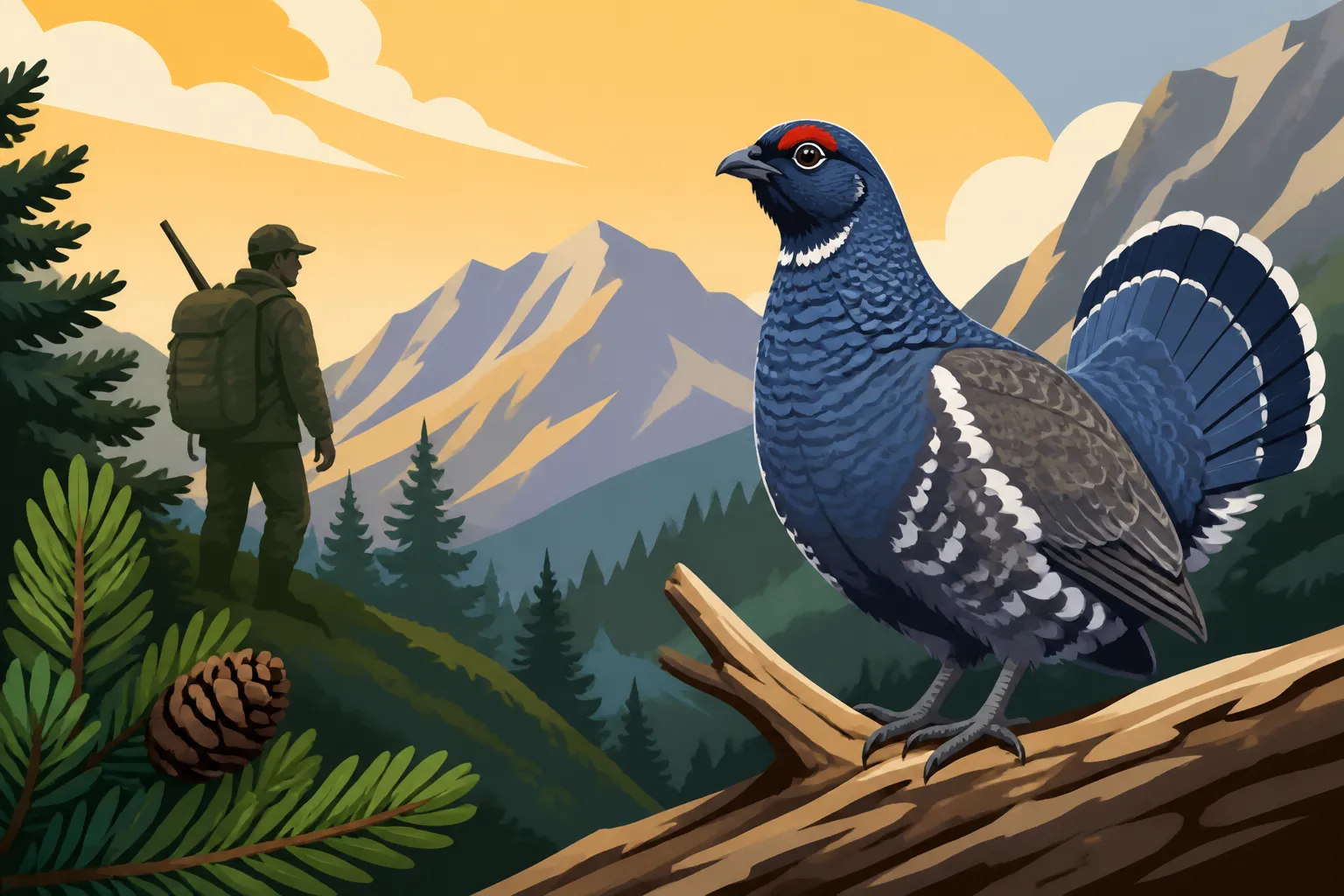
The high timber in New Mexico presents a unique challenge for bird hunters, often leaving folks scratching their heads about where to even begin looking for those elusive blue grouse. They're not like quail or doves, bursting out of open fields; these birds live deep in the mountains, and finding them requires a different approach, a keen eye, and a bit of grit. This guide is all about peeling back the layers on blue grouse hunting, helping you understand their world and offering practical strategies to make your next high-country adventure a success.
Understanding New Mexico's Blue Grouse Habitat
Blue grouse, often called dusky grouse, are truly creatures of the high country. They thrive in environments that would send many other birds packing, embracing the solitude and unique vegetation found at significant elevations. If you want to find them, you first need to understand where they like to hang out.
High Elevation Ecosystems Where They Thrive
When we talk about high elevation, we're really thinking about those majestic mountain forests that tower above 9,000 feet, often stretching up past 11,000 or even 12,000 feet. These aren't your typical ponderosa pine forests, though you might find some transition zones. Instead, imagine dense stands of spruce and fir, towering conifers that provide deep shade and protection. This thick canopy creates a specific microclimate that blue grouse adore. They feed heavily on the needles and buds of these trees, especially in the winter months when other food sources are scarce. The elevation isn't just a number; it dictates the tree species, the undergrowth, and ultimately, the presence of these magnificent birds. Getting a handle on Elevation Bands Worth Understanding can really clarify what kind of habitat you're looking at.
Beyond the conifers, you'll often find blue grouse utilizing areas with significant aspen stands. Aspens, with their white bark and shimmering leaves, signal a different kind of forest, one that often brings with it more varied undergrowth. These areas might be slightly less dense than the pure spruce-fir zones, offering clearings and edges that provide berries, insects, and other food sources. Look for areas where these different forest types intermingle, especially on north-facing slopes which tend to hold moisture longer and support richer vegetation. The cooler temperatures at these elevations also keep insect populations active longer into the fall, providing a crucial protein source for growing birds.
The Role of Old Growth and Forest Edges
Blue grouse have a distinct preference for older, more mature timber. This isn't just about the height of the trees; it's about the complexity of the forest floor, the structure of the canopy, and the overall stability of the ecosystem. Old-growth forests often have a more open understory, making it easier for grouse to walk and forage, yet the canopy above provides excellent cover from aerial predators. They'll also find fallen logs and dense brush to use as escape cover. When you're hiking through a unit that just feels ancient, with massive trees and a quiet, almost cathedral-like feel, you're probably in prime blue grouse country.
While old growth is key, the "edges" of these forests are equally important. Think about where a dense timber stand meets an alpine meadow, a rocky outcrop, or even a small stream drainage. These transition zones offer a smorgasbord of food sources that aren't available in the deep timber, such as wild berries, seeds from grasses, and a greater variety of insects. In the mornings and evenings, blue grouse will often move to these edges to feed, dust themselves, or soak up some sun. During the heat of the day, especially in early season, they'll retreat back into the cool, dense shade of the timber. Scouting these edges, especially using a mapping tool like GoHunt to identify changes in vegetation or elevation, can dramatically increase your chances of finding birds. Knowing how Terrain That Hides an Approach at 10,000 Feet can help you move quietly in these areas.
Prime New Mexico Ranges for Blue Grouse
New Mexico might be known for its deserts, but it also boasts some incredible mountain ranges that climb high enough to create ideal blue grouse habitat. Knowing which ranges to target is half the battle when planning a hunt for these elusive upland birds.
Northern Mountain Ranges
When it comes to blue grouse, your compass should generally point north. The Sangre de Cristo Mountains, stretching down from Colorado into northern New Mexico, are arguably the state's premier blue grouse destination. This vast range features extensive spruce-fir forests and aspen groves at elevations perfect for grouse. Areas within the Carson National Forest and the Santa Fe National Forest are particularly good bets. You'll find a mix of wilderness areas and accessible forest roads, though "accessible" in high timber often means a long walk uphill. Places like the Pecos Wilderness, Latir Wilderness, and areas around Taos and Red River offer promising habitat. However, be prepared for significant elevation changes and rugged terrain. Understanding Carson National Forest Access in New Mexico and Santa Fe National Forest Ground in New Mexico will be crucial for planning your approach.
The Jemez Mountains, west of Los Alamos, also offer excellent opportunities. While perhaps not as extensive as the Sangre de Cristos in terms of continuous high-elevation timber, the Jemez still hold significant pockets of spruce, fir, and aspen. The Valles Caldera National Preserve, while often requiring special permits for hunting, also contains prime habitat, but standard public land hunting is available in the surrounding national forest. The key here, as with all high-country grouse hunting, is finding those elevations above 9,000 feet and focusing on the denser timbered slopes. Often, finding good elk habitat in these northern units aligns perfectly with finding grouse habitat, as both species utilize the same cool, forested slopes.
Isolated High-Elevation Islands
Beyond the main northern ranges, New Mexico has several other mountain "islands" that, while smaller, can hold resident populations of blue grouse. These often stand alone from the larger ranges, rising dramatically from the surrounding plains or desert. Think about the higher elevations of the Sacramento Mountains in the south-central part of the state, or even the higher peaks within the Cibola National Forest in other parts of the state. While less consistent than the northern strongholds, these isolated pockets can offer surprising opportunities for those willing to do their homework. The trick is to meticulously e-scout these areas, looking for continuous stands of conifer and aspen that reach the critical elevation thresholds. Tools like GoHunt can be invaluable for identifying these specific patches of habitat in otherwise lower-elevation units.
These "islands" often receive less hunting pressure simply because they are not as well-known for grouse, or because access might be more challenging. This can make for a more solitary and rewarding hunt if you put in the effort. Always double-check regulations for specific units, as seasons and bag limits can sometimes vary. Remember, blue grouse are often an incidental find for big game hunters in these areas, so purposely targeting them means you'll likely have the mountains to yourself. The remoteness also means you need to be extra prepared for safety, as Cell Coverage Across New Mexico Hunt Units can be spotty at best.
Strategies for Locating and Hunting Blue Grouse
Unlike chasing quail that blast out of a covey in open scrub, or pheasants that hold tight in cattail swamps, hunting blue grouse in New Mexico's high timber is a different beast entirely. It demands patience, keen observation, and often, a lot of uphill walking.
Still Hunting and Roving Techniques
Still hunting is arguably the most effective way to find blue grouse, especially if you're hunting without a dog. This means moving slowly, deliberately, and stopping frequently to observe and listen. Imagine you're stalking a big mule deer buck: one slow step, pause, scan, another slow step. Blue grouse are masters of camouflage, especially the hens, and will often hold tight, relying on their drab plumage to blend in with the forest floor or tree bark. They can be incredibly difficult to spot until they flush. Walk through the dense spruce and fir, paying close attention to the base of trees, under fallen logs, and where the timber thins out slightly.
Look for subtle movements, a flicker of a tail, or the distinct shape of a bird amidst the shadows. Use your binoculars regularly to pick apart dense cover ahead of you. These birds will often flush vertically, flying up into the thick branches of a conifer, or sometimes exploding out and sailing downhill through the timber. Listen for their distinctive flush – it's a powerful wing beat that echoes in the quiet forest. Sometimes, you'll hear a "huffing" sound as they take off. Roving involves covering more ground, but still doing so thoughtfully, focusing on areas identified as high-probability habitat. Focus on contour lines on a map, gradually working your way along a ridge or side-hill through good cover. For a better understanding of how the land dictates your movement, consider reading up on Hunting New Mexico From 4,000 Feet to 10,000.
Dogs as a Grouse Hunter's Best Friend
While still hunting is effective, bringing a well-trained bird dog into the high timber can revolutionize your blue grouse hunting experience. Pointers, setters, and even flushers can be invaluable assets in locating birds that would otherwise be missed. A pointing dog will lock up on a grouse, allowing you to walk in for a shot as the bird flushes. This is particularly useful in dense cover where a wild flush might be nearly impossible to get a shot at. Flushers, while not holding a point, will work through the cover and push birds out, giving you a better idea of where they are.
The scent cone in high-elevation timber can be tricky, with thermals rising and falling, but a dog's nose is still far superior to a human's eyes in finding these camouflaged birds. Ensure your dog is in excellent physical condition, as high-altitude hunting is demanding on both humans and canines. They also need to be well-versed in handling difficult terrain and should have a good recall, as a bird might lead them on a chase into thick, unseen areas. Just like you need to hydrate, so does your dog, so carry extra water.
Reading the Terrain for Grouse Sign
Before you even start walking, or as you move through an area, keep an eye out for tell-tale signs that grouse are in the vicinity. Droppings are a primary indicator. Blue grouse droppings are typically cylindrical, about half an inch long, and can be dark or greenish depending on their diet (often reflecting the conifer needles they've been eating). You'll often find these at the base of trees, near dusting areas, or along game trails they frequent.
Dusting bowls are shallow depressions in soft soil or pine duff where birds will bathe to remove parasites and clean their feathers. These can look like small, disturbed areas, sometimes with a faint imprint of a bird's body. Look for these in sunny patches within the timber or along the edges of clearings. Additionally, look for areas where conifer buds or needles have been nipped off, or where berries have been recently consumed. While blue grouse primarily feed on conifer needles in the colder months, they will forage for a wider variety of foods, including berries, seeds, and insects, in the early season. Understanding the different elevations and their associated vegetation types, as discussed in How Elevation Shapes Hunting Seasons, will also give you clues as to what grouse might be feeding on.
Essential Gear and Considerations for High Timber Grouse
Heading into New Mexico's highest timber for blue grouse isn't a casual stroll. It requires thoughtful preparation, the right gear, and a healthy respect for the mountain environment.
Footwear, Clothing, and Navigation
Your feet are your most important tools in the high country, so invest in sturdy, waterproof hiking boots that offer excellent ankle support. You'll be traversing uneven, rocky, and often steep terrain, sometimes with slippery pine needles or wet leaves. A good pair of wool socks is non-negotiable to prevent blisters and manage moisture. When it comes to clothing, layering is key. Temperatures can swing dramatically from crisp mornings to warm afternoons, and a sudden mountain shower can drop temperatures quickly. Think breathable base layers, insulating mid-layers like fleece or puffy jackets, and a waterproof/windproof outer shell. This approach works for all mountain hunting, even if it's geared towards bigger game like in Layering for Gila Temperature Swings. Blaze orange is also a smart idea, even if not strictly required for upland bird hunting, especially if big game seasons overlap.
Reliable navigation is paramount. A GPS device with pre-loaded maps, or a robust smartphone app like GoHunt with downloaded offline maps, is absolutely essential. These apps often include topographical lines, public/private land boundaries, and even vegetation layers that can help you pinpoint prime grouse habitat. Always carry a physical map and compass as a backup, and know how to use them. These mountains can be disorienting, and getting lost above 10,000 feet is no joke. Before you head out, use these tools to perform E-Scouting a New Mexico Unit Before the Season, marking potential hotspots.
Shotgun Choice and Ammunition
For blue grouse, portability is often as important as stopping power. A lightweight 20-gauge or 28-gauge shotgun is an excellent choice, making those long uphill climbs a bit easier. While 12-gauge will certainly work, the lighter guns are less fatiguing over a full day of mountain hunting. Opt for an open choke, like improved cylinder or modified, as most shots will be relatively close-range, often as the bird flushes from dense cover or flies through a tight window in the trees.
For ammunition, smaller shot sizes like 7.5 or 8 are ideal. These birds aren't heavily feathered like a pheasant, and the smaller shot provides a denser pattern for quick, close-range flushes. Carry enough shells for your hunt, but don't overpack – every ounce counts when you're gaining thousands of feet in elevation. A small game vest or backpack with dedicated shell loops works perfectly, allowing easy access while keeping your hands free for climbing or holding trekking poles.
| Habitat Feature | Blue Grouse Preference | How to Spot/Find It |
|---|---|---|
| Elevation | 9,000 – 12,000+ feet (cooler, specific vegetation) | Topo maps, altimeter, focus on high mountain units. |
| Tree Species | Dense Spruce, Fir, Aspen groves | Dark green canopy, light-barked patches on maps. |
| Forest Structure | Mature, old-growth timber with open understory | Large diameter trees, quiet forest floor, minimal brush. |
| Edges/Transitions | Where timber meets meadows, rocky slopes, clearings | Satellite imagery for sudden changes in cover. |
| Food Sources | Conifer needles/buds, berries, seeds, insects | Look for nipped buds, droppings, dusting areas. |
| Cover | Thick canopy for aerial protection, fallen logs | Areas with dense overhead cover and ground structure. |
Altitude Sickness and Mountain Safety
Hunting in New Mexico's high timber means you're operating at elevations where altitude sickness can be a real concern. Symptoms can range from headaches and nausea to more severe, life-threatening conditions. Acclimatization is key; if possible, spend a day or two at a moderate elevation (6,000-8,000 feet) before heading higher. Stay well-hydrated, even if it's cold, and avoid alcohol and excessive caffeine. Pacing yourself is crucial. Don't try to sprint up a steep incline; move slowly and steadily, taking frequent breaks. Prepare your body physically for a high elevation hunt well in advance. Preparing Physically for a High Elevation Hunt is a good read.
Beyond altitude, mountain safety involves being prepared for rapidly changing weather, potential wildlife encounters (bears and mountain lions are present in these areas), and the inherent risks of rugged terrain. Always tell someone your exact hunting plan, including your intended route and return time. Pack a first-aid kit, a headlamp, fire-starting materials, extra food and water, and emergency shelter. Consider carrying a satellite communication device for emergencies, as cell service is often nonexistent. Dress appropriately, focusing on Choosing Boots for Rocky Desert Ground but applicable to mountains. The mountains are beautiful, but they demand respect and preparation.
Disclaimer
This article is for general informational purposes only and does not constitute professional advice. Laws, prices and regulations vary by location and change over time. Consult a qualified professional for guidance on your specific situation.